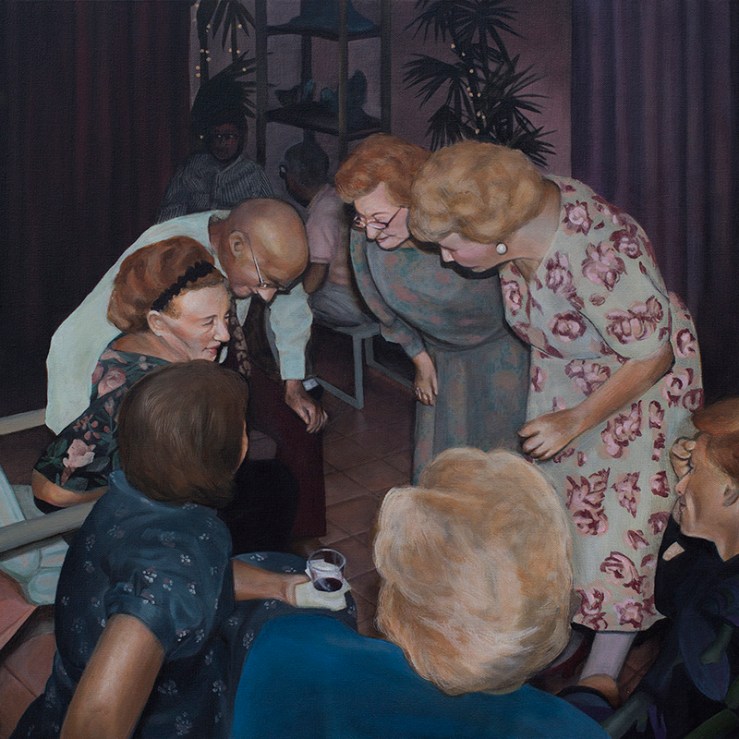
The Story — Emile Mausner

story_800px_800

The Story, 2016 by Emile Mausner

“A Worn Path” — Eudora Welty

“A Worn Path”

by

Eudora Welty


It was December—a bright frozen day in the early morning. Far out in the country there was an old Negro woman with her head tied red rag, coming along a path through the pinewoods. Her name was Phoenix Jackson. She was very old and small and she walked slowly in the dark pine shadows, moving a little from side to side in her steps, with the balanced heaviness and lightness of a pendulum in a grand-father clock. She carried a thin, small cane made from an umbrella, and with this she kept tapping the frozen earth in front of her. This made a grave and persistent noise in the still air, that seemed meditative like the chirping of a solitary little bird.

She wore a dark striped dress reaching down to her shoe tops, and an equally long apron of bleached sugar sacks, with a full pocket: all neat and tidy, but every time she took a step she might have fallen over her shoelaces, which dragged from her unlaced shoes. She looked straight ahead. Her eyes were blue with age. Her skin had a pattern all its own of numberless branching wrinkles and as though a whole little tree stood in the middle of her forehead, but a golden color ran underneath, and the two knobs of her cheeks were illumined by a yellow burning under the dark. Under the red rag her hair came down on her neck in the frailest of ringlets, still black, and with an odor like copper.

Now and then there was a quivering in the thicket. Old Phoenix said, “Out of my way, all you foxes, owls, beetles, jack rabbits, coons and wild animals!. . . Keep out from under these feet, little bob-whites…. Keep the big wild hogs out of my path. Don’t let none of those come running my direction. I got a long way.” Under her small black-freckled hand her cane, limber as a buggy whip, would switch at the brush as if to rouse up any hiding things.

On she went. The woods were deep and still. The sun made the pine needles almost too bright to look at, up where the wind rocked. The cones dropped as light as feathers. Down in the hollow was the mourning dove—it was not too late for him.

The path ran up a hill. “Seem like there is chains about my feet, time I get this far,” she said, in the voice of argument old people keep to use with themselves. “Something always take a hold of me on this hill— pleads I should stay.” Continue reading ““A Worn Path” — Eudora Welty”

The Badminton Game — David Inshaw

The Badminton Game 1972-3 by David Inshaw born 1943

The Badminton Game, 1973 by David Inshaw (b. 1943)

Mu Pan’s Garden of Earthly Delights (detail) — Mu Pan

mupan

Mu Pan’s Garden of Earthly Delights (detail), 2019 by Mu Pan (b. 1976)

The Fire-writing — J.R.R. Tolkien

merlin_149984133_1ff78bb0-bddf-401b-82fa-872fde459cea-superjumbo

The Fire-writing, 1953 by J.R.R. Tolkien (1892–1973).

From The Morgan Library & Museum’s exhibition “Tolkien: Maker of Middle-earth.”

He sets off one day on an arduous journey to a remote kingdom, wondering, as the weeks pass, about the wisdom of it (Robert Coover)

He sets off one day on an arduous journey to a remote kingdom, wondering, as the weeks pass, about the wisdom of it. Even the purpose. When he launched forth, he was sure he had a purpose, but by the time he reaches the primitive mountain village at the edge of the wilderness, he can no longer remember it. In fact, he is not certain this was his original destination. Wasn’t he going to the barber shop? It was summertime when he left, but now it is winter and the dead of night and he is alone and dressed only in his golf shirt and orange-and-green checked Bermuda shorts. He is met by villagers, huddled in heavy furs, who stare at him with expressions of dread and horror. He’s a friendly guy, even among strangers, always ready to buy the first round, and he puts his hand out and flashes them his best smile, but they shriek and shrink back, crossing themselves theatrically. A horse-drawn sleigh stands waiting in the middle of the snowy road, apparently meant for him, the driver’s face hidden in his upturned collar and large fur hat, the horses impatiently snorting plumes of white fog. There are thick fur wraps laid out for him on the seat, so he crawls into the sleigh and pulls them around him and they’re off, whipping over the snowswept mountains with alarming speed, the sleigh’s bells tolling funereally. The icy wind pushes his eyelashes back, but he can see nothing except the snow thudding against his naked eyeballs. The sleigh stops abruptly in a neighbourhood of ancient stone castles. He is dropped off unceremoniously in front of one of them, and the sleigh flies off into the distance, rear lanterns wagging frantically in the black night. Overhead, the bitter wind whistles around the louring towers, and wolves howl menacingly in the surrounding hills. As he approaches the heavy doors, they open of their own accord, the hinges grinding, and he enters the castle’s great hall. It is starkly inhospitable, unkempt and cold and smelling vaguely of unwashed laundry, yet, for all that, it looks suspiciously like his own living room. The television is on so he goes in and, exhausted by his travels, collapses in front of it, ready to accept whatever might appear there. Seems to be a sitcom with comic monsters playing a ball game of some sort with human heads. He laughs along with the canned laughter on the TV and about as sincerely. His wife comes in, baring, with a wink, her incisors, and offers him a Bloody Mary.

Read the rest of Robert Coover’s very short story “Vampire” at Granta.

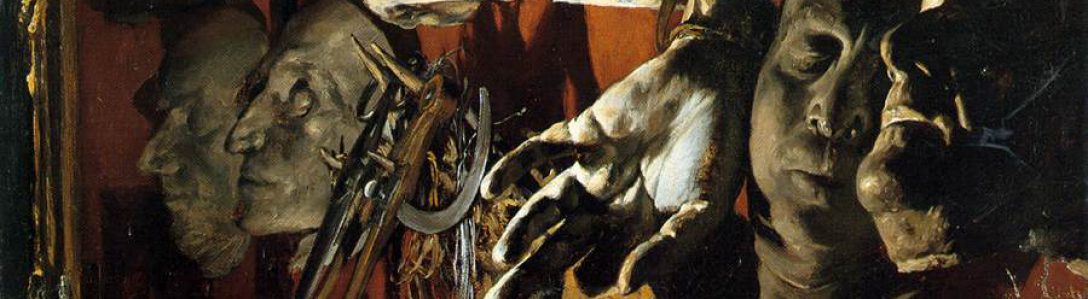
Ab eo, Quod — Leonora Carrington

tumblr_mnu8gkavpb1qzse0lo1_1280

Ab eo, Quod, 1956 by Leonora Carrington (1917-2011)

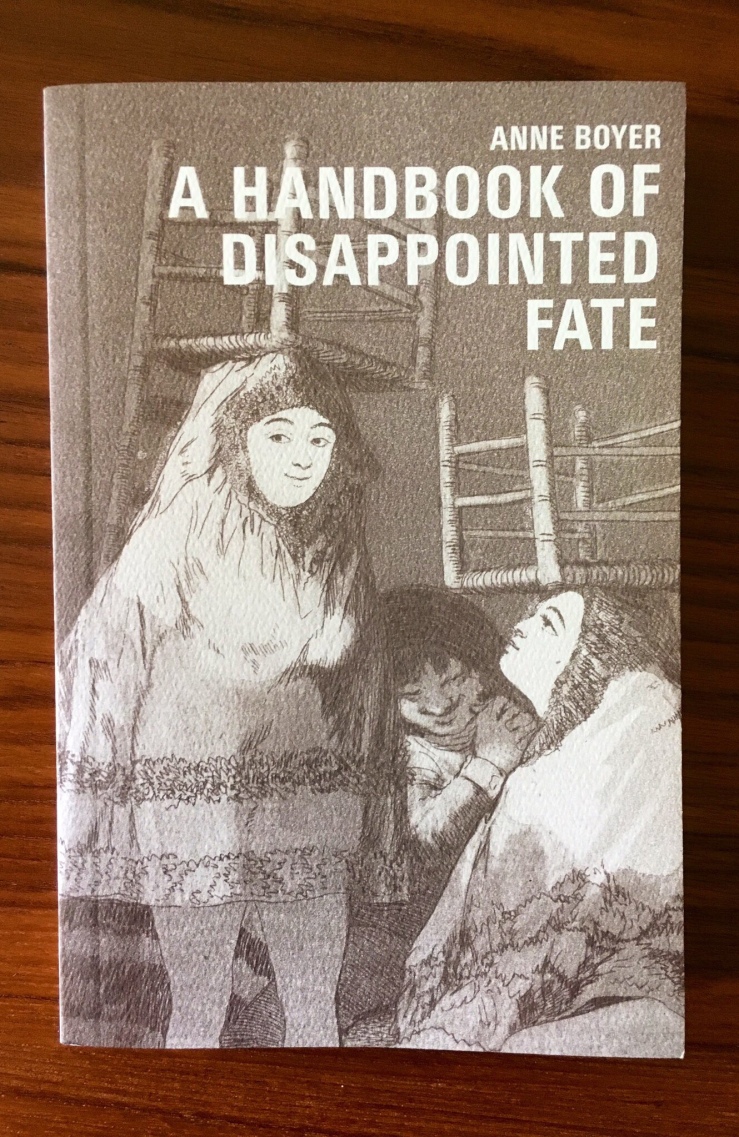
Anne Boyer’s A Handbook of Disappointed Fate (Book acquired, 8 April 2019)

img_2617

A tremendous thank you to to BLCKDGRD for sending me a copy of Anne Boyer’s strange discursive book of essays-poems-critiques-I-do-not-know-whats A Handbook of Disappointed Fates. It showed up in the mail unexpectedly, and I figured it might be from him (he posted excerpts last week). I’m really digging the book so far, although I haven’t been reading it in a straight line. I did start at the beginning though, which starts like this:

img_2624

(Bartleby prefers not to arrive in this essay on “No,” but it is nevertheless rather rich in its refusals).

Thanks to my friend again.

Mu Pan’s Garden of Earthly Delights (detail) — Mu Pan

mupan

Mu Pan’s Garden of Earthly Delights (detail), 2019 by Mu Pan (b. 1976)

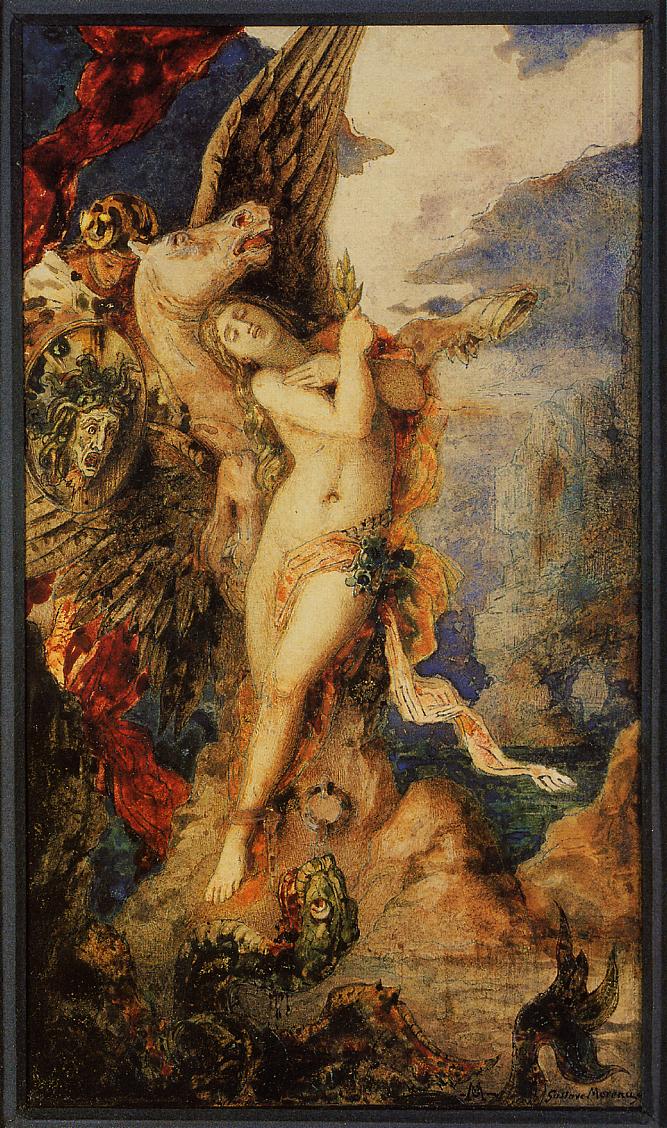
Perseus and Andromeda — Gustave Moreau

perseus-and-andromeda-1869

Perseus and Andromeda, 1869 by Gustave Moreau (1826 – 1898)

Five from Félix Fénéon

ffff

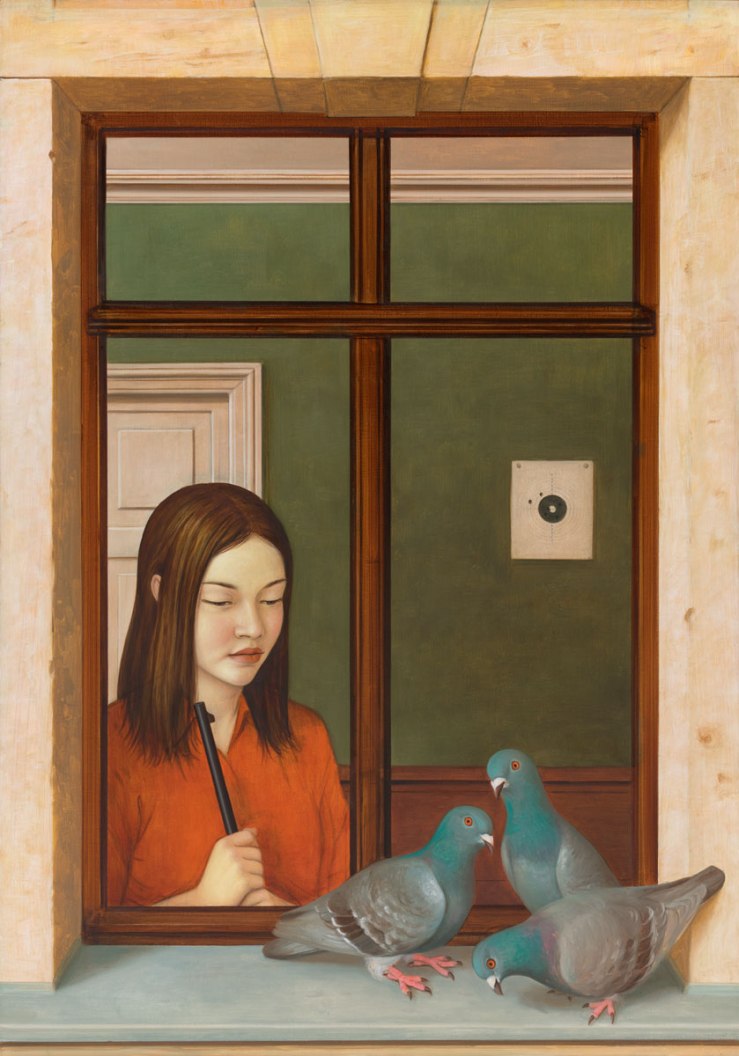
The Pigeons — Falk Gernergross

gernegross2c-20die-tauben2c-20182c-mischtechnik-auf-mdf2c-100x70cm

The Pigeons, 2018 by Falk Gernergross (b. 1973)

Frogs have been melodious for a fortnight, and the birds sing pleasantly | Nathaniel Hawthorne’s journal entry for April 9th, 1851

April 9th.–There was a great rain yesterday,–wind from the southeast, and the last visible vestige of snow disappeared. It was a small patch near the summit of Bald Mountain, just on the upper verge of a grove of trees. I saw a slight remnant of it yesterday afternoon, but to-day it is quite gone. The grass comes up along the roadside and on favorable exposures, with a sort of green blush. Frogs have been melodious for a fortnight, and the birds sing pleasantly.

Nathaniel Hawthorne’s journal entry for April 9th, 1851. From Passages from the American Note-Books.

Mu Pan’s Garden of Earthly Delights (detail) — Mu Pan

mupan.PNG

Mu Pan’s Garden of Earthly Delights (detail), 2019 by Mu Pan (b. 1976)

Secret Life IV — Rene Magritte

original-horata_pazyat_staratelno_svoite_tayni_rene_magrit-7

Secret Life IV, 1928 by René Magritte (1898-1967)

Mu Pan’s Garden of Earthly Delights (detail) — Mu Pan

mupan.PNG

Mu Pan’s Garden of Earthly Delights (detail), 2019 by Mu Pan (b. 1976)

Blog about giving books away and buying books for a friend and acquiring some books for myself

img_2588

This morning my dean told me that I needed to pack up my office over the summer as the building I’m in will be undergoing a renovation. Even though I knew this was coming, the prospect hit me as a series of big anxiety waves. My walls are covered with masks, art, pictures. I have file drawers of student work going back over a decade. And books. Lots and lots of books. Books and art and stuff that I don’t really have room for anywhere else, even for a season.

Three shelves in my office are doublestacked with old mass market paperbacks from my youth—-Vonnegut, Edgar Rice Burroughs, Hemingway, Jack London, Philip K. Dick, Richard Adams, Stephen Crane, etc. Shabby books, well worn, glue splitting. Over the years I’ve acquired nicer versions of the ones I want to reread, but my sentimental attachment to this small library of paperbacks doesn’t quite fade. When I taught high school, they were the bulk of my classroom library. I insisted on their return, and was always disappointed in students who seemed interested in certain novels but never quite managed to steal them. I was always thrilled when a student would ask to borrow one “over the summer” and then forget to return it.

This sorry shabby mass-market library has been depleted over my past decade teaching community college. Every semester, a few students ask if they can borrow something they see on the shelves when they stop by to chat. It is the most wonderful feeling to give a young person a copy of Brave New World (“I’ve heard it’s good”) or Cat’s Cradle (“Is it as good as Slaughterhouse Five?”) of Studies in Classic American Literature and then insist that they keep it and not worry about returning it.

This morning, a young man approached me after class and told me he’d noticed I had a copy of Do Androids Dream Electric Sheep? in my office—could he maybe borrow it? He made a point of calling it Do Androids Dream Electric Sheep? and not Blade Runner, despite the fact that it’s a movie tie-in. He seemed so happy when I repeated that the book was his now.

Earlier that morning I gave another student my copy of Howard Zinn’s A People’s History of the United States. He’s taken a couple of classes with me, and based on our conversations and his writing, I thought he could us the book more than I could. Again—young kid so happy to get a book, to think that someone thought he should read a particular book—I recall the feeling so vividly, from the other side. I love watching the old library dwindle away. Maybe I can give away more before I have to pack it up again.
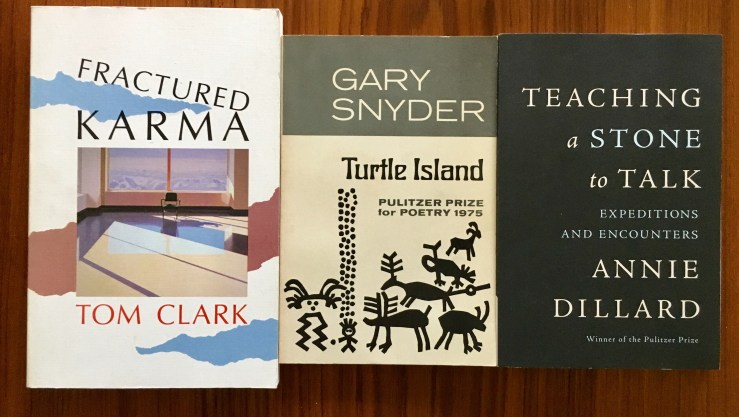
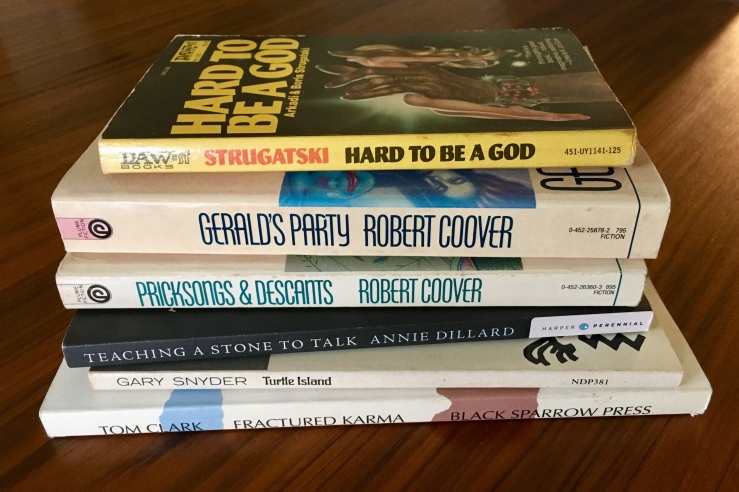
img_2578

After classes and office hours I swung by my beloved bookstore. I do this a lot on Fridays, in the spare hour that I have between work and picking up kids. I had a little mission this time—buying some books for a great old friend who turns forty this weekend. He loves hiking and camping and poetry—more than I love those things, I think—so I asked twitter to throw out some recommendations, which they did. I had fun browsing the “Nature” section. I ended up getting three: Tom Clark’s Fractured Karma (a favorite of mine), Gary Snyder’s Turtle Island (I had never heard of it until today), and Annie Dillard’s Teaching a Stone to Walk (I dug a few of the short essays I read in the store). I enjoyed buying books for my friend. I am almost 100% he never reads this blog so I’m sure my posting this will not spoil his present, and, if not, Happy Birthday.

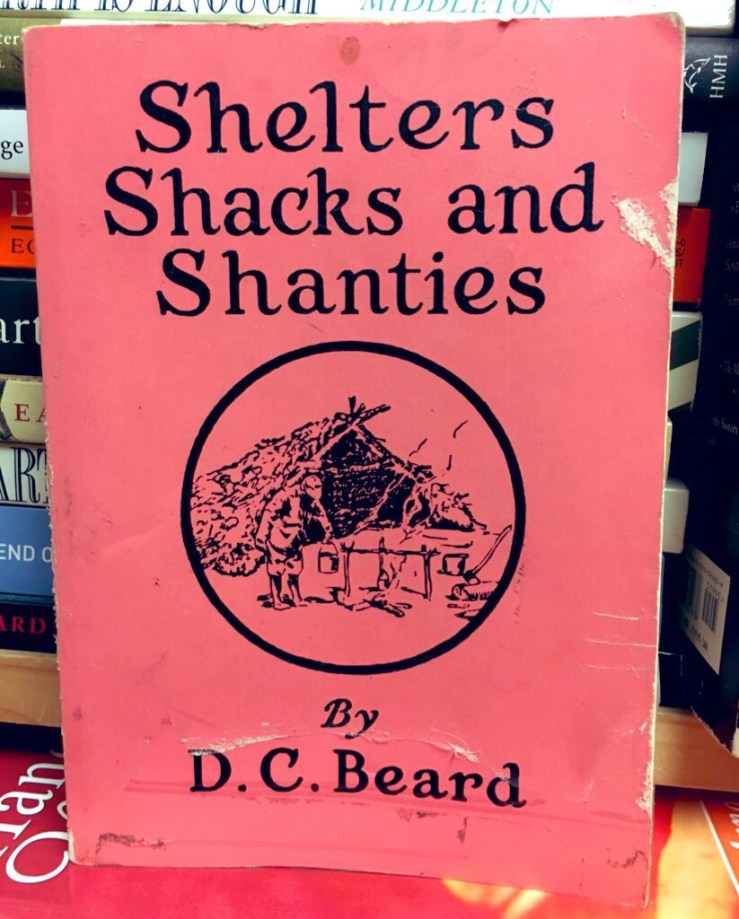
While browsing the “Nature” section, I resisted Shelters Shacks and Shanties—for now. Apologies to D.C. Beard, whose hut diagrams are exquisite:
img_2575

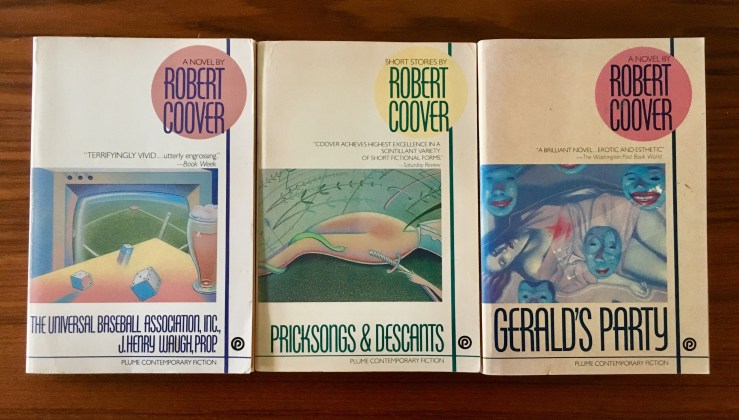
I of course selfishly picked up books for myself, although I didn’t browse for myself. I keep a silly geeky list of names to check in on, including Robert Coover. Even though I’m slogging my way through his first novel, The Origin of the Brunists, I still have a desire to read its sequel, The Brunist Day of Wrath. No wrath, but I picked up Plume editions of Pricksongs & Descants (which I’ve read but didn’t own) and Gerald’s Party (which I haven’t read and now own). The editions match the copy of  The Universal Baseball AssociationInc., J. Henry Waugh, Prop. I picked last summer (and no I have not read goddamn it).
img_2589

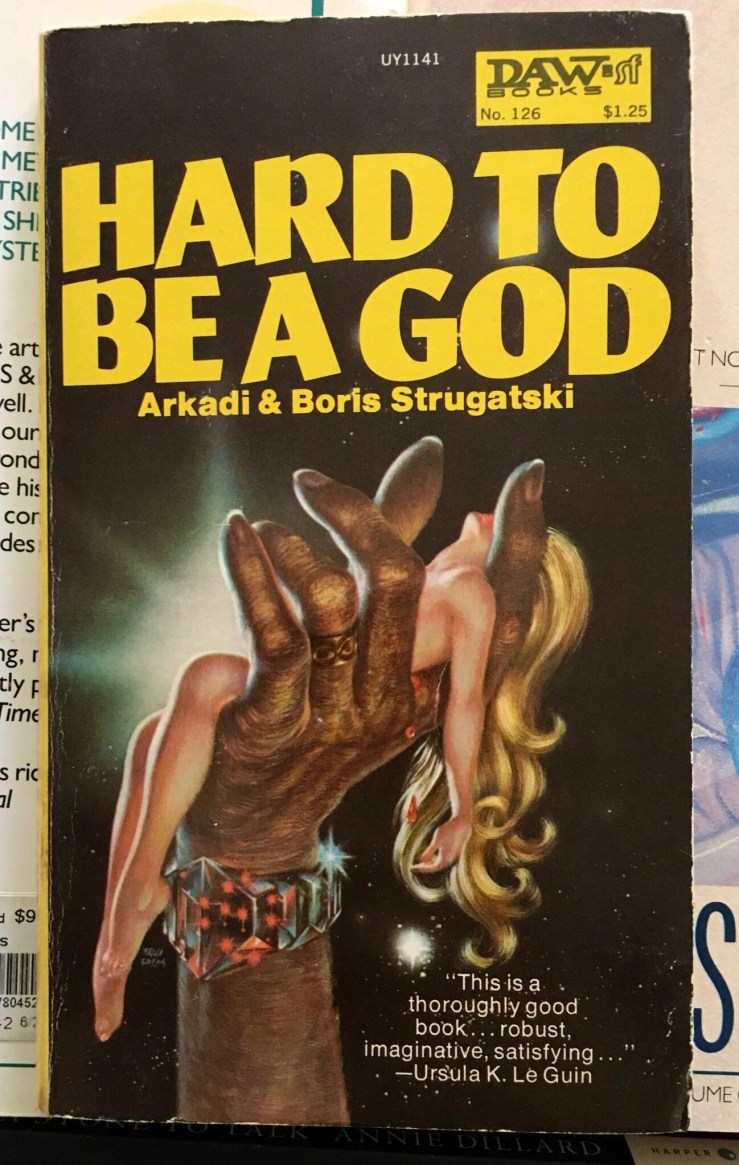
I was also thrilled to pick up a 1974 Daw Paper edition of Wendayne Ackerman’s translation of Arkadi and Boris Strugatsky’s Hard to Be a God. I read Olena Bormashenko’s translation as an e-book a few years ago, after seeing Aleksei German’s film adaptation. (I loved Bormashenko’s translation of Snail on the Slope, by the way).
img_2577

This copy of Hard to Be a God, blurbed by Ursula K. Le Guin, will end up in a stack on my shelf of massmarket paperbacks, cheap pulp editions with colorful, zany, vibrant covers. Lovely unroughed, somehow pristine copies of Philip K. Dick and Stanislaw Lem and Ishmael Reed and Ursual K. Le Guin and J.G. Ballard and etcetera that’s been building up over the years, a private collection—but another library I’m sure I’ll eventually end up giving away.