Portrait of a reader driven by horror vacui

There is a fascinating feature in today’s New York Times Magazine by Jack Hitt about John Kidd, a James Joyce scholar who “disappeared” two decades ago. The article, titled “The Strange Case of the Missing Joyce Scholar,” initially focuses on Kidd’s very-public (for academia, anyway) fight with Hans Walter Gabler. Gabler claimed to have produced a corrected version of Joyce’s 1922 novel Ulysses, and Kidd delighted at picking apart his “corrected version,” exposing minute errors to the literary world. As the article progresses though, Hitt draws a compelling portrait of Kidd as a kind of highly-artistic reader of encyclopedic literature driven by extreme horror vacui, fear of the void. A couple of paragraphs from late in the essay, in which Kidd explains his translation of The Slave Isaura  (after the pair has escaped some knife-wielding thugs):

One day, Kidd and I got up early to make our way to the Brazilian Academy of Letters, where he works. Crossing a vacant square beneath an aqueduct, we suddenly realized that five men with knives were tailing us; soon, they were chasing us. Kidd, a former high school sprinter, grunted a suggestion — run! — and we poured out our best 100-yard dash to a nearby food cart. Street vendors, Kidd explained later, collect money all day and are typically armed and tough. As we sailed under the cart’s umbrella, our churrasquinho-monger stepped up beside us and glared. The thugs melted away.

Inside the refuge of the academy, Kidd keeps a permanent cubicle occupied by a big old PC and a few books. For years he has been working on the first English edition of the novel “The Slave Isaura.” Kidd is translating the 19th-century book with a few rules he felt compelled to devise. The work will be in two parts, and every word in Part 1 will have its lexicographic partner in Part 2. If “cat feet” appears in Part 1, expect “cattail” in Part 2. His sense of what pairs up can get quite intricate, but that’s part of the fun, he told me. So he maintains lists of all the possible pairings and where and whether he has used one: six foot, six foot under, footing, foothills, footloose, footprint. There is a logic to the work, and the part I read resounded with the baroque tone you might expect of a translation that will obey his other rule: It will use every word exactly once.

Already, the work is nearly twice as plump as Joyce’s “Ulysses.” Kidd was particularly excited to show me his key apparatus — the homemade thesaurus where he keeps a running crosscheck on the entirety of the English language. So far, it runs to some 3,000 pages.

“As much as humanly possible, the 19th-century dictionary of English is in here,” he told me. His translation is titled “Isaura Unbound,” and he wanted me to understand its ambition: When the book is finished, it will be a complete reordering of one entire English dictionary into a single work of art. Take that, void.
Breakup — Andrew Wyeth

ayethhands02

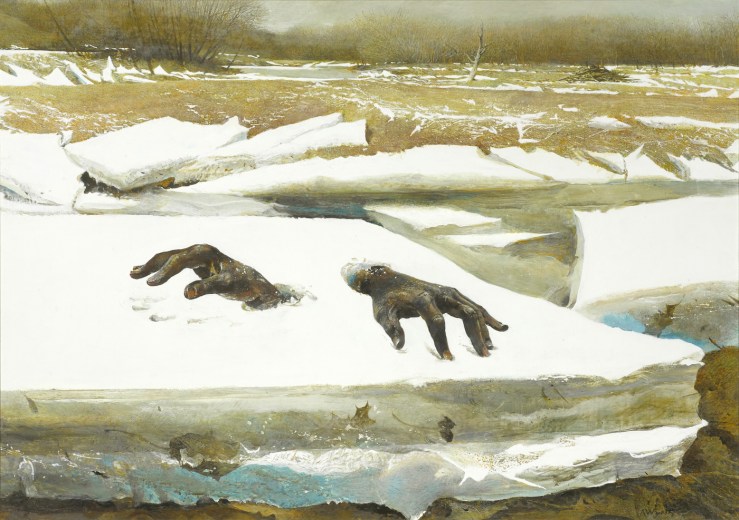
Breakup, 1994 by Andrew Wyeth (1917-2009)

Read Philip K. Dick’s short story “The Day Mr. Computer Fell out of Its Tree”

“The Day Mr. Computer Fell out of Its Tree”

by

Philip K. Dick


He awoke, and sensed at once that something dreadful was wrong. Oh God, he thought as he realized that Mr. Bed had deposited him in a muddled heap against the wall. It’s beginning again, he realized. And the Directorate West promised us infinite perfection. This is what we get, he realized, for believing in what mere humans say.

As best he could he struggled out of his bedclothes, got shakily to his feet and made his way across the room to Mr. Closet.

“I’d like a natty sharkskin gray double-breasted suit,” he informed it, speaking crisply into the microphone on Mr. Closet’s door. “A red shirt, blue socks, and –” But it was no use. Already the slot was vibrating as a huge pair of women’s silk bloomers came sliding out.

“You get what you see,” Mr. Closet’s metallic voice came to him, echoing hollowly.

Glumly, Joe Contemptible put on the bloomers. At least it was better than nothing — like the day in Dreadful August when the vast polyencephalic computer in Queens had served up everyone in Greater America nothing but a handkerchief to wear.

Going to the bathroom, Joe Contemptible washed his face — and found the liquid which he was splashing on himself to be warm root beer. Christ, he thought. Mr. Computer is even zanier this time than ever before. It’s been reading old Phil Dick science fiction stories, he decided. That’s what we get for providing Mr. Computer with every kind of archaic trash in the world to read and store in its memory banks.

He finished combing his hair — without making use of the root beer — and then, having dried himself, entered the kitchen to see if Mr. Coffeepot was at least a sane fragment in a reality deteriorating all around him.

No luck. Mr. Coffeepot obligingly presented him with a dixie cup of soap. Well, so much for that.

The real problem, however, came when he tried to open Mr. Door. Mr. Door would not open; instead it complained tinnily: “The paths of glory lead but to the grave.”

“Meaning what?” Joe demanded, angry, now. This weird business was no longer fun. Not that it had ever been the times before — except, perhaps, when Mr. Computer had served him with roast pheasant for breakfast.

“Meaning,” Mr. Door said, “that you’re wasting your time, fucker. You’re not getting to the office today nohow.”

This proved to be true. The door would not open; despite his efforts the mechanism, controlled miles away from the polyencephalic master matrix, refused to budge.

Breakfast, then? Joe Contemptible punched buttons on the control module of Mr. Food — and found himself staring at a plate of fertilizer.

He thereupon picked up the phone and savagely attacked the numbers which would put him in touch with the local police.

“Loony Tunes Incorporated,” the face on the vidscreen said. “An animated cartoon version of your sexual practices produced in one week, including GLORIOUS SOUND EFFECTS!”

Fuck it, Joe Contemptible said to himself and rang off. Continue reading “Read Philip K. Dick’s short story “The Day Mr. Computer Fell out of Its Tree””

Nuit Tropicale — Wolfgang Paalen

nuit-tropicale-hi

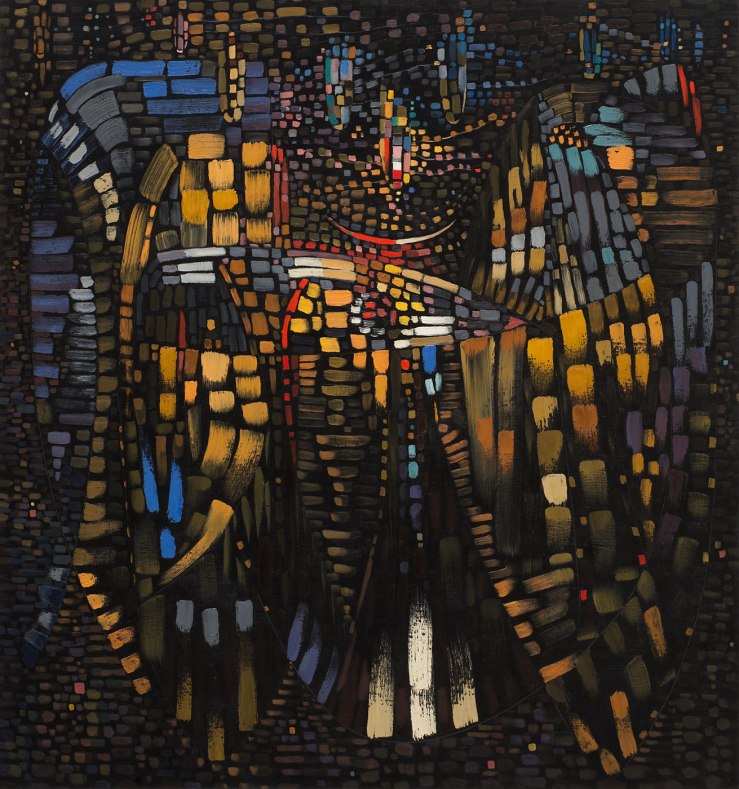
Nuit tropicale (Tropical Night), 1948 by Wolfgang Paalen (1905-1959)

Ethel Ashton — Alice Neel

Ethel Ashton, 1930 by Alice Neel (1900–1984)

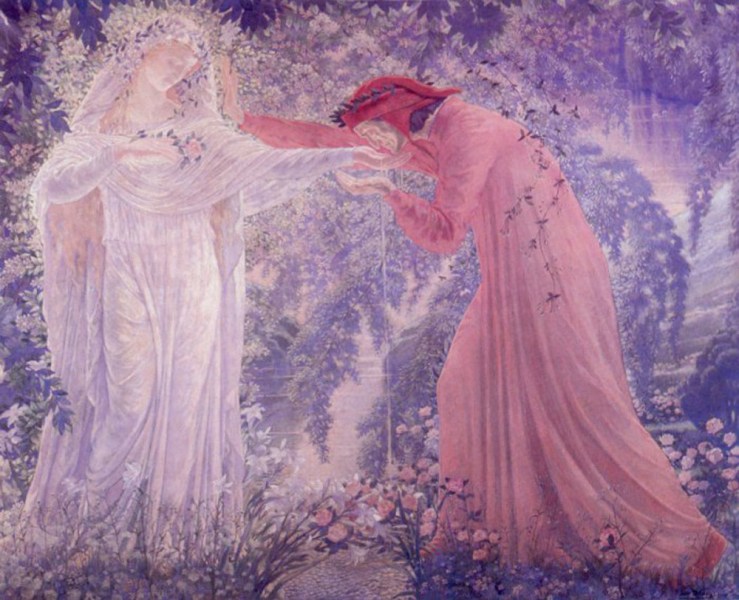
Dante Drinking the Waters of Lethé — Jean Delville

jean-delville-dante-drinks-the-waters-of-lethe

Dante Drinking the Waters of Lethé, 1919 by Jean Delville (1867–1953)

Terrible Saturday Night Double Feature: Ant-Man and The Disaster Artist (Summer Film Log)

It is possible that there is a good film hiding somewhere in the patched-together mess that is Ant-Man (2015), but I doubt it. The film had a troubled production, with original director (and producer/writer) Edgar Wright dropping out because he could see that Marvel Studios would not let him make the film he wanted to make.

I haven’t liked anything Wright has done since Shaun of the Dead (2004), and his last film Baby Driver (2017) looked so insufferable that I’ll likely never sit through it. Still: Wright’s films are his films, marked by his style, his idea of “cool,” and his idea of “humor.” I don’t think his films are particularly good, but they are nevertheless original. The version of Ant-Man that Marvel Studios gave its loyal fandom bears traces of Wright’s vision—“traces” is not the right word; it is too subtle–maybe “chunks” is the word I want: Big “chunks” of the film Wright likely intended are in Ant-Man, delivered mainly via Paul Rudd’s glib charm. And yet the chunks aren’t particularly well-integrated—or maybe it’s unclear what they are to be integrated intoAnt-Man tries to do too many things and ends up not delivering on them; or, rather, it delivers them with slick emptiness that points to the film’s utter inconsequentiality. There are plenty of examples, but none so glaring as when Michael Douglas (playing the original Ant-Man Hank Pym) reconciles a relationship with his emotionally-estranged daughter (Evangeline Lilly who will become the Wasp in the upcoming and inevitable sequel), only to have the moment punctured by Paul Rudd. The breeziness doesn’t feel comedic, but rather a bit nihilistic.

Nothing matters in Ant-Man except setting up the next Marvel Cinematic Universe film. So why not shoehorn in a scene with a flying Avenger? The film sometimes delivers aesthetically—I mean, this is a movie about a guy who shrinks, right? there should be plenty of cool imagery here—but for all its charms à la Honey, I Shrunk the Kids (1989), Ant-Man is ultimately uninterested in tapping the massive potential of a microscopic world. Even worse, the film has no interest at all in exploring the deeper philosophical implications of what it might mean for a consciousness to find its bearings in time/space fundamentally transformed. Ant-Man feels more like a product assembled by committee than an actual film, which is a shame, given all the potential in its basic story.


How I watched it: On a big TV via a streaming service, with my wife and my children, who selected it for our viewing entertainment.


The Disaster Artist (2017) is a bad movie about a bad movie. I’ll admit that the charms of The Room (2003) will forever be lost on me. That film is bad, yes, but worse, it’s boring. (I like my bad films to be not boring).

The Disaster Artist is based on a book of the same name by Greg Sestero and Tom Bissell. The book chronicles Sestero’s relationship with Tommy Wiseau, the auteur behind The Room (Wiseau and Sestero star in The Room). Director James Franco plays Wiseau and his little brother Dave Franco plays Sestero. James Franco portrays Wiseau as kind of deranged Dracula; Dave Franco plays Sestero as an earnest, empathetic, friendly hero. The Disaster Artist never questions Sestero’s account making The Room. He’s simply the Good Guy.

The Francos are not nearly as compelling as the cast around them, which is larded with ringers like Alison Brie, Sharon Stone, Nathan Fielder, Hannibal Buress, Bryan Cranston, and Seth Rogen. (Rogen’s performance as a script supervisor who ends up essentially directing The Room is probably the highlight of The Disaster Artist).

A good cast is not enough to cover over James Franco’s pedestrian direction though. He takes every possible shortcut, slathering scene after scene with cheap music, staging scenes in the most formulaic way possible, and telegraphing almost every plot point in unnecessary exposition. Franco directs the film as if he is worried your baby boomer uncle might not get what’s going on, squandering much of the weird potential that rests in a character as unique as Tommy Wiseau.

To make sure that all viewers “get it” — or at least get the idea of “getting it” — Franco frontloads the film with talking head celebrities (including Adam Scott, Kristen Bell, and Danny McBride) pretending to improvise their enthusiasm for the ironic charms of The Room.

The Disaster Artist culminates in the premiere of The Room. In Franco’s portrayal, The Room’s premiere audience attunes quickly to the absurdity of Wiseau’s wreck, adopting an ironic vision that allows them to take deep joy in watching a bad film. Franco pours sweetened laughter over the scene. The whole effect is like having someone explain an absurd joke. Who wants to have an absurd joke explained to them?

What the film never does—never even really tries to do—is get into Wiseau’s weird mind. There’s a strange and fascinating story in there, but The Disaster Artist can’t get to it, offering instead contours with no real substance. Indeed, The Disaster Artist seems a bit afraid of whatever’s going on inside Wiseau, and so instead retreats into platitudes about How Great Film Is and How Great It Is To Make Movies and etc.  The Disaster Artist is boringly competent. The Room is a bad film, but at least it’s original.


How I watched it: On an iPad with earphones, lying in bed, trying to follow up Ant-Man with something better, and ultimately finding no success.

Wisdom V — Tamara de Lempicka

lectora_tamara2bde2blempicka

Wisdom V, c. 1974 by Tamara de Lempicka (1898-1980)

List with No Name #61

img_0045

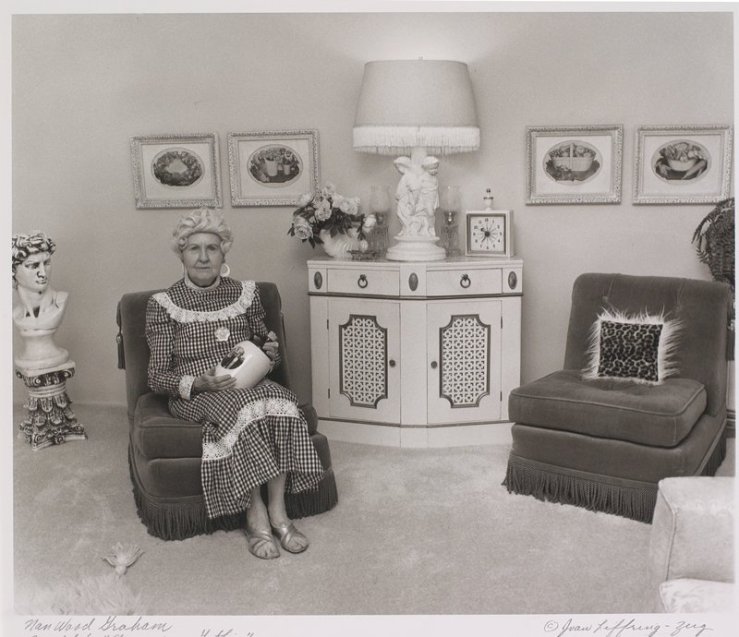
Nan Wood Graham — Joan Liffring-Zug Bourre

23998

Nan Wood Graham, 1975 by Joan Liffring-Zug Bourre (b. 1929)

The next one is waiting somewhere else (William Eggleston)

Society II — Normunds Brasliņš 

normundsbraslinsbycatherinelarose2528362529

Society II, 1994 by Normunds Brasliņš  (b. 1962)

The Swing — Bo Bartlett 

1181

The Swing, 2017 by Bo Bartlett (b. 1955)

RIP Anthony Bourdain

dsc_6277_845_560_s_c1_c_c

RIP Anthony Bourdain, 1956-2018

Anthony Bourdain, who died today of an apparent suicide, embodied a visceral curiosity far too absent in much of American culture. Bourdain took his readers and viewers into strange places and showed them that those places weren’t really that strange because, after all, the people there turned out to be human too. This strand of humanism sometimes evinced with bitter notes in Bourdain’s presentation, but ultimately there was a deep love for the human potential throbbing underneath everything the man did. His resolutely-cool persona never seemed like a put-on or an act. Even though he performed that persona with a ready naturalism in his shows, there was always a wonderful nervous edge there too, as if Bourdain was winkingly aware of the artificiality of show bizness but was confident that if he was just himself enough he could transcend that artificiality and make something real.

When I graduated college in 2001 I thought I would be a travel writer. I moved to Japan and did the English teacher thing and then I did the backpack around Thailand thing. Then I ran out of money. At some point in there, I read Kitchen Confidential, Bourdain’s 2000 behind-the-scenes look at the New York restaurant scene; I’d later listen to the audiobook a few times, read by Bourdain himself. Bourdain’s first show A Cook’s Tour became a favorite—particularly the episodes in Japan and Vietnam—and I watched his second show No Reservations when I could. By the time the oughties were over and Bourdain was doing The Layover and Parts Unknown, I’d settled into a nice domestic professorial life fitted out with occasional (comfortable) trips. Bourdain, meanwhile, lived the life that I had imagined for myself when I was 17, 18, 19, before I even knew who he was. I’m envious of him for that, but moreover I’m ultimately thankful that he shared what he did with all of us, and that he shared it in such a bullshit-free way. His spirit of visceral curiosity will live on.

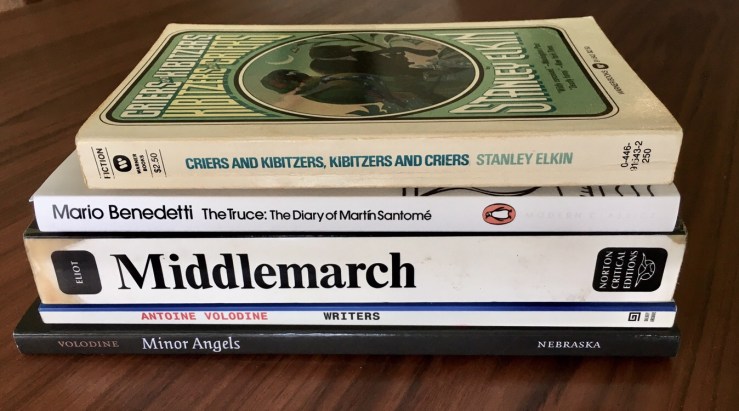
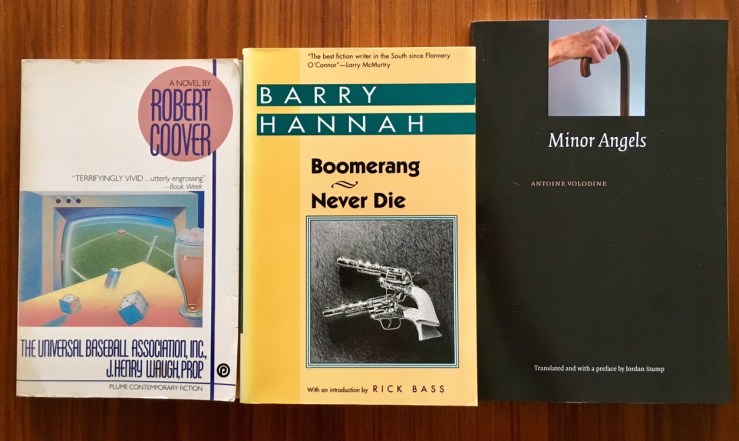
Robert Coover/Barry Hannah/Antoine Volodine (Books acquired, 7 June 2018)

img_0040

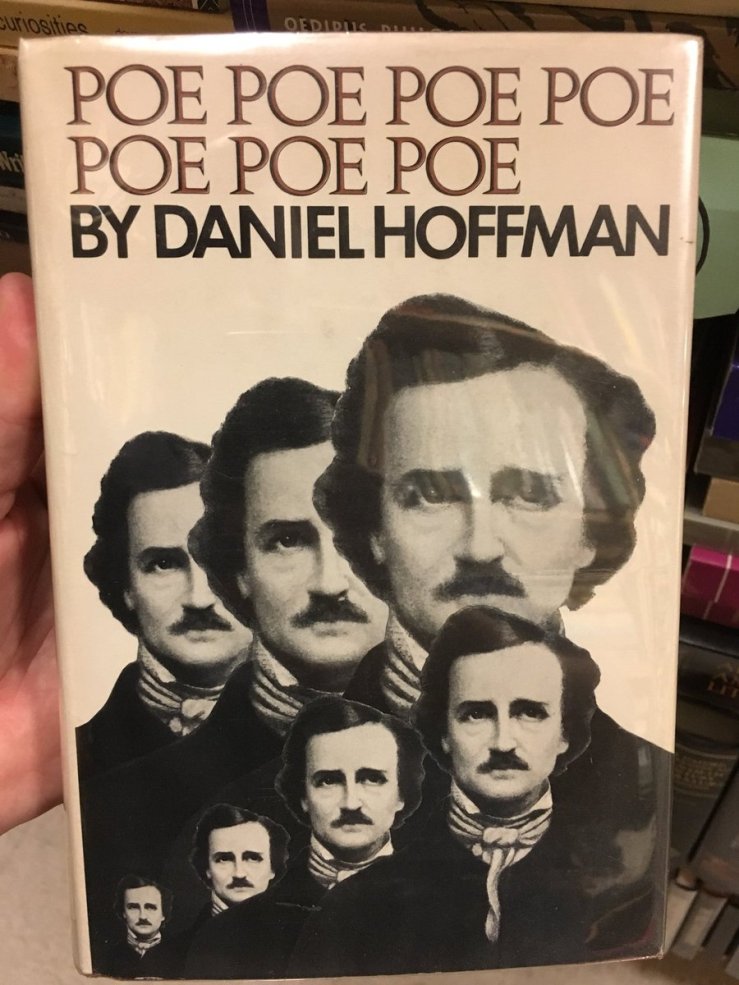
I had ordered Antoine Volodine’s Minor Angels through my favorite bookstore, and it came in yesterday. It’s slim but expensive (ah! university presses!) and ate up all of my store credit, but still I picked up used copies of Robert Coover’s second novel The Universal Baseball Association, Inc., J. Henry Waugh, Prop. and Barry Hannah’s Boomerang b/w Never Die (some of the only Hannah I’ve yet to read). I was tempted also by the title and cover of Daniel Hoffman’s 1971 Poe Poe Poe Poe Poe Poe Poe—but I was not tempted enough to acquire it.

dfg3rjnwaaay2nl

Long-Sleeved Kimono Double Suicide — Ikenaga Yasunari

chd9esousaauwyk

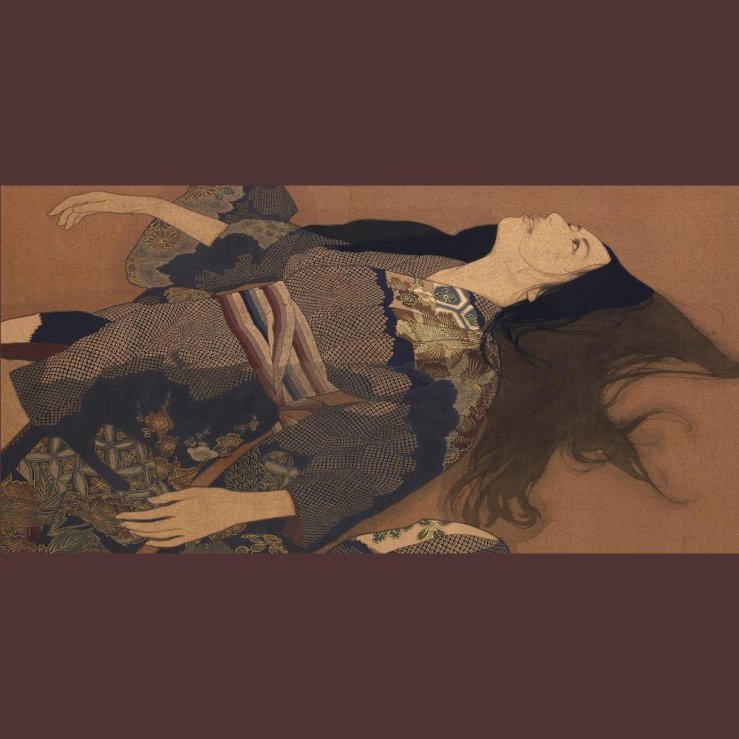
Long-Sleeved Kimono Double Suicide, 2013 by Ikenaga Yasunari (b. 1965)

Birthday — John Currin

18

Birthday, 1999 by John Currin (b. 1962)

Screenshot 2018-06-07 at 1.28.31 PMScreenshot 2018-06-07 at 1.28.12 PM