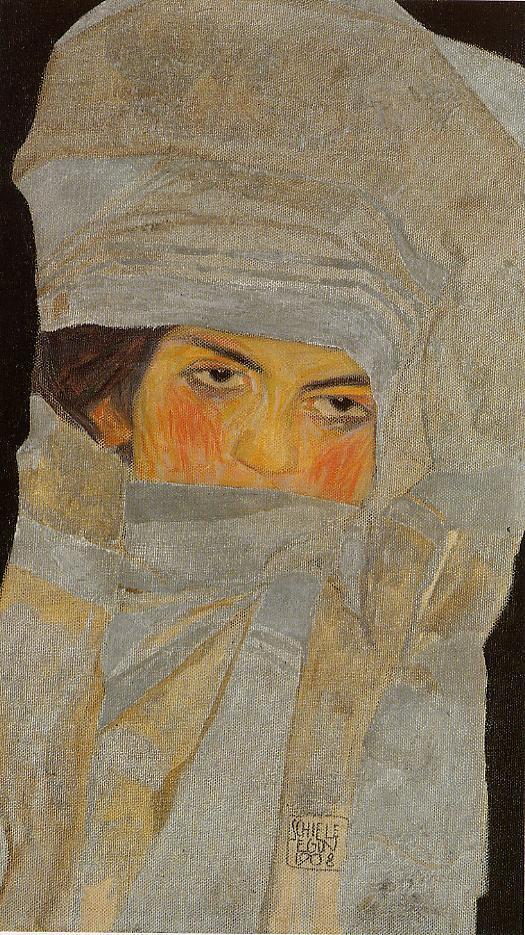
The Artist’s Sister, Melanie — Egon Schiele

the-artist-s-sister-melanie-1908

The Artist’s Sister, Melanie, 1908 by Egon Schiele (1890-1918)

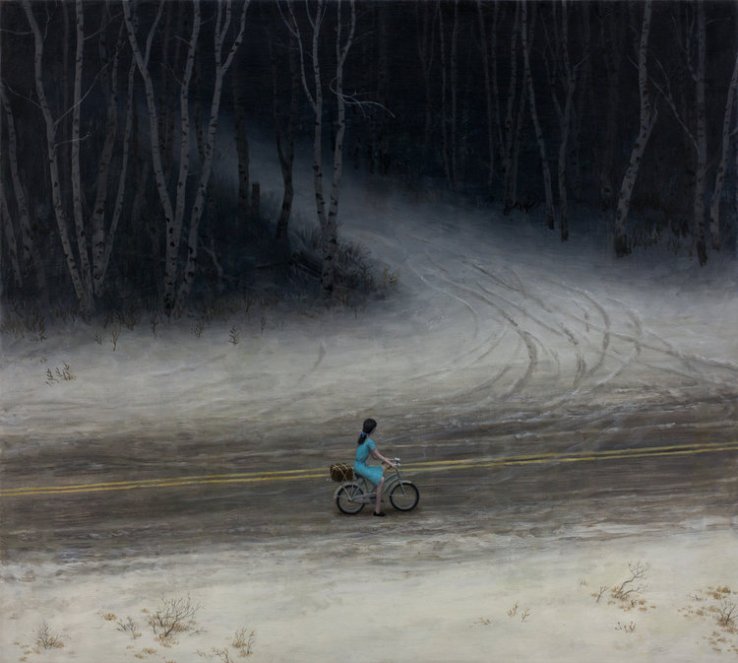
The Return — Aron Wiesenfeld

thereturn

The Return by Aron Wiesenfeld (b. 1972)

We create insanities (William H. Gass)

Put yourself in a public place, at a banquet—one perhaps at which awards are made. Your fork is pushing crumbs about upon you plate while someone is receiving silver in a bowler’s shape amid the social warmth of clapping hands. How would you feel if at this moment a beautiful lady in a soft pink nightie should lead among the tables a handsome poodle who puddled under them, and there was a conspiracy among the rest of us not to notice? Suppose we sat quietly; our expressions did not change; we looked straight through her, herself as well as her nightie, toward the fascinating figure of the speaker; suppose, leaving, we stepped heedlessly in the pools and afterward we did not even shake our shoes. And if you gave a cry, if you warned, explained, cajoled, implored; and we regarded you then with amazement, rejected with amusement, contempt, or scorn every one of your efforts, I think you would begin to doubt your senses and your very sanity. Well, that’s the idea: with the weight of our numbers, our percentile normality, we create insanities: yours, as you progressively doubt more and more of your experience, hide it from others to avoid the shame, saying “There’s that woman and her damn dog again,” but now saying it silently, for your experience, you think, is private; and ours, as we begin to believe our own lies, and the lady and her nightie, the lady and her poodle, the lady and the poodle’s puddles, all do disappear, expunged from consciousness like a stenographer’s mistake. 

–From William H. Gass’s essay “The Artist and Society” (1968). Collected in Fiction and the Figures of Life. 

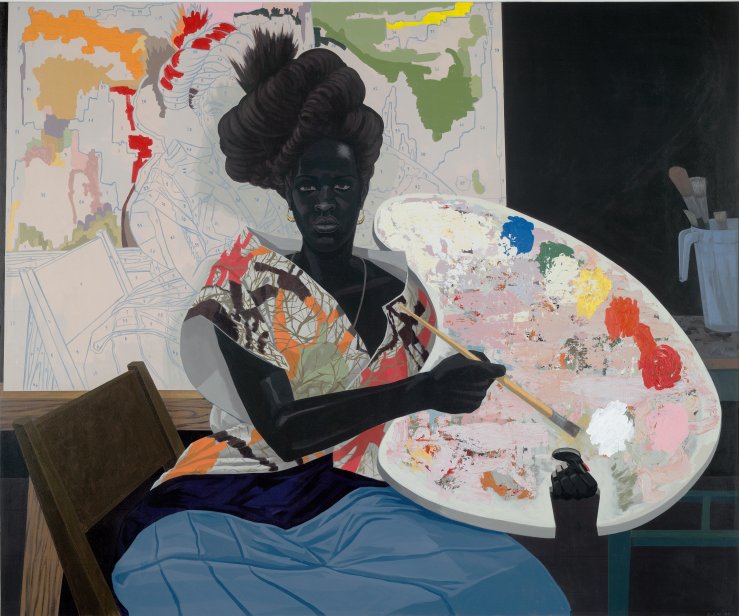
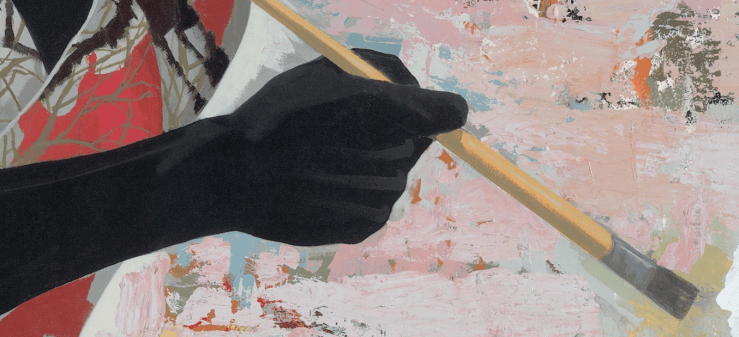
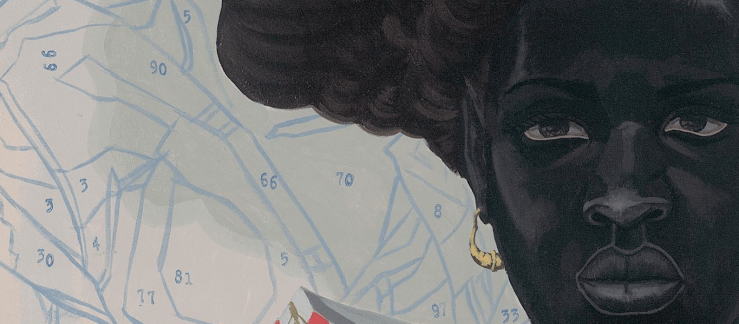
Untitled (Painter) — Kerry James Marshall

583f5dc21800007b14310b6fScreenshot 2018-01-06 at 7.04.48 PMScreenshot 2018-01-06 at 7.04.08 PM

Untitled (Painter), 2009 by Kerry James Marshall (b. 1955)

The Truth About Comets — Dorothea Tanning

tumblr_n1f2aikqjz1qzse0lo1_1280

The Truth About Comets, 1945 by Dorothea Tanning (1910-2012)

Eliot’s Middlemarch, Murdoch’s Net (Books acquired, 2 Jan. 2018)

img_8860

I put George Eliot’s Middlemarch and Irish Murdoch’s The Bell on my 2018 Good Intentions Reading List. I didn’t own either of these novels, which necessitated a trip to my friendly neighborhood bookstore (a labyrinthine maze comprised of, like, 2 million books. I’m not exaggerating). Improbably, I couldn’t find a copy of The Bell, so I picked up a nice Penguin edition of Under the Net. I also couldn’t find William Gass’s big novel The Tunnel—another of the books I put on my 2018 list that I don’t own—but I knew it wasn’t there because I’ve been checking for its fat spine for over a year. I’m gonna have to buy it elsewhere, alas. (I saw a copy there a few years ago and held off buying it because I was buying William Gaddis’s The Recognitions at the time, and buying two great big novels like that seemed too indulgent. Alas). My beloved store did of course have like a gajillion copies of War and Peace (which it’s weird I don’t have a copy), but my internet pal BLCKDGRD told me he’d send me one, so I held off. Plus—like, Middlemarch is already pretty damn long. I picked up the Norton Critical Edition, just out of habit, and then downloaded the e-book to my iPad via Project Gutenberg. My Norton Critical Edition of Adventures of Huckleberry Finn lists “Samuel Langhorne Clemens” as the author, and not “Mark Twain”—why does this Norton list “George Eliot” and not “Mary Anne Evans”? I actually don’t really care that much.

So who else is reading Middlemarch this year?


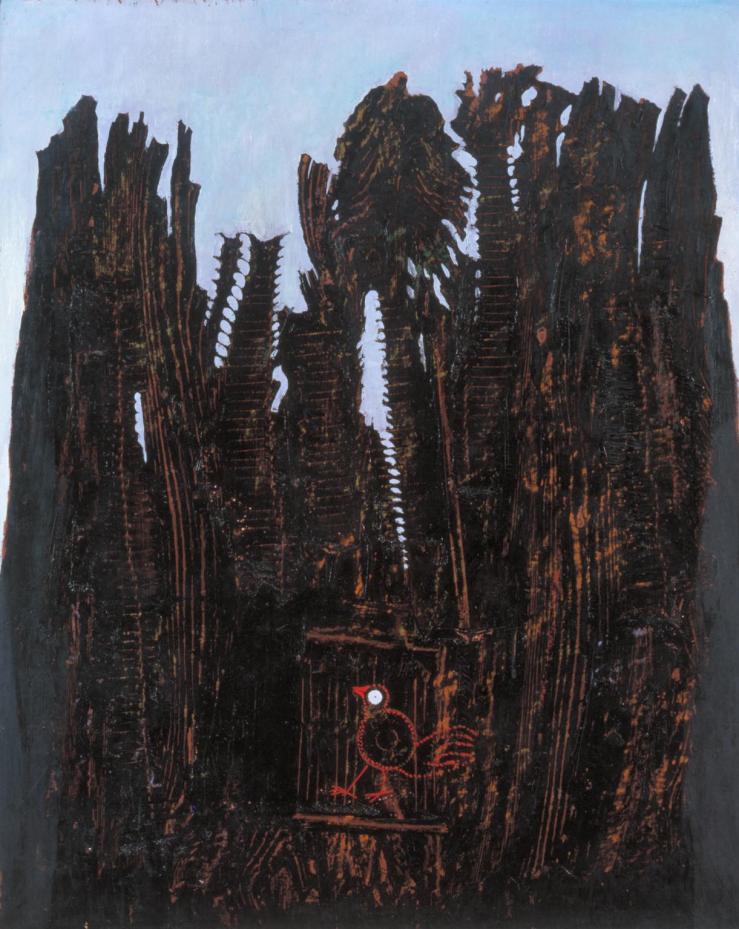
Forest and Dove — Max Ernst

Forest and Dove 1927 by Max Ernst 1891-1976

Forest and Dove, 1927 by Max Ernst (1891–1976)

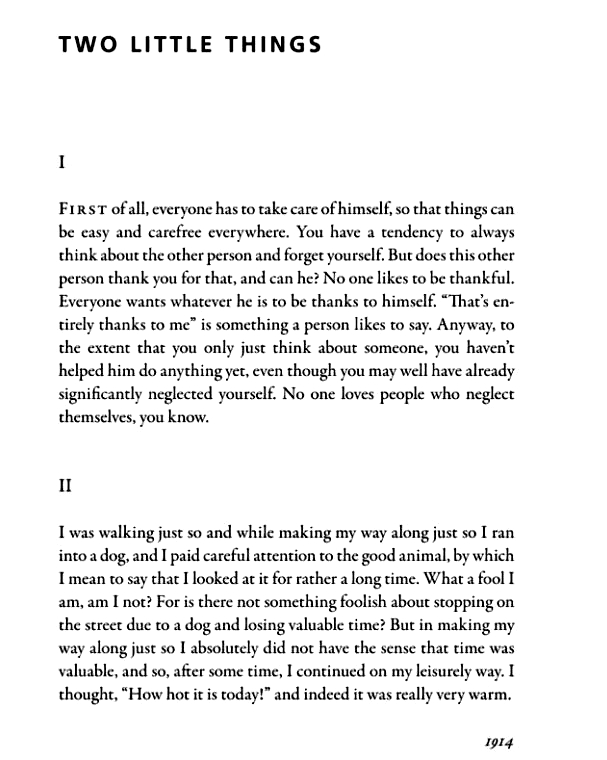
“Two Little Things” — Robert Walser

tw

Silence — Fernand Khnopff

silence-1890

Silence, 1890 by Fernand Khnopff (1858–1921)

Face — Leonor Fini

face2c_1970

Face, c. 1970 by Leonor Fini (1908-1996)

A page from Paul Kirchner’s Shaman

From “Shaman” by Paul Kirchner. Originally published in Heavy Metal vol. 4 #6, Sept. 1980. Republished in Awaiting the Collapse, Tanibis Editions.

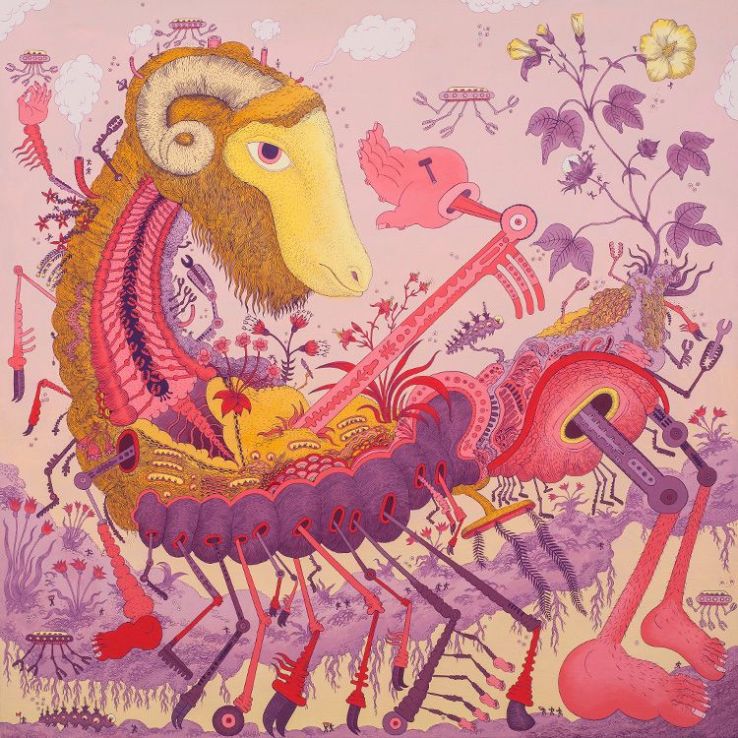
Ludditebot — Peter Hamlin

17052059_peter-hamlin_ta11fe865

Ludditebot,2017 by Peter Hamlin

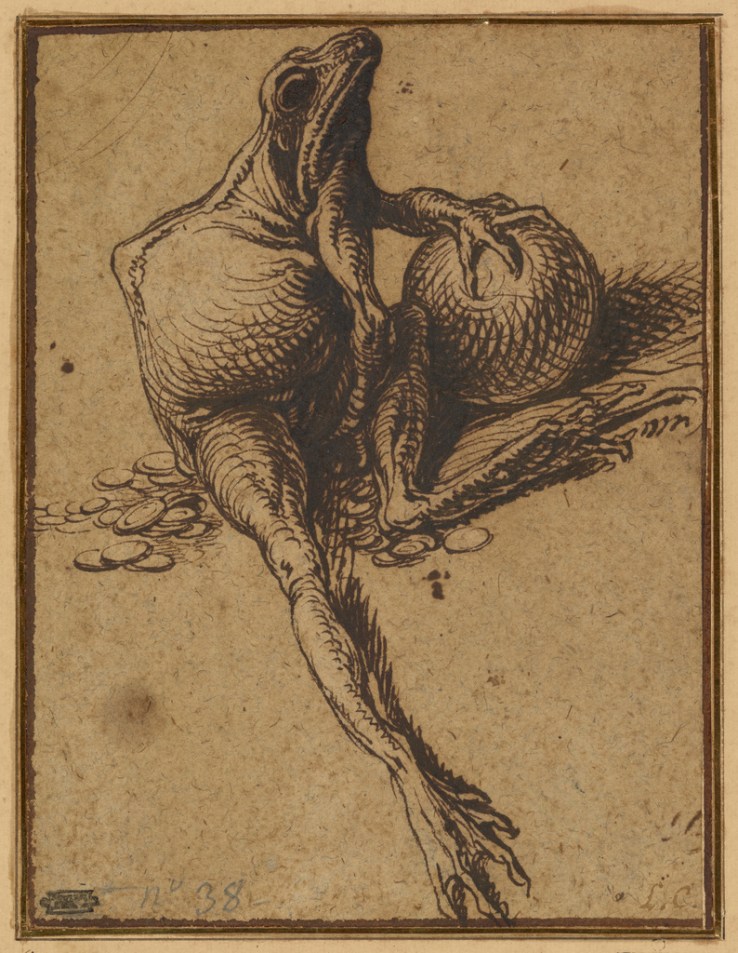
Allegory of Avarice — Jacques de Gheyn II

9d618fef66fc0584bec94e7e94453e2d

A Frog Sitting on Coins and Holding a Sphere: Allegory of Avarice, 1609 by Jacques de Gheyn II (1565-1629)

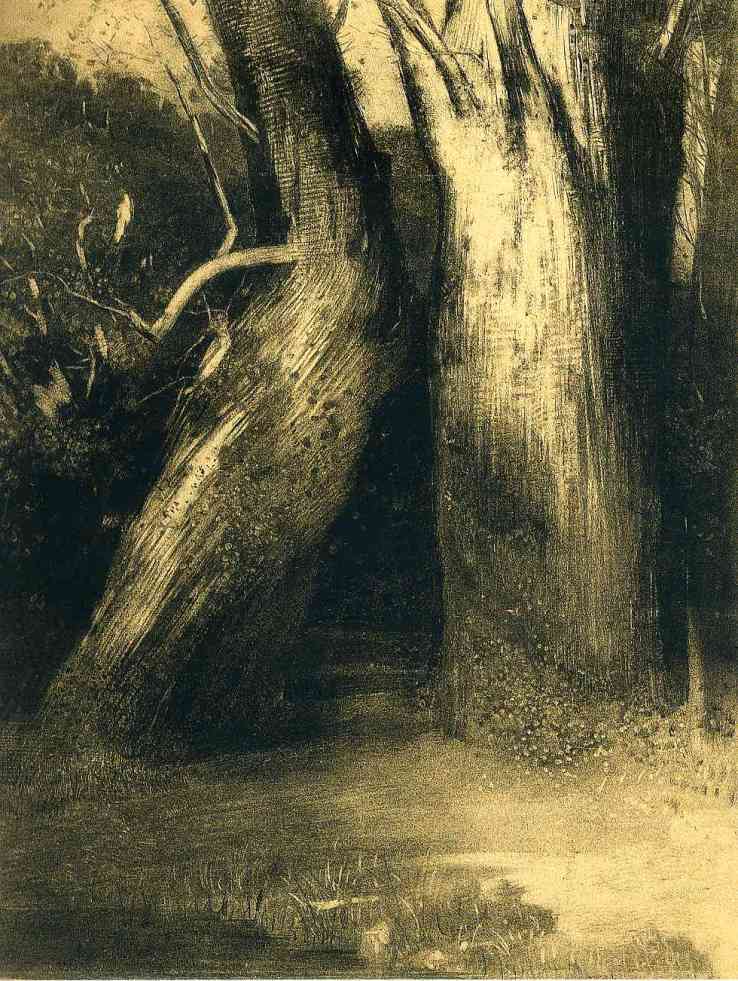
Two Trees — Odilon Redon

two-trees-1875

Two Trees, 1875 by Odilon Redon (1840-1916)

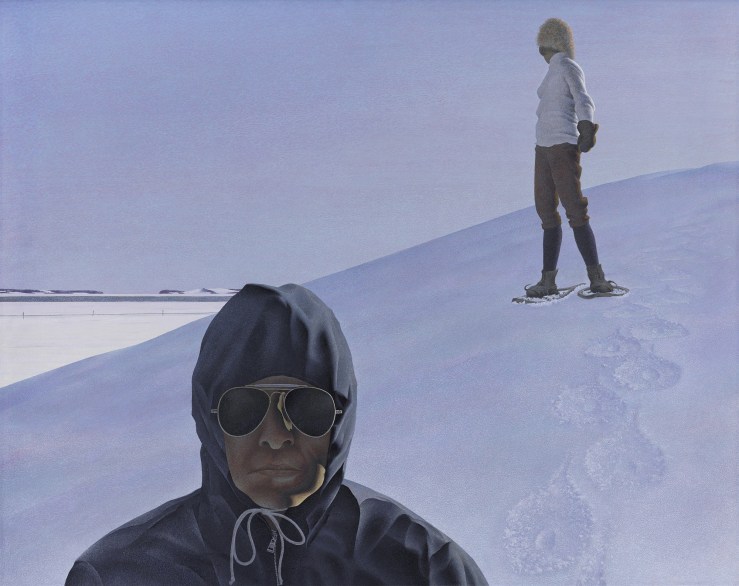
January — Alex Colville

48463lpr_c90651a3b625e58

January, 1971 by Alex Colville (1920-2013)

Happy New Year (And some books I’ll try to read in 2018)

img_8840

Happy 2018.

Around the New Year, I usually dig out some shelved books (or books in tbr stacks) to make a good-intentions reading list for the forthcoming year. Here are those books, from top to bottom in the pic above:

Philip K. Dick and Roger Zelazny’s Deus Irae: I picked up the old Daw paperback a few months ago—a habit I’ve gotten into with any old Dick—and haven’t gotten to it yet. I read a lot of PKD in 2017 though, so that mood may carry over into early 2018. Curious about the co-authorship—we’ll see.

I’ll admit that I bought Hugh Trevor-Roper’s Hermit of Peking for its Arcimboldosque cover, but dipping into it back in October intrigued me.

I tried to read Elizabeth Hardwick’s Sleepless Nights a few years ago and got distracted by something else, but a lot of folks I admire have praised it, so I’ll give it another shot this year.

I read, “Cutting It Short,” the first novella in Bohumil Hrabal’s The Little Town Where Time Stood Still, but saved the titular second novella for later. Later is now, or nowish, or down the linish. 2018ish.

I stumbled getting into DeLillo’s The Names a few times last year, so maybe I’ll stumble again, but maybe not.

Aberrant, the début novel by Czech author Marek Šindelka, showed up at Biblioklept World Headquarters at the end of my spring semester when I was swamped with term papers, so it sort of got shuffled aside, but it looks so wonderfully weird that I’ll need to carve out space for it this year.

Svetlana Lavochkina’s Zap is new from Whiskey Tit. More to come.

Leon Forrest’s Two Wings to Veil My Face was on last year’s good intentions reading list (I went 6 of 13 by the way).

I read a lot of Paul Bowles in 2016 and 2017, but fizzled out—too much at once. But I want to read The Spider’s House this year.

Four novels that I want to read that I don’t actually own and will thus have to go buy:

Wish me luck. Or not. Either way, I hope your 2018 is the good good stuff.

Commodified fantasy takes no risks (Ursula K. LeGuin)

All times are changing times, but ours is one of massive, rapid moral and mental transformation. Archetypes turn into millstones, large simplicities get complicated, chaos becomes elegant, and what everybody knows is true turns out to be what some people used to think.

It’s unsettling. For all our delight in the impermanent, the entrancing flicker of electronics, we also long for the unalterable.

We cherish the old stories for their changelessness. Arthur dreams eternally in Avalon. Bilbo can go “there and back again,” and there is always the beloved familiar Shire. Don Quixote sets out forever to kill a windmill… So people turn to the realms of fantasy for stability, ancient truths, immutable simplicities.

And the mills of capitalism provide them. Supply meets demand. Fantasy becomes a commodity, an industry.

Commodified fantasy takes no risks: it invents nothing, but imitates and trivializes. It proceeds by depriving the old stories of their intellectual and ethical complexity, turning their action to violence, their actors to dolls, and their truth- telling to sentimental platitude. Heroes brandish their swords, lasers, wands, as mechanically as combine harvesters, reaping profits. Profoundly disturbing moral choices are sanitized, made cute, made safe. The passionately conceived ideas of the great story-tellers are copied, stereotyped, reduced to toys, molded in bright-colored plastic, advertised, sold, broken, junked, replaceable, interchangeable.

What the commodifiers of fantasy count on and exploit is the insuperable imagination of the reader, child or adult, which gives even these dead things life—of a sort, for a while.

Imagination like all living things lives now, and it lives with, from, on true change. Like all we do and have, it can be co-opted and degraded; but it survives commercial and didactic exploitation. The land outlasts the empires. The conquerors may leave desert where there was forest and meadow, but the rain will fall, the rivers will run to the sea. The unstable, mutable, untruthful realms of Once-upon-a-time are as much a part of human history and thought as the nations in our kaleidoscopic atlases, and some are more enduring.

We have inhabited both the actual and the imaginary realms for a long time. But we don’t live in either place the way our parents or ancestors did. Enchantment alters with age, and with the age.

We know a dozen different Arthurs now, all of them true. The Shire changed irrevocably even in Bilbos lifetime. Don Quixote went riding out to Argentina and met Jorge Luis Borges there. Plus c’est la meme chose, plus fa change.

From Ursula K. LeGuin’s foreword to her 2001 collection Tales from Earthsea.