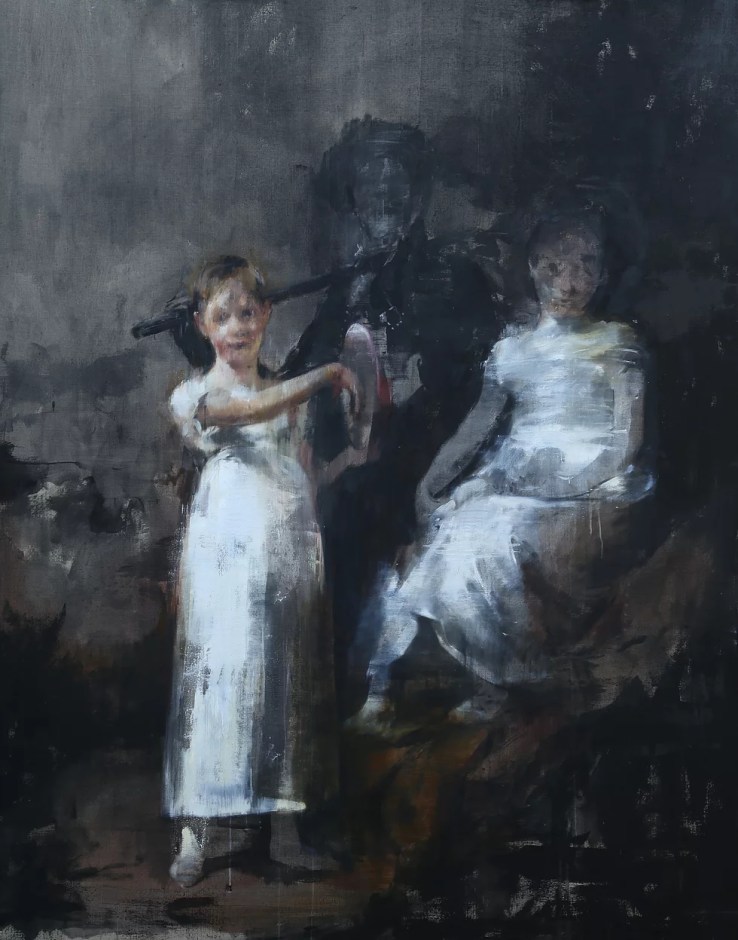
I Wake to Sleep — Dina Brodsky

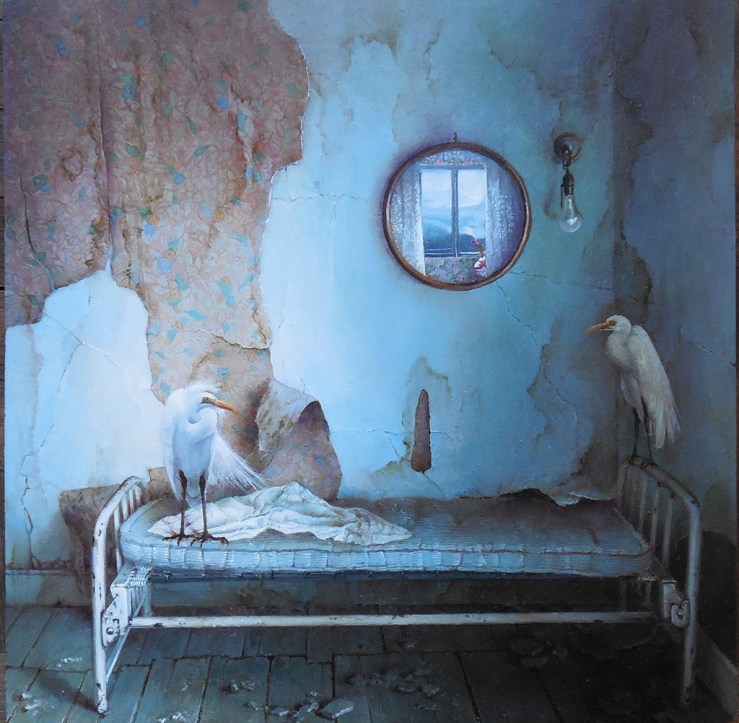
waketosleepwebsite-1024x1002

I Wake to Sleep by Dina Brodsky (b. 1981)

Read “P’s Correspondence,” a short story by Nathaniel Hawthorne

“P’s Correspondence”

by

Nathaniel Hawthorne


MY UNFORTUNATE FRIEND P. has lost the thread of his life, by the interposition of long intervals of partially disordered reason. The past and present are jumbled together in his mind, in a manner often productive of curious results; and which will be better understood after a perusal of the following letter, than from any description that I could give. The poor fellow, without once stirring from the little white-washed, iron-grated room, to which he alludes in his first paragraph, is nevertheless a great traveller, and meets, in his wanderings, a variety of personages who have long ceased to be visible to any eye save his own. In my opinion, all this is not so much a delusion, as a partly wilful and partly involuntary sport of the imagination, to which his disease has imparted such morbid energy that he beholds these spectral scenes and characters with no less distinctness than a play upon the stage, and with somewhat more of illusive credence. Many of his letters are in my possession, some based upon the same vagary as the present one, and others upon hypotheses not a whit short of it in absurdity. The whole form a series of correspondence, which, should fate seasonably remove my poor friend from what is to him a world of moonshine, I promise myself a pious pleasure in editing for the public eye. P. had always a hankering after literary reputation, and has made more than one unsuccessful effort to achieve it. It would not be a little odd, if, after missing his object while seeking it by the light of reason, he should prove to have stumbled upon it in his misty excursions beyond the limits of sanity.

LONDON, February 29, 1845.

MY DEAR FRIEND:

Old associations cling to the mind with astonishing tenacity. Daily custom grows up about us like a stone-wall, and consolidates itself into almost as material an entity as mankind’s strongest architecture. It is sometimes a serious question with me, whether ideas be not really visible and tangible, and endowed with all the other qualities of matter. Sitting as I do, at this moment, in my hired apartment, writing beside the hearth, over which hangs a print of Queen Victoria–listening to the muffled roar of the world’s metropolis, and with a window at but five paces distant, through which, whenever I please, I can gaze out on actual London–with all this positive certainty, as to my whereabouts, what kind of notion, do you think, is just now perplexing my brain? Why–would you believe it?–that, all this time, I am still an inhabitant of that wearisome little chamber,–that whitewashed little chamber–that little chamber with its one small window, across which, from some inscrutable reason of taste or convenience, my landlord had placed a row of iron bars–that same little chamber, in short, whither your kindness has so often brought you to visit me! Will no length of time, or breadth of space, enfranchise me from that unlovely abode? I travel, but it seems to be like the snail, with my house upon my head. Ah, well! I am verging, I suppose, on that period of life when present scenes and events make but feeble impressions, in comparison with those of yore; so that I must reconcile myself to be more and more the prisoner of Memory, who merely lets me hop about a little, with her chain around my leg.

My letters of introduction have been of the utmost service, enabling me to make the acquaintance of several distinguished characters, who, until now, have seemed as remote from the sphere of my personal intercourse as the wits of Queen Anne’s time, or Ben Jonson’s compotators at the Mermaid. One of the first of which I availed myself, was the letter to Lord Byron. I found his lordship looking much older than I had anticipated; although–considering his former irregularities of life, and the various wear and tear of his constitution–not older than a man on the verge of sixty reasonably may look. But I had invested his earthly frame, in my imagination, with the poet’s spiritual immortality. He wears a brown wig, very luxuriantly curled, and extending down over his forehead. The expression of his eyes is concealed by spectacles. His early tendency to obesity having increased, Lord Byron is now enormously fat; so fat as to give the impression of a person quite overladen with his own flesh, and without sufficient vigor to diffuse his personal life through the great mass of corporeal substance, which weighs upon him so cruelly. You gaze at the mortal heap; and, while it fills your eye with what purports to be Byron, you murmur within yourself–“For Heaven’s sake, where is he?” Were I disposed to be caustic, I might consider this mass of earthly matter as the symbol, in a material shape, of those evil habits and carnal vices which unspiritualize man’s nature, and clog up his avenues of communication with the better life. But this would be too harsh; and besides, Lord Byron’s morals have been improving, while his outward man has swollen to such unconscionable circumference. Would that he were leaner; for, though he did me the honor to present his hand, yet it was so puffed out with alien substance, that I could not feel as if I had touched the hand that wrote Childe Harold.

On my entrance, his lordship apologized for not rising to receive me, on the sufficient plea that the gout, for several years past, had taken up its constant residence in his right foot; which, accordingly, was swathed in many rolls of flannel, and deposited upon a cushion. The other foot was hidden in the drapery of his chair. Do you recollect whether Byron’s right or left foot was the deformed one? Continue reading “Read “P’s Correspondence,” a short story by Nathaniel Hawthorne”

Missionaries — Bridget Tichenor

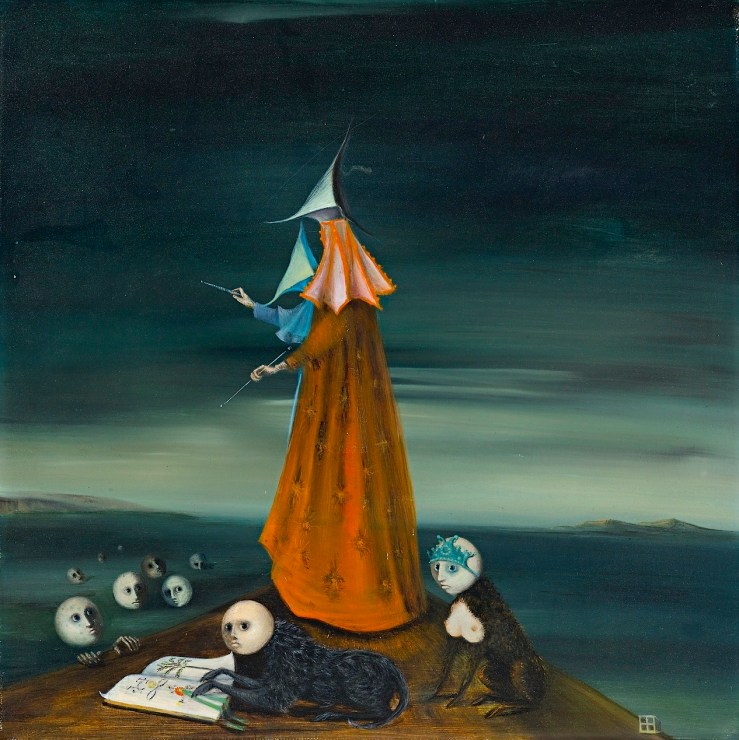
tumblr_ndisy4tmz21rtynt1o7_r2_1280

Missionaries, 1965 by Bridget Tichenor (1917-1990)

Appel-Calder — Eduardo Paolozzi  

Appel-Calder 1975 by Sir Eduardo Paolozzi 1924-2005

Appel-Calder, 1975 by Eduardo Paolozzi (1924–2005)

Lady in Yellow Dress — Max Kurzweil

lady-in-yellow-1899

Lady in Yellow Dress, 1899 by Max Kurzweil (1867-1916)

The Box — Pierre-Auguste Renoir

the-box-1874hd

The Box, 1874 by Pierre-Auguste Renoir (1841-1919)

In the Box — Mary Cassatt

in-the-box

In the Box, 1879 by Mary Cassatt (1844-1926)

In the Box — Paul Klee

a77b27c0e3114595febfc2ea77d1ffd3-paul-klee-the-box

In the Box, 1908 by Paul Klee (1879-1940)

Don Quixote — Amadeo de Souza-Cardoso

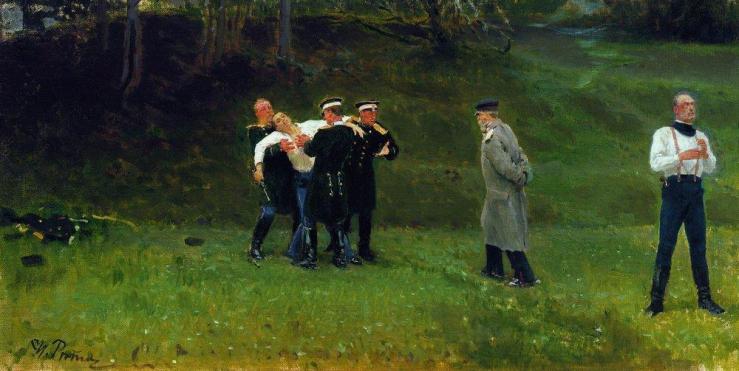
amadeo_de_souza-cardoso_-_dom_quixote

Don Quixote, 1914 by Amadeo de Souza-Cardoso (1887-1918)

Read Edgar Allan Poe’s “The Man of the Crowd”

SH925
Fritz Eichenberg’s illustration for Edgar Allan Poe’s “The Man of the Crowd”


“The Man of the Crowd”

by

Edgar Allan Poe


     Ce grand malheur, de ne pouvoir être seul.

              La Bruyère.

IT was well said of a certain German book that “er lasst sich nicht lesen“—it does not permit itself to be read. There are some secrets which do not permit themselves to be told. Men die nightly in their beds, wringing the hands of ghostly confessors and looking them piteously in the eyes—die with despair of heart and convulsion of throat, on account of the hideousness of mysteries which will not suffer themselves to be revealed. Now and then, alas, the conscience of man takes up a burthen so heavy in horror that it can be thrown down only into the grave. And thus the essence of all crime is undivulged.

Not long ago, about the closing in of an evening in autumn, I sat at the large bow window of the D——- Coffee-House in London. For some months I had been ill in health, but was now convalescent, and, with returning strength, found myself in one of those happy moods which are so precisely the converse of ennui—moods of the keenest appetency, when the film from the mental vision departs—the [Greek phrase]—and the intellect, electrified, surpasses as greatly its every-day condition, as does the vivid yet candid reason of Leibnitz, the mad and flimsy rhetoric of Gorgias. Merely to breathe was enjoyment; and I derived positive pleasure even from many of the legitimate sources of pain. I felt a calm but inquisitive interest in every thing. With a cigar in my mouth and a newspaper in my lap, I had been amusing myself for the greater part of the afternoon, now in poring over advertisements, now in observing the promiscuous company in the room, and now in peering through the smoky panes into the street.

This latter is one of the principal thoroughfares of the city, and had been very much crowded during the whole day. But, as the darkness came on, the throng momently increased; and, by the time the lamps were well lighted, two dense and continuous tides of population were rushing past the door. At this particular period of the evening I had never before been in a similar situation, and the tumultuous sea of human heads filled me, therefore, with a delicious novelty of emotion. I gave up, at length, all care of things within the hotel, and became absorbed in contemplation of the scene without. Continue reading “Read Edgar Allan Poe’s “The Man of the Crowd””

Reading, Whale Point — Stephen Scott Young

6k8c5239

Reading, Whale Point, 2000 by Stephen Scott Young (b. 1957)

Domina I / Domina III — Natalie Frank

domina_i

domina_iii

Domina I and Domina III, 2017 by Natalie Frank (b. 1980)

The Madonna and Child — William Dyce

1virgin

The Madonna and Child, 1845 by William Dyce (1806–1864)

We live in Philip K. Dick’s future, not George Orwell’s or Aldous Huxley’s

philip-k-dick-robert-crumb-portrait-weirdo

“Philip K. Dick and the Fake Humans” is a compelling essay by Henry Farrell published today in The Boston Review. From the essay:

This is not the dystopia we were promised. We are not learning to love Big Brother, who lives, if he lives at all, on a cluster of server farms, cooled by environmentally friendly technologies. Nor have we been lulled by Soma and subliminal brain programming into a hazy acquiescence to pervasive social hierarchies…

….Standard utopias and standard dystopias are each perfect after their own particular fashion. We live somewhere queasier—a world in which technology is developing in ways that make it increasingly hard to distinguish human beings from artificial things. The world that the Internet and social media have created is less a system than an ecology, a proliferation of unexpected niches, and entities created and adapted to exploit them in deceptive ways. Vast commercial architectures are being colonized by quasi-autonomous parasites. Scammers have built algorithms to write fake books from scratch to sell on Amazon, compiling and modifying text from other books and online sources such as Wikipedia, to fool buyers or to take advantage of loopholes in Amazon’s compensation structure. Much of the world’s financial system is made out of bots—automated systems designed to continually probe markets for fleeting arbitrage opportunities. Less sophisticated programs plague online commerce systems such as eBay and Amazon, occasionally with extraordinary consequences, as when two warring bots bid the price of a biology book up to $23,698,655.93 (plus $3.99 shipping).

In other words, we live in Philip K. Dick’s future, not George Orwell’s or Aldous Huxley’s

A Lane Near Arles — Vincent van Gogh

a-lane-near-arles-18881

A Lane Near Arles, 1888 by Vincent van Gogh (1843-1890)

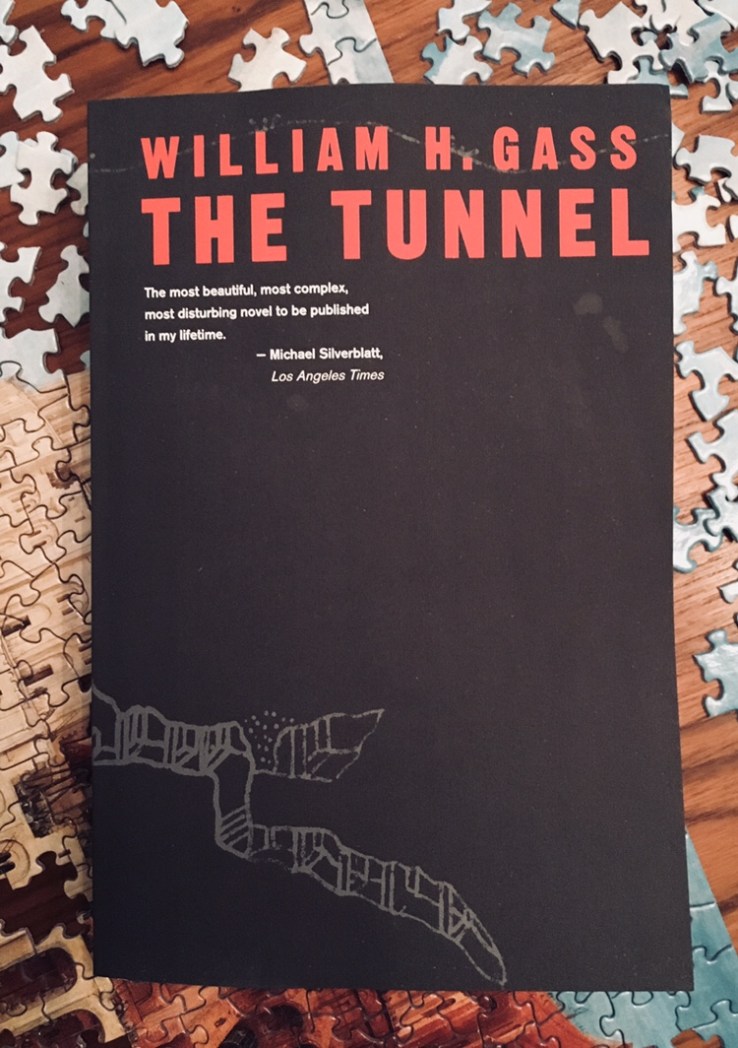
Big fat War and Peace (Book acquired, 12 Jan. 2018)

dtx7fmrumaauwj2

Huge thankyous to BLCKDGRD for sending me a spare copy of some obscure Russian novel called War and Peace. Now I have to read the damn thing. (The only Tolstoy I’ve really read is Hadji Murad).

Society I — Normunds Brasliņš

5050348d2eb3b0979c9f3578bcd9ed54abcde

Society I, 1993 by Normunds Brasliņš  (b. 1962)