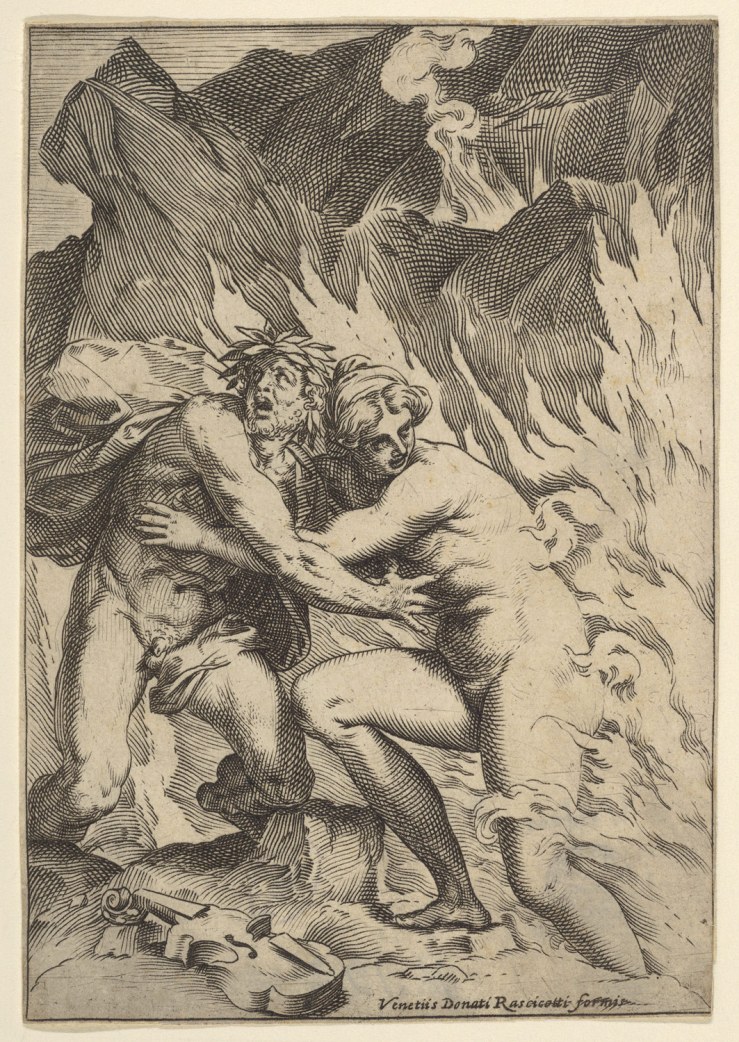
Orpheus and Eurydice — Agostino Carracci

17.37.170

“Between Absence and Forgetting” — A Review of Human Acts

At 3:AM Magazine, I wrote a review about Han Kang’s latest book Human Acts. I wrote about her last book, The Vegetarian, on the blog here.

Below is an excerpt of the new review. Follow the link to the full piece.

Suffering from an unnamed illness, all J. wants is to die—which, as Blanchot describes for us in his essay ‘Literature and the Right to Death’, is her inalienable right—yet the narrator ruins her chances. In the essay, Blanchot takes issue with Sartre’s ‘What is Literature?’ because he offers a definition of literature that only perpetuates the primordial lie of language. The so-called committed work’s language is forced to “designate, demonstrate, order, refuse, interpolate, beg, insult, persuade, insinuate”. Sentences are then specialised and instrumentalised towards a specific end. The grave risk here is articulated a bit differently from Blanchot by Adorno: “The error of the primacy of [commitment] as it is exercised today appears clearly in the privilege accorded to tactics over everything else. The means have become autonomous to the extreme. Serving the ends without reflection, they have alienated themselves from them.”1 Committed literary works lose their object of action because they forget that language first murders, as Hegel might say, its referents in service to mere presence—mere sake of behaving politically. “When even genocide becomes cultural property in committed literature,” Adorno writes elsewhere, “it becomes easier to continue complying with the culture that [gives] rise to the murder.”2 In affect alone, atrocious experiences are straitjacketed into fixed meanings. These kinds of works imagine themselves as counteractive agents to the strategies of violence and domination that governments still practice today, literally murderous and not, and continually risk complicity with the very regimes of brutality themselves. Both Adorno’s and Blanchot’s responses to this literary affectation result in high-modernist works that, through a resistance to exaggerated forms of politicking, appear in reality as apolitical but offer a more political resistance by not participating in the “rigid coordinate system” of authoritarian systems. For both of these thinkers, it is not an author’s or text’s political orientation that is at most risk, but the problem of representation itself.

While Human Acts does not resist denotative meaning like Beckett’s The Unnameable, it sympathises with the question that Blanchot raises in his essay. When J. opens her eyes and seethes at the narrator, it is because he made her open her eyes and refused her right to death. This opens onto a question of place and action: Does the very act of writing itself violate this right to death, or does it constellate a map of the ways in which language attempts to fill the void it instantiates in the first place?

Is this an art form or are you just a technician? | Martin Hannett and Tony Wilson at Strawberry Studios in July 1980

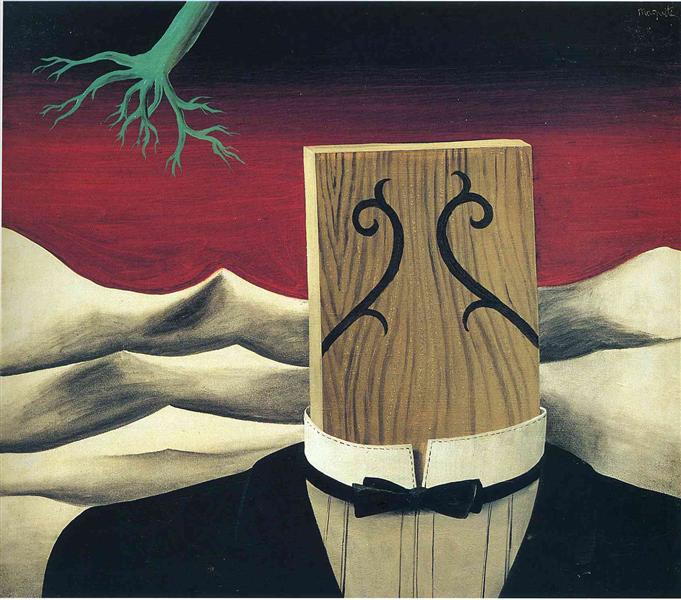
The Conqueror — Rene Magritte

the-conqueror-19261large

Books acquired, 5.23.2016

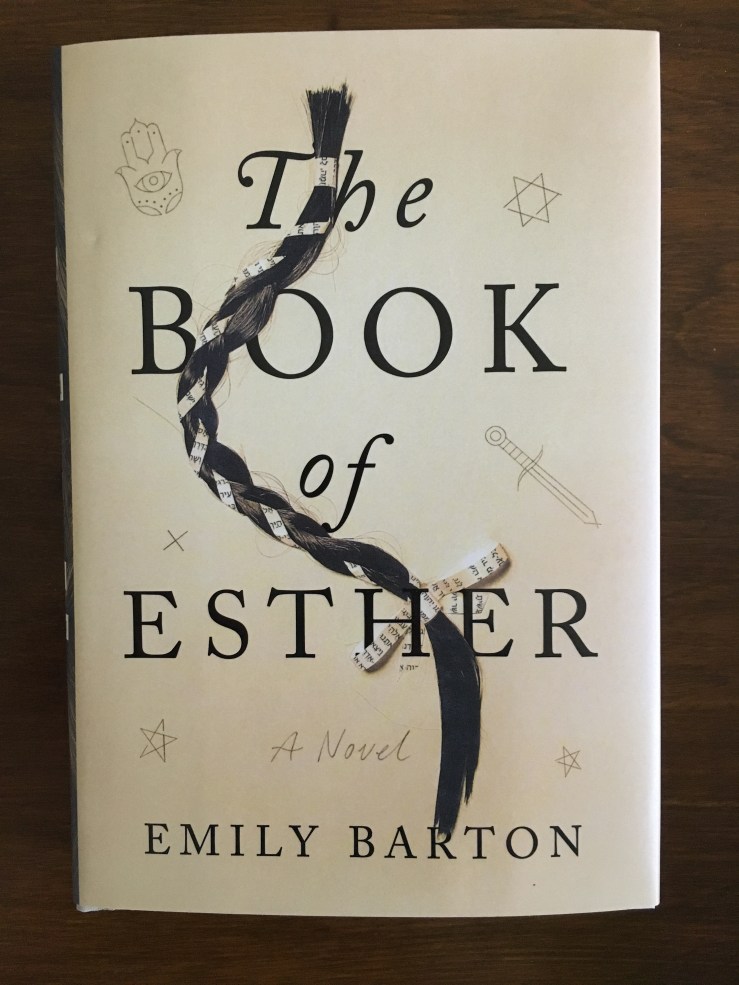
Emily Barton’s The Book of Esther is new from Crown (Penguin-Random House). Their blurb:

Eastern Europe, August 1942. The Khazar kaganate, an isolated nation of Turkic warrior Jews, lies between the Pontus Euxinus (the Black Sea) and the Khazar Sea (the Caspian). It also happens to lie between a belligerent nation to the west that the Khazars call Germania—and a city the rest of the world calls Stalingrad.

After witnessing the first foray of Germani warplanes into sovereign Khazar territory, Esther bat Josephus, daughter of Khazaria’s chief policy adviser, knows she must fight for her country. Germania is gaining ground and if they are successful, the Khazar kaganate will be wiped out. Only Esther sees the ominous implications of Germania’s disregard for Jewish lives.  But as a woman she is prohibited from joining the war effort. Her one chance is to set out on her mechanical horse, Seleme, accompanied by Itakh, her adopted brother, to seek a fabled village of kabbalists. They may hold the key to her destiny: their rumored ability to change her into a man so that she may convince her entire nation to join in the fight for its very existence against an enemy like none Khazaria has faced before.

THE BOOK OF ESTHER is a genre-bending novel by a writer who invents worlds “out of Calvino or Borges” (The New Yorker).  Reminiscent of Michael Chabon’s The Yiddish Policemen’s Union and Philip Roth’s The Plot Against America, readers will delight in this tour de force novel which blends rich steampunk fantasy, powerful feminism, and Jewish mysticism into a singular piece of fiction.

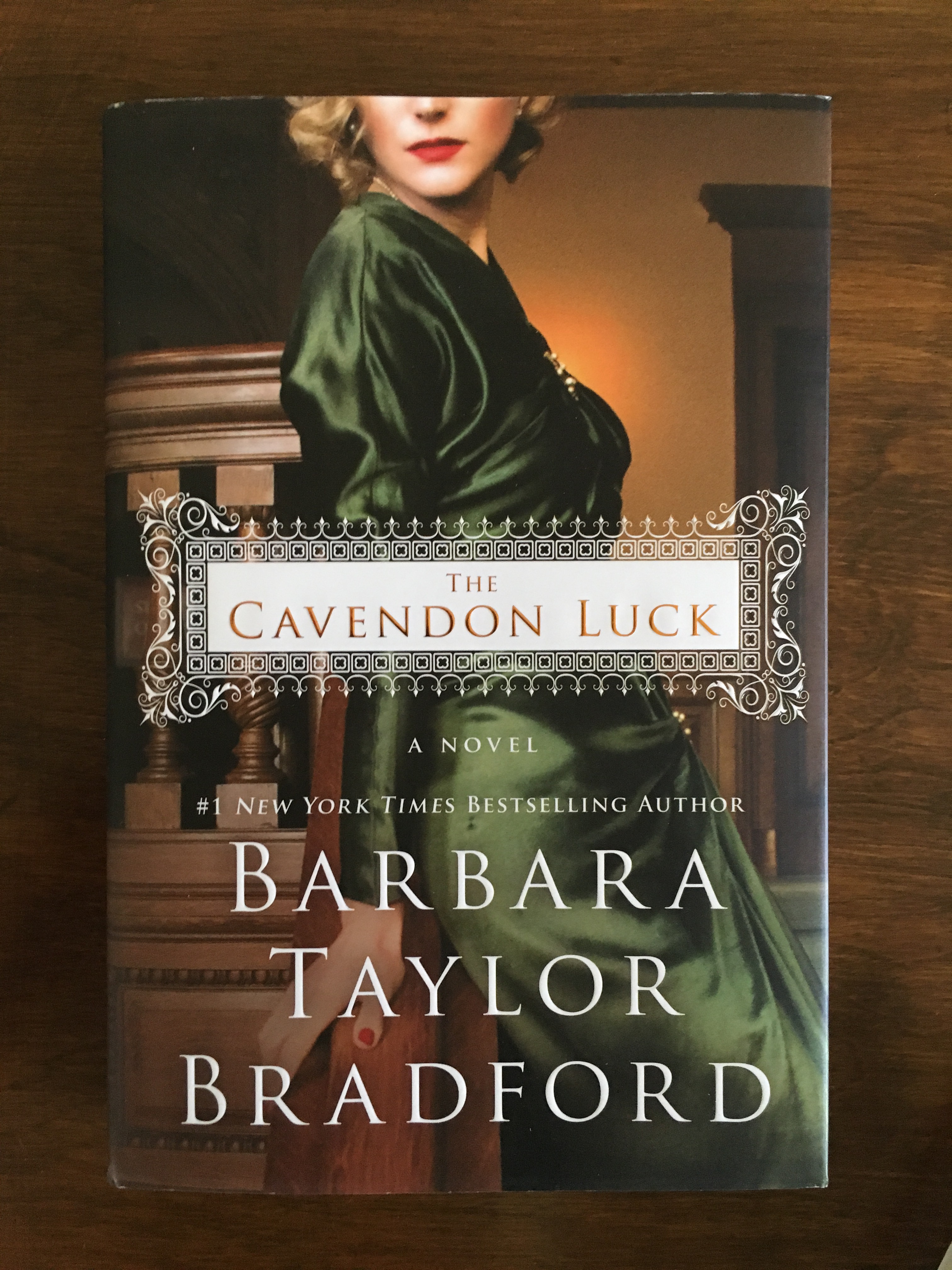
Barbara Taylor Bradford’s novel The Cavendon Luck is new from St. Martin’s. Their blurb:

It is 1938 in England, and Miles and Cecily Ingham have lead the family in bringing the Cavendon estate back from the brink of disaster. But now, with the arrival of World War II, Cavendon Hall will face its biggest challenge yet. It is a challenge that will push the Inghams and Swanns to protect each other and the villagers, and reveal their true capacity for survival and rebirth.

Told with Bradford’s deft, evocative prose and featuring a beloved cast of characters, The Cavendon Luck is a story of intrigue, romance, sorrow, and joy that readers won’t soon forget.

The Lonely Life — Jack Pierson

hb_2000-379

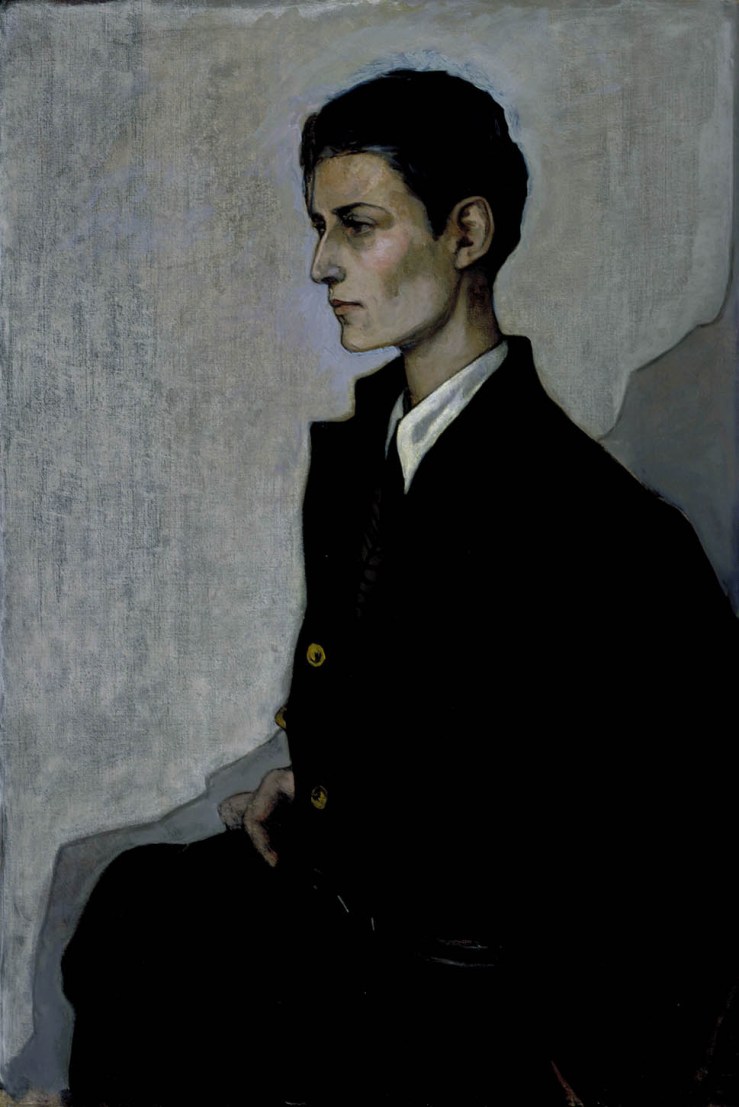
Peter (A Young English Girl) — Romaine Brooks

1970-70_1a

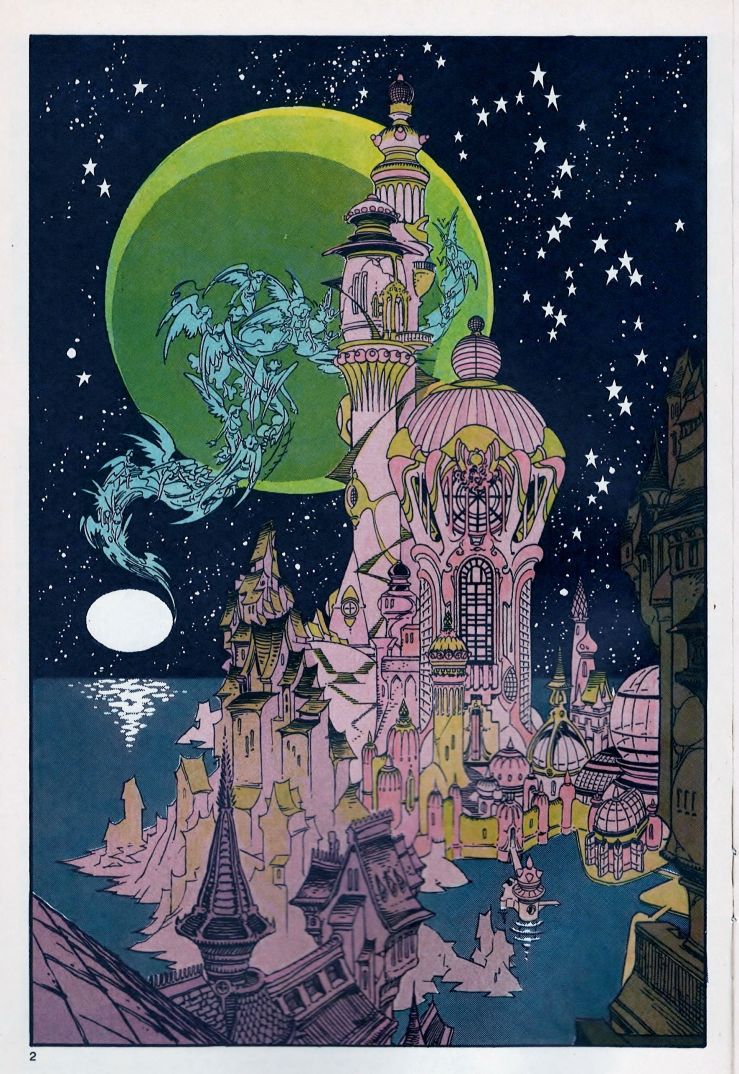
The City of Sleep — P. Craig Russell

p-craig-russell-la-sonnambula-002

From P. Craig Russell’s “La Sonnambula and the City of Sleep: A Fragment of a Dream.” Published in Night Music #2 (Eclipse Comics). Via Comics A-Go-Go!, where you can find full scans of the story.


Self-Portrait — Maurice Sendak

img_2619

Watercolor illustration for the cover of the Hartford Courant’s Sunday Magazine edition, Dec. 19, 1993.

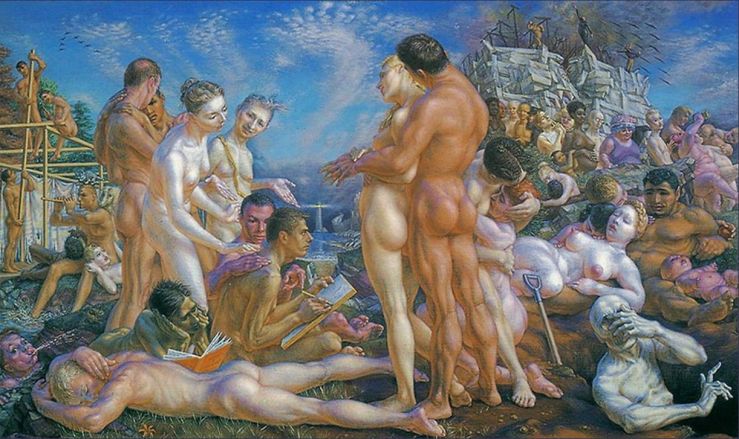
What I Believe — Paul Cadmus

PaulCadmus17_What I Believe_1947

Three Books

img_2612

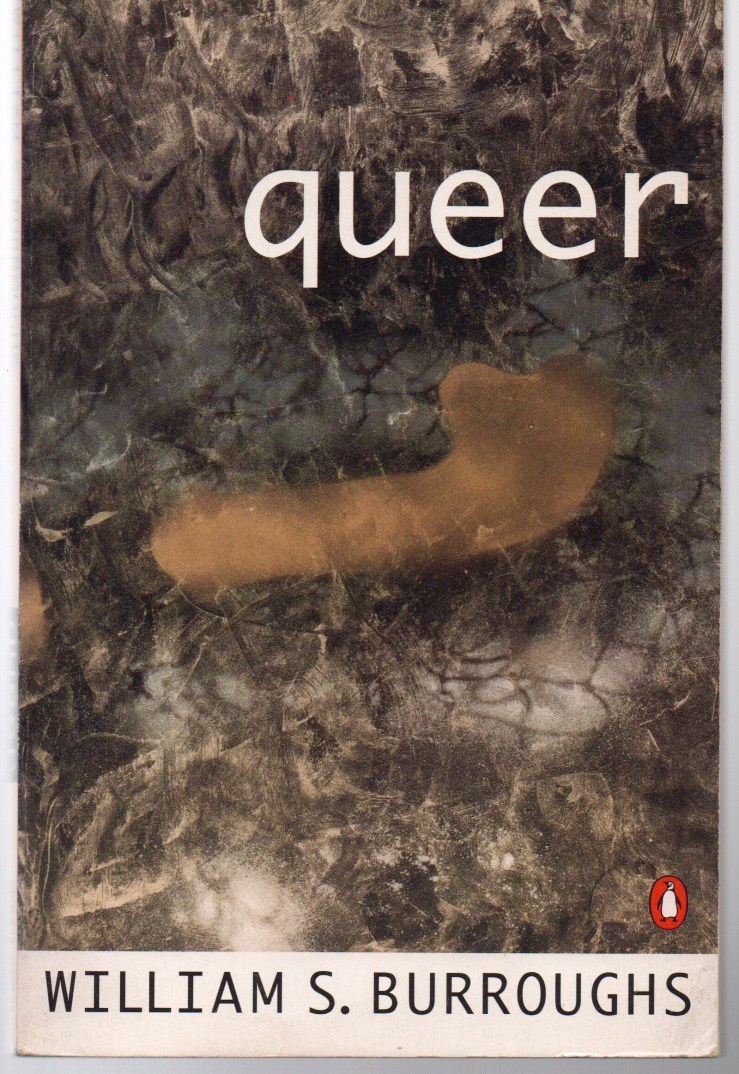
Queer by William S. Burroughs. Trade paperback by Penguin; copyrighted 1987 but no year of the actual printing, which I’m sure is sometime in the mid-nineties. Cover design by Daniel Rembert from a painting by Burroughs.

I bought Queer and Junkie at the Barnes & Noble where I spent too many Friday nights of my high school years. I was sophomore in high school, I think. My parents were concerned about the books, I recall, but in a vague, troubled way—a wrinkling of the temples, a look that I now know means, What does this mean? What are we supposed to do here? They asked me what the books were about and then told me not to do heroin.

img_2613

O Pioneers! by Willa Cather. Hardback and cloth by Houghtin Mifflin, 31st printing, 1961. No designer is credited; the book may have had a dust jacket at one point.

The dark marks are from a librarian’s tape job. She gave me this book, and dozens others, which were being remaindered. I reread the novel a few years ago, noting some of its themes, “including the divide between the New World and the Old, alienation, and the ways in which conformity and routine are antithetical to the pioneer spirit that Americans like to trick themselves into believing they are heir to.”

img_2615

My Sister’s Hand in Mine by Jane Bowles. Trade paperback by the Ecco Press, 7th printing, 1988. Cover design by Anna Demchick.

This collection includes the novel Two Serious Ladies, one of the best and strangest books I’ve read in years. I wrote about it last year on this blog, concluding:

The reading experience cannot be easily distilled. (Strike that adverb). Two Serious Ladies resists unfolding in the way we expect our narratives to unfold—to be about something—Bowles withholds exposition, clarification, and motivation—well, okay, not withholds, but rather hides, or obscures, or enshadows. (I don’t have the verbs for this book). I think of Harold Bloom’s rubric for canonical literature here. In The Western Canon, he  argues that strong literature exemplifies a “strangeness, a mode of originality that either cannot be assimilated, or that so assimilates us that we cease to see it as strange.” Nearly three-quarters of a century after its publication, Two Serious Ladies is still strange, still strong, still ahead of its time. Its vignettes flow (or jerk or shift or pitch wildly or dip or soar or sneak) into each other with a wonderfully dark comic force that simultaneously alienates and invites the reader, who, bewildered by its transpositions, is compelled to follow into strange new territory. Very highly recommended.

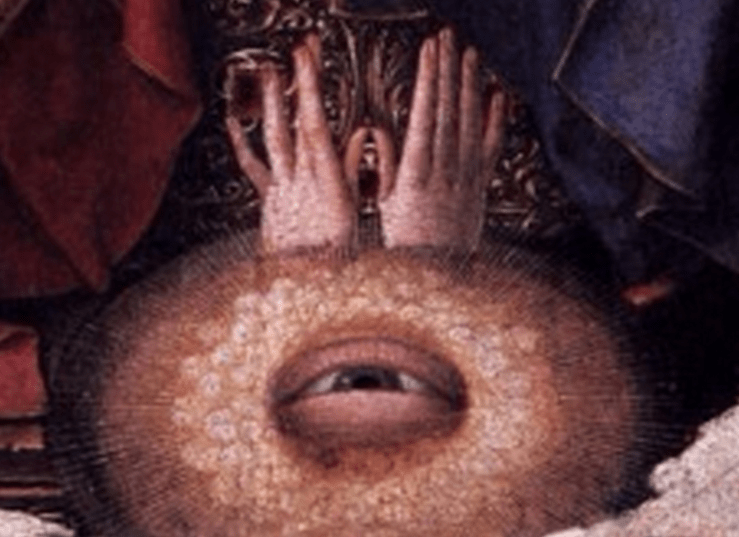
Allegory of Christianity (detail) — Jan Provoost

Screenshot 2016-06-06 at 7.13.01 PM.png

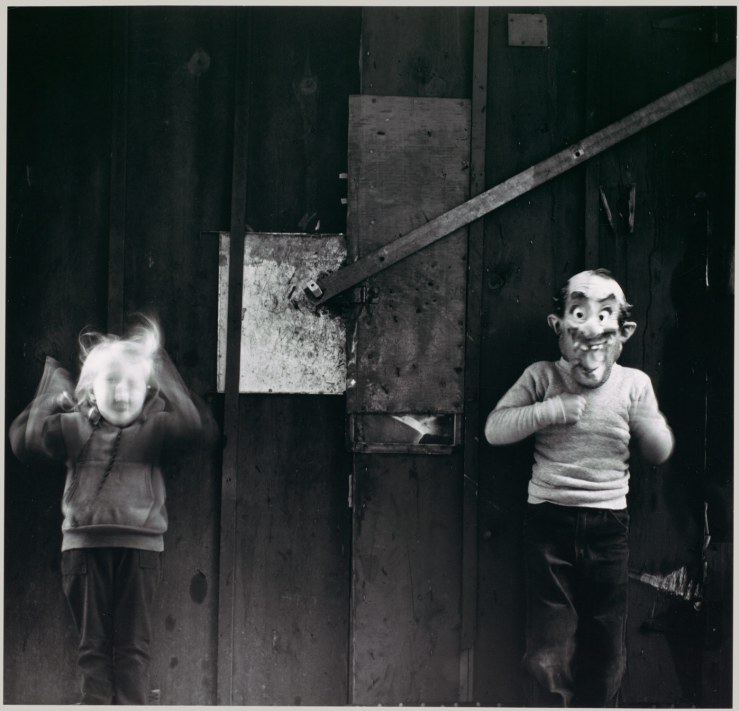
Occasion for Diriment — Ralph Eugene Meatyard

67.543.29

The Judgment of Paris (detail) — Joachim Wtewael

Screenshot 2016-06-10 at 12.47.03 PM

Georgia O’Keeffe — Michael A. Vaccaro

hb_61-565-36