Two Passengers — Hugo Simberg

two-passengers-1901

Three Books (that are good starting points for reading Thomas Pynchon)

Today is Pynchon in Public Day, so today’s Three Books blog offers three books that I think may make good entry points for those interested in, but perhaps unnecessarily daunted by, Thomas Pynchon. My intuition is that many readers’ first experiences reading Pynchon may have been like mine: I read The Crying of Lot 49 as a college assignment, found it bewildering and baffling, and despite understanding almost none of it, I then attempted Gravity’s Rainbow (the key word is attempted (failed will also do in a pinch)).

Many readers start with The Crying of Lot 49 because it’s short. While I like the novel (I wrote about it here), it’s also extraordinarily dense, a box so crammed with jokes and japes that some fail to spring out at full force. Lot 49 is a much better reading experience after you’ve read more of Pynchon.

Lots of readers new to Pynchon plunge into Gravity’s Rainbow, probably because it’s famous. I love love love Gravity’s Rainbow, but along with Mason & Dixon (which may be my favorite Pynchon novel), I do not think it is a good starting place for Pynchon. Gravity’s Rainbow is a rich, ringing vortex, a seven-hundred-and-something pager that almost necessitates that its reader immediately reread it. Gravity’s Rainbow is a very funny and very tragic book, and I think it is the work of genius that its reputation suggests—but it’s also one of the few books I can think of that get put on lists of Big Difficult Novels that is, actually, Difficult.

So here are my suggestions for starting places for Pynchon.
img_2195

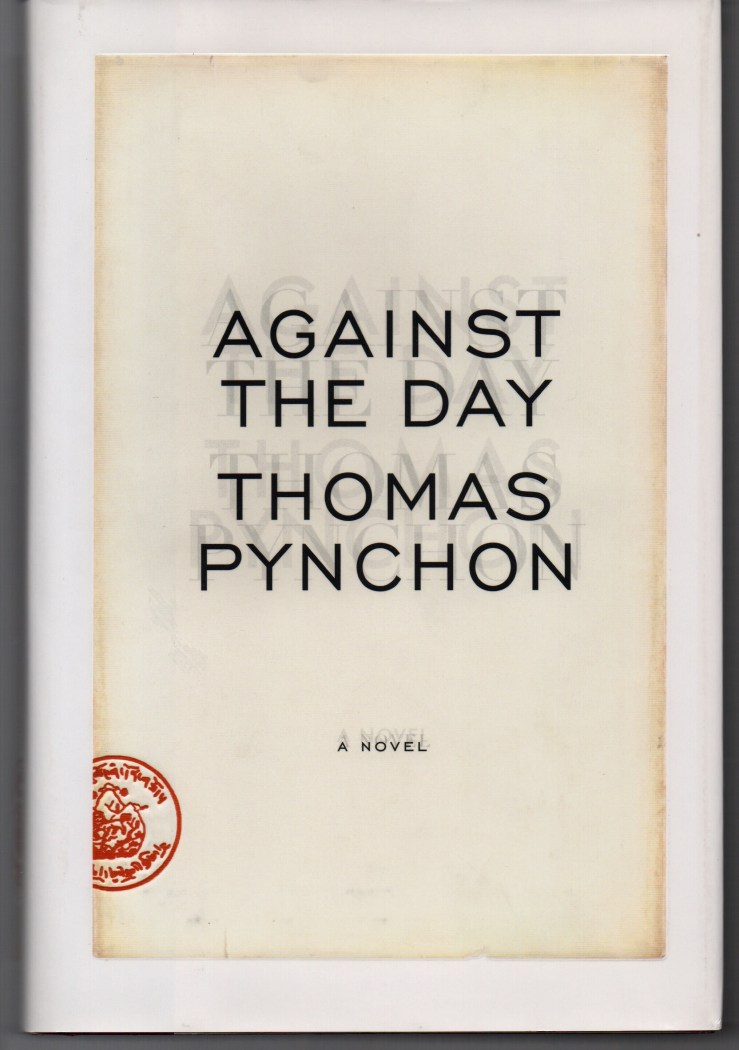
Against the Day by Thomas Pynchon. First edition Penguin hardback, 2006. Jacket design my Michael Ian Kaye.

Okay. So maybe you’re saying, Waitisn’t that one, like, really long? Reader, you’re correct. At 1,085 pages Against the Day is Pynchon’s longest novel to date. But it’s also one of his most accessible, and, most importantly, it offers a condensation of Pynchon’s Big Ideas and Big Themes. (I wrote a list of 101 possible descriptors for Against the Day, if you’re interested in a short take; I also riffed on the book at some length in a series of posts).
img_2194

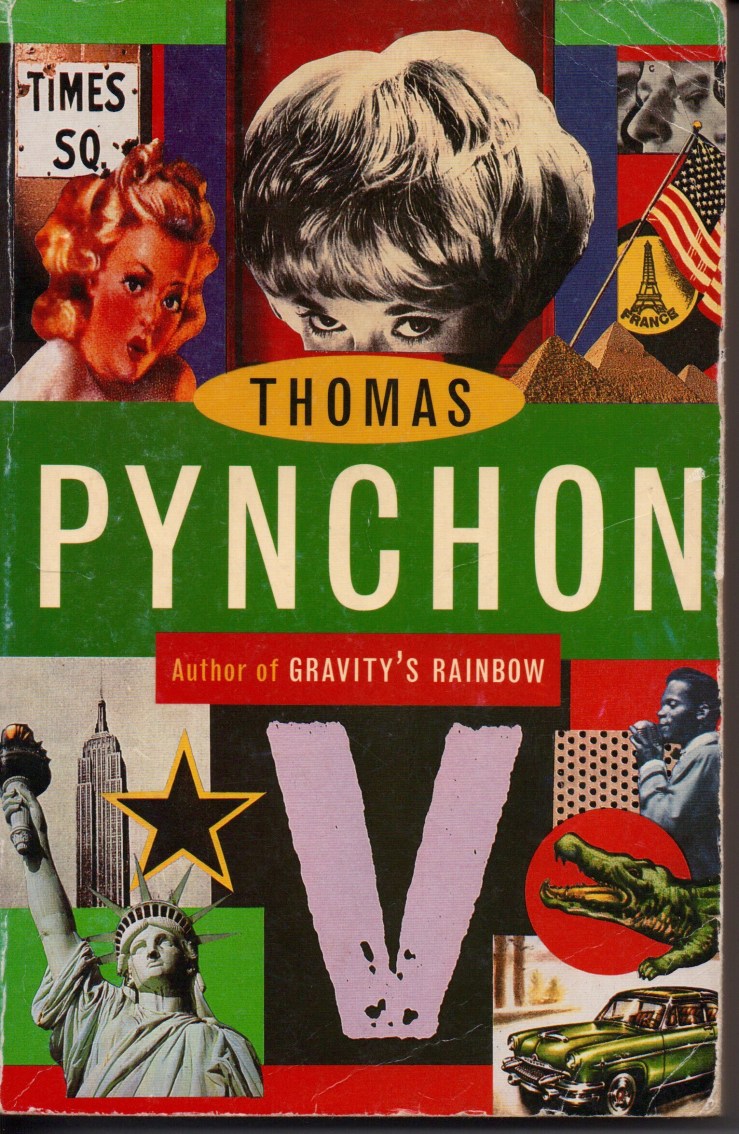
V. by Thomas Pynchon. Vintage UK trade paperback edition (1995). Cover by Paul Burgess.

V. is Thomas Pynchon’s first novel. It’s also the first Pynchon novel I read and loved and (possibly) understood. Like Against the DayV. lays out many of the themes and styles (and even a character or two) that appear elsewhere Pynchon’s oeuvre. In a loose sense, V. feels like a dress rehearsal for Gravity’s Rainbow. Oh, it’s also pretty discursive—in fact, you can read chunks of it almost as short stories. In fact, here’s a good way to break into Pynchon: Get V., and read Ch. 9–it stands on its own as a long short story, the tale of Kurt Mondaugen—and colonialism, siege paranoia, dark dread, etc.

img_2197

Inherent Vice by Thomas Pynchon. First edition hardback, Penguin, 2009. Jacket design by Tal Goretsky and Darren Haggar; image credited to Darshan Zenith and Cruiser Art.

I’ve heard Inherent Vice dismissed as “Pynchon lite,” which may be true—I’ve read the book twice now and if its shaggy threads connect, I can’t see it (unlike, say, Gravity’s Rainbow, which resolves like a complicated math problem). Still, Inherent Vice makes a nice gateway drug to Pynchon—it’s funny and loose, and even though it rambles through an enormous cast of characters and settings, it’s ultimately far, far more contained than sprawling novels like Mason & Dixon and Gravity’s Rainbow. Paul Thomas Anderson’s film adaptation also makes an interesting visual counterpart to the novel—which it somehow simultaneously condenses and expands. Inherent Vice—the novel—also seems to me a kind of bookend or sequel to The Crying of Lot 49. (I wrote a bit about that here).

Last thought: Ignore my suggestions. Pick any novel that interests you by Pynchon and dive in. Don’t get too frustrated if you’re not sure what’s going on. A lot of the time, that’s the point of it all. Enjoy it.

Portrait of the Artist’s Mother

Portrait of the Artist’s Mother — Vincent van Gogh
The Artist’s Mother — Pierre-Auguste Renoir
Portrait of the Artist’s Mother — Camille Pissarro

Continue reading “Portrait of the Artist’s Mother”

The Annunciation (Detail) — Jan van Eyck

anunc13

Beach Read — Karen Hollingsworth

threerockers40x4b

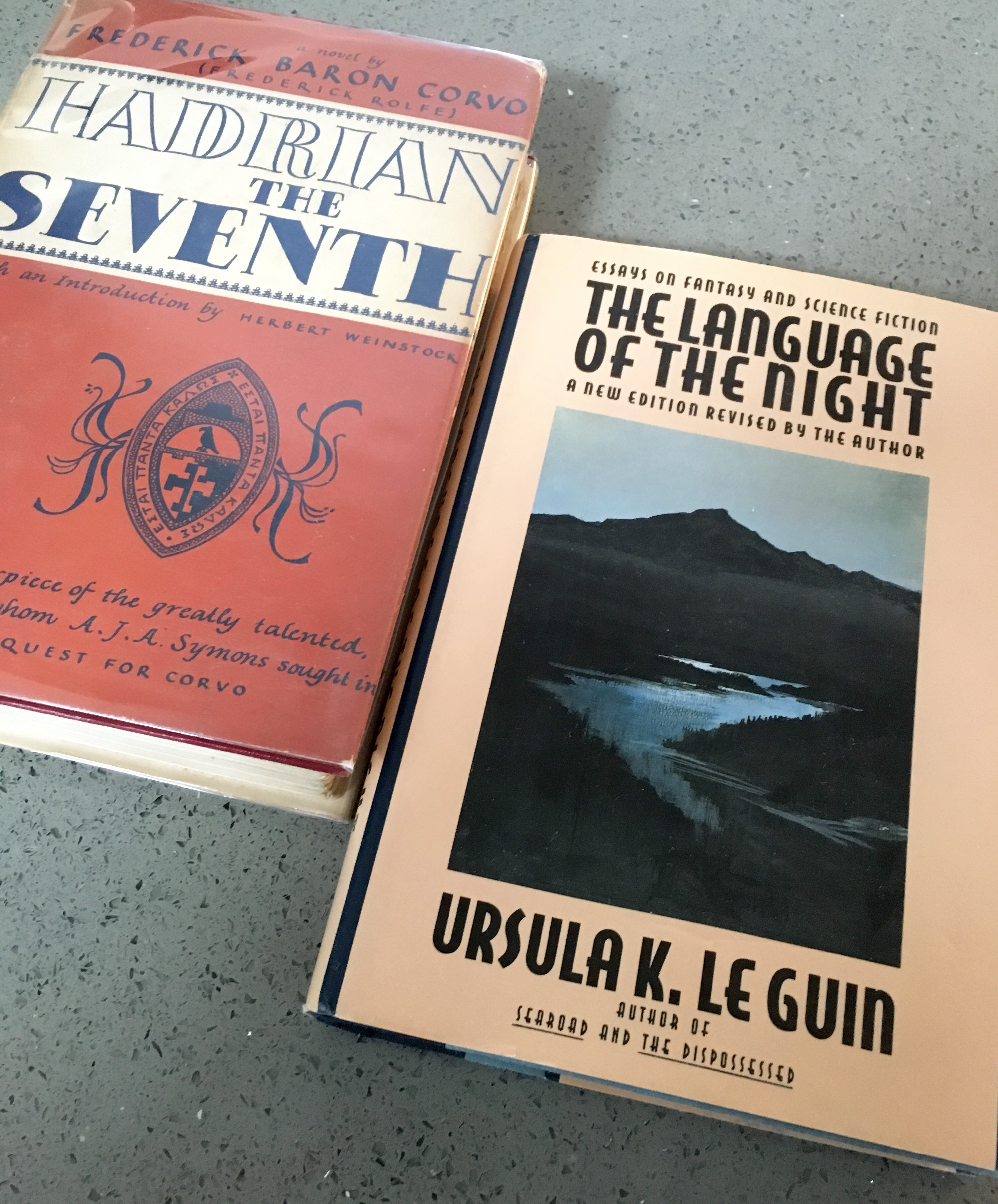
Le Guin/Corvo (Books acquired, 4.27.2016)


Thanks, Jon. 

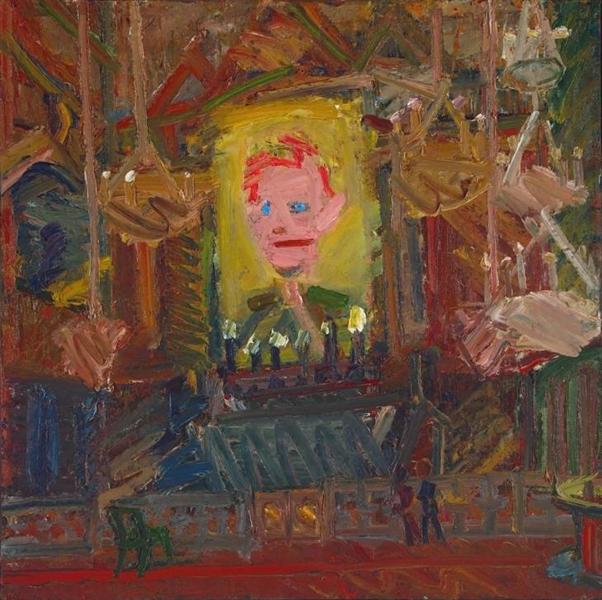
Rimbaud — Frank Auerbach

rimbaud-1976large

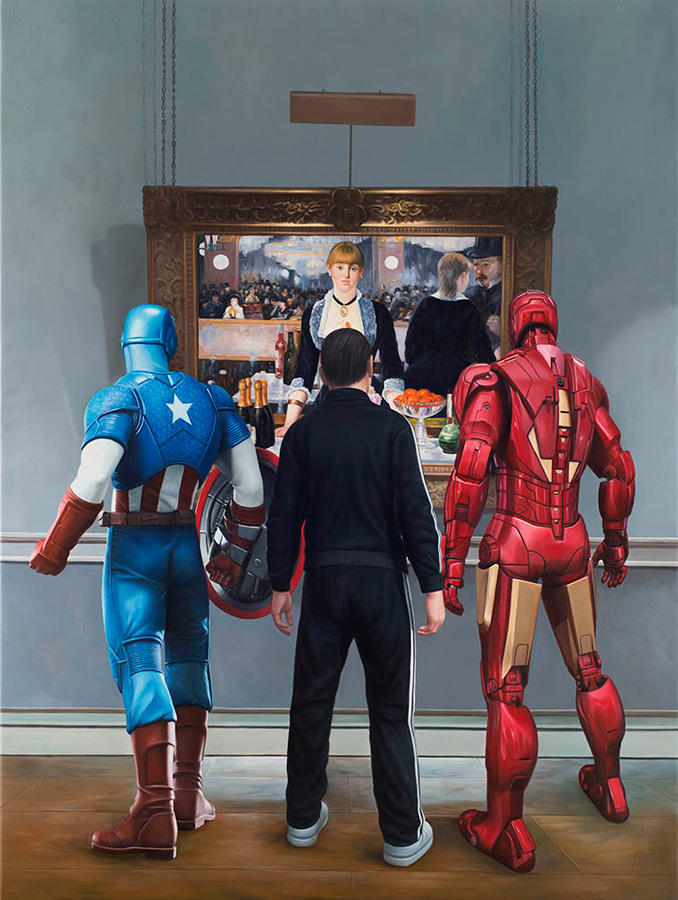
Iron Man, Captain America, and a Russian Mobster Walk into a Bar — Marc Dennis

marc-dennis_ironman-captain-america-and-a-russian-mobster-walk-into-a-bar_2015_oil-on-linen_80x60inches

The Annunciation (Detail) — Jan van Eyck

anucn12

It’s been 7 hours and 13 days

Illustration for Oscar Wilde’s “The Remarkable Rocket” — James Hill

the remarkable rocket

James Hill’s illustration for “The Remarkable Rocket” by Oscar Wilde. From The Short Stories of Oscar Wilde, Heritage Press, 1968.


“The Remarkable Rocket”

by

Oscar Wilde


The King’s son was going to be married, so there were general rejoicings. He had waited a whole year for his bride, and at last she had arrived. She was a Russian Princess, and had driven all the way from Finland in a sledge drawn by six reindeer. The sledge was shaped like a great golden swan, and between the swan’s wings lay the little Princess herself. Her long ermine cloak reached right down to her feet, on her head was a tiny cap of silver tissue, and she was as pale as the Snow Palace in which she had always lived. So pale was she that as she drove through the streets all the people wondered. ‘She is like a white rose!’ they cried, and they threw down flowers on her from the balconies.

At the gate of the Castle the Prince was waiting to receive her. He had dreamy violet eyes, and his hair was like fine gold. When he saw her he sank upon one knee, and kissed her hand.

‘Your picture was beautiful,’ he murmured, ‘but you are more beautiful than your picture;’ and the little Princess blushed.

‘She was like a white rose before,’ said a young Page to his neighbour, ‘but she is like a red rose now;’ and the whole Court was delighted.

For the next three days everybody went about saying, ‘White rose, Red rose, Red rose, White rose;’ and the King gave orders that the Page’s salary was to be doubled. As he received no salary at all this was not of much use to him, but it was considered a great honour, and was duly published in the Court Gazette.

When the three days were over the marriage was celebrated. It was a magnificent ceremony, and the bride and bridegroom walked hand in hand under a canopy of purple velvet embroidered with little pearls. Then there was a State Banquet, which lasted for five hours. The Prince and Princess sat at the top of the Great Hall and drank out of a cup of clear crystal. Only true lovers could drink out of this cup, for if false lips touched it, it grew grey and dull and cloudy.


Continue reading “Illustration for Oscar Wilde’s “The Remarkable Rocket” — James Hill”

The Annunciation (Detail) — Jan van Eyck

anunc11

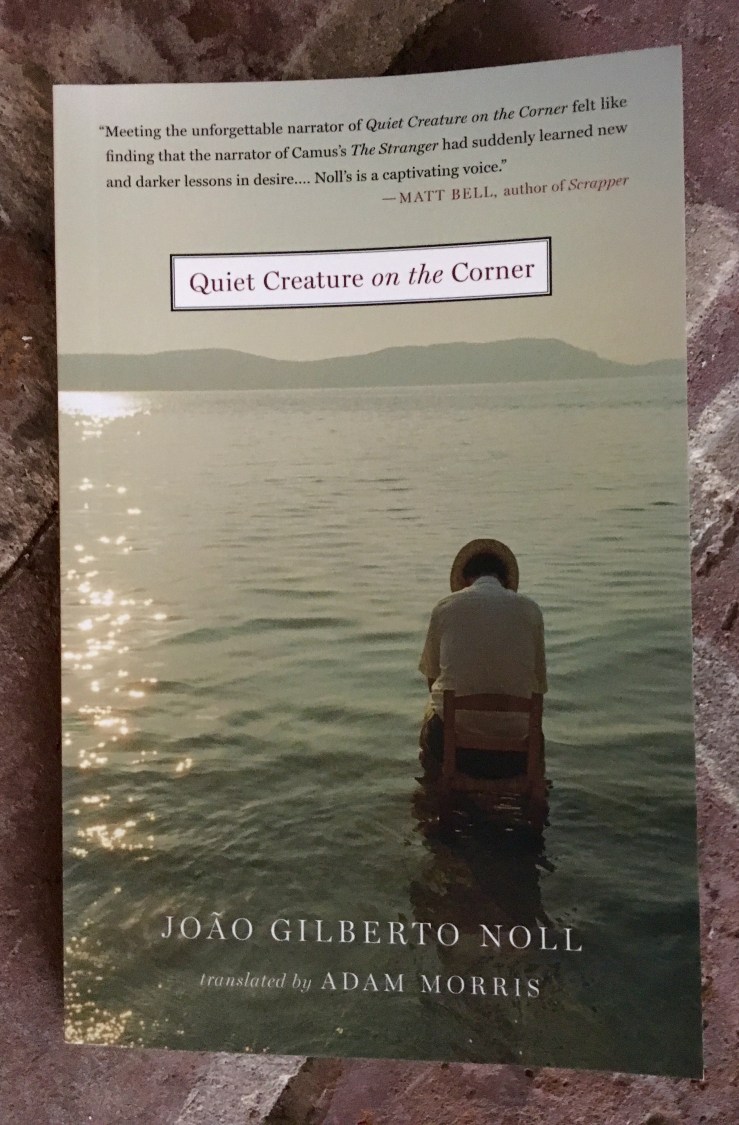
A quick riff on the first 30 pages of Quiet Creature on the Corner, João Gilberto Noll’s nightmare novella (Book acquired, 5.03.2016)

img_2169

In today’s mail I found a small package from Two Lines Press containing João Gilberto Noll’s 1991 novella Quiet Creature on the Corner, freshly translated into English from Portuguese by Adam Morris.

I started into the Noll. Each sentence made me want to read the next sentence. What is it about? you ask, perhaps. Well. I’m not sure. Let’s say the style, the tone, the mood are what matters here: Dark, nightmarish, abject, kinetic, surreal. There’s a picaresque bent to Quiet Creature: one damn thing happening after another. Dare I drop the K wordKafkaesque? Sure. (The opening pages remind me much of the opening sections of Alasdair Gray’s Lanark, for some reason—the dark dream logic). Okay, but what is it about? Gosh. Wait, there’s a blurb on the back of the book:

Quiet Creature on the Corner throws us into a strange world without rational cause and effect, where everyone always seems to lack just a few necessary facts. The narrator is an unemployed poet who is thrown in jail after inexplicably raping his neighbor. but then he’s abruptly taken to a countryside manor where all that’s required of him is to write poetry. What do his captors really want from him?

I’ve just gotten to the countryside manor part myself, so I can’t say. I know that in the 30 pages before that all kinds of weird dark disjointed shit happens. For example, on the third page, in the novella’s sixth paragraph, our poet narrator, leaving the public library, observes that “soot was falling, and nobody could really say where it came from—in certain places so thick that you couldn’t see the other side of the street.” This is like maybe an early little metaphor of the image-logic of Quiet Creature on the Corner (I love the crunch of the title). At the end of the paragraph, the narrator goes to a pornographic film which he describes to us.

Or another example—and here is where the book zapped me. Our narrator is taken from jail to a clinic, where he is given a nice clean bed and decides to sleep, finally:

I dreamed I was writing a poem in which two horses were whinnying. When I woke up, there they were, still whinnying, only this time outside the poem, a few steps a way, and I could mount them if I wanted to.

And then, for a few pages, Quiet Creature enters into a semi-bucolic reverie, as our hero lives another life, complete with farm, kids, a wife. Hay. I apply semi- to bucolic; sinister vibes underwrite every line so far of this novella. The poet doesn’t so much wake up out of this reverie as he leaves it to walk into another dream/nightmare.

More to come.

Sadko in the Underwater Kingdom — Ilya Repin

8Oˆ

Completely cleansed of the dross of speech (From Elena Ferrante’s novel My Brilliant Friend)

I stuck my head out the window, the postman said there was a letter for Greco. I ran down with my heart pounding. I ruled out the possibility that my parents had written to me. Was it a letter from Lila, from Nino? It was from Lila. I tore open the envelope. There were five closely written pages, and I devoured them, but I understood almost nothing of what I read. It may seem strange today, and yet it really was so: even before I was overwhelmed by the contents, what struck me was that the writing contained Lila’s voice. Not only that. From the first lines I thought of The Blue Fairy, the only text of hers that I had read, apart from our elementary-school homework, and I understood what, at the time, I had liked so much. There was, in The Blue Fairy, the same quality that struck me now: Lila was able to speak through writing; unlike me when I wrote, unlike Sarratore in his articles and poems, unlike even many writers I had read and was reading, she expressed herself in sentences that were well constructed, and without error, even though she had stopped going to school, but—further—she left no trace of effort, you weren’t aware of the artifice of the written word. I read and I saw her, I heard her. The voice set in the writing overwhelmed me, enthralled me even more than when we talked face to face: it was completely cleansed of the dross of speech, of the confusion of the oral; it had the vivid orderliness that I imagined would belong to conversation if one were so fortunate as to be born from the head of Zeus and not from the Grecos, the Cerullos. I was ashamed of the childish pages I had written to her, the overwrought tone, the frivolity, the false cheer, the false grief. Who knows what Lila had thought of me. I felt contempt and bitterness toward Professor Gerace, who had deluded me by giving me a nine in Italian. The first effect of that letter was to make me feel, at the age of fifteen, on the day of my birthday, a fraud. School, with me, had made a mistake and proof was there, in Lila’s letter.

From Elena Ferrante’s 2011 novel My Brilliant Friend. English translation by Ann Goldstein. I love this novel, and what I perhaps love most about it is how Ferrante’s narrator conveys the titular brilliance of her friend Lila. My Brilliant Friend might be summarized in one of its own sentences: “She was trying to understand, we were both trying to understand, and understanding was something that we loved to do.”

The Annunciation (Detail) — Jan van Eyck

anunc10