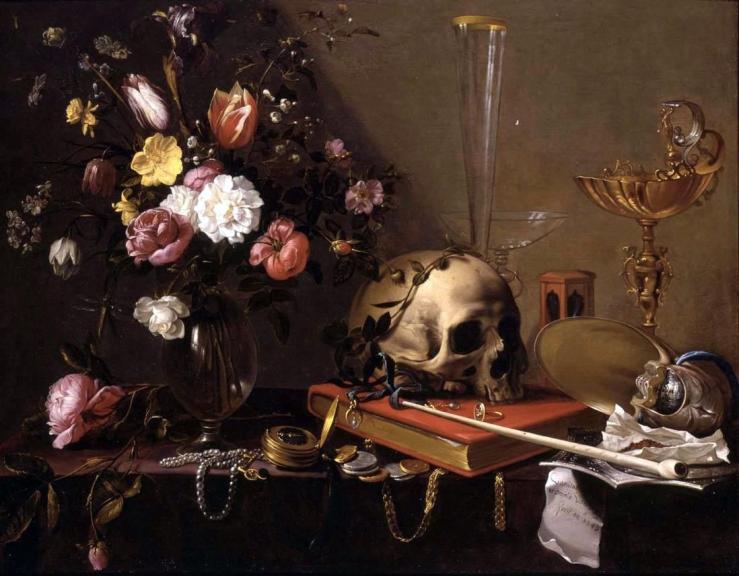
Small Bouquet and Skull — Adriaen van Utrecht

tumblr_lun3mnsEhb1r5569zo1_1280

Place has enshrined the spirit (Eudora Welty)

Place in fiction is the named, identified, concrete, exact and exacting, and therefore credible, gathering spot of all that has been felt, is about to be experienced, in the novel’s progress. Location pertains to feeling; feeling profoundly pertains to – place; place in history partakes of feeling, as feeling about history partakes of place. Every story would be another story, and unrecognizable as art, if it took up its characters and plot and happened somewhere else. Imagine Swann’s Way laid in London, or The Magic Mountain in Spain, or Green Mansions in the Black Forest. The very notion of moving a novel brings ruder havoc to the mind and affections than would a century’s alteration in its time. It is only too easy to conceive that a bomb that could destroy all trace of places as we know them, in life and through books, could also destroy all feelings as we know them, so irretrievably and so happily are recognition, memory, history, valor, love, all the instincts of poetry and praise, worship and endeavor, bound up in place. From the dawn of man’s imagination, place has enshrined the spirit; as soon as man stopped wandering and stood still and looked about him, he found a god in that place; and from then on, that was where the god abided and spoke from if ever he spoke.

From Eudora Welty’s essay “Place in Fiction.”

Henry VIII by the studio of Hans Holbein the Younger, 1540-1550 / Rick Ross

tumblr_nglfnbOeIh1txszqqo1_1280

I love love love this blog.

Taking Tea with Gordon Lish

Ready? I take my tea bag (or you take your teaspoon), one bag or one spoon for each five ounces of water, which is cold when I start and boiling up a rumpus before I pour, which I do, into a teapot that’s already hot, which condition of temperature is crucial.


So I pour furiously boiling water into good and hot teapot over bags or over loose tea or over bags or over tea bomb, slam top down, wrap entire business in dish towel, which is what I saw my mother do during the blizzard of ’46 and it made a tremendous impression on me, she being my mother and all. I understand some people are willing to buy a tea cosy—but, so far as I’m concerned, you’ve got to draw the line somewhere.


Anyhow, it sits for five minutes—you know, it steeps. If the waiting makes you edgy, go fold some paper bags. The next step is the last step, which is to hurry up and divide the product from its makings. Well, truth to tell, there is one more step—but that’s drinking it, drinking tea—which is a step I’m going to get around to, all in good time. When coffee scoots up over a sawbuck a can.

From Gordon Lish’s 1977 piece in The New York Times, “A Teaser on Tea, with a Footnote on Bags.” By way of context for that last line: the price of coffee soared in 1977 after a harsh freeze killed Brazilian crops. High coffee prices led to a coffee boycott. And tea drinking.

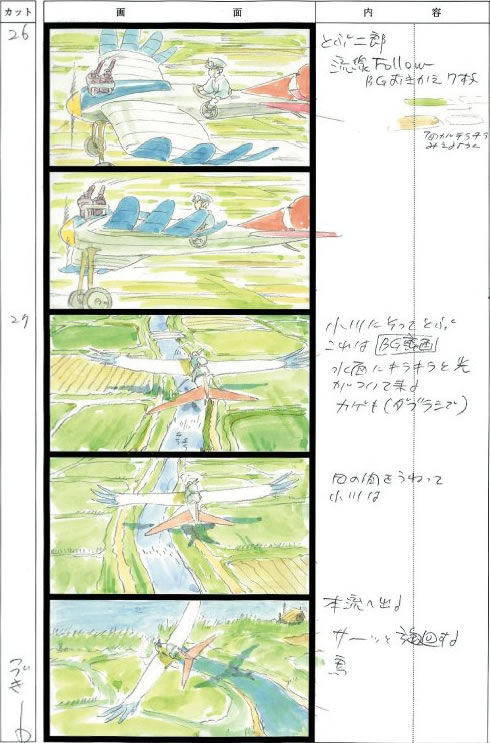
A storyboard from Hayao Miyazaki’s film The Wind Rises

tumblr_mr0fwaEYdQ1rjztfjo2_500

Via/more.

“Weather Vane” — Sam Prekop

Read Kurt Vonnegut’s early short story “Tomorrow and Tomorrow and Tomorrow”

“Tomorrow and Tomorrow and Tomorrow”

by

Kurt Vonnegut

(Originally published in Galaxy as “The Big Trip Up Yonder”)
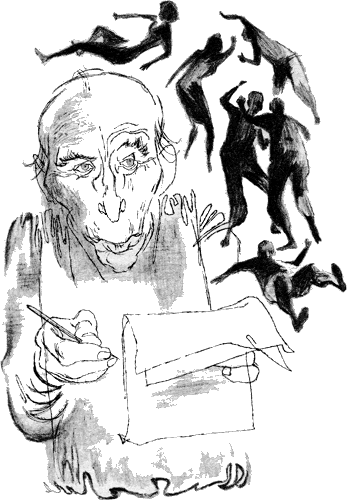
001

GRAMPS FORD, his chin resting on his hands, his hands on the crook of his cane, was staring irascibly at the five-foot television screen that dominated the room. On the screen, a news commentator was summarizing the day’s happenings. Every thirty seconds or so, Gramps would jab the floor with his cane-tip and shout, “Hell, we did that a hundred years ago!”

Emerald and Lou, coming in from the balcony, where they had been seeking that 2185 A.D. rarity—privacy—were obliged to take seats in the back row, behind Lou’s father and mother, brother and sister-in-law, son and daughter-in-law, grandson and wife, granddaughter and husband, great-grandson and wife, nephew and wife, grandnephew and wife, great-grandniece and husband, great-grandnephew and wife—and, of course, Gramps, who was in front of everybody. All save Gramps, who was somewhat withered and bent, seemed, by pre-anti-gerasone standards, to be about the same age—somewhere in their late twenties or early thirties. Gramps looked older because he had already reached 70 when anti-gerasone was invented. He had not aged in the 102 years since.

“Meanwhile,” the commentator was saying, “Council Bluffs, Iowa, was still threatened by stark tragedy. But 200 weary rescue workers have refused to give up hope, and continue to dig in an effort to save Elbert Haggedorn, 183, who has been wedged for two days in a …”

“I wish he’d get something more cheerful,” Emerald whispered to Lou.


“SILENCE!” cried Gramps. “Next one shoots off his big bazoo while the TV’s on is gonna find hisself cut off without a dollar—” his voice suddenly softened and sweetened—”when they wave that checkered flag at the Indianapolis Speedway, and old Gramps gets ready for the Big Trip Up Yonder.”

He sniffed sentimentally, while his heirs concentrated desperately on not making the slightest sound. For them, the poignancy of the prospective Big Trip had been dulled somewhat, through having been mentioned by Gramps about once a day for fifty years.

“Dr. Brainard Keyes Bullard,” continued the commentator, “President of Wyandotte College, said in an address tonight that most of the world’s ills can be traced to the fact that Man’s knowledge of himself has not kept pace with his knowledge of the physical world.”

Hell!” snorted Gramps. “We said that a hundred years ago!”

“In Chicago tonight,” the commentator went on, “a special celebration is taking place in the Chicago Lying-in Hospital. The guest of honor is Lowell W. Hitz, age zero. Hitz, born this morning, is the twenty-five-millionth child to be born in the hospital.” The commentator faded, and was replaced on the screen by young Hitz, who squalled furiously.

“Hell!” whispered Lou to Emerald. “We said that a hundred years ago.” Continue reading “Read Kurt Vonnegut’s early short story “Tomorrow and Tomorrow and Tomorrow””

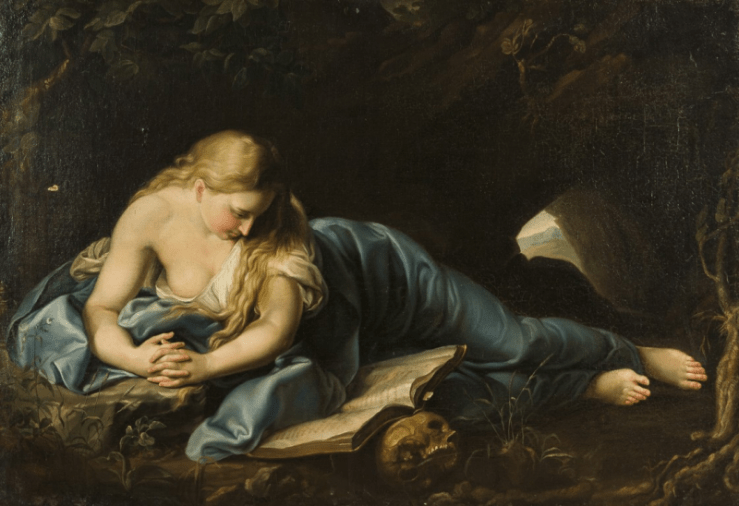
Madeleine Reading — Italian School of the Eighteenth Century (Attributed)

1394629586030218 (1)

Infinite Fictions (Book acquired 2.10.2015)

Control (Gravity’s Rainbow)

It’s control. All these things arise from one difficulty: control. For the first time it was inside, do you see. The control is put inside. No more need to suffer passively under ‘outside forces’—to veer into any wind. As if…A market needed no longer be run by the Invisible Hand, but now could create itself—its own logic, momentum, style, from inside. Putting the control inside was ratifying what de facto had happened—that you had dispensed with God. But you had taken on a greater, and more harmful, illusion. The illusion of control. That A could do B. But that was false. Completely. No one can do. Things only happen, A and B are unreal, are names for parts that ought to be inseparable…

From Thomas Pynchon’s novel Gravity’s Rainbow.

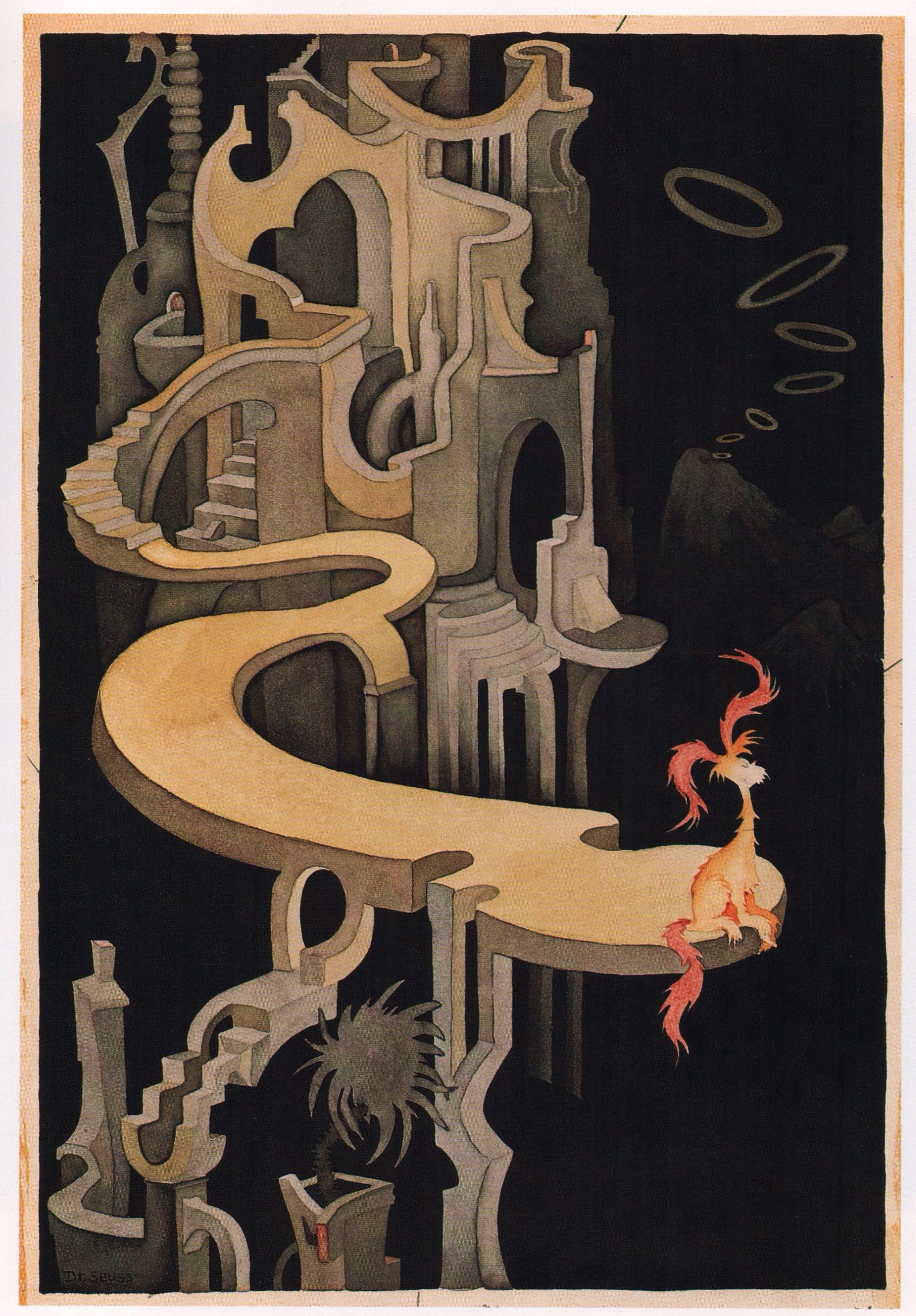
Pink-Tufted Small Beast in a Night Landscape — Dr. Seuss

IMG_5169

Portrait of Luca Pacioli — Jacopo de’ Barbari (Attributed)

Pacioli

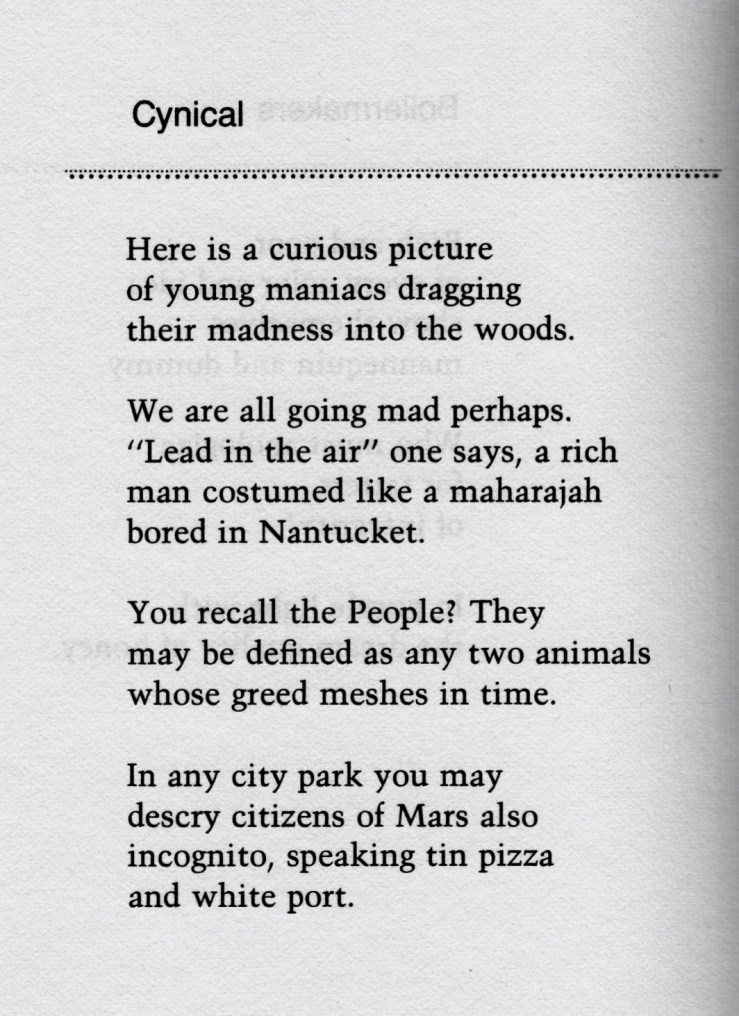
“Cynical” — Gilbert Sorrentino

IMG_5160

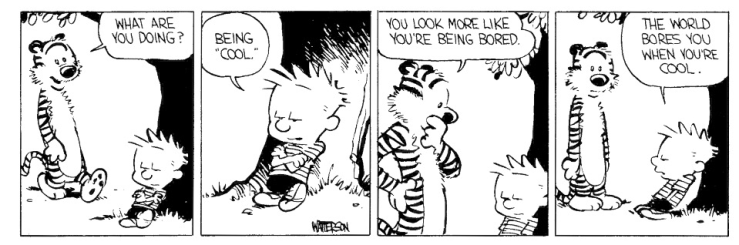
Bored/cool (Calvin & Hobbes)

IMG_0159

The Suitors — Gustave Moreau