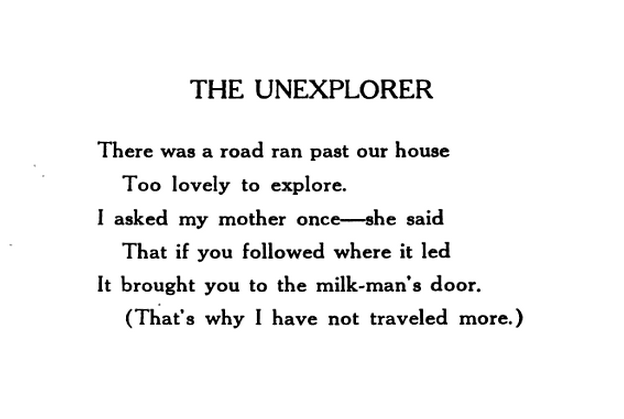
“The Unexplorer” — Edna St. Vincent Millay

esvm

Smoker — Adriaen Brouwer

“Breakfast” — Gertrude Stein

“Breakfast” by Gertrude Stein

From Tender Buttons

BREAKFAST.

A change, a final change includes potatoes. This is no authority for the abuse of cheese. What language can instruct any fellow.

A shining breakfast, a breakfast shining, no dispute, no practice, nothing, nothing at all.

A sudden slice changes the whole plate, it does so suddenly.

An imitation, more imitation, imitation succeed imitations.

Anything that is decent, anything that is present, a calm and a cook and more singularly still a shelter, all these show the need of clamor. What is the custom, the custom is in the centre.

What is a loving tongue and pepper and more fish than there is when tears many tears are necessary. The tongue and the salmon, there is not salmon when brown is a color, there is salmon when there is no meaning to an early morning being pleasanter. There is no salmon, there are no tea-cups, there are the same kind of mushes as are used as stomachers by the eating hopes that makes eggs delicious. Drink is likely to stir a certain respect for an egg cup and more water melon than was ever eaten yesterday. Beer is neglected and cocoanut is famous. Coffee all coffee and a sample of soup all soup these are the choice of a baker. A white cup means a wedding. A wet cup means a vacation. A strong cup means an especial regulation. A single cup means a capital arrangement between the drawer and the place that is open.

Price a price is not in language, it is not in custom, it is not in praise.

A colored loss, why is there no leisure. If the persecution is so outrageous that nothing is solemn is there any occasion for persuasion.

A grey turn to a top and bottom, a silent pocketful of much heating, all the pliable succession of surrendering makes an ingenious joy.

A breeze in a jar and even then silence, a special anticipation in a rack, a gurgle a whole gurgle and more cheese than almost anything, is this an astonishment, does this incline more than the original division between a tray and a talking arrangement and even then a calling into another room gently with some chicken in any way.

A bent way that is a way to declare that the best is all together, a bent way shows no result, it shows a slight restraint, it shows a necessity for retraction.

Suspect a single buttered flower, suspect it certainly, suspect it and then glide, does that not alter a counting.

A hurt mended stick, a hurt mended cup, a hurt mended article of exceptional relaxation and annoyance, a hurt mended, hurt and mended is so necessary that no mistake is intended.

What is more likely than a roast, nothing really and yet it is never disappointed singularly.

A steady cake, any steady cake is perfect and not plain, any steady cake has a mounting reason and more than that it has singular crusts. A season of more is a season that is instead. A season of many is not more a season than most.

Take no remedy lightly, take no urging intently, take no separation leniently, beware of no lake and no larder.

Burden the cracked wet soaking sack heavily, burden it so that it is an institution in fright and in climate and in the best plan that there can be.

An ordinary color, a color is that strange mixture which makes, which does make which does not make a ripe juice, which does not make a mat.

A work which is a winding a real winding of the cloaking of a relaxing rescue. This which is so cool is not dusting, it is not dirtying in smelling, it could use white water, it could use more extraordinarily and in no solitude altogether. This which is so not winsome and not widened and really not so dipped as dainty and really dainty, very dainty, ordinarily, dainty, a dainty, not in that dainty and dainty. If the time is determined, if it is determined and there is reunion there is reunion with that then outline, then there is in that a piercing shutter, all of a piercing shouter, all of a quite weather, all of a withered exterior, all of that in most violent likely.

An excuse is not dreariness, a single plate is not butter, a single weight is not excitement, a solitary crumbling is not only martial.

A mixed protection, very mixed with the same actual intentional unstrangeness and riding, a single action caused necessarily is not more a sign than a minister.

Seat a knife near a cage and very near a decision and more nearly a timely working cat and scissors. Do this temporarily and make no more mistake in standing. Spread it all and arrange the white place, does this show in the house, does it not show in the green that is not necessary for that color, does it not even show in the explanation and singularly not at all stationary.

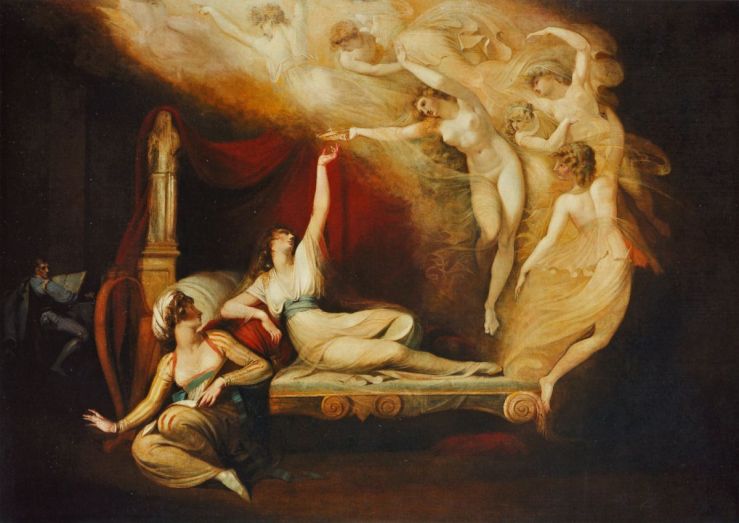
Queen Katherine’s Dream — Henry Fuseli

hf

Bored?

bored

“Apparently with no surprise” — Emily Dickinson

x

Merriment on Frozen River – Abraham van Strij

“All art constantly aspires towards the condition of music”

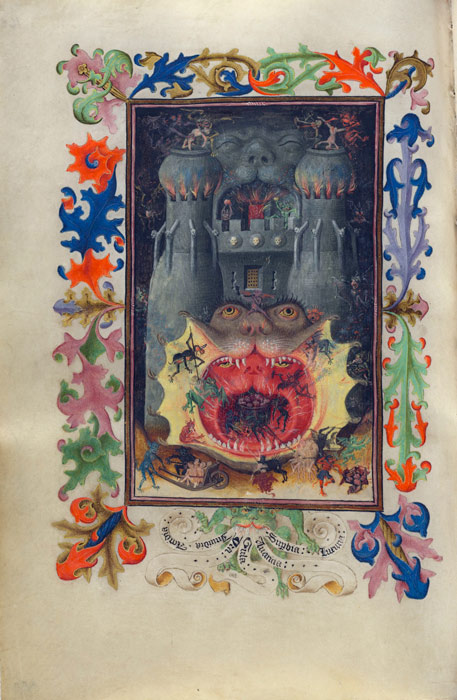
Mouth of Hell — The Master of Catherine of Cleves

Catherine_03

Old worm-eaten aristocracy (Nathaniel Hawthorne)

In the cabinet of the Essex Historical Society, old portraits.–Governor Leverett; a dark mustachioed face, the figure two thirds length, clothed in a sort of frock-coat, buttoned, and a broad sword-belt girded round the waist, and fastened with a large steel buckle; the hilt of the sword steel,–altogether very striking. Sir William Pepperell, in English regimentals, coat, waistcoat, and breeches, all of red broad-cloth, richly gold-embroidered; he holds a general’s truncheon in his right hand, and extends the left towards the batteries erected against Louisbourg, in the country near which he is standing. Endicott, Pyncheon, and others, in scarlet robes, bands, etc. Half a dozen or more family portraits of the Olivers, some in plain dresses, brown, crimson, or claret; others with gorgeous gold-embroidered waistcoats, descending almost to the knees, so as to form the most conspicuous article of dress. Ladies, with lace ruffles, the painting of which, in one of the pictures, cost five guineas. Peter Oliver, who was crazy, used to fight with these family pictures in the old Mansion House; and the face and breast of one lady bear cuts and stabs inflicted by him. Miniatures in oil, with the paint peeling off, of stern, old, yellow faces. Oliver Cromwell, apparently an old picture, half length, or one third, in an oval frame, probably painted for some New England partisan. Some pictures that had been partly obliterated by scrubbing with sand. The dresses, embroidery, laces of the Oliver family are generally better done than the faces. Governor Leverett’s gloves,–the glove part of coarse leather, but round the wrist a deep, three or four inch border of spangles and silver embroidery. Old drinking-glasses, with tall stalks. A black glass bottle, stamped with the name of Philip English, with a broad bottom. The baby-linen, etc., of Governor Bradford of Plymouth County. Old manuscript sermons, some written in short-hand, others in a hand that seems learnt from print.

Nothing gives a stronger idea of old worm-eaten aristocracy–of a family being crazy with age, and of its being time that it was extinct–than theseblack, dusty, faded, antique-dressed portraits, such as those of the Oliver family; the identical old white wig of an ancient minister producing somewhat the impression that his very scalp, or some other portion of his personal self, would do.

From Nathaniel Hawthorne’s American Note-Books.

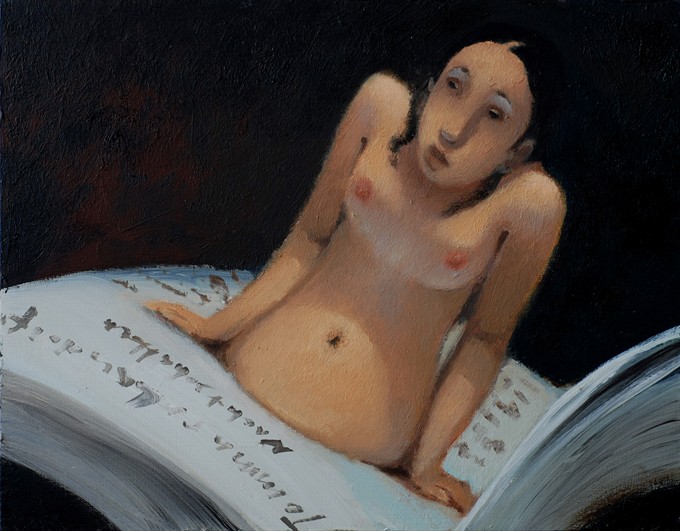
Johannes Hüppi Painting (Woman/Book)

Johannes Huppi  (23)

Cold — Remedios Varo

Blurst of times

The Shepherd’s Dream (Paradise Lost) — Henry Fuseli

2084 — Chris Marker

Ye Olde Ruin — Paul Noble

Jack London’s Dystopian Short Story, “A Curious Fragment”

“A Curious Fragment” by Jack London

[The capitalist, or industrial oligarch, Roger Vanderwater, mentioned in the narrative, has been identified as the ninth in the line of the Vanderwaters that controlled for hundreds of years the cotton factories of the South. This Roger Vanderwater flourished in the last decades of the twenty- sixth century after Christ, which was the fifth century of the terrible industrial oligarchy that was reared upon the ruins of the early Republic. From internal evidences we are convinced that the narrative which follows was not reduced to writing till the twenty- ninth century. Not only was it unlawful to write or print such matter during that period, but the working-class was so illiterate that only in rare instances were its members able to read and write. This was the dark reign of the overman, in whose speech the great mass of the people were characterized as the “herd animals.” All literacy was frowned upon and stamped out. From the statute-books of the times may be instanced that black law that made it a capital offence for any man, no matter of what class, to teach even the alphabet to a member of the working-class. Such stringent limitation of education to the ruling class was necessary if that class was to continue to rule. One result of the foregoing was the development of the professional story-tellers. These story-tellers were paid by the oligarchy, and the tales they told were legendary, mythical, romantic, and harmless. But the spirit of freedom never quite died out, and agitators, under the guise of story-tellers, preached revolt to the slave class. That the following tale was banned by the oligarchs we have proof from the records of the criminal police court of Ashbury, wherein, on January 27, 2734, one John Tourney, found guilty of telling the tale in a boozing-ken of labourers, was sentenced to five years’ penal servitude in the borax mines of the Arizona Desert.—EDITOR’S NOTE.]

Listen, my brothers, and I will tell you a tale of an arm. It was the arm of Tom Dixon, and Tom Dixon was a weaver of the first class in a factory of that hell-hound and master, Roger Vanderwater. This factory was called “Hell’s Bottom”… by the slaves who toiled in it, and I guess they ought to know; and it was situated in Kingsbury, at the other end of the town from Vanderwater’s summer palace. You do not know where Kingsbury is? There are many things, my brothers, that you do not know, and it is sad. It is because you do not know that you are slaves. When I have told you this tale, I should like to form a class among you for the learning of written and printed speech. Our masters read and write and possess many books, and it is because of that that they are our masters, and live in palaces, and do not work. When the toilers learn to read and write—all of them—they will grow strong; then they will use their strength to break their bonds, and there will be no more masters and no more slaves.

Kingsbury, my brothers, is in the old State of Alabama. For three hundred years the Vanderwaters have owned Kingsbury and its slave pens and factories, and slave pens and factories in many other places and States. You have heard of the Vanderwaters—who has not?—but let me tell you things you do not know about them. The first Vanderwater was a slave, even as you and I. Have you got that? He was a slave, and that was over three hundred years ago. His father was a machinist in the slave pen of Alexander Burrell, and his mother was a washerwoman in the same slave pen. There is no doubt about this. I am telling you truth. It is history. It is printed, every word of it, in the history books of our masters, which you cannot read because your masters will not permit you to learn to read. You can understand why they will not permit you to learn to read, when there are such things in the books. They know, and they are very wise. If you did read such things, you might be wanting in respect to your masters, which would be a dangerous thing… to your masters. But I know, for I can read, and I am telling you what I have read with my own eyes in the history books of our masters. Continue reading “Jack London’s Dystopian Short Story, “A Curious Fragment””