“The Purple of the Balkan Kings” — Saki

“The Purple of the Balkan Kings” by Saki

Luitpold Wolkenstein, financier and diplomat on a small, obtrusive, self-important scale, sat in his favoured cafe in the world-wise Habsburg capital, confronted with the Neue Freie Presse and the cup of cream-topped coffee and attendant glass of water that a sleek-headed piccolo had just brought him.  For years longer than a dog’s lifetime sleek-headed piccolos had placed the Neue Freie Presse and a cup of cream-topped coffee on his table; for years he had sat at the same spot, under the dust-coated, stuffed eagle, that had once been a living, soaring bird on the Styrian mountains, and was now made monstrous and symbolical with a second head grafted on to its neck and a gilt crown planted on either dusty skull.  To-day Luitpold Wolkenstein read no more than the first article in his paper, but read it again and again.

“The Turkish fortress of Kirk Kilisseh has fallen . . .  The Serbs, it is officially announced, have taken Kumanovo . . .  The fortress of Kirk Kilisseh lost, Kumanovo taken by the Serbs, these are tiding for Constantinople resembling something out of Shakspeare’s tragedies of the kings . . .  The neighbourhood of Adrianople and the Eastern region, where the great battle is now in progress, will not reveal merely the future of Turkey, but also what position and what influence the Balkan States are to have in the world.”

For years longer than a dog’s lifetime Luitpold Wolkenstein had disposed of the pretensions and strivings of the Balkan States over the cup of cream-topped coffee that sleek-headed piccolos had brought him.  Never travelling further eastward than the horse-fair at Temesvar, never inviting personal risk in an encounter with anything more potentially desperate than a hare or partridge, he had constituted himself the critical appraiser and arbiter of the military and national prowess of the small countries that fringed the Dual Monarchy on its Danube border.  And his judgment had been one of unsparing contempt for small-scale efforts, of unquestioning respect for the big battalions and full purses.  Over the whole scene of the Balkan territories and their troubled histories had loomed the commanding magic of the words “the Great Powers”—even more imposing in their Teutonic rendering, “Die Grossmächte.” Continue reading ““The Purple of the Balkan Kings” — Saki”

Portrait of Rodo Reading — Camille Pissarro

portrait-of-rodo-reading-1893

List with No Name #13

  1. 2013
  2. 2766
  3. 1462
  4. 6763
  5. 169
  6. 1420
  7. 2963
  8. 2557
  9. 1729
  10. 2005
  11. 12013
  12. 2069
  13. 1391
  14. 102
  15. 2556

Watch Cult Classic Two-Lane Blacktop (Full Film)

“The more I consider this mighty tail, the more do I deplore my inability to express it” (Moby-Dick)

The more I consider this mighty tail, the more do I deplore my inability to express it. At times there are gestures in it, which, though they would well grace the hand of man, remain wholly inexplicable. In an extensive herd, so remarkable, occasionally, are these mystic gestures, that I have heard hunters who have declared them akin to Free-Mason signs and symbols; that the whale, indeed, by these methods intelligently conversed with the world. Nor are there wanting other motions of the whale in his general body, full of strangeness, and unaccountable to his most experienced assailant. Dissect him how I may, then, I but go skin deep. I know him not, and never will. But if I know not even the tail of this whale, how understand his head? much more, how comprehend his face, when face he has none? Thou shalt see my back parts, my tail, he seems to say, but my face shall not be seen. But I cannot completely make out his back parts; and hint what he will about his face, I say again he has no face.

From “The Tail,” Chapter 86 of Melville’s Moby-Dick.

Robert Downey Sr. Shares Screenwriting Advice; Picks Out Some Films

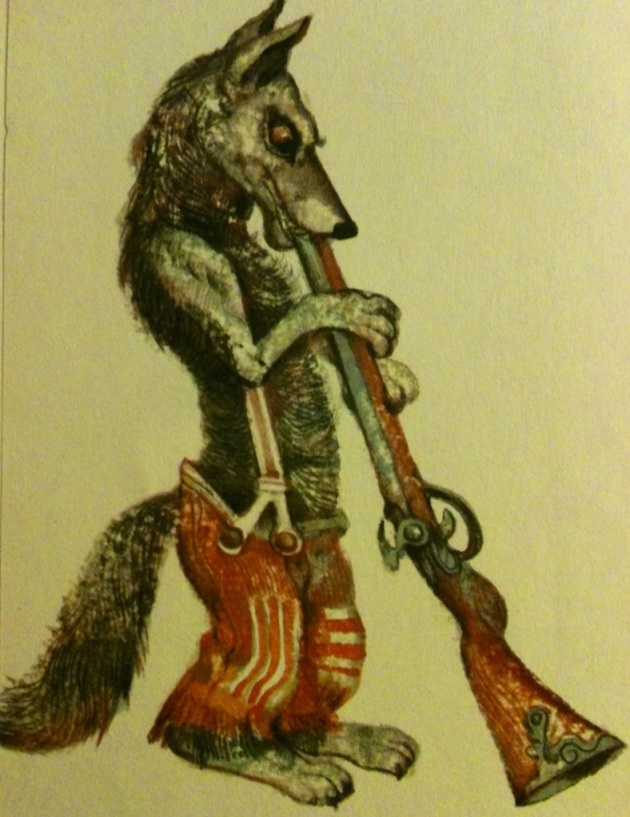
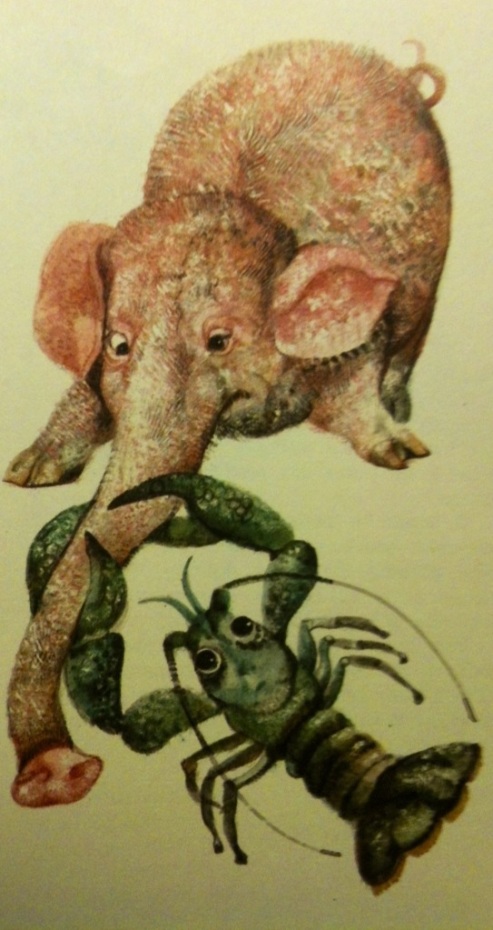
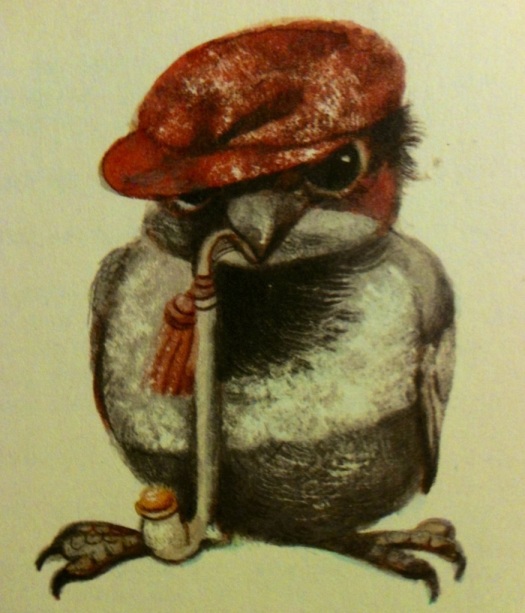
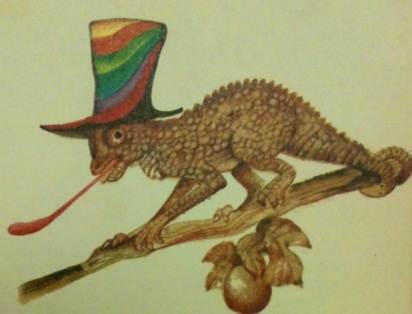
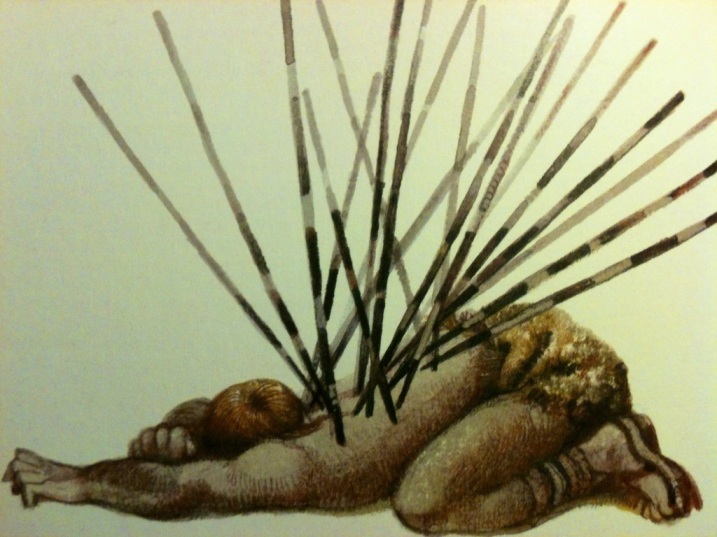
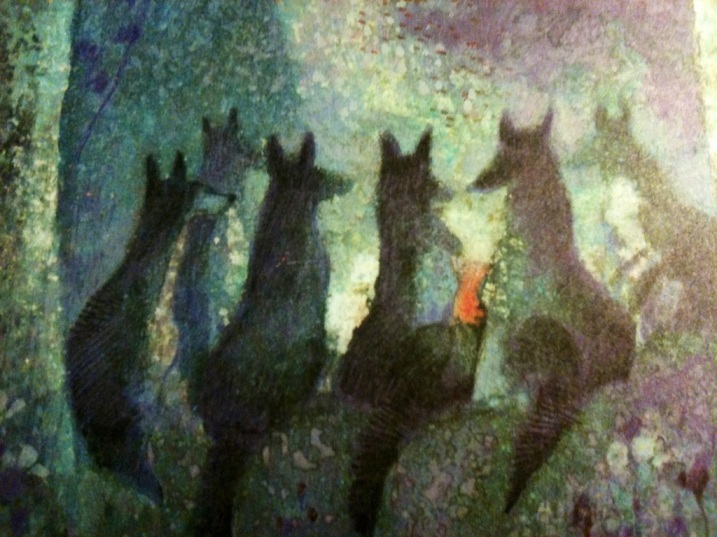
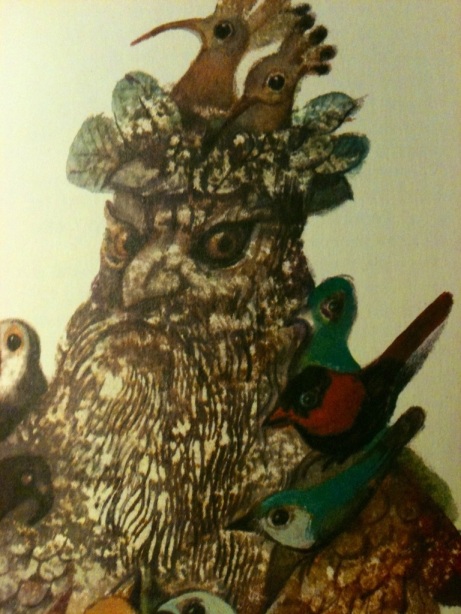
Karel Franta’s Marvelous Fairy Tale Illustrations

20130129-204614.jpg

My mother dropped off several boxes of books, comics, and papers I hadn’t delved into in probably 20 years—stuff I’d left at my parents’ house, intending to retrieve at some point. One book I reacquired was a Czechoslovakian folk and fairy tale collection with the nondescript name Animal Fairy Stories (retold by Alena Benesova and translated into English by Ruth Shepherd), a volume collecting over a hundred stories from all over the globe.

These stories had a tremendous impact on me as a child. Most describe a time “when the world was still young and everything was very different,” an amorphous, shifting world full of tricksters and their dupes, kings always precariously poised to fall and fail, interspecies cohabitation, and lots and lots of death. As important as these stories were in forming my reading habits and taste, the book’s illustrations by Czech artist Karel Franta had an even more profound and unsettling impact on my imagination. His strange, marvelous paintings somehow imprinted on my psyche, mixing in with the horror and joy and fascination that all those early stories entailed. Reading over a dozen animal tales with my own children last night, I was taken aback at how precisely each of Franta’s illustrations was etched into my brain, and how each image burned with its own special humor or terror or confusion or weird delight.

Below are a few of his paintings; I’ve tried to share a sampling that showcases his mix of strange pathos, unsettling humor, and dreamworld evocation.

20130129-204505.jpg

20130129-204450.jpg

20130129-204457.jpg

20130129-204512.jpg

20130129-204520.jpg

20130129-204529.jpg

20130129-204536.jpg

20130129-204544.jpg

20130129-204552.jpg

Wonder Woman — Jaime Hernandez

Wonder Woman Day Jaime Hernandez

“Beer and Cider” — George Saintsbury

“Beer and Cider” by George Saintsbury

There is no beverage which I have liked “to live with” more than Beer; but I have never had a cellar large enough to accommodate much of it, or an establishment numerous enough to justify the accommodation. In the good days when servants expected beer, but did not expect to be treated otherwise than as servants, a cask or two was necessary; and persons who were “quite” generally took care that the small beer they drank should be the same as that which they gave to their domestics, though they might have other sorts as well. For these better sorts at least the good old rule was, when you began on one cask always to have in another. Even Cobbett, whose belief in beer was the noblest feature in his character, allowed that it required some keeping. The curious “white ale,” or lober agol—which, within the memory of man, used to exist in Devonshire and Cornwall, but which, even half a century ago, I have vainly sought there—was, I believe, drunk quite new; but then it was not pure malt and not hopped at all, but had eggs (“pullet-sperm in the brewage”) and other foreign bodies in it.

I did once drink, at St David’s, ale so new that it frothed from the cask as creamily as if it had been bottled: and I wondered whether the famous beer of Bala, which Borrow found so good at his first visit and so bad at his second, had been like it. Continue reading ““Beer and Cider” — George Saintsbury”

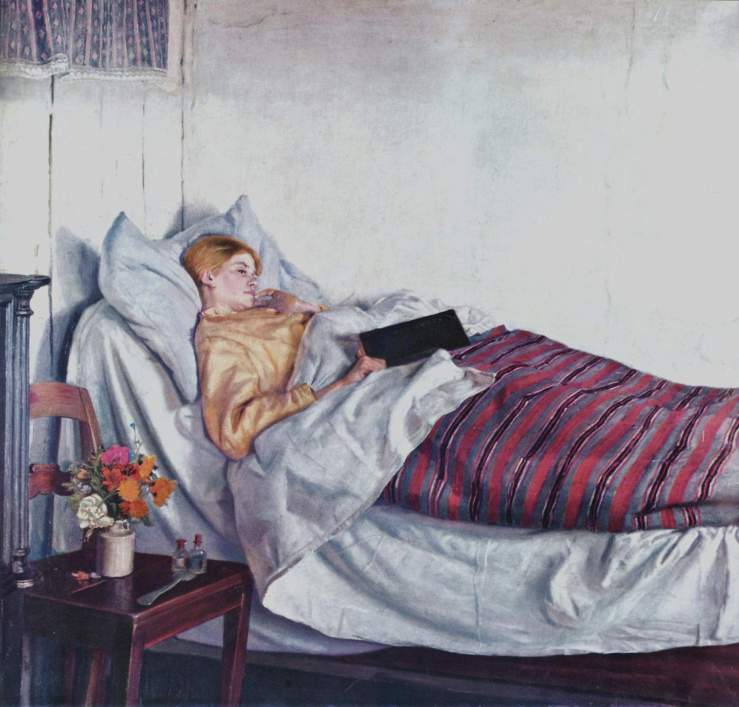
The Sick Girl — Michael Ancher

Michael_Ancher_001

Shellac Was on Some Animal Planet Show a Few Years Ago

I’m sure that all kinds of music blogs already posted this one. Sorry. Too weird.

Max Ernst — Frederick Sommer

max-ernst-1946.jpg!HD

Lydia Davis Reads “Jane and the Cane”; Talks to Ben Marcus

“Jane and the Cane” by Lydia Davis; collected in Collected Stories:

Capture

Kurt Vonnegut on Twerps

From Kurt Vonnegut’s 1977 interview with The Paris Review:

INTERVIEWER

What is a twerp in the strictest sense, in the original sense?

VONNEGUT

It’s a person who inserts a set of false teeth between the cheeks of his ass.

INTERVIEWER

I see.

VONNEGUT

I beg your pardon; between the cheeks of his or her ass. I’m always offending feminists that way.

INTERVIEWER

I don’t quite understand why someone would do that with false teeth.

VONNEGUT

In order to bite the buttons off the backseats of taxicabs. That’s the only reason twerps do it. It’s all that turns them on.

INTERVIEWER

You went to Cornell University after Shortridge?

VONNEGUT

I imagine.

INTERVIEWER

You imagine?

Robert Crumb in Conversation with Robert Hughes

The Sin — Franz Stuck

“The She-Wolf” — Saki

“The She-Wolf” by Saki

Leonard Bilsiter was one of those people who have failed to find this world attractive or interesting, and who have sought compensation in an “unseen world” of their own experience or imagination—or invention.  Children do that sort of thing successfully, but children are content to convince themselves, and do not vulgarise their beliefs by trying to convince other people.  Leonard Bilsiter’s beliefs were for “the few,” that is to say, anyone who would listen to him.

His dabblings in the unseen might not have carried him beyond the customary platitudes of the drawing-room visionary if accident had not reinforced his stock-in-trade of mystical lore.  In company with a friend, who was interested in a Ural mining concern, he had made a trip across Eastern Europe at a moment when the great Russian railway strike was developing from a threat to a reality; its outbreak caught him on the return journey, somewhere on the further side of Perm, and it was while waiting for a couple of days at a wayside station in a state of suspended locomotion that he made the acquaintance of a dealer in harness and metalware, who profitably whiled away the tedium of the long halt by initiating his English travelling companion in a fragmentary system of folk-lore that he had picked up from Trans-Baikal traders and natives.  Leonard returned to his home circle garrulous about his Russian strike experiences, but oppressively reticent about certain dark mysteries, which he alluded to under the resounding title of Siberian Magic.  The reticence wore off in a week or two under the influence of an entire lack of general curiosity, and Leonard began to make more detailed allusions to the enormous powers which this new esoteric force, to use his own description of it, conferred on the initiated few who knew how to wield it.  His aunt, Cecilia Hoops, who loved sensation perhaps rather better than she loved the truth, gave him as clamorous an advertisement as anyone could wish for by retailing an account of how he had turned a vegetable marrow into a wood pigeon before her very eyes.  As a manifestation of the possession of supernatural powers, the story was discounted in some quarters by the respect accorded to Mrs. Hoops’ powers of imagination.

However divided opinion might be on the question of Leonard’s status as a wonderworker or a charlatan, he certainly arrived at Mary Hampton’s house-party with a reputation for pre-eminence in one or other of those professions, and he was not disposed to shun such publicity as might fall to his share.  Esoteric forces and unusual powers figured largely in whatever conversation he or his aunt had a share in, and his own performances, past and potential, were the subject of mysterious hints and dark avowals.

“I wish you would turn me into a wolf, Mr. Bilsiter,” said his hostess at luncheon the day after his arrival. Continue reading ““The She-Wolf” — Saki”