No. II — Cy Twombly

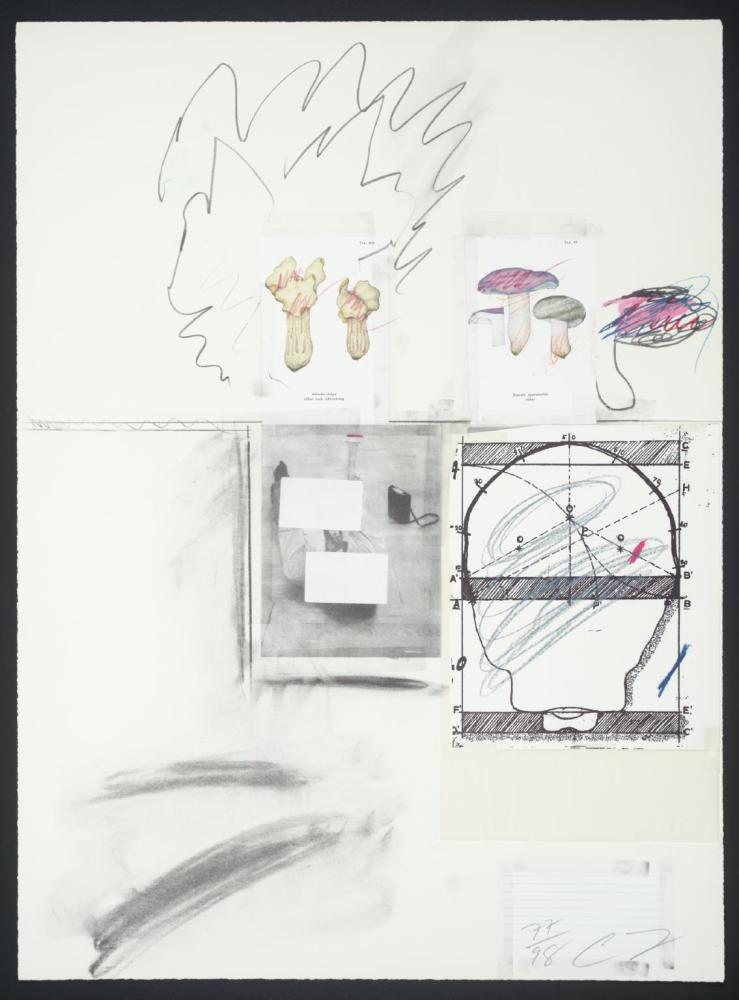
No. II, 1974 by Cy Twombly (1928-2011)

Gwendoline Riley’s First Love and My Phantoms (Books acquired, 16 Aug. 2022)

NYRB is publishing two novels by Gwendoline Riley next month: First Love and My Phantoms. Both novels were previously published in the UK.

Blurb for First Love:

Neve is a writer in her mid-thirties married to an older man, Edwyn. For now they are in a place of relative peace, but their past battles have left scars. As Neve recalls the decisions that led her to this marriage, she tells of other loves and other debts, from her bullying father and her self-involved mother to a musician who played her and a series of lonely flights from place to place.

Drawing the reader into the battleground of her relationship, Neve spins a story of helplessness and hostility, an ongoing conflict in which both husband and wife have played a part. But is this, nonetheless, also a story of love?

And My Phantoms:
Helen Grant is a mystery to her daughter. An extrovert with few friends who has sought intimacy in the wrong places, a twice-divorced mother of two now living alone surrounded by her memories, Helen (known to her acquaintances as “Hen”) has always haunted Bridget.

Now, Bridget is an academic in her forties. She sees Helen once a year, and considers the problem to be contained. As she looks back on their tumultuous relationship—the performances and small deceptions—she tries to reckon with the cruelties inflicted on both sides. But when Helen makes it clear that she wants more, it seems an old struggle will have to be replayed.

From the prize-winning author of First LoveMy Phantoms is a bold, heart-stopping portrayal of a failed familial bond, which brings humor, subtlety, and new life to the difficult terrain of mothers and daughters.

Noise like crumpled pages, noise like burned books, and over 100 other similes from Roberto Bolaño’s novel 2666

    1. black eyes like two deep wells
    2. He seemed less like a child than like a strand of seaweed.
    3. little particles of his own filth floated, tiny bits of skin that traveled like submarines toward an inlet the size of an eye, a calm, dark cove, although there was no calm, and all that existed was movement
    4. watching the fragments of his body drift away in all directions, like space probes launched at random across the universe
    5. a region very like hell
    6. he moved across the surface of the earth like a novice diver along the seafloor
    7. strands that really did look like fingers
    8. The Poles look like chickens, but pluck four feathers and you’ll see they’ve got the skin of swine.
    9. They look like starving dogs but they’re really starving swine, swine that’ll eat anyone, without a second thought, without the slightest remorse.
    10. They’re like swine disguised as Chihuahuas.
    11. A churning gray like pus.
    12. like ghost towns
    13. like blood and rotting meat
    14. moving like a diver
    15. like a night diver
    16. What was it about the boy that made him look like seaweed?
    17. that dark sea, a sea like a pack of wolves
    18. dark waves like forest beasts
    19. the body of young Reiter floating like uprooted seaweed, upward, a brilliant white in the underwater space
    20. sometimes the baby looked like a bag of rubbish left on a pebbly beach
    21. other times like Petrobius maritimus, a marine insect that lives in crevices and rocks and feeds on scraps, or Lipura maritima, another insect, very small and dark slate or gray, its habitat the puddles among rocks
    22. like prophecies
    23. “My son,” said the one-legged man.
      “He looks like a giraffe fish,” said the former pilot, and he laughed.
    24. that weekend was like a month
    25. samurais were like fish in a waterfall but the best samurai in history was a woman
    26. an eternity, like the minutes of those condemned to die
    27. like the minutes of women who’ve just given birth and are condemned to die
    28. like luxurious excrescences or heartbeats
    29. go forth like the keeper of a swarm of bees, except that this beekeeper wasn’t protected by a mesh suit or a helmet and woe betide the bee that tried to sting him, even if only in thought.
    30. like the eyes of a hawk that flies and delights in its flight, but that also maintains a
      watchful gaze
    31. noise like crumpled pages, noise like burned books
    32. cavorted like a mermaid
    33. he watched the sunrise as it washed like a wave over the city, drowning them all
    34. darts along like a squirrel
    35. the village, like a black lump set or encrusted in the darkness
    36. like a box from some scientific research center where glove-wearing German scientists pack away something with the power to destroy the world and Germany too
    37. like seeing a giraffe go off in a pack of wolves, coyotes, and hyenas
    38. the seaweed jungle was like the locks of a dead giant
    39. like sheep or little goats
    40. He saw hills or rocky outcroppings that looked like ships about to sink, prows lifted, like enraged horses, nearly vertical
    41. the towers of the castle like two gray candles on a deserted altar
    42. being here is like being buried alive
    43. like a shadow
    44. more like a horse than a man
    45. like an engraving of a worker or artisan, an innocent passerby suddenly blinded by a ray of moonlight
    46. swaying back and forth, like a little shepherdess gone wild in the vastness of Asia
    47. reality was increasingly vague, more like a dream
    48. d her eyes, a washed-out blue, like the eyes of a blind woman
    49. strolling like philosophers
    50. woods like dark islands in the middle of endless wheat fields
    51. a black fog rose before his eyes, full of granulated dots like a rain of meteors
    52. he fired and walked, like someone strolling and taking photographs, until the
      fort exploded
    53. looking as if they were starving or like pupils at a reform school
    54. the sergeant looked like an ant that gradually grew bigger and bigger
    55. already approaching old age, like the biblical Abraham and Sarah
    56. drank like a condemned woman
    57. more like a strand of seaweed than a human being
    58. the seaweedlike extraterrestrial
    59. like a burning doll
    60. a rending violence, like a claw, but not a claw that did any damage
    61. like a claw that pounces and floats in the middle of the room, like a helium balloon, a selfconscious claw, a claw-beast that wonders what in God’s name it’s doing in this rather untidy room, who that old man is sitting at the table, who that young man is standing with tousled hair, then falls to the floor, deflated, returned once more to nothing.
    62. like something rotting
    63. like an orphan, a self-designated orphan
    64. On the subject of art, a politician with power is like a colossal pheasant, able to crush mountains with little hops, whereas a politician without power is only like a village priest, an ordinary-sized pheasant.
    65. They lived like garbagemen. They were the garbagemen of the jungle
    66. like birds
    67. like a horror painting
    68. other poets shun them like lepers
    69. the sudden appearance of this incredible woman is like a miracle
    70. inspecting the dead like someone who inspects a lot for sale or a farm or a country house
    71. like madmen escaped from an asylum
    72. From a hill he saw a column of German tanks moving east. They looked like the coffins of an extraterrestrial civilization.
    73. feeling something very strange that sometimes seemed like happiness and other times like a guilt as vast as the sky
    74. the bottom of the river was like a gravel road
    75. a vague noise, like the clatter of furniture, as if sick people were moving furniture around
    76. the full moon filtered through the fabric of the tent like boiling coffee through a sock
    77. my name has grown like a malignant tumor and now it turns up on the most unlikely documents
    78. the light sweeping the tent like a bird’s wing or a claw
    79. dreamlike
    80. they seemed less like children than like the skeletons of children, abandoned sketches, pure will and bone
    81. like girls who’ve just woken from a terrible nightmare
    82. like the habitues of racetracks who commit suicide in cheap rented rooms or hotels tucked away on back-streets frequented by gangsters
    83. like a murderer
    84. like a ragpicker’s room
    85. he drank like a Cossack
    86. the killer will open the window of my room and come tiptoeing in like a nurse
      and slit my throat, bleed me dry
    87. I would never manage to create anything like a masterpiece.
    88. He writes like someone taking dictation.
    89. his old man’s neck, like the neck of a turkey or a plucked rooster
    90. his gray temples like a stormy sea
    91. deep eyes that at the slightest tilt of his head seemed at times like two endless tunnels, two abandoned tunnels on the verge of collapse.
    92. a kind of crepuscular lethargy crept from under the doors like poison gas
    93. Mickey, like the mouse
    94. Everything is burning. It looks more like the moon than Normandy.
    95. like the living dead, zombies, cemetery dwellers, soldiers without eyes or mouths, but with penises
    96. like the soldier who was trapped under a pile of corpses and there, beneath the corpses and the snow, he dug a little cave with his regulation shovel, and
      to pass the time he jerked off, more boldly each time, because once the fear and surprise of the first few instants had vanished, all that was left was the fear of death and boredom, and to stave off boredom he began to masturbate, first timidly, as if he were seducing a peasant girl or a little shepherdess, then with increasing determination, until he managed to bring himself off to his full satisfaction, and he went on like that for fifteen days, in his little cave of corpses and snow, rationing his food and indulging his urges, which didn’t make him weaker but rather seemed to retronourish him, as if he had drunk his own semen or as if after going mad he had found a forgotten way back to a new sanity, until the German troops counterattacked and discovered him
    97. not dirty or like shit or urine, nor like rot or worm meat
    98. like Ali Baba’s cave
    99. like a doll’s house, a cabin, a hut, a place that existed on the edge of time and remained fixed in a willed and imaginary childhood, comfortable and unspoiled.
    100. like something out of a fairy tale
    101. Then he began to talk, still pacing, about Europe, Greek mythology, and something
      vaguely like a police investigation
    102. like something out of a PreRaphaelite painting
    103. a little white-chocolate house with beams like slabs of dark chocolate, surrounded by a little garden in which the flowers looked like paper cutouts and a lawn trimmed with mathematical precision
    104. all human beings are obliged to bear until their deaths, like the rock of Sisyphus
    105. throbbed like the ripped-out heart of an Aztec victim
    106. typewriter was like a heart, a giant heart beating in the middle of the fog and chaos
    107. the stain of blood was like a giant rose in full bloom
    108. and the mountains multiplying in the night, all white, like nuns with no worldly ambitions.
    109. a laugh that sounded to Archimboldi like a cascade of ice
    110. she didn’t weigh a thing anymore, it was like climbing up with a bundle of sticks
    111. like a couple of vagabonds
    112. buildings propping each other up like little old Alzheimer’s patients, a jumble of houses and mazelike passageways where distant voices could be heard, worried voices asking questions and offering answers with great dignity
    113. Like the final surroundings of Sisyphus
    114. like a phantom
    115. He smiled like a father
    116. the place looked like a graveyard
    117. the old man in pajamas looked less like a vanished novelist than like a justly forgotten novelist, the typical hard-luck bad French novelist, most likely born at the wrong time
    118. a sweet and chirping voice, like the water of a brook that runs over a bed of flat stones
    119. The essayist looked like a cigarette covered with a handkerchief.
    120. arm in arm like two ex-lovers who no longer have many secrets to tell
    121. a car like a hearse awaited her
    122. the days were like nights and the nights like days
    123. sometimes the days and nights were unlike anything, everything was a continuum of blinding brightness and explosions
    124. Mouths like carrots, with peeling lips, and noses like wet potatoes
    125. like women who haven’t yet begun to menstruate
    126. he preferred someone decent and hardworking, who wouldn’t suck his blood like a
      vampire
    127. Her suffering was like the screech of chalk on a blackboard. As if a boy were dragging a piece of chalk across a blackboard on purpose to make it screech.
    128. like looking for a needle in a haystack
    129. slept like a baby
    130. The sounds she heard were like the sounds of the abyss.

These similes are from “The Part About Archimboldi,” the fifth part of 2666, a novel by Roberto Bolaño, in English translation by Natasha Wimmer.

The Rat-Catcher’s Daughter — Laurence Housman

The Rat-Catcher’s Daughter, c.1904 by Laurence Housman (1861-1959)

Read the story here.

Ann Quin’s novel Passages collapses hierarchies of center and margin

Ann Quin’s third novel Passages (1969) ostensibly tells the story of an unnamed woman and unnamed man traveling through an unnamed country in search of the woman’s brother, who may or may not be dead.

The adverb ostensibly is necessary in the previous sentence, because Passages does not actually tell that story—or it rather tells that story only glancingly, obliquely, and incompletely. Nevertheless, that is the apparent “plot” of Passages.

Quin is more interested in fractured/fracturing voices here. Passages pushes against the strictures of the traditional novel, eschewing character and plot development in favor of pure (and polluted) perceptions. There’s something schizophrenic about the voices in Passages. Interior monologues turn polyglossic or implode into elliptical fragments.

Quin repeatedly refuses to let her readers know where they stand. Indeed, we’re never quite sure of even the novel’s setting, which seems to be somewhere in the Mediterranean. It’s full of light and sea and sand and poverty, and the “political situation” is grim. (The woman’s brother’s disappearance may or may not have something to do with the region’s political instability.)

Passage’s content might be too slippery to stick to any traditional frame, but Quin employs a rhetorical conceit that teaches her reader how to read her novel. The book breaks into four unnamed chapters, each around twenty-five pages long. The first and third chapters find us loose in the woman’s stream of consciousness. The second and fourth chapters take the form of the man’s personal journal. These sections contain marginal annotations, which might be meant to represent actual physical annotations, or perhaps mental annotations–the man’s stream of consciousness while he rereads his journal.

Quin’s rhetorical strategy pays off, particularly in the book’s Sadean climax. This (literal) climax occurs at a carnivalesque party in a strange mansion on a small island. We see the events first through the woman’s perception, and then through the man’s. But I’ve gone too long without offering any representative language. Here’s a passage from the woman’s section, just a few paragraphs before the climax. To set the stage a bit, simply know that the woman plays voyeur to a bizarre threesome:

Mirrors faced each other. As the two turned, approached. Slower in movement in the centre, either side of him, turning back in the opposite direction to their first movement. Contours of their shadows indistinct. The first mirror reflected in the second. The second in the first. Images within images. Smaller than the last, one inside the other. She lay on the floor, wrists tied together. She bent back over the chair. He raised the whip, flung into space.

Later, the man’s perception of events at the party both clarify and cloud the woman’s account. As you can see in the excerpt above, the woman frequently refuses to qualify her pronouns in a way that might stabilize identities for her reader. Such obfuscation often happens in the course of a sentence or two:

I ran on, knowing I was being followed. She came to the edge, jumped into expanding blueness, ultra violet tilted as she went towards the beach. We walked in silence.

The woman’s becomes a She and then merges into a We. The other half of that We is a He, the follower (“He later threw the bottle against the rocks”), but we soon realize that this He is not the male protagonist, but simply another He that the woman has taken as a one-time lover.

The woman frequently takes off somewhere to have sex with another man. At times the sex seems to be part of her quest to find her brother; other times it’s simply part of the novel’s dark, erotic tone. The man is undisturbed by his lover’s faithlessness. He is passive, depressive, and analytical, while she is manic and exuberant. Late in the novel he analyzes himself:

How many hours I waste lying in bed thinking about getting up. I see myself get up, go out, move, drink, eat, smile, turn, pay attention, talk, go up, go down. I am absent from that part, yet participating at the same time. A voyeur in all senses, in my actions, non-actions. What a delight it might be actually to get up without thinking, and then when dressed look back and still see myself curled up fast asleep under the blankets.

The man longs for a kind of split persona, an active agent to walk the world who can also gaze back at himself dormant, passive.

This motif of perception and observation echoes throughout Passages. Consider one of the man’s journal entries from early in the book:

Above, I used an image instead of text to give a sense of what the journal entries and their annotations look like. Here, the man’s annotation is a form of self-observation, self-analysis.

Other annotations dwell on describing myths or artifacts (often Greek or Talmudic). In a “December” entry, the man’s annotation is far lengthier than the text proper. The main entry reads:

I am on the verge of discovering my own demoniac possibilities and because of this I am conscious I am not alone with myself.

Again, we see the fracturing of identity, consciousness as ceaseless self-perception. The annotation is far more colorful in contrast:

An ancient tribe of the Kouretes were sorcerers and magicians. They invented statuary and discovered metals, and they were amphibious and of strange varieties of shape, some like demons, some like men, some like fishes, some like serpents, and some had no hands, some no feet, some had webs between their fingers like gees. They were blue-eyed and black-tailed. They perished struck down by the thunder of Zeus or by the arrows of Apollo.

Quin’s annotations dare her reader to make meaning—to put the fragments together in a way that might satisfy the traditional expectations we bring to a novel. But the meaning is always deferred, always slips away. Passages collapses notions of center and margin. As its title suggests, this is a novel about liminal people, liminal places.

The results are wonderfully frustrating. Passages is abject, even lurid at times, but also rich and even dazzling in moments, particularly in the woman’s chapters, which read like pure perception, untethered by traditional narrative expectations like causation, sequence, and chronology.

As such, Passages will not be every reader’s cup of tea. It lacks the sharp, grotesque humor of Quin’s first novel, Berg, and seems dead set at every angle to confound and even depress its readers. And yet there’s a wild possibility in Passages. In her introduction to the new edition of Passages recently published by And Other Stories, Claire-Louise Bennett tries to capture the feeling of reading Quin’s novel:

It’s difficult to describe — it’s almost like the omnipotent curiosity one burns with as an adolescent — sexual, solipsistic, melancholic, fierce, hungry, languorous — and without limit.

Bennett, whose anti-novel Pond bears the stamp of Quin’s influence, employs the right adjectives here. We could also add disorienting, challengingabject and even distressing. While clearly influenced by Joyce and Beckett, Quin’s writing in Passages seems closer to William Burroughs’s ventriloquism and the hollowed-out alienation of Anna Kavan’s early work. Passages also points towards the writing of Kathy Acker, Alasdair Gray, and João Gilberto Noll, among others. But it’s ultimately its own weird thing, and half a century after its initial publication it still seems ahead of its time. Passages is clearly Not For Everyone but I loved it. Recommended.

[Ed. note: Biblioklept first published this review in May, 2021. Quin’s fourth and final novel, Tripticks, is being reissued this month by And Other Stories.]

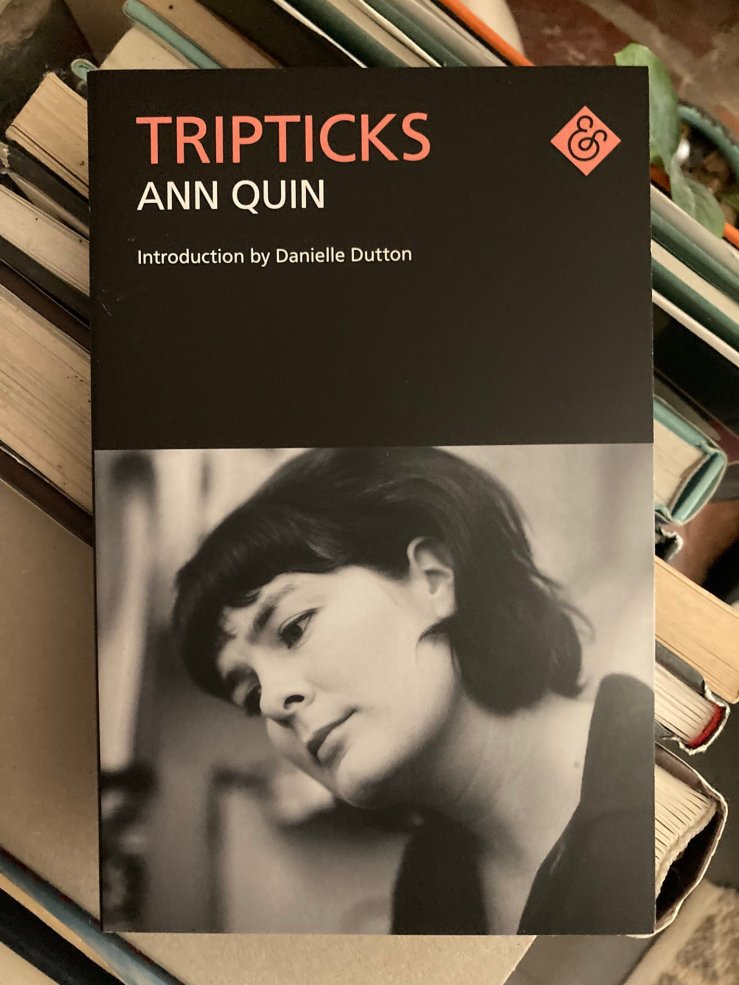
Ann Quin’s Tripticks (Book acquired, 15 Aug. 2022)

I’m a big fan of Ann Quin. Her last novel, Tripticks, is reissued this month from the good folks of And Other Stories. Here is their blurb:

First published in 1972, Ann Quin’s fourth and final novel was a radical break from the introspective style she had developed in Three and Passages: a declaration of independence from all expectations.

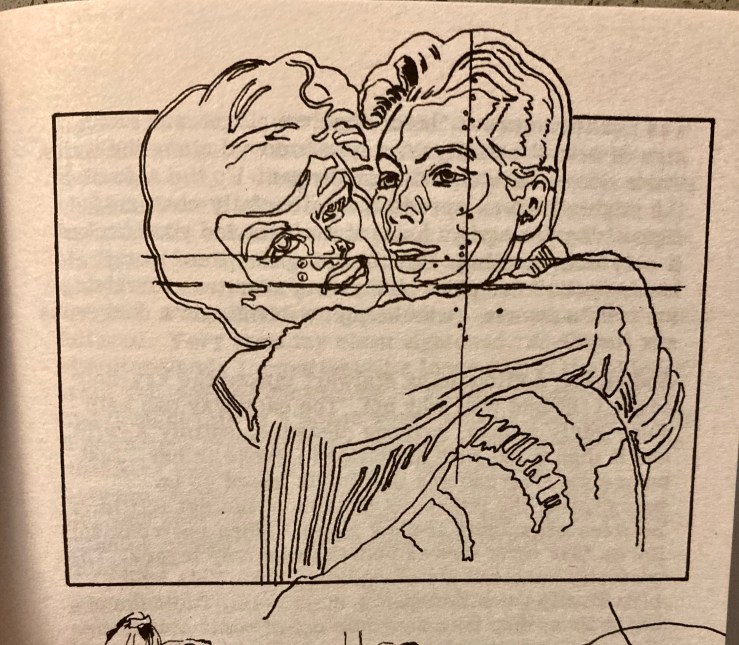
Brashly experimental, ribald, and hilarious, Tripticks maps new territories for the novel – aspiring to a form of pop art via the drawings of the artist Carol Annand and anticipating the genre-busting work of Kathy Acker through collage and gory satire.

Splattering its pages with the story of a man being chased across a nightmarish America by his ‘first X-wife’ and her ‘schoolboy gigolo’, Tripticks was ground zero for the collision of punk energy with high style.

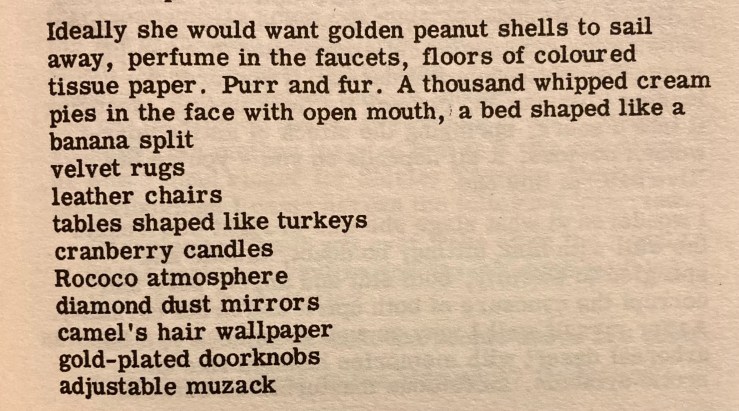
And Other Stories seem to have preserved the original style of Tripticks—it has the look and feel of a punk zine—mimeographed, collage-oriented, pasted together: little surreal comic strips and Pop Art explosions juxtaposed against lists and riffs.

Here’s one of Carol Annand’s illustrations:

And a little list:

Read an excerpt here.

My review of Quin’s first novel Berg.

My review of Quin’s third novel Passages.

“The Suspect” — Tom Clark

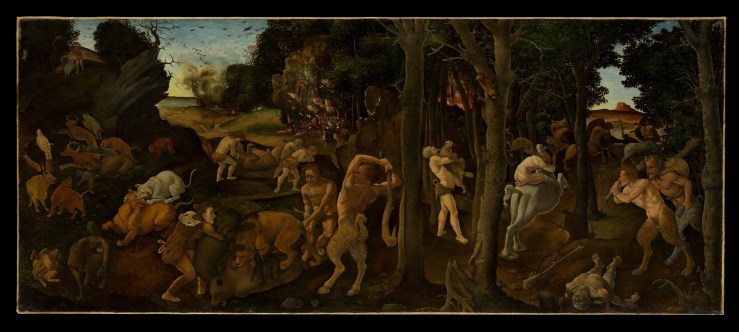
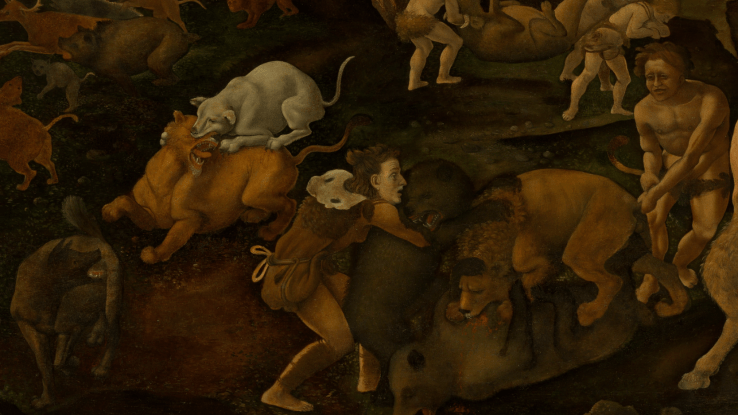
A Hunting Scene — Piero di Cosimo

A Hunting Scene, c. 1494–1500 by Piero di Cosimo (1462–1522)

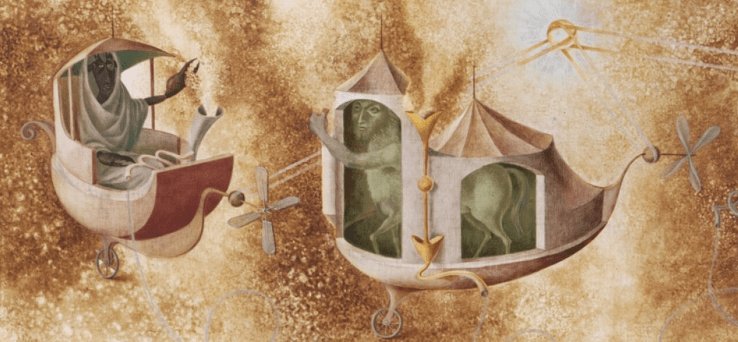
Microcosmos — Remedios Varo

Microcosmos, 1959 by Remedios Varo (1908-1963)

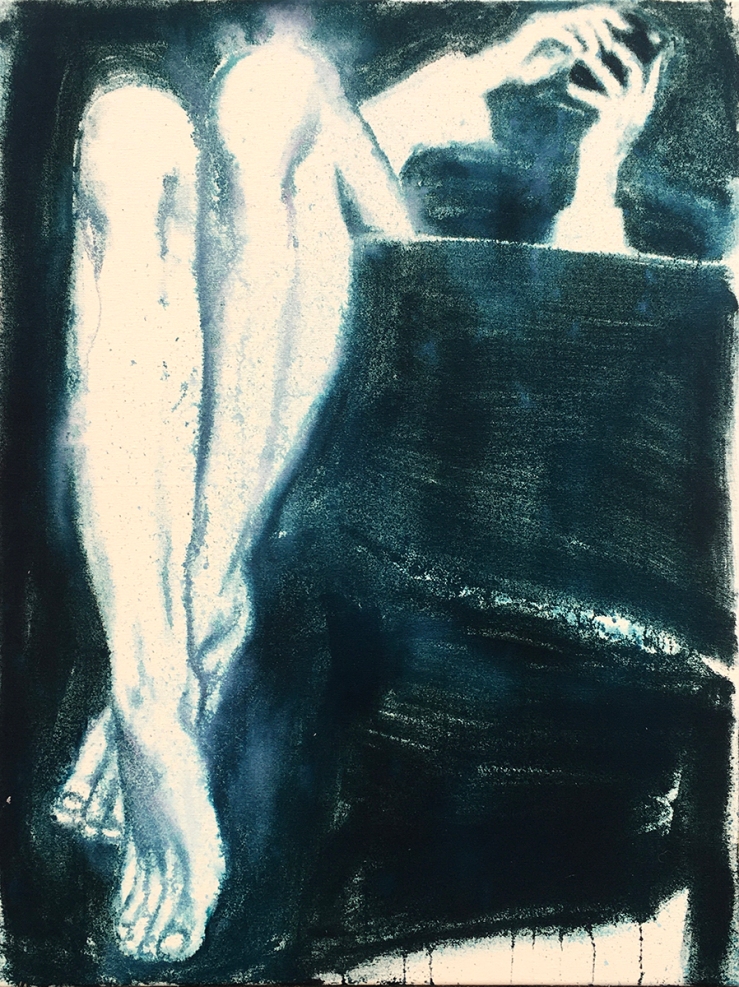
Chatleg 2 — Dieter Mammel

Chatleg 2, 2021 by Dieter Mammel (b. 1965)

Last Friday of no-school summer blog

Our air conditioner broke this week. Specifically, the fan motor broke, after a big power surge that left us without electricity for about six hours.

I read most of Fernanda Melchor’s novel Paradais (in Sophie Hughes’ translation) that day. While it’s not as rich and full (and really, just long) as her novel Hurricane Season, it’s cut from the same abject cloth. Two kids working towards becoming full-time alcoholics in an upscale development somewhere in Mexico ruin their lives. It’s a grimy glowing postmodern gothic, part of the Nothing Good Happens genre of what I think of as the Nothing Good Happens genre, reminiscent of Handke’s Funny Games, Bolaño’s myth crimes, and Nicolas Winding Refn’s neon romance terrors. Good stuff.

But our air conditioner is still broken, and school starts for the kids this Monday, and Florida is burning hot, like a lot of the northern hemisphere. It’s pretty bad! I taped foil to the skylights, where the infrared thermometer was hitting over a hundred today, even though it was cloudy. It’s likely that the twenties might offer some of the best years this century will yield,. Dour thought.

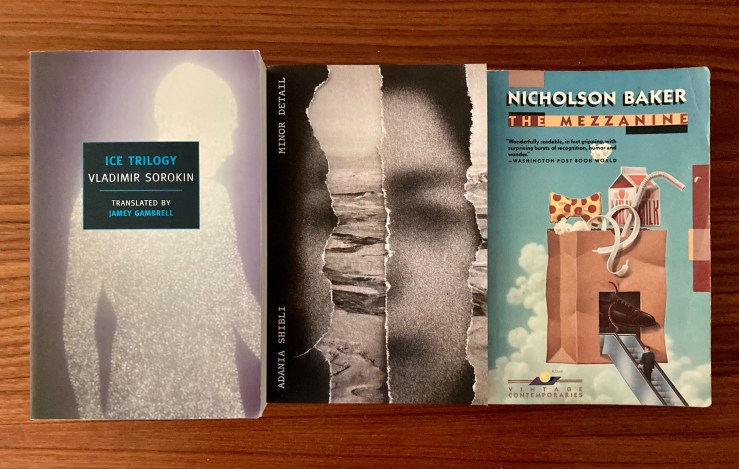
I had covid for a nice-not-nice chunk of July. I still have a cough from it, although I never got really sick. I went to the used bookstore maybe a week ago. It was the first place I went to after I recovered and cleared quarantine. I  picked up Vladimir Sorokin’s Ice “trilogy” (BroIce, and 23,000), in translation by Jame Gambrell. I also picked up a Vintage Contemporaries edition of Nicholson Baker’s The Mezzanine. I didn’t read those this week; I read Vladimir Sorokin’s Blue Lard (trans. Max Lawton), a true mindfuck, and Melchor’s Paradais. 

Some dirty motherfucker stabbed Salman Rushdie today. Antarctic heatwave. The US DOJ is investigating a former president of the United States of America for espionage related to selling nuclear secrets. I went to the bookstore again.

I picked up a thin novel published by New Directions, Adania Shibli’s Minor Detail, in translation by Elisabeth Jaquette. Here is ND’s jacket copy:

Minor Detail begins during the summer of 1949, one year after the war that the Palestinians mourn as the Nakba—the catastrophe that led to the displacement and exile of some 700,000 people—and the Israelis celebrate as the War of Independence. Israeli soldiers murder an encampment of Bedouin in the Negev desert, and among their victims they capture a Palestinian teenager and they rape her, kill her, and bury her in the sand.

Many years later, in the near-present day, a young woman in Ramallah tries to uncover some of the details surrounding this particular rape and murder, and becomes fascinated to the point of obsession, not only because of the nature of the crime, but because it was committed exactly twenty-five years to the day before she was born. Adania Shibli masterfully overlays these two translucent narratives of exactly the same length to evoke a present forever haunted by the past.

I ran into a former student today at the bookstore. Always feels good. So I guess I’ll end on that, a positive note, a little hope.

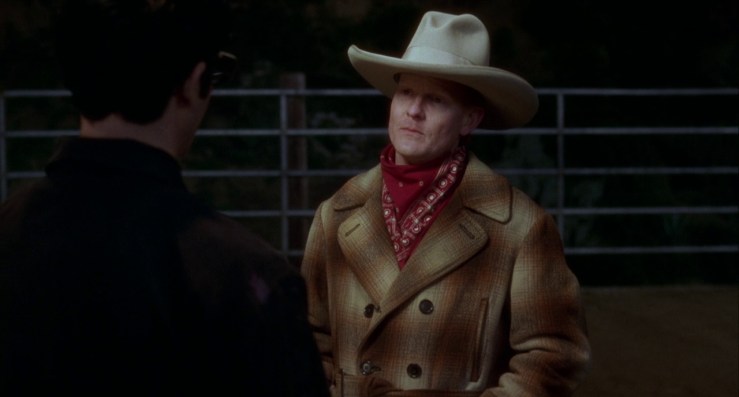
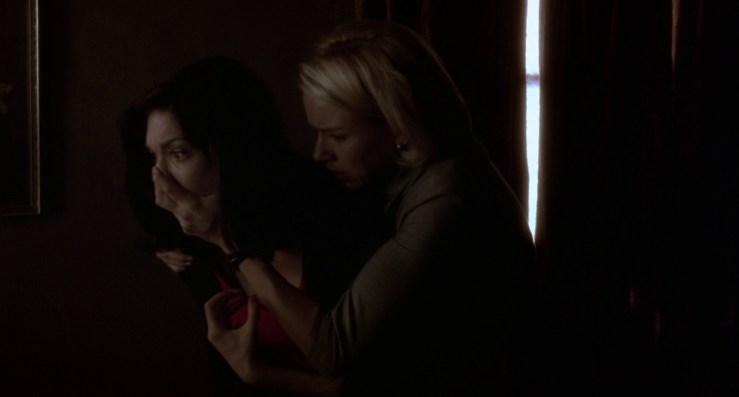
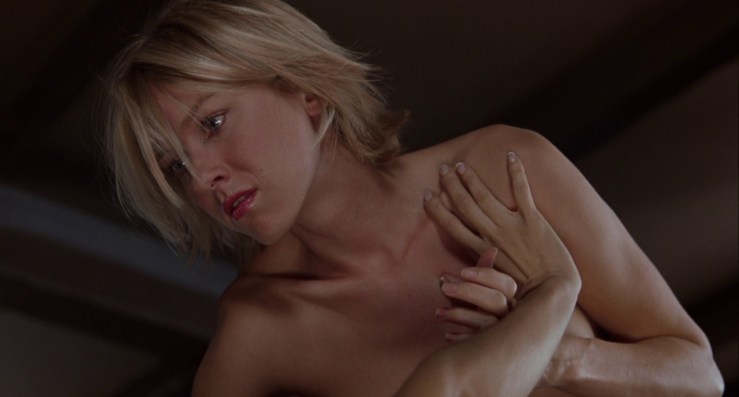
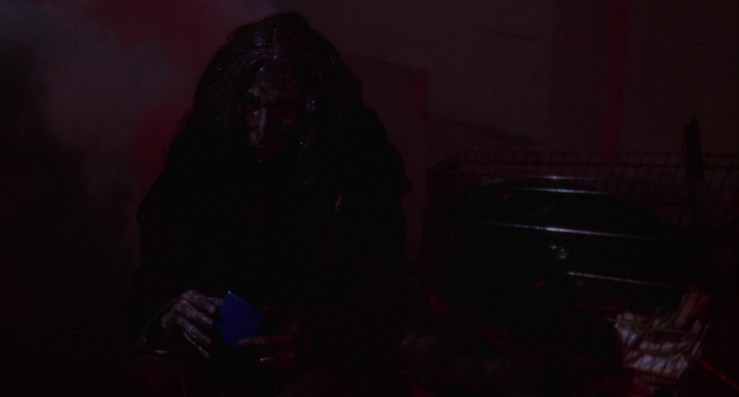
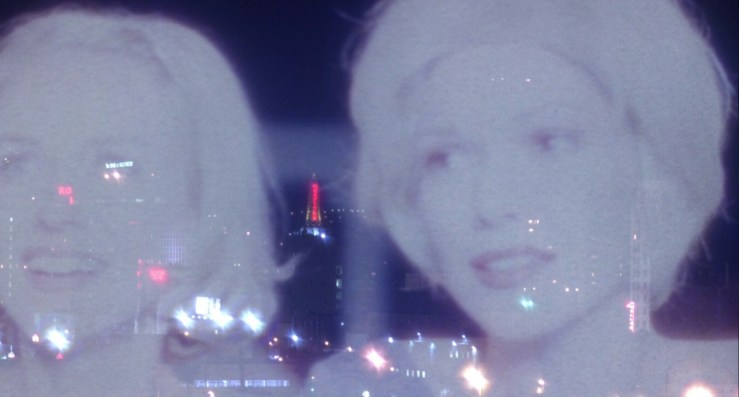
28 still frames from David Lynch’s Mulholland Drive

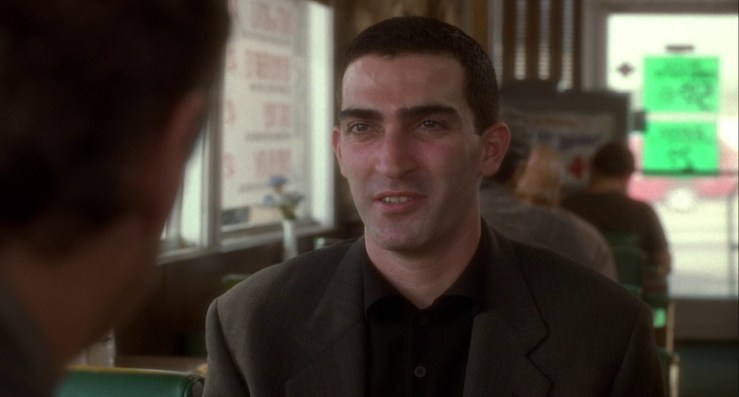
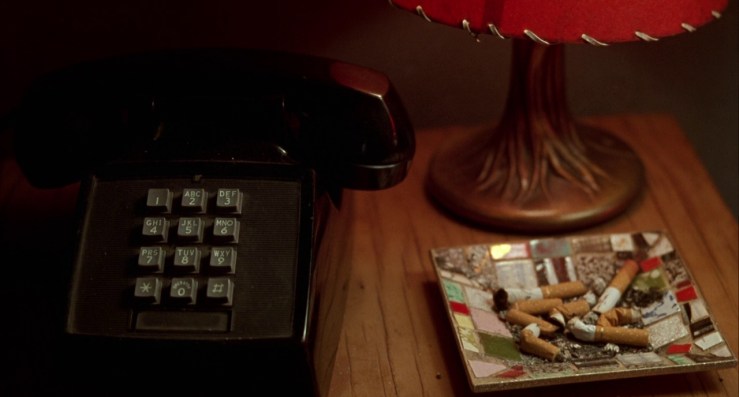
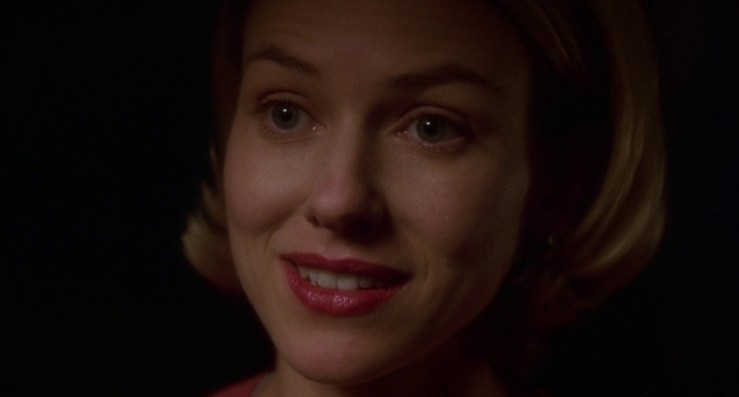
From Mulholland Drive, 2001. Directed by David Lynch with cinematography by Peter Deming. Via FilmGrab.

“The Hot Dog Factory (1937) — Grace Cavalieri

“The Hot Dog Factory (1937)”

by

Grace Cavalieri


Of course now children take it for granted but once
we watched boxes on a conveyor belt, sliding by,
magically filled and closed, packed and wrapped.
We couldn’t get enough of it, running alongside the machine.
In kindergarten Miss Haynes walked our class down
Stuyvesant Avenue, then up Prospect Street
to the hot dog factory. Only the girls got to go
as the boys were too wild.
We stood in line, wiggling with excitement as the man
talked about how they made hot dogs, then he handed us
one, and Jan dropped hers, so I broke mine in half.
This was the happiest day of our lives,
children whose mothers didn’t drive, and had nowhere
to go but school and home, to be taken to that street
to watch the glittering steel and shining rubber belts moving,
moving meats, readymade. I wish I could talk with Jan,
recalling the miracle and thrill of the hot dog factory,
when she was alive, before it all stopped—
bright lights, glistening motors, spinning wheels.

“Grateful Dead Tapes” — Ed Skoog

“Grateful Dead Tapes”

by

Ed Skoog


Even though we’ve already been dead,
when I find two trays of Grateful Dead tapes
in a Missoula secondhand store,
I too feel bound in the stasis of cassette,
plastic cases scarred and cracked
like old scuba goggles. Some retain
the delicate peg that lets the door swing open;
some have broken, maybe from a fall
when someone slid too fast the van door open
in a hot parking lot. Could be no tragedy
made the tapes secondhand greater
than a lost interest. Used to listen to them,
the owner might say, the way you adjust
to walking past a grave. I love him, or her,
who has curated these happenings, although
the Dead’s not really my bag. I follow
other melodies and injured visions, draw
my cider from another press, a cooler lava.
I saw them once, summer of ’95 at RFK,
with my friend Jax. It was terrible,
a lot of twentieth-century business came due
at once. Bob Dylan opened unintelligible
and sleepy as if reaching from the frost
to make known “in life I was Bob Dylan.”
The Dead would play five more stands:
Auburn Hills, Pittsburgh, Noblesville,
Maryland Heights, Chicago, then done,
those last shows, autobiographies of indulgence.
Lightning struck by a branch. We left early.
Tapers caught every note of the show.
You can hear it forever at archive.org.
In my greatest period of disorientation,
the Dead, like death, seemed best avoided.
Yet I was the sort who might admit
a simplifying affection like the Dead.
I remember, coming down in a cornfield
near a creek at dawn, talking it out with Jason
whether those trees were weird, or that
weirdness took the form of trees,
and every woman I pursued
had a pet cat that made me sneeze.
They either liked the Dead or Neil
Diamond. Yet I would persevere,
like one with a disorder, hanging
in the doorway to their petite kitchens
while they ground coffee, or searched
the crisper for a roommate’s hidden beer.
I longed to become more elaborate,
my approaches too simple and still are,
ask anyone about pleasure’s light opera
and the children’s music of the first kiss,
the hair metal of the second. And now
I play the Dead around the house.
It’s children’s music. We play operettas,
Pinafore, Penzance, for the same reasons,
because they are kind and almost meaningless.
I make few claims. What lasts is awkward
chance, like this thrift-store wrench
anthologized on pegboard, or smudges
on a yellow phone. I’m not buying
the tapes today. The price isn’t marked
and the clerk’s busy. I keep what marriage
and child need, a few books and held-back objects,
metal or paper, letters from old loves,
because letters are antique, and for
the limestone antiquity of those affections.

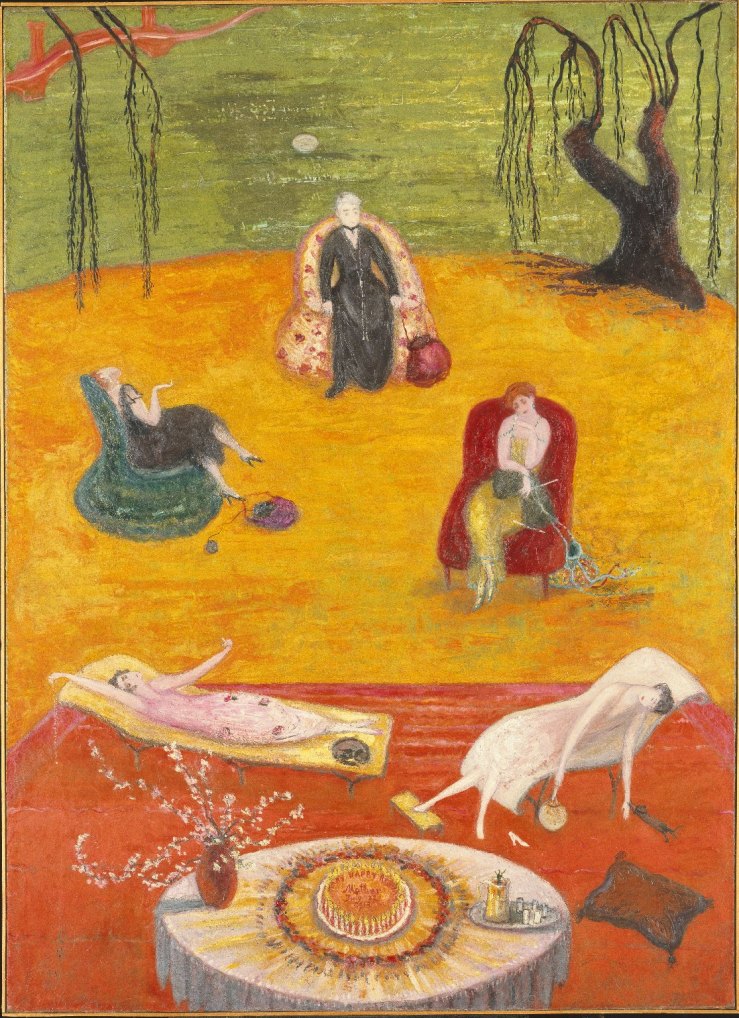
Heat — Florine Stettheimer

Heat, 1919 by Florine Stettheimer (1871-1944)

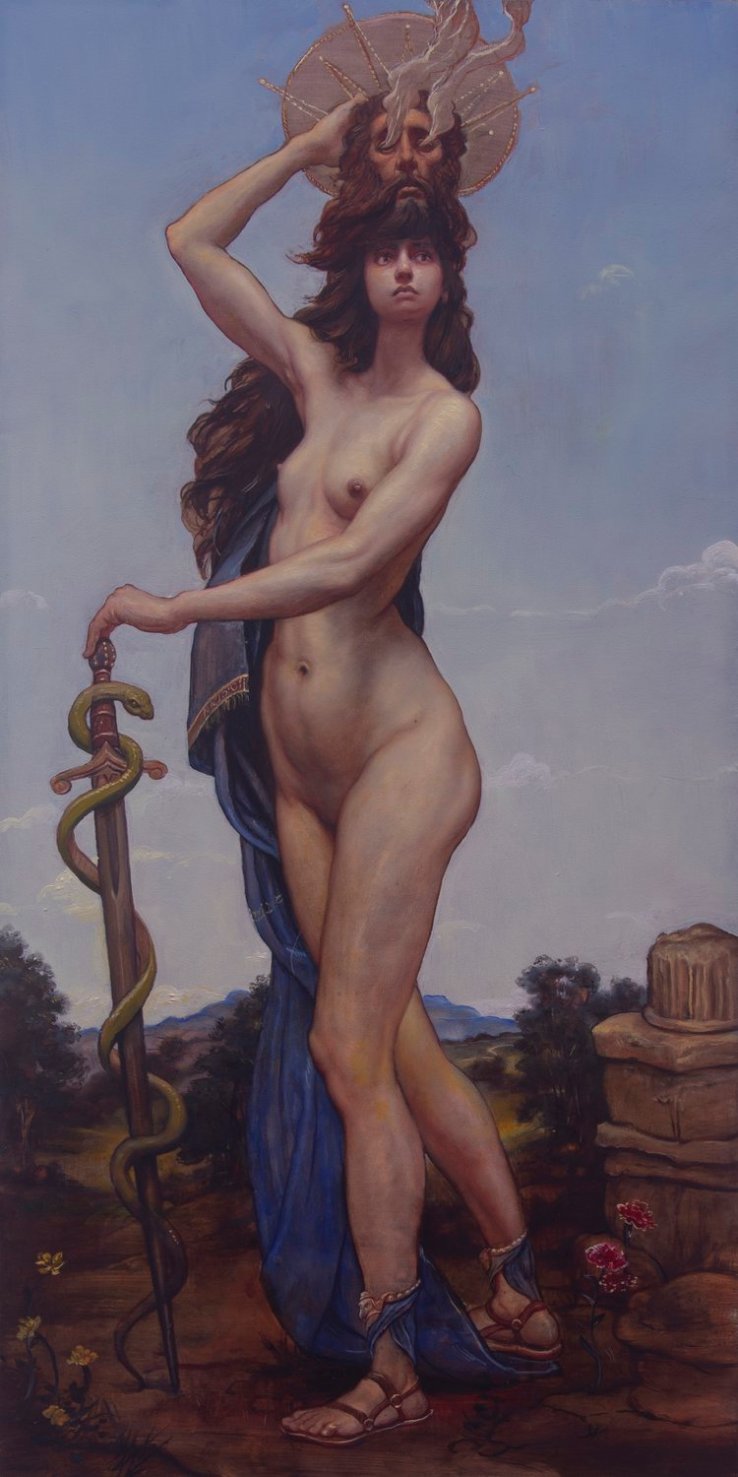
Salome — Adam Miller

Salome, 2021 by Adam Miller (b. 1979)

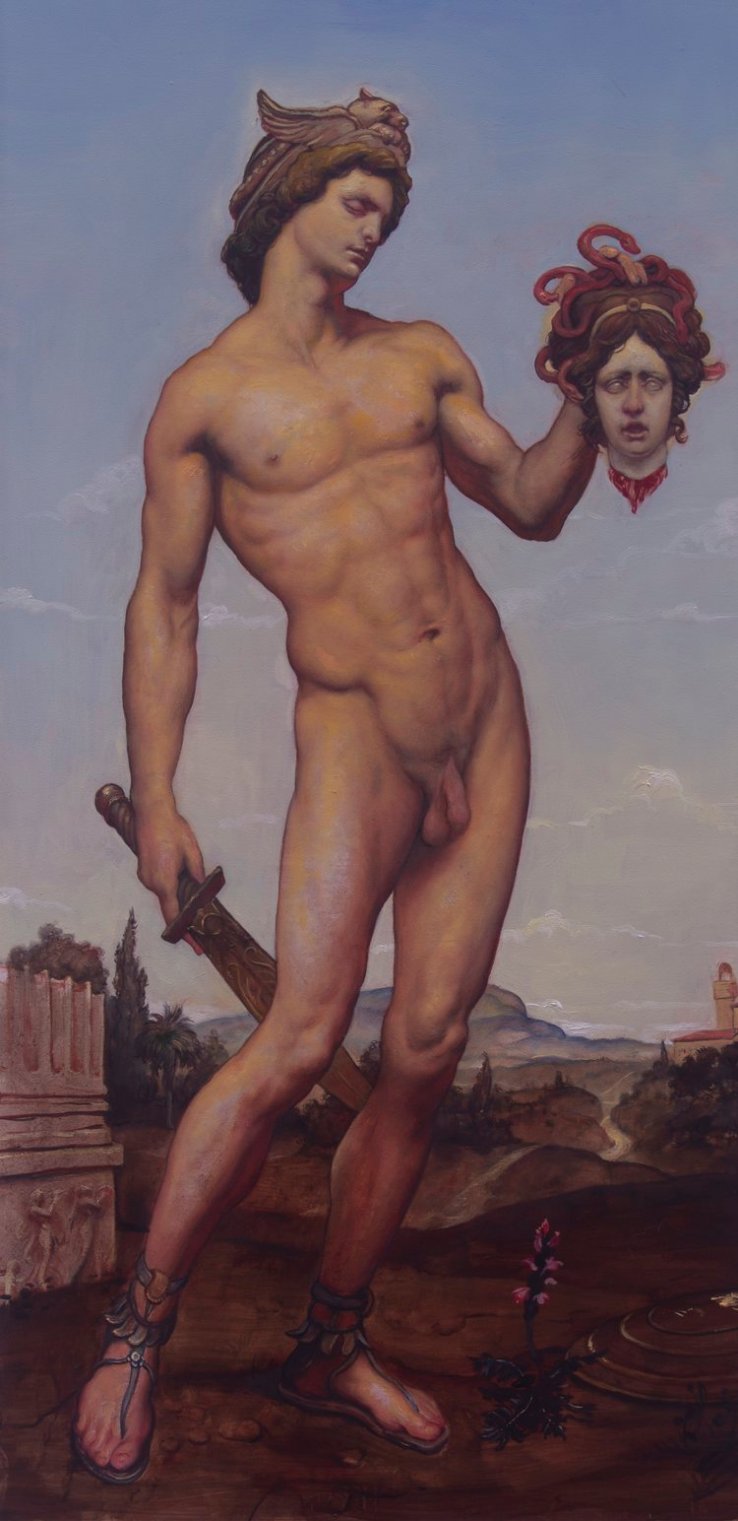
Perseus — Adam Miller

Perseus, 2021 by Adam Miller (b. 1979)