Book Shelves #52, 12.23.2012

Book shelves series #52, fifty-second Sunday of 2012: In which, in this penultimate chapter, we return to the site of entry #1.

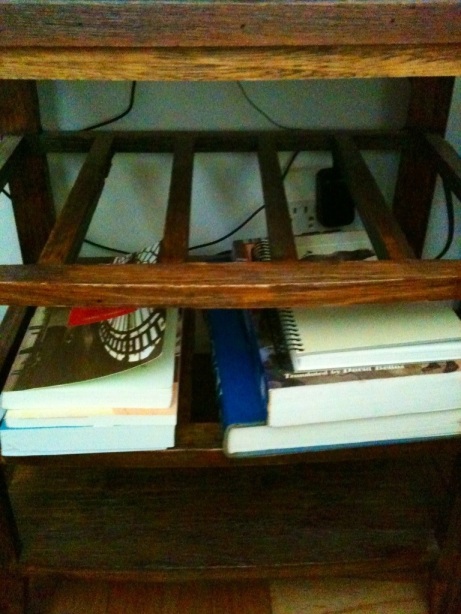
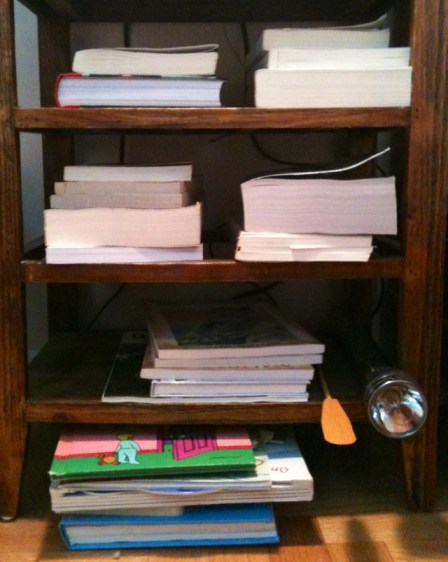
The first entry in this project was my bedside nightstand. This is what it looked like back in January:

This is it this morning:

20121223-113957.jpg

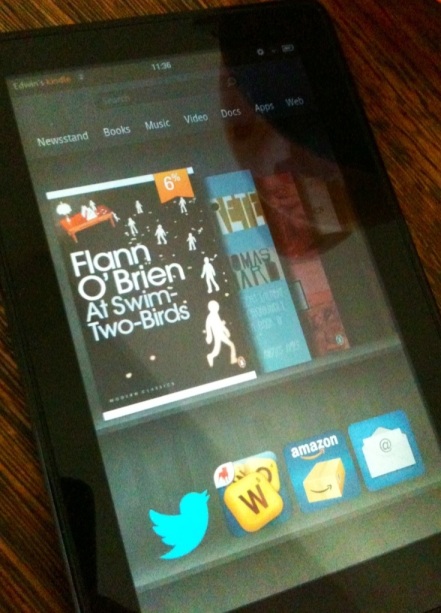
This is the major difference:

20121223-114053.jpg

The Kindle Fire has changed my late night shuffling habits.

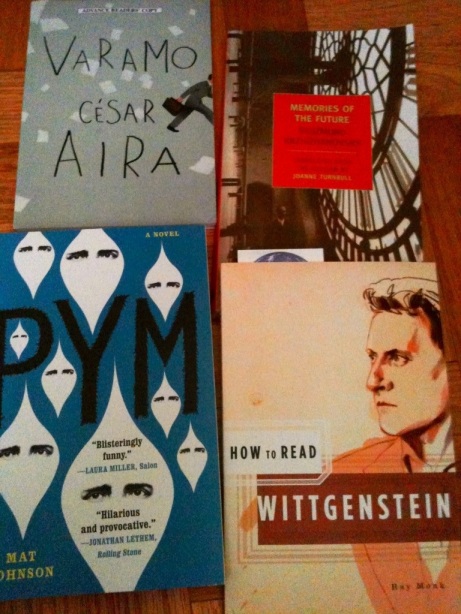
Here are the books that are in the nightstand:

20121223-114006.jpg

I read the Aira novel but completely forgot about it, which I’m sure says more about me than it.

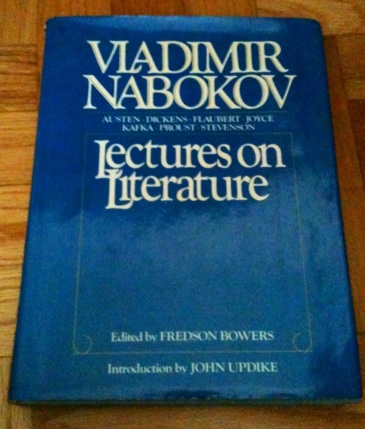
Have no idea why this is in there:

20121223-114014.jpg

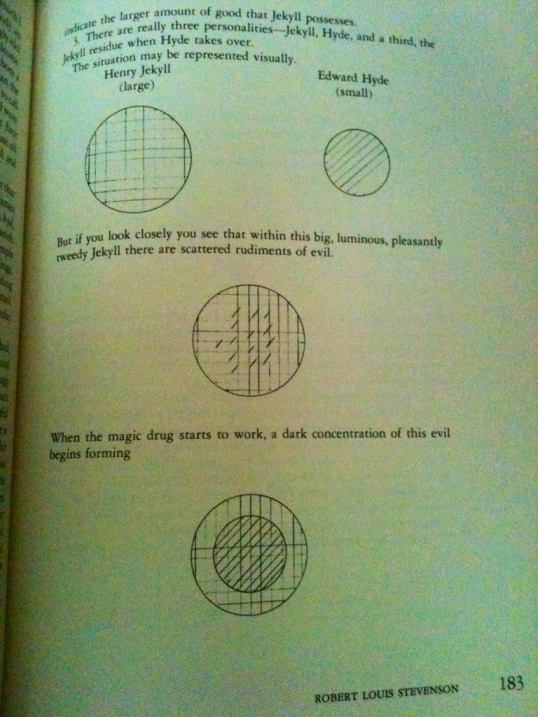
But it’s a fun book. With pictures! Sample:

20121223-114024.jpg

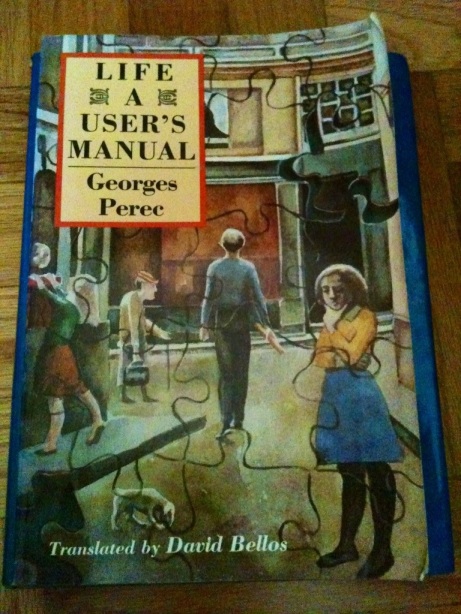
Finally, Perec’s Life A User’s Manual—this is one of my reading goals for 2013. It seems like a good way to close out this penultimate post, as one of Perec’s essays inspired this project

“Every library answers a twofold need, which is often also a twofold obsession: that of conserving certain objects (books) and that of organizing them in certain ways”

—Georges Perec, from ”Brief Notes on the Art and Manner of Arranging One’s Books” (1978)

20121223-114044.jpg

The House Opposite — Leonora Carrington

untitled1336461157077

Read Nathaniel Hawthorne’s Short Story “The Christmas Banquet”

“The Christmas Banquet,” a tale from Nathaniel Hawthorne (from Mosses from an Old Manse):

“I HAVE HERE attempted,” said Roderick, unfolding a few sheets of manuscript, as he sat with Rosina and the sculptor in the summer-house–“I have attempted to seize hold of a personage who glides past me, occasionally, in my walk through life. My former sad experience, as you know, has gifted me with some degree of insight into the gloomy mysteries of the human heart, through which I have wandered like one astray in a dark cavern, with his torch fast flickering to extinction. But this man–this class of men–is a hopeless puzzle.”

“Well, but propound him,” said the sculptor. “Let us have an idea of him, to begin with.”

“Why, indeed,” replied Roderick, “he is such a being as I could conceive you to carve out of marble, and some yet unrealized perfection of human science to endow with an exquisite mockery of intellect; but still there lacks the last inestimable touch of a divine Creator. He looks like a man, and, perchance, like a better specimen of man than you ordinarily meet. You might esteem him wise–he is capable of cultivation and refinement, and has at least an external conscience–but the demands that spirit makes upon spirit, are precisely those to which he cannot respond. When, at last, you come close to him, you find him chill and unsubstantial–a mere vapor.”

Continue reading “Read Nathaniel Hawthorne’s Short Story “The Christmas Banquet””

Reading the Letter — Nikolay Bogdanov-Belsky

Christmas in Shakespeare (From Thomas Firminger Thiselton-Dyer’s Folk-lore of Shakespeare)

From Thomas Firminger Thiselton-Dyer’s Folk-lore of Shakespeare:

Christmas. Among the observances associated with this season, to which Shakespeare alludes, we may mention the Christmas Carol, a reference to which is probably made in “A Midsummer-Night’s Dream” (ii. 1), by Titania: “No night is now with hymn or carol blest.”

Hamlet (ii. 2) quotes two lines from a popular ballad, entitled the “Song of Jephthah’s Daughter,” and adds: “The first row of the pious chanson will show you more.”

In days gone by, the custom of carol-singing was most popular, and Warton, in his “History of English Poetry,” notices a license granted in 1562 to John Tysdale for printing “Certayne goodly carowles to be songe to the glory of God;” and again “Crestenmas Carowles auctorisshed by my lord of London.”

In the “Taming of the Shrew” (Ind., sc. 2) Sly asks whether “a comonty is not a Christmas gambold.” Formerly the sports and merry-makings at this season were on a most extensive scale, being presided over by the Lord of Misrule. Again, in “Love’s Labour’s Lost” (v. 2), Biron speaks of “a Christmas comedy.”

As we have noticed, too, in our chapter on Plants, a gilt nutmeg was formerly a common gift at Christmas, and on other festive occasions, to which an allusion is probably made in the same scene. Formerly, at this season, the head of the house assembled his family around a bowl of spiced ale, from which he drank their healths, then passed it to the rest, that they might drink too. The word that passed among them was the ancient Saxon phrase wass hael , i. e., to your health. Hence this came to be recognized as the wassail or wassel bowl; and was the accompaniment to festivity of every kind throughout the year. Thus Hamlet (i. 4) says: “The king doth wake to-night, and takes his rouse, Keeps wassail.” And in “Love’s Labour’s Lost” (v. 2), Biron speaks of: “wakes and wassails, meetings, markets, fairs.” In “Macbeth” (i. 7), it is used by Lady Macbeth in the sense of intemperance, who, speaking of Duncan’s two chamberlains, says: “Will I with wine and wassail so convince, That memory, the warder of the brain, Shall be a fume, and the receipt of reason A limbeck only.” In “Antony and Cleopatra” (i. 4), Cæsar advises Antony to live more temperately, and to leave his “lascivious wassails.” In the same way, a “wassail candle” denoted a large candle lighted up at a festival, a reference to which occurs in “2 Henry IV.” (i. 2): “Chief-Justice. You are as a candle, the better part burnt out. Falstaff. A wassail candle, my lord; all tallow.”

A custom which formerly prevailed at Christmas, and has not yet died out, was for mummers to go from house to house, attired in grotesque attire, performing all kinds of odd antics. Their performances, however, were not confined to this season. Thus, in “Coriolanus” (ii. 1) Menenius speaks of making “faces like mummers.”

 

What the Water Gave Me — Frida Kahlo

Tom McCarthy & D.T. Max Discuss David Foster Wallace

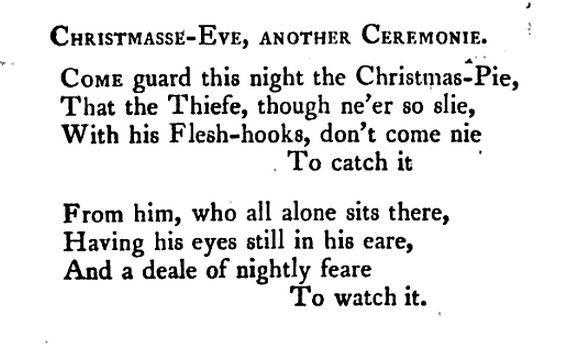
“Christmasse-Eve, Another Ceremonie” — Robert Herrick

herrick

The Nativity — William Blake

https://i0.wp.com/uploads1.wikipaintings.org/images/william-blake/the-nativity-1800.jpg

“The Mouse” — Saki

“The Mouse” — Saki

Theodoric Voler had been brought up, from infancy to the confines of middle age, by a fond mother whose chief solicitude had been to keep him screened from what she called the coarser realities of life. When she died she left Theodoric alone in a world that was as real as ever, and a good deal coarser than he considered it had any need to be. To a man of his temperament and upbringing even a simple railway journey was crammed with petty annoyances and minor discords, and as he settled himself down in a second-class compartment one September morning he was conscious of ruffled feelings and general mental discomposure.

He had been staying at a country vicarage, the inmates of which had been certainly neither brutal nor bacchanalian, but their supervision of the domestic establishment had been of that lax order which invites disaster. The pony carriage that was to take him to the station had never been properly ordered, and when the moment for his departure drew near, the handyman who should have produced the required article was nowhere to be found. In this emergency Theodoric, to his mute but very intense disgust, found himself obliged to collaborate with the vicar’s daughter in the task of harnessing the pony, which necessitated groping about in an ill-lighted outbuilding called a stable, and smelling very like one – except in patches where it smelled of mice. Without being actually afraid of mice, Theodoric classed them among the coarser incidents of life, and considered that Providence, with a little exercise of moral courage, might long ago have recognised that they were not indispensable, and have withdrawn them from circulation.

As the train glided out of the station Theodoric’s nervous imagination accused himself of exhaling a weak odour of stable yard, and possibly of displaying a mouldy straw or two on his unusually well-brushed garments. Fortunately the only other occupation of the compartment, a lady of about the same age as himself, seemed inclined for slumber rather than scrutiny; the train was not due to stop till the terminus was reached, in about an hour’s time, and the carriage was of the old-fashioned sort that held no communication with a corridor, therefore no further travelling companions were likely to intrude on Theodoric’s semiprivacy. And yet the train had scarcely attained its normal speed before he became reluctantly but vividly aware that he was not alone with the slumbering lady; he was not even alone in his own clothes. Continue reading ““The Mouse” — Saki”

Young Man Reading by Candlelight — Matthias Stom

Allegory of Winter — Remedios Varo

Watch Samuel Beckett’s Endgame (Full Filmed Production)

The Junky’s Christmas — William S. Burroughs

Apocalypse Is Postponed — Florin Ciulache

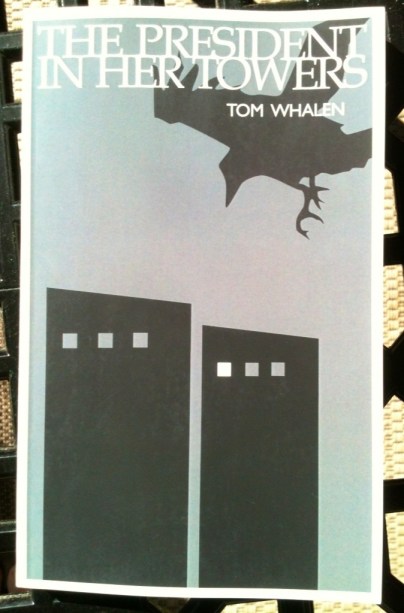
The President in Her Towers (Book Acquired, 12.20.2012)

20121221-122159.jpg

I just read the first few chapters of The President in Her Towers, Tom Whalen’s satire of academia—good stuff: short, punchy chapters that illustrate the reality of academia in all its paranoid surreality. Here’s publisher Ellipsis Press’s blurb:

Through the corridors of the university’s Humanities and Sciences Towers, rumors are swirling about the President: her bizarre decrees, her midnight meetings, her strange projects (the Head-in-Progress, the Activated Eye, the Gestation Chamber). The President’s dedicated personal assistant, Thomas (a.k.a. Herr Abjectus), is charged with investigating and reporting on these and other matters, but it won’t be easy—especially since the President has disappeared. And now there is a new rumor: that she has been marked for assassination


The Four Horsemen of the Apocalypse — Arturo Souto