Frederic Remington Letter

at0179.7s

From the LOC:

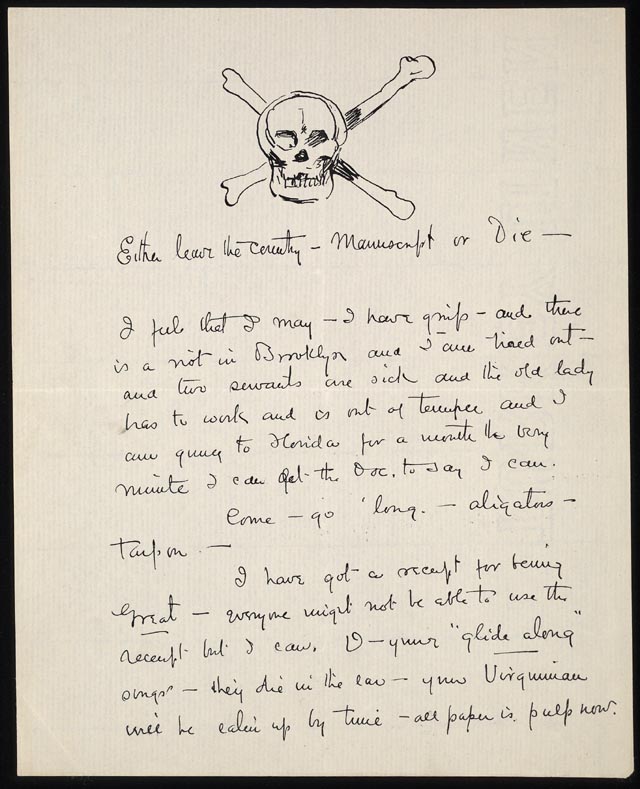
Two champions of the old West share their common interest in this illustrated letter from sculptor, illustrator, and painter Frederic Remington to writer Owen Wister. Both originally Easterners, the two men had met in 1893 when Wister went to Wyoming for his health. In this letter to his new friend, Remington muses about the instability of his paintings, which may fade in time “like pale molasses,” but he suggests that his new work in bronze–“a cowboy on a bucking broncho”–will “rattle down through all the ages.”

 

Merry Christmas from Winsor McCay

Book Shelves #51, 12.16.2012


Book shelves series #51, fifty-first Sunday of 2012

20121216-092447.jpg

I am very ready for this project to be over. Two more weeks.

At this point, I’ve photographed all book shelves (and other bookbearing surfaces) in the house, but clearly the book shelves aren’t stable.

I mean, structurally, sure, they’re stable.

But their content shifts.

So this week (having three weeks left to fill), I go back to a sitting room in the front of the house where I like to read.

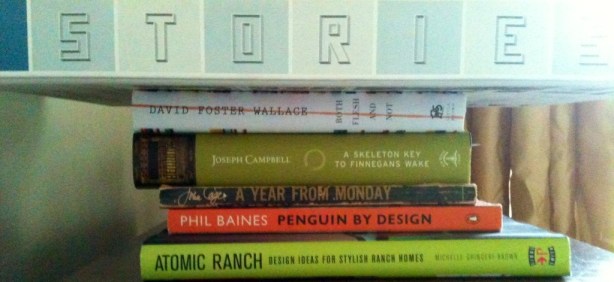
Above, resting on this cabinet, some current reading, including the latest DFW collection and Chris Ware’s Building Stories.

Below, a coffee table (first photographed in #7 of this series):


20121216-092518.jpg

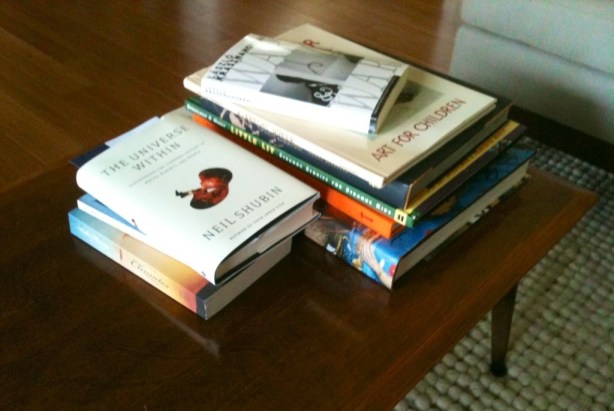
As usual, a few coffee table books, plus several review copies that I need to look at sometime next week:

20121216-092535.jpg

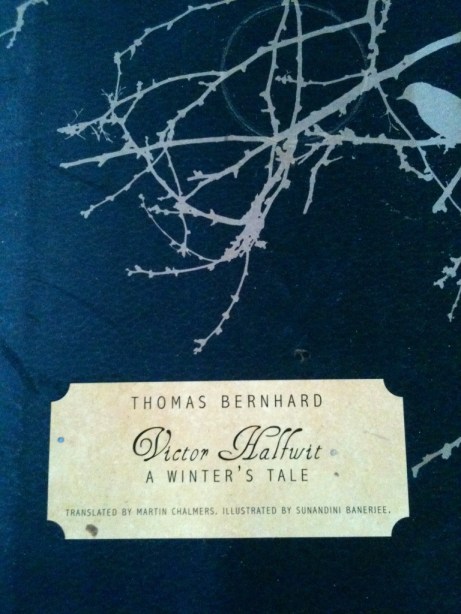
One of the coffee table books is by Thomas Bernhard:

20121216-092544.jpg

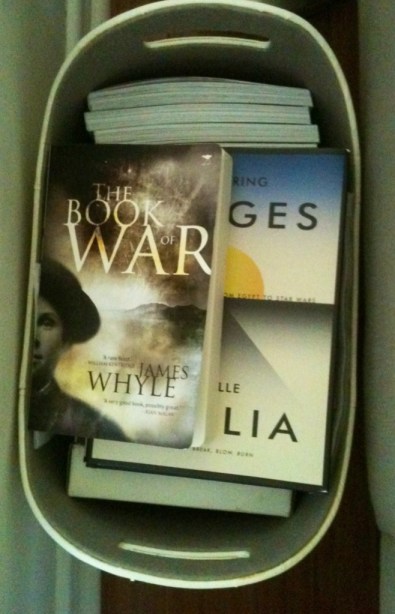
To the right of the case, a bin of books—mostly review copies that come in that I plan to write more about:

20121216-092558.jpg


Reading in the Forest — Eva Gonzales

Mourning — Umberto Boccioni

Watch A Day in the Afterlife, a Documentary on Philip K. Dick (BBC, 1994)

Noel — Salvador Dali

https://i0.wp.com/uploads7.wikipaintings.org/images/salvador-dali/christmas-noel.jpg

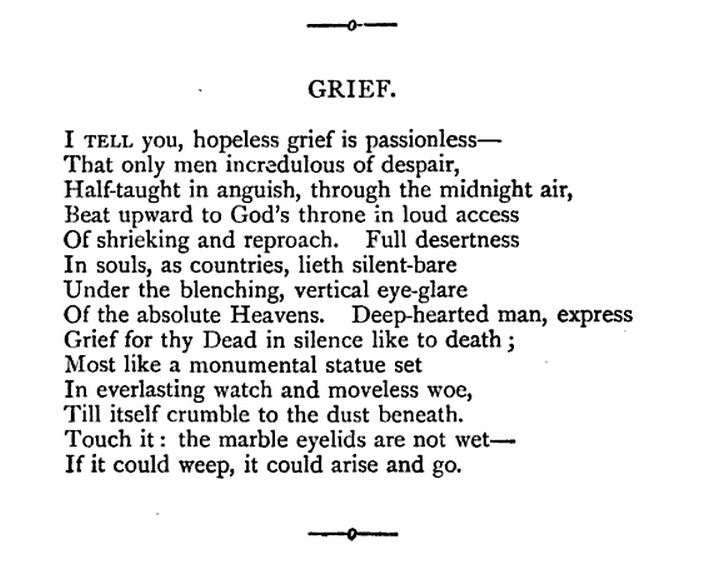
“Grief” — Elizabeth Barrett Browning

grief

Reading a Story — James Tissot

Sorrow — Vincent van Gogh

Watch Death for Five Voices, Werner Herzog’s Film About the Bizarre Life of Carlo Gesualdo

This Is Probably the Best Thing We Ran in 2012

The Bride’s Last Encounter with Her Lovers — Kristine Moran


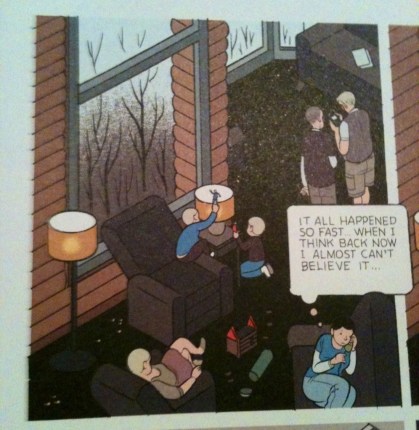
Reading Chris Ware’s Building Stories / It All Happened So Fast

20121213-185225.jpg

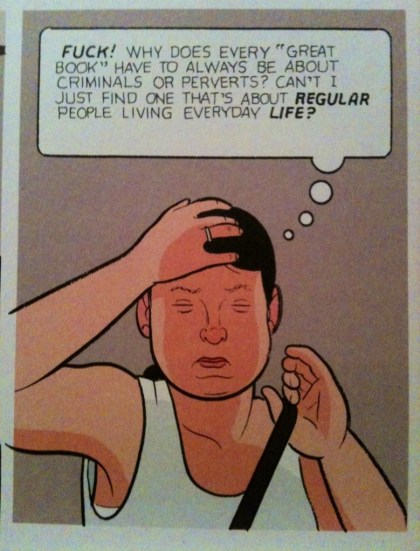
As seems to be the case more often than not in this series of write-ups on reading Chris Ware’s Building Stories, I’ve taken the title from the first line of the first panel (below); you can see the scale of this chapter in folded broadside in the pic above (which also reveals the heart of this episode).

20121213-185234.jpg

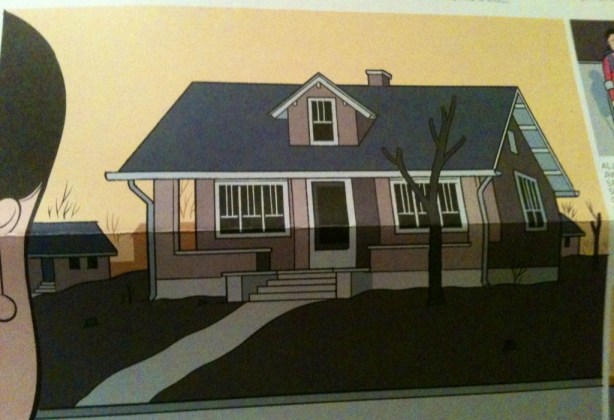
This particular episode focuses again on Lonely Girl/Married Mom/The Amputee, who has slowly emerged as the protagonist of Ware’s novel. Here, she deals with the news of her father’s illness, an event that brings her back to her childhood home repeatedly. The motif of homes and buildings evinces again too, of course—it’s a subtle but omnipresent device in Building Stories:

20121213-185305.jpg

20121213-185312.jpg

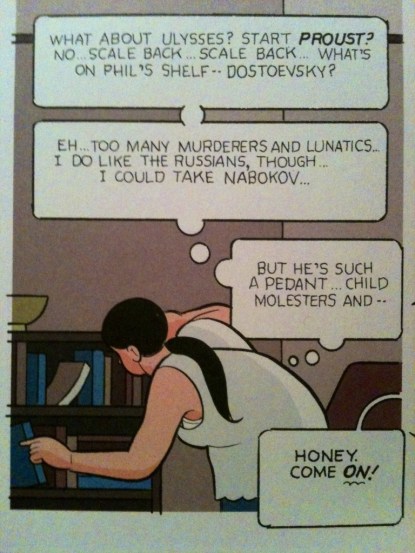
And as always, Ware’s genius shows in the way he conveys so much truth in the smallest detail. Below he illustrates Lonely Girl’s disconnected relationship with her architect husband in just a panel:

20121213-185243.jpg

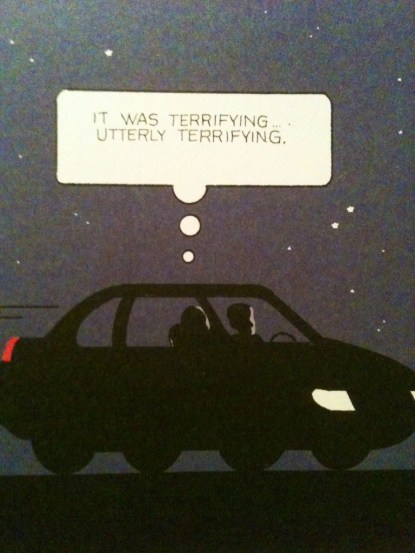
“It All Happened So Fast” is a fair name for this chapter—Ware’s panels illustrate the way that our lives (and the narrativizing of those lives) can become radically compressed, how our memories fail us, how seemingly trivial details anchor themselves to the emotional strata of our personalities even as concrete fact slips away. Still, another title could come from this panel:

20121213-185256.jpg

I’ll close this out by offering three panels that strike me as so utterly real, so wonderfully truthful, that I won’t bother to comment further:

20121213-185321.jpg

20121213-185328.jpg

20121213-185336.jpg

“The Magi,” A Stark Christmas Poem by William Butler Yeats

“The Magi” by William Butler Yeats. A Christmas poem that’s not about Christmas, I guess. I love the final image:

Now as at all times I can see in the mind’s eye,
In their stiff, painted clothes, the pale unsatisfied ones
Appear and disappear in the blue depth of the sky
With all their ancient faces like rain-beaten stones,
And all their helms of silver hovering side by side,
And all their eyes still fixed, hoping to find once more,
Being by Calvary’s turbulence unsatisfied,
The uncontrollable mystery on the bestial floor.


Books #3 — Dmitry Samarov

books3_Samarov

(Read my interview with Dmitry Samarov)

“When My First Wife Left Me” — R.L. Burnside (Film Shot by Alan Lomax in ’78)