The Misanthrope — Pieter Bruegel the Elder

RIP Adam Yauch

RIP MCA. 47 is way too young.

“Quite an Original” — Herman Melville on Hamlet, Don Quixote, and Satan

This is Chapter XLIV of Herman Melville’s The Confidence Man:

“Quite an original:” A phrase, we fancy, rather oftener used by the young, or the unlearned, or the untraveled, than by the old, or the well-read, or the man who has made the grand tour. Certainly, the sense of originality exists at its highest in an infant, and probably at its lowest in him who has completed the circle of the sciences.

As for original characters in fiction, a grateful reader will, on meeting with one, keep the anniversary of that day. True, we sometimes hear of an author who, at one creation, produces some two or three score such characters; it may be possible. But they can hardly be original in the sense that Hamlet is, or Don Quixote, or Milton’s Satan. That is to say, they are not, in a thorough sense, original at all. They are novel, or singular, or striking, or captivating, or all four at once.
More likely, they are what are called odd characters; but for that, are no more original, than what is called an odd genius, in his way, is. But, if original, whence came they? Or where did the novelist pick them up?

Where does any novelist pick up any character? For the most part, in town, to be sure. Every great town is a kind of man-show, where the novelist goes for his stock, just as the agriculturist goes to the cattle-show for his. But in the one fair, new species of quadrupeds are hardly more rare, than in the other are new species of characters—that is, original ones. Their rarity may still the more appear from this, that, while characters, merely singular, imply but singular forms so to speak, original ones, truly so, imply original instincts.

In short, a due conception of what is to be held for this sort of personage in fiction would make him almost as much of a prodigy there, as in real history is a new law-giver, a revolutionizing philosopher, or the founder of a new religion.

In nearly all the original characters, loosely accounted such in works of invention, there is discernible something prevailingly local, or of the age; which circumstance, of itself, would seem to invalidate the claim, judged by the principles here suggested.

Furthermore, if we consider, what is popularly held to entitle characters in fiction to being deemed original, is but something personal—confined to itself. The character sheds not its characteristic on its surroundings, whereas, the original character, essentially such, is like a revolving Drummond light, raying away from itself all round it—everything is lit by it, everything starts up to it (mark how it is with Hamlet), so that, in certain minds, there follows upon the adequate conception of such a character, an effect, in its way, akin to that which in Genesis attends upon the beginning of things.

For much the same reason that there is but one planet to one orbit, so can there be but one such original character to one work of invention. Two would conflict to chaos. In this view, to say that there are more than one to a book, is good presumption there is none at all. But for new, singular, striking, odd, eccentric, and all sorts of entertaining and instructive characters, a good fiction may be full of them. To produce such characters, an author, beside other things, must have seen much, and seen through much: to produce but one original character, he must have had much luck.

There would seem but one point in common between this sort of phenomenon in fiction and all other sorts: it cannot be born in the author’s imagination—it being as true in literature as in zoology, that all life is from the egg.

In the endeavor to show, if possible, the impropriety of the phrase, Quite an Original, as applied by the barber’s friends, we have, at unawares, been led into a dissertation bordering upon the prosy, perhaps upon the smoky. If so, the best use the smoke can be turned to, will be, by retiring under cover of it, in good trim as may be, to the story.

Books Acquired, 4.23.2012 — Or, Here’s What’s New from Picador This Month

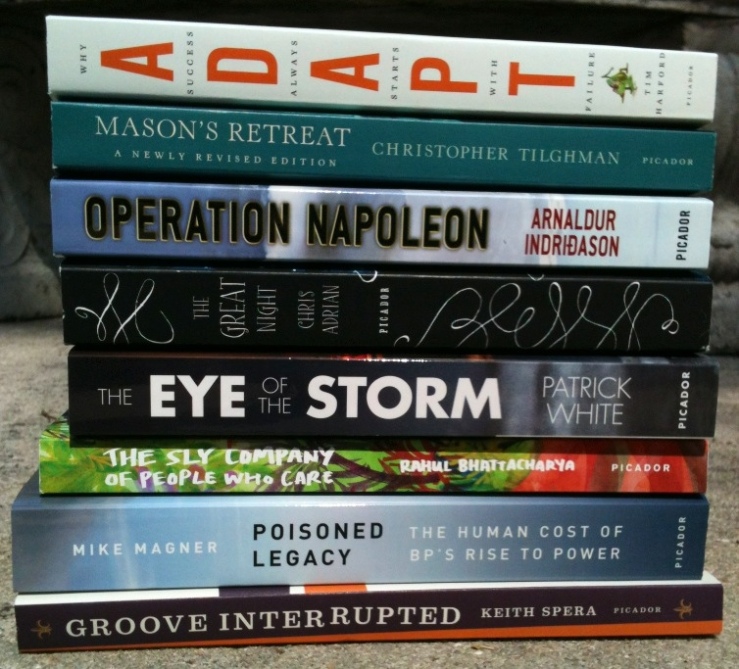
20120502-162855.jpgNice little stack from the good people at Picador—novels, reissues, first-time-in-trade-paperbacks, nonfiction . . . a nice little spread.

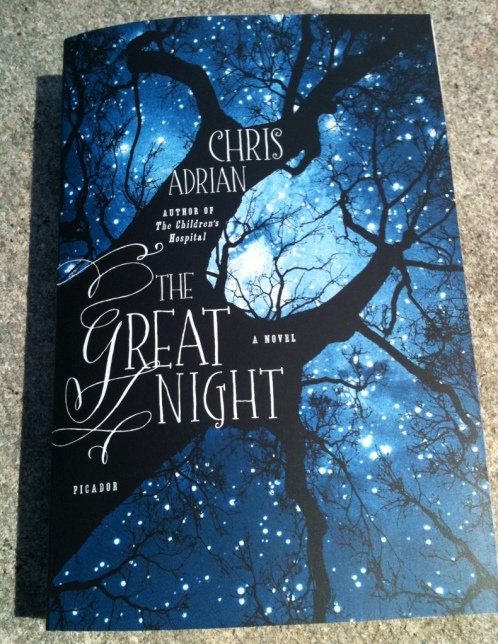
First up is Chris Adrian’s latest novel The Great Night, which, improbably, I’ve yet to read—I’m a huge fan of Chris Adrian’s other books, especially The Children’s Hospital (although I’ve reviewed his other books here too, for those inclined to hit the archives), and I love A Midsummer Night’s Dream, which I know The Great Night basically riffs on. Anyway, my wife snapped this one up right away (I had to go through her nightstand to fetch it up for yon photograph), so my reading will be delayed (although I will likely con her into reviewing it here).

20120502-162916.jpg

From Patrick Ness’s review at The Guardian

The Great Night is set in Buena Vista Park in San Francisco. Titania and Oberon – the very ones from Shakespeare’s play – live under the park’s main hill with their full court. Puck is there too, a malevolent but chained force, chafing for revenge against his masters. He may get his chance, for Titania is collapsing under grief. Boy, a changeling brought in by Oberon to amuse her and for whom she felt the first maternal feelings of her immortal life, has died of a very human disease, leukaemia.

Consumed by the pain of her loss, Titania makes a terrible mistake and tells Oberon she never loved him. Furious, he abandons her and shows no signs of returning. But perhaps if Titania releases Puck, who the other faeries refer to as the Beast, then Oberon will have to return to enslave him again. Won’t he? She breaks Puck’s bonds on the Great Night – Midsummer’s Eve, naturally – for which he says, “Milady, I am in your debt, and so I shall eat you last.” . . .

. . . Adrian does nearly everything right here. The Shakespearean references are worn lightly, and the plotting is so skilful you barely notice it falling into place. The characterisations are rich, too. There’s a spellbinding chapter on Molly’s childhood in a performing Christian family band that is both deeply weird and blisteringly sad. Plus there’s an eye-wateringly matter-of-fact approach to sex (and lots of it), which here is essentially indistinguishable from magic, and from love as well, in all its “intimations from the world that there was more to be had, something different and something better”.

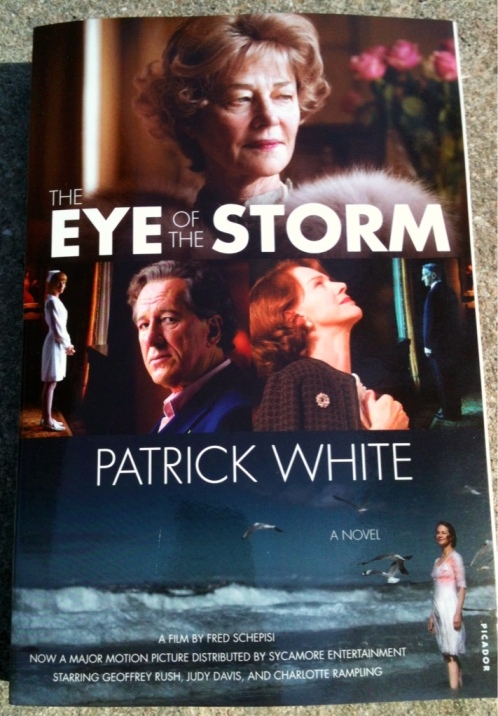
I like the cover of the Adrian, which I only mention here to transition into The Eye of the Storm, the novel that won Patrick White the Nobel in 1973. The book has been adapted into a film, so of course there’s a reissue with a film tie-in cover. (Buzzfeed’s addressed this phenomena recently; I did it a few years ago myself).

20120502-162937.jpg

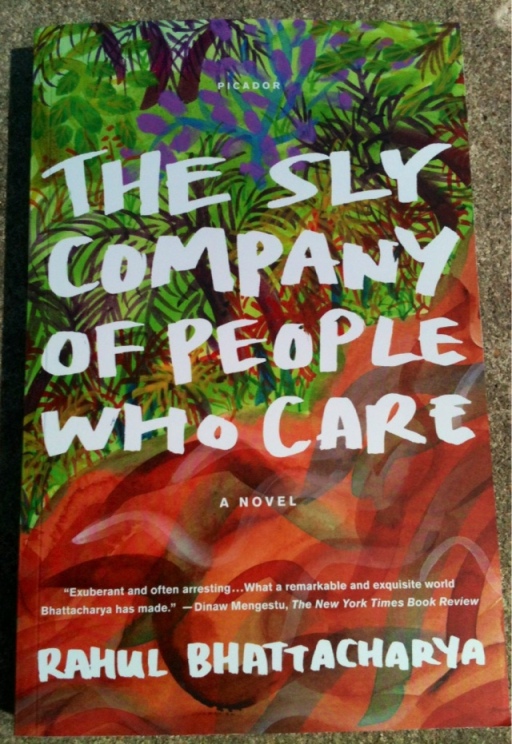
Speaking of covers: Love love love this one for The Sly Company of People Who Care by  Rahul Bhattacharya:

20120502-162952.jpg

Here’s novelist Dinaw Mengestu, from his review in The New York Times:

In the opening paragraph of Rahul Bhattacharya’s first novel, “The Sly Company of People Who Care,” the unnamed narrator, a former cricket journalist from India, declares his intentions for his life, and thus his story — to be a wanderer, or in his words, “a slow ramblin’ stranger.” That rambling, through the forests of Guyana; the ruined streets of its capital, Georgetown; and out to the borders of Brazil and Venezuela, constitutes the novel’s central action. But its heart lies in the exuberant and often arresting observations of a man plunging himself into a world full of beauty, violence and cultural strife.

20120502-163001.jpg

The Kirkus review of Mike Magner’s Poisoned Legacy:

This angry investigative report begins well before the 2010 Deepwater Horizon catastrophe.

In the first chapter, National Journal editor Magner describes a possible cancer epidemic in a Kansas town where refinery wastes have poisoned a wide area and where a courageous retired schoolteacher is fighting an uphill battle to force BP to clean up. Apparently, he had been researching this problem when the Gulf blowout forced him to change the book’s focus, but both stories alternate throughout the narrative. Readers with a taste for heated fist-shaking will have plenty of opportunities as Magner delivers detailed accounts of BP’s mishaps, emphasizing the massive 2005 Texas refinery explosion, leaks and malfunctions along the Alaska pipeline and the Deepwater disaster. Each follows an identical pattern: BP officials cut costs, safety budgets drop, employees grumble and warn of disaster, disaster occurs, individuals who suffered terribly tell their stories and government regulators and the media suddenly show interest, resulting in an outpouring of outrage, investigations, damning reports, fines and apologies from BP executives and the inevitable avalanche of lawsuits. Magner makes a strong case for BP’s negligence and the American government’s feeble oversight, but his case that BP operates less competently than other oil companies is not as convincing. Perhaps wisely, the author makes no argument that Americans are willing to make the painful sacrifices necessary to ensure that these catastrophes never recur. We want oil, and we don’t want it to cost too much.

A relentlessly critical denunciation of the latest environmental disaster that leaves the impression that more will follow.

20120502-163011.jpg

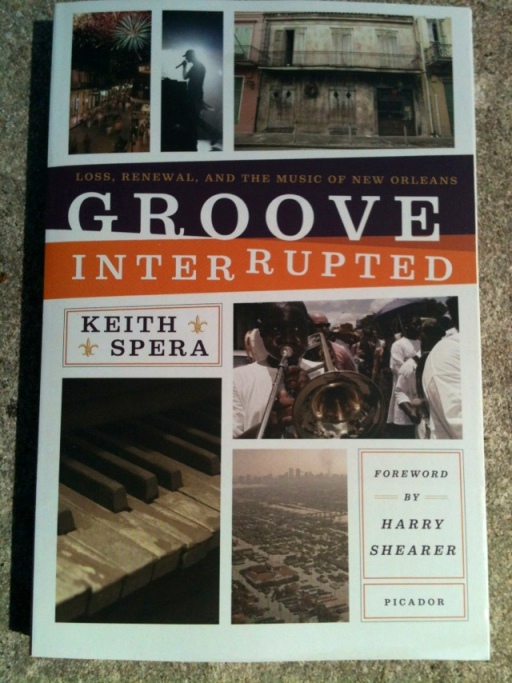
Groove Interrupted immediately piqued my interest and quickly found its way into my stack. Excerpt from Jazz Time’s review:

New Orleans native Spera, a longstanding music writer for The Times-Picayune who was also part of the newspaper’s Pulitzer Prize-winning Hurricane Katrina coverage team, focuses on tales of musicians confronting the challenges of trying to continue to make music in a post-Katrina environment. He covers those displaced New Orleanians forced to seek refuge in Houston, Austin, Nashville and other points around the country in the wake of Hurricane Katrina (known around New Orleans as “the Federal flood”). His profile of the cantankerous, Slidell-based blues guitarist-singer-fiddler Gatemouth Brown, who succumbed to lung cancer shortly after Katrina hit, is particularly moving, as is his eloquent recounting of Aaron Neville’s escape from his beloved hometown in the face of Katrina, his subsequent mourning over the loss of his wife to lung cancer in 2006 and triumphant return to New Orleans in 2008.

Road House Bar Brawls

(Fight Week continues at Biblioklept. Road House (read my essay!) is one of my favorite films of all time).

Books Acquired, Some Time Last Week (Plus Some Garden Shots)

20120502-155420.jpg

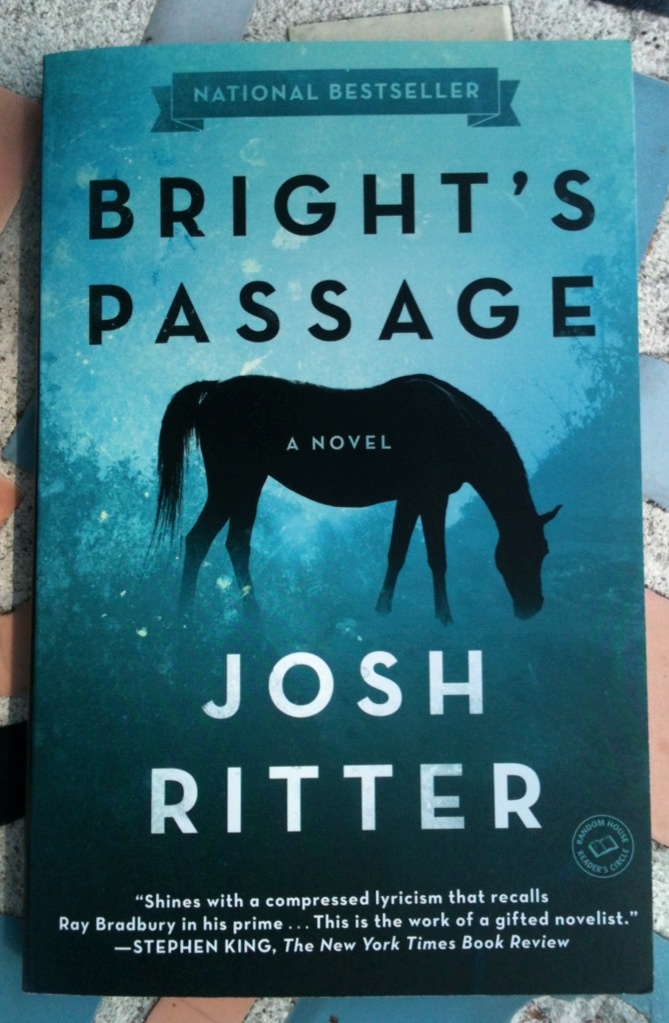
Josh Ritter’s Bright’s Passage is out in trade paperback, featuring a Q&A at the end with Ritter and some guy named Neil Gaiman who used to write comic books or something. Here’s my write up from last year, wherein I quote some guy named Stephen King:

Bright’s Passage is the début novel from songwriter/musician Josh Ritter. This slim novel tells the story Henry Bright, a man who returns to the hills of West Virginia after the trauma of World War I only to have his wife (who is also his first cousin) die in childbirth. Bright buries her body and sets fire to their cabin, which sparks a massive forest fire. Bright then takes his infant son and flees, both from the fire and his unstable father-in-law, “The Colonel,” a vet of America’s adventures in the Philippines who still wears his uniform. The Colonel and his crazy sons pursue Bright, who is guided on the lam by the angel who talks to him—yeah, an angel directs Bright; in fact it was the angel’s idea that Bright marry his cousin, burn down his cabin, and run . . . also, the angel swears that Bright’s son is going to be, like, the new Messiah. Also, Bright’s horse talks. Ritter moves the action between Bright’s flight, his ordeal in WWI, and his youth in simple, concrete, declarative prose. There are echoes here of Chris Adrian’s angel stories (The Children’s Hospital and A Better Angel), and perhaps something of a Cormac McCarthy-lite vibe. Here’s an excerpt from obscure author Stephen King’s review in the Times

At its best, “Bright’s Passage” shines with a compressed lyricism that recalls Ray Bradbury in his prime. When Henry, his talking horse — a kind of holy Mr. Ed — and the Future King of Heaven leave the woods and enter a small town, Ritter writes: “It seemed a tidy place of dappled white houses and American flags. . . . Even the trees here seemed to have a kind of deep green and prepossessing prosperity that the trees of the forest could have no share in.” Recalling his mother’s death, Henry remembers “a windstorm that made the trees bow to one another like ballroom dancers.” More striking still are Henry’s memories of life in the trenches, some of which compare favorably to the prose in Mark Helprin’s “Soldier of the Great War”: “Artillery passed high above their heads in singsong trajectories that merged and lifted with one another into strange musical chords, like cats crossing pump organs.”

And here’s a tomato from my spring garden:

20120502-155432.jpg

20120502-155445.jpg

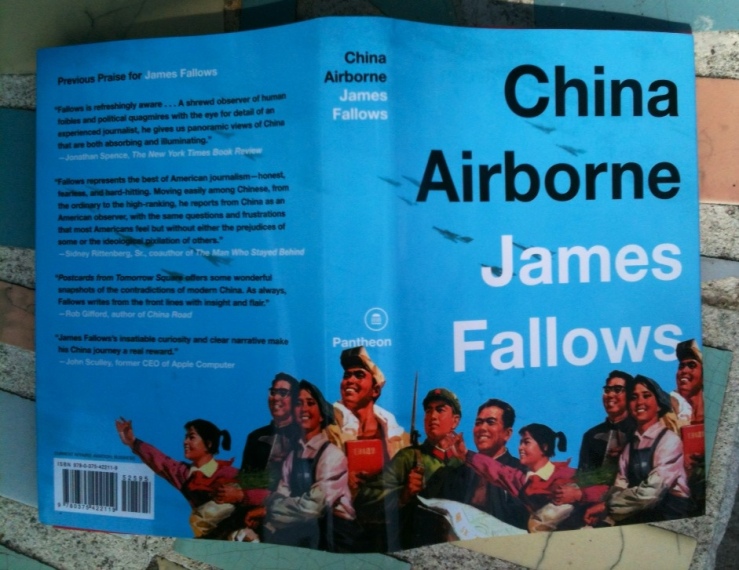
Nice cover on China Airborne, a book about the rise of Chinese industry by James Fallows. Pantheon’s write up:

More than two-thirds of the new airports under construction today are being built in China. Chinese airlines expect to triple their fleet size over the next decade and will account for the fastest-growing market for Boeing and Airbus. But the Chinese are determined to be more than customers. In 2011, China announced its Twelfth Five-Year Plan, which included the commitment to spend a quarter of a trillion dollars to jump-start its aerospace industry. Its goal is to produce the Boeings and Airbuses of the future. Toward that end, it acquired two American companies: Cirrus Aviation, maker of the world’s most popular small propeller plane, and Teledyne Continental, which produces the engines for Cirrus and other small aircraft.

In China Airborne, James Fallows documents, for the first time, the extraordinary scale of this project and explains why it is a crucial test case for China’s hopes for modernization and innovation in other industries. He makes clear how it stands to catalyze the nation’s hyper-growth and hyper- urbanization, revolutionizing China in ways analogous to the building of America’s transcontinental railroad in the nineteenth century. Fallows chronicles life in the city of Xi’an, home to more than 250,000 aerospace engineers and assembly workers, and introduces us to some of the hucksters, visionaries, entrepreneurs, and dreamers who seek to benefit from China’s pursuit of aerospace supremacy. He concludes by examining what this latest demonstration of Chinese ambition means for the United States and the rest of the world—and the right ways to understand it.

Some not-quite-ripe blackberries from my garden:

20120502-155455.jpg

20120502-155504.jpg

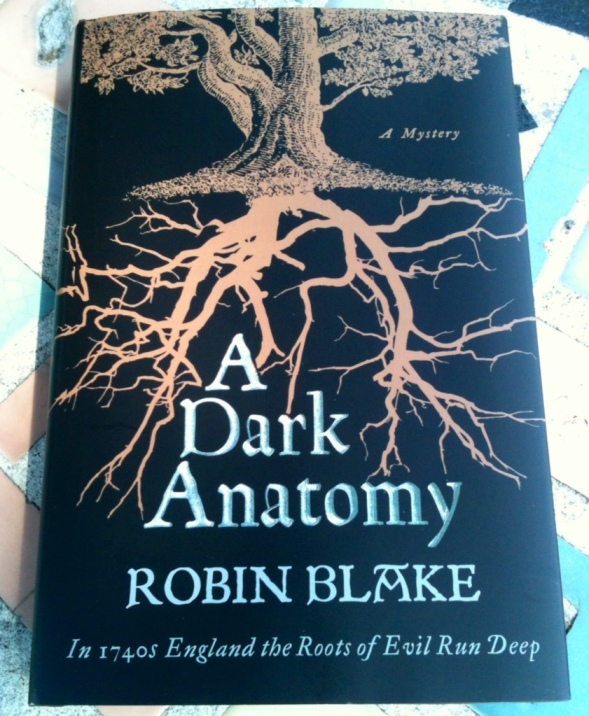
 I like the cover on this one too, a historical mystery by Robin Blake called A Dark Anatomy (and I know someone who might like this book for a present). From Blake’s site:

Mid-Georgian Preston was one of England’s ancient self-governing charter towns, pleasantly and strategically located in the heart of Lancashire, with a thriving agricultural market, and a significant concentration of craft workers amongst its stable population of below 5,000. In the 1600s the town gradually became Lancashire’s prime social and legal centre, and remained so until industrialization transformed and disfigured the town at the end of the century, turning it into the grimy and overcrowded manufactory that Charles Dickens called Coketown, the setting for Hard Times.  Today hardly anything pre-Victorian remains except the medieval street-plan around the central area: the three principle streets of Church Gate (now Church Street), Friar Gate and Fisher Gate,  leading away from the focal point of the flagged market and the site of the old timber-framed Moot Hall, where a 1960s office block of remarkable ugliness now stands.

Politically, like most other borough towns, Georgian Preston was an oligarchy. The council’s 24 members (or burgesses) appointed each other and parceled out the senior offices, including the Mayor and two Bailiffs, annually between themselves. Charter towns like this were virtual city-states where (in Tom Paine’s scathing words) a man’s “rights are circumscribed to the town and, in some cases, to the parish of his birth; and all other parts, though in his native land, are to him as a foreign country”.  These communities reserved the right to run their own affairs, and keep outsiders away at all costs.

I take a few liberties with details of local administration, not least in the Coroner’s office. In historical Preston the unusual custom was for the annually appointed  Mayor to sit as Coroner ex officio. But I wanted my investigator to stand apart from local politics, so I have imposed the more usual model whereby the Coroner was a Crown appointment with life-tenure, and independent of the Corporation. My other inventions in A Dark Anatomy include Garlick Hall, the nearby village of Yolland, and most of the cast of characters.

And here’s a white eggplant from my garden:

20120502-155540.jpg

David Foster Simpson

(About/via).

Map of St. Augustine, 1589

Hand-colored engraved map of St. Augustine by Baptista Boazio, 1589.

The Bride Vs. The Crazy 88 (Kill Bill)

Alley Brawl, They Live

Parenting After the Apocalypse — I Review Matt Bell’s Cataclysm Baby

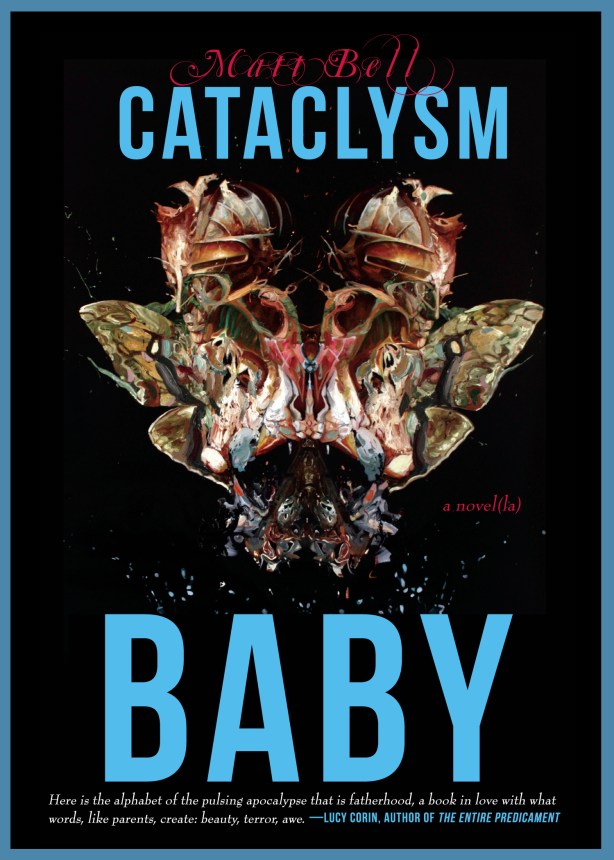
Cataclysm-Baby-Final-Cover-Front

Each of the twenty-six short pieces that comprise Matt Bell’s Cataclysm Baby offers a different take on family life after the apocalypse. The opening paragraphs of “Abelard, Abraham, Absalom”—the first tale in the collection—offers an overview of Cataclysm Baby’s program:

The smoldered cigar, last of a box of twenty, bought to celebrate happier times, now smoked to keep away the smell of our unwashed skin, of our slipping flesh, of our baby grown in my wife’s belly, the submerged sign of a prophecy burning, stretching taut her hard bulge: All hair, just like the others, gone wrong again.

Fists of black hail fall from the cloudless sky and spatter the house, streak the skin of our walls, break windows above broken beds. The birth-room fills with air the texture of mud, with black birds forgetting how to fly, these crows and vultures waiting to make a nest of our child, and still I I focus, keep my eyes on shattered glass, on my wife’s pelvis tilting toward sunlight, toward sun turned the color of baby’s first stool, then the color blood.

We see here the vestiges of civilization, emblematic in the narrator’s cigar smoking down to ash; we see the mutated child, another hirsute monster “just like the others, gone wrong again”; we see the backdrop of ecological disaster, of carrion birds that can no longer fly yet nevertheless maintain a brutal Darwinian competition with humanity; we see a deathly world that seems to all but occlude birth. These motifs—the end of social order, the species-transformation of new children, the utter collapse of ecological norms—run throughout Cataclysm Baby, telegraphed in Bell’s precise, concrete style.

These short fables are also united by the alphabet: “Abelard, Abraham, Absalom” gives way to “Beatrice, Bella, Blaise,” and so on until “Zachary, Zahir, Zedekiah.” However, Bell’s apocalypse is discontinuous; each tale evokes its own paradigm, its own idiom of grief. He’s less interested in the invention and world-building that marks so much of sci-fi and fantasy than he is in tapping into the mythological undercurrents of end-of-the-world narratives. The short pieces in Cataclysm Baby unfold (or burst, or twist) like strange, dark fairy tales, each proposing another vision of collapse.

Even in these collapses, Bell hints at some sense of social order, suggesting the occasional dystopia, as in “Fawn, Fiona, Fjola,” where forced breeders exchange their child for a basement with an oxygen supply and the occasional shower, or “Grayson, Griffin, Guillermo,” where the narrator-father’s awful offspring dooms the rest of the town:

How many babies are born before we realize that all their children are boys? That our town’s women are the past, thanks to my one-note issue, to their deadly sperm making deathly pregnancies, taking each of their partners the way of their own mother: the blood-wet, breath-gasped, split-wombed, at best to linger, never to recover from the makings of their children?

Elsewhere, there’s pure horror, like in “Svara, Sveta, Sylvana,” a riff on parenting-as-grave-digging, or “Prescott, Presley, Preston,” where precognitive children sound out their own infanticidal doom. Horror generally pervades Bell’s language, as in the opening paragraph of “Isaac, Isaiah, Ishmael”:

Even at birth they were already damaged, their brittle bones opened and crushed, powdered by their mother’s powerful organs, her pressing canal: All those thin ribs snapped and splintered upon the stainless steel of the operating room. All those skulls crooked and cracked, all those twisted greenstick limbs. We lifted each child out from the mother’s body and into surgeries of its own, did our best to splint and screw our prides together.

Despite its horrors, there are occasional moments of (very) dark humor in Cataclysm Baby, absurd comic eruptions, like these lines from “Domina, Doreen, Dorma”:

A chrysalis? I ask my wife. A cocoon?

What’s the difference, she says, when it’s your child inside, when it’s your caterpillar?

I’m tempted to offer more examples, but I fear that I’m approaching over-paraphrasing here when much of the pleasure (is this the right noun?) of Cataclysm Baby comes from its strange familiarity, its uncanny contours, its ugly surprises. Bell’s cryptic details—shaved heads, missing mothers, night soot—allow the reader’s imagination do much of the work. This trust pays off; Bell is aware of the tradition he taps into and equally aware of reader awareness.

The apocalyptic tradition evinces in the two epigraphs Cataclysm Baby bears. The first, from the King James bible version of Noah’s apocalypse, notes “the creeping thing” — a bizarre expression, frightening, frustrating, and intriguing in its vivid vagueness. (Bell appropriates the expression later in one of his narratives). The other epigraph comes fromThe Road, Cormac McCarthy’s sad apocalypse story about a father and son who are “carrying the fire.” There’s little room for other characters in The Road  and in a sense, Cataclysm Baby offers variations on the characters who might lurk in the margins of McCarthy’s story, or the edges of the other end-of-the-world stories we know. These parents simultaneously fear and fear for their children, harbingers of a world they will not survive. Recommended.

Cataclysm Baby is new from Mud Luscious Press.

Human Sacrifice Before Tohil — Diego Rivera

Pool Hall Brawl (Mean Streets)

May Day? Labour Day? Loyalty Day?

The following is excerpted from one of our favorite freely-found books, Alice van Straalen’s The Book of Holidays Around the World:

May Day: Worldwide —  In a festival that lasted from April 28 to May 3, the Romans offered flowers to Flora, their goddess of spring. They brought the custom to all the European lands they conquered; and by the Middle Ages it became especially popular in England. People rose early in the morning to “bring in the May.” They gathered flowers and tree branches to decorate their homes and later went to the town square where the maypole–often over 100 feet tall–was raised, and a woman representing the May Queen presided over the celebrations. Dancers held the streamers that fell from the top of the pole and, as they circled around it, wove them into tight patterns. When they changed directions the streamers untangled again and blew free, a tradition that some towns in England and America have continued. In 1889 the Second Internationale, an association of French socialists, dedicated May Day to working people, and today in many countries it is celebrated as a labor day. The Soviet Union marks the day with a military parade in Moscow.

Soviet Union…yeah, the bookover 25 years old…

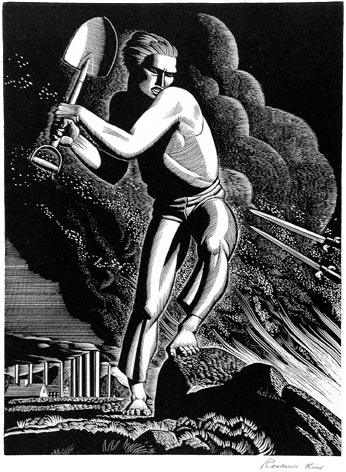
Workers of the World Unite -- Rockwell Kent

But don’t worry, God-fearing Americans! It turns out that, in order to reclaim May Day from pinkos and anarchists, the U.S. government declared May 1st “Loyalty Day.” From 36 US Code §115:

(a) Designation.— May 1 is Loyalty Day.

(b) Purpose.— Loyalty Day is a special day for the reaffirmation of loyalty to the United States and for the recognition of the heritage of American freedom.

(c) Proclamation.— The President is requested to issue a proclamation—

(1) calling on United States Government officials to display the flag of the United States on all Government buildings on Loyalty Day; and
(2) inviting the people of the United States to observe Loyalty Day with appropriate ceremonies in schools and other suitable places.

Loyalty Day? Okay, sure, why not? But are the two perspectives on this ancient festival–the concept of workers standing up for the right to control the means of production, etc., and the idea of being loyal to America–are they so different?

Flag -- Jasper Johns

Village Scene with Dance around the May Pole – Pieter Bruegel the Elder

Maypole Song, Wicker Man

St. George’s Kermis with the Dance Around the Maypole — Pieter Brueghel the Younger