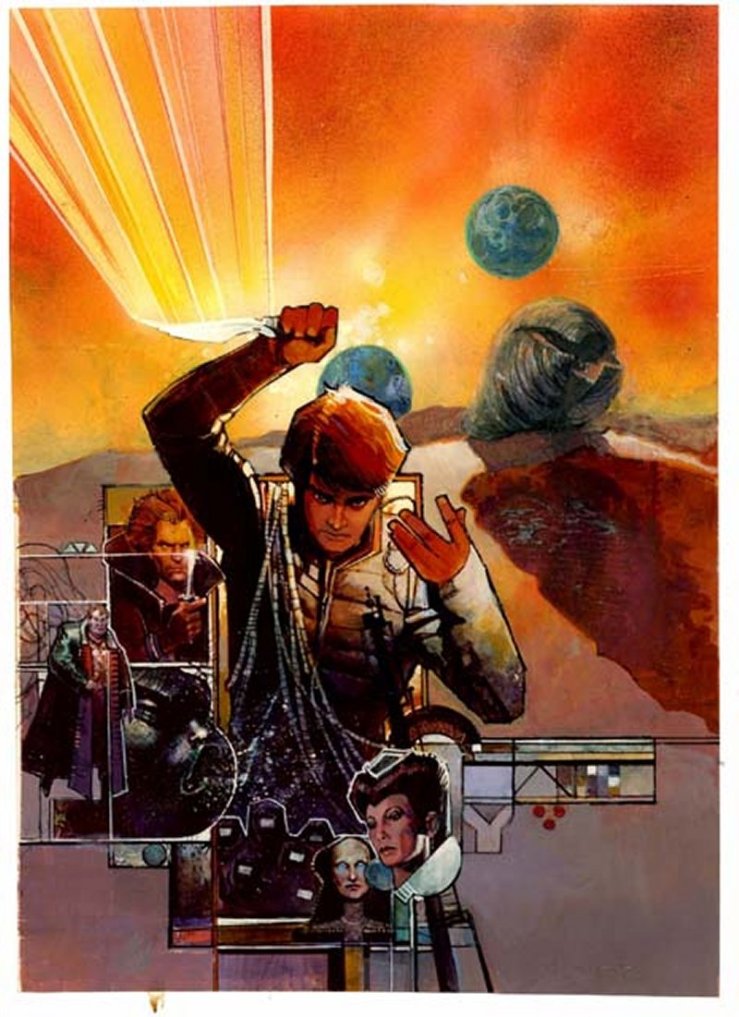
Dune Cover (Marvel Comics Adaptation) — Bill Sienkiewicz

Books Acquired, 9.15.2011

20110916-111429.jpg

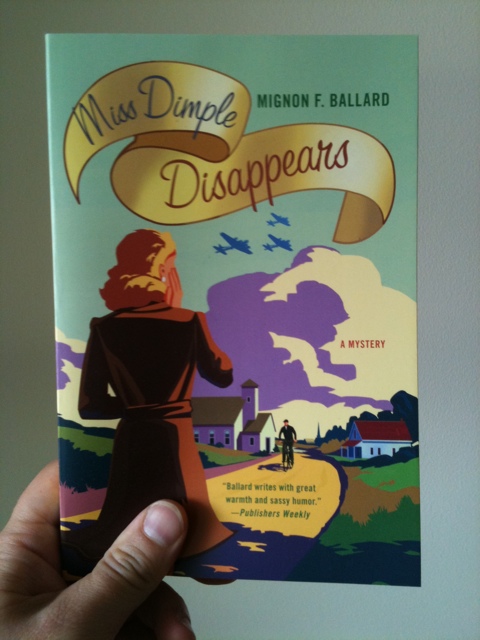
The kind people at Minotaur (St. Martin’s) sent Biblioklept a hefty little stack of new titles in several of the genres the press specializes in. (The box arrived yesterday but I didn’t have the time to put this post together until today). The first is a mystery, Mignon F. Ballard’s Miss Dimple Disappears

It is 1942, and most of the men in the town of Elderberry, Georgia, have gone to war. One frosty morning just before Thanksgiving, young schoolmistress Charlie Carr and her fellow teachers are startled to find that the school custodian, Wilson “Christmas” Malone, has neglected to stoke the furnace or empty the wastebaskets—and then is found dead in a broom closet, the apparent victim of a heart attack. But when Miss Dimple Kilpatrick, who is as dependable as gravity and has taught Elderberry first graders—including Charlie—for nearly forty years, disappears the following day, town residents are shaken down to their worn, rationed shoes. Knowing that Miss Dimple would never willingly abandon her students, Charlie and her friend Annie begin sleuthing—and uncover danger surprisingly close to home.

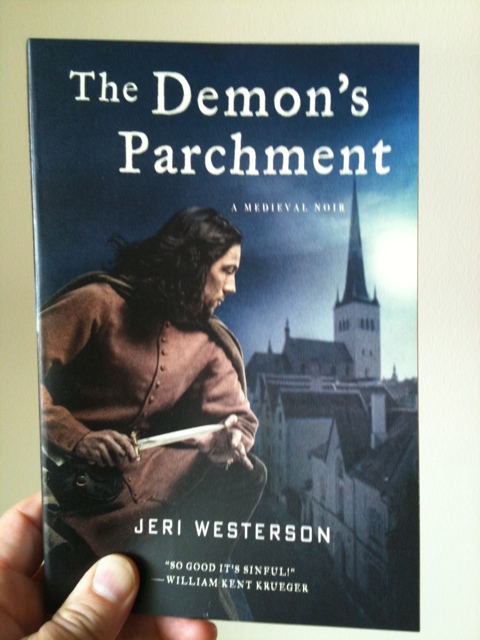
20110916-111440.jpgOkay, I’m not crazy about the cover for Jeri Westerson’s medieval noir The Demon’s Parchment, I dipped into it this morning (the genre seemed intriguing) and the writing is sharp and precise. Publisher’s description—

In fourteenth century London, Crispin Guest is a disgraced knight convicted of treason and stripped of his land, title and his honor. He has become known as the “Tracker”—a man who can find anything, can solve any puzzle and, with the help of his apprentice, Jack Tucker, an orphaned street urchin with a thief ’s touch—will do so for a price. But this time, even Crispin is wary of taking on his most recent client. Jacob of Provencal is a Jewish physician at the King’s court, even though all Jews were expelled from England nearly a century before. Jacob wants Crispin to find stolen parchments that might be behind the recent, ongoing, gruesome murders of young boys, parchments that someone might have used to bring forth a demon which now stalks the streets and alleys of London.

20110916-111451.jpg

Tasha Alexander’s Dangerous to Know looks to be somewhere between a bodice-ripper and a body ripper. Not really my thing, but I’m sure the book will find an audience interested in historical fiction that mixes romance and suspense. The title band reminds me of a candy wrapper. Publisher’s description—

Set in the lush countryside of Normandy, France, this new novel of suspense featuring Lady Emily Hargreaves is filled with intrigue, romance, mysterious deaths, and madness.

Returning from her honeymoon with Colin Hargreaves and a near brush with death in Constantinople, Lady Emily convalesces at her mother-in-law’s beautiful estate in Normandy. But the calm she so desperately seeks is shattered when, out riding a horse, she comes upon the body of a young woman who has been brutally murdered. The girl’s wounds are identical to those inflicted on the victims of Jack the Ripper, who has wreaked havoc across the channel in London. Emily feels a connection to the young woman and is determined to bring the killer to justice.

       Pursuing a trail of clues and victims to the beautiful medieval city of Rouen and a crumbling château in the country, Emily begins to worry about her own sanity: She hears the cries of a little girl she cannot find and discovers blue ribbons left in the child’s wake. As Emily is forced to match wits with a brilliant and manipulative killer, only her courage, keen instincts, and formidable will to win can help her escape becoming his next victim.

20110916-111500.jpg

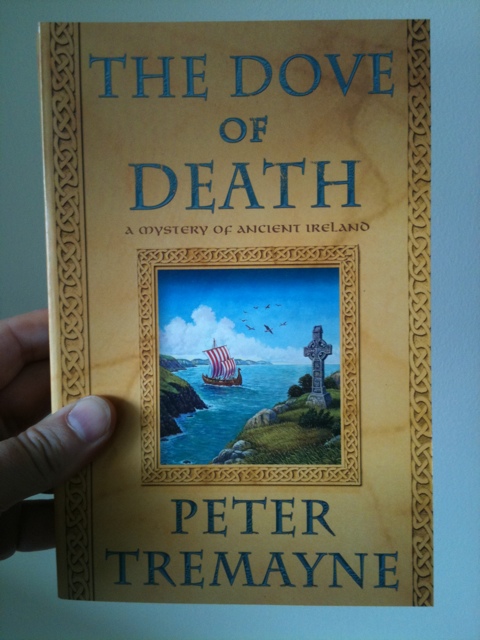
Peter Tremayne’s The Dove of Death  (“A Mystery of Ancient Ireland”) was the title in these four that I found most intriguing. Again, I dipped into it this morning, and Tremayne’s prose is tight, precise, and propelled by dialogue—just what you might look for in a page-turner. Description—

In A.D. 670, an Irish merchant ship is attacked by a pirate vessel off the southern coast of the Breton peninsula. Merchad, the ship’s captain, and Bressal, a prince from the Irish kingdom of Muman, are killed in cold blood after they have surrendered. Among the other passengers who manage to escape the slaughter are Fidelma of Cashel and her faithful companion, Brother Eadulf.Once safely ashore, Fidelma—sister to the King of Muman and an advocate of the Brehon law courts—is determined to bring the killers to justice, not only because her training demands it but also because one of the victims was her cousin. The only clue to the killer’s identity is the symbol of the dove on the attacking ship’s sails, a clue that leads her on a dangerous quest to confront the man known as The Dove of Death.

Quentin Tarantino Talks About the Pipe Scene in Inglourious Basterds

Nilsson and Ringo Do Lame Comedy at the 1973 Grammys

“List of Social Changes that Would Assist the Flourishing of Literary Beauty” — William T. Vollmann

“List of Social Changes that Would Assist the Flourishing of Literary Beauty” by William T. Vollmann. Originally published in his essay, “Something to Die For” (Review of Contemporary Fiction) but excised here from Expelled from Eden, the Vollmann reader I’m finding addictive—-

1. Abolish television, because it has no reverence for time.

2. Abolish the automobile, because it has no reverence for space.

3. Make citizenship contingent upon literacy in every sense. Thus, politicians who do not write every word of their own speeches should be thrown out of office in disgrace. Writers who require editors to make their books “good” should be depublished.

4. Teach reverence for all beauty, including that of the word.

“I Want to Create a Prophet” — Jodorowsky Talks About Dune

David Lynch Talks About Making Dune (1985 Interview)

Dr. Yueh Gets Ready to Poison Duke Leto with His Dartgun

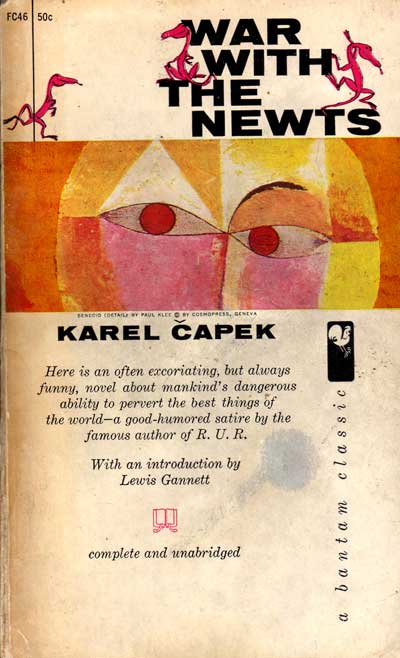
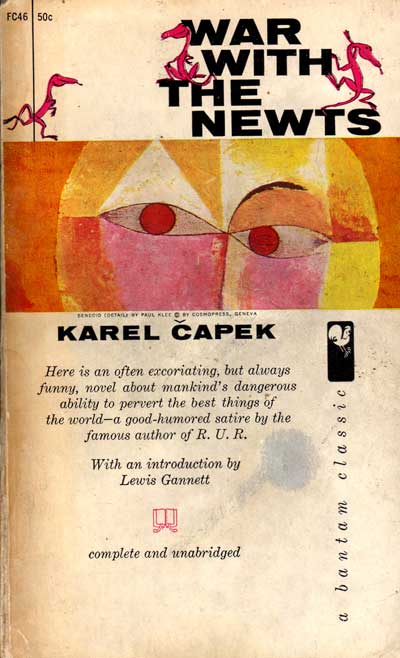
War With the Newts — Karel Capek


Even though the plot of War with the Newts may not shock audiences accustomed to its “human-invention-intended-for- good-becomes-in-the-end-not-so-good” story, readers shouldn’t neglect this often-overlooked science-fiction classic from 1937 by notable Czech writer and satirist Karel Capek.  Humans, motivated by a range of impulses: greed, curiosity, and sometimes even the best of intentions, have created an uncontrollable menace and brought about the end to their dominion over the planet.  Computers, robots, even monkeys have spelled doom for mankind, but Capek warned, in this short and sparkling book, that while masses of intelligent amphibians must be dealt with cautiously, true danger arises from our manipulation of the natural world, the unceasing capitalist drive to increase production by exploiting the weakest, and our inability to foresee the consequences of our actions.

The action begins when a drunk but benevolent sea captain discovers a new species of amphibians inhabiting the waters near an isolated island in the Pacific Ocean.  These docile creatures are able to breathe on land, walk on their hind legs, and communicate using rudimentary sounds and gestures.  The captain trains them to speak a pidgin English and dive for pearls before arming them so that they might fend off the sharks that prey on their young.  Once he receives generous financial backing from a Dutch conglomerate, he ships them to similar islands where pearl harvests have been been impossible or unproductive.  Eventually big business determines that the tireless and fecund newts are valuable for the expansion and development of economic activities near the coasts and under the seas and develop a global marketplace for trade in their labor and bodies.  Educated, well-equipped, and trained to use with the most advanced technologies, the newts produce the greatest expansion of wealth in the history of the world before taking it all for themselves, returning the continents to the bottom of the ocean while requiring a small cadre of humans, relocated to the mountains, to produce the steel and weapons required to support their new Atlantis.

Written as a history book, Capek brilliantly footnotes his narrative with carefully crafted primary sources: newspaper reports, academic studies, religious tracts, political manifestos and corporate minutes in order to illustrate human reaction to new, unsettling circumstance.  A nimble author blessed with the knowledge and skill to write comfortably about a wide variety of subjects, Capek captures both the progressive and cautious voices that shape human reaction to the slow advancement of a new and underestimated intelligence.  He shows that agreement against economic interest is impossible;  labor, for instance, bemoans loss of work to newt hordes while agriculture comes to rely on the millions of new mouths that have to be fed.  Scholars measure, analyze, and categorize; anonymous tract-writers urge an uneasy populace to take up arms against sea-dwelling usurpers while the young and fashionable flock to newt cults, giving themselves up to sexual licentiousness they relish the mysterious and taboo.

But though Capek capably documents trivialities, most of his accounts reflect the time in which he lived and wrote, between the two great European wars, situated between Stalin’s Russia and Hitler’s new Germany, at the height of colonial exploitation, not yet separated by a century from the horrors of the trans-Atlantic slave trade and the American Civil War.  In a report written by the “Salamander Syndicate,” the organization responsible for the organization and dissemination of the world trade in newts justifies the “humane” husbandry, categorization, and sale of newts according to their physical attributes.  Exemplary newts are invited to join committees and expound on their visions for a future shared with humans.  Echoes of American abolitionist thought appear in the debates waged in the media regarding the existence of newt art and culture, their assumed “soullessness,” and the minimal levels of education required for their lives as workers.

The newts, masters of human technology, eventually take over.  Humans, fleeing to higher ground,  are incapable of bringing the fight to the seas.   War with the Newts is an indictment not only of our ability to take without question unearned economic value, but also of our inability to halt the mechanisms by which we accrue those benefits once it becomes evident that the process of enrichment, by itself, is detrimental to the common good.  This is a very good book, a satire of the institutions that will fail when we need them the most, created by a writer whose demonstrated virtuosity deserves more attention.

“Medley” — Nilsson

I hate it when blogs just post music vids, but jeeze, this is better than any art film, and Harry Nilsson is my favorite, so get over it already!

“I Will Burn Away the Sickness,” Says the Baron’s Doctor


“The Stench of Corpses” — William Vollmann Reviews William Vollmann

“The Stench of Corpses” is a self-review by William T. Vollmann of the poorly-received and rarely read book Argall, one of his “Seven Dreams” series (still incomplete). The piece originally ran in the October 7, 2001 edition of The Los Angeles Times, but I read it in Expelled from Eden, a Vollmann reader that I am very much enjoying.  There’s an immediate post-9/11 vibe running through Vollmann’s scathing review of Vollmann, culminating in his declaration that Argall is “positively un-American.”

“The Stench of Corpses”

A hundred years after William T. Vollmann was killed in a gun cleaning accident, I, William the Blind, received a commission to review the long novel “Argall,” which marks the midpoint of his uncompleted “Seven Dreams” series. According to Dombey’s “Easily Digested Biographies of Minor Authors,” which I just happen to have right here inside my reading pod, it was always Vollmann’s hope that the “Seven Dreams,” which were second in ambition only to his still-unpublished essay on violence, “Rising Up and Rising Down,” would “somehow, uh, mean something to people a hundred years from now.”

This desire is best understood as a form of wish compensation. Vollmann lived what can only be called a pathetic life. Isolated within and stubbornly estranged from millennial American society, he consoled himself with a sophomorically romantic belief that art, if protected in time capsules, can outlast Dark Ages. Let’s temporarily ignore the fact that Vollmann’s so-called art was never worth preserving, being infested by individualism, moral relativism and sexual depravity. More to the point, since stars, elephants and gods suffer death, how could even the greatest art be “immortal”? As we all know, the Liu-Mallinger Act of 2027, which made cranial stimulation devices compulsory for all inhabitants of the Global Trans-Industrial Zone, reduced the printed word to irrelevancy at last. Continue reading ““The Stench of Corpses” — William Vollmann Reviews William Vollmann”

The Scriptural Sperm Can No Longer Flow: Sade the Eunuch

The final section of Roland Barthes’ “Life of Sade,” a short biography of The Marquis de Sade. Translated from the French by Richard Miller.  Read the entire essay at Supervert.

22. Any detention is a system: a bitter struggle exists within this system, not to get free of it (this was beyond Sade’s power), but to break through its constraints. A prisoner for some twenty-five years of his life, Sade in prison had two fixations: outdoor exercise and writing, which governors and ministers were continually allowing and taking away from him like a rattle from a baby. The need and the desire for outdoor exercise are easily understood (although Sade always linked its privation to a symbolic theme, obesity). The repression, obviously, as anyone can see, of writing is as good as censoring the book; what is poignant here, however, is that writing is forbidden in its physical form; Sade was denied “any use of pencil, ink, pen, and paper.” Censored are hand, muscle, blood. Castration is circumscribed, the scriptural sperm can no longer flow; detention becomes retention; without exercise, without a pen, Sade becomes bloated, becomes a eunuch.

Slavoj Žižek Uses the Marx Brothers to Explain Freud’s Notion of Superego, Ego, and Id

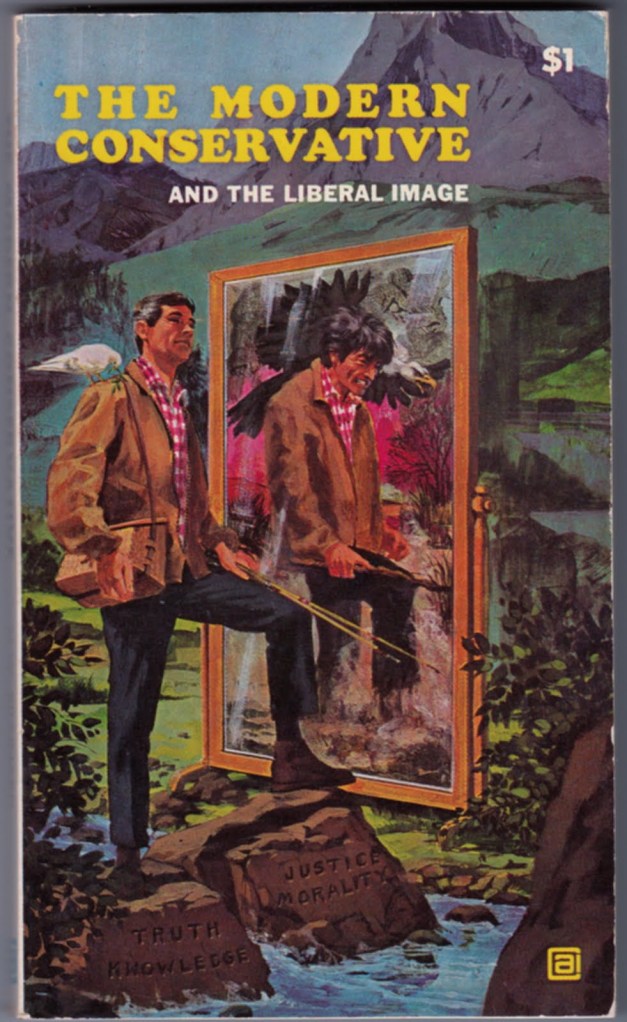
The Modern Conservative and the Liberal Image

This glorious cover from Maurice W. Brainard’s The Modern Conservative and the Liberal Image comes to us via DCB at Menthol Mountains; DCB’s original MM post has plenty of spiffy links, by the by. One of our favorite book covers since Donald (okay, that’s kind of an achronological “since,” but you get the drift, nay?).

Book Acquired, 9.12.11 — Nathanael West Biography

20110912-050619.jpg

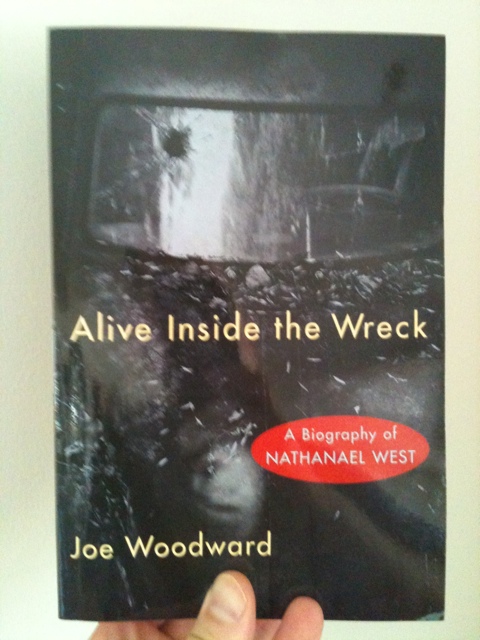
This one’s new from OR BooksJoe Woodward’s Alive Inside the Wreck: A Biography of Nathanael West. (Sorry for the extraordinarily amateurish photograph—the glossy cover spit back much light). I read the first three chapters this afternoon, and Woodward has a punchy, even terse style that I greatly appreciate in a literary biographer. It’s rare that the literary critic, “showing a little plumage,” to borrow a phrase from James Wood, knows when to remove himself from the text under discussion. Woodward’s writing here dispenses with any airy rhetoric, cutting sharply to bone in telegraphic sentences and short chapters.It’s the kind of  beginning that makes me want to keep reading. Here’s the publisher’s description—

From his name to his college transcript to his literary style, Nathanael West was self-invented. Born Nathan Weinstein, the author of the classics Miss Lonelyhearts (1933) and The Day of theLocust (1939) was an uncompromising artist obsessed with writing the perfect novel. He pursued his passion from New York to California, flirting dangerously with the bleak, faux-glamour of Hollywood as the country suffered through the grim realities of the Great Depression. At the center of a circle of vigorous young literary writers that included F. Scott Fitzgerald, Malcolm Cowley, William Carlos Williams, S. J. Perelman, and Dashiell Hammett, West rose to become one of the most original literary talents of the twentieth century—an accomplished yet regrettably underappreciated master of the short lyric novel.

In December of 1940, West — a notoriously bad driver — was racing back from a vacation in Mexico with his young bride of eight months when he crashed at full speed into another car. He was dead at 37. Just as he was finally starting to enjoy financial stability as a Hollywood screenwriter, he died in the California desert.

For this book, the first biography on West alone in over 40 years, Joe Woodward combed the archives at The Huntington Library and the John Hay Library at Brown University. He had access to personal letters, photographs, unpublished manuscripts and corrected typescripts as well as seldom-heard taped interviews with S. J. Perelman, Dalton Trumbo, Matthew Josephson and others.

Alive Inside the Wreck comes alive as it explores West’s struggle to survive both the writer’s life and the 1930s.


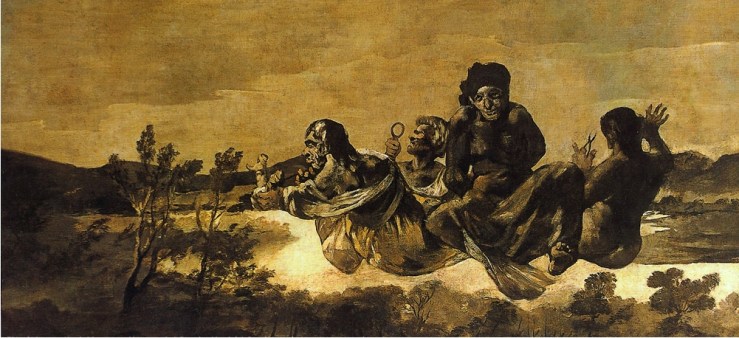
Atropos — Goya