Old Man Sade, Seducer and Corrupter of the Young

From Roland Barthes’ “Life of Sade,” a short biography of The Marquis de Sade. Translated from the French by Richard Miller.  Read the entire essay at Supervert.

21. Corridor Philosophy: Imprisoned at Sainte-Pélagie (at sixty-three years of age), Sade, we are told, used “every means his imagination could suggest… to seduce and corrupt the young people (to slake his lubricity with young fools) who were imprisoned in Sainte-Pélagie owing to unfortunate circumstances and put by chance in the same corridor as himself.”

Candide — Voltaire

I liked pretty much all of the assigned reading in high school (okay, I hated every page of Tess of the D’Ubervilles). Some of the books I left behind, metaphorically at least (Lord of the Flies, The Catcher in the Rye), and some books bewildered me, but I returned to them later, perhaps better equipped (Billy Budd; Leaves of Grass). No book stuck with me quite as much as Candide, Voltaire’s scathing satire of the Enlightenment.

20110911-025457.jpg

I remember being unenthusiastic when my 10th grade English teacher assigned the book—it was the cover, I suppose (I stole the book and still have it), but the novel quickly absorbed all of my attention. I devoured it. It was (is) surreal and harsh and violent and funny, a prolonged attack on all of the bullshit that my 15 year old self seemed to perceive everywhere: baseless optimism, can-do spirit, and the guiding thesis that “all is for the best.” The novel gelled immediately with the Kurt Vonnegut books I was gobbling up, seemed to antecede the Beat lit I was flirting with. And while the tone of the book certainly held my attention, its structure, pacing, and plot enthralled me. I’d never read a book so willing to kill off major characters (repeatedly), to upset and displace its characters, to shift their fortunes so erratically and drastically. Not only did Voltaire repeatedly shake up the fortunes of Candide and his not-so-merry band—Pangloss, the ignorant philosopher; Cunegonde, Candide’s love interest and raison d’etre and her maid the Old Woman; Candide’s valet Cacambo; Martin, his cynical adviser—but the author seemed to play by Marvel Comics rules, bringing dead characters back to life willy nilly. While most of the novels I had been reading (both on my own and those assigned) relied on plot arcs, grand themes, and character development, Candide was (is) a bizarre series of one-damn-thing-happening-after-another. Each chapter was its own little saga, an adventure writ in miniature, with attendant rises and falls. I loved it.

I reread Candide this weekend for no real reason in particular. I’ve read it a few times since high school, but it was never assigned again—not in college, not in grad school—which may or may not be a shame. I don’t know. In any case, the book still rings my bell; indeed, for me it’s the gold standard of picaresque novels, a genre I’ve come to dearly love. Perhaps I reread it with the bad taste of John Barth’s The Sot-Weed Factor still in my mouth. As I worked my way through that bloated mess, I just kept thinking, “Okay, Voltaire did it 200 years earlier, much better and much shorter.”

Revisiting Candide for the first time in years, I find that the book is richer, meaner, and far more violent than I’d realized. Even as a callow youth, I couldn’t miss Voltaire’s attack on the Age of Reason, sustained over a slim 120 pages or so. Through the lens of more experience (both life and reading), I see that Voltaire’s project in Candide is not just to satirize the Enlightenment’s ideals of rationality and the promise of progress, but also to actively destabilize those ideals through the structure of the narrative itself. Voltaire offers us a genuine adventure narrative and punctures it repeatedly, allowing only the barest slivers of heroism—and those only come from his innocent (i.e. ignorant) title character. Candide is topsy-turvy, steeped in both irony and violence.

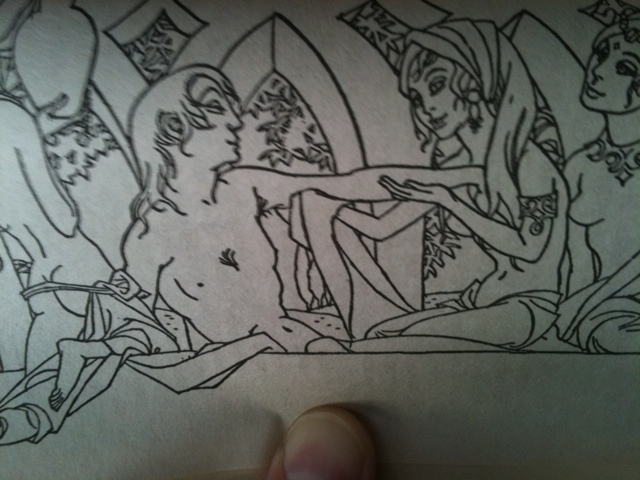
As a youth, the more surreal aspects of the violence appealed to me. (An auto-da-fé! Man on monkey murder! Earthquakes! Piracy! Cannibalizing buttocks!). The sexy illustrations in the edition I stole from my school helped intrigue me as well—

20110911-025719.jpg

The self who read the book this weekend still loves a narrative steeped in violence—I can’t help it—Blood Meridian, 2666, the Marquis de Sade, Denis Johnson, etc.—but I realize now that, despite its occasional cartoonish distortions, Candide is achingly aware of the wars of Europe and the genocide underway in the New World. Voltaire by turns attacks rape and slavery, serfdom and warfare, always with a curdling contempt for the powers that be.

But perhaps I’ve gone too long though without quoting from this marvelous book, so here’s a passage from the last chapter that perhaps gives summary to Candide and his troupe’s rambling adventures: by way of context (and, honestly spoiling nothing), Candide and his friends find themselves eking out a living in boredom (although not despair) and finding war still raging around them (no shortage of heads on spikes); Candide’s Cunegonde is no longer fair but “growing uglier everyday” (and shrewish to boot!), Pangloss no longer believes that “it is the best of all worlds” they live in, yet he still preaches this philosophy, Martin finds little solace in the confirmation of his cynicism and misanthropy, and the Old Woman is withering away to death. The group finds their only entertainment comes from disputing abstract questions—

But when they were not arguing, their boredom became so oppressive that one day the old woman was driven to say, “I’d like to know which is worse: to be raped a hundred times by Negro pirates, to have one buttock cut off, to run the guantlet in the Bulgar army, to be whipped and hanged in an auto-da-fé, to be dissected, to be a galley slave—in short, to suffer all the miseries we’ve all gone through—or stay here and do nothing.

“That’s a hard question,” said Candide.

It’s amazing that over 200 years ago Voltaire posits boredom as an existential dilemma equal to violence; indeed, as its opposite. (I should stop and give credit here to Lowell Blair’s marvelous translation, which sheds much of the finicky verbiage you might find in other editions in favor of a dry, snappy deadpan, characterized in Candide’s rejoinder above). The book’s longevity might easily be attributed to its prescience, for Voltaire’s uncanny ability to swiftly and expertly assassinate all the rhetorical and philosophical veils by which civilization hides its inclinations to predation and straight up evil. But it’s more than that. Pointing out that humanity is ugly and nasty and hypocritical is perhaps easy enough, but few writers can do this in a way that is as entertaining as what we find in Candide. Beyond that entertainment factor, Candide earns its famous conclusion: “We must cultivate our garden,” young (or not so young now) Candide avers, a simple, declarative statement, one that points to the book’s grand thesis: we must work to overcome poverty, ignorance, and, yes, boredom. I’m sure, gentle, well-read reader, that you’ve read Candide before, but I’d humbly suggest to read it again.

How to Open a New Book

20110911-082527.jpg

Citizen Sade

From Roland Barthes’ “Life of Sade,” a short biography of The Marquis de Sade. Translated from the French by Richard Miller.  Read the entire essay at Supervert.

20. A plurality of which Sade was well aware, since he laughs at it: in 1793, Citizen Sade was proposed as a juror in a common-law case (a matter of forged promissory notes): the dual hearing of the Sadian text (of which Sade’s life is a part): the apologist of crime and its judge are united in the same subject, as the Saussurian anagram is inscribed in a Vedic verse (but what remains of a subject that subjects itself with alacrity to a dual inscription?).

Books Acquired, 9.10.11

20110910-040358.jpg

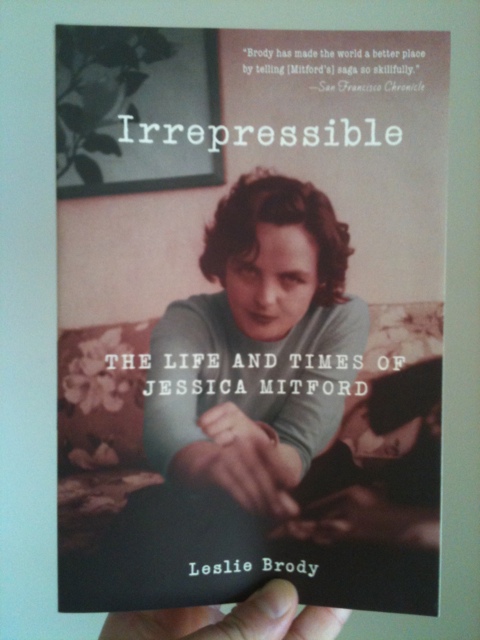
Two books in the mail today from Counterpoint Press, an expanding indie press with a broad but sharp catalog (including Soft Skull Press). The first is Irrepressible: The Life and Times of Jessica Mitford, a biography of the progressive upstart. From the press release—

Admirers and detractors use the same words to describe Jessica Mitford: subversive, mischief-maker, muckraker. J.K. Rowling calls Mitford her “most influential writer.” Those who knew her best simply called her “Decca.” Born into one of Britain’s most famous aristocratic families, Mitford eloped with Winston Churchill’s nephew to America as a teenager in 1939. A no-holds barred civil rights activist, outspoken communist, and feared journalist, Mitford rose to one of the New Deal’s most notorious bureaucrats. For her the personal was political. She coined the term “frenemies,”  and as a member of the American Communist Party, she made several, though not among the Cold War witch hunters. When she left the Communist Party in 1958 after fifteen years, she promised to be subversive whenever the opportunity arose. True to her word, late in life she hit her stride as a writer, publishing nine books before her death in 1996. With unrestricted access to the Mitford Family archives, Leslie Brody presents a moving, impeccably researched biography of one of the most influential women of the 20th century.

20110910-040407.jpg

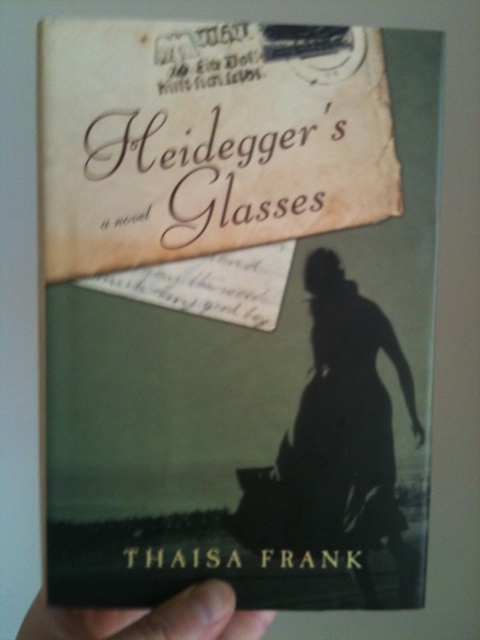
Heidegger’s Glasses is a novel by Thaisa Frank that seems promising. Description—

Magical and surreal, Heidegger’s Glasses offers a completely original vantage point on the Holocaust.  The story opens during the end of World War II in a failing Germany coming apart at the seams. The Third Reich’s strong reliance on the occult and the leading officials’ obsession with the astral plane has led to the formation of a secret Compound of Scribes–multilingual translators that have been spared from deportation to answer returned letters written to the dead in the concentration camps. Ellie Schacten, the mysterious heroine of the novel, supervises the Scribes, yet secretly uses the compound to hide a steadily growing number of refugees. When a letter arrives, written by eminent German philosopher Martin Heidegger to his friend and optometrist––a man who is now lost in the dying thralls of Auschwitz––a series of events unfold that turn the Reich’s attention to the compound and threaten Ellie’s operation and the lives of the Scribes.

Based on the real Third Reich procedure, Operation Mail, which forced concentration camp prisoners to send letters to loved ones extolling conditions in the camps, Heidegger’s Glasses explores a dark, absurd world in which fear and death are a constant companion, and yet, Frank’s characters show how that when stripped of their freedom and virtually all material possessions, the human spirit perseveres and thrives.

Sade’s Passion Was Theatrical, Not Erotic

From Roland Barthes’ “Life of Sade,” a short biography of The Marquis de Sade. Translated from the French by Richard Miller.  Read the entire essay at Supervert.

19. Throughout his life, the Marquis de Sade’s passion was not erotic (eroticism is very different from passion); it was theatrical: youthful liaisons with several young ladies of the Opéra, engaging the actor Bourdais to play for six months at La Coste, and in his torment, one idea: to have his plays performed; barely out of prison (1790), repeated requests to the actors of the Comédie Française; and finally, of course, theater at Charenton.

Sade Loved His Big Pillow

From Roland Barthes’ “Life of Sade,” a short biography of The Marquis de Sade. Translated from the French by Richard Miller.  Read the entire essay at Supervert.

18. Suddenly transferred from Vincennes to the Bastille, Sade made a great fuss because he had not been allowed to bring his big pillow, without which he was unable to sleep, since he slept with his head unusually high: “The barbarians!”.

It Is the Point One Is at that Makes a Thing Good or Bad, and Not the Thing Itself

From Roland Barthes’ “Life of Sade,” a short biography of The Marquis de Sade. Translated from the French by Richard Miller.  Read the entire essay at Supervert.

17. At Vincennes in 1783, the penitentiary administration forbade the prisoner’s receiving Rousseau’sConfessions. Sade comments: “They honor me in thinking that a deist author could be a bad book for me; I wish I were at that point… Understand, it is the point one is at that makes a thing good or bad, and not the thing itself… Start there, dear sirs, and by sending me the book I request, be sensible enough to understand that for died-in-the-wool bigots like yourselves, Rousseau can be a dangerous author, and that makes it an excellent book for me. For me, JeanJacques is what the Imitation of Christ is for you…” Censorship is abhorrent on two levels: because it is repressive, because it is stupid; so that we always have the contradictory urge to combat it and to teach it a lesson.

Book Acquired, 9.09.11 — Or, I Buy Yet Another William T. Vollmann Book Against My Better Judgment

20110909-044233.jpg

I like William T. Vollmann the persona probably more than I like William T. Vollmann the writer. That isn’t to say that I haven’t thought that the handful of books I’ve read by him were brilliant, strange, and engrossing—because they are—but I’ll admit that his methods, his back story, his sheer and absolute not-giving-a-fuckness is a major attraction. Voluminous Vollmann, unreadable Vollmann; smartypants Vollmann, fragile Vollmann. Vollmann, producer of travelogues, alternate histories, hagiographies for hookers; Vollmann, Ice Age chronicler; saga-slinging Vollmann. I can’t think of a writer who does more and says more and, because of his maximalist approach, will be largely unread, both for his career and for posterity—unless he concedes to edit. I think the irony is that, in wanting to give everything to his reader and wanting to preserve everything about his subjects—an act of love, compassion, empathy, what have you—in these grand, hopeless gestures, Vollmann paradoxically displays that intrinsic not-giving-a-fuckness. He needs an editor.

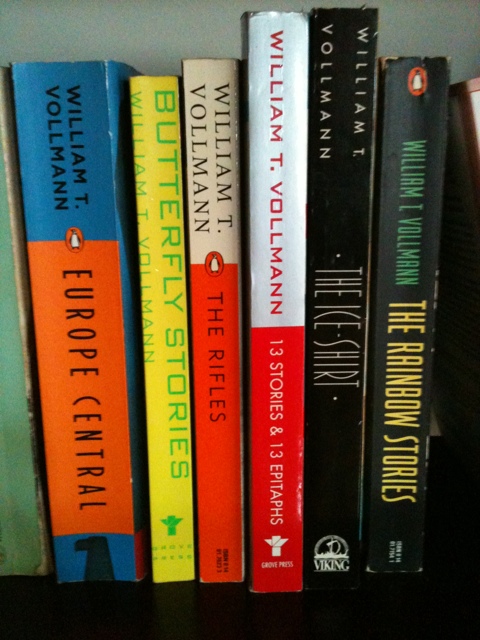
So, this afternoon, browsing at my favorite bookshop, a labyrinthine twisty thing, I ambled innocently past the ‘V’s of General Fiction, looking for a novel by Karel Capek in the sci-fi section, which abuts said ‘V’ aisle. Again, this was all innocence. I had no intention of picking up anything by Vollmann, despite the huge stack of his works there, used testaments to the futility of trying to read Vollmann perhaps—at least a dozen souls who said “fuck it” to Europe Central. Here are the Vollmann volumes (volmumes?) I possess—

20110909-044243.jpg

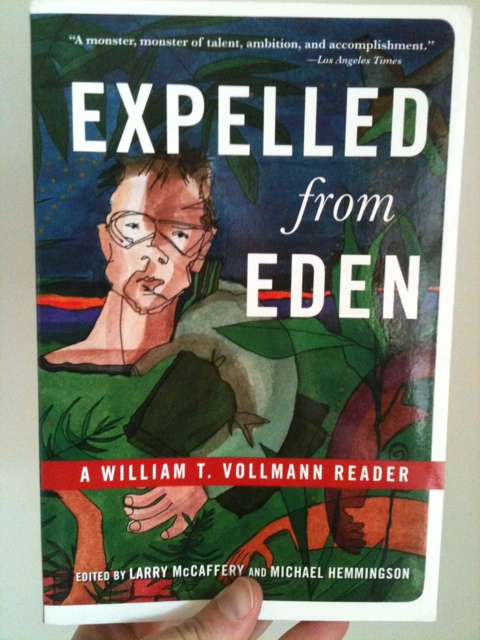
I’ve read Butterfly Stories, The Rifles, and The Ice-Shirt; I’ve read most of 13 Stories & 13 Epitaphs. I’ve read bits of The Rainbow Stories and mostly nothing of Europe Central, which migrated out of the “to read” stack a few years ago. So, yeah, I wasn’t looking for another Vollmann. But I’m too frequent a visitor at this particular labyrinthy, somewhat famous North Florida bookshop, so I noticed a “new” Vollmann in the stack, Expelled from Eden. And I started thumbing through it. Against my better judgment. 20 minutes later I was brainstorming reasons not to pick it up, but honestly, the credit in book trade I have with the store nails most economic arguments, and really, I’m thinking this is exactly what I wanted someone to do with Vollmann: edit that shit.

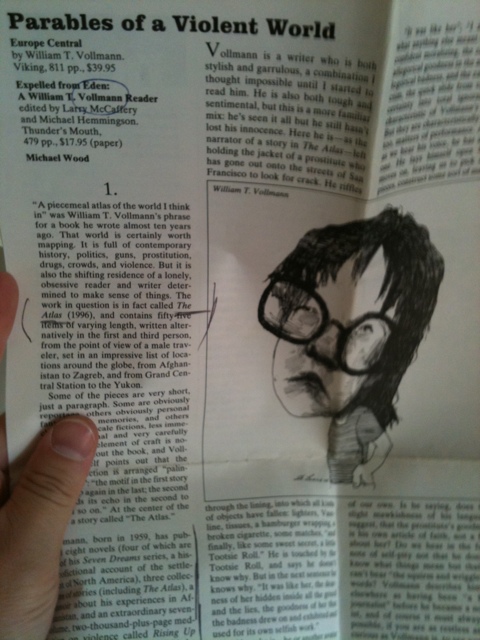
Larry McCaffrey and Michael Hemmingson have excised, chopped, moved around, and pulled from all over Vollmann’s massive world, putting together a book organized around Vollmann’s grand themes—travel writing; war; violence; prostitution; literature. There are lists, drawings, photographs. There is biography. I came home and read for an hour. I’m sure I’ll be sharing some citations down the road.

As a sort of bonus—and I always love to pick up a book where something is neatly tucked away—is an entire 2005 feature from The New York Review on Vollmann, focusing on Expelled from Eden and Europe Central.

20110909-044253.jpg

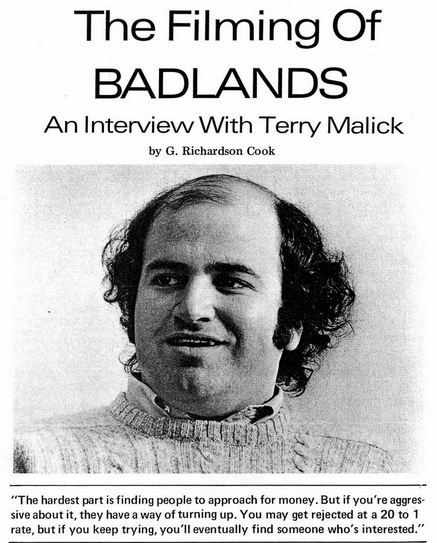
Read a Rare 1974 Interview with Terrence Malick

If you’re a fan of Terrence Malick, you may know how hard it is to come across interviews with the director. In the interview, Malick talks in some depth about making his moving début Badlands. Kudos to All Things Shining for unearthing a rare 1974 interview from Filmmakers Newsletter. (Chain of Twitter thanks: @NekoCase, @kurt_loder, @Coudal).

Chingado — Walton Ford

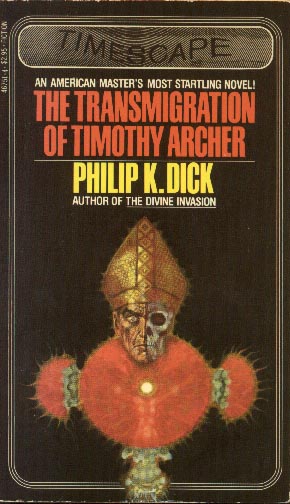
The Transmigration of Timothy Archer — Philip K. Dick

Suffering is the core of The Transmigration of Timothy Archer, a novel published just months after Philip Dick’s death in 1982. This is a book written by an author sure of his abilities, one who could confidently make this novel about big ideas turn on his characters’ struggles to control the trivialities of their day to day lives. While they attempt to make sense of the nature of God and unravel the mysteries of Christian teaching, they confront the questions that must have puzzled even Jesus’ own early advocates: is joy possible when good people are randomly confronted with confusion, pain, and death?  Dick tries to locate a mushy but viable middle ground in this sad, nimble, and touching novel.  Opening on the date of John Lennon’s assassination, Dick writes to commemorate the grinders, the survivors who manage to keep waking up, day after day, despite knowing that life often destroys those who dream too large.

The book is ostensibly based on the life and times of Timothy Archer, the iconoclastic American Episcopalian bishop of California in the 1960s whose unending search for truth led to his becoming friends with Robert Kennedy and Martin Luther King, Jr., advocating for the rights of women, homosexuals, and the transgendered, and time in the national spotlight.  The quest for knowledge led him also to adopt a number of intellectual positions that conflicted directly with his duties as a representative of the Episcopalian church — for example, he was brought to trial for heresy for openly questioning the existence of hell and the Holy Ghost.  The character of Bishop Archer was based almost entirely on the life of Bishop James Pike, Dick’s friend, who, like his fictional counterpart, died of exposure in Israel’s Dead Sea Desert searching for the sources of early Christian doctrine.  Bishop Archer is the bright flame in this book, the Gatsby who pulls in everyone he encounters — not because he’s influential and wealthy, but because his personality is that rare combination of knowledge and empathy, a true man of God who recognizes no difference between the important writer and the indigent cancer patient.  The actions of Bishop Archer form the arc of the book, and his deeds are a mirror to the other characters.  They struggle to shape their own individual visions for their lives because they must work in the shadow cast by a giant they love.

Angel Archer, the bishop’s daughter-in-law and the narrator of the novel, becomes one of Dick’s most realistically drawn characters.  She’s tough, articulate, and well-read.  While those around her succumb to suicidal impulses and mental illness she survives by searching her mind for poems and plays she’s read and committed to memory.  She finds uncomfortable parallels between books and her life.  She values her education and her self-identification as a “Berkeley intellectual” but makes light of her own pretension, telling us that she’s read all the long books but remembers nothing about them.  Do we become apathetic to our own experiences if we’ve read previously about something similar?  Angel fears ennui but describes her own artistic awakening as a ridiculous mixture of pleasure and pain — an agonizing night spent reading Dante’s Commedia while drinking a bottle of bourbon to dampen the pain of an abscessed tooth.  Aware that intellectual exercises and games both trivial and consequential have led to the deaths of her husband, the bishop, and his mistress, she still can’t escape her own self-made prison of words.  “The problem with introspection,” she states while contemplating her own death, “is that it has no end.”  When nobody is left, she soldiers on, dedicating herself, a fragile shell, to driving and working and walking and talking, a person “who records on a notepad the names of those who die.”

Like the narrator, this book reveals its depth rapidly, in spurts of astounding erudition and scholarship.  Dick writes masterfully about nuances of early Judaic law and the formation of Christian thought, illustrates the petty jealousy, kindness, and warmth that seems inherent to certain friendships between between intelligent, rival women, and indicts our perception and treatment of mental illness.  He quotes John Donne, Henry Vaughn, and discusses Virgil and Goethe without arrogance and without disturbing the flow of his story.  Like his best works — A Scanner Darkly, The Man in the High Castle, and Do Androids Dream of Electric Sheep?  — The Transmigration of Timothy Archer is fully drawn and completely real.  His best works seem to be filled with screwed up people trying to get by in a world that has been arbitrarily fucked up by war or technology or drug abuse.  This one is distinctly alive not because it’s set in an alternative world, but in sunny California that existed just three decades ago, close to the environs we currently abide.  A beautiful, moving coda from a man whose vision and prose changed and continues to challenge American writers.

Books Acquired, 9.08.11

20110908-034509.jpg

20110908-034521.jpg

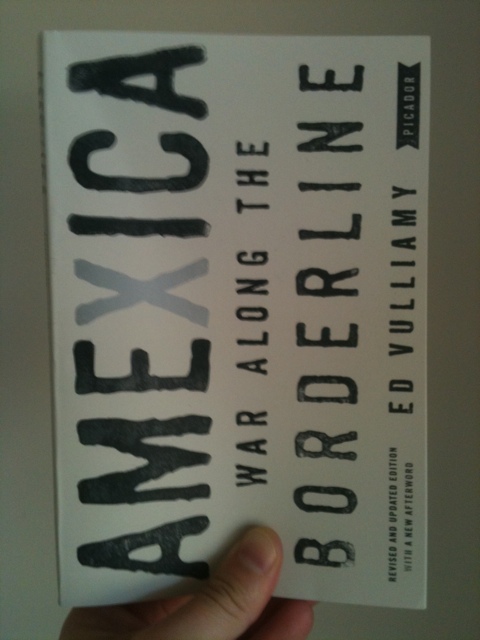
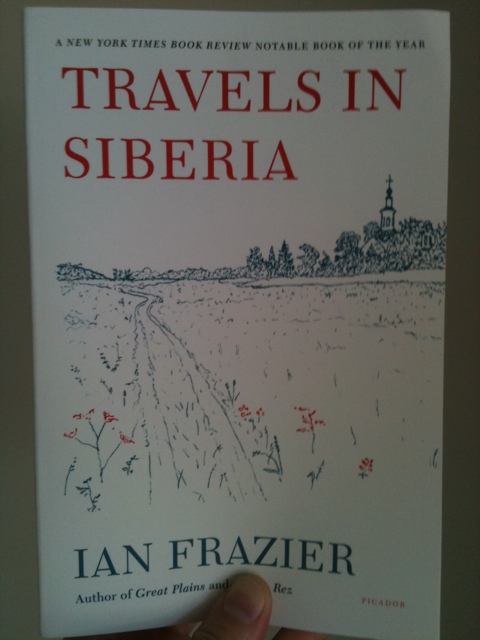
Big stack of reader copies on the homestead’s porch this afternoon, including two works of nonfiction from Picador, new in trade paperback. I’ve been itching to read Ed Vulliamy’s Amexica for a while, perhaps one of the weird aftereffects of 2666 . . . anyway, it should be a nice, visceral antidote to all the middling novels that pile up in the fall. Ian Frazier’s no slouch either, and Travels in Siberia looks pretty cool as well. A few weeks ago, Picador sent me a copy of Jason Elliot’s An Unexpected Light: Travels in Afghanistan, which also got great reviews in hardback last summer—I think I’ll make it my fall reading mission to read more nonfiction (particularly travel writing, which I’ve always loved), and these three books seem like a great way to go.

20110908-034540.jpg

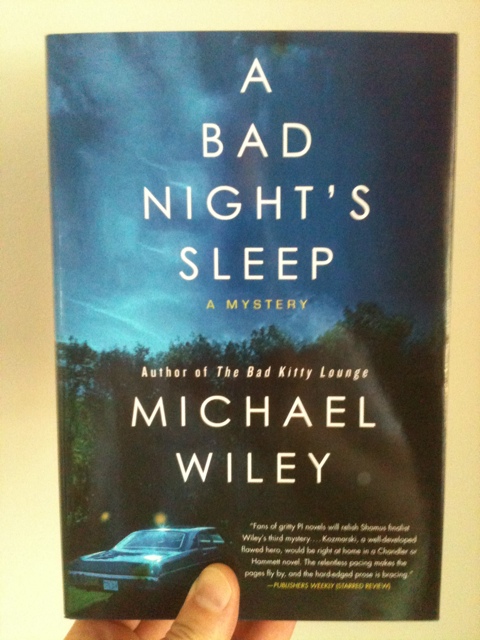
A Bad Night’s Sleep is the latest from crime writer Michael Wiley (I interviewed Wiley about his last book, The Bad Kitty Lounge, back in May of 2010, and he mentioned this book was underway, although he also talked about something called Wordsworth with a Glock, which, hey, I’d still love to see).

20110908-034550.jpg

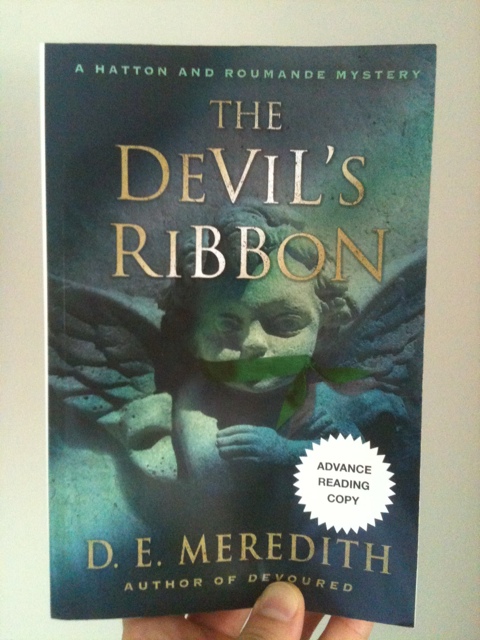
Wiley’s novel is new from Minotaur, who are also putting out a crime novel called The Devil’s Ribbon by D.E. Meredith.

Sade Was Very Fond of Dogs

From Roland Barthes’ “Life of Sade,” a short biography of The Marquis de Sade. Translated from the French by Richard Miller.  Read the entire essay at Supervert (or here over the next few days, parceled out over 22 sections)—

16. Sade was very fond of dogs, spaniels, and setters; he had them at Miolans, asked for them at Vincennes. Through what moral (or worse: virile) law should the greatest of subversions exclude minor affection, that for animals?

Sade, the Social Joker

From Roland Barthes’ “Life of Sade,” a short biography of The Marquis de Sade. Translated from the French by Richard Miller.  Read the entire essay at Supervert (or here over the next few days, parceled out over 22 sections)—

15. In the social game of his time, doubly complicated because — rare in history — it was both synchronic and diachronic, displaying the (apparently immobile) tableau of classes under the Ancien Régime and class changes (under the Revolution), Sade was extremely mobile: a social joker, able to occupy any niche in the class system; Lord of LaCoste, he was supplanted in Mlle Colet’s affections by a bourgeois, a collector of rents, who presented the actress with a magnificent sultan (a dressing table); later, a member of the Piques sector, he assumes the socially neutral figure of a man of letters, a dramatist; struck from the list of émigrés and owing to a confusion of first names that exists today, he was able (or at least his family was) to appear as he wished according to the varied moments of History on this turnstile of social class. He honors the sociological notion of social mobility, but in a ludic sense; he moves up and down on the social scale like a bottle imp; a reflection, once again in the socio-economic meaning of the term, he makes this reflection not the imitation or product of a determination, but the unselfconscious game of a mirror. In this carrousel of roles, one fixed point: manners, way of life, which were always aristocratic.

“I’m One of Those Writers Who Gropes Her Way into a Story” — Biblioklept Interviews Joan Leegant About Her Novel Wherever You Go

Joan Leegant’s latest novel Wherever You Go tells the story of three Americans in Israel whose lives intersect against the backdrop of Jewish extremism and the tension between democracy and terror. Wherever You Go is Joan’s second book; her first, An Hour in Paradise, a collection of stories that grapple with religion and identity, won the PEN/New England Book Award and was a finalist for the National Jewish Book Award. Joan was a lawyer and taught at Harvard for eight years before seriously pursuing a career in fiction writing.  She splits her time between Boston and Israel, where she’s the visiting writer at Bar-Ilan University in Tel Aviv. Wherever You Go and An Hour in Paradise are both available from W.W. Norton. You can learn more about her and her work at her website. Joan was kind enough to talk to me about her writing over a series of emails.

Biblioklept: How did Wherever You Go come about? Can you talk about the genesis behind the plot?

Joan Leegant: I knew only a couple of things about the book when I began to write it: first, that I wanted to write a novel about Israel, and second, that I wanted to write about Americans in Israel, specifically American Jews. The impulse for that is pretty straightforward. I’ve spent a lot of my adult life either being in Israel, or thinking or reading or worrying or despairing about Israel. In fact, my adult life seems to have been bookended by long stays in Israel. I first went there from Massachusetts in 1978 as a young lawyer for what I thought would be six months; I stayed 3 years. Flash-forward 30 years when I was invited to be a visiting writer for a semester at an Israeli university that, lucky for me, keeps inviting me back.

So the experience of American Jews in Israel interests me — why they go there, what they do when they get there – and that’s what I wanted to write about. Some of that curiosity is personal in that I lived there for a time and thought I would stay but didn’t. So part of the impulse to write is the “what if” that fiction writers traffic in: what if I had stayed?

But I learned through writing the book that I have strong feelings, passions, related to the experience of Americans in Israel that aren’t strictly personal. Americans have been among the most notorious Jewish extremists in Israel. Americans also comprise a segment of the radical settlers. Their numbers are small, but some Israelis hold a stereotype of American Jews in Israel as fanatics. Obviously there are plenty of American Jews living there who are not fanatics of any sort. But I was interested in exploring those who were.

There’s another source of this curiosity, which someone reading the book would be hard-pressed to guess. And it’s this: I was a college student in the late 1960s,  during the heyday of SDS (Students for a Democratic Society), the Weathermen, the anti-war movement, the push to get ROTC off campus. At my university there were student take-overs of university buildings, faculty protest strikes. My school was no Kent State, but I remember the president of the university calling in the National Guard at some point. And who was making all this happen, yelling into the megaphones on college campuses and morphing from heiress Patty Hearst into the SLA’s Tanya with a machine gun? Young twenty-somethings convinced of the rightness of their cause. As a cautious, careful person, I was intrigued by their passion. Often their cause was just even if their methods were violent or wrong-headed. This came back to me while I was writing Wherever You Go. 

But I didn’t know any of this when I began the novel. I’m one of those writers who gropes her way into a story. I don’t think anything through in advance. I don’t even like to think much about a story while I’m writing it. It’s like I have to turn off my head to write. I don’t know if that’s because of my legal training (linear, organized, concerned with relevance, and in my case, probably a bit rigid) or if it’s one of those left-brain right-brain things. Whatever the reason, I’ve learned to trust my instincts and have faith that something will emerge if I’ve got a reasonably promising premise or situation or character to work with. I wrote short stories for a long time before attempting a novel, and that turned out to be good practice for learning to let the story run the show. So I began Wherever You Go with some characters, went where they led me. Not accidentally, they led me straight into my own passions.

The plot emerged from the characters. Fairly early on, I knew that one of them, Aaron, was going to do something violent. I wrote the scene where he commits the violent act, and for a long time I kept that scene as a prologue. I thought I might structure the book so that the reader knew about the act from the start. Eventually it occurred to me that keeping it as the prologue had been a kind of place-holder for me, a helpful signpost: all things in the book needed to either lead up to that event or be the aftermath of the event. Once all that was written, I moved the event into the body of the book.

I also intuited at a point early on that the lives of the three main characters would intersect around this violent act, though I didn’t know how that would come about — how or why their paths would cross — until I wrote it all out. This enabled me to envision a structure. It also allowed me to use points of view I felt reasonably proficient in, which were three third-person narratives. From all this — the characters, the specific event, the structure, the points of view — a plot emerged.

Biblioklept: That structure gives you the tools to explore these characters, who are all in very different places in their relationships to Israel and the Jewish faith. Obviously, Wherever You Go will appeal to a Jewish audience (American or otherwise), but were you ever worried about alienating certain readers who may feel that your complex approach might sometimes portray Jewish people in a less than flattering light?

JL: I did worry. After I’d finished the book and it was at the publisher, in production, I began contacting Jewish venues about giving book talks. One of the first people I reached was the program director of a prominent Jewish cultural institute. She enthusiastically requested a review copy and then called two weeks later to say that, though she’d loved the book, she couldn’t host me there; her board simply wouldn’t have it—she knew this without even having to ask. This worried me and I thought I’d killed the possibility of a book tour. As you may know, the Jewish community is very well-organized for book events. Nearly every city has an annual book fair where authors speak, and most synagogues regularly host writers for book talks. So when this institute turned me down early in the outreach effort, I thought: uh oh.

But then, remarkably, the opposite happened: Jewish organizations were eager to have me come speak. In the ten months following the initial publication of Wherever You Go, I spoke at 100+ Jewish venues up and down the east coast, in Chicago, California, Seattle. It turns out that a great many American Jews are worried about the same things I’m worried about; namely, the rise of extremism in Israel, the power and influence of the settlement movement, and the drift to the right in Israeli politics and policy. Like me, many are deeply devoted to Israel and care passionately about its survival; yet we also believe there must be a Palestinian state, and that the Palestinian narrative must be heard as well as the Jewish narrative.

Who were these audiences who turned out for my book talks? They weren’t young lefties or radicals associated with, for instance, the movement promoting sanctions or divestment. They were mostly middle-aged women and men who identify strongly as Jews and Zionists but are worried about where Israel is headed and dismayed about the hijacking of the Jewish tradition by those with fundamentalist views. Instead of being angry that I was talking about Jewish extremism, they wanted to know more about it, to become better informed. I think this feeling is best captured by a line from the review of Wherever You Go that ran in The Forward, the pre-eminent American Jewish newspaper: “Finally, a novel about Israel by an American Jew that’s written well and without sentimentality.” American Jews don’t want an update to Exodus. Certainly those who are knowledgeable about Israel, who’ve been there or follow the news, want to read books that depict the country, as it is today, with more nuance.

Which is not to say that some people didn’t get upset with me. I got some nasty reviews, most which I’m pretty sure were motivated not by literary critique but political animus. One early reviewer for a well-regarded Jewish newspaper was startlingly honest about his discomfort. In a measured and articulate piece, he praised the book for its insight, character development and accuracy–and then said he just wished I hadn’t written it. Couldn’t I have used my novelistic talent to write about something else? he asked. Frankly, I admired him, and still do, for being up front about his personal reaction instead of feeling the need to find a reason to rip the book apart.

I seem to be one of those writers capable of remaining oblivious of her readers while engaged in the act of writing. I didn’t much think about alienating readers or reviewers while I was working on the book. It took me seven years to complete this work, and for a long time I simply didn’t know if I would produce a novel at all, let alone publish one. So that enabled me to sink into the material without giving a lot of thought to its reception. I also didn’t know until quite a ways in that the book would contain such charged material, since I began with character, not theme or idea. This also helped me wade in deep while maintaining a kind of happy ignorance about what I was heading toward, subject-wise.

Nonetheless, I’ve come to understand that writers working out of a particular ethnic or religious or regional tradition often upset members of their own group when their work is released into the wider world. Philip Roth infuriated many in the Jewish community when he published Goodbye, Columbus in 1959 (National Book Award notwithstanding) because of the less than flattering light in which he portrayed his characters. I hope I’m not misremembering, but I believe I once read that Sherman Alexie’s work was not happily received by his fellow Native Americans, for the same reason. I have a friend who is a playwright; she is also Armenian. She told me that with her next play, her first about being Armenian, she expects to be nearly excommunicated. This is part of the territory of writing. You tell the truth, not, to my lights, in order to be outrageous or provocative or snide or even merely clever, but because honesty is essential. Not everyone is going to like it.

Biblioklept: I imagine (if you’ll permit me that license) that although Alexie would like for Indians to read his books and relate, and perhaps your Armenian friend wishes that Armenians will be able to identify the truth in her work, I imagine that both writers hope for audiences beyond their own ethnic backgrounds. Do you worry about your books being perceived as “Jewish books”—not necessarily during the crafting (as you’ve already described), but perhaps in the nitty-gritty of the marketing and so forth?

JL: I don’t worry about that kind of labeling very much, though perhaps I should. Maybe this comes out of initially publishing short stories. The first piece I ever published was about a 75-year-old rabbi thrown into a spiritual crisis when a pair of Siamese twins appears at his morning minyan — he’s been waiting for a sign from the Divine for a long time and wonders if they are it — and it was published in Nimrod, a very fine literary journal out of the University of Tulsa. Several things came out of that publishing experience. First, I learned that, like the old advertisement for Levy’s Rye Bread (“You don’t have to be Jewish to love Levy’s”), you didn’t have to be Jewish to connect to and enjoy a good Jewish story. Now, of course, I knew intellectually that non-Jewish readers could, and did, appreciate intensely Jewish fiction all the time. One of my literary beacons is Bernard Malamud, many of whose short stories are masterpieces, particularly those in The Magic Barrel,another National Book Award winner from the 1950s. When it comes to Jewish stories, you can’t get much more Jewish than that. But I’m no Malamud, and until I began to publish, I didn’t know where my work might end up. When Nimrod took that first piece, I understood that the work had transcended a strictly ethnic readership, something, I might add, that my wonderful teacher, Bret Lott, had already told me. It was Bret who pushed me to send that story out in the first place.

The second thing that came from the Nimrod experience was attending their annual writers conference. The story they took — it’s called “The Tenth”– had won third place in Nimrod’s Katherine Anne Porter Prize; they flew me to Tulsa to accept the prize and participate in the conference, where I also met the judge, novelist Anita Shreve. And what I found while talking to people all weekend and being at an awards dinner with a couple hundred guests was that the truths I was exploring in that story — the wish to connect to the Divine, the terror of having glimpsed the Angel of Death – were indeed universal. This gave me the impetus to keep mining the Jewish vein, and I did the classic obsessed-writer thing: I scribbled potential story titles and opening paragraphs all over the backs of the conference materials on the plane ride home. The prize and the talky weekend were the boosts I needed to say to myself, OK, write those Jewish stories. If they’re good, people will read them.

Marketing that first book as a Jewish book, then, became primarily a business decision, and it was by my doing, my choice. That holds true for my novel, Wherever You Go, as wellAs I mentioned earlier, the Jewish community is well-organized in terms of providing opportunities for writers to get the word out. So the community has been a natural launching pad for my work. I was also very lucky with my first book, An Hour in Paradise, in that it was selected early on for the Barnes & Noble Discover Great New Writers Program and then won the Winship/PEN New England Book Award, two honors that kept it from being perceived as exclusively of interest to Jewish readers.

That said, I’d love both books, and especially the novel, Wherever You Go, to reach more  readers in the broader world. Wherever You Go deals with religious fanaticism, and while the focus is the Arab-Israeli conflict, and Jewish extremism in particular, much of what’s explored in the book applies to any kind of fundamentalism. Which, as we know, is happening all over the globe. What allows people to commit violence in the name of God? What draws certain individuals to embrace the fanatic’s worldview? How do families deal with the rifts within them caused by differences in ideology? These are questions I think a lot of us are asking in this new century. Then there are the themes of forgiveness and atonement and repairing relationships. I’m hoping general readers will be interested in exploring these issues through the lens of fiction.

Biblioklept: What are you working on next? What projects are on your horizon?

JL: I’m working on stories as well as a larger project. I won’t say much about the larger work because I’m still finding my way into it, except to say that it’s set in central Massachusetts in apple growing country. The stories are set in Israel and are about secular Israelis — a departure from the world I explored in my novel, Wherever You GoThe new stories are also a change for me stylistically in that they are written in first-person, which is not a voice or point of view I’ve used much at all. But that’s just how they’re coming out. And you have to go with the demands of the story.

The new stories and new novel are both leaps for me both in terms of subject matter and style (narrative structure, voice, etc.). While that can feel unsettling, it’s also great to be pushing into uncharted territory. I didn’t start writing fiction until I was almost 40; now I’m 60, a slow writer, and hope I have enough time to keep trying new things.

Biblioklept: Have you ever stolen a book?

JL: I am the quintessential good girl and have never stolen anything. I even became a lawyer because I liked rules. The closest I came to stealing a book was when I stayed for a week at the home of friends who were away for a semester and began reading their copy of Francine Prose’s novel, Blue Angel. I was loving the book but wasn’t going to be able to finish before I had to leave. So I took it with me. But I felt so guilty that I bought another copy for myself and slipped back into my friends’ unoccupied house to return theirs. I know they would have given it to me had I asked. But I felt so tarnished by my original conduct that I couldn’t even ask.

Wig Fetishist

From Roland Barthes’ “Life of Sade,” a short biography of The Marquis de Sade. Translated from the French by Richard Miller.  Read the entire essay at Supervert (or here over the next few days, parceled out over 22 sections)—

14. One of Sade’s principal persecutors, Police Lieutenant Sartine, suffered from a psychopathological condition which in a just (equal) society would have entailed his imprisonment on the same footing as his victim: he was a wig fetishist: “His library contained all kinds of wigs of all sizes: he put them on according to the circumstances; among others, he owned a good-luck wig (with five loosely hanging little curls) and a wig for interrogating criminals, a kind of snake headdress called the inexorable” (Lély, II, 90). Aware of the phallic value of the braid, we can imagine how Sade must have longed to clip the toupees of his hated cop.