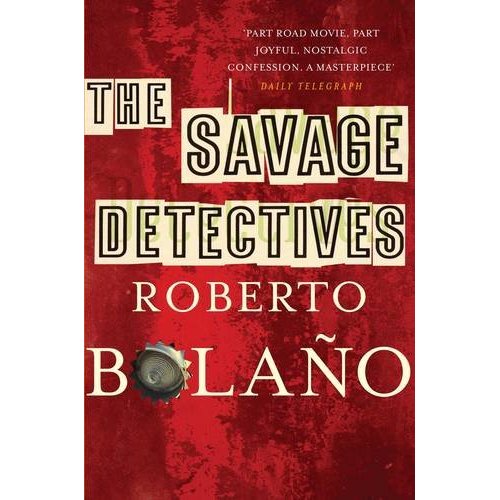
The Savage Detectives — Roberto Bolaño

Roberto Bolaño’s “other” masterwork The Savage Detectives has been previously reviewed on this website, but my view is that the previous writeup was unfair and premature.  Perhaps those of us who love this book are not “serious” readers.

The plot was accurately diagrammed in the earlier post. The Savage Detectives is made up of three sections. The first section consists of the diary of seventeen year-old Visceral Realist poet Juan Garcia Madero, his record of his literary ambition and dawning appreciation of beauty and words. The second, lengthy section is a series of interviews, seemingly conducted by a single, unknown interviewer in an attempt to uncover the history of the Visceral Realist movement, a group of iconoclastic poets that lived in Mexico City in the early part of the 1970s. The third section revisits Garcia Madero’s diary as he and Arturo Belano and Ulises Lima, the nominal leaders of the Visceral Realists, scour the unforgiving Sonora desert in search of their own lost heroes.

Bolaño revisits familiar themes in this novel by asking what drives people to create, and what happens to those people when the things they create are pushed, like themselves, to the margins of society.  Garcia Madero’s drive to write forces him to confront his everyday existence as he attempts to shed his innocence.  He loses friends, quits school, moves in with a waitress, falls in love, has his heart broken.  He writes when he eats, he writes when he should be doing something else, he writes about writing.  He assumes that he and his comrades are on the verge of fame and that others are aware that everything the Visceral Realists do is bold and profound.  Why then, Bolaño asks, is Garcia Madero satisfied with reading his poems to others when he dreams of placing his work in well-regarded anthologies?  What happens when we realize that immortality is ultimately an illusion?  Where does the spirit go when the ghost leaves only a sheet behind?

The answers to the questions posed in the first book are addressed in the second, but there is no sense that the unknown interviewer is close to mythologizing the Visceral Realists in the same manner as the scholars who made a hero of Hans Reiter in the first book of 2666.  At least at the time the interviews were conducted, the Visceral Realists’ body of work is unknown to most, but to those with knowledge of their oeuvre, the Visceral Realists are remembered as hacks or kids from the wrong side of the tracks who preferred the commission of petty misdemeanors to dedication to their craft.  The reality, as usual, is located somewhere in the middle. The Visceral Realists are shown to be like any other group of talented, excitable and intelligent young people because they’re bound to be disappointed.  Their failure of their movement can be blamed on their own choices as well as on barriers erected by those ensconced in the Mexican literary establishment whose notions of where ideas ought to come from are not easily refuted.  Especially by those demanding entry to their small but exclusive club.

Mr. Biblioklept’s first review was essentially right when he stated that The Savage Detectives “is an epic about the banal, ordinary things that fill our lives: jobs and eating and getting to places and having one’s friendships sour and being disappointed and so on.”  Yes, sadness pervades the book.  The Visceral Realists put down their pens, or they move to America, or they run and hide from the things that they cannot control at home.  The Visceral Realists succumb to disease, lose their minds, attempt to cope, and they die.  An early friend of Arturo Belano’s recounts–

I imagined him lost in a white space, a virgin space that kept getting dirtier and more soiled despite his best efforts, and even the face I remembered grew distorted, as if while I was talking to his sister his features melded into what she was describing, ridiculous feats of strength, terrifying, pointless rites of passage into adulthood so distant from what I thought would become of him.

Although the young poets suffer defeat, they enjoy small but significant triumphs, the most important of which is the existence of the book being argued about in this space.  For Bolaño, whose business is the veneration of creators and their creation, the perseverance of the questions raised by the mere existence of the Visceral Realists and their permanent embodiment in a physical object capable of transmission in perpetuity is the ultimate victory. If the author is right that “the search for a place to live and a place to work [is] the common fate of all humanity,” then the young poets transitioning to adulthood don’t fare so poorly.  Most of them, despite their backgrounds, become citizens with some stake in the places they live.  They find work, they have children, they find adventure.  Some, like Arturo Belano, continue to write at an immense personal cost.  A man without a country, he’s the shadow who forms the substance of the book and allows his alter ego to demonstrate his remarkable narrative powers.

But what makes The Savage Detectives a complete work is that, like the characters of Borges and Cortazar, who so many in this novel profess to admire, the poets realize, sometimes too late, that brief and startling connections between people are always possible and love may be found anywhere.  La Maga and Oliviera meet on strange bridges in Paris, condemned men revisit their lives in the moment between gunshot and blackness, and poor, unlettered poets will continue to read, and despite derision and hardship, will continue to express their own vision of hope and possibility.
Roberto Bolaño Explains the Good Thing About Stealing Books

From Roberto Bolaño’s July, 2003 interview with Mexican Playboy, collected in The Last Interview and Other Conversations

The good thing about stealing books–unlike safes–is that one can carefully examine their contents before perpetrating the crime.

Heroes of 2010 — Bernie Sanders

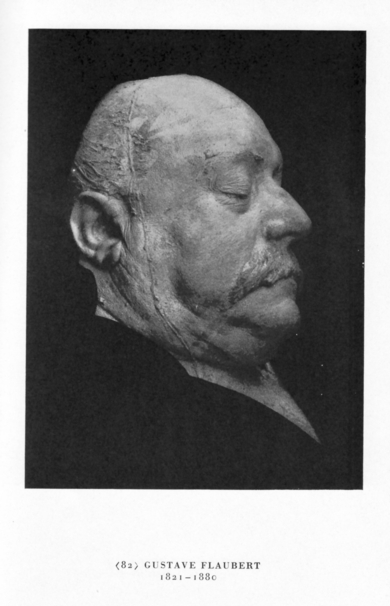
Gustave Flaubert’s Death Mask

Heroes of 2010 — Kenny Powers

As always, Kenny Powers is heroically NSFW —

And then there’s his seriously NSFW K-Swiss ad campaign —

Dr. Samuel Johnson, Origin of a Penis Euphemism

In his forthcoming cultural history of euphemisms, Euphemania, Ralph Keyes offers the following (seemingly apocryphal) origin of the euphemism “Johnson” (for “penis,” of course) —

Johnson is the last name most often used for the male sex organ. According to one theory, this slangy euphemism originated with the name of a large railroad brake lever. Lexicographer Eric Partridge thought it was more likely an abbreviated version of Dr. Johnson, a onetime synonym for “penis” that Partridge said might be based on the assumption that ‘there was no one Dr. [Samuel] Johnson was not prepared to stand up to.’ Working under the verbal restraints of his times, Partridge said this synonym was for the ‘membrum virile.’

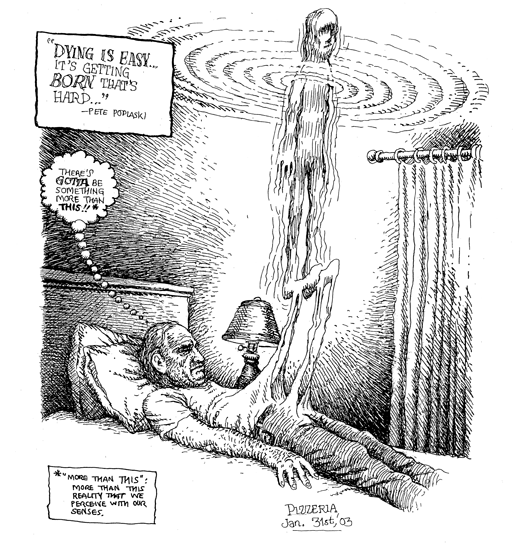
“Dying Is Easy” — Robert Crumb

(Via).

Heroes of 2010 — Yung Humma, Flossy Flynt, and Whatchyamacallit

Lie vs. Lay (with Help from Roy Peter Clark and Mad Men)

Roy Peter Clark, in his excellent guide to practical writing The Glamour of Grammar, offers the following advice on two of the trickiest homophones in the English language, lie and lay

Here’s the simplest way to remember the difference: lie means “to recline”; lay means “to place.” As in “I lay the cushions on the floor so I can recline in comfort.” (You can use the vowel sounds as a memory aid: lie/recline; lay/place.)

Confusion sweeps in when we move from the present tense to the past. Alas, the past tense of lie happens to by lay: “When I heard the news, I lay on the bed in disbelief.” And the past tense of lay is laid, as in “The bank robbers laid their weapons on the ground.”

Clark then gives us the following helpful examples that distinguish the principal parts of these tricky irregular verbs —

Lie: Today I lie on the bed. Yesterday I lay on the bed. I have lain on that bed so many times there are holes in the mattress.

Lay: Today I lay my cards on the table. Yesterday I laid my cards on the table. I have laid my cards on the table so many times that I was bound to win.

Significantly, Clark uses lie and lay as part of a larger discussion about how a writer can master irregular verbs. He suggests that learning the principal parts of these verbs and understanding the distinction between transitive and intransitive verbs will help writers to communicate more clearly. (The Glamour of Grammar is a fantastic book, by the way, and would make a vital addition to the libraries of experience and inexperienced writers alike).

So, ready for a quiz? One of our favorite blogs, Ironic Sans, compiled every use and misuse of lay and lie from the first three seasons of Mad Men. You’ll have a moment after hearing a character use or misuse lay or lie to decide if he or she has done so with grammatic fidelity. After that, a graphic (and sound) will let you know if the word has been used correctly. Good luck!

Why Cormac McCarthy Doesn’t Write Short Stories

I’m not interested in writing short stories. Anything that doesn’t take years of your life and drive you to suicide hardly seems worth doing.

(Via).

“Honoring the Subjunctive” — Lydia Davis

“Honoring the Subjunctive,” a very short story by Lydia Davis, from The Collected Stories of Lydia Davis

It invariably precedes, even if it do not altogether supersede, the determination of what is absolutely desirable and just.

Heroes of 2010 — PS22 Chorus

Truman Capote’s Caviar-Smothered Baked Potatoes with 80-Proof Russian Vodka (and Other Literary Recipes)

Cool post over at Flavorwire on authors’ favorite foods — we like Truman Capote’s baked potato lunch the best:

Though Truman Capote’s writing was mostly occupied with social dealings, he managed to find time to write a forward to Myrna Davis’ The Potato Book, a cookbook penned to raise funds for a Long Island day school. In his brief contribution, Capote offers a recipe for what he describes as “my one and only most delicious ever potato lunch.” In a tribute to the then existing potato fields of Long Island, the recipe called for a baked potato smothered in sour cream and caviar, then paired with a chilled bottle of 80-proof Russian vodka.

Read our list of literary recipes here.

Heroes of 2010 — Dan Savage

Saucy sex advice sage Dan Savage said, when Obama made an “It Gets Better” vid

“The president of the United States has the power to do more than assure LGBT kids that it will get better,” Mr. Savage said. “The president of the United States and his administration have the power to make it better.”

“Treasure” — Edgar R. McHerly

“Treasure,” a creepy/fun webcomic by Edgar R. McHerly. From his website The Invisible Hair Suit.

Heroes of 2010 — El Guincho

El Guincho’s video for “Bombay” is heroically and emphatically NSFW

“Without Any Jiggery-Pokery” — David Mitchell on Writing His Novel Black Swan Green

David Mitchell talks about writing his novel Black Swan Green in his 2010 Paris Review interview

MITCHELL

I’d actually started Black Swan Green years earlier. In 2003, while I was finishing Cloud Atlas, Granta asked for an unpublished story, and all I had were a few sketches about the world I grew up in. I didn’t want to be overly distracted from the end of Cloud Atlas, so I decided to knock one of the sketches into a publishable story. In doing so, I began my next novel.

INTERVIEWER

Did you, like Jason, write poetry under a pseudonym for the parish newsletter?

MITCHELL

I did.

INTERVIEWER

Was your pseudonym the same as Jason’s: Eliot Bolivar?

MITCHELL

James Bolivar—after a character created by an American science-fiction writer, Harry Harrison. I’ve never told anyone that before. You can see why.

INTERVIEWER

And, like Jason, did you go see a speech therapist?

MITCHELL

Just the same, aged about thirteen. Like Jason, I would go, and my stammer would vanish in the presence of the therapist, but come the next day, I’d be stammering again. One very pleasing result of Black Swan Green is that the book now appears on course syllabi for speech therapists in the UK. I hope that the book is useful for anyone wanting to understand an insider’s account of disfluency. For most of my life, the subject was a source of paralyzing shame, scrupulously avoided by family and friends. They were being kind, but to do something about a problem it must be named, discussed, and thought about. After writing the second chapter of Black Swan Green I realized, This is true, real, and liberating. I felt a little like how I imagine a gay man feels when he comes out. Thank God—well, thank me actually—that I don’t have to pretend anymore. Now I’m more able to feel that if people have a problem with my stammer, that problem is theirs and not mine. Almost a militancy. If Jason comes back in a future book, he’ll be an adult speech therapist.

INTERVIEWER

When you were creating Jason Taylor, did you ask yourself, What was David Mitchell like at that age?

MITCHELL

It was largely that, yes. Arguably, the act of memory is an act of fiction—and much in the act of fiction draws on acts of memory. Despite the fact that Jason’s and my pubescent voices are close, his wasn’t the easiest to crack because it had to be both plausible and interesting for adult readers.

INTERVIEWER

It was perverse of you to write a first novel after having written three others.

MITCHELL

When I started out on this head-banging vocation, my own background simply didn’t attract me enough to write about it. An island boy looking for his father in Tokyo; sarin-gas attackers; decayed future civilizations in the middle of the Pacific—these were what attracted me. It took me three books to realize that any subject under the sun is interesting, so long as the writing is good. Chekhov makes muddy, disappointed tedium utterly beguiling.

INTERVIEWER

Black Swan Green is very carefully structured.

MITCHELL

Get the structure wrong and you blow up shortly after takeoff. Get it right and you save yourself an aborted manuscript and months and months of wasted writing. Make your structure original and you may end up with a novel that looks unlike any other. So yes, Black Swan Green is carefully structured—like all halfway decent books—but simply structured too, with one story per month for thirteen months. After Cloud Atlas I wanted a holiday from complexity. I was reading Raymond Carver, John Cheever, and Alice Munro—all three great No Tricks merchants. After doing a half Chinese-box, half Russian-doll sort of a novel, I wanted to see if I could write a compelling book about an outwardly unremarkable boy stuck in an outwardly unremarkable time and place without any jiggery-pokery, without fireworks—just old-school.
