Superbad:Supergood

superbad_bigposter.jpg

Superbad is really, really funny; funny like funny-from-beginning-to-end funny, funny like out-of-shape persons like myself will feel laughter fatigue after leaving the theater type funny. The film has been plenty hyped, and for good reason; it doesn’t disappoint. My tendency is to judge a film’s greatness on the last 30 minutes–plenty of films deliver a solid opening based on an interesting premise that eventually falls flat. Superbad resuscitates a hackneyed premise, injecting it with genuine heart and soul, plenty of jokes, and, magically, an ending that doesn’t make you go “meh.”

I won’t bother going over the details of the plot: it’s essentially the same as any other teen sex comedy (think Porky’s and American Pie). Heroes Michael Cera, Jonah Hill, and Christopher Mintz-Plasse shine as the freaks and geeks trying to score some booze in the hopes of getting laid, and SNL’s Bill Hader and screen writer Seth Rogan play two rotten cops who balance the young trio’s misguided attempts to navigate the adult world.

superbad1.jpg

Underneath the rough profanity and crass humor of Superbad is, of course, a tender spirit of love and comradery tempered by the requisite sense of loss that attends the ending of any era (in this case, the end of high school). Homosociality dominates the film in every aspect, figuring most strongly in the changing relationship between Evan (Michael Cera), who’s off to Dartmouth next year, and Seth (Jonah Hill) who’s bound for “State.” The homosocial undercurrent is most neatly summed up in the penis motif that runs through the film, although an especially tender scene between Evan and Seth near the end also stands out as a perfect evocation and identification of platonic male love. While other teen sex comedies fall into gay-panic jokes (American Pie again), Superbad presents homosociality as unthreatening, even when it falls out of the culturally normative balance. And by the end of the movie, Seth and Evan do manage to reach a culturally normative balance, sundering their codependency in order to try meaningful relationships with girls. It’s a happy ending.

Like American Grafitti, Fast Times at Ridgemont High and Dazed and Confused before it, Superbad is a teens-growing-up comedy that transcends its genre; undoubtedly it will be revered for years to come. Besides, it’s really fucking funny. Highly recommended.

How Bluegrass Music Destroyed My Life–John Fahey

dc124.gif

As astute reader Nicky Longlunch pointed out in a comment on my last post on 50 Great Guitarists, John Fahey was not only a fantastic guitarist, he was also a published author. Fahey wrote three books–1970’s Charley Patton, a biography of that great blues guitarist (out of print now unless you buy the Charley Patton box set); 2000’s How Bluegrass Music Destroyed My Life, a collection of mostly humorous anecdotes and stories; and the posthumously published Vampire Vultures, a collection of Fahey’s letters, limericks, and interviews. HBMDML and VV are both still in print from Drag City (you can also read a PDF extract from HBMDML there).

I remember enjoying How Bluegrass Music Destroyed My Life back when it was first published, when Mr. Longlunch was kind enough to let me borrow it (I returned it folks!). I recall it as being funny, insightful, and Bukowski-spare; I recall it also exhibiting the same raw pathos that Bukowski infused in his work, but with none of the vulgar meanness. The best parts of the book detail Fahey’s young years in Maryland. I can’t really remember much else. I’d love to read it again, but I can’t really shell out $20 for a paperback right now. And unfortunately, I can’t just borrow it from Longlunch again, because he is no longer in possession.

In his comment, Longlunch griped at me to “Focus!” and he’s right–this blog is supposed to be focused on stolen books, and, poor guy, his copy of HBMDML is (I’m guessing) somewhere in Texas. Or he’s just misplaced it for the past seven years. Or he’s lying about it being MIA because he doesn’t want to loan it out. Which is fair, I guess.

Before I leave, I should also point out that Fahey isn’t the only author I overlooked in yesterday’s post. For years now, Pete Townshend has been doing “research” for his as-yet-unpublished autobiography. So we have that to look forward to.

50 Great Guitarists, All Better Than Slash (In No Particular Order)–Part III

11. John Fahey
In the late nineties, indie rock kids–myself included–started embracing sounds that expanded beyond four white guys playing drums, bass, and guitar. Bands like Tortoise and The Sea and Cake bridged the way to the avant garde stylings of Gastr del Sol and Oval, opening up whole new sound-worlds to young ears. Gastr del Sol’s stunning 1996 record Upgrade and Afterlife featured a cover of Fahey’s “Dry Bones in the Valley” as the most beautiful closing statement imaginable. A whole new generation of listeners were introduced to cult fave Fahey’s cryptic finger-picking style via Gastr’s Jim O’Rourke, along with Table of the Elements records who released Fahey’s Womblife in 1997. Today, followers of Fahey’s sound include Six Organs of Admittance, Jack Rose, Glenn Jones, and James Blackshaw, among many others. Great stuff, all around.

12. Jimi Hendrix

Hendrix is as great as everyone thinks he is.

13. Brian Jones

Brian Jones is often credited as the “second guitarist” for the Rolling Stones, and relegated to a space under the shadow of Keith Richards. He’s more infamous than famous, remembered as the wild man of the Stones who helped define their renegade image. However, Brian Jones was a multi-instrumentalist whose passion for different styles of music from around the world helped infuse the basic rocknroll of the early Stones with a certain eclectic punch. And although his early drowning death (like Dennis Wilson) in 1969 (before Jimi Hendrix, Jim Morrison, Janis Joplin) is tragic on some levels (like Keith Moon), it may have preserved him from turning into what the Rolling Stones are today–a decrepit zombie joke that can no longer reasonably retire, already having permanently damaged any patina of mythos to their legacy.

14. Pete Townshend

What Pete Townshend lacked in technical dazzle he more than made up for in bombast, his raw energy and indelicacy summed up best in his propensity to smash his guitars and stab his amps. His work with synthesizers pioneered whole new territories and genres of music, and his penchant for arranging narrative song-suites proved a profound influence on my favorite band, The Fiery Furnaces.

This is one of my favorite things ever:

15. Phil Manzanera

Besides being a founding member of Roxy Music, Manzanera released a series of excellent solo albums of strange new wave music in the late seventies, continuing to work with Brian Eno, as well as guys like Robert Wyatt and John Wetton. Diamond Head is a favorite of mine.

The Biblioklept Salute to Eleven Great TV Shows, Not One of Them with Us Today–Part VI

Parts I, II, III, IV, and V — everyone’s doing it.

So way back when, when I first started this series (ah, those were gentler times) the original eleven shows I planned to feature didn’t include the two that now comprise the end of this list, for the simple reason that I wasn’t even aware that they had been canceled. Which is a cryin’ shame, because these shows still had a lot of mileage in them. What can you do.

10. Veronica Mars (2004-2006, UPN; 2006-2007, CW)

Teeming with neo-noir cool, tight plotting, and good ole fashioned teen angst, Veronica Mars managed to fill the Buffy-sized hole in my heart for a brief time. Veronica Mars (Kristen Bell) is the teenage daughter of a private investigator. She’s ten times savvier than detective dad (and several hundred thousand times cuter), she manages to solve a lot of his cases–behind his back (my wife, incidentally hates Veronica–she thinks she’s a nosy brat). The first season of this show was an absolute masterpiece in TV plotting, a single season arc revolving around the murder of Veronica’s best friend. It maintained an intense and exciting pace over 20 or so episodes, never straying off course. Of course, not enough of you watched this show, and in June the CW network decided to pull it, replacing it with re-runs of a show about street tramps trying out for a “pop group” comprised of dirty strippers. Ugh.

I normally post clips of these shows, but to be honest, VM seems a little cheesy in Youtube-sized portions (the show is probably a little cheesy, perhaps). You really have to watch the whole thing. If you’re unwilling to Netflix it up, at least check out a full, divX quality episode here.

11. Deadwood (2004-2006, HBO)

Deadwood is the best TV show ever (or at least in the top three with The Andy Griffith Show and The Simpsons). Why did HBO cancel it? I don’t get it. I don’t get it. If you take the time to watch the first three episodes of Deadwood and still don’t like it, it’s probably because you’re not very bright (or perhaps you’re offended by lots and lots of cursing, which is fair I guess…actually my last proclamation is a little mean. I just really like the show, and if you don’t like it, fine, that’s fair, opinions are subjective, blah blah blah). Al Swearengen as played by Ian McShane is reason enough to watch every episode of this show twice. Observe some great Deadwood moments and tell me this show ain’t the bees knees:

(Incidentally, Kristen Bell–Veronica Mars–had a brief guest role on Deadwood–you can view a clip of that here, but it’s in Italian (the language, not the dressing)).

So that’s all folks, as a certain old young swine might say, but no fear–undoubtedly future lists will be populated by near-dozens of other TV shows that are sadly no longer with us–f’r’instance, how much longer could 30 Rock have? If we’ve learned anything through this series (you’re welcome), it’s that TV is precious, and we need to spend more time with our favorite shows each and every day.

Alphabet Soup: J

jonah.jpg

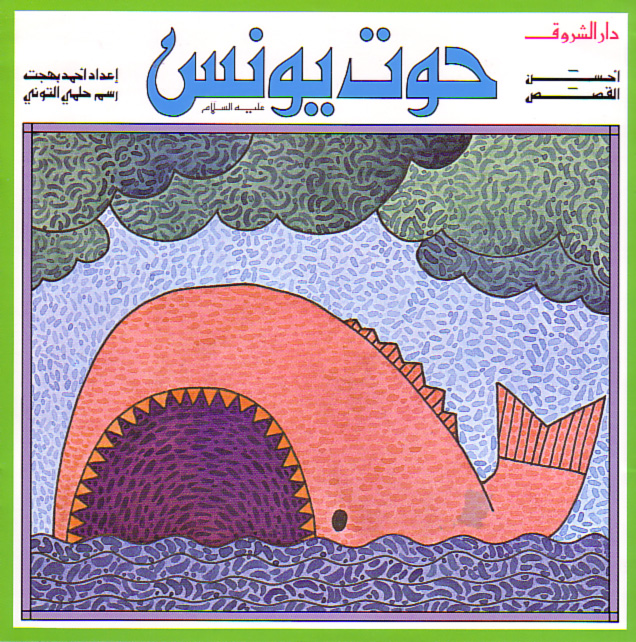
J is for Jonah, the reluctant Old Testament prophet. He’s been called by YHWH to bring the word to Nineveh–something he is definitely unprepared and unwilling to do. So Jonah hits Joppa Road and boards a ship sailing to Tarshish (this is pretty much as far away as one could get from Nineveh in the known world). YHWH is a wrathful God, and sets out in pursuit, sending storms to wreak havoc on the ship; the sailors panic and despair and pray. Jonah, meanwhile, manages to sleep like a baby through the whole thing. They eventually wake him up and he says, “Oh yeah, this is kinda my fault, throw me overboard.” At first the sailors are reluctant, but eventually the tempest leaves them no other choice, and they heave Jonah off the ship. Wrathful YHWH now shows his merciful side: he sends a “great fish” to swallow Jonah, thus saving him from drowning. In the belly of the beast, Jonah sends a prayer of repentance and thanksgiving; the whale then “vomits” him out onto the dry land of Nineveh where he preaches the word of YHWH. Jonah, however, is wrathful now–he hopes that the people won’t accept the word, and that YHWH will wipe them out. YHWH’s satisfied, however, and leaves Jonah outside of the city in the heat. A gourd grows giving Jonah some shade, but then a worm eats it, pissing him off again. He even gets suicidal sitting in the hot sun. YHWH asks him why if it’s right that he’s angry and Jonah replies: “I do well to be angry”–his last line in the story. YHWH then lectures him, reminding him that he didn’t make the gourd, and that furthermore he shouldn’t be angry at YHWH for sparing Nineveh, which is full of people and cattle.

The story, especially the episode with the whale, resonates throughout the history of myth and literature and into contemporary stories. But beyond the mythic echoes of Jonah and the whale, we just downright love the guy–he’s angry, lazy, and self-righteous–just like us.

We’re Ready for You, Mr. Grodin

charles-grodin.jpg

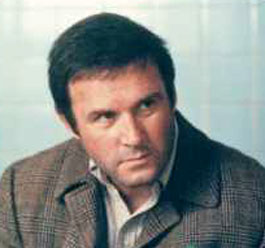
A post over at RP a few days back reminded me of a long-forgotten chestnut by Charles Grodin, We’re Ready for You, Mr. Grodin, a memoir of the curmudgeon’s odyssey through TV land’s myriad talk shows. For readers too young to recall, Charles Grodin used to go on late-night talk shows and play a misanthropic git, provoking David Letterman or Johnny Carson with mean-spirited jibes. Of course, it was all an act; a kind of toned-down Andy Kaufman bit, perhaps. He even had his own talk show for a couple of years on CNBC; it was pretty all right decent okay (I think he does the Andy Rooney bit on 60 Minutes II now, but I’m not really sure because I won’t watch anything on CBS except Sunday Morning).

Well so and anyway, I remember the book as being pretty good, but obviously this is the sort of thing for Grodin fans only (and I must admit I love Grodin–and not just the Grodin of Seems Like Old Times or Midnight Run, but also the Grodin of Beethoven’s 2nd (superior in many ways to the original) (Grodin also had a cameo in Rosemary’s Baby, you may recall–a film I had a mild obsession with in my college years)).Sadly, I lent this book out and it never came home (hey, come to think of it, I haven’t written about a stolen book in a really long time. Slackin’). I’m not sure who I gave it to, but I have a suspicion a funny-looking redheaded kid might be the culprit. Now if only Michael Keaton would write a book…

50 Great Guitarists, All Better Than Slash (In No Particular Order)–Part II

Check out Part I here.

6. Ian Williams

I’ve been blown away each time I’ve seen Ian Williams play, whether it was in the original monsters of crushing polyrhythmic madness, Don Caballero, the avant-weird hyperkinetic not-jazz of Storm & Stress, or in his current band Battles, where he taps the fretboard with his left hand and plays a keyboard with his right. On top of that, he’s a really nice guy.

Ian rocks “Atlas” live–

7. Prince

Prince is such an extraordinary performer and songwriter that his skills on the axe are often overlooked. The guy is awesome though, displaying a masterful command over his blistering, soul-stinging solos and tight riffage.

Prince shows Eric Clapton a better way–

8. Brian May

Brian May had to invent new instruments and equipment in order to translate the melodic heavy metal pop in his head. His triple-tracked leads, chugging rhythms, and ambient harmonics were certainly showy at times, but Queen was a showy band. Nothing wrong with that–it’s called glam music after all.

Brian May rips up a 10 minute solo from “Brighton Rock”–

9. Mick Ronson

Would we care about David Bowie today if Mick Ronson hadn’t been there to boost the one-time fairy-folk singer’s fey melodies and bizarro lyrics with some rocknroll oomph? Maybe, who knows–Bowie was (is) always adept at finding great people to work with (no fewer than three of Bowie’s guitar players will make this list). Besides working with Bowie and the perennially underrated Mott the Hoople, Ronson was always behind the scenes working with all the cool kids–Lou Reed, Bob Dylan, Morrissey, etc.

Ronson tears up the solo from “Moonage Daydream” on the Ziggy Stardust tour–

10. Richard Thompson

After making five albums with British folkies Fairport Convention (including my faves Unhalfbricking and Liege and Lief) Richard Thompson set out down the solo path, recording some brilliant albums with his wife Linda, including the classic I Want to See the Bright Lights Tonight. Although he’s best known for his distinctive folk-rock sound and wiry, spare solos, Thompson also made a significant contribution to the new, punk influenced music of the early eighties with his album Shoot Out the Lights–a masterpiece on par with Television’s Marquee Moon and almost as good as anything the Talking Heads ever did.

Check out “Wall of Death” from Shoot Out the Lights

50 Great Guitarists, All Better Than Slash (In No Particular Order)–Part I

Welcome to yet another ongoing Biblioklept series which may or may not ever end in your lifetime (and no, we haven’t given up on the Alphabet Soup thing). These axe-masters will come in random order–don’t confuse the numbers I give them with rankings. There’s only one tier of hierarchy here–all of these guitar players are superior to Slash, he of Snake Pit fame.

1. Robert Fripp

Fripp is the guitarist who best epitomizes the spirit of this list: he has consistently evolved over his 40+ years in King Crimson, he combines his masterful playing with a keen ear for control, and he’s a true innovator to his instrument. Watch the man demonstrate his patented Frippertronics below.

2. Nels Cline

This guy is fucking amazing, whether he’s channeling John Coltrane:

lending a virtuoso lead to Wilco:

or just kicking it experimental:

3. Sonny Sharrock

Sonny Sharrock’s 1991 album Ask the Ages is absolutely perfect. Possibly the most under-appreciated guitarist in history.

Sonny jams with Last Exit:

4. Neil Young

Neil Young gets more mileage out of a one-note solo on “Cinnamon Girl” than most wankers achieve on the whole fretboard. Neil Young was willing to go beyond the standard rock stuff (which he excelled at of course) and challenge his listeners with experimental albums like Trans and Arc. And for the record, Harvest is the most perfect Sunday-morning album ever committed to vinyl.

From the Rust Never Sleeps tour:

5. Steve Cropper

Cropper’s subtle and steady rhythm helped define the Stax sound. He was never showy, and in his production and songwriting as well as his playing he knew how to highlight the song, not his own guitar. If he’d only done “(Sittin’ on the) Dock of the Bay” with Otis Redding he’d still be on this list; as it is you can hear him on literally hundreds of hit recordings. And we’ll agree to forgive him for the Blues Brothers, okay?

Steve Cropper playing with Booker T & The MGs:

Exterminate All Rational Thought: Burroughs at the Movies

naked-lunch1.jpg

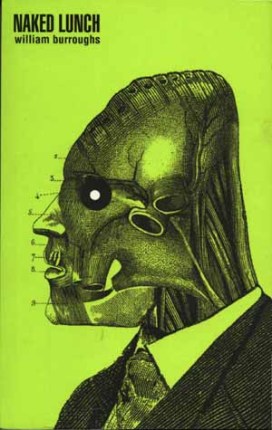
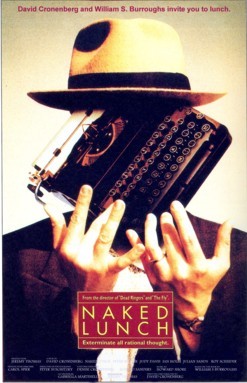
I love Naked Lunch. I love David Cronenberg. Theoretically, I should love David Cronenberg’s film adaptation of William Burrough’s psychosurreal classic. But hey, that’s rational thought for you, right? I didn’t love it in ’93 or ’94, the first time I saw it. Maybe I was too young. Maybe I just didn’t get it (but if that was the case then why did I love the book so much..?) So I watched it again as an undergrad; this was maybe ’99 or ’00. Nope. In fact, I remember thinking “Wow. This is actually pretty bad.” At that point, I was a big Cronenberg fan too. eXistenZ had just come out. eXistenZ is easily my favorite Cronenberg film, and a favorite film in general, and Naked Lunch didn’t hold up well against it or my re-reading of the Burrough’s book. But yet and still, ever the glutton for disappointment, I gave the Naked Lunch movie another shot this weekend, as part of the Biblioklept Summer of Cronenberg Film Festival. Guess what? It’s not a very good movie.

The fault of Cronenberg’s movie is not in failing to adapt the content of Burrough’s book, which is pretty much untranslatable as a narrative movie. Instead, Cronenberg attempts to weld some of the images of Naked Lunch–along with elements of other Burroughs novels such as Nova Express, The Soft Machine, and The Ticket that Exploded–into a cohesive thread using Burroughs’s biography as the overarching frame story. Burroughs’s life story is fascinating–the guy shot his wife in the head, for chrissakes–and lit junkies will love to see characters based on Kerouac and Ginsberg and Paul Bowles–but the end results simply don’t achieve or reflect the spirit of the novel. The bitter, caustic satire of Naked Lunch is almost wholly absent, replaced by wry one-liners from Peter Weller (who woodenly portrays Burroughs’s alter-ego, William Lee (an alter-ego who doesn’t appear in the novel of Naked Lunch at all, incidentally)). Cronenberg seems to underestimate his audience’s capacity for a nonlinear story, taking the loose collection of riffs, routines, and episodes that comprise Naked Lunch, and turning them into a pretty dull meditation on the nature of creativity and the suffering and alienation of the outsider-artist. Worst of all, the audience is asked to identify and sympathize with William Lee–again, this seems to be a negation of the original text.

naked_lunch.jpg

In the end, Cronenberg’s Naked Lunch is just another bad Cronenberg film (see also: his mish-mashed adaptation of J.G. Ballard’s Crash, his boring adaptation of Stephen King’s The Dead Zone). In Naked Lunch, we get the usual Cronenbergian tropes: mechanical objects that become hideously organic, bodily invasion, constant “is this real or is this a dream?” moments, and general dark creepiness. However, they simply don’t work here: Cronenberg is attempting Burroughs-icky resulting only in Cronenberg-icky. Cronenberg’s entire oeuvre is littered with flawed films, but I tend to enjoy them more for their flaws. This one was a no-go though, and I gave it three shots. But, in a way, I believe that Cronenberg deserved three viewings. You never know. Still, I doubt I’ll watch this one again.

If you haven’t seen a Cronenberg film, I suggest starting with Videodrome, A History of Violence, or eXistenZ. He also has a new movie coming out later this year, Eastern Promises starring Naomi Watts. If you haven’t read Burroughs, I suggest starting with Junkie or Queer (or just go ahead and jump into Naked Lunch).

I end with a far better review of Naked Lunch than I’ve provided here, courtesy of The Simpsons. Do you remember that episode where Bart makes a fake driver license (not the one where he’s awarded a real driver license courtesy Mayor Quimby)? And he takes Milhouse and Nelson and Martin on a road trip to the World’s Fair in Knoxville? Well, along the way the boys decide to sneak into an R-rated movie. They leave the theater disappointed; the shot reveals that they’ve just left Naked Lunch. Nelson remarks: “There’s at least two things wrong with that title.” I’ll leave it at that.

Hieroglyphick Bibles and other Marvelous Oddities

I’ve really been enjoying going through the Library of Congress American Treasures Collection. I came across this Hieroglyphick Bible (1788) the other day and thought it was pretty cool.

hieroglyph.jpg

Of course, I’m a big fan of the graphic novel (as well as the Old Testament) so this was right up my alley. More evidence supporting Scott McCloud‘s argument that the comics form is one of the oldest forms on earth (of course he goes way further back than the eighteenth century, contending that Egyptian hieroglyphs fall into his definition of comics art). Either way, check out LOC’s collection–fun for book nerds and history geeks alike.

Journey into Mohawk Country–Van den Bogaert and O’Connor


mohawk.jpg

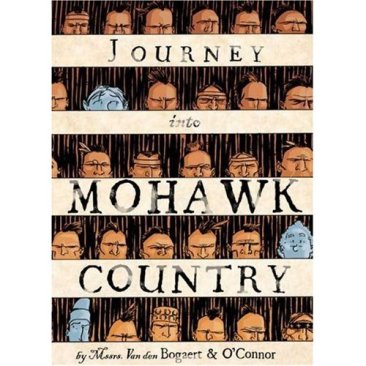
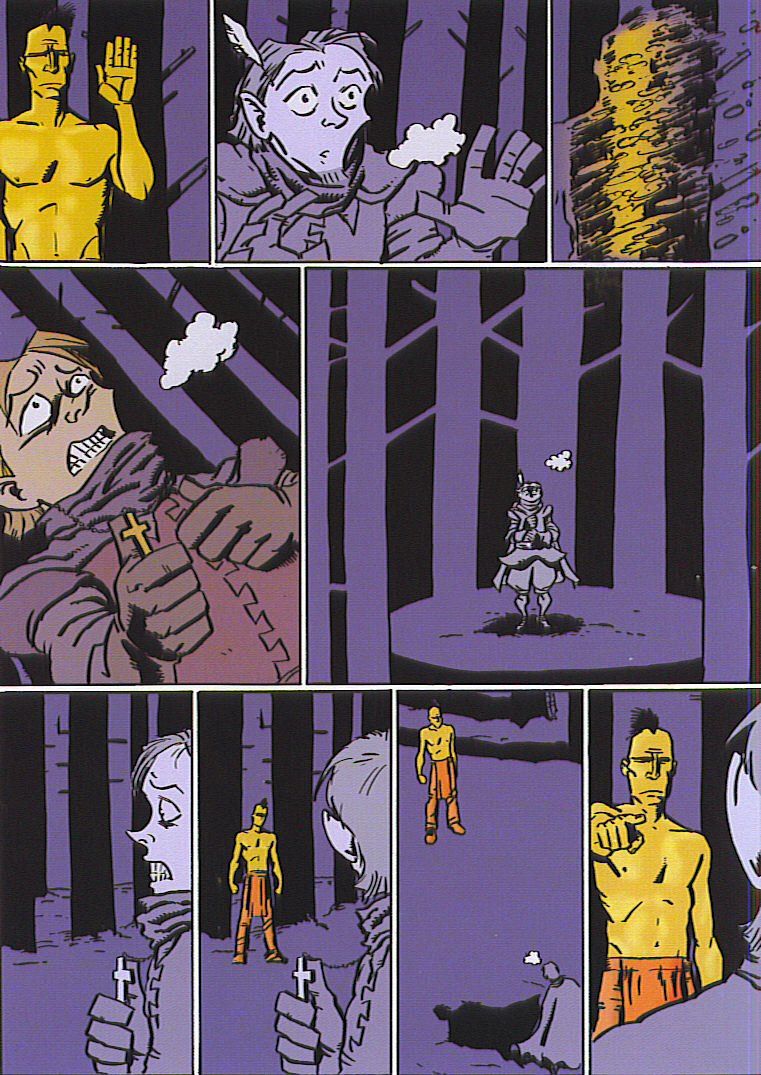
Journey into Mohawk Country is George O’Connor’s adaptation of Harmen Meyndertsz Van den Bogaert’s diary, an historical document detailing the young Dutch explorer’s 1634 journey out west of New Amsterdam to make contact with Indian villages for trade. O’Connor uses Van den Bogaert’s words verbatim, but his graphic novel format allows him extraordinary liberties with the journal’s account. Vague descriptions are literally fleshed out; O’Connor finds innuendo in even the simplest of Van den Bogaert’s entries, illustrating a between-the-lines reading of the Dutchman’s diary. O’Connor even manages to stick a strange epiphanic mystical revelation scene in there. The story itself is pretty simple: Van den Bogaert and his two companions head out into Mohawk country, meet and trade with Indians, eat bear, learn about some alien customs (including a sequence where some Indians show Van den Bogaert how to heal the sick by vomiting on them), and go back to Fort Orange. It’s really the little interpretive scenes around the text-proper, courtesy of O’Connor’s cartoony pictures, that make Journey into Mohawk Country such a pleasure to read. O’Connor’s work here illustrates the first-person narrative’s slippery claims on truth and the limited viability of a “true” historical account. Good stuff.

mohawk2.jpg

The Biblioklept Salute to Eleven Great TV Shows, Not One of Them with Us Today–Part V

Prove that you’re a winner by checking out parts I, II, III, and IV.

9. Home Movies (1999, UPN; 2001-2004, Cartoon Network)

Eight-year-old maverick director Brendon Small makes movies in his basement with the help of his regular crew, Melissa and Jason. He also plays a little soccer on the side, although his team never wins–no doubt due to the fact that their coach, McGuirk, is a washed-up alcoholic. Home Movies is the funniest show ever to appear on Cartoon Network’s Adult Swim. Comprised of hilarious, rambling conversations, witty movie parodies, and really cool original songs, Home Movies also boasted an excellent round-up of regular guest stars, including Jonathan Katz, Emo Phillips, Mitch Hedburg and Louis CK. But more than anything, it was the repartee between Brendon and his friends, teachers, and nemeses that really made the series so funny. For the record, John McGuirk is my favorite animated non-Simpsons character ever, and a personal hero of mine. The last episode of Home Movies was the saddest TV finale I’ve ever seen. The episodes are still funny on DVD or re-runs.

This is one of my favorite episodes: Brendon directs the school play (a take on Grease), convincing McGuirk to play the male lead (as well as drive his car onto the stage).

No Country for Old Men–Cormac McCarthy

no-country.jpg

Didn’t we write about No Country for Old Men a week or two ago? Yeah, but that was for the upcoming Coen brothers movie; this post is a review of the audiobook, and I’m not creative enough to think of a different title.

So we listened to the entirety of Cormac McCarthy’s No Country for Old Men over the course of two drives: from Jacksonville to St. Pete Beach and back. First off, as far as books-on-CD goes, this one was pretty good. Native Texan Tom Stechshulte manages to get all of the male characters spot on (the women in the novel sound kind of ridiculous though), and the action-filled plot, tight pacing, and simple sentences make for an easy-to-follow-while-driving listening experience (this is my number one criterion for an audiobook–you have to be able to follow the plot while navigating a road littered with truckers and asshole teenagers. F’r’instance, Faulkner’s short stories are almost impossible to follow in audiobook format).

Set in 1980, No Country for Old Men is the story of Llewellyn Moss, a Vietnam vet who stumbles across the aftermath of a drug deal gone bad and a suitcase with 2.4 million dollars in it. Of course, he takes the money and runs. Assassin Chigurh is hot on his heels to collect the drug money, leaving a bloody wake of murder and chaos. Sheriff Bell, a WWII vet who first-person narrates the beginning of each section of the book, is also on the case, trying to track down Llewellyn before he gets himself killed.

The first five discs (of seven) of the book were excellent–an exercise in genre fiction–the crime-suspense novel–that transcends the limits of the genre’s tropes. McCarthy’s spare prose moves at just the right pace, with just the right amount of “literary” interjection. However, the end of the novel morphs (evolves or devolves?) into a meditation on war and the changing nature of America and the American people. McCarthy’s symbols and metaphors seem heavy-handed and downright clunky at times, and in the end, the book becomes something of a reflection on personal failures and regrets, and how these personal failures add up to national failures.

Perhaps because I was driving, and because I had been so involved with characters over the course of five compact discs who suddenly disappeared in the narrative, I was disappointed in the end. Perhaps if I had read the book instead of listening to it on compact disc while driving, I would have found the ending more profound, or even enjoyable. Who knows–reading books vs. listening to them is probably a subject for another post. I do think that the Coen brothers will make a fantastic movie out of this story–potentially on par with Fargo. We’ll see.

Alphabet Soup: I

1831s.jpg

I is for Ishmael, narrator of Herman Melville’s Moby-Dick, a story about whaling/wailing. Ishmael’s narrative is an attempt to transform his pain and loss into some kind of meaningful human connection–to try to measure the incomprehensible and to put the ineffable into words. He’s a lovable guy, something of an eccentric in his time, who makes good friends with his strange bedfellow Queequeg. Of course, the whole thing ends in disaster, a disaster that Ishmael alone bears witness to, like one of Job’s servants returning to the master.

Also, I think that the great white whale, Moby Dick, is like a symbol or something.

infinitejest.jpg

I is also for Incandenza, Hal, the would-be tennis prodigy, secret stoner, and eidetically gifted prescriptive grammarian who is–along with Don Gately (somehow unjustly skipped over in installments D and G)–the protagonist of David Foster Wallace’s mammoth novel Infinite Jest. Hal is a sensitive kid, the son of a mad scientist filmmaker/tennis academy founder, who kinda sorta haunts both the novel as well as the Enfield Tennis Academy. Writing this makes me wish for a free month (i.e. no grad school) to re-read IJ, just so that I could take another crack at why Hal comes down with the howling fantods. Plenty of theories here.

Rescue Dawn–Werner Herzog

rescuedawn2.jpg

So my uncle and I went to see Rescue Dawn, the new Werner Herzog film. Rescue Dawn is the true story of Dieter Dengler (not a porn name), an Air Force pilot who crashed his plane during a mission over Laos in 1966. Dengler was captured, held as a POW, and tortured by his captors. Dengler organized and executed a daring escape, leading the other prisoners out of the camp. In 1997 Herzog made a documentary about Dengler’s story called Little Dieter Needs to Fly. I have not seen that film.

My expectations for Rescue Dawn were high–I love Herzog’s films, which mix high adventure with a sense of naturalistic realism and psychological surrealism–and I love Christian Bale, he of American Psycho fame, who plays Dengler. I suppose my expectations were too high, because Rescue Dawn wasn’t nearly as good as I thought it would be. My uncle was also slightly disappointed. It was by no means bad, but it wasn’t nearly as good as its reviews would make it seem; additionally, it’s practically a Hollywood action movie (complete with the big happy ending in front of an assembled audience of cheering extras)–something I wouldn’t have expected from Herzog. Bale is excellent though, as is co-star Steve Zahn, and the setting and pacing of the film make for an exciting afternoon. Then again, so does Missing in Action.

I may be going a little rough on Rescue Dawn–it’s better than 99% of the schlock out there, and in a summer crowded with franchise sequels, I think that moviegoers (i.e. people who go to the movies every week) should go check it out. Chalk my disappointment up to high expectations. Netflix addicted hermits like myself should probably just wait for the DVD.

Sanctuary–William Faulkner

sanctuary.jpg

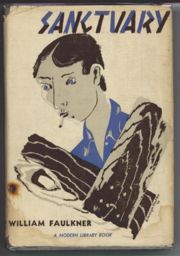
So I’ve been reading William Faulkner’s Sanctuary over the past few days. This was Faulkner’s breakthrough novel, the one that made him famous when it was published in 1931. He claimed that it was pot-boiler pulp fiction, written purely to make money, but who knows. I mean, we’re talking about a guy who chose to start spelling his name with a ‘u’ for some obscure reason–an author who worked from day one at creating the myth of himself as author. So who knows–maybe he actually thought he was writing a great piece of literature when he produced this lurid drivel.

Sanctuary is most famous for the rape of Southern debutante Temple Drake. She is raped with a corn cob. There you go. That’s pretty much all you need to know about this book. However, if you’re into elliptical and confusing depictions of violence, drunken debauchery, creepy voyeurism, and post-lynching sodomy, Sanctuary just might be the book for you.

There are two film adaptations of Sanctuary–1933’s The Story of Temple Drake, and 1961’s Sanctuary. Neither are readily available on VHS or DVD, and for good reason. They’re both pretty terrible. Still, the early sixties take on Sanctuary manages to capture the backwoods grotesque that saturates the novel. Actually, David Lynch could make a pretty decent film out of this.

My final analysis: I’m very very happy that I only have one more novel of Faulkner’s to read–Intruder in the Dust. Sanctuary did nothing but help consolidate my prejudice against Faulkner and my belief that the notion of Faulkner as an American Great is nothing but a scam.

How to Write a Lazy Post

1. Begin with some kind of excuse or explanation for why your post is so lazy. Remember to be earnest and emphatic.

Example: Sorry this post is so lazy! It’s Monday! I was swamped all weekend with school work and reading!

2. Link to somebody else’s work, preferably work that’s more creative and interesting than your own, but still within the realm of your blog’s subject.

Example: For a humorous take on the prose styles of some of our favorite authors, check out “The American Canon of the Choose-Your-Own-Adventure, Volume II” at McSweeney’s. Funny stuff.

3. If possible, link to some past post of your own that may or may not be tangentially related to the link to more-creative stuff above (of course, this older post of your may contain numerous links to other people’s more-creative-than-your-own stuff). Linking to your own previous work may help present your lazy post as something other than lethargic hackwork. Or not.

Example: Then check out our own post from last year on the Choose-Your-Own-Adventure series.

4. Then, so your readers don’t feel totally cheated (remember, they’re only really reading your blog to kill time at “work” anyway), post a completely unrelated mp3 or video.

Example A: On a completely unrelated note, my little baby two month old daughter just loves this song:

YMCK–“Magical 8bit Tour”

Example B: On a completely unrelated note, I recently saw the 1961 version of Sanctuary (adapted from a combination of two Faulkner books–Sanctuary and Requiem for a Nun). The film featured a standout performance from blues singer Odetta, which reminded me of this killer footage from that Bob Dylan movie Scorcese made:

5. Finally, apologize again for your lazy post and make an unsubstantiated promise to post more meaningful, more original content in the near future.

Example: Again, sorry for the lazy post folks, but look forward to upcoming posts on canceled TV shows, books-on-tape, a graphic novel about Mohawks (the people, not the hairstyle), and more griping about Faulkner.