
“Tarzan Based on the works of Burroughs”— Comic by Kelly Shane & Woody Compton, part of their Is This Tomorrow? series.

“Tarzan Based on the works of Burroughs”— Comic by Kelly Shane & Woody Compton, part of their Is This Tomorrow? series.
Because of the age I was when I saw it, the 1988 film Willow has an unduly large place in my heart. I even got to see some of the sets as a child on a skiing vacation to the Remarkables, a mountain range near Queenstown, NZ.
So I was psyched to come across these early designs for the film by the Jean Giraud, the artist also known as Moebius. Full gallery at Tell Forward; a few samples below: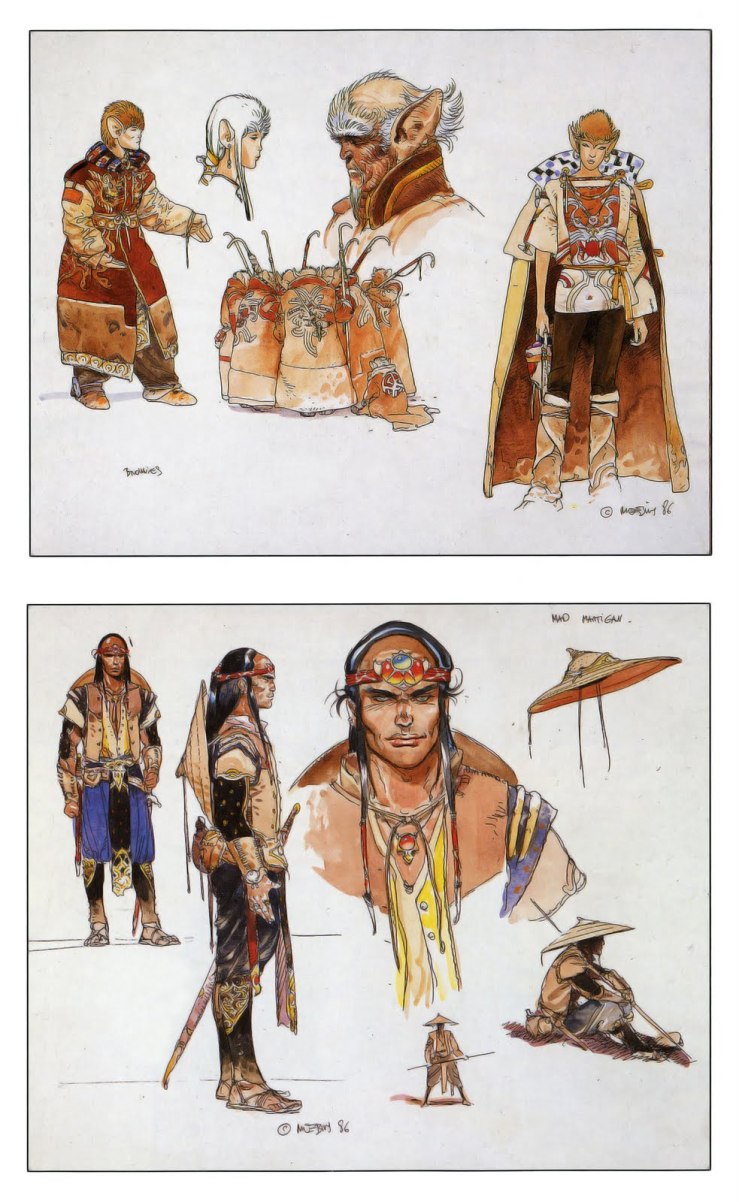



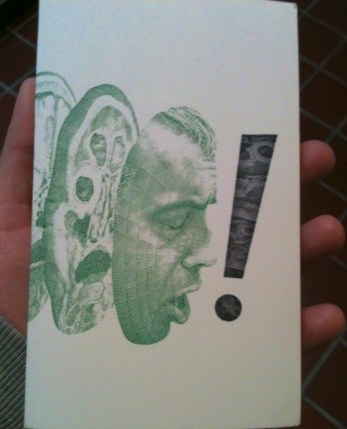
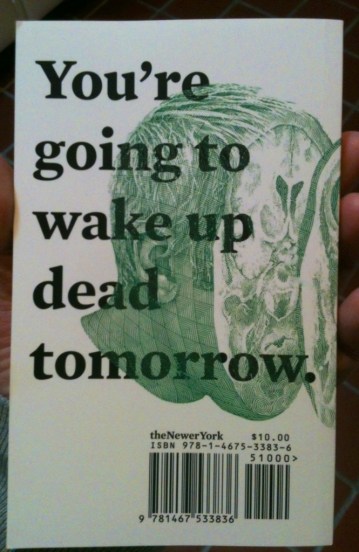
TheNewerYork is a new little magazine or journal or whatever you want to call it, featuring short fiction, poetry, art, lists, labels, fake reviews, and other stuff. Issue #2, clocking in at just over 80 pages fits neatly into a man’s jacket pocket and can be read in queues or at red lights or in between other readings or discreetly during end of semester faculty meetings. (I’m pretty sure you could read it in other occasions but I didn’t). You can see the front cover above; here’s the back cover, featuring this worrisome promise:
Maybe the best way to summarize (what I take to be) theNewerYork’s aesthetic/literary mission is to show off the issue’s disclaimer (which is preceded by a fancy Foucault quote):
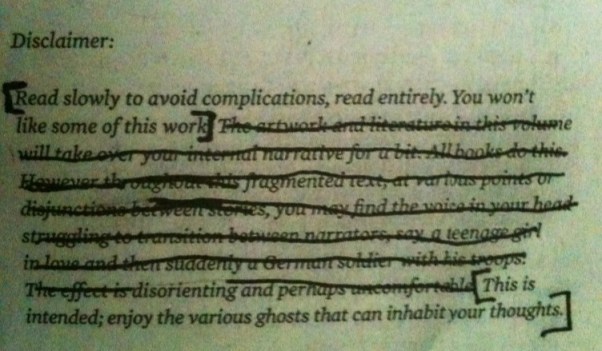
“You won’t like some of this work” seems like a fair warning, but theNewerYork is more hit than miss, starting with its excellent opener, ‘The Thank You War” by Elliot L. Ackerman, a four-paragraph flash that tackles how would-be patriotic citizens bungle human relationships with returning soldiers. Also very good is Jamie Grefe’s list “Over Thirteen,” which is a lovely little horror story that makes meaningful use of the reader’s imagination. Another list, Bruce Harris’s “Nearly A Dozen Things Sherlock Holmes Never Said” made me laugh (sample: “Watson, you’re right.”)
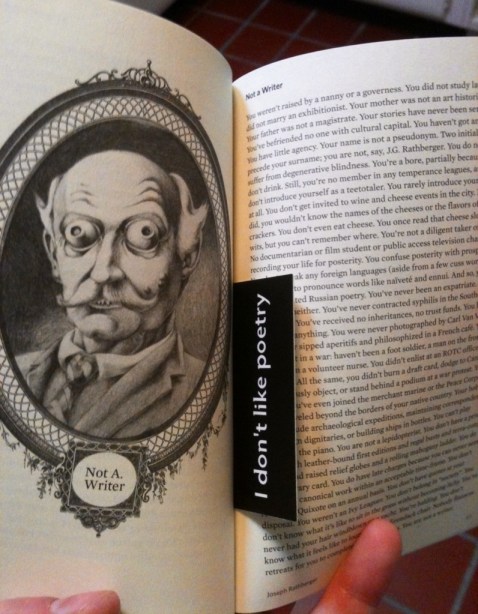
One of my favorite pieces in the volume is “Not a Writer” by Joseph Rathberger (indexed as “A Put Down”). You can see it below, filling up a page; you can also see the art that precedes it and the nifty bookmark that comes with the issue:
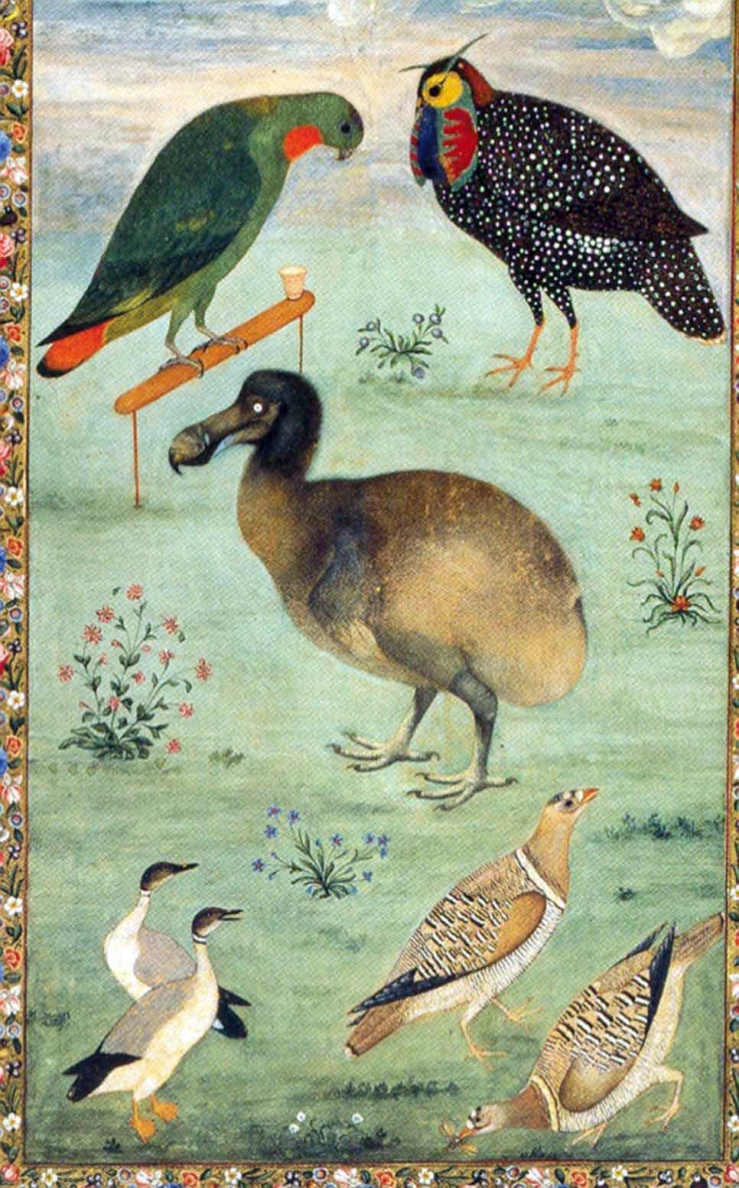
Most of the art in the issue is black and white and all of it is varied (in style and in quality). Here is Food Poop by Shaina Yang:

TheNewerYork’s willingness to showcase experimentation in what goes on paper for people to look at and read is both a strength and a weakness. Most of the pieces succeed, even when they shouldn’t (why is a Google translation from “Baby Got Back” from English to Latin and then back into English so funny?). The pieces in the issue that don’t succeed fail on their own terms: half-formed or poorly executed ideas, the occasionally gimmicky experiment, and, thankfully more rarely, pieces that feel too imitative. But like I said, most of the texts in theNewerYork’s second issue succeed, which is to say they entertain or amuse or baffle or occasionally move the reader. What I like most about theNewerYork is its spirit, which is daring and experimental without the heavy robes of irony that often cloak these sorts of operations. A promising beginning.

(More/via).
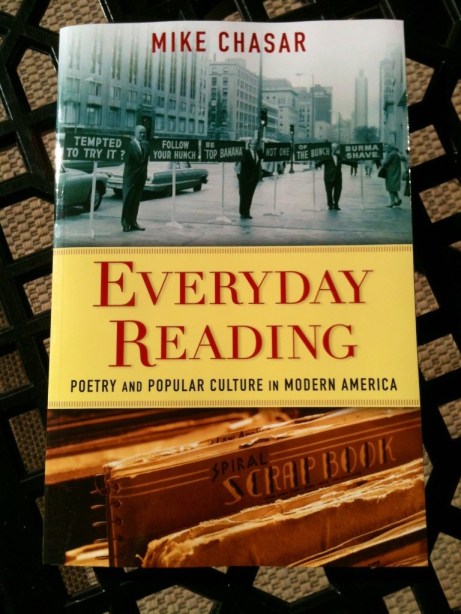
I got a little lax with these “books acquired” posts at the end of last year—chalk it up to end of semester deadlines and meetings, family-oriented holiday stuff, and an awful illness. Anyway–
Mike Chasar’s Everyday Reading: Poetry and Popular Culture in Modern America, new from Columbia University Press is pretty cool: it’s kind of a dialogic study of how poetry evinces (or infiltrates or collides or emerges from or is bound by) a variety of popular media. Some of the most fascinating chapters dwell on scrapbooking. Here’s Columbia U of P’s blurb:
Exploring poetry scrapbooks, old-time radio show recordings, advertising verse, corporate archives, and Hallmark greeting cards, among other unconventional sources, Mike Chasar casts American poetry as an everyday phenomenon consumed and created by a vast range of readers. He shows how American poetry in the first half of the twentieth century and its reception helped set the stage for the dynamics of popular culture and mass media today.
Poetry was then part and parcel of American popular culture, spreading rapidly as the consumer economy expanded and companies exploited its profit-making potential. Poetry also offered ordinary Americans creative, emotional, political, and intellectual modes of expression, whether through scrapbooking, participation in radio programs, or poetry contests. Reenvisioning the uses of twentieth-century poetry, Chasar provides a richer understanding of the innovations of modernist and avant-garde poets and the American reading public’s sophisticated powers of feeling and perception.
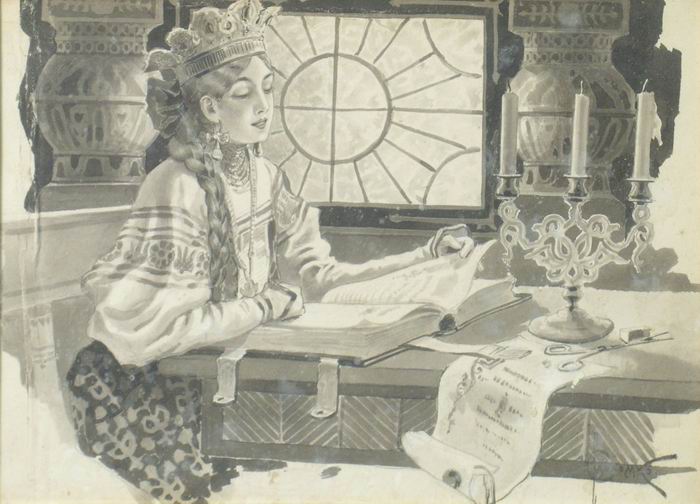
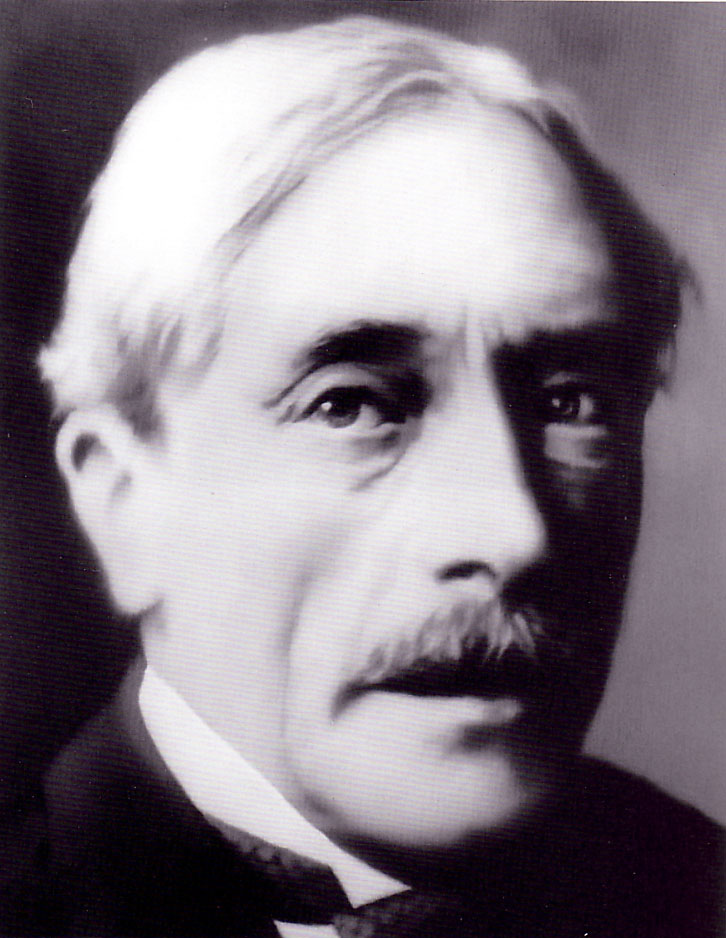
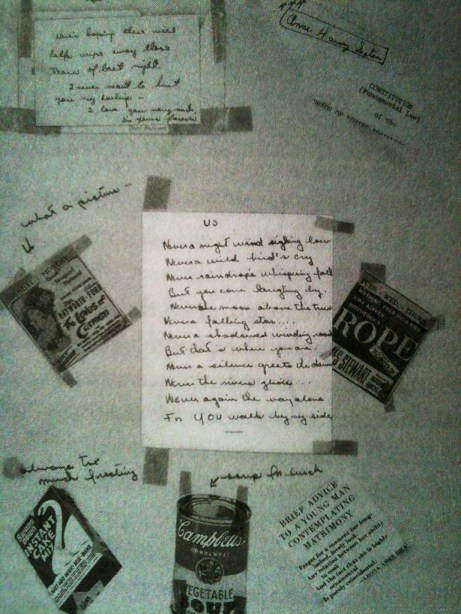
A couple of snaps from the book—pics of pages from one of those scrapbooks—

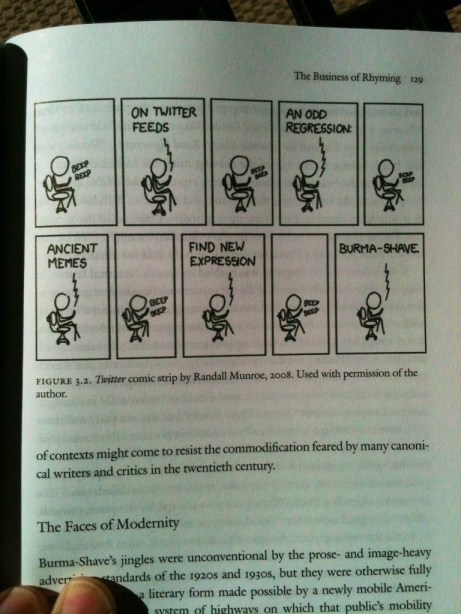
And—

 Biblioklept