Still Life with Three Books — Vincent van Gogh

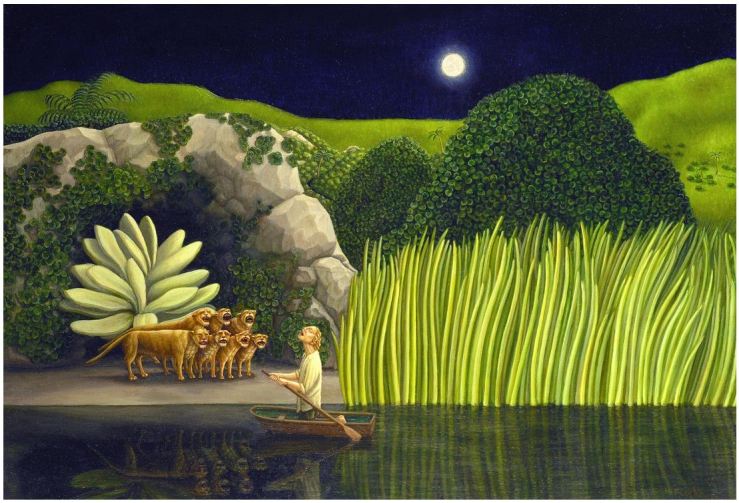
Heracles — Helen Flockhart

(More at Helen Flockhart’s website).

A Peasant with an Evil Eye — Ilya Repin

Books Got Her — Ivan Kramskoy

Massacre at Chios — Eugène Delacroix

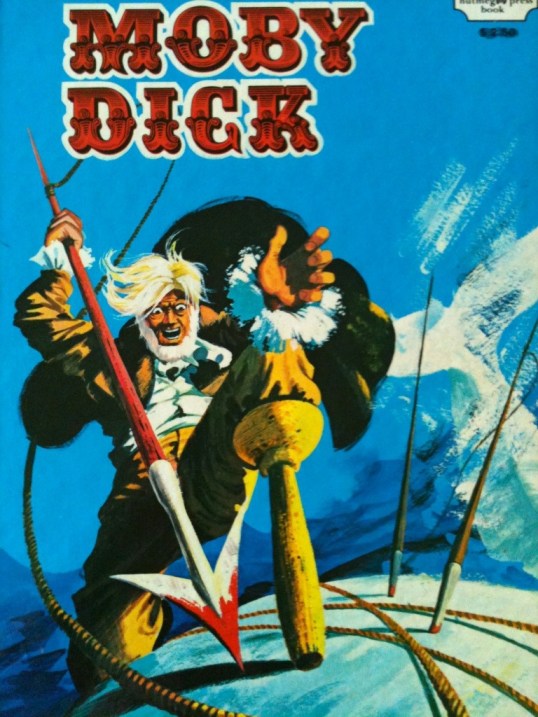
Moby Dick (Unhyphenated Kids Book Acquired 6.30.2012)

20120716-124132.jpg

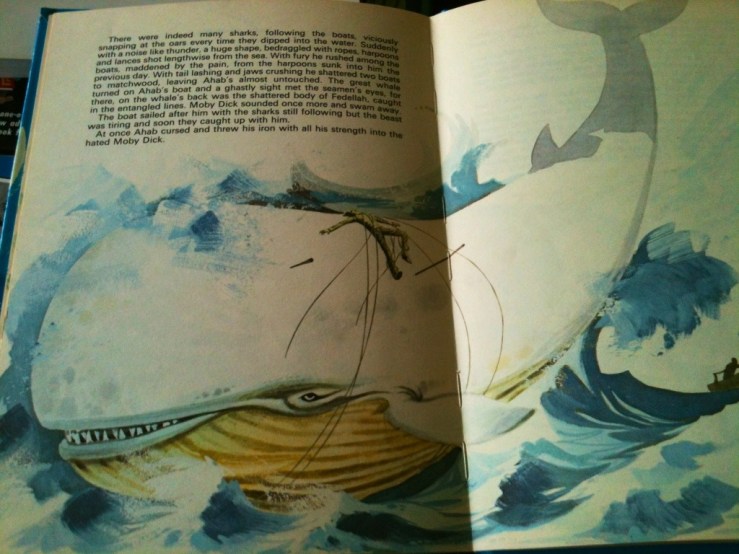
I picked this one up a few weeks ago to add to a small collection of Moby-Dick adaptations. It’s especially weird: I can’t find the name of an illustrator or author anywhere (it doesn’t even mention Herman Melville!). The adaptation is also kinda weird, lingering on the gold piece scene. Anyway. Some of the pics are cool, I guess.

20120716-124139.jpg

Two Hands Holding A Pair Of Books — Albrecht Durer

Greed — Pieter Bruegel the Elder

“Half Man/Half Mole” — Chris Knox

Book Shelves #29, 7.15.2012

20120715-103934.jpg

Book shelves series #29, twenty-ninth Sunday of 2012

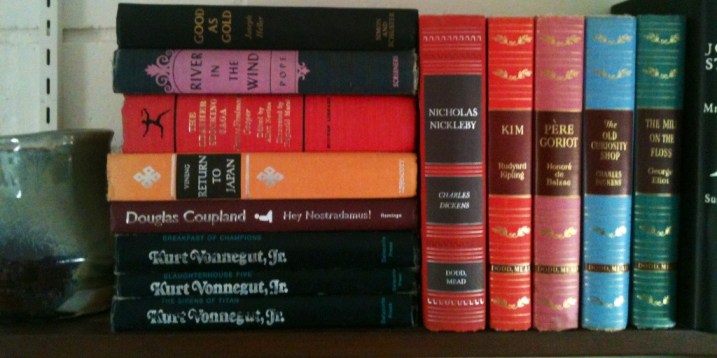
Lots of hardbacks on this long, long shelf. The Vonneguts above were particularly important to me when I was young. They were my father’s. I read them surreptitiously for years and then outright appropriated them at some point. The matching Dodd, Mead hardbacks were rescued from a school I worked at for years. My wife made the vase that serves as a bookend. The copy of Jonathan Strange and Mr. Norrell that doesn’t quite fit in the frame remains unread.

20120715-103943.jpg

The BFG: a classic. I reviewed Wabi Sabi. Next to the Crumb:
20120715-111742.jpg

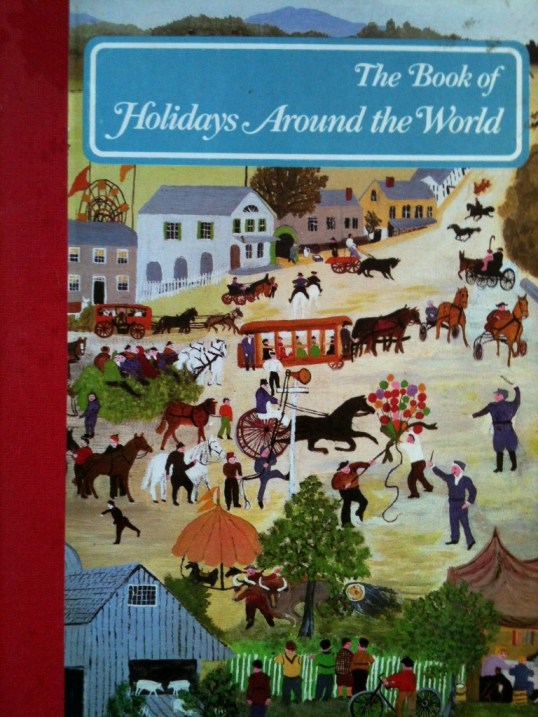
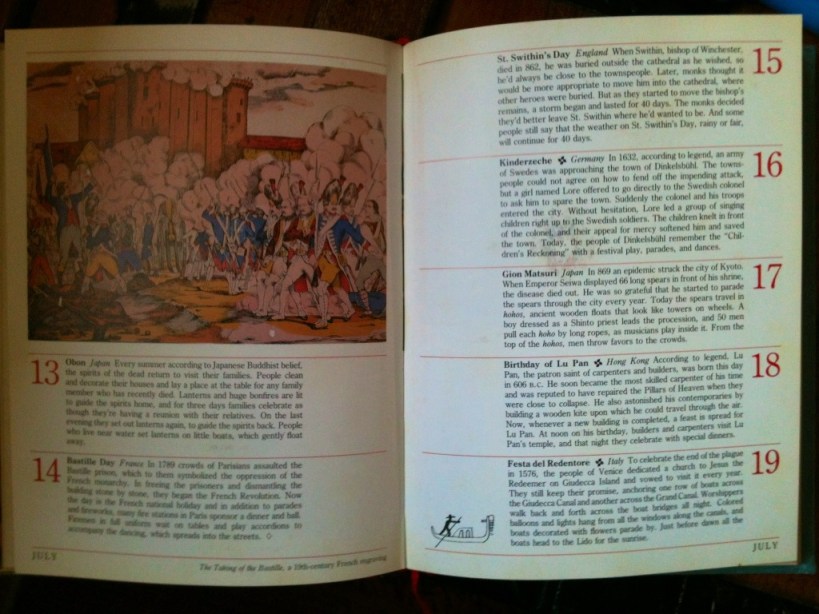
I found Holidays in a box of free books in a library lobby. Love it. Here’s this week’s schedule of holidays:
20120715-111749.jpg

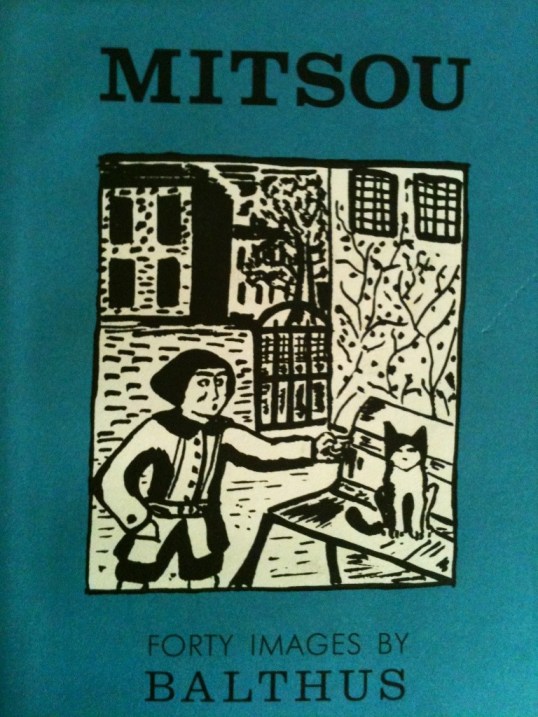
One of my favorite books ever is Mitsou, a book that Balthus did when he was like 10 or 12 or something:
20120715-104032.jpg

It’s about a young boy who gets a cat and loves the cat and then loses the cat. It’s heartbreaking. Image:
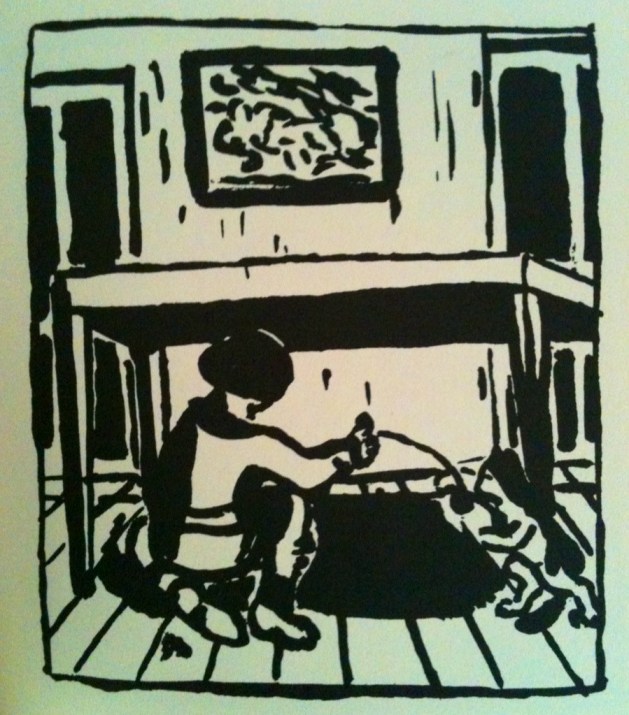
20120715-104040.jpg

And next to this one:

20120715-104015.jpg

Shelf’s end:

20120715-112719.jpg

A Man Seated at a Table Covered with Books — Rembrandt

Bluebird — Albrecht Dürer

The World Within: C.G. Jung In His Own Words (1990 Documentary with Archival Footage)

Italo Calvino’s List of Reasons Why We Should Read the Classics

From Italo Calvino’s The Uses of Literature

  1. The classics are the books of which we usually hear people say, “I am rereading . . . ” and never “I am reading . . . “
  2. We use the words “classics” for books that are treasured by those who have read and loved them; but they are treasured no less by those who have the luck to read them for the first time in the best conditions to enjoy them
  3. The classics are books that exert a peculiar influence, both when they refuse to be eradicated from the mind and when they conceal themselves in the folds of memory, camouflaging themselves as the collective or individual unconscious.
  4. Every rereading of a classic is as much a voyage of discovery as the first reading.
  5. Every reading of a classic is in fact a rereading.
  6. A classic is a book that has never finished saying what it has to say.
  7. The classics are the books that come down to us bearing the traces of readings previous to ours, and bringing in their wake the traces they themselves have left on the culture or cultures they have passed through (or, more simply, on language and customs).
  8. A classic does not necessarily teach us anything we did not know before. In a classic we sometimes discover something we have always known (or thought we knew), but without knowing that this author said it first, or at least is associated with it in a special way. And this, too, is a surprise that gives much pleasure, such as we always gain from the discovery of an origin, a relationship, an affinity.
  9. The classics are books which, upon reading, we find even fresher, more unexpected, and more marvelous than we had thought from hearing about them.
  10. We use the word “classic” of a book that takes the form of an equivalent to the universe, on a level with the ancient talismans. With this definition we are approaching the idea of the “total book,” as Mallarmé conceived of it.
  11. Your classic author is the one you cannot feel indifferent to, who helps you to define yourself in relation to him, even in dispute with him.
  12. A classic is a book that comes before other classics; but anyone who has read the others first, and then reads this one, instantly recognizes its place in the family tree.
  13. A classic is something that tends to relegate the concerns of the moment to the status of background noise, but at the same time this background noise is something we cannot do without.
  14. A classic is something that persists as a background noise even when the most incompatible momentary concerns are in control of the situation.


Piles of Books — Hercules Seghers

“Genius of Love” — Tom Tom Club

Summer in the City — Edward Hopper