The Resurrectionist (Book Acquired, 6.04.2013)

20130607-155808.jpg

20130607-155816.jpg

Matthew Guinn’s The Resurrectionist showed up in the mail a few days ago. Haven’t really had time to get into it, but the premise seems promising, and Guinn’s Southern lit bona fides also intrigue me.

Publisher W.W. Norton’s blurb:

A young doctor wrestles with the legacy of a slave “resurrectionist” owned by his South Carolina medical school.

“Dog days and the fresh bodies are arriving once again.” So begins the fall term at South Carolina Medical College, where Dr. Jacob Thacker is on probation for Xanax abuse. His interim career—working public relations for the dean—takes an unnerving detour into the past when the bones of African American slaves, over a century old, are unearthed on campus. Out of the college’s dark past, these bones threaten to rise and condemn the present.

In the middle of the nineteenth century, Dr. Frederick Augustus Johnston, one of the school’s founders, had purchased a slave for his unusual knife skills. This slave, Nemo (“no man”) would become an unacknowledged member of the surgical faculty by day—and by night, a “resurrectionist,” responsible for procuring bodies for medical study. An unforgettable character, by turns apparently insouciant, tormented, and brilliant, and seen by some as almost supernatural, Nemo will seize his self-respect in ways no reader can anticipate.

With exceptional storytelling pacing and skill, Matthew Guinn weaves together past and present to relate a Southern Gothic tale of shocking crimes and exquisite revenge, a riveting and satisfying moral parable of the South.


Barry Hannah/Stanley Elkin (Books Acquired, 5.29.2013)

20130529-164927.jpg

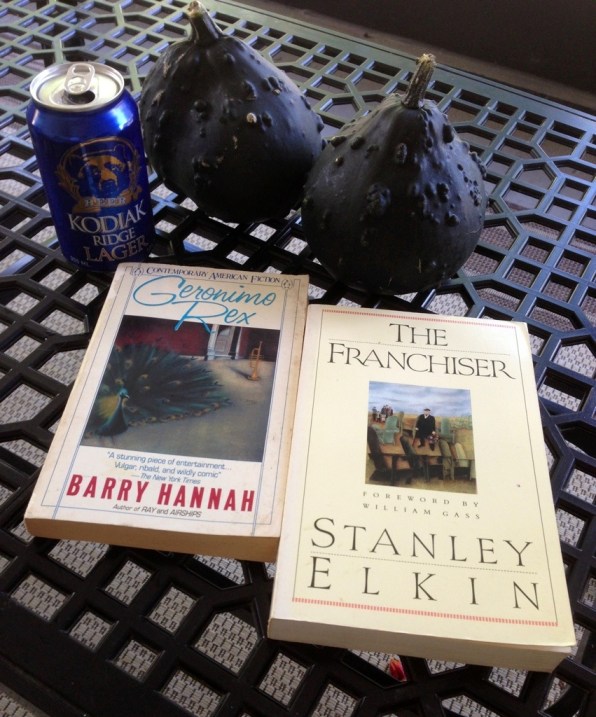
I was thrilled to find a somewhat tattered copy of Barry Hannah’s Geronimo Rex, after trolling the [huge, unorganized] “HA” section of my favorite used bookstore. Years ago, I found like seven of Hannah’s books used there and picked up only one. I devoured it, returned, the rest were gone. Regrets, regrets. I will review this maybe at the end of the summer (?) — until then:  reviews of Hannah’s AirshpsHey Jack!, and Ray.

I’ve never read Stanley Elkin, but sort of feel like I should. Mr. BLCKDGRD (-a, -o, -e) suggested The Franchiser as a good starting point (although he said that The Magic Kingdom is his pers. fav. {disney fan?}). Some dude named Billy Gass wrote the forward. 

Also pictured: Two weird black gourds that grew in my garden, right in the midst of my cucumber patch. Also: Kodiak Ridge Lager, a weak lager with a beautiful blue an’ gold can.

Alan Furst Novel (Book Acquired, 5.22.2013)

20130523-101727.jpg

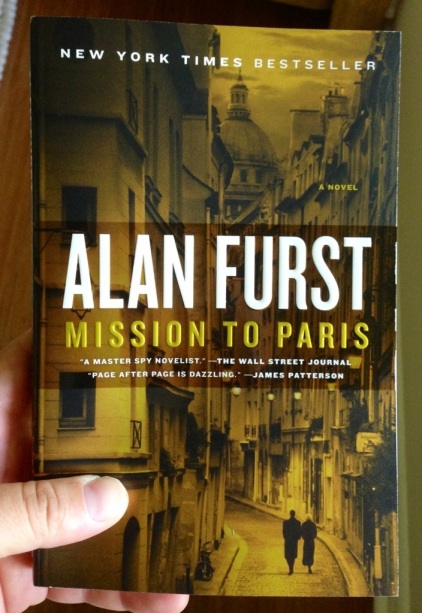
Alan Furst’s Mission to Paris is new in trade paperback this month. Publisher Random House’s blurb:

Late summer, 1938. Hollywood film star Fredric Stahl is on his way to Paris to make a movie. The Nazis know he’s coming—a secret bureau within the Reich has been waging political warfare against France, and for their purposes, Fredric Stahl is a perfect agent of influence. What they don’t know is that Stahl, horrified by the Nazi war on Jews and intellectuals, has become part of an informal spy service run out of the American embassy. Mission to Paris is filled with heart-stopping tension, beautifully drawn scenes of romance, and extraordinarily alive characters: foreign assassins; a glamorous Russian actress-turned-spy; and the women in Stahl’s life. At the center of the novel is the city of Paris—its bistros, hotels grand and anonymous, and the Parisians, living every night as though it were their last. Alan Furst brings to life both a dark time in history and the passion of the human hearts that fought to survive it.


A Short Bright Flash (Book Acquired, 5.15.2013)

20130521-093914.jpg

Theresa Levitt’s A Short Bright Flash, new in hardback from WW Norton, traces the story of scientist and engineer Augustin Fresnel, a major contributor to wave optics. Fresnel originated a lens that lighthouses adopted; the Fresnel lens is still used today.

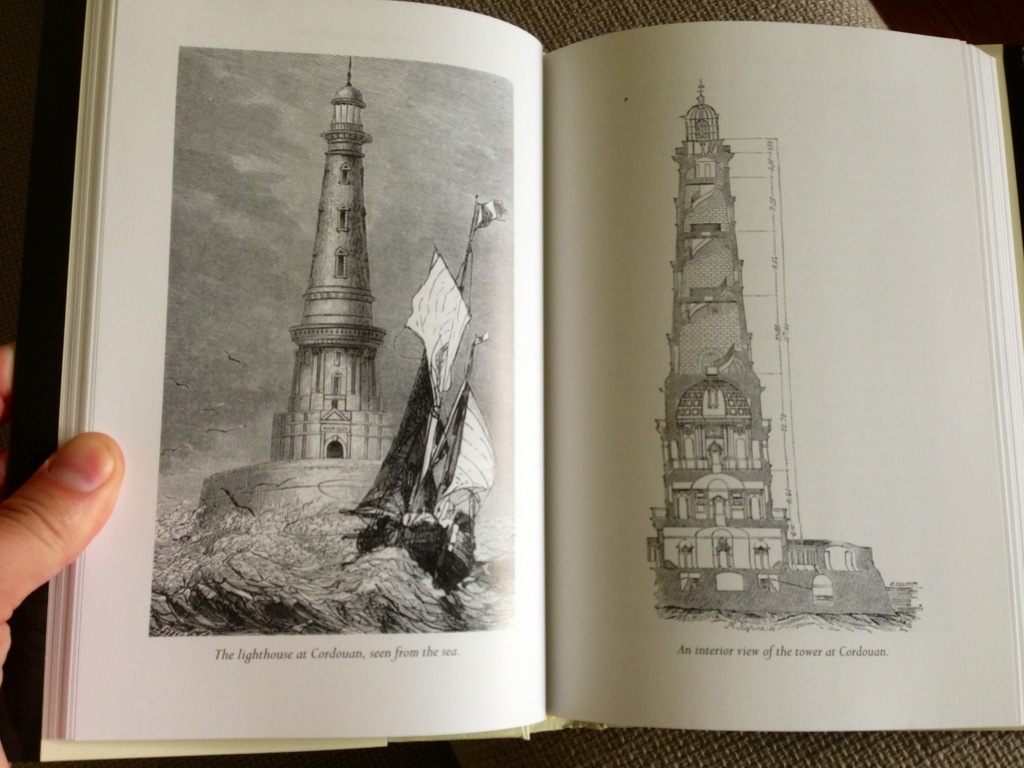
Levitt’s book focuses on Fresnel’s mission to change some of the fundamental ways lighthouses operated and the legacy of the Fresnel lens. The book is handsome an illustrated in glorious black and white:

20130521-093919.jpg

Here’s the publisher’s blurb:

How a scientific outsider came up with a revolutionary theory of light and saved untold numbers of lives.

Augustin Fresnel (1788–1827) shocked the scientific elite with his unique understanding of the physics of light. The lens he invented was a brilliant feat of engineering that made lighthouses blaze many times brighter, farther, and more efficiently. Battling the establishment, his own poor health, and the limited technology of the time, Fresnel was able to achieve his goal of illuminating the entire French coast. At first, the British sought to outdo the new Fresnel-equipped lighthouses as a matter of national pride. Americans, too, resisted abandoning their primitive lamps, but the superiority of the Fresnel lens could not be denied for long. Soon, from Dunkirk to Saigon, shores were brightened with it.  The Fresnel legacy played an important role in geopolitical events, including the American Civil War. No sooner were Fresnel lenses finally installed along U.S. shores than they were drafted: the Union blockaded the Confederate coast; the Confederacy set about thwarting it by dismantling and hiding or destroying the powerful new lights.

Levitt’s scientific and historical account, rich in anecdote and personality, brings to life the fascinating untold story of Augustin Fresnel and his powerful invention.

20130521-093925.jpg


Patricio Pron Novel (Book Acquired, 5.08.2013)

pron

I got a review copy of My Father’s Ghost Is Climbing in the Rain, the first novel from Patricio Pron a few days ago and wandered into it a bit yesterday afternoon but then got distracted by something else. Anybody read this one—or anything by Pron? Curious what you think…

From a Granta interview:

Name the five writers you most admire at the moment (any period, language or genre).

David Foster Wallace, Vladimir Nabokov, Flannery O’Connor, W. G. Sebald, Roberto Bolaño.

Here is publisher Knopf’s blurb for My Father’s Ghost Is Climbing in the Rain:

The anticipated American debut of one of Granta’s Best Young Spanish-Language Novelists: a daring, deeply affecting novel about the secrets buried in the past of an Argentine family.

A young writer, living abroad, makes the journey home to South America to say good-bye to his dying father. In his parents’ house, he finds a cache of documents—articles, maps, photographs—and unwittingly begins to unearth his father’s obsession with the disappearance of a local man. Suddenly he comes face-to-face with the ghosts of Argentina’s dark political past and with the long-hidden memories of his family’s underground resistance against an oppressive military regime. As the fragments of the narrator’s investigation fall into place—revealing not only a part of his father’s life he had tried to forget but also the legacy of an entire generation—this audacious novel tells a completely original story of corruption and responsibility, history and remembrance.

You can also read “Ideas,” a story by Pron published in The Paris Review, which I think is an excerpt from the book. First paragraph:

On April 16, 1981, at approximately three P.M., little Peter Möhlendorf, whom everyone called der schwarze Peter, “black Peter,” went home from the village school. His house was on the eastern edge of Sterberode, a town of some five thousand inhabitants outside the East German town of Magdeburg whose main economic activity is farming—asparagus, mostly. His father, who was in the basement of the house when little Möhlendorf arrived, would later say that he heard him come in and then could infer from the sounds in the kitchen, which was above the basement, what he was doing: he flung his backpack beneath the staircase landing, went to the kitchen, took a carton of milk out of the refrigerator, and poured himself a glass, which he drank standing; then he put the carton back in the refrigerator and went out into the backyard. Anyway, that was what he did every day when he came home from school and it could be that his father hadn’t really heard the noises he later would say he heard but rather had heard Peter come home and from that had guessed the rest of the series of actions. However, what his father did not know, as he listened or thought he listened to the noises his son was making above his head, was that little Peter was not going to return home that night or the nights that would follow, and that something incomprehensible and frightening was going to open up before him and the rest of the townspeople, and it would swallow everything up.

Ruler of the World (Book Acquired, 5.06.2013)

20130506-191048.jpg

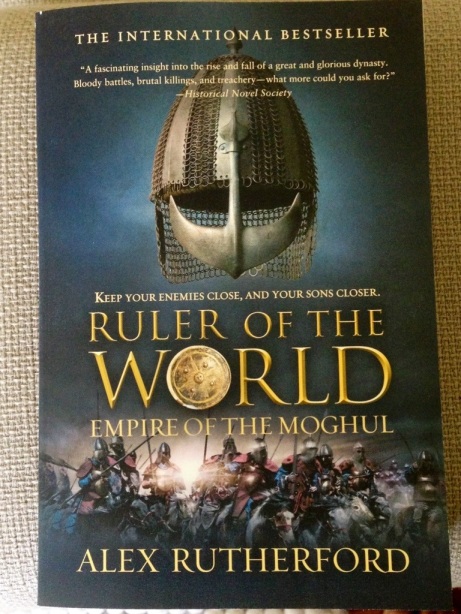
Ruler of the World by Alex Rutherford. Pub’s copy:

Alex Rutherford’s internationally bestselling series continues with Ruler of the World, the story of the third great Moghul Emperor, Akbar, leader of a triumphant dynasty which contained the seeds of its own destruction.

Akbar, ruler of a sixth of the world’s people, colossally rich and utterly ruthless, was a contemporary of Elizabeth I, but infinitely more powerful. He extended his empire over much of Asia, skillfully commanding tens of thousands of men, elephants and innovative technology, yet despite the unimaginable bloodshed which resulted his rule was based on universal religious tolerance.

However, Akbar’s homelife was more complicated. He defied family, nobles and mullahs to marry a beautiful Rajput princess, whose people he had conquered; but she hated Akbar and turned Salim, his eldest son, against him. What’s more, as any Moghul prince could inherit his father’s crown and become Emperor, his sons were brought up to be intensely competitive and suspicious of each other: to see each other as rivals for the greatest prize of all. And, as Salim grew to manhood, the relationship between father and son became tainted by rebellion and competition to be the greatest Moghul of them all.


What Dies in Summer (Book Acquired, 5.02.2013)

20130505-185201.jpg

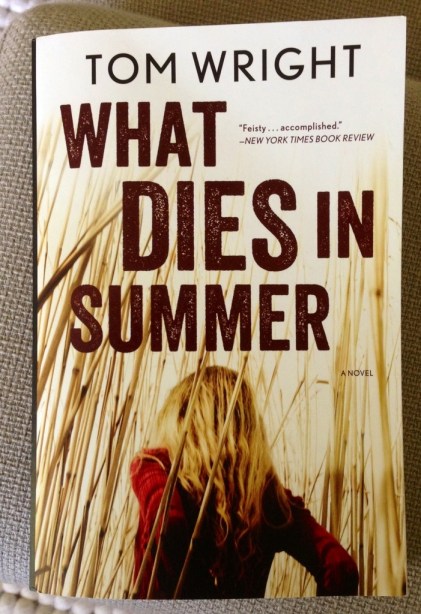
Tom Wright’s What Dies in Summer is new in trade paperback. Pub’s blurb:

A riveting Southern Gothic coming-of-age debut by major new talent.

“I did what I did, and that’s on me.” From that tantalizing first sentence, Tom Wright sweeps us up in a tale of lost innocence. Jim has a touch of the Sight. It’s nothing too spooky and generally useless, at least until the summer his cousin L.A. moves in with him and their grandmother. When Jim and L.A. discover the body of a girl, brutally raped and murdered in a field, an investigation begins that will put both their lives in danger. In the spirit of The Lovely Bones and The Little FriendWhat Dies in Summer is a novel that casts its spell on the very first page and leaves an indelible mark.

And the lede from Julie Myerson’s review last year in the NYT:

Why do teenagers make such ideal protagonists? Maybe it’s because they’re doing just what novels do: struggling to make sense of a troubling and imperfect world. And at first, Jim, called Biscuit, and L. A. (Lee Ann), the teenage cousins at the heart of Tom Wright’s feisty first novel, are ­exactly what you hope they’ll be: funny, frank, mouthy and more than a touch off kilter. Both are forced to live with their grandmother because their mothers aren’t up to the task of child rearing. Their homes are haunted by alcoholism and violence, but Gram takes a simple, affectionate, responsibility for them — though it’s almost inevitable that certain questions, if not the answers, will push their ugly way to the surface sooner or later.

Atrocities! (Book Acquired, 5.02.2013)

20130502-141603.jpg

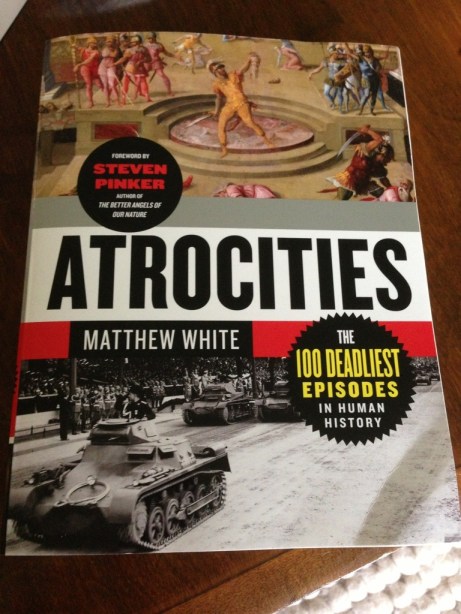
Okay, so there’s no exclamation point in Atrocities by Matthew White, as my title suggests—but it feels like there should be one. The book is huge and full of atrocities, so there you go. It made me laugh out loud a little bit, but flicking through it I realized it’s exactly the kind of book I used to check out from the library when I was like ten and eleven. I think this book was released a few years ago under a different name—The Great Big Book of Horrible Things. Here’s a New York Times review.

Mortal Lock (Book Acquired, 5.02.2013)

20130502-141624.jpg

Mortal Lock by Andrew Vachss seems like a good choice for anyone who digs short, punchy crime noir stories. There’s also a screenplay in here. Random House’s blurb:

A hit man stalks his mark at a race track. A sociopath crosses every moral boundary to become a published author. An ex-mercenary obsessively defends his “perimeter” from a dangerous interloper. A man for hire grudgingly accepts help from a teenage girl to track an online predator. In a dystopian future, young people struggle for survival underground, forming themselves into vicious gangs with only the graffiti of the “last journalists” accepted as truth. Andrew Vachss collects twenty tight, powerful stories—all from the past decade of his career, including some now published for the first time—along with an original screenplay. Together, they form Mortal Lock, a searing portrait of the criminal underworld, with both its depravity and humanity on display.


Bring Up the Bodies (Book Acquired and Sort of Reviewed, 4.23.2013)

20130502-141548.jpg

I wrote a three-part review of Hilary Mantel’s Bring Up the Bodies when it came out in hardback last year, which I’ll cannibalize right after this short paragraph, which is lazy, but hey, sorry. Anyway, Bodies is new in trade paperback from Picador, freshly blazoned with the Booker Prize sticker. When Mantel won the award the second time, there was a lot of grumbling and mockery in my Twitter stream—terms like middlebrow and hack were thrown around. I think a lot of this derision comes from 1). the perception that the Wolf Hall trilogy is genre fiction and 2). dare I say it, unreflective sexism. Anway, I thought both books were great and am looking forward to the third. Here is me plagiarizing myself:

Bring Up the Bodies—now seems as good a time as any to point out that, hey, that’s just a great title—Bring Up the Bodies picks up right where Wolf Hall left off. Just as that first book throws its audience into the deep end, with one of the more bewildering openings in recent memory, so too does Bring Up the Bodies begin abruptly in media res. Please forgive me if I begin in the middle of things as well—to be clear, it’s not a good idea to jump into Bodies until you’ve read Wolf Hall. And Wolf Hall is worth your time.

It’s 1535 and our protagonist Thomas Cromwell is 50 and starting to feel his age (he laments at one point that he no longer remembers any of the snippets of Welsh he once knew; he can no longer play tennis). His prince, King Henry VIII, is also quickly aging, his body turning to the fat lump that we tend to picture him as these days. An expanding tummy is the least of Henry’s worries, however—and Henry’s worries are Cromwell’s worries. The major plot arc will likely be Henry’s plans to oust his newish bride Anne Boleyn, a repetition of sorts from Wolf Hall, where Henry and Cromwell (mostly Cromwell) worked to annul Henry’s marriage to Queen Katherine. Obviously though, we can’t accuse Mantel of a lack of imagination in crafting her plots. She’s working from history of course, and what’s most amazing about both Wolf Halland Bring Up the Bodies is how Mantel invigorates that history. Who knew the hoary Tudor saga needed a retelling?

It works here of course because Cromwell is such a fascinating character. Mantel anchors her impeccable free indirect style in Cromwell’s mind, and she channels his intense intellect with sharp grace.  Here’s a remarkable passage that somehow summarizes (broadly, of course) much of Wolf Hall and showcases Mantel’s ability to move her prose seamlessly from exterior to interior,  from how others might see Cromwell to how he might understand himself:

Thomas Cromwell is now about fifty years old. He has a labourer’s body, stocky, useful, running to fat. He has black hair, greying now, and because of his pale impermeable skin, which seems designed to resist rain as well as sun, people sneer that his father was an Irishman, though really he was a brewer and a blacksmith at Putney, a shearsman too, a man with a finger in every pie, a scrapper and brawler, a drunk and a bully, a man often hauled before the justices for punching someone, for cheating someone. How the son of such a man has achieved his present eminence is a question all Europe asks. Some say he came up with the Boleyns, the queen’s family. Some say it was wholly through the late Cardinal Wolsey, his patron; Cromwell was in his confidence and made money for him and knew his secrets. Others say he haunts the company of sorcerers. He was out of the realm from boyhood, a hired soldier, a wool trader, a banker. No one knows where he has been and who he has met, and he is in no hurry to tell them. He never spares himself in the king’s service, he knows his worth and merits and makes sure of his reward: offices, perquisites and title deeds, manor houses and farms. He has a way of getting his way, he has a method; he will charm a man or bribe him, coax him or threaten him, he will explain to a man where his true interests lie, and he will introduce that same man to aspects of himself he didn’t know existed. Every day Master Secretary deals with grandees who, if they could, would destroy him with one vindictive swipe, as if he were a fly. Knowing this, he is distinguished by his courtesy, his calmness and his indefatigable attention to England’s business. He is not in the habit of explaining himself. He is not in the habit of discussing his successes. But whenever good fortune has called on him, he has been there, planted on the threshold, ready to fling open the door to her timid scratch on the wood.

Of course, good fortune is not without its headaches, and Bring Up the Bodies quickly establishes the daily grind of being the king’s chief minister. Cromwell has to worry about the uncertain finances of the kingdom; the plots of the Catholic Church; the ever-present threat of Katherine’s nephew, Charles V, Holy Roman Emperor; Cromwell also has to worry about scheming at court and gossip in the towns. And yet he keeps a level head, even as he appeals to his memories of the late Cardinal Wolsey, who hangs like an ironic ghost over the early chapters of Bring Up the Bodies. (I’m hoping Wolsey’s ghost will continue to haunt the book). It’s when Cromwell turns his sharp mind to a critique of the cleric class (he’d turn out all the abbeys and seize their coffers), or to a flat rebuttal of the concept of confession (“God doesn’t require an intermediary”), or even when he sniffs at Machiavelli as too conservative that we see in Cromwell the advent of modernity.

Mantel’s ability to express Cromwell’s keen intelligence reanimates the Tudor saga, which I frankly could give a rat’s ass about on its own. Okay, the plot is fascinating, but much of history fascinates. What’s remarkable is the manner by which Mantel channel’s Cromwell’s mind. His brain is always at work, and Mantel shows us that brain at work. It would be a mistake to suggest that Bring Up the Bodies has no prose style, but it’s difficult to describe the style—Mantel elides authorial intrusion; her free indirect style stays close to Cromwell’s perceptions, but she knows when to move her camera out, knows when to show her audience a shot of his face or a gesture of his hand when he receives some piece of information or imparts some command. She rarely tells us what Cromwell is thinking, instead allowing us to go through the cognitive process with him.

And that cognitive process never rests. There’s a remarkable passage near the end of the book that ties together so many of the book’s themes and images. I would quote in full but I listened to the audio, so I’ll have to paraphrase (forgiveness, please). Cromwell is busy making arrangements for the executions of Boleyn and the men accused of sleeping with her, and his mind turns somehow to imagery of gristle and bone and fat—and he wonders what the ancient Greek pagans and Hebrews of the bible did with the meat from their sacrifices—Surely they didn’t waste the meat, surely they gave it to the poor, he thinks. Cromwell figures Boleyn as a sacrifice and then converts that sacrifice into a concern for the common people of the commonwealth.

Of course, it’s a mistake to see Cromwell’s motivations as absolutely pure. The revenge plot of Bring Up the Bodies unfolds so smoothly that the reader (okay, this reader) is slow to catch on, to see how delicately and expertly Cromwell snares those who brought down his beloved mentor Cardinal Wolsey. His control is so precise (Mantel’s control is so precise) that he refuses to tip his hand to himself, let alone the schemers around him, let alone the reader.

Still, Bring Up the Bodies concludes with an uneasy Cromwell, a man already looking for solace in grandchildren, in some kind of futurity, in a life (in a rare metatextual gesture on Mantel’s part) on paper, a figure marked in ink and words. He’s too perceptive—too sharp a reader—not to see the writing on the wall, even if that wall is some years out, even if that writing is still malleable and undefined. Cromwell has controlled the myriad political, familial, and personal circumstances that surround the wishes of his prince, King Henry, but he knows that it’s only a matter of time before his favor falls.

Bring Up the Bodies is a fantastic sequel to Wolf Hall, picking up the reins in media res, yet never resting on that first book’s tropes (“Choose your prince”; “Arrange your face”), but rather absorbing them and then adding to them. Mantel has given those of us not particularly interested in historical fiction a great reason to read some, although dithering about genre seems silly here. Ultimately, she gives us a powerful, character-driven story, a story that we think we already know, but understand anew in her retelling. Recommended.
A Constellation of Vital Phenomena (Book Acquired Some Time Last Week)

20130502-112630.jpg

A Constellation of Vital Phenomena by Anthony Marra. Publisher Random House’s blurb:

In his brilliant, haunting novel, Stegner Fellow and Whiting Award winner Anthony Marra transports us to a snow-covered village in Chechnya, where eight-year-old Havaa watches from the woods as Russian soldiers abduct her father in the middle of the night, accusing him of aiding Chechen rebels. Across the road their lifelong neighbor and family friend Akhmed has also been watching, fearing the worst when the soldiers set fire to Havaa’s house. But when he finds her hiding in the forest with a strange blue suitcase, he makes a decision that will forever change their lives. He will seek refuge at the abandoned hospital where the sole remaining doctor, Sonja Rabina, treats the wounded.
For the talented, tough-minded Sonja, the arrival of Akhmed and Havaa is an unwelcome surprise. Weary and overburdened, she has no desire to take on additional risk and responsibility. And she has a deeply personal reason for caution: harboring these refugees could easily jeopardize the return of her missing sister. But over the course of five extraordinary days, Sonja’s world will shift on its axis and reveal the intricate pattern of connections that weave together the pasts of these three unlikely companions and unexpectedly decides their fate. A story of the transcendent power of love in wartime, A Constellation of Vital Phenomenais a work of sweeping breadth, profound compassion, and lasting significance.


Chris Eaton, a Biography: A Novel by Chris Eaton (Book Acquired, 4.18.2013)

IMG_5190

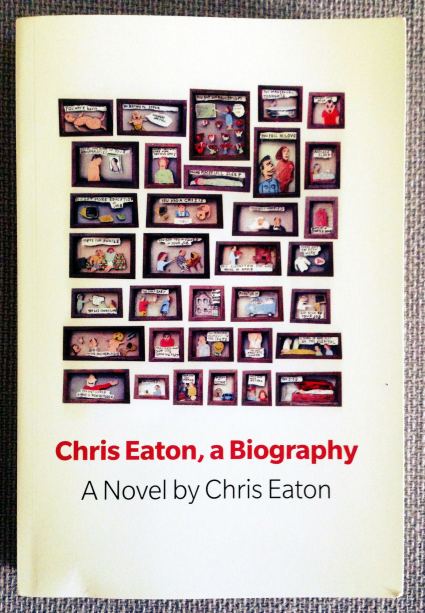
Chris Eaton’s novel Chris Eaton, A Biography showed up last week.  I haven’t made time to get into it yet—even though it looks pretty cool—mostly because I’m reading too many books right now and it’s the end of the term and all that nonsense. Anyway, this looks like a weird one. Publisher Book Thug’s blurb:

Chris Eaton, A Biography is a novel that arises from the idea that we have all been driven, at some point, to Google ourselves. And if you did, what did you find? That there are people out there who seem to have something in common with you? Dates, places, interests? How coincidental are these connections? And what are the factors that define a human life? We are the sum of our stories: Anecdotal constructs. We remember moments in our pasts the way we remember television episodes. In pieces. And we realize that our own memories are no more valid in the construction of our identities than stories we’ve heard from others. Chris Eaton, A Biography constructs a life by using, as building blocks, the lives of dozens of other people who share nothing more than a name, identities that blur into each other with the idea that, in the end, we all live the same life, deal with the same hopes and fears, experience the same joys and tragedies. Only the specifics are different. From birth to death and everything in between, the narratives we share bring us closer to a truth about what it means to be alive. To be you.


The Anatomy of Violence (Book Acquired, Some Time Last Week)

IMG_5191

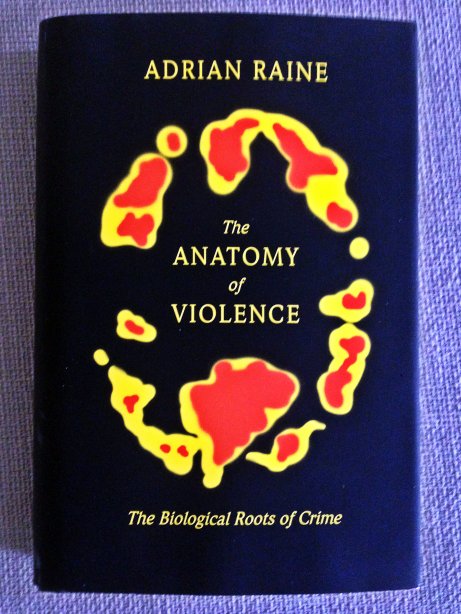
Adrian Raine’s The Anatomy of ViolencePublisher Random House’s blurb:

Why do some innocent kids grow up to become cold-blooded serial killers? Is bad biology partly to blame? For more than three decades Adrian Raine has been researching the biological roots of violence and establishing neurocriminology, a new field that applies neuroscience techniques to investigate the causes and cures of crime. In The Anatomy of Violence, Raine dissects the criminal mind with a fascinating, readable, and far-reaching scientific journey into the body of evidence that reveals the brain to be a key culprit in crime causation.Raine documents from genetic research that the seeds of sin are sown early in life, giving rise to abnormal physiological functioning that cultivates crime. Drawing on classical case studies of well-known killers in history—including Richard Speck, Ted Kaczynski, and Henry Lee Lucas—Raine illustrates how impairments to brain areas controlling our ability to experience fear, make good decisions, and feel guilt predispose us to violence. He contends that killers can actually be coldhearted: something as simple as a low resting heart rate can give rise to violence. But arguing that biology is not destiny, he also sketches out provocative new biosocial treatment approaches that can change the brain and prevent violence.

Finally, Raine tackles the thorny legal and ethical dilemmas posed by his research, visualizing a futuristic brave new world where our increasing ability to identify violent offenders early in life might shape crime-prevention policies, for good and bad. Will we sacrifice our notions of privacy and civil rights to identify children as potential killers in the hopes of helping both offenders and victims? How should we punish individuals with little to no control over their violent behavior? And should parenting require a license? The Anatomy of Violence offers a revolutionary appraisal of our understanding of criminal offending, while also raising provocative questions that challenge our core human values of free will, responsibility, and punishment.

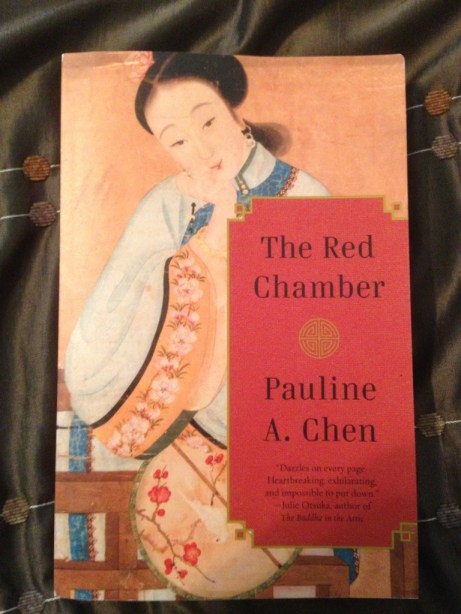
The Red Chamber (Book Acquired, Some Time Like Two Weeks Ago Maybe)

20130414-153312.jpg

A review copy of Pauline A. Chen’s The Red Chamber arrived at Biblioklept World Headquarters like maybe two weeks ago, but my wife snapped it up immediately and then I neglected to look at it until today. Publisher Random House’s blurb:

In eighteenth-century China, the beautiful orphan Daiyu leaves her home in the provinces to seek shelter with her mother’s family in Beijing. At Rongguo Mansion, she is drawn into a world of sumptuous feasts, silken robes, and sparkling jewels—as well as a complex web of secret rivalries and intrigues that threatens to trap her at every turn. When she falls in love with Baoyu, the family’s brilliant, unpredictable heir, she finds the forces of the family and convention arrayed against her, and must risk everything to follow her heart.

Based on the epic Dream of the Red Chamber—one of the most famous love stories in Chinese literature—this novel recasts a timeless tale for Western audiences to discover.


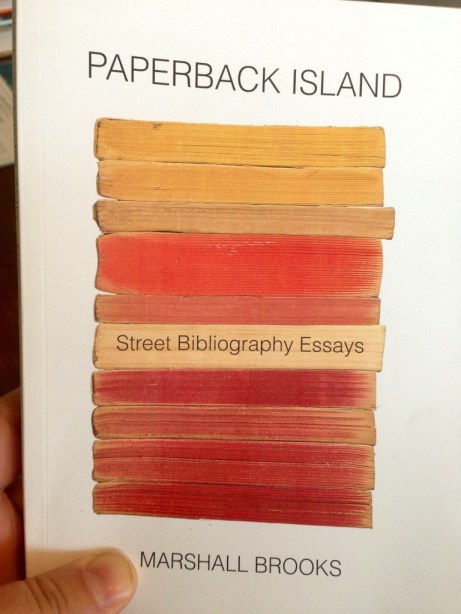
Paperback Island (Lovely and Vibrant Book Acquired, 4.05.2013)

20130405-161009.jpg

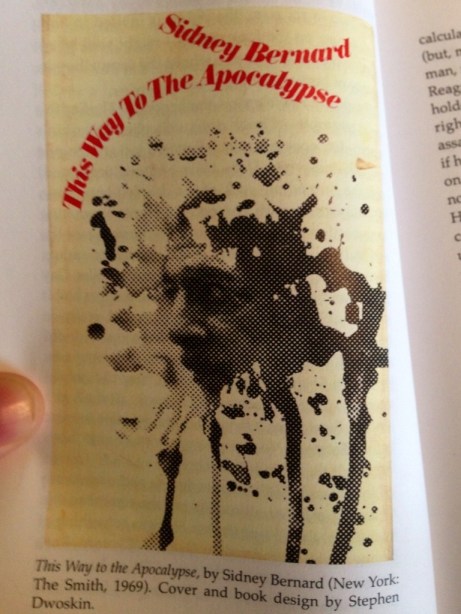
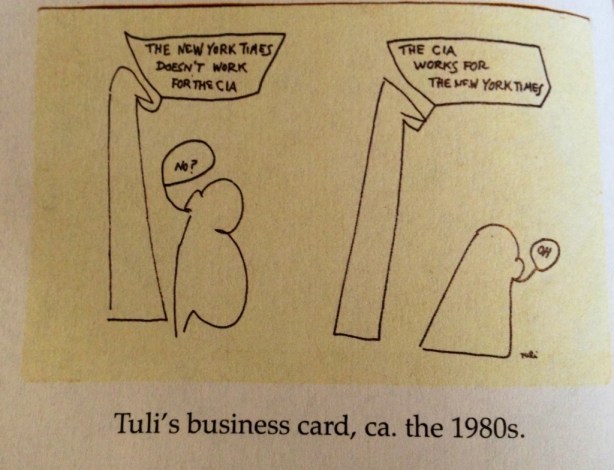
Marshall Brook’s memoir-in-essays, Paperback Island arrived at Biblioklept World Headquarters today. Brooks’s book snagged me into an hour of reading I hadn’t planned on doing, even from the preface (I usually skim or skip prefaces, but Brooks’s hooked me—he opens at Tuli Kupferberg’s funeral and then talks about reading a book that required him to actually stay in the author’s apartment). There’s an opening memoir about an adolescent friendship that revolves around books; this essay could easily tread into schmaltz but instead intrigues and foregrounds what comes next. The following essay, “Sid,” is about Sidney Bernard’s book This Way to the Apocalypse, which I now want to read.

20130405-161019.jpg

This is followed by a piece on Tuli Kupferberg, whose funeral seems to serve as a galvanizing force throughout the essays. Anyway, I kept reading, and this is obviously not a review, just an enthusiastic entry on the blog, a sort of, yes, this is a beautiful, perhaps melancholy, but beautiful book, a book about books, writers, libraries…full review to come.

20130405-161013.jpg


The Wild Beasts of Wuhan (Book Acquired, 3.21.2013)

20130322-135238.jpg

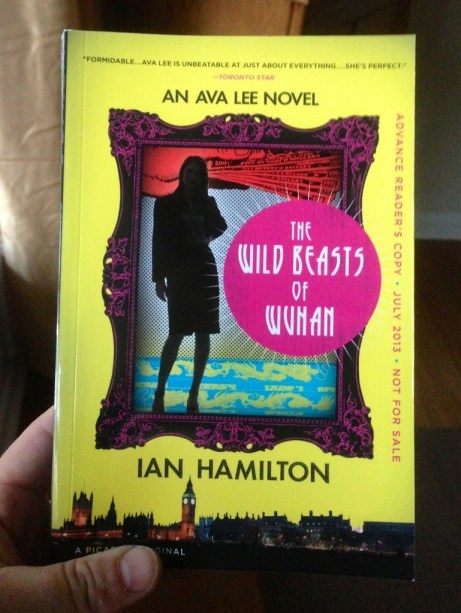
It took me a few minutes to figure out the title of Ian Hamilton’s latest Ava Lee novel, The Wild Beasts of Wuhan—something about the font I guess. The book is out this June from Picador. Blurb from Hamilton’s site:

In The Wild Beasts of Wuhan, Uncle and Ava are summoned by Wong Changxing, “The Emperor of Hubei” and one of the most powerful men in China, when he discovers that the Fauvist paintings he recently acquired are in fact forgeries.

Ava uncovers a ring of fraudulent art dealers and follows their twisted trail to Denmark, the Faroe Islands, Dublin, London, and New York. But the job is further complicated by Wong’s second wife, the cunning and seductive May Ling, who threatens to interfere in Ava’s investigation.

Will Ava find the perpetrators and get the Wongs’ money back? Or will May Ling get to them first…


Evan Lavender-Smith’s Avatar (Book Acquired, 3.22.2013)

20130322-131801.jpg

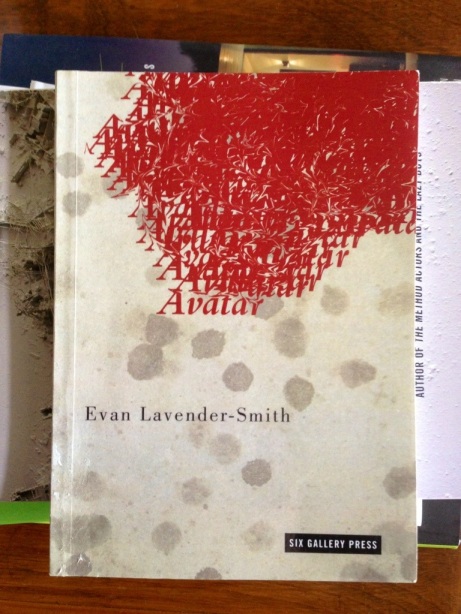
Came home to Evan Lavender-Smith’s Avatar in the mail. Loved his book From Old NotebooksWhat is Avatar about? I asked Evan and he told me. This was in an interview we did that will run next week here on this very blog. Here’s a sample:

Biblioklept: I haven’t read your novel Avatar—can you tell us a little bit about it?

ELS: It’s a monologue spoken or thought by someone floating in the depths of space who can see only two points of light, two stars in the distance, one in front and one behind. The speaker/thinker has apparently been stuck in this condition for a very long time, having spent much of that time — hundreds, thousands, maybe millions of years — trying to puzzle out how he/she arrived in such an awful situation, what it means to be there, what to think about next, etc. It’s very different than From Old Notebooks in most respects — a number of people who liked From Old Notebooks told me they didn’t care for Avatar, and some people who liked Avatar told me they weren’t crazy about From Old Notebooks — but I believe they share at least one main concern, which is an attempt to come up with a formal analog that would describe a figure for thought, to formally systemize and to abstract or maybe almost to allegorize thought within the context of a book. Ulysses is probably my all-time favorite novel, and one of the things I love best about it is how its method of interior monologue functions, to my reading, both as this bizarre formal contrivance — people don’t really think like that at all, don’t rely so heavily on words to think, at least I don’t — and as a beautiful linguistic or formal analog to real human thought. In both From Old Notebooks and Avatar, I believe I was trying to do something along those lines, to come up with a way for a book to develop its own peculiar grammar or system of thought quite distinct from real human thought and at the same time have that grammar somehow formally or abstractly correspond to the ebbs and tides and the fits and starts and the beauty and boring repetition of how a mind really thinks; to develop over the course of a book a formal figure for thought that both does and doesn’t resemble thought as we encounter it in our day-to-day lives.