Mass-market Monday | John Steinbeck’s The Grapes of Wrath

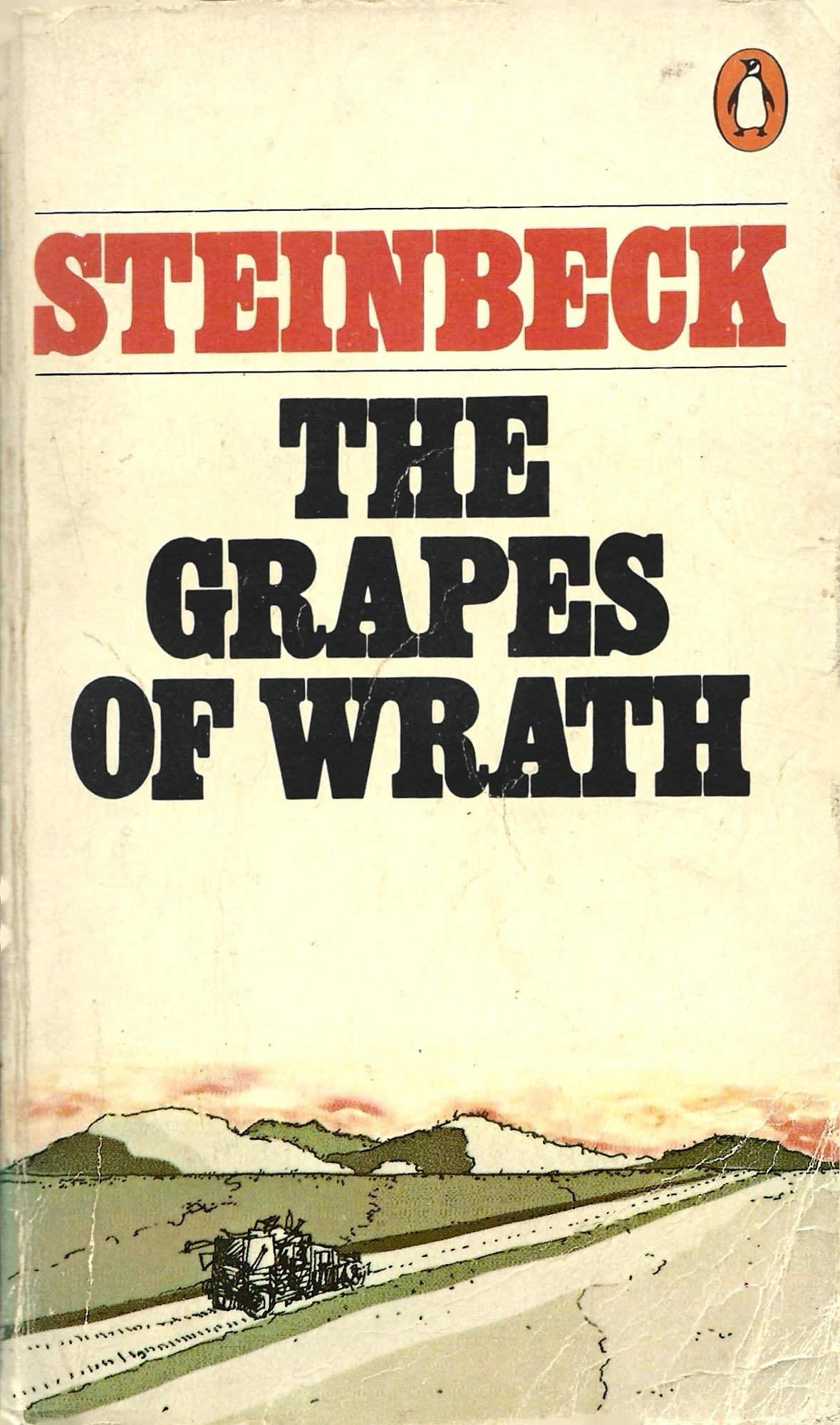
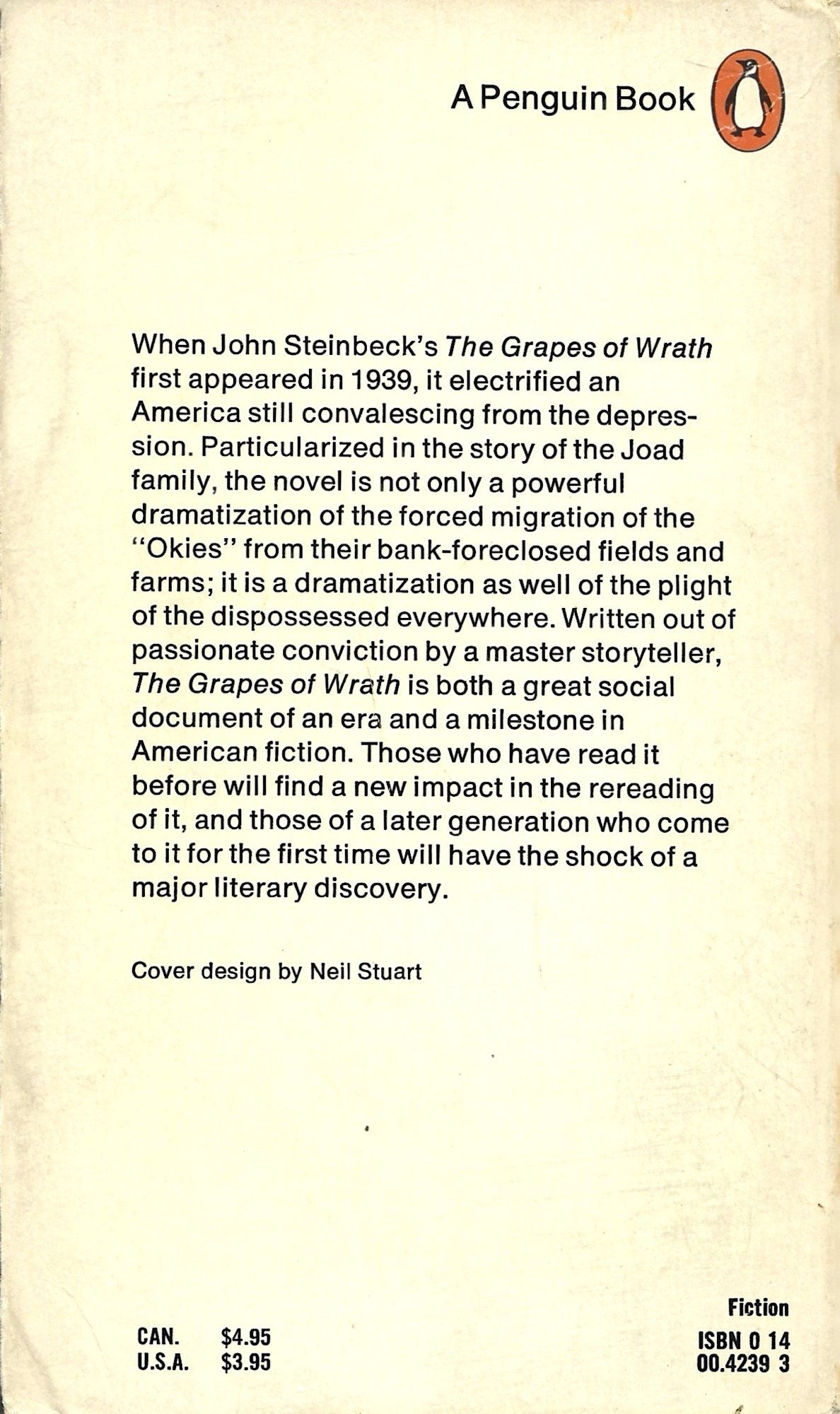
The Grapes of Wrath, John Steinbeck, 1939. Penguin Books (1979). Cover design by Neil Stuart. 502 pages.

While it is not fair to call The Grapes of Wrath underrated I think it continues to be under-read. There’s something corny and beautiful I love in Steinbeck’s prose, and while the novel is not without its problems, it remains a sympathetic and convincing depiction of people — laborers — resisting the dehumanizing machinations of capital. Here is Chapter Twenty-One, one of the many stand-alone intercalary vignettes that flesh out the Joad’s saga–


The moving, questing people were migrants now. Those families which had lived on a little piece of land, who had lived and died on forty acres, had eaten or starved on the produce of forty acres, had now the whole West to rove in. And they scampered about, looking for work; and the highways were streams of people, and the ditch banks were lines of people. Behind them more were coming. The great highways streamed with moving people. There in the Middle- and Southwest had lived a simple agrarian folk who had not changed with industry, who had not formed with machines or known the power and danger of machines in private hands. They had not grown up in the paradoxes of industry. Their senses were still sharp to the ridiculousness of the industrial life.

And then suddenly the machines pushed them out and they swarmed on the highways. The movement changed them; the highways, the camps along the road, the fear of hunger and the hunger itself, changed them. The children without dinner changed them, the endless moving changed them. They were migrants. And the hostility changed them, welded them, united them—hostility that made the little towns group and arm as though to repel an invader, squads with pick handles, clerks and storekeepers with shotguns, guarding the world against their own people.

In the West there was panic when the migrants multiplied on the highways. Men of property were terrified for their property. Men who had never been hungry saw the eyes of the hungry. Men who had never wanted anything very much saw the flare of want in the eyes of the migrants. And the men of the towns and of the soft suburban country gathered to defend themselves; and they reassured themselves that they were good and the invaders bad, as a man must do before he fights. They said, These goddamned Okies are dirty and ignorant. They’re degenerate, sexual maniacs. These goddamned Okies are thieves. They’ll steal anything. They’ve got no sense of property rights.

And the latter was true, for how can a man without property know the ache of ownership? And the defending people said, They bring disease, they’re filthy. We can’t have them in the schools. They’re strangers. How’d you like to have your sister go out with one of ’em?

The local people whipped themselves into a mold of cruelty. Then they formed units, squads, and armed them—armed them with clubs, with gas, with guns. We own the country. We can’t let these Okies get out of hand. And the men who were armed did not own the land, but they thought they did. And the clerks who drilled at night owned nothing, and the little storekeepers possessed only a drawerful of debts. But even a debt is something, even a job is something. The clerk thought, I get fifteen dollars a week. S’pose a goddamn Okie would work for twelve? And the little storekeeper thought, How could I compete with a debtless man?

And the migrants streamed in on the highways and their hunger was in their eyes, and their need was in their eyes. They had no argument, no system, nothing but their numbers and their needs. When there was work for a man, ten men fought for it—fought with a low wage. If that fella’ll work for thirty cents, I’ll work for twenty-five.

If he’ll take twenty-five, I’ll do it for twenty.

No, me, I’m hungry. I’ll work for fifteen. I’ll work for food. The kids. You ought to see them. Little boils, like, comin’ out, an’ they can’t run aroun’. Give ’em some windfall fruit, an’ they bloated up. Me. I’ll work for a little piece of meat.

And this was good, for wages went down and prices stayed up. The great owners were glad and they sent out more handbills to bring more people in. And wages went down and prices stayed up. And pretty soon now we’ll have serfs again.

And now the great owners and the companies invented a new method. A great owner bought a cannery. And when the peaches and the pears were ripe he cut the price of fruit below the cost of raising it. And as cannery owner he paid himself a low price for the fruit and kept the price of canned goods up and took his profit. And the little farmers who owned no canneries lost their farms, and they were taken by the great owners, the banks, and the companies who also owned the canneries. As time went on, there were fewer farms. The little farmers moved into town for a while and exhausted their credit, exhausted their friends, their relatives. And then they too went on the highways. And the roads were crowded with men ravenous for work, murderous for work.

And the companies, the banks worked at their own doom and they did not know it. The fields were fruitful, and starving men moved on the roads. The granaries were full and the children of the poor grew up rachitic, and the pustules of pellagra swelled on their sides. The great companies did not know that the line between hunger and anger is a thin line. And money that might have gone to wages went for gas, for guns, for agents and spies, for blacklists, for drilling. On the highways the people moved like ants and searched for work, for food. And the anger began to ferment.
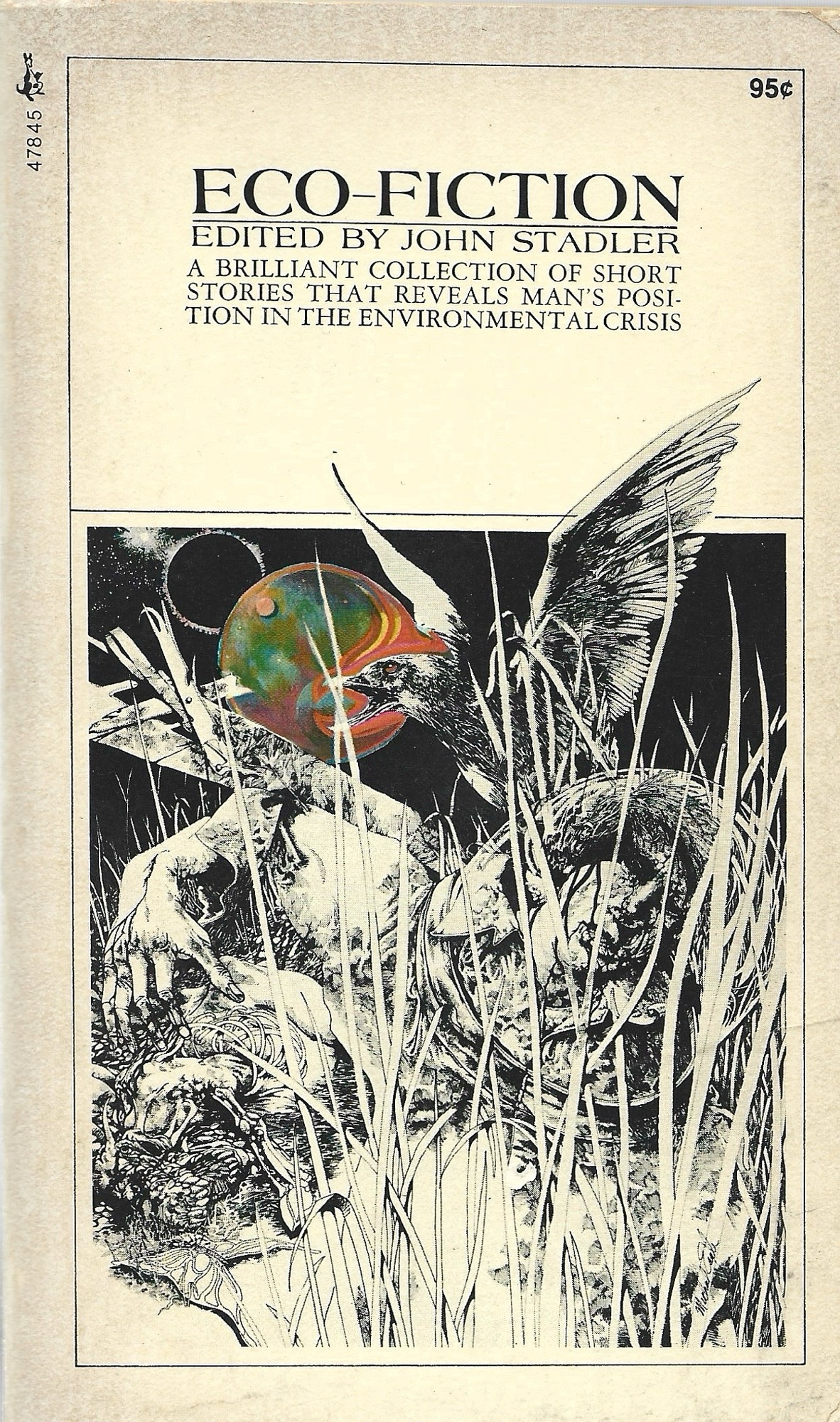
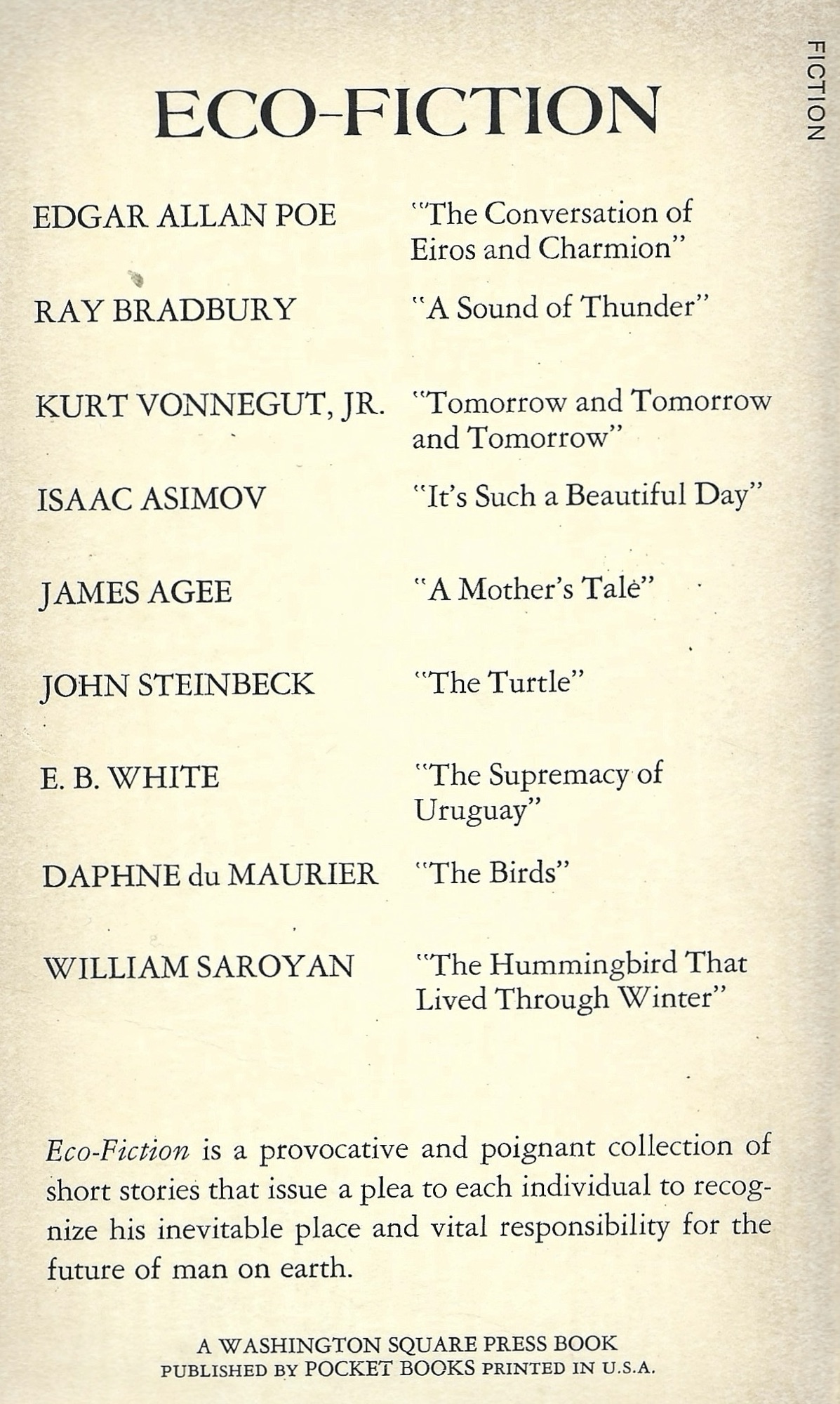
Mass-market Monday | Eco-Fiction

Eco-Fiction, 1971, ed. John Stadler. Pocket Books (1971). No cover artist or designer credited. 206 pages.

The cover art is by Michael Eagle (you can see his signature in the illustration).

In addition to the names listed on the back cover, this collection also features stories by J.G. Ballard, Frank Herbert, J.F. Powers and more.

The vignette “The Turtle” condenses all of The Grapes of Wrath–and most of Steinbeck’s themes in general–into four paragraphs.


“The Turtle”

by

John Steinbeck

The concrete highway was edged with a mat of tangled, broken, dry grass, and the grass heads were heavy with oat beards to catch on a dog’s coat, and foxtails to tangle in a horse’s fetlocks, and clover burrs to fasten in sheep’s wool; sleeping life waiting to be spread and dispersed, every seed armed with an appliance of dispersal, twisting darts and parachutes for the wind, little spears and balls of tiny thorns, and all waiting for animals or the hem of a woman’s skirt, all passive but armed with appliances of activity, still, but each possessed of the anlage of movement.

The sun lay on the grass and warmed it, and in the shade under the grass the insects moved, ants and ant lions to set traps for them, grasshoppers to jump into the air and flick their yellow wings for a second, sow bugs like little armadillos, plodding restlessly on many tender feet. And over the grass at the roadside a land turtle crawled, turning aside for nothing, dragging his high-domed shell over the grass: His hard legs and yellow-nailed feet threshed slowly through the grass, not really walking, but boosting and dragging his shell along. The barley beards slid off his shell, and the clover burrs fell on him and rolled to the ground. His horny beak was partly opened, and his fierce, humorous eyes, under brows like fingernails, stared straight ahead. He came over the grass leaving a beaten trail behind him, and the hill, which was the highway embankment, reared up ahead of him. For a moment he stopped, his head held high. He blinked and looked up and down. At last he started to climb the embankment. Front clawed feet reached forward but did not touch. The hind feet kicked his shell along, and it scraped on the grass, and on the gravel. As the embankment grew steeper and steeper, the more frantic were the efforts of the land turtle. Pushing hind legs strained and slipped, boosting the shell along, and the horny head protruded as far as the neck could stretch. Little by little the shell slid up the embankment until at last a parapet cut straight across its line of march, the shoulder of the road, a concrete wall four inches high. As though they worked independently the hind legs pushed the shell against the wall. The head upraised and peered over the wall to the broad smooth plain of cement. Now the hands, braced on top of the wall, strained and lifted, and the shell came slowly up and rested its front end on the wall. For a moment the turtle rested. A red ant ran into the shell, into the soft skin inside the shell, and suddenly head and legs snapped in, and the armored tail clampled in sideways. The red ant was crushed between body and legs. And one head of wild oats was clamped into the shell by a front leg. For a long moment the turtle lay still, and then the neck crept out and the old humorous frowning eyes looked about and the legs and tail came out. The back legs went to work, straining like elephant legs, and the shell tipped to an angle so that the front legs could not reach the level cement plain. But higher and higher the hind legs boosted it, until at last the center of balance was reached,  the front tipped down, the front legs scratched at the pavement, ad it was up. But the head of wild oats was held by its stem around the front legs.

Now the going was easy, and all the legs worked, and the shell boosted along, waggling from side to side. A sedan driven by a forty-year-old woman approached, She saw the turtle and swung to the right, off the highway, the wheels screamed and a cloud of dust boiled up. Two wheels lifted for a moment and then settled. The car skidded back onto the road, and went on, but more slowly. The turtle had jerked into its shell, but now it hurried on, for the highway was burning hot.

And now a light truck approached, and as it came near, the driver saw the turtle and swerved to hit it. His front wheel struck the edge of the shell, flipped the turtle like a tiddly-wink, spun it like a coin, and rolled it off the highway. The truck went back to its course along the right side. Lying on its back, the turtle was tight in its shell for a long time. But at last its legs waved in the air, reaching for something to pull it over. Its front foot caught a piece of quartz and little by little the shell pulled over and flopped upright. The wild oat head fell out and three of the spearhead seeds stuck in the ground. And as the turtle crawled on down the embankment, its shell dragged dirt over the seeds. The turtle entered a dust road and jerked itself along, drawing a wavy shallow trench in the dust with its shell. The old humorous eyes looked ahead, and the horny beak opened a little. His yellow toe nails slipped a fraction in the dust.

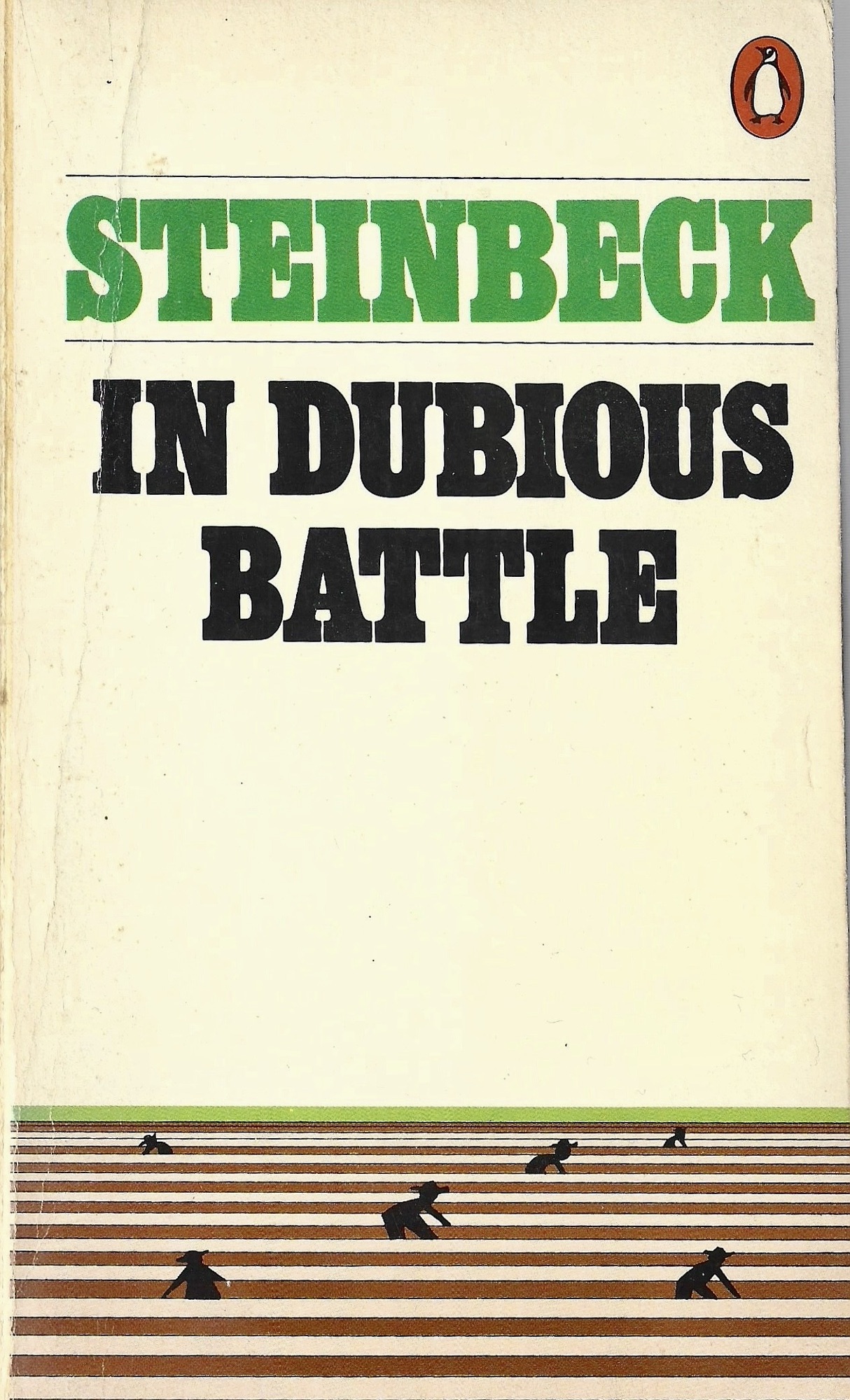
Mass-market Monday | John Steinbeck’s In Dubious Battle

In Dubious Battle, John Steinbeck. Penguin Books (1979). Cover design by Neil Stuart. 313 pages.

John Steinbeck’s underrated and under-read novel In Dubious Battle seems like a good Labor Day mass-market pick. Perhaps Steinbeck’s most radical novel, In Dubious Battle details the fight for better working conditions during the Great Depression in California’s fruit orchards. The hero is young Jim Nolan who joins a labor strike organized by the Communist Party (one of the Party’s officials is named Harry Nilson). Jim is taken under the wing of the veteran organizer Mac McLeod; the pair drive a plot that focuses on the sometimes violent conflict between the workers and the landowners, who use the police and hired thugs to attempt to break the strike. Steinbeck, as is often the case with his serious novels, caps In Dubious Battle with a devastating conclusion, the final line a howl that does not end, its dash carrying the battle into the future, our own future: “Comrades! He didn’t want nothing for himself—“

Three Books

img_1894

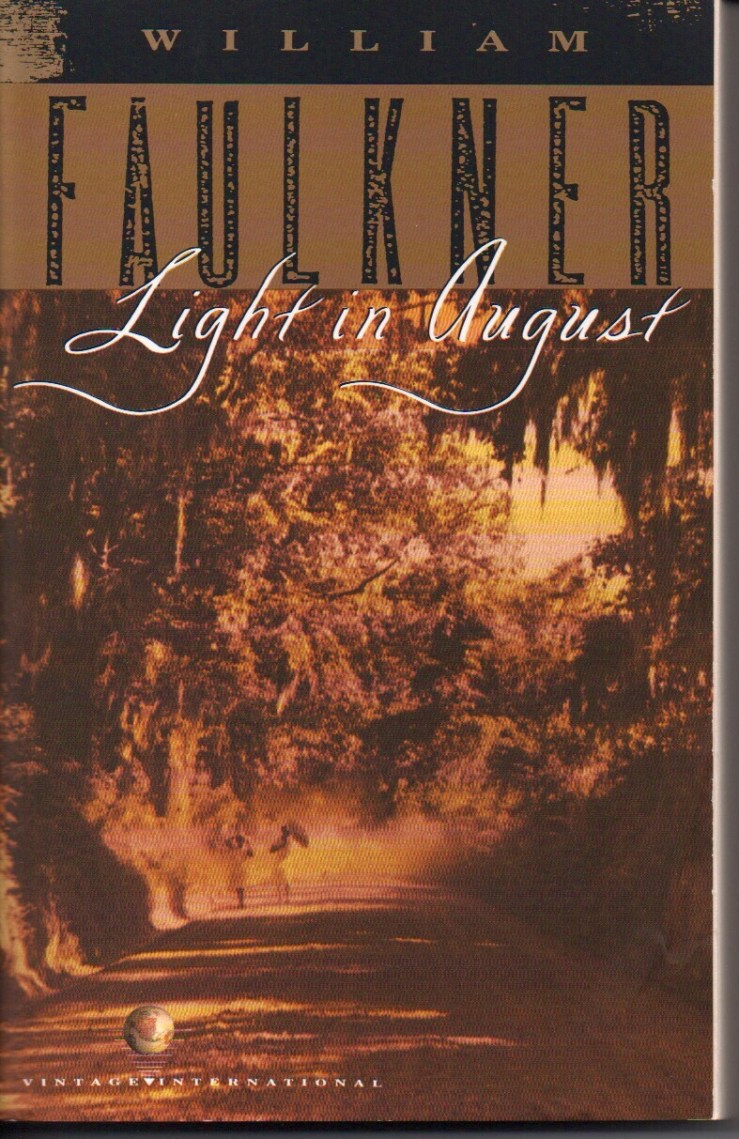
Light in August by William Faulkner. Vintage International trade paperback. Design by Marc J. Cohen from a photograph by Marion Post Wolcott. I wrote about Light in August here. Joe Christmas is a Jesus Christ figure.

img_1895

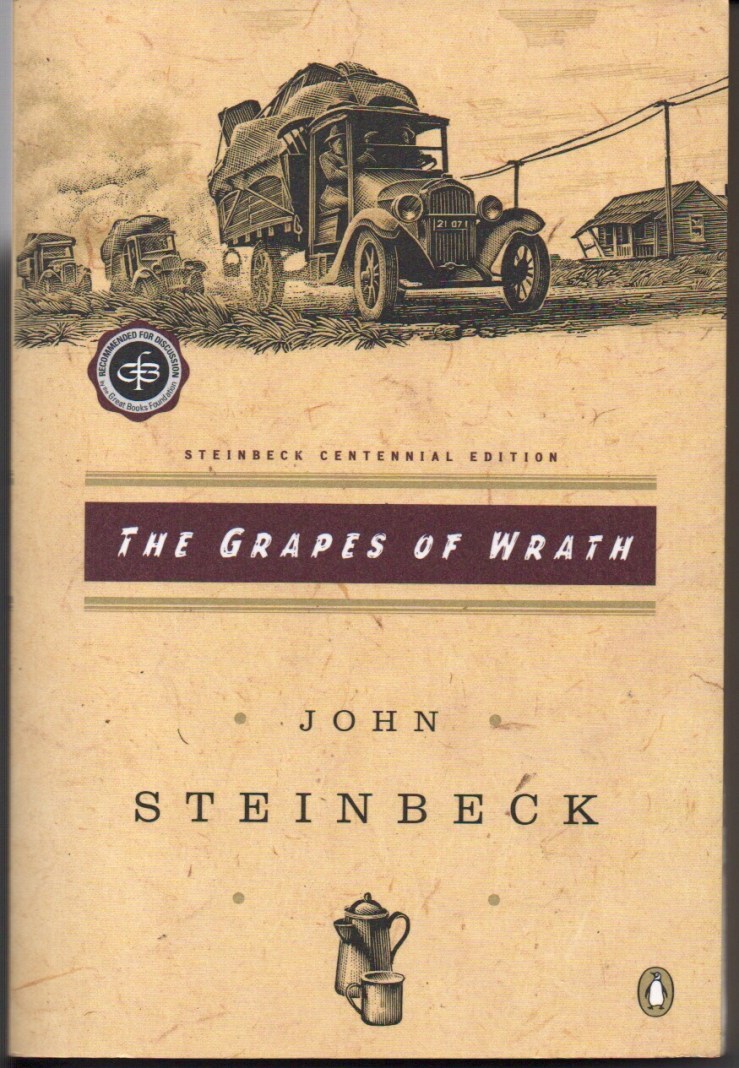
The Grapes of Wrath by John Steinbeck. An oversized trade paperback edition with French flaps and deckle edges from Penguin. Cover design by Paul Buckley, using art by Andrew Davidson. This was part of a class set I used in a school where I used to teach; it left with me when I left. Jim Casy is a Jesus Christ figure.

img_1893

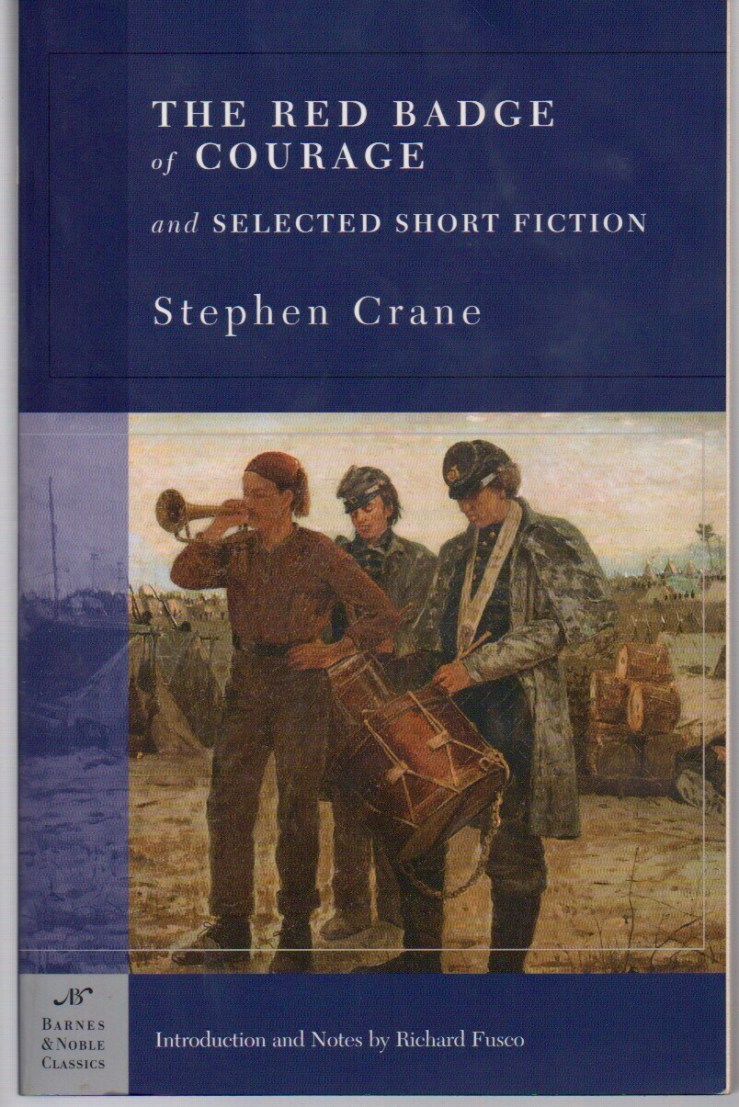
The Red Badge of Courage and Selected Short Fiction by Stephen Crane. A cheap trade paperback by Barnes & Nobles Classics. Cover design by Dutton & Sherman, using a detail from Winsolw Homer’s painting Drum and Bugle Corp, Civil War Encampment. Another class set copy that made its way to my home. Jim Conklin is a Jesus Christ figure.

“Publishing” — John Steinbeck

“Publishing”

by

John Steinbeck

from his 1969 “interview” in The Paris Review

EDITOR

The book is out of balance. The reader expects one thing and you give him something else. You have written two books and stuck them together. The reader will not understand.

WRITER

No, sir. It goes together. I have written about one family and used stories about another family as—well, as counterpoint, as rest, as contrast in pace and color.

EDITOR

The reader won’t understand. What you call counterpoint only slows the book.

WRITER

It has to be slowed—else how would you know when it goes fast?

EDITOR

You have stopped the book and gone into discussions of God knows what.

WRITER

Yes, I have. I don’t know why. Just wanted to. Perhaps I was wrong.

SALES DEPARTMENT

The book’s too long. Costs are up. We’ll have to charge five dollars for it. People won’t pay five dollars. They won’t buy it.

WRITER

My last book was short. You said then that people won’t buy a short book.

PROOFREADER

The chronology is full of holes. The grammar has no relation to English. On page so and so you have a man look in the World Almanac for steamship rates. They aren’t there. I checked. You’ve got the Chinese New Year wrong. The characters aren’t consistent. You describe Liza Hamilton one way and then have her act a different way.

EDITOR

You make Cathy too black. The reader won’t believe her. You make Sam Hamilton too white. The reader won’t believe him. No Irishman ever talked like that.

WRITER

My grandfather did.

EDITOR

Who’ll believe it.

2ND EDITOR

No children ever talked like that.

WRITER (losing temper as a refuge from despair)

God damn it. This is my book. I’ll make the children talk any way I want. My book is about good and evil. Maybe the theme got into the execution. Do you want to publish it or not?

EDITORS

Let’s see if we can’t fix it up. It won’t be much work. You want it to be good, don’t you? For instance, the ending. The reader won’t understand it.

WRITER

Do you?

EDITOR

Yes, but the reader won’t.

PROOFREADER

My God, how you do dangle a participle. Turn to page so and so.

There you are, Pat. You came in with a box of glory and there you stand with an arm full of damp garbage.

And from this meeting a new character has emerged. He is called The Reader.

THE READER

He is so stupid you can’t trust him with an idea.

He is so clever he will catch you in the least error.

He will not buy short books.

He will not buy long books.

He is part moron, part genius and part ogre.

There is some doubt as to whether he can read.

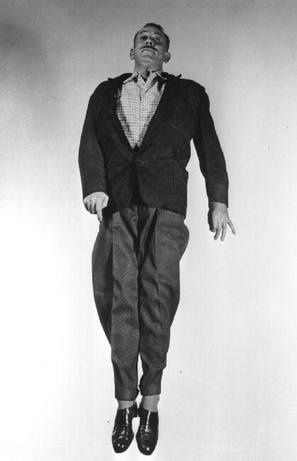
Jumpin’ John Steinbeck

jumping john steinbeck

(Via).

“Flight” — John Steinbeck

“Flight” by John Steinbeck

Out fifteen miles below Monterey, on the wild coast, the Torres family had their farm, a few sloping acres above a cliff that dropped to the brown reefs and to the hissing white waters of the ocean. Behind the farm the stone mountains stood up against the sky. The farm buildings huddled like the clinging aphids on the mountain skirts, crouched low to the ground as though the wind might blow them into the sea. The little shack, the rattling, rotting barn were gray-bitten with sea salt, beaten by the damp wind until they had taken on the color of the granite hills. Two horses, a red cow and a red calf, half a dozen pigs and a flock of lean, multicolored chickens stocked the place. A little corn was raised on the sterile slope, and it grew short and thick under the wind, and all the cobs formed on the landward sides of the stalks.

Mama Torres, a lean, dry woman with ancient eyes, had ruled the farm for ten years, ever since her husband tripped over a stone in the field one day and fell full length on a rattlesnake. When one is bitten on the chest there is not much that can be done.

Mama Torres had three children, two undersized black ones of twelve and fourteen, Emilio and Rosy, whom Mama kept fishing on the rocks below the farm when the sea was kind and when the truant officer was in some distant part of Monterey County. And there was Pepe, the tall smiling son of nineteen, a gentle, affectionate boy, but very lazy. Pepe had a tall head, pointed at the top, and from its peak coarse black hair grew down like a thatch all around. Over his smiling little eyes Mama cut a straight bang so he could see. Pepe had sharp Indian cheekbones and an eagle nose, but his mouth was as sweet and shapely as a girl’s mouth, and his chin was fragile and chiseled. He was loose and gangling, all legs and feet and wrists, and he was very lazy. Mama thought him fine and brave, but she never told him so. She said, “Some lazy cow must have got into thy father’s family, else how could I have a son like thee.” And she said, “When I carried thee, a sneaking lazy coyote came out of the brush and looked at me one day. That must have made thee so.”

Pepe smiled sheepishly and stabbed at the ground with his knife to keep the blade sharp and free from rust. It was his inheritance, that knife, his father’s knife. The long heavy blade folded back into the black handle. There was a button on the handle. When Pepe pressed the button, the blade leaped out ready for use. The knife was with Pepe always, for it had been his father’s knife.

One sunny morning when the sea below the cliff was glinting and blue and the white surf creamed on the reef, when even the stone mountains looked kindly, Mama Torres called out the door of the shack, “Pepe, I have a labor for thee.”

There was no answer. Mama listened. From behind the barn she heard a burst of laughter. She lifted her full long skirt and walked in the direction of the noise.

Pepe was sitting on the ground with his back against a box. His white teeth glistened. On either side of him stood the two black ones, tense and expectant. Fifteen feet away a redwood post was set in the ground. Pepe’s right hand lay limply in his lap, and in the palm the big black knife rested. The blade was closed back into the handle. Pepe looked smiling at the sky.

Suddenly Emilio cried, “Ya!”

Pepe’s wrist flicked like the head of a snake. The blade seemed to fly open in midair, and with a thump the point dug into the redwood post, and the black handle quivered. The three burst into excited laughter. Rosy ran to the post and pulled out the knife and brought it back to Pepe. He closed the blade and settled the knife carefully in his listless palm again. He grinned self-consciously at the sky.

“Ya! ”

The heavy knife lanced out and sunk into the post again. Mama moved forward like a ship and scattered the play. Continue reading ““Flight” — John Steinbeck”

Of Mice and Men (Full Film, 1939)

John Steinbeck on Work Habits

Mark Twain used to write in bed—so did our greatest poet. But I wonder how often they wrote in bed—or whether they did it twice and the story took hold. Such things happen. Also I would like to know what things they wrote in bed and what things they wrote sitting up. All of this has to do with comfort in writing and what its value is. I should think that a comfortable body would let the mind go freely to its gathering.

You know I always smoke a pipe when I work—at least I used to and now I have taken it up again. It is strange—as soon as a pipe begins to taste good, cigarettes become tasteless. I find I smoke fewer and fewer cigarettes. Maybe I can cut them out entirely for a while. This would be a very good thing. Even with this little change, my deep-seated and perennial cigarette cough is going away. A few months without that would be a real relief.

I have dawdled away a good part of my free time now carving vaguely on a scrap of mahogany, but I guess I have been thinking too. Who knows. I sit here in a kind of a stupor and call it thought.

Now I have taken the black off my desk again, clear down to the wood, and have put a green blotter down. I am never satisfied with my writing surface.

My choice of pencils lies between the black Calculator stolen from Fox Films and this Mongol 2 3/8 F which is quite black and holds its point well—much better in fact than the Fox pencils. I will get six more or maybe four more dozen of them for my pencil tray.

I have found a new kind of pencil—the best I have ever had. Of course it costs three times as much too but it is black and soft but doesn’t break off. I think I will always use these. They are called Blackwings and they really glide over the paper.

In the very early dawn, I felt a fiendish desire to take my electric pencil sharpener apart. It has not been working very well and besides I have always wanted to look at the inside of it. So I did and found that certain misadjustments had been made at the factory. I corrected them, cleaned the machine, oiled it and now it works perfectly for the first time since I have it. There is one reward for not sleeping.

Today is a dawdly day. They seem to alternate. I do a whole of a day’s work and then the next day, flushed with triumph, I dawdle. That’s today. The crazy thing is that I get about the same number of words down either way. This morning I am clutching the pencil very tight and this is not a good thing. It means I am not relaxed. And in this book I want to be just as relaxed as possible. Maybe that is another reason I am dawdling. I want that calmness to settle on me that feels so good—almost like a robe of cashmere it feels.

It has been a good day of work with no harm in it. I have sat long over the desk and the pencil has felt good in my hand. Outside the sun is very bright and warm and the buds are swelling to a popping size. I guess it is a good thing I became a writer. Perhaps I am too lazy for anything else.

On the third finger of my right hand I have a great callus just from using a pencil for so many hours every day. It has become a big lump by now and it doesn’t ever go away. Sometimes it is very rough and other times, as today, it is as shiny as glass. It is peculiar how touchy one can become about little things. Pencils must be round. A hexagonal pencil cuts my fingers after a long day. You see I hold a pencil for about six hours every day. This may seem strange but it is true. I am really a conditioned animal with a conditioned hand.

I am really dawdling today when what I want to write is in my head. It is said that many writers talk their books out and so do not write them. I think I am guilty of this to a large extent. I really talk too much about my work and to anyone who will listen. If I would limit my talk to inventions and keep my big mouth shut about work, there would probably be a good deal more work done.

The callus on my writing finger is very sore today. I may have to sandpaper it down. It is getting too big.

The silly truth is that I can take almost any amount of work but I have little tolerance for confusion.

From John Steinbeck’s 1969 interview in The Paris Review.

John Steinbeck: “I have never been a title man”

I have never been a title man. I don’t give a damn what it is called. I would call it [East of Eden] Valley to the Sea, which is a quotation from absolutely nothing but has two great words and a direction. What do you think of that? And I’m not going to think about it anymore.

From John Steinbeck’s 1969 interview in The Paris Review.

Five Favorite Fictional Mothers

Happy Mother’s Day! Sure, it’s a marketing scam, but we all love moms, right?

Fascinating moms populate literary fiction, and there’s no shortage of great baddies, evil stepmothers, and distant headcases in our favorite literature—but we thought we’d focus instead on some of the moms that seem to be, you know, really great moms.

(See also: Five Favorite Fictional Fathers, Five Favorite Fictional Sons (the daughters list is surely round the bend)).

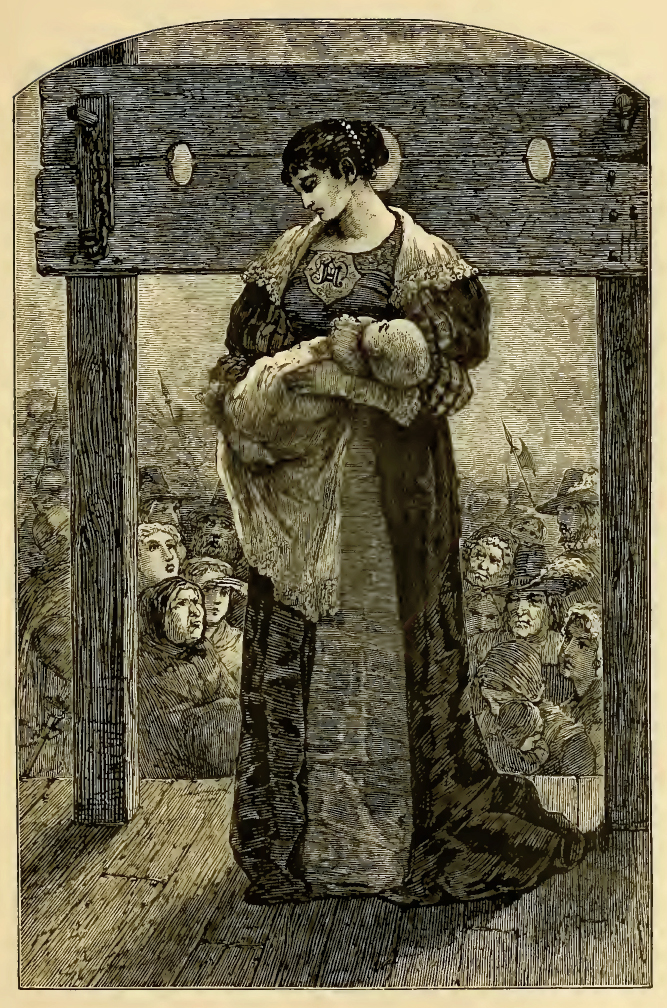
“Hester Prynne & Pearl before the stocks”, an illustration by Mary Hallock Foote from an 1878 edition of The Scarlet Letter

1. Hester Prynne, The Scarlet Letter (Nathaniel Hawthorne)

Hester Prynne is a bundle of contradictions—sin and salvation, radical freedom and reactionary repression, hope and despair—all bound to a deeply patriarchal society that had to control women’s bodies at all turns. Fortunately, there’s no analog for the Puritans’ judgmental, shame-based behavior in our own society (har har). Hester and her daughter Pearl, living in a cottage outside of Boston, are outside the dominant social order. It’s a form of punishment that paradoxically frees the pair, allowing Pearl to grow into a kind of nature spirit—impish and willful, to be sure, but also artistic and able to express herself. Although Pearl is the human doubling of Hester’s titular letter, she’s ultimately no badge of shame, but rather a treasure in her mother’s eyes.

2. Penelope, The Odyssey (Homer et al.)

Patient Penelope weaving and unweaving her husband’s shroud—is she the faithful wife, waiting for Odysseus who’s having adventures asea? Or is she cunningly keeping her son safely alive from the predatory suitors who would certainly want to get him out of the way ASAP. Penelope is an extraordinary and ambiguous figure, but one thing is clear: she loves her son Telemachus.

3. Molly Bloom, Ulysses (James Joyce)

Speaking of Penelope . . . Molly might not be the most faithful wife, but damn if she isn’t a hot mama.

4. Ma Joad, The Grapes of Wrath (John Steinbeck)

Ma Joad never gets a first name in Grapes—she’s an elemental matriarchal force that keeps the family together against every kind of pain. The final scene of this novel is utterly amazing. When Rose of Sharon’s daughter dies in childbirth, Ma Joad directs the mother to nurse a man dying from hunger. All the while, a flood of epic proportions looms. Ma Joad’s determination to live transcends Darwinian impulses here; against the backdrop of infanticide, economic and social genocide, and natural disaster, she still directs her family to a loving, Emersonian course of action.

5. Grendel’s mother, Grendel (John Gardner)

In John Gardner’s fabulous retelling of the Beowulf saga from Grendel’s POV, we find a deeply alienated young man who, try as he might, cannot communicate with the plants and animals around him. Grendel should be a thing of nature, but he is a thinking thing, a thing with a conscience, a soul. He can understand men but they cannot understand him. In one of the book’s saddest conceits, Grendel cannot communicate through speech with his mother, who in many senses seems a creature apart from him. Gardner here dramatizes the radical alienation that all children must feel at some point for their mothers, an alterity grounded in the paradox that, hey, your mom gave birth to you—you came out of her, metaphorically, sure, but also, like, really. Even though Mama Grendel can’t speak to her son, she protects and lovingly cares for him, splitting a few skulls here and there in the process. Motherhood is tough.

Steinbeck on Critics: “Curious Sucker Fish Who Live with Joyous Vicariousness on Other Men’s Work”

ON CRITICS

This morning I looked at the Saturday Review, read a few notices of recent books, not mine, and came up with the usual sense of horror. One should be a reviewer or better a critic, these curious sucker fish who live with joyous vicariousness on other men’s work and discipline with dreary words the thing which feeds them. I don’t say that writers should not be disciplined, but I could wish that the people who appoint themselves to do it were not quite so much of a pattern both physically and mentally.

I’ve always tried out my material on my dogs first. You know, with Angel, he sits there and listens and I get the feeling he understands everything. But with Charley, I always felt he was just waiting to get a word in edgewise. Years ago, when my red setter chewed up the manuscript of Of Mice and Men, I said at the time that the dog must have been an excellent literary critic.

Time is the only critic without ambition.

Give a critic an inch, he’ll write a play.

From John Steinbeck’s 1969 interview in The Paris Review.

“On Getting Started” — John Steinbeck Shares Writing Tips

From John Steinbeck’s 1969 “interview” in The Paris Review (the piece reads more like a series of short writings than a conventional interview):

ON GETTING STARTED

It is usual that the moment you write for publication—I mean one of course—one stiffens in exactly the same way one does when one is being photographed. The simplest way to overcome this is to write it to someone, like me. Write it as a letter aimed at one person. This removes the vague terror of addressing the large and faceless audience and it also, you will find, will give a sense of freedom and a lack of self-consciousness.

Now let me give you the benefit of my experience in facing 400 pages of blank stock—the appalling stuff that must be filled. I know that no one really wants the benefit of anyone’s experience which is probably why it is so freely offered. But the following are some of the things I have had to do to keep from going nuts.

1. Abandon the idea that you are ever going to finish. Lose track of the 400 pages and write just one page for each day, it helps. Then when it gets finished, you are always surprised.

2. Write freely and as rapidly as possible and throw the whole thing on paper. Never correct or rewrite until the whole thing is down. Rewrite in process is usually found to be an excuse for not going on. It also interferes with flow and rhythm which can only come from a kind of unconscious association with the material.

3. Forget your generalized audience. In the first place, the nameless, faceless audience will scare you to death and in the second place, unlike the theater, it doesn’t exist. In writing, your audience is one single reader. I have found that sometimes it helps to pick out one person—a real person you know, or an imagined person and write to that one.

4. If a scene or a section gets the better of you and you still think you want it—bypass it and go on. When you have finished the whole you can come back to it and then you may find that the reason it gave trouble is because it didn’t belong there.

5. Beware of a scene that becomes too dear to you, dearer than the rest. It will usually be found that it is out of drawing.

6. If you are using dialogue—say it aloud as you write it. Only then will it have the sound of speech.

Book Shelves #17, 4.22.2012

Book shelves series #17, seventeenth Sunday of 2012.

20120422-114730.jpg

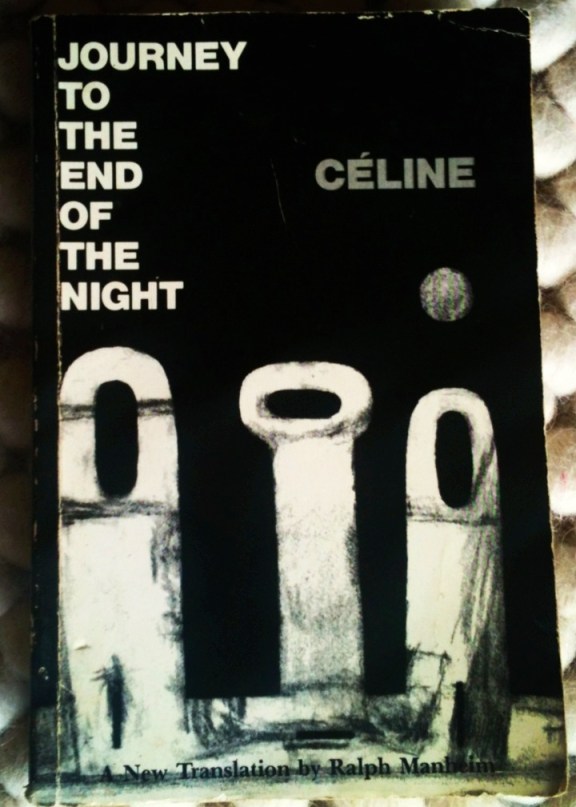
Hemingway, Fitzgerald, Steinbeck, Camus, Nabokov, Celine, Kafka.

20120422-130058.jpg

Jonathan Littell’s The Kindly Ones with Revere movie camera as bookend. Littell’s lurid, bizarre book is only shelved here temporarily (he’s in too-rarefied company, perhaps).

20120422-130453.jpg

A friend gave me this in high school.

The John Steinbeck Map of America

(Via/about).

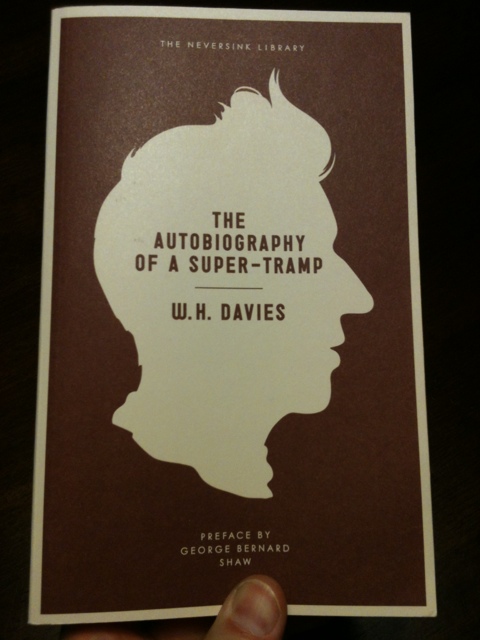
The Autobiography of a Super-Tramp — W.H. Davies

The Autobiography of a Super-Tramp documents W.H. Davies’s picaresque adventures in America in the last decade of the nineteenth century. In bildungsroman mode, Davies begins by relating the story of his childhood in Wales, where he was raised by his grandparents after his father died and his mother essentially abandoned her children. Despite his grandparents’ care, Davies soon turns to petty crime, shoplifting for sport (as well as to provide trifles for his girlfriend). He’s caught, tried,  and beaten, an early run-in that would set a template for future dealings with authority figures. A restless spirit with a hankering for adventure, Davies has trouble attaining steady work; he’s a bit of a romantic, always stuck in a book. He elects to set off for America. In one of the funnier moments in the book, Davies describes writing a letter comparing America to England. Davies mails the missive home—only he’s still in Liverpool and has yet to see the New World, let alone the open sea. Of course, after years trekking across the US, Davies got to know much of the national characteristic; here he is reflecting—

My impression of Americans from the beginning is of the best, and I have never since had cause to alter my mind. They are a kind, sympathetic race of people and naturally proud of their country. The Irish-American is inclined to be the most bitter, remembering from his youth the complaints of his parents, who were driven through unjust laws from their own beloved land; and such a man is not to be idly aggravated, for life is a serious subject to him. This man is not to be aggravated, especially under the consideration that our conscience is not too clean in this respect, and that we are apt to be very slow in making that open confession which is good for the soul. The most pleasing trait in Americans, which cannot for long escape us, is their respect for women and the way in which the latter do deserve it.

In a strange moment that’s never quite fully explained (there are lots of these in Super-Tramp), upon arrival in America, our hero elects to take up with a vagabond named Brum, who teaches the would-be tramp the ins-and-outs of jumping rail, beating trail, and begging from town to town. In one inspired episode, Brum takes our hero to Michigan, where vagabonds could wait out the winter in warm jails with plenty of food (and tobacco). Here, the tramps could barter their own sentences with the complicity of the judge and jailers, who were basically working a scam on the taxpayers. (Luckily, no one makes undue profits by overcrowding prisons in America today. Right? Right?) Brum is one of the first players in a large cast of indigents and outsiders, men of dubious honesty and strange talents whose common thread is that they are all aliens to mainstream society. These are self-exiles whose only telos is movement itself.

These themes of travel and outsider status link Davies’s narratives strongly to those two Jacks of all trades, London and Kerouac, although the clean, spare style of Super-Tramp shares more blood with London’s reportorial rhythms than Kerouac’s unbound typing. It’s also hard to read Super-Tramp without recalling Steinbeck’s bindlestiffs, and just as in Steinbeck’s finest works, there’s depth, humility, and pathos in Davies’s writing, whether he’s describing picking berries, sharing a drink with the fellows, or moving cattle across the Atlantic.

And if Davies demonstrates empathy for his fellow man, that empathy extends to his keen descriptions of nature and animals; his tender descriptions of the poor cattle he helps transport to England are especially moving. Here, Davies shows the reader his naturalist sympathies—

I like to see to a good scientific bout by men who know the use of their hands, but would rather walk twenty miles than see animals in strife. Although of a quiet disposition, my fondness for animals is likely at any time to lead me into danger. After reading cases of vivisection I have often had dreams of boldly entering such places, routing the doctors with an iron bar, cutting the cords and freeing the animals, despite of any hurt I might receive from bites and scratches. Perhaps I should cut a ridiculous figure, walking the crowded streets with a poor meek creature under each arm, but that would not bother me in the performance of a humane action.

These dual drives—empathy and outrage against injustice—guide Super-Tramp, set against an abiding spirit of freedom and nature. As the narrative progresses, Davies repeatedly foregrounds the Darwinian peril the emerging capitalist industrial culture places on ordinary people. His note on vivisection above becomes tragically ironic late in the book when a terrible accident on the rails claims one of his feet.

Despite his hard (if self-elected) life, Davies would later become more comfortable as one of the most famous poets of his age in England, lauded for his plain, naturalist style, and championed by George Bernard Shaw (who wrote the preface to Super-Tramp and helped get the book published). The Autobiography of a Super-Tramp is an engaging page-turner that will likely appeal to fans of Jack London and John Steinbeck or anyone fascinated by the grime and romance of a hobo jungle. With its emphasis on the human face of those who refuse to play into the capitalist system, the book is as timely as it ever was.

And yes, the band got their name from the book.

The Autobiography of a Super-Tramp is part of Melville House’s new Neversink line.

“Steinbeck Is Sincere” — William T. Vollmann on East of Eden

William Vollmann writes about John Steinbeck’s East of Eden (excerpted from Imperial via Expelled from Eden)—

The book of his which I admire the most is East of Eden. For a decade now the character of Kate, whom some critics find unconvincing has haunted my head; she’s horrific, she’s pathetic, she’s steady and successful and lonely; she is perfectly what she is. The retelling of the Cain and Abel story is brilliant, the landscape descriptions lovely and lush, the plotting as careful and convincing as the best of George Eliot. And of course there’s a message, a flaw, personified by a Chinese servant who tells us, sometimes at great length, what to think. But Lee has never annoyed me. He speechifies intelligently, at times wittily, and sometimes compassionately. Do I care that nobody I’ve ever met talks like that? He is sincere because Steinbeck is sincere. And this is what I love about Steinbeck most of all, his sincerity.