Movie Trailer for Hillcoat’s Adaptation of McCarthy’s The Road

Australian director John Hillcoat’s movie adaptation of Cormac McCarthy‘s bleak and beautiful novel The Road finally has a proper trailer as well as (another) release date, October 16th, 2009. Here’s the trailer:

I weighed in on the possible merits (and possible demerits) of a film adaptation of The Road way back in October of last year, back when the movie was planned for a Thanksgiving release (what better time than Turkey Day to watch a story with baby cannibalism?)

The trailer makes the movie look kinda “big”–explosions, way more people than I remember being in the novel, and what appears to be a heavily expanded role for the wife, played by Cherlize Theron. Still. I wanna see this. At the same time, the trailer seems to scream “Go read the book, now!” And you should. It’s great.

Will Eisner’s Adaptation of Herman Melville’s Moby-Dick

moby_dick_cv_300

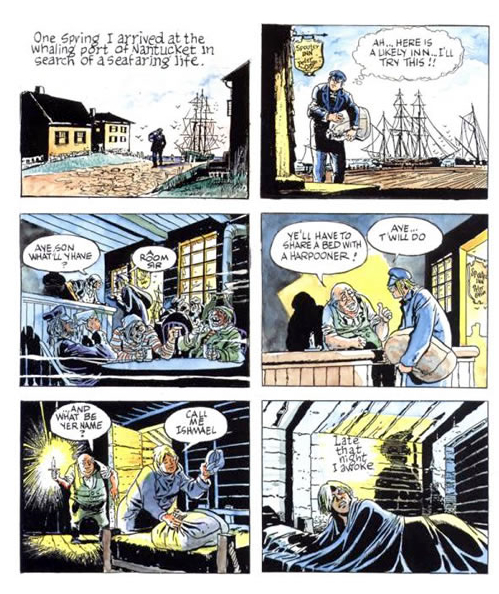
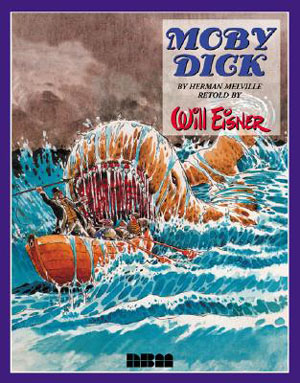
Will Eisner’s adaptation of Herman Melville’s Moby-Dick was one of his last works, completed in 2001 just four years before his death. While no comic book adaptation can match Ishmael’s expansive voice, Eisner’s work here does capture the spirit of adventure and the wish for communion that underpins Melville’s tome. We think it would make a great introduction for younger readers to Melville’s massive book, and will surely interest older readers apprehensive of Moby-Dick. Great stuff.

Eisner Moby-DickMore here.

The Belly of Paris – Émile Zola

belly

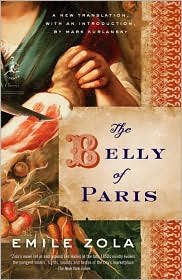
It’s totally appropriate that food-writer Mark Kurlansky should helm Modern Library Classics’ new translation of Émile Zola’s The Belly of Paris. Not only does he have a keen ear for Zola’s revolutionary naturalism, he also captures the passion at the heart (or gut) of The Belly of Paris–a passion for food. To be clear, Zola’s book is not so much about gourmet preparations (although they’re there, to be sure) as it is about the production and marketing of food, and, more specifically, the ways in which food delineates class lines.

The Belly of Paris is the third of Zola’s twenty-novel naturalist cycle Les Rougon-Macquart, a series of books examining two intertwined families–one rich and respectable, the other poor and disreputable–during the rise of the Industrial Revolution in France. Belly takes Florent Quenu (one of the poor and disreputable) for its protagonist. Quenu, wrongfully accused of a crime, escapes imprisonment on Devil’s Island and attempts to start a new life in Les Halles, the great, sprawling market known as “the belly of Paris.” Readers are treated to lovingly detailed depictions of Les Halles and its produce stands, fish shops, cheese markets, butcheries, both through the eyes of Quenu and many other characters. There are those who work in the great market and their children (who also, of course, work in the market); artists and rabble rousers; the nouveau riche and the would-be revolutionaries.

Zola evokes a lust for life centered around this great belly, even as he dramatizes the sharp disparity between the rich and the poor. While Zola is hardly preachy, his sympathies are clearly with the poor and downtrodden. Like America’s great literary naturalist John Steinbeck, Zola’s major rhetorical gesture is to avoid the romanticism of metaphor in favor of a tightly-drawn Darwinian realism. Like Steinbeck, this means a strong focus not just on the symbolic registry of food–food as communion, for example–but also on the real-world consequences of not having enough food. Put another way, Zola’s not afraid to get his hands dirty, and there’s quite a bit of dirt in Belly. It’s easy even now to see why Zola’s naturalism was something of a minor scandal in its day (this translated into sales for Zola, of course).

Contemporary English-reading audiences will have no difficulties with Zola’s late nineteenth-century France. Kurlansky’s deft translation zips along with vivid intensity, and his detailed endnotes inform the text without intrusion. While Francophiles pining for romantic visions of a pristine Paris will likely be put off by Zola’s gritty visions, lovers of food writing and social fiction alike will undoubtedly enjoy The Belly of Paris. Recommended.

The Belly of Paris is available from Random House’s Modern Library Classics on May 12th, 2009.

Chicken with Plums – Marjane Satrapi

chicken with plums

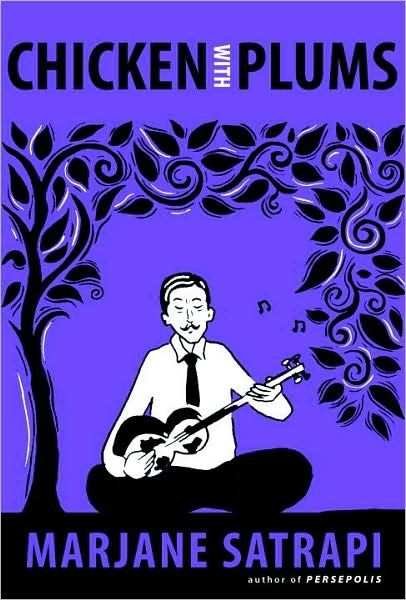
In Chicken with Plums, new in paperback from Pantheon, acclaimed author Marjane Satrapi tells the story of the life and death of her great uncle Nasser Ali, a renowned Iranian tar player who decides to die after his wife destroys his beloved instrument. Satrapi organizes her narrative around Ali’s last eight days alive in November, 1958–from the time he decides to quit eating and not leave his bedroom, to his eventual, somewhat unexplained death. Ali’s life story–and the reasons for his slow suicide–are revealed in a series of dreams, fantasies, flashbacks (and flashbacks within flashbacks!), and even a few flash forwards. Although the context of the recentish 1953 CIA-backed coup informs the plot, Chicken with Plums is far less concerned with Iranian politics than was the book that made her famous, her stunning debut graphic novel, Persepolis. Instead, Chicken plumbs loss and love, art and passion, family and disappointment, and the ways in which the small comforts in life–a favorite meal of say, chicken with plums, or a Sophia Loren flick, ultimately offer no protection against death.

Casual readers to comics often make the error of supposing that the medium is merely words with accompanying pictures. Satrapi’s deft work here might do wonders in correcting this ignorance. There isn’t a wasted panel in Chicken with Plums, and Satrapi commands intense emotion from her thick, black lines. There’s a seamless quality to Chicken with Plums; the text and the pictures, indivisible, add up to more than the sum of their parts. Satrapi knows when to hold back and let her simple black and white images tell the story. There is a certain economy of storytelling that great comic writers can achieve in ways entirely possible in prose, and here Satrapi has surpassed her earlier work in Persepolis, which, while great, often relied heavily on textual exposition. In Chicken with Plums, Satrapi’s evocations of troubled family life, unfulfilled love, the perils of Iranian immigration to California, and Sufi mysticism all blend into a poignant, often-funny, and occasionally devastating portrait that exemplifies the best of the comics medium.

While comparisons to her Persepolis series will undoubtedly hang over all of Satrapi’s work, Chicken with Plums is a wonderful successor, and in some senses, a more achieved work. Although it doesn’t convey the first-person immediacy of Persepolis, nor that memoir’s dramatic scope, the story of Nasser Ali is intimately detailed and achieves something rare in an age of overstuffed books: it leaves its readers hungry for more. Highly recommended.

Salon published a seven page excerpt from Chicken with Plums when the book was originally published in hardback.

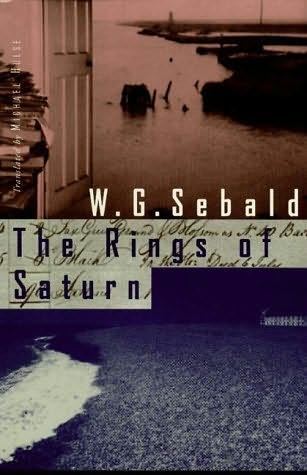
The Rings of Saturn — W.G. Sebald

rings

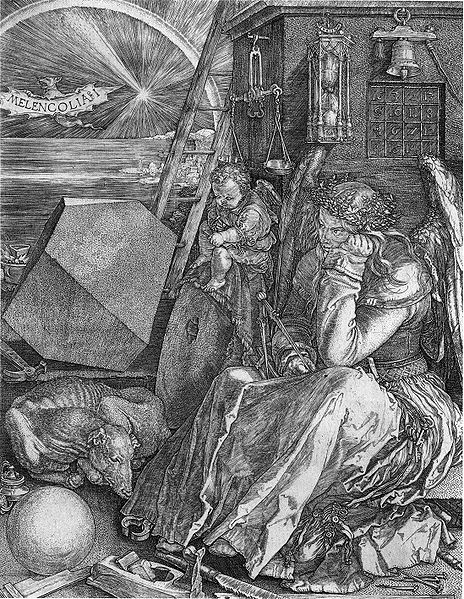
Early on in W.G. Sebald‘s strange and beautiful novel The Rings of Saturn, the erudite narrator (seemingly) offhandedly alludes to Albrecht Dürer’s 1514 engraving Melencolia I. Rings is larded with such references, stuffed to the gills with analysis of history and literature and art (and so much more), but the quick allusion to Melencolia I seems a particularly informative way of interpreting–or at least comprehending–Sebald’s grand, glorious book. Before we begin though, it will be useful to quickly summarize the plot: In 1992, a German intellectual named W.G. Sebald takes a walking tour of the east coast of England. He visits old English manors, the homes of dead writers, decaying seaside resorts, abandoned islands, and many other melancholy spots. In true King Lear style, he wanders the heath a bit. But this walking tour is not the real plot: no, instead, Sebald, in a casual, sometimes wryly humorous, and mostly melancholy tone reflects on the global and historical implications of a host of subjects far too numerous to try to list here. In other words, this is a very smart book about everything.
464px-durer_melancholia_i1

The Rings of Saturn, as its title suggests, is a book about melancholy (Renaissance medical texts identified Saturn with the bodily humor melancholy–black bile–indicated by sluggishness and moroseness, paradoxically paired with an eagerness for action (hence the modern word saturnine)). The melancholy of Rings pervades the whole text and even infiltrates each sentence. Like Dürer’s engraving, Sebald’s text is complexly and richly detailed, overflowing with allusion and symbolic registry that defies simple or easy interpretation. Just as Dürer situates the winged figure of genius at the (slightly off-) center of his image, contemplative yet dreamy, we find Sebald’s narrator to be a flighty genius made forlorn by the world he sees. And yet, just as Dürer’s figure is ultimately ambiguous (is he despondent or merely in the throes of absent fancy? Is he shirking his duty or contemplating a new grand work?) so too does Sebald’s narrator resist any simple interpretation. The narrative bulk of Rings consists of the narrator’s perspectives on history and memory, art and economics, literature and suffering. Like the myriad strange objects that surround the figure of genius in Dürer’s engraving, the connections between the subjects of the narrator’s lessons seem tenuous at first (indeed, several interpretations of Dürer’s piece have argued that it is simply a failed allegorical vision). As the text develops, we begin to see how the narrator’s obsession with, say, Thomas Browne’s skull connects to a biographical account of Joseph Conrad, or early English colonial forays into Imperial China, or reflections on the life cycle of the herring. Like the objects that litter Dürer’s engraving, the narrator’s varied lessons are detailed things, concretizations of history, or art, or literature, or science, and, at the same time–like Dürer’s objects–the narrator’s lessons are also symbols connected to grander abstractions. The work–and joy–of the reader is to link these symbols, these abstractions, into meaning. This is no simple task, but Sebald’s masterful writing ensures that it is a rewarding (and downright fun) adventure.

The flip side to melancholy is the potential energy writhing within its dramatic inertia. The very nature of the narrator’s simple quest–a walking tour–dramatizes this energy; at the same time, the decay and erosion of English coastal life threatens to overwhelm it for good. The narrator’s access to so much human knowledge, both miserable and horrible, attests to the power of history to survive through–but also to paradoxically crush–the living. This paradox of melancholy, dramatized in Dürer’s Melencolia I, is neatly summed up in a line from the first page of The Rings of Saturn (a page I immediately returned to after finishing the book, I must add):

At all events, in retrospect I became preoccupied not only with the unaccustomed sense of freedom but also with the paralysing horror that had come over me at various times when confronted with the traces of destruction, reaching far back into the past, that were evident to me even in that remote place.

In this “remote place,” this forlorn milieu, Sebald’s narrator (Sebald?) again and again uses the lens of history to–again paradoxically–attempt to come to terms with history, both collective and individual.

The result of all this is a wonderful, engaging read, on par with the greatest books I’ve read. Sebald’s command of language, his ability to dip into another’s voice recalls Roberto Bolaño’s great work 2666; Sebald’s narrator, in his will to understand and catalog recalls Ishmael in Melville’s masterpiece Moby-Dick, as does his human sympathy, humor, and sensitivity. At the same time, Sebald’s scope spills out of the conventional borders of what we’ve come to know as the novel. While hardly as dry–or neutral–as a history or science text, Sebald’s narrator’s takes on sericulture, or the life of Joseph Conrad, or the relationship between art museums and the sugar trade of the 18th century all vibrate with an intense truthfulness that informs and engages the reader without ever falling into didactic prattle.

At the end of The Rings of Saturn, Sebald’s narrator returns to Thomas Browne’s skull again–only this time resurrected, a living brain. He discusses at length Browne’s Musaem Clausum, an imaginary library that Browne invented containing texts, artifacts, and relics of every manner of wonder. Sebald’s narrator goes on for pages listing the contents of Musaem Clausum with fervor and passion–the reader realizes that the book, and the narrator, could go on and on, detailing these wonders and their connected histories under more intense scrutiny. Rings replicates both Browne’s Musaem Clausum and Dürer’s engraving, offering readers a tour through myriad marvels–and if the walk is melancholy and strange, it is also profound and beautiful, and very, very rewarding. Very highly recommended.
The 2009 PEN/O. Henry Prize Stories

penab

The short story often gets short shrift. While Hemingway’s “Hills Like White Elephants” is an astounding feat of economy, it’s rarely mentioned in the canon of Hemingway’s masterpieces like For Whom the Bell Tolls. There’s a strong case to be made that Kafka’s little fables are far more perfect than his unfinished novels, and yet The Trial, incomplete as it is, is still considered his finest work. I would take any one of Nathaniel Hawthorne’s Twice-Told Tales over the interminable stuffiness of The Scarlet Letter. There exists, perhaps, a feeling that the short story as art form is incapable of making Grand Gestures or Big Important Statements. Collections that are lauded tend to function (or at least pretend to function) as homogeneous “novels in short story” –which can be great, of course (see Denis Johnson’s inimitable volume Jesus’ Son) — but why should that be? To often, readers dismiss short stories, particularly short stories, as little more than time-fillers, neat little chunks of text to occupy specific moments in time: a subway ride, an term in a waiting room, a spare half-hour. Sometimes we set aside our real Reading Time for those oh-so important novels, so that we might Learn and Grow as a Person (or whatever). And while the tales comprising the 2009 PEN/O. Henry Prize Stories certainly won’t disappoint as time-fillers, they offer so much more than simple leisure reading.

Repeatedly, the stories in this collection explore what is at stake in the human condition, and a sense of loss underpins many (if not most) of the tales. Take the lead story, Graham Joyce’s “An Ordinary Soldier of the Queen,” for instance. This story of a British Army officer who may or may not have been exposed to toxic nerve gas during the first Gulf War unfurls in a realistic, funny, and often affecting voice. Joyce’s tale dips from a military procedural into uncanny, fantastic territory, making the reader question the perception of the narrator, who never wavers in his beliefs about the strange events (namely, meeting a djinn) that are (maybe) happening to him. I thought about “An Ordinary Soldier of the Queen” for days after I read it and I made a colleague read it so that I could force him to discuss it with me. Karen Brown’s “Isobel’s Daughter” also explores loss, communicating the profundity of those everyday tragedies we often look away from. (Brown’s evocation of Tampa, Florida is spot-on, I must add). In “Purple Bamboo Park,” E.V. Slate lets us peer into the life of an old maid in modern China. The story is heartbreaking from the get-go, and yet her protagonist is not a wholly sympathetic character; Slate’s handle on human failure and our investment in mundane adventures is crushing–who knew we could have so much in common with an aging domestic worker? Caitlin Horrocks literalizes loss in “This Is Not Your City,” thrusting her readers into the panic of Russian immigrants whose daughter goes missing. In “The Order of Things,” Judy Troy examines loss and meaning through an affair, concluding that “Feeling came first and though after; that was the order of things,” much to the surprise of her protagonist. And while Paul Theroux’s “Twenty-two Stories” is more playful in both structure and content (it is comprised of twenty-two short short short stories), again we find characters pondering loss and the circumstances of their losses. Theroux’s characters, like those in James Joyce’s Dubliners, repeatedly come to negative epiphanies, whether they lose their faith in God and religion or realize that they were unfit parents. The closing story, Junot Díaz’s “Wildwood” makes me kind of ashamed that I still haven’t read Brief Wondrous Life of Oscar Wao. I will remedy this omission forthwith.

While readers may not love every story collected in The 2009 PEN/O. Henry Prize Stories, it would take a pretty cold automaton to dismiss most of what’s presented here. The project, helmed by editor Laura Furman with jury prize selections by A.S. Byatt, Anthony Doerr, and Tim O’Brien, is really an exploration of how people handle loss and beauty and family and adventure and boredom and all those things that happen in life (and death). And isn’t that what we ask of our literature? Read this book, but give these stories their proper due. They’re more than just time-fillers; each one is a perfectly crafted little world waiting to be explored. Recommended.

The 2009 PEN/O. Henry Prize Stories is available May 5th, 2009 from Anchor Books.

“The Distance from the Moon” — Italo Calvino

We’re loving this very cool animation of Calvino’s short tale “The Distance from the Moon,” from the collection Cosmicomics. This month’s Harper’s features two funny and thoughtful little fables told by Cosmicomic‘s strange narrator Qfwfq , and if you’re too lazy to buy that, check out The New Yorker‘s recent publication of “The Daughters of the Moon.” Presumably these stories will be published in the upcoming volume Complete Cosmicomics. Stay ahead of the curve by reading them now. Special mp3 bonus: actress Maria Tucci reads from Cosmicomics.

The Penelopiad – Margaret Atwood

thepenelopiad

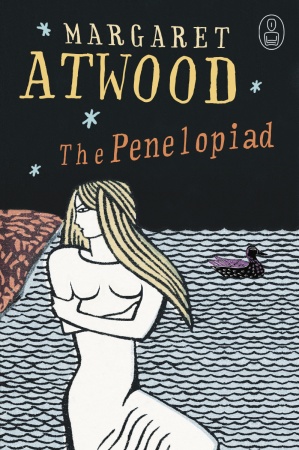
The Odyssey has long been my go-to example for phallocentric literature in the high school classes I teach. The story of wily Odysseus and his crew wandering the high seas for a decade after the Trojan War prototypifies a literature of masculine fantasy full of adventure, intrigue, and romance. While Odysseus explores the world, bedding nymphs and witches and having every kind of adventure with his boys, his wife Penelope is at home, faithful and chaste, raising kid Telemachus and keeping the would-be usurpers at bay. In short, the story of Odysseus licenses an entire tradition of phallocentric literature wherein the clever protagonist is able to duck familial and social duty and have a great adventure in the process. Think of Huck lighting out for the territory. Same deal. Not that there’s anything wrong with that. But as Margaret Atwood saliently demonstrates in The Penelopiad, her reworking of The Odyssey, there’s always another side to that story of masculine escape–and a price to that adventure, as well.

As its title suggests, The Penelopiad tells the story from the perspective of Penelope, a plain but clever girl, who–like Odysseus–must learn to live by her wits. Atwood, working from several myths, details Penelope’s divine parentage (she’s half-naiad), and her upbringing as a young maid in her father’s home. In an early key scene, Penelope’s father supposedly (the details are fuzzy, she admits) tries to murder her by drowning her, after learning that she will weave his shroud. This infanticide echoes the story of Oedipus, and also serves as a dominant motif throughout the story (it’s also twinned with a motif of eating meat–Penelope remarks at one point that she is just “meat” to be eaten). As the story progresses, young, shy Penelope slowly transforms from a naive gal with a chip on her shoulder about her preternaturally beautiful cousin, Helen, into a woman as wily as Odysseus himself. Atwood treats us to Penelope’s inner thoughts on all sorts of subjects, and even though Penelope claims to love Odysseus, it’s repeatedly clear how angry she is at not only him, but also her son.

While Penelope’s story is dominant, Atwood is very concerned with Penelope’s twelve maids, orphaned servants slain by Odysseus and Telemachus after Odysseus’ return. The maids serve as a chorus, interjecting their voice in short chapters written in a variety of styles, ranging from epic poetry to sea shanties to short skits. One of the most fascinating choral sections plays as an anthropological seminar, in which Atwood’s maids suggest that the real story of Odysseus and Penelope is in fact the displacement of a matriarchy by a wandering warrior. There’s also an inspired court scene where Odysseus is tried for killing the suitors, and the maids sue for justice.

Ultimately, Atwood paints the maids, poor orphans and slaves, as the real victims in this ancient tale. While Penelope complains that she is treated as “meat,” Atwood makes it clear that it’s really the maids who are treated as mere flesh to be consumed–slaves forced to clean, bodies subjected to repeated rapes. And while Penelope repeatedly expresses sorrow and dismay for the murder of the maids, complaining that their deaths were a result of tragic miscommunication, the maids have a different story to tell–one that ironizes much of what Penelope has to say. As the story progresses, we are frequently reminded by Penelope herself that she is a liar and storyteller on par with Odysseus and because of this insight we begin to realize that there might be something to some of the slanderous rumors she’s been protesting in her narrative. It would’ve been simple for Atwood to give Penelope a straightforward and strong voice, a voice that communicated the virtue classically identified with Penelope along with a feminist slant of insight. Instead, Atwood’s Penelope is far more complex and human, gossipy and spiteful, sympathetic and ripe for contempt. The Penelopiad ironizes not only The Odyssey (and the phallocentric literary tradition after it), but also itself; its a book that complicates our notions of history, memory, and identity, and it does so in ways both playful and profound. Highly recommended.

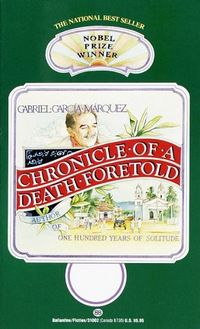
Beer and Book Pairing: Shandies + García Márquez’s Chronicle of a Death Foretold

While the special pleasures of drinking a beer have undergone something of a renaissance in the past ten years in America, what with all the awesome microbreweries popping up left and right, there remains among many a staunch and unjustified prejudice against the world’s oldest liquor. In short, wine is still the go-to beverage for fine dining, and for many, the mark of sophistication and refinement. And while we certainly don’t begrudge a glass of pinot or chardonnay, why all the prejudice? Beer goes great with food–especially fine food–and also with books. In order to make headway against overcoming beer’s unjust vulgar reputation with some folks, we proudly present a new ongoing series of beer-book pairings, hopefully lending a little weight to our favorite beverage’s literary caché. It’s Spring Break Week at Biblioklept International Headquarters, and what better way to celebrate the season than with our crisp homemade shandies paired with Gabriel García Márquez’ s Chronicle of a Death Foretold.

Shandies are made simply by mixing beer with ginger ale, ginger beer, or, preferably, lemonade. Our recipe for shandies is pretty basic. We recommend starting with a lager–Tecate, Red Stripe, or even Corona will do fine (we’re featuring Red Stripe at the BIH this week). You can certainly use an ale, but ales tend to have richer, sharper, and more complex flavors, and they tend to be not as smooth as lagers. (We suppose you could make shandies with a porter or stout or a lambic ale, but this seems kinda sorta reprehensible). Next, you’ll need either an imperial pint glass (20 oz.) or an American pint glass (16 oz.). Pour your lager into the glass, then add your lemonade in desired ratio (we prefer to fill an imperial pint glass, creating roughly a 3 to 2 ratio of beer to lemonade. Oh yeah, we’re lazy and use store bought lemonade (Minute Maid sugar free), but we’ve made our own in the past. Making your own lemonade is easy, and if you don’t know how to do it you probably are too dimwitted to be reading these words right now). Final step: stir, drink, enjoy.

chronicle

We’ve chosen shandies for their crisp lightness. They’re the perfect early afternoon drink, cool and refreshing, preferably enjoyed on porches or hammocks (we don’t really recommend them for indoors or at night). We’ve paired them with a fresh little jewel of a book, Gabriel García Márquez’ s Chronicle of a Death Foretold. Chronicle is a murder/love story with about a million little twists, the biggest twist being that there is no twist: we know from the first sentences exactly what will happen. Still, García Márquez’ s kaleidescopic reconstruction of the day of the murder is thoroughly engrossing, bewildering, and un-put-downable. The book’s rhetoric is hardly as morbid as its subject matter–it’s great hammock/beach reading, and its crisp lightness belies its complex flavors. Like a shandy, it slowly, subtly intoxicates you. It’s also pretty short, about 130 pages, and despite its infinite digressions, its the sort of book that you read in just one or two sittings.

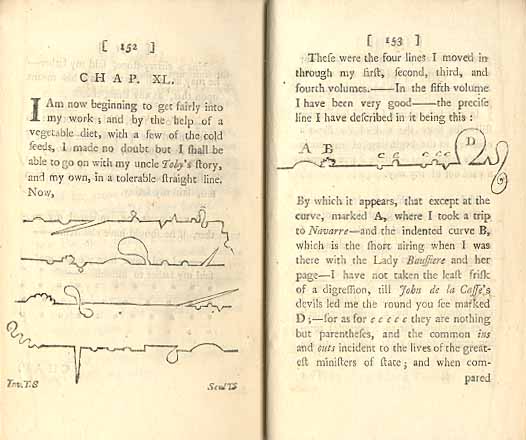
Of course, maybe you’ve read Chronicle but you’re still dying to drink some shandies on your porch with a good book, and you want Biblioklept to give you a literary excuse. Well, here’s another option: take a shot at another book of infinite digressions, Laurence Sterne’s 1759 (anti-)novel The Life and Opinions of Tristram Shandy, Gentleman. The fun of pairing a shandy with Shandy will be doubled in Sterne’s love of wordplay in the text. And sure, there’s no way you’ll finish it, but it’s not that sort of book anyway–it doesn’t finish its self! Pick it up at random, flip around, marvel at its weirdness, at the very idea that the first post-modern novel could somehow come before the modern novel. Then get up, make another shandy, and pick up again elsewhere. Fun stuff.

shandy
Shandy charts the course of his narrative thus far

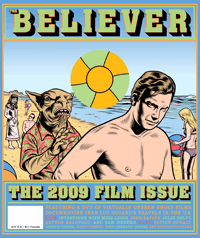
The Believer’s 2009 Reader Survey: (What Some Jokers Thought Were) The Best Books of 2008

200903

The new issue of The Believer showed up in my overstuffed mailbox today. It’s the film issue, featuring a DVD of short films about Jean-Luc Goddard’s travels in the U.S. My second favorite Jean-Luc! (Seriously, Alphaville is great, but it’s no ST:TNG). The issue also features The Believer‘s annual reader survey. Here are the results, from their website, with our parenthetical thoughts and links.

READER SURVEY RESULTS

  1. 2666—Roberto Bolaño (This seems pretty obvious. Go, read it, now. Not that awards mater, but it also just won the National Book Critics Circle Award for best fiction).
  2. Unlucky Lucky Days—Daniel Grandbois
  3. Lush Life—Richard Price (After hearing a great interview with Price on NPR, I really wanted to read this book–and I really don’t care for detective fiction. And I never got into The Wire. I guess it’s not really genre fiction though. I guess I should read it).
  4. The Lazarus Project—Aleksandar Hemon
  5. Netherland—Joseph O’Neill (Heard lots of good things about this, but neglected to solicit a copy).
  6. Vacation—Deb Olin Unferth (Haven’t read it. Like her short stories in McSweeney’s though).
  7. Unaccustomed Earth—Jhumpa Lahiri (Unsolicited promo copy of the new trade paperback edition showed up in the mail a few days ago. I will try to read it).
  8. Arkansas—John Brandon
  9. A Mercy—Toni Morrison (This topped my best of 2008 list only because I hadn’t read 2666 yet–to be fair, however, they’re both great, totally different books, so no real reason why one should top another).
  10. Indignation—Philip Roth (Jesus. Do people still read Philip Roth. Who knew?) Continue reading “The Believer’s 2009 Reader Survey: (What Some Jokers Thought Were) The Best Books of 2008”

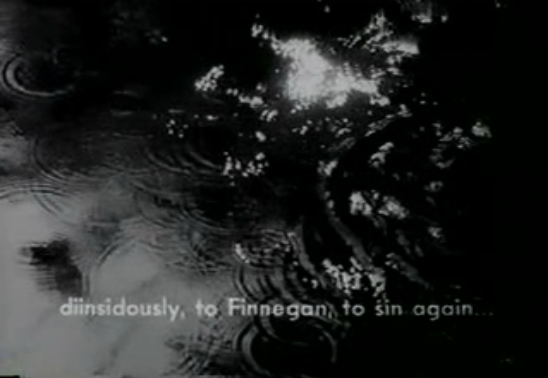
Passages From James Joyce’s Finnegans Wake — Mary Ellen Bute

finnegan

In the mid-sixties, Mary Ellen Bute made a surreal little film that kinda sorta illustrates James Joyce’s most inscrutable novel, Finnegans Wake. Watch the whole thing at UbuWeb Film. And you were going to celebrate St. Patrick’s Day by simply getting stinking drunk…for shame…for shame!

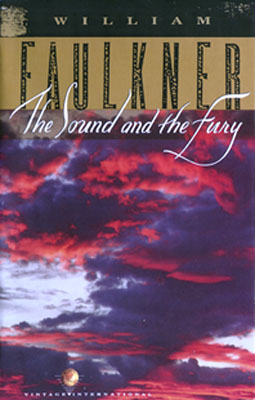
The Sound and the Fury — William Faulkner

tsatfwf

I don’t really know if there’s anything new I can say about Faulkner’s The Sound and the Fury in a blog post, and I’m not in the practice of writing term papers here, and you wouldn’t want to read one anyway. I’ll cop out and be vague but honest: the book was astounding and exhausting. I’ve read a number of Faulkner novels now, and The Sound and the Fury was easily my favorite. I’d attempted it a few times before, only to be thwarted by an inability to commit to the sustained concentration required to comprehend Faulkner’s stream-of-consciousness technique. The first section of the book, told from the perspective of Benjy, the seminal Faulknerian idiot man-child, is particulalry daunting, especially if you have no prior knowledge of the story of the Compson family, and I don’t think I would’ve made it through this reading if I didn’t arleady know the major themes and the trajectory of the plot. I’m actually kinda sorta shocked that the book was published at all, and I really wonder about its earliest audiences–how much context did they have? What guided them through the verbal detritus of the book’s first half?

I suppose that at the time of its publication in 1929, literary audiences were at least somewhat familiar–if not wholly intrigued by–the stream-of-consciousness technique pioneered in books like James Joyce’s Ulysses and Virginia Woolf’s Mrs. Dalloway. I read both of those books years before The Sound and the Fury, and I would make a subjective argument that they are quite a bit easier to enter into in terms of linearity and plot structure. Also, reading TSatF, I couldn’t help but feel the subtle resonance of Ulysses, particular in the constant use of omission. One of the things that makes Ulysses challenging is that Leopold Bloom frequently elides specific referents–we often get a “him” or a “he” or a “she” or an “it” without immediate context. Often, that context comes much, much later in the novel, with the net result that at times Bloom’s stream of consciousness is awfully ambiguous. Other times, Bloom seems unable to even think the words that would name the tragedies of his life (his dead son, his unfaithful wife, his outsider status in Dublin). Similarly, Faulkner’s Compsons are unable to directly name their own tragedies of promiscuity, suicide, alcoholism, madness, and financial decline. The effect is disarming and immediate, and while it can be very engaging, I can see how many readers would be alienated to the point that they can’t finish the book. I think there are a few simple solutions to the intrinsic problems of reading The Sound and the Fury, and at the risk of looking like a didactic asshole, I’ll share:

1) Read a brief plot summary first. I took a graduate seminar on Faulkner from which I gleaned the basic plot points and themes. (Ironically, the seminar assumed that any English major in grad school would have a working knowledge of the book, and instead focused on lesser-read volumes like Intruder in the Dust). Knowing the background of the Compson family did not ruin reading the book for me, nor did it replace an actual reading of Faulkner’s language–it simply gave me enough of a frame of reference not to throw up my hands in despair.

2) Read quickly and in long sittings. This is not a book that you can pick up and read a few pages of each night. Each chapter has a distinctive rhythm, and it takes a few pages to get into the pace and perspective of the chapter. I read the book in about eight sittings. I also found TSatF impossible to read at night before I was about to go to bed.

3) Don’t worry about getting everything in the first reading. Not possible. Enjoy the language, its strangeness. Marvel at Faulkner’s attempts–both successful and unsuccessful–to transcend time, space, and place. If you’re not enjoying it, why bother reading it?

Most of these suggestions could be applied to Ulysses as well. I brought up the possible influence of Joyce on Faulkner and I was interested enough to do a little research. The following text is from pages 208-209 of A William Faulkner Encyclopedia by Robert Hamblin and Charles Peek, and I think it neatly summarizes the issue:

When asked about the influence of Joyce on his own writing during the early years of his fame, following the publication of The Sound and the Fury and As I Lay Dying, Faulkner tended to be understandably evasive. In a 1932 interview with Henry Nash Smith, for example, Faulkner claimed, in fact, that he had never read Ulysses, invoking instead a vague aural source for his knowledge of Joycean methods: ” ‘ You know,’ he smiled, ‘sometimes I think there must be a sort of pollen of ideas floating in the air, which fertilizes similarly minds here and there which have not had direct contact. I had heard of Joyce, of course,’ he went on. ‘Some one told me about what he was doing, and it is possible that I was influenced by what I heard’ ” (LIG 30). In a moment of irony that may not have been lost on the interviewer, Faulkner reached over to his table and handed Smith a 1924 edition of the book. . . By 1947, Faulkner hardly needed to be so coy, telling an English class at the University of Mississippi that Joyce was “the father of modern literature” (1974 FAB 1230). By 1957, Faulkner’s pronouncements on Joyce had become fully classical: “James Joyce was one of the great men of my time. He was electrocuted by the divine fire” (LIG 280).

“Electrocuted by the divine fire” . . . very nice.

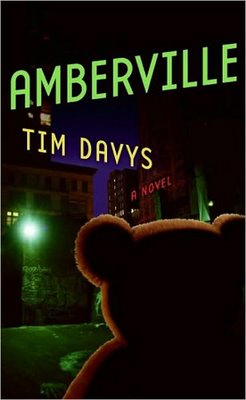
Three New Novels: Brothers, Amberville, and The Post-War Dream

The stack of promo copies and galleys at Biblioklept World Headquarters has built to an unmanageable and untenable tower of tasks that we are simply not up to of late. It’s not like we’re not reading, but we do have a day job! While we do request certain new books from publishers, most of what comes into our esteemed hallows is unsolicited, and a lot of it is honestly pretty dull stuff. However, we have a tidy little pile of new books that we’re going to read in full as soon as we can get to them, and it seems only right to share with our Esteemed Readers in a timely manner.

brothers

First up is Chinese author Yu Hua’s titanic Brothers, the engrossing and often ribald story of two step-brothers, Baldy Li and Song Gang. Brothers moves from the quiet village life of the brothers’ native Liu Town, through the Cultural Revolution, and into China’s contemporary economic and technological boom. At over 600 pages, the novel seemed a bit daunting, but we read the first 50 pages at a steady clip. Honestly, Yu Hua had us at the fourth page, when Baldy Li indulges in a bit of nasty voyeurism in a public restroom. Check the pithy wisdom:

Nowadays women’s bare butts aren’t worth much, since they can be found virtually everywhere. But back then things were different. It used to be that women’s bottoms were a considered a rare and precious commodity that you couldn’t trade for gold or silver or pearls. To see one, you had to go peeping in a public toilet . . .

We’re really enjoying Brothers so far, and the book seems destined to break Yu Hua’s funny and poignant voice to a Western audience. Here’s a pretty cool in-depth profile on Yu Hua by the New York Times. Full of weird vignettes, crude humor, and a frank look at a very different culture, we think this will be one of the highlights of 2009. Brothers is now available in hardback from Pantheon Books.

amberville

We’re not really big fans of detective noir, but Tim Davys’s Amberville seems to do the genre justice despite its big twist–the characters are all stuffed animals. In Davys’s debut novel, dark secrets from Eric Bear’s past come back to haunt him and challenge his legit prominence as a high-powered ad exec. The first two chapters were okay–Davys certainly has his noir tropes and rhythms down–but we had a hard time getting over the stuffed animal conceit. Still, readers who like their noir twisted–or fans of fantasy may get a kick out of Amberville, available now in hardback from HarperCollins.

postwardreampreview

New in paperback next month from Anchor Books, Mitch Cullin’s novel The Post-War Dream tells the story of two retirees in Arizona. After his wife Debra becomes gravely ill, Hollis finally confronts the trauma of his past, rooted in his experiences as a soldier in the Korean War. We have to admit that the plot description sounded a bit…hmmmm… “not our speed” would be a polite way to put it, we suppose (honestly, the idea of reading about an old married retired couple didn’t sound that interesting), but the first three chapters were very good, a bit strange, and intriguing enough to keep us going. Plus the book is dedicated to Howe Gelb–how weird is that? Those unfamiliar with Cullins might know his novel Tideland from its film adaptation a few years ago by Terry Gilliam. Those unfamiliar with Terry Gilliam have our permission to give up.

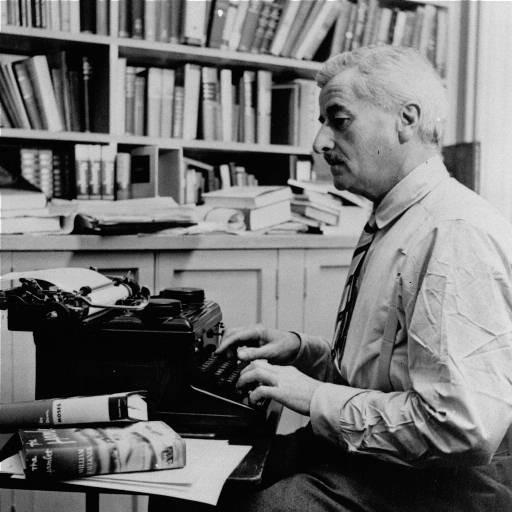
William Faulkner, As I Lay Dying, The Perils of Assigned Reading, and A Call for Second Chances

WKD WILLIAM FAULKNER

Not quite two years ago, I wrote some pretty awful things about William Faulkner on this blog. In a review of his first published novel Sancutary, I argued, quite ineffectually, that, “Faulkner as an American Great is nothing but a scam.” Elsewhere, I proffered this ignorant nugget:

“…it seems that a few critics–notably Malcolm Cowley and Cleanth Brooks–decided either that a. Faulkner is really great and/or b. America needs a new master of literary fiction, and it might as well be Faulkner. It seems amazing to me that these two critics conned a whole generation into believing that someone whose books were so unbelievably poorly written was actually, like, a totally awesome and important writer.”

Ouch. At the time I wrote that rant, I was still in grad school, which is to say I was still being assigned reading by well-intentioned professors. I was also laboring under a cruel miscalculation, the mistaken belief that I had actually read most of Faulkner’s great works–As I Lay Dying, The Sound and the Fury, and Absalom, Absalom!–in my high school and undergraduate courses–where said books were assigned reading. The truth, I realize now, is that while Faulkner’s strange, dense, elliptical prose might have passed under my eyes, I completely failed to read his books when I was a young man. It wasn’t until last spring, when I read one of Faulkner’s last novels, Go Down, Moses, that I came to understand the genius of his writing, which is to say I came to learn to read his voices in a non-academic, non-studied fashion, intuitively and rhythmically. Go Down, Moses is strange and sad and funny and truly an achievement, a book that works as a sort of time machine, an attempt to undo or recover the racial and familial (in Faulkner, these are the same) divides of the past.

So. Skip ahead a year.

After reading Bolaño’s stunning 2666, I strategically read Cormac McCarthy’s Child of God, knowing that I’d need a voice at least equal to Bolaño’s in order to not get totally bummed out and sort of paralyzed with that “What do I read next?” feeling. The strategy worked, but of course I needed a follow up book. So I picked up As I Lay Dying, the story of a poor rural family who labor to return their dead matriarch to her family’s home town for burial. I’d “read” the book in high school; I remembered the plot, but I could not in any way comment on it. This time, with the freedom to choose to read it–and perhaps, older, better equipped–I truly entered the book, entered into each of the character’s heads, their eyes, their voices. I “got” it.

as-i-lay-dying

I read As I Lay Dying in essentially three or four long sittings, sustained by Faulkner’s incomparable, engrossing language. I realize now that as a high school student, and then again as an undergrad, I resisted the book, attempted to impose my own consciousness into the narrative in order to “understand” the plot, rather than letting the book happen to me–which I believe is how one must read Faulkner. I was amazed how quickly I read the book once I attuned myself to Faulkner’s rhythm, and I was equally amazed at how conflicted and confused I felt about the story. I can’t recall a novel whose characters I’ve ever felt so hateful and sympathetic toward at the same time. Great, great book.

Anyway. The point of this post is to say, “Hey, I was wrong, mistaken, terribly wrong about Faulkner when I said he wasn’t a Great American Writer.” I suppose I’m also implicitly arguing that the necessary evil of assigned reading can sometimes be less necessary and more evil: How many kids are we turning away from the really great stuff forever by forcing it upon them when they are too young, too unequipped to appreciate it? The other side of this logic, of course, is to point out that often assigned reading can turn us on to great writers forever; this was the case for me, with most of what I read in high school. Still, as an English teacher I do worry that in assigning and then dissecting literature–under the pretense of explaining it and appreciating it and learning from it–we always run the risk of killing it, draining it of the very vitality that was the rationale for reading it in the first place. Of course, there’s a simple, simple antidote to reconciling yourself to all those books you hated in high school, those books you were supposed to love and be moved by and learn important and meaningful lessons from–you can read them again for the first time. The worst that could happen is a confirmation of your own prejudice; far more likely, in assigning your own reading, you’ll find something truly great and meaningful.

Sum — David Eagleman

sum

In his new book Sum, neuroscientist David Eagleman proposes forty visions of what an afterlife might be. Each of the tales is a short thought-experiment written in the second-person, a rhetorical device that literally engages the reader — the “you” — in the text. Eagleman’s background as a scientist is evident in many of these short tales. In “Giantess,” for example, he asks us to ponder the whole of the universe as a woman with whom we cannot communicate because of our infinitesimal scale in relation to her. In “Conservation,” Eagleman imagines all of time and space and what we know of it as the traces of a single little quark. Elsewhere, technology informs Eagleman’s depictions of the afterlife, as in “Impulse,” where the minutest of human interactions are compared to a massive computer program; in “Great Expectations” a company offers customers the experience of uploading their digitized souls to their own pre-programmed heavens–the customers are devastated when the upload fails and all that they get is regular old heaven. A bummed-out God wrings his hands, saying, “Your fantasies have cursed your realities…The Company offered you no evidence that it would work; why did you believe them?” Still, in this tale, God goes “to bed at night” knowing that “one of His best gifts — the ability to have faith in an unseen hereafter — has backfired.”

Many of Eagleman’s little stories evoke these moods of sad dissatisfaction and disappointment, repeatedly asking the reader to question their own values. And, as the god of “Great Expectations” shows, it’s not just the everyday folk who get their expectations crushed, but often the deities themselves. Take the god of “Mary,” for example. His favorite book is Frankenstein–he loves the end, where Victor Frankenstein flees his own creation. This is a god who can’t help his creation and chooses to run away from it. Particularly sad is “Descent of Species,” wherein the dead get to choose whatever they like to be. The “you” in this tale unfortunately chooses a horse, believing you’ll enjoy freedom–however, as “you” morph into a horse, so does your consciousness, and you realize that “you cannot revel in the simplicity unless you remember the alternatives.”

Not all of the stories in Sum are bummers (and even the downers are thought-provoking)–many play out like jokes or riddles. In the afterlife of “Quantum,” “everything exists in all possible states at once, even states that are mutually exclusive.” When simultaneously “bowling and not bowling” becomes too much for “you,” an angel helps you out by letting you spend some time “in a closed room, one-on-one with your lover.” You find yourself “simultaneously engaged in her conversation and thinking about something else; she both gives herself to you and does not giver herself to you; you find her objectionable and you deeply love her; she worships you and wonders what she might have missed with someone else.” Finally, you thank the angel, saying, “This I’m used to.”

As “Quantum” shows, most of the tales in Sum are ultimately not so much about a metaphysical afterlife as they are about what we value in this world–what are our expectations, desires, hopes, and dreams–and why do we expect, desire, hope, and dream these things? Eagleman is an astute observer of the human condition with a keen insight into our strange animal psychologies. I found his tales about identity to be the most affecting of the lot, like in “Mirrors,” where Eagleman points out that we are “much better at seeing the truth about others than” we are at “seeing ourselves,” and we therefore rely on others to hold up “mirrors” of our selves in order to know our selves. In “Prism,” Eagleman imagines an afterlife where you exist at every age in your life, only to find out that “you” at seventeen really is not “you” at seventy–your “compound identity” was hardly as unified as you’d imagined; rather, it “was like a bundle of sticks from different trees.” If these lines evoke a whiff of the postmodern philosopher, don’t be surprised. While Pantheon lists the book as “Fiction” it seems it would be just as at home in the Philosophy section.

I enjoyed Sum very much, blowing through its 110 pages in just two sittings, and then re-reading several of the tales again–they’re meant to be re-read, I believe. The cover boasts a glowing bit of praise from Philp Pullman, author of the “His Dark Materials” trilogy (a Biblioklept favorite). Fans of Pullman’s trilogy will find many of the same ideas played with in Sum, only handled in quite a different (but no less inventive) manner. This is the kind of science fiction we love. Highly recommended.

Sum is available 2.10.09 from Pantheon Books.

Convicts and Sailors, Yagé and Nutmeg, Seeing Things from a Special Angle, and the Uncut Kick that Opens Out Instead of Narrowing Down: Don’t Try This at Home, Kids

Do you remember when you were like thirteen or fourteen and you read that bit in Naked Lunch about the supposed mind-expanding properties of nutmeg? Nutmeg! Like your mom baked with! Like, readily-available, no questions asked! And then you took it, just like Burroughs indicated, and it made your stomach hurt and gave you a headache (just like he said it would). And nothing else happened. No visions, no enlightenment, nada. Do you remember that? Oh, wait…that wasn’t you? That was someone else? Sorry…

From “Afterthoughts on a Deposition,” an index to Naked Lunch:

Convicts and sailors sometimes have recourse to nutmeg. About a tablespoon is swallowed with water. Results are vaguely similar to marijuana with side effects of headache and nausea. Death would probably supervene before addiction before addiction if such addiction is possible. I have only taken nutmeg once.

There you go, kids. Knock yourselves out. Actually, don’t. Just rent Altered States instead.

Burroughs, of course, was far more interested in yagé, or ayahuasca, a psychoactive preparation of a South American vine. At the end of his spare, funny, first novel Junky, Burroughs writes:

I decided to go down to Colombia and score for yage. … My wife and I are separated. I am ready to move on south and look for the uncut kick that opens out instead of narrowing down like junk.

Kick is seeing things from a special angle. Kick is momentary freedom from the claims of aging, cautious nagging, frightened flesh. Maybe I will find in yage what I was looking for in junk and weed and coke. Yage may be the final fix.

I’ve read Junky a few times and it seems that these lines are strangely half-hopeful and also deeply ironic. Burroughs’s stand-in, narrator William Lee doesn’t get what the writer William Burroughs seems to realize: there is no permanent solution, no “final fix.” Still, Burroughs sure did have some wacky adventures looking for it. Check out this clip from a documentary, apparently called Ayahuasca, narrated by Burroughs (if anyone out there knows anything about this movie, please let us know):

The Unspeakable Mr. Hart and Ah Pook Is Here– William Burroughs/Malcolm McNeill

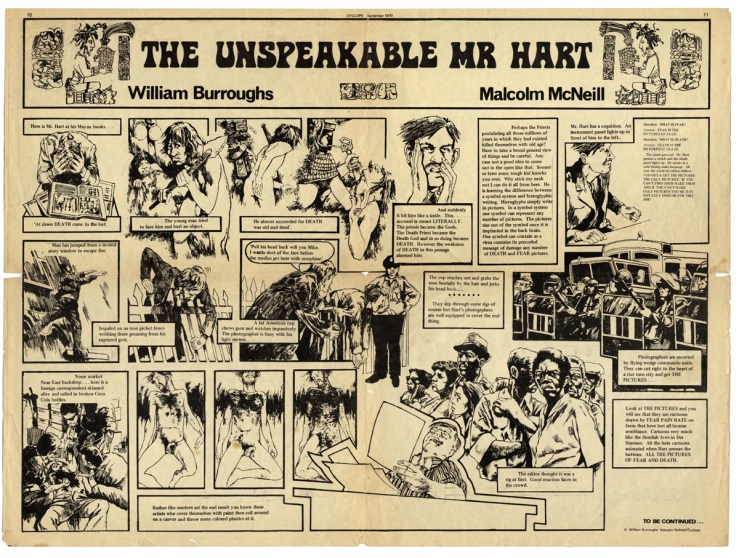
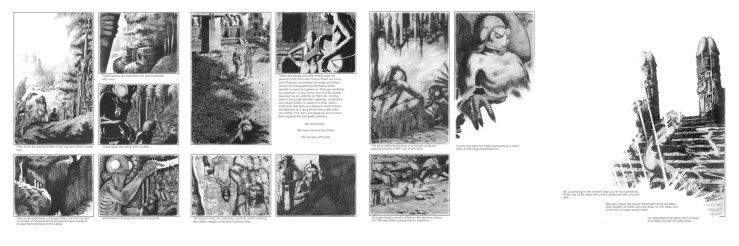
In 1970, William Burroughs was living in London. While there, he collaborated with young English artist Malcolm McNeill on a comic series for a magazine called Cyclops. The series was called The Unspeakable Mr. Hart, and remains uncollected/reprinted to date. Too bad, because it looks like really cool stuff. We got these images via The Virtual Library’s Beats collection, where there’s a really cool interview with McNeill (he discusses Burroughs habit of “going to movies to admire hard-ons and talking about them all afternoon,” which is kinda hilarious):

mcneillmrhart1mcneillmrhart2

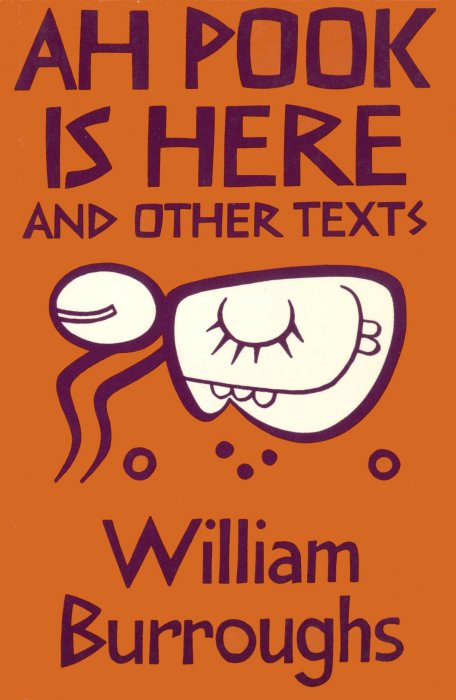
After Cylcops went kaput, Burroughs and McNeill continued the story in a project called Ah Pook Is Here, (a reference to the Mayan death god). Ah Pook Is Here, unfinished, was collected in the early eighties in Ah Pook Is Here and Other Texts which unfortunately is out of print. And very expensive. (Feel free to send it to me, anyone).

ah_pook_is_hereukcalder1979

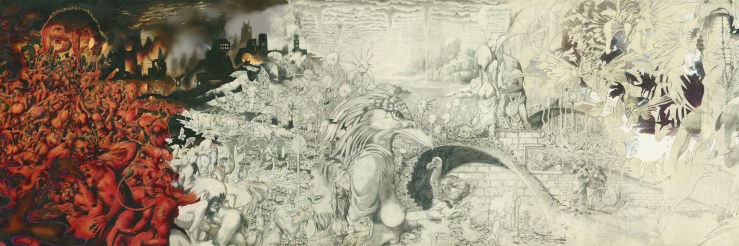
Fortunately, we can at least get a peek at some of McNeil’s hellish art at burroughsmcneillart.com. A few Boschian samples

burroughs_mcneill3

burroughs_mcneill

burroughs_mcneill2

Again, we want this book. Please send us this book. In the meantime, filmmaker Philip Hunt made this 1994 6 minute animated short of Ah Pook Is Here: