Tag: Poetry
We have the right to convey the fictive of any reality at all | Gil Orlovitz
We have the right to convey the fictive of any reality at all–and there is nothing that is not real—by any method we wish, and to have as our goal, if we so opt, only that we maintain the reader’s tension, the solitary indication, itself mercurial, of a work-of-art event.
Syntax being nothing more nor less than the codification of selected usages, we may alter syntax or reject it wholly.
We may compose the fictive in such a manner that the result is ambiguous, baffling and sometimes altogether impossible significantly to paraphrase-but so long as the piece seizes and holds the reader, a basic meaning, impossible to state in language as we know it, has been established, a meaning that belongs to a time series of seizing-and-holding.
The notion, we submit, of clarity, remains simply a notion, real enough, of course, under whatever category it is sub-sumed, but of no universal vigor, necessarily, nor marked by socalled objective truth; clarity is a notion identifying a particular social agreement in a one-to-one sense as to what construct evokes similarity of analysis.
Empirically all that is demonstrable is that we experience as creator or audience a series of perceptions. Now, if we set forth that demonstration in the fictive in such a fashion as to generate and sustain tension in the reader whether or not he is mystified by the significs, we have met the sole possible criterion.
We are not of course here in any way concerned with the alleged scalar values of a given fiction-the notion of value belongs to ad hominen pleaders usually involved in depressing or elevating a status for economic reasons—just as we cannot in any way be concerned with the alleged scalar values of the given reader. Fiction and reader are conjoined, and may not with any sense be disjunct if we are trying to penetrate the nature of the esthetic.
Such being the case, I believe we can with some innocence look at the choices of the contemporary avant-garde herein, and digest them according to our lights or chiaroscuras.
We need remember only how much more we usually discern if we take the trouble, to begin with, to clean our own canvasses-within reason.
—Gil Orlovitz
Gil Orlovitz’s introduction to The Award Avant-Garde Reader (1965).
“Football Weather” — Paul Carroll
“Football Weather”
by
Paul Carroll
As a kid I tried to coax its coming
By sleeping beneath light sheets
Weeks before
The funeral of the summer locusts in the yard;
Then when Granny peeled down the crucifix of
flypaper that dangled from the ceiling of the
kitchen
Magic wasn’t needed any longer
To fill the air with pigskins. The air itself
Acrid, lambent, bright
As the robes of the Chinese gods inside their
house of glass
In the Field Museum by the lake.
Even practice could be fun—
The way, say, even sepia photographs of old-time
All Americans could be pirates’ gold
Like my favorite Bill Corbus, Stanford’s “Baby-
Face Assassin” crouching at right guard, the
last to play without a helmet on—
And the fun of testing muscles out
Like new shoes; the odor of the locker room
pungent
As the inside of a pumpkin;
And the sting of that wet towel twirled against
bare butt by a genial, roaring Ziggy, Mt.
Carmel’s All State tackle from Immaculate
Conception Parish near the mills;
And then the victory, especially the close shaves,
could feel
Like finally getting beneath a girl’s brassiere
She’ll let you keep
Unhooked for hours while you neck
Until the windshield of your Granddad’s Ford V-8
Becomes filled by a fog
Not even Fu Manchu could penetrate. Jack,
Next football weather my son Luke will be in high
school,
Bigger than I was and well-coordinated—but
Couldn’t care a plenary indulgence
If he ever lugs a pigskin down the turf
Or hits a long shot on the court. At times, I wish he
would.
So he might taste the happiness you knew
Snagging Chris Zoukis’ low pass to torpedo nine
long yards to touchdown
And sink archrival Lawrence High
45 years ago come this Thanksgiving Day. Still,
He has his own intensities
As wild as sports and writing were for us:
Luke’s the seventh Rolling Stone,
His electric guitar elegant and shiny black
As a quiet street at night
Glazed by rain and pumpkin frost.
“Proposal” — Denis Johnson
“Proposal”
by
Denis Johnson
The early inhabitants of this continent
passed through a valley of ice two miles deep
to get here, passed from creature to creature
eating them, throwing away the small bones
and fornicating under nameless stars
in a waste so cold that diseases couldn’t
live in it. Three hundred million
animals they slaughtered in the space of two centuries,
moving from the Bering isthmus to the core
of squalid Amazonian voodoo, one
murder at a time; and although in the modern hour
the churches’ mouths are smeared with us
and all manner of pleading goes up from our hearts,
I don’t think they thought the dark and terrible
swallowing gullet could be prayed to.
I don’t think they found the smell of baking
amid friends in a warm kitchen anything to be revered.
I think some of them had to chew the food
for the old ones after they’d lost all their teeth,
and that their expressions
were like those we see on the faces
of the victims of traffic accidents today.
I think they threw their spears with a sense of utter loss,
as if they, their weapons, and the enormous animals
they pursued were all going to disappear.
As we can see, they were right. And they were us.
That’s what makes it hard for me now to choose one thing
over all the others; and yet surrounded by the aroma
of this Mexican baking and flowery incense
with the kitchen as yellow as the middle
of the sun, telling your usually smart-mouthed
urchin child about the early inhabitants
of this continent who are dead, I figure
I’ll marry myself to you and take my chances,
stepping onto the rock
which is a whale, the ship which is about to set sail
and sink
in the danger that carries us like a mother.
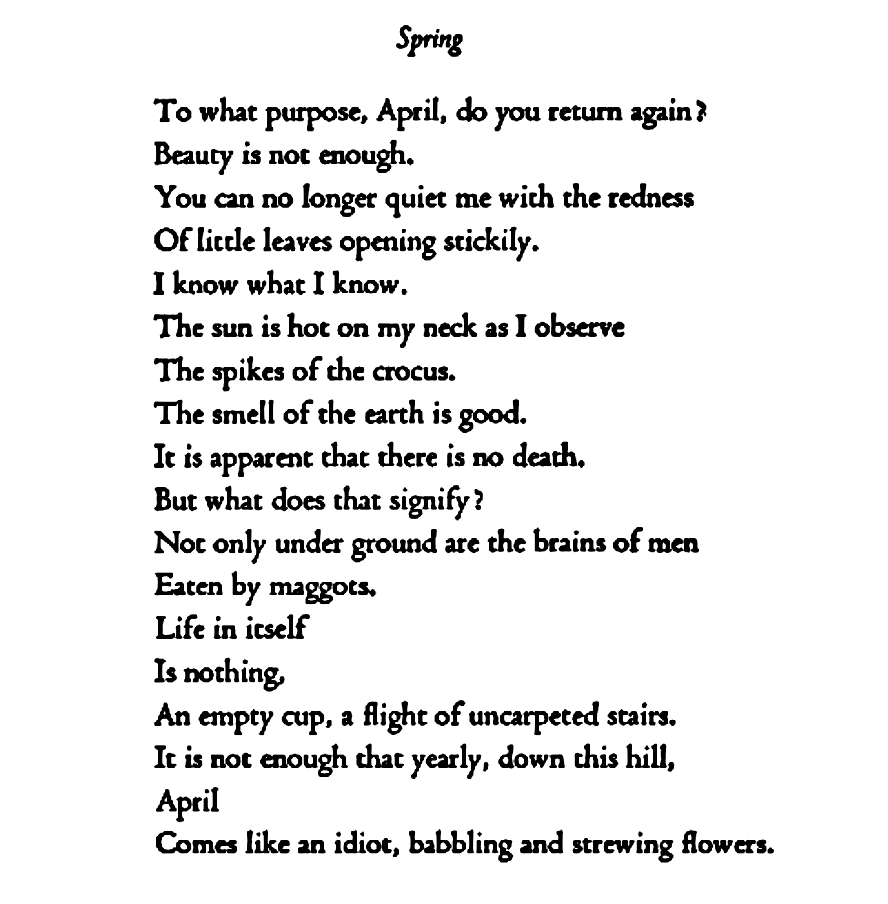
April comes like an idiot, babbling and strewing flowers | Edna St. Vincent Millay

“Five Dream Units” — David Berman
Five Dream Units:
1. Knock the frog
2. Kick it out
3. Push it through
4. Cranial amphibian
5. Forget the happening
6. Your head/furnace
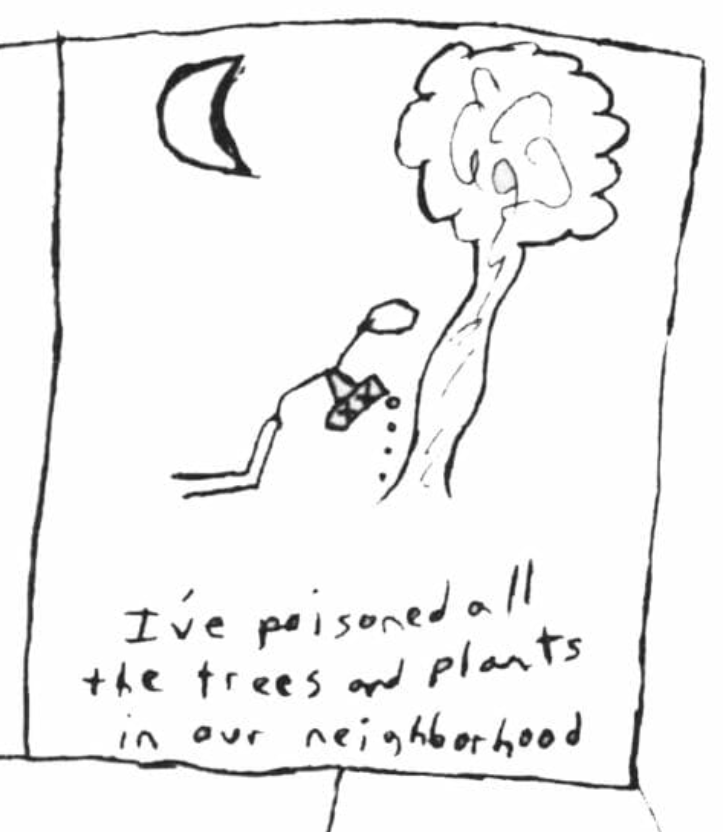
From “Riot in the Eye” by David Berman

Responsibilities | Grace Paley
It is the responsibility of society to let the poet be a poet
It is the responsibility of the poet to be a woman
It is the responsibility of the poets to stand on street corners giving out poems and beautifully written leaflets also leaflets they can hardly bear to look at because of the screaming rhetoric
It is the responsibility of the poet to be lazy, to hang out and prophesy
It is the responsibility of the poet not to pay war taxes
It is the responsibility of the poet to go in and out of ivory towers and two-room apartments on Avenue C and buckwheat fields and Army camps
It is the responsibility of the male poet to be a woman
It is the responsibility of the female poet to be a woman
It is the poet’s responsibility to speak truth to power, as the Quakers say
It is the poet’s responsibility to learn the truth from the powerless
It is the responsibility of the poet to say many times: There is no freedom without justice and this means economic justice and love justice
It is the responsibility of the poet to sing this in all the original and traditional tunes of singing and telling poems
It is the responsibility of the poet to listen to gossip and pass it on in the way storytellers decant the story of life
There is no freedom without fear and bravery. There is no freedom unless earth and air and water continue and children also continue
It is the responsibility of the poet to be a woman, to keep an eye on this world and cry out like Cassandra, but be listened to this time.
From Grace Paley’s 1986 essay “Poetry and the Women of the World.” Collected in Just as I Thought.
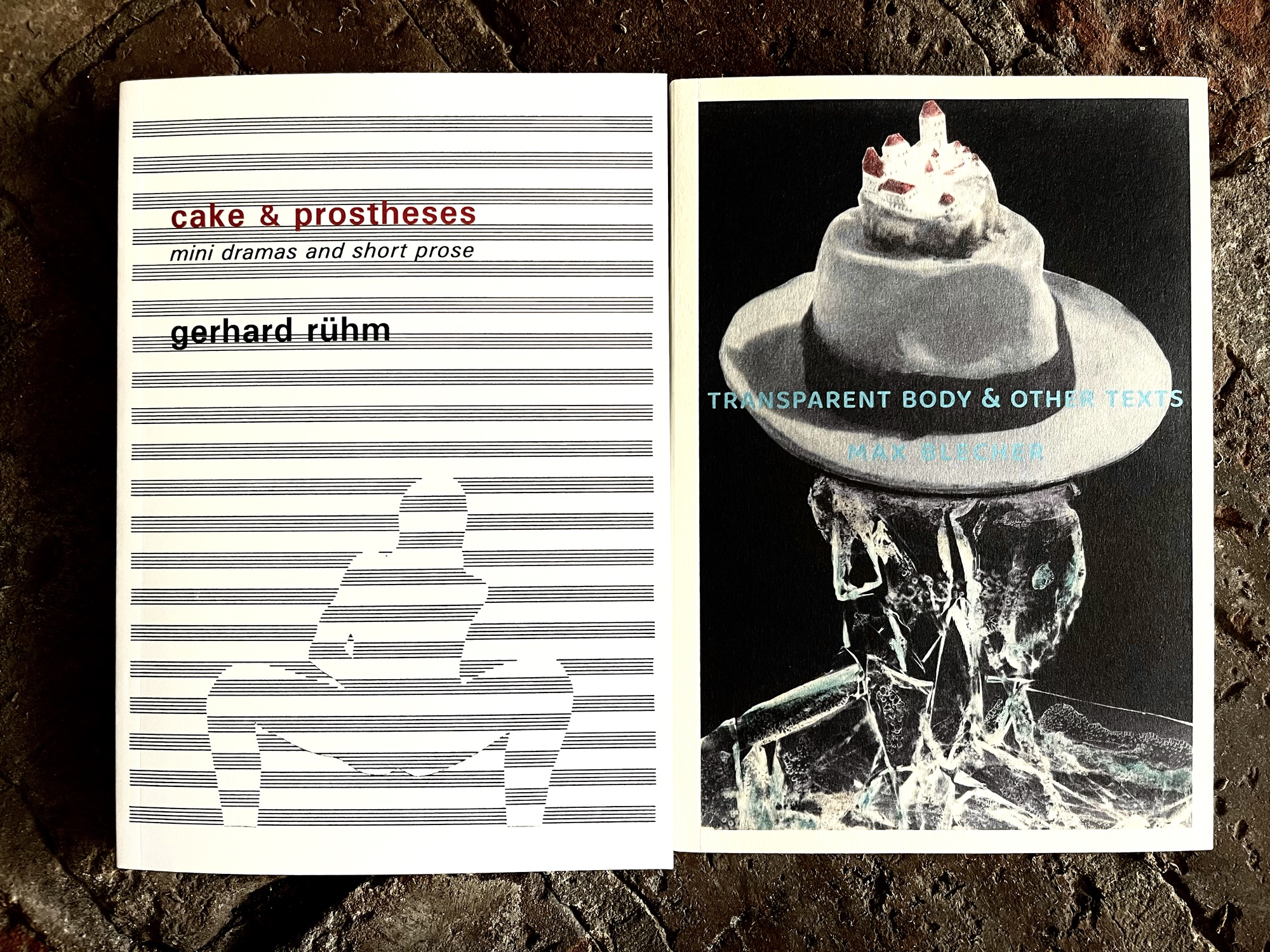
Gerhard Rühm’s Cake & Prostheses/Max Blecher’s Transparent Body (Books acquired 11 Jan. 2024)

I was quite excited earlier this week to get a pair of books in new English translations from the Czech publisher Twisted Spoon Press.
I started in on Gerhard Rühm’s Cake & Prostheses (translated from the German by Alexander Booth) late last night and kept reading and reading, greedily consuming the surreal, poetic “mini dramas” as thought experiments played out in my head. Here’s an early example of one:
practiced biblical saying
catechist : love thy neighbor as thyself.
exegete: i hate myself! (gives the former a hard hook to the chin tho crumples him to the floor).
I’ll admit I didn’t know of Gerhard Rühm, but I’m enjoying Cake & Prostheses and hope to muster a review in the next week or so. Here’s Twisted Spoon’s blurb:
An inveterate experimenter with image and text and music, Gerhard Rühm is truly one of the major figures of the postwar European avant-garde. Yet reprehensibly little of his work has appeared in English. This edition brings together a selection of his work spanning the past seven decades, displaying a wide thematic range (as he has remarked, “there is nothing that cannot become part of one’s poetic universe”) and ingenious combinations of music, pornography, banality, humor, and mythology. The first section comprises “mini dramas,” the text often combined with images and musical notation to create sensorial episodes, the expression of a singular aesthetic perception. The second section is a wry deconstruction of Grillparzer’s play Hero and Leander that juxtaposes original passages with images from a swimming manual and with a more contemporary erotic retelling of the mythological tale. The final section presents 24 short prose pieces: 12 from the early 1950s and 12 from the past few years.
I had heard of the surrealist Romanian poet Max Blecher, but am still largely unfamiliar with his work. Twisted Spoon is publishing his 1934 collection Transparent Body along with some, uh, other texts, in a translation by Gabi Reigh. Blurb:
Blecher’s very first book, the poetry collection Transparent Body, appeared in 1934, in a limited edition for bibliophiles. Yet general recognition as one of the most inventive European writers of his day came only with the publication of two of his three “novels” a few years later. And then he died, at the age of twenty-eight. But since 1930 Blecher had been publishing his poetry, short prose, essays, critiques, and other texts in the leading Romanian periodicals, some even appearing in important French publications, such as Le Surréalisme au service de la révolution. In addition, the past half century has seen the posthumous first publication of many texts in a variety of Romanian editions.
Transparent Body & Other Texts brings together Blecher’s entire output of poetry and short prose, from the earliest texts published during his lifetime to those appearing for the first time only recently. They range from stories in the vein of his fantastical, hallucinatory longer work to aphorisms, reportage, and notebook fragments. The volume also includes a selection of his correspondence with such major figures of Romanian interwar modernism as Geo Bogza, Ilarie Voronca, and Saşa Pană to give a fuller picture of Blecher’s engagement with the avant-garde and literary life even as his health was progressively deteriorating over the course of the 1930s.
William Carlos Williams’ fried onion on rye bread with beer
“To Be Hungry Is to Be Great”
by
William Carlos Williams
The small, yellow grass-onion,
spring’s first green, precursor
to Manhattan’s pavements, when
plucked as it comes, in bunches,
washed, split and fried in
a pan, though inclined to be
a little slimy, if well cooked
and served hot on rye bread
is to beer a perfect appetizer——
and the best part
of it is they grow everywhere.
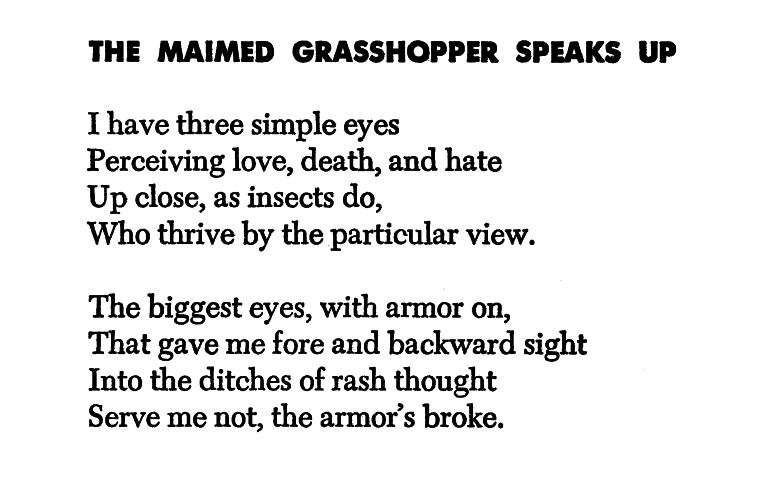
“The Maimed Grasshopper Speaks Up” — Jean Garrigue
There is no universal Poetry | Adrienne Rich
I hope never to idealize poetry—it has suffered enough from that. Poetry is not a healing lotion, an emotional massage, a kind of linguistic aromatherapy. Neither is it a blueprint, nor an instruction manual, nor a billboard. There is no universal Poetry anyway, only poetries and poetics, and the streaming, intertwining histories to which they belong. There is room, indeed necessity, for both Neruda and César Vallejo, for Pier Paolo Pasolini and Alfonsina Storni, for Audre Lorde and Aimé Césaire, for both Ezra Pound and Nelly Sachs. Poetries are no more pure and simple than human histories are pure and simple. Poetry, like silk or coffee or oil or human flesh, has had its trade routes. And there are colonized poetics and resilient poetics, transmissions across frontiers not easily traced.
From Adrienne Rich’s Plenary Lecture at the Conference on Poetry and Politics, University of Stirling, Scotland, 13 July 2006. Collected in Essential Essays.
“Before I got my eye put out” — Emily Dickinson
“Before I got my eye put out”
by
Emily Dickinson
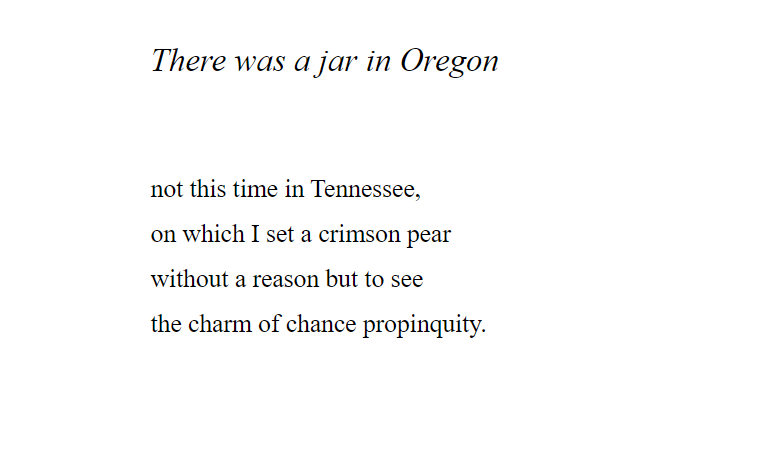
“There Was a Jar in Oregon” — Ursula K. Le Guin

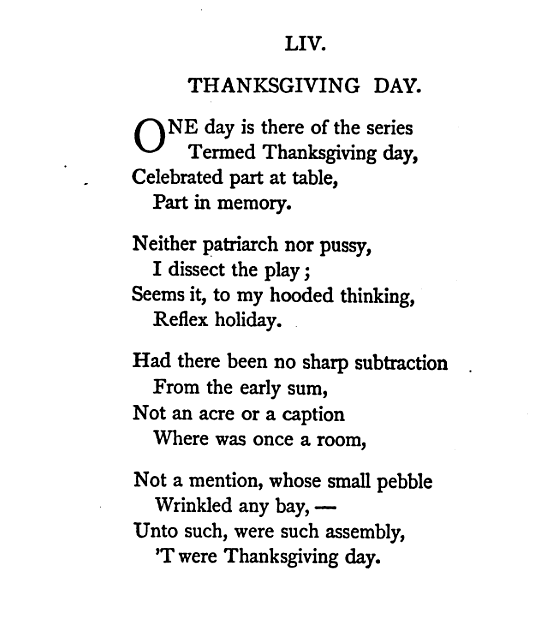
“One day is there of the series / Termed Thanksgiving day” — Emily Dickinson

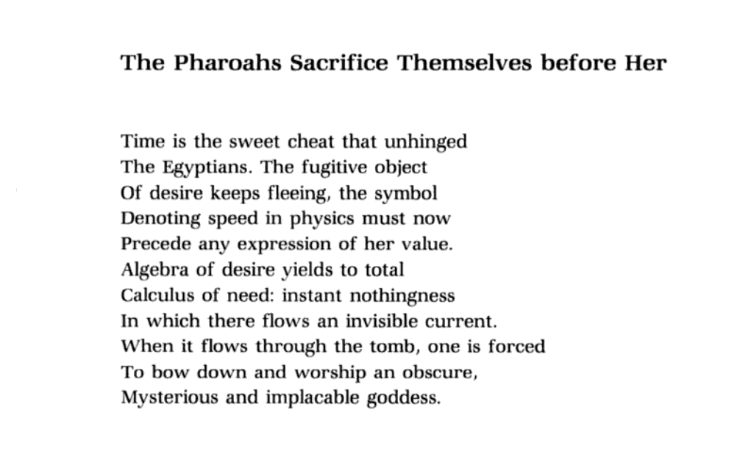
“The Pharaohs Sacrifice Themselves before Her” — Tom Clark

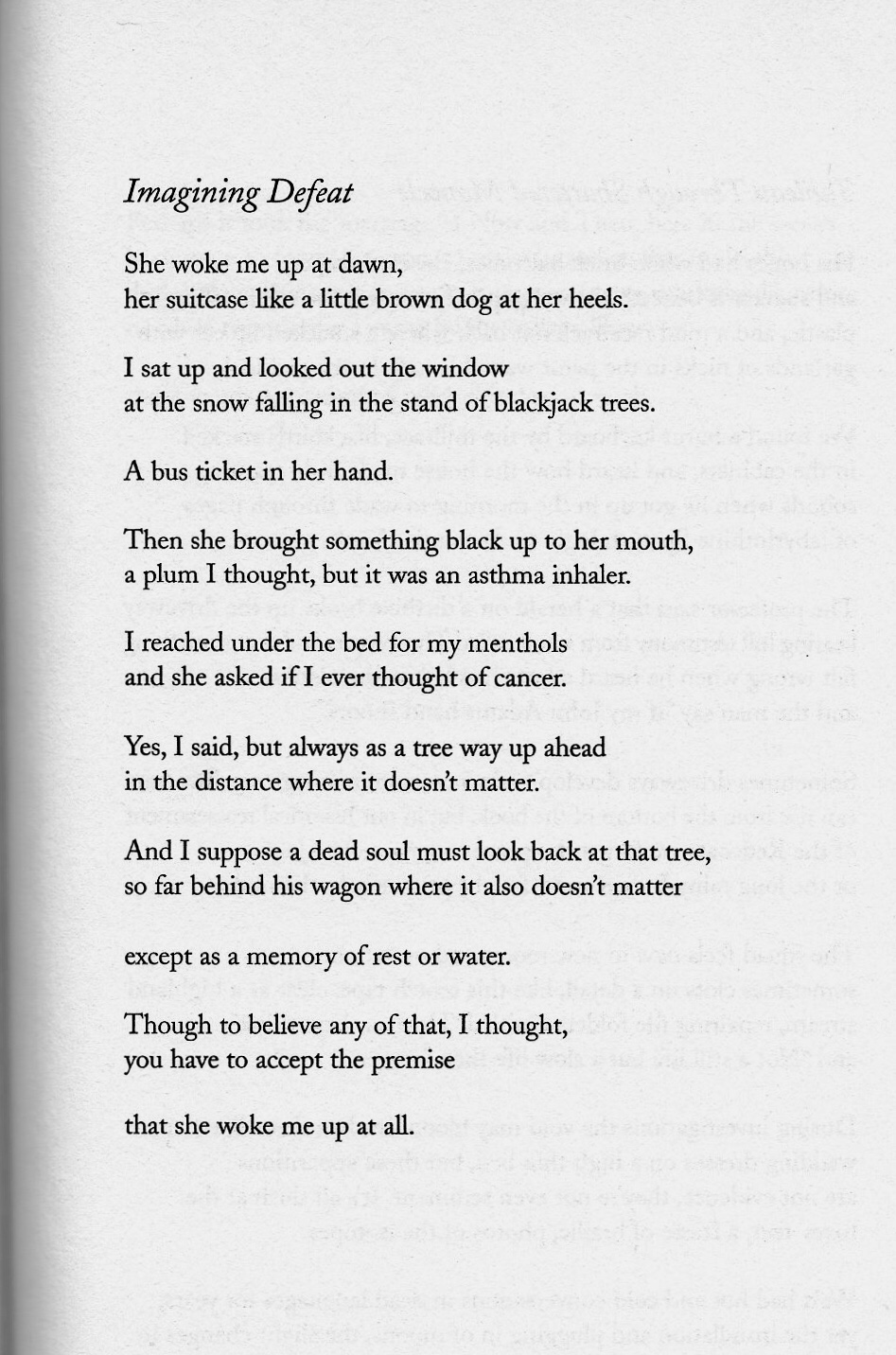
“Imagining Defeat” — David Berman

From Actual Air (Open City, 1999)
“The Surgeon General’s Report on Waiting” — David Berman
“The Surgeon General’s Report on Waiting”
by
David Berman
The situation in my country is this. Our poor love our rich, and our wives adore our wife-beaters.
It’s sad, yes, but let’s not talk about it. Even the subject of sadness will make us sad.
Here’s something else we do. In my country, when we’re waiting for someone who is very late, we stand at the meeting spot and smoke cigarette after cigarette. Then, when we die, we blame everybody who kept us waiting.