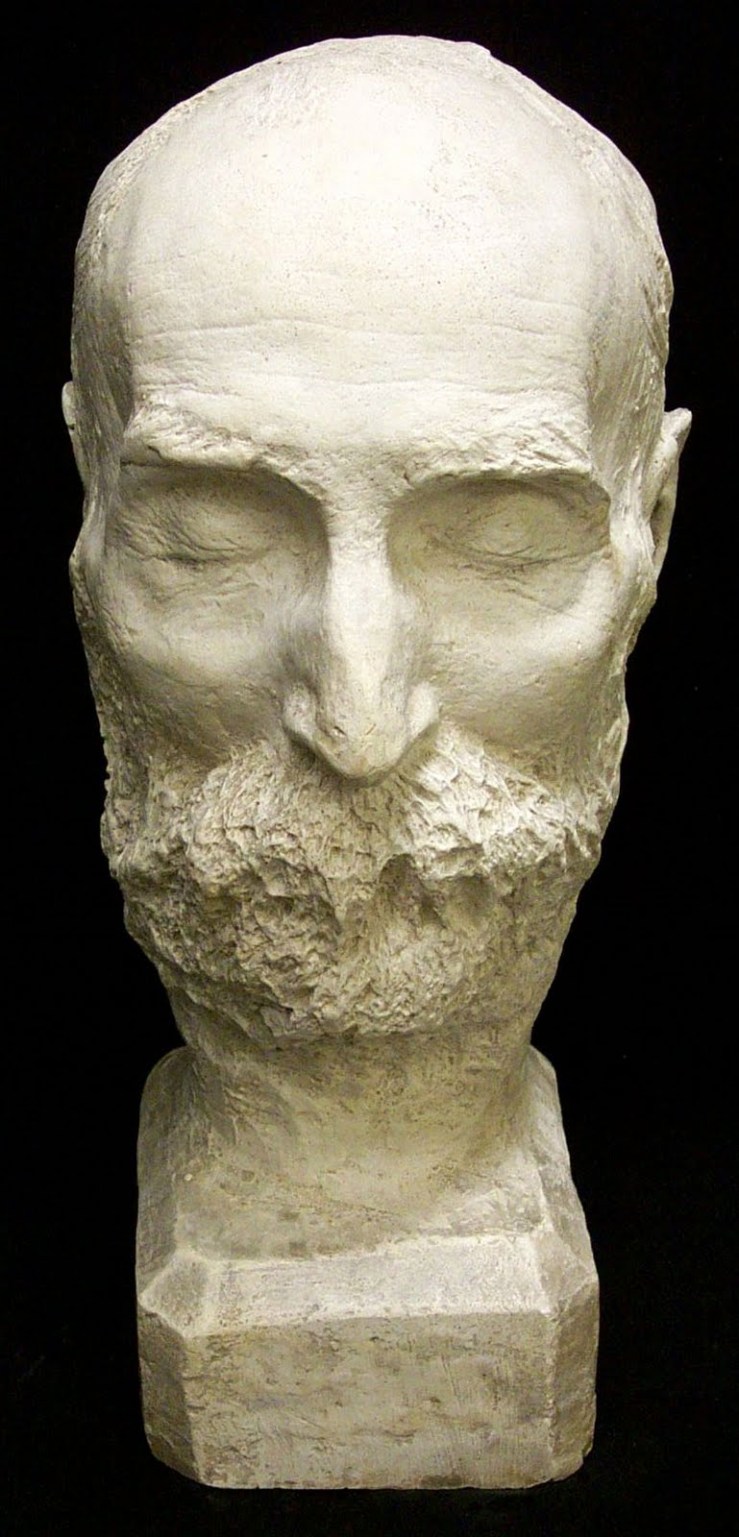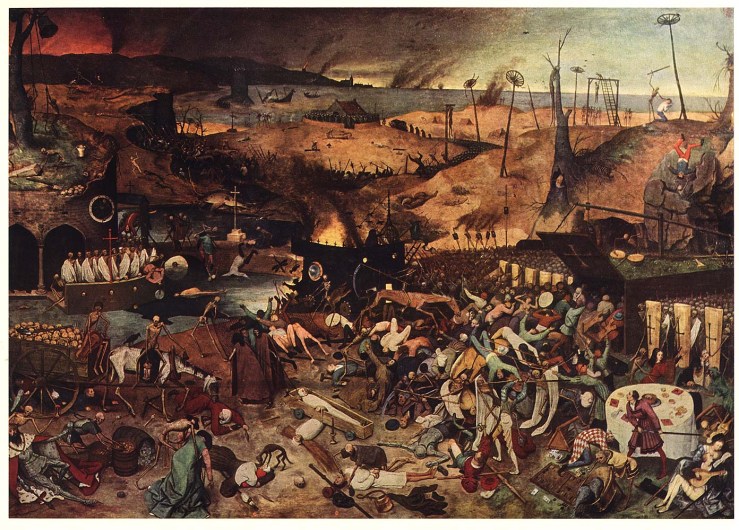
“Death Mask” — Edward Field

“Death Mask,” a poem by Edward Field

“Old age is the most unexpected
of all the things that happen to a man.”
–Leon Trotsky.

“Do not let me hear
Of the wisdom of old men, but rather of their
folly,
Their fear…”
–“East Coker,” by T.S. Eliot

1

In the mirror now,
what I see
reminds me
I won’t be here forever.

I don’t feel like
that face at all.
Inside it, I protest,
I’m quite different.

It’s somebody’s grandfather,
not me.

Whose grandfather is that?
I don’t want him.

2

Ah, memory, memory….

terrible,

to be losing

the words.

3

How do you get from here to there-
I mean, from where I am
to the nursing home?
In a snap of the fingers,
the blink of an eye.

Like my mother said,
as she was being loaded
into the ambulance,
It went so fast.

4

Life
a lazy buzz,
then
the quick sting.

A long inward breath,
then
the sudden
exhaling.

Allen Ginsberg Talks to Neal Cassady

“At the Entering of the New Year” — Thomas Hardy

“At the Entering of the New Year” by Thomas Hardy–

I
(OLD STYLE)

Our songs went up and out the chimney,
And roused the home-gone husbandmen;
Our allemands, our heys, poussettings,
Our hands-across and back again,
Sent rhythmic throbbings through the casements
On to the white highway,
Where nighted farers paused and muttered,
“Keep it up well, do they!”

The contrabasso’s measured booming
Sped at each bar to the parish bounds,
To shepherds at their midnight lambings,
To stealthy poachers on their rounds;
And everybody caught full duly
The notes of our delight,
As Time unrobed the Youth of Promise
Hailed by our sanguine sight.

II
(NEW STYLE)

We stand in the dusk of a pine-tree limb,
As if to give ear to the muffled peal,
Brought or withheld at the breeze’s whim;
But our truest heed is to words that steal
From the mantled ghost that looms in the gray,
And seems, so far as our sense can see,
To feature bereaved Humanity,
As it sighs to the imminent year its say:—

“O stay without, O stay without,
Calm comely Youth, untasked, untired;
Though stars irradiate thee about
Thy entrance here is undesired.
Open the gate not, mystic one;
Must we avow what we would close confine?
With thee, good friend, we would have converse none,
Albeit the fault may not be thine.”

December 31. During the War


“A Song for New Year’s Eve” — William Cullen Bryant

“A Song for New Year’s Eve” by William Cullen Bryant–

Stay yet, my friends, a moment stay—
Stay till the good old year,
So long companion of our way,
Shakes hands, and leaves us here.
Oh stay, oh stay,
One little hour, and then away.

The year, whose hopes were high and strong,
Has now no hopes to wake;
Yet one hour more of jest and song
For his familiar sake.
Oh stay, oh stay,
One mirthful hour, and then away.

The kindly year, his liberal hands
Have lavished all his store.
And shall we turn from where he stands,
Because he gives no more?
Oh stay, oh stay,
One grateful hour, and then away.

Days brightly came and calmly went,
While yet he was our guest;
How cheerfully the week was spent!
How sweet the seventh day’s rest!
Oh stay, oh stay,
One golden hour, and then away.

Dear friends were with us, some who sleep
Beneath the coffin-lid:
What pleasant memories we keep
Of all they said and did!
Oh stay, oh stay,
One tender hour, and then away.

Even while we sing, he smiles his last,
And leaves our sphere behind.
The good old year is with the past;
Oh be the new as kind!
Oh stay, oh stay,
One parting strain, and then away

“The Old Year” — John Clare

John Clare’s poem “The Old Year”—

The Old Year’s gone away
To nothingness and night:
We cannot find him all the day
Nor hear him in the night:
He left no footstep, mark or place
In either shade or sun:
The last year he’d a neighbour’s face,
In this he’s known by none.

All nothing everywhere:
Mists we on mornings see
Have more of substance when they’re here
And more of form than he.
He was a friend by every fire,
In every cot and hall–
A guest to every heart’s desire,
And now he’s nought at all.

Old papers thrown away,
Old garments cast aside,
The talk of yesterday,
Are things identified;
But time once torn away
No voices can recall:
The eve of New Year’s Day
Left the Old Year lost to all.

“A Christmas Greeting” — Walt Whitman

“A Christmas Greeting” by Walt Whitman

Welcome, Brazilian brother–thy ample place is ready;
A loving hand–a smile from the north–a sunny instant hall!
(Let the future care for itself, where it reveals its troubles,
impedimentas,
Ours, ours the present throe, the democratic aim, the acceptance and
the faith;)
To thee to-day our reaching arm, our turning neck–to thee from us
the expectant eye,
Thou cluster free! thou brilliant lustrous one! thou, learning well,
The true lesson of a nation’s light in the sky,
(More shining than the Cross, more than the Crown,)
The height to be superb humanity.

So Much Depends on the Hideous William Carlos Williams Tattoo

(Via).

“A Thanksgiving Prayer” — William S. Burroughs

“To Bertholt Brecht” — William Meredith

“To Bertholt Brecht” by William Meredith— 

I’ve heard that you said, when a scene you had revised
Still didn’t suit a man you used to know,
“But I am not Kafka!” What artist hasn’t sized
Himself in the dwindling lacquer row
Of chinese dolls that, with no loss of face,
Can be out back inside one another now
And only a fool quarrel about his place.
There are such ranks; and yet I quarrel with
Those who have put a price on mere despair,
Ranking a man as he can fetch up death
And senselessness, and finding you famous so.
You called your foe by name: a naive faith.
It is a naive disillusion, everywhere
Fudging the good and bad, we must call foe.
The truth is hidden as cunningly from one
Time as another; what they change is the decoys,
And it takes a wily man to use the gun.
I think you would not be fooled by our bully-boys
Who say, “As Brecht said, I live in an age of blood.”
You might stop with an oath their shrill, untimely noise:
Evil is nothing until it touches good.

“The Discharged Soldier” — William Wordsworth

“The Discharged Soldier” is William Wordsworth’s moving poem about the pain of a war veteran returning home.

No living thing appeared in earth or air,
And, save the flowing water’s peaceful voice,
Sound there was none–but, lo! an uncouth shape,
Shown by a sudden turning of the road,
So near that, slipping back into the shade
Of a thick hawthorn, I could mark him well,
Myself unseen. He was of stature tall,
A span above man’s common measure, tall,
Stiff, lank, and upright; a more meagre man
Was never seen before by night or day.
Long were his arms, pallid his hands; his mouth
Looked ghastly in the moonlight: from behind,
A mile-stone propped him; I could also ken
That he was clothed in military garb,
Though faded, yet entire. Companionless,
No dog attending, by no staff sustained,
He stood, and in his very dress appeared
A desolation, a simplicity,
To which the trappings of a gaudy world
Make a strange back-ground. From his lips, ere long,
Issued low muttered sounds, as if of pain
Or some uneasy thought; yet still his form
Kept the same awful steadiness–at his feet
His shadow lay, and moved not. From self-blame
Not wholly free, I watched him thus; at length
Subduing my heart’s specious cowardice,
I left the shady nook where I had stood
And hailed him. Slowly from his resting-place
He rose, and with a lean and wasted arm
In measured gesture lifted to his head
Returned my salutation; then resumed
His station as before; and when I asked
His history, the veteran, in reply,
Was neither slow nor eager; but, unmoved,
And with a quiet uncomplaining voice,
A stately air of mild indifference,
He told in few plain words a soldier’s tale–
That in the Tropic Islands he had served,
Whence he had landed scarcely three weeks past;
That on his landing he had been dismissed,
And now was travelling towards his native home.
This heard, I said, in pity, “Come with me.”
He stooped, and straightway from the ground took up
An oaken staff by me yet unobserved–
A staff which must have dropped from his slack hand
And lay till now neglected in the grass.
Though weak his step and cautious, he appeared
To travel without pain, and I beheld,
With an astonishment but ill suppressed,
His ghostly figure moving at my side;
Nor could I, while we journeyed thus, forbear
To turn from present hardships to the past,
And speak of war, battle, and pestilence,
Sprinkling this talk with questions, better spared,
On what he might himself have seen or felt.
He all the while was in demeanour calm,
Concise in answer; solemn and sublime
He might have seemed, but that in all he said
There was a strange half-absence, as of one
Knowing too well the importance of his theme,
But feeling it no longer. Our discourse
Soon ended, and together on we passed
In silence through a wood gloomy and still.
Up-turning, then, along an open field,
We reached a cottage. At the door I knocked,
And earnestly to charitable care
Commended him as a poor friendless man,
Belated and by sickness overcome.
Assured that now the traveller would repose
In comfort, I entreated that henceforth
He would not linger in the public ways,
But ask for timely furtherance and help
Such as his state required. At this reproof,
With the same ghastly mildness in his look,
He said, “My trust is in the God of Heaven,
And in the eye of him who passes me!”

The cottage door was speedily unbarred,
And now the soldier touched his hat once more
With his lean hand, and in a faltering voice,
Whose tone bespake reviving interests
Till then unfelt, he thanked me; I returned
The farewell blessing of the patient man,
And so we parted. Back I cast a look,
And lingered near the door a little space,
Then sought with quiet heart my distant home.

“Self Portrait at Twenty Years” — Roberto Bolaño

“Self Portrait at Twenty Years,” a poem by Roberto Bolaño, from Laura Healy’s translation of The Romantic Dogs

I set off, I took up the march and never knew
where it might take me. I went full of fear,
my stomach dropped, my head was buzzing:
I think it was the icy wind of the dead.
I don’t know. I set off, I thought it was a shame
to leave so soon, but at the same time
I heard that mysterious and convincing call.
You either listen or you don’t, and I listened
and almost burst out crying: a terrible sound,
born on the air and in the sea.
A sword and shield. And then,
despite the fear, I set off, I put my cheek
against death’s cheek.
And it was impossible to close my eyes and miss seeing
that strange spectacle, slow and strange,
though fixed in such a swift reality:
thousands of guys like me, baby-faced
or bearded, but Latin American, all of us,
brushing cheeks with death.

“Some Demon’s Mistress, Or the Demon’s Self” — From Keats’s Lamia

John Keats’s long poem Lamia (or “Lamia,” I suppose) is a fantastic supernatural romance narrative. Give it a read–like Twilight, only, y’know, good

She was a gordian shape of dazzling hue,
Vermilion-spotted, golden, green, and blue;
Striped like a zebra, freckled like a pard,
Eyed like a peacock, and all crimson barr’d;
And full of silver moons, that, as she breathed,
Dissolv’d, or brighter shone, or interwreathed
Their lustres with the gloomier tapestries–
So rainbow-sided, touch’d with miseries,
She seem’d, at once, some penanced lady elf,
Some demon’s mistress, or the demon’s self.
Upon her crest she wore a wannish fire
Sprinkled with stars, like Ariadne’s tiar:
Her head was serpent, but ah, bitter-sweet!
She had a woman’s mouth with all its pearls complete:
And for her eyes: what could such eyes do there
But weep, and weep, that they were born so fair?
As Proserpine still weeps for her Sicilian air.
Her throat was serpent, but the words she spake
Came, as through bubbling honey, for Love’s sake,
And thus; while Hermes on his pinions lay,
Like a stoop’d falcon ere he takes his prey.

You can read the whole poem here.

Goethe’s Death Mask

John Keats’s Death Mask

“Ballad of Birmingham” — Dudley Randall

“Ballad of Birmingham” by Dudley Randall

(On the bombing of a church in Birmingham, Alabama, 1963)

“”Mother dear, may I go downtown
Instead of out to play,
And march the streets of Birmingham
In a Freedom March today?”

“No, baby, no, you may not go,
For the dogs are fierce and wild,
And clubs and hoses, guns and jails
Aren’t good for a little child.”

“But, mother, I won’t be alone.
Other children will go with me,
And march the streets of Birmingham
To make our country free.”

“No baby, no, you may not go
For I fear those guns will fire.
But you may go to church instead
And sing in the children’s choir.”

She has combed and brushed her night-dark hair,
And bathed rose petal sweet,
And drawn white gloves on her small brown hands,
And white shoes on her feet.

The mother smiled to know that her child
Was in the sacred place,
But that smile was the last smile
To come upon her face.

For when she heard the explosion,
Her eyes grew wet and wild.
She raced through the streets of Birmingham
Calling for her child.

She clawed through bits of glass and brick,
Then lifted out a shoe.
“O, here’s the shoe my baby wore,
But, baby, where are you?”

Learn more about the September 15th, 1963 terrorist attack in Birmingham, Alabama.

Walt Whitman’s Death Mask

Read more about Walt Whitman’s death mask here. Read Whitman’s poem “Starting from Paumonak,” where he claims “I will show that nothing can happen more beautiful than death.”

Bill Murray Reads Emily Dickinson (and Other Poets)

Bill Murray reads poems by Billy Collins, Lorine Niedecker, and Emily Dickinson to the workers who built the Poets House literary center in museum. The applause after “I dwell in possibility” is golden.