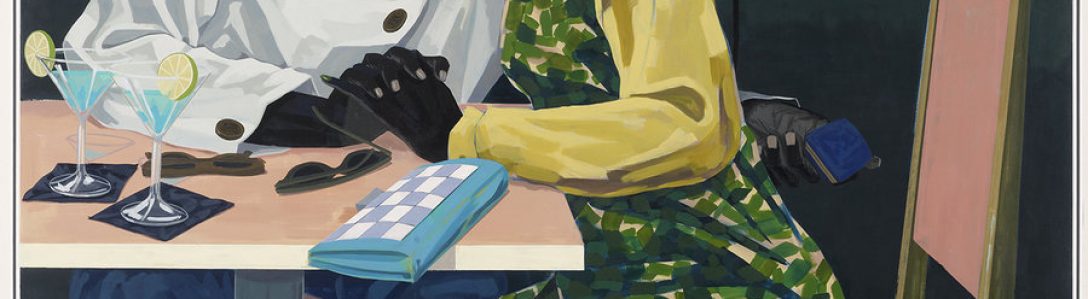
Bill Murray reads poems by Billy Collins, Lorine Niedecker, and Emily Dickinson to the workers who built the Poets House literary center in museum. The applause after “I dwell in possibility” is golden.
Tag: Poetry
“Two Views of a Cadaver Room” — Sylvia Plath
(1)
The day she visited the dissecting room
They had four men laid out, black as burnt turkey,
Already half unstrung. A vinegary fume
Of the death vats clung to them;
The white-smocked boys started working.
The head of his cadaver had caved in,
And she could scarcely make out anything In that rubble of skull plates and old leather.
A sallow piece of string held it together. In their jars the snail-nosed babies moon and glow.
He hands her the cut-out heart like a cracked heirloom.
(2)
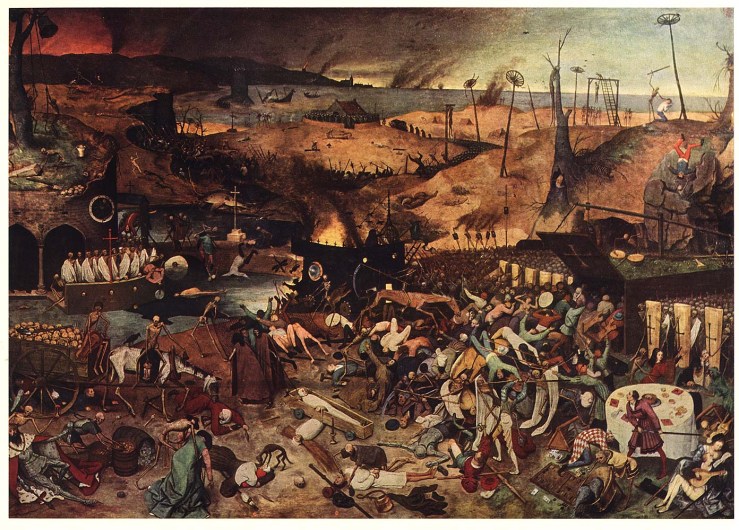
In Brueghel’s panorama of smoke and slaughter
Two people only are blind to the carrion army:
He, afloat in the sea of her blue satin
Skirts, sings in the direction Of her bare shoulder, while she bends,
Finger a leaflet of music, over him, Both of them deaf to the fiddle in the hands
Of the death’s-head shadowing their song.
These Flemish lovers flourish; not for long.
Yet desolation, stalled in paint, spares the little country
Foolish, delicate, in the lower right hand corner.

“Fast Anchor’d Eternal O Love!” — Walt Whitman
FAST-ANCHOR’D eternal O love! O woman I love!
O bride! O wife! more resistless than I can tell, the thought of
you!
Then separate, as disembodied or another born,
Ethereal, the last athletic reality, my consolation,
I ascend, I float in the regions of your love O man,
O sharer of my roving life.
Bright Star — Campion Does Keats

So I finally got around to watching Jane Campion’s Bright Star last night, a film that quietly studies the final years of Romantic poet John Keats and his relationship with Fanny Brawne. When Keats moves next door to the Brawnes, eldest daughter Fanny, a talented seamstress and flighty flirt, soon becomes intrigued by the poet. Keats, with his love for beauty and truth, represents a world of greater depth than the wits and dandies who usually attempt to court Brawne. Their relationship is, of course, doomed from the outset. Perpetually broke Keats doesn’t have the moolah or means to properly engage Brawne in marriage, but that doesn’t stop the pair from undertaking a furtive, pensive love affair, carried out in long walks on the heath and passionate letters. Oh, and Keats gets sick and dies at 25. That shouldn’t be a spoiler if you’ve studied your Romantics properly, now should it?
Both Abbie Cornish who plays Brawne and Ben Whishaw who plays Keats are excellent in their understatement and reserve, but the standout turn in the movie comes from actor Paul Schneider (from NBC’s Parks & Recreation) who plays Keats’s bankrolling friend Charles Armitage Brown. Brown is a lesser poet whose love and envy of Keats leads him to vex Brawne and Keats’s love at every turn, plaguing them with doubt, and that enemy of Romance, Reason. Schneider invests his character with a boorish charm that never veers into the rote tropes that afflict modern romance film. It’s emblematic of the Campion’s film in a way: Bright Star has every opportunity to devolve into a mundane exercise in doomed romance or a stuffy period piece, but under Campion’s delicate care it manages to match the depth of its subject matter.
Campion wrote the screenplay, presumably using letters from the principals as her primary source. She honors her viewers’ intelligence — far too rare these days — by never cobbling her plot together with easy exposition or forced narrative developments, and it’s that sense of history that lends the film authenticity. Cornish’s Brawne is a protagonist whose personality transformations read as real, and Whishaw’s Keats is never a cartoonish mystic or a moody caricature, but a fully-drawn human. Campion also has the good judgment to let her cinematography convey her story, letting gorgeous shots of the English countryside and cloistered chambers alike convey the mood and rhythm of her story. At times, Bright Star‘s beautiful camerawork recalls Terrence Malick, another director who allows film to “happen” to the viewer as an evocative experience rather than a spoon-feeding. Campion also shows considerable restraint with the film’s wonderful score, never allowing it to color a scene unduly when her actors can do a great job on their own. Bright Star avoids all of the pitfalls that might afflict a period piece, and does a far better job handling the subject of Romantic poetry than a movie has any right to. The film is hardly for everyone (sorry guys, no Jason Statham), but it’s very, very good. Recommended.
“little tree” — e.e. cummings

little tree
little silent Christmas tree
you are so little
you are more like a flower
who found you in the green forest
and were you very sorry to come away?
see i will comfort you
because you smell so sweetly
i will kiss your cool bark
and hug you safe and tight
just as your mother would,
only don’t be afraid
look the spangles
that sleep all the year in a dark box
dreaming of being taken out and allowed to shine,
the balls the chains red and gold the fluffy threads,
put up your little arms
and i’ll give them all to you to hold
every finger shall have its ring
and there won’t be a single place dark or unhappy
then when you’re quite dressed
you’ll stand in the window for everyone to see
and how they’ll stare!
oh but you’ll be very proud
and my little sister and i will take hands
and looking up at our beautiful tree
we’ll dance and sing
“Noel Noel”
Lucinella — Lore Segal
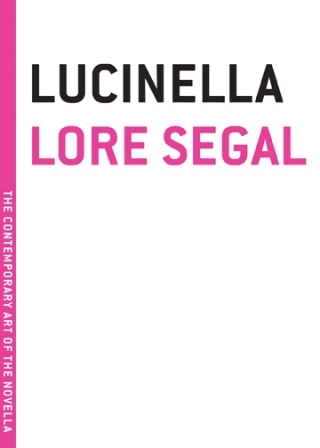
The story of a group of poets and critics in the late 60s/early 70s NYC should not be so fun or rewarding. From its first page, Lore Segal’s novella Lucinella invents itself as a scathing satire of writers and would-be writers. Segal’s book paradoxically reveres its subject matter, a back-biting and insular literati; and yet at the same time it exposes their solipsistic, narcissistic, cannibalistic shortcomings. These are not particularly generous people, but they are somehow endearing.
Lucinella takes first-person authority to tell the story–and boy does she take authority, bending reality, reason, and narrative cohesion to fit her whim. Lucinella is a poet (a minor poet, perhaps), and Lucinella is very much a poetic action, an act of creation in thirteen parts. The story begins with our (utra-)self-conscious heroine at the idyllic artists’ retreat Yaddo, where she’s ostensibly trying to compose a poem about a root cellar but really just having a grand ole time with a host of notable intellectuals, the poets and critics who will populate the book. “I will make up an eye here, borrow a nose or two there, and a mustache and something funny someone said and a pea-green sweater, so it’s no use your fitting you keys into my keyholes, to try and figure out who’s who,” Lucinella tells us. No worries, Lucinella, we had no idea who, if anyone, your Betterwheatling and Winterneet and Meyers were based on–heck, it took us a few pages to figure out that your Zeus was, um, y’know, that Zeus.
Segal’s (or Lucinella’s) inventions work within a hyperbolic schema set to slow burn. Describing a fellow poet of greater renown:
This Winterneet walking beside me has walked beside Roethke, breakfasted with Snodgrass and Jarrell–with Auden! Frost is his second cousin; he went to school with Pound, traveled all the way to Ireland once, to have tea with Yeats, and spent the weekend with the Matthew Arnolds. He remembers Keats threw up on his way from anatomy; Winterneet says he admires Wordsworth’s poetry, but couldn’t stand the man.
This is pretty much Lucinella‘s program: plausibly esoteric literary references running amok into sublimely surrealistic sketches. If you don’t like that, take your sense of humor to its doctor. Lucinella’s time at the haven of Yaddo is soon up, and she must return to the monster of Manhattan, where young poet William (despite his too-thin neck) shows up at her doorstep to fall in love and eventually marry her. The two attend every literary party, where they feel alternately bedazzled, thrilled, or–mostly–slighted. William, composer of a never-quite-finished epic about Margery Kempe, takes his snubs especially hard, even when he’s being celebrated (and published). We weren’t there, but it seems that Segal evokes her Manhattanite milieu with painterly (or perhaps cartoonly) accuracy. Really, the infighting intellectuals are reminiscent of poseurs and scenesters of any time and place. Lucinella and William go to parties, throw parties, complain about parties, and throw fits like children when they don’t get invited to parties. It’s all very real and very silly and very funny. In one (literally) fantastic set-piece (okay, the whole book might be a fantasy set-piece), Lucinella meets Old Lucinella and Young Lucinella at a party, giving her an(other) opportunity to critique herself. “There’s old Lucinella, the poet,” says one character. “She hasn’t written much in these last years. Used to be good in a minor way” comes the nonchalant reply. Young Lucinella fares no better, although she does manage an affair with William (don’t worry, Lucinella proper hooks up with Zeus in one of the book’s strangest flights of fancy).
The real seduction, as Lucinella points out at a party (of course), is her attempt to seduce her reader into a trenchant unreality that the poets and critics pretend is reality even as they bemoan the reality that their addiction to unreality is their main reality. Yeah. It’s all a bit surreal, and it all comes to a head quite pointedly twice in the novel. The first unmasking occurs at a symposium where the group holds forth on weighty matters – “Why Read?” – “Why Write?” – “Why Publish?” The house lights come up to reveal our fretting poets addressing an empty hall. Even in 1970, no one cares about reading and writing and publishing. And it’s not just the symposium–when Lucinella hosts a party for her pal Betterwheatling, who’s just published a collection of a criticism, she’s shocked to realize as the party dwindles that, not only has she not read his new book, she’s never read anything he’s written. But that’s not all: “I can tell, with the shock of a certitude, by the set of the line of Betterwheatling’s jaw, by the way his hair falls into his forehead, that Betterwheatling has never read a line I have written either and I flush with pain.” Betterwheatling’s punishment: “I’ll never invite him to another party!” Ahhh . . . the petulance. Oh, all the backstabbing and perceived slighting and posing and posturing leads up to an apocalyptic climax, complete with a proper de-invention of Lucinella. It’s all really great.
If Lucinella is light on plot–which we don’t really think it is, despite its slim build, light weight, and 150 or so pages–it’s big on ideas and even bigger on voice. Lucinella is kinda like that crazy art chick you knew in college who was always working on some project that never quite came to fruition, and her cohorts are just the sort of mad loonies you spend time alternately ducking calls from or hoping to run into at a party (depending on your mood). Her evocation of the youthful excitement and nascent romance of poetry reminds us of some of Roberto Bolaño‘s work, particularly the joyful jocularity of Garcia Madero’s section of The Savage Detectives (Segal’s volume is in no short supply of exclamations points). The book builds to a massive millennial climax, a hodgepodge of social consciousness movements and poetry and block party–a moveable feast of paranoia and art and possibility and good clean fun, and, more than anything else, the death-sentences we impose upon ourselves. But we’re overextending our review. Let’s just say that the book is great, and if you love books that both simultaneously mock and valorize the creative process, you’ll probably dig Lucinella’s metafictional tropes. Highly recommended.
Lucinella is in print again for the first time since the 1970s thanks to indie stronghold Melville House Publishing.
“The Old Flame” — Robert Lowell

Listening to Robert Lowell read his poem “The Old Flame” is way better than just reading it yourself. Really.
“Saturday’s Child” — Countee Cullen
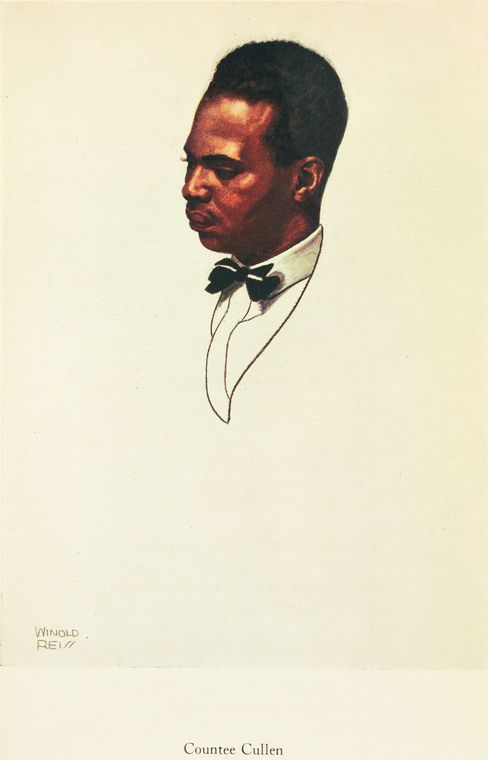
We’d never read this poem until earlier today when a student brought it to our attention. We love all the double-edged wordplay, the caustic tone, and the recontextualization of a Mother Goose classic. Great stuff.
“Saturday’s Child” by Countee Cullen–
Some are teethed on a silver spoon,
With the stars strung for a rattle;
I cut my teeth as the black racoon–
For implements of battle.Some are swaddled in silk and down,
And heralded by a star;
They swathed my limbs in a sackcloth gown
On a night that was black as tar.For some, godfather and goddame
The opulent fairies be;
Dame Poverty gave me my name,
And Pain godfathered me.For I was born on Saturday–
“Bad time for planting a seed,”
Was all my father had to say,
And, “One mouth more to feed.”Death cut the strings that gave me life,
And handed me to Sorrow,
The only kind of middle wife
My folks could beg or borrow.
No Poets Don’t Own Words
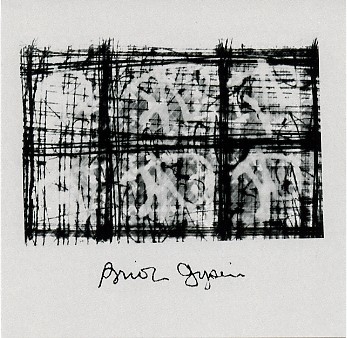
“No Poets Don’t Own Words” from Brion Gysin’s Recordings 1960-1981. A very cool record, featuring lots of tape manipulation, cut-ups, poetry, and interviews with Gysin on a variety of subjects including censorship, surrealism, and art. We like it much. Much we like. It. Like much it we.
Langston Hughes Reads Three Poems
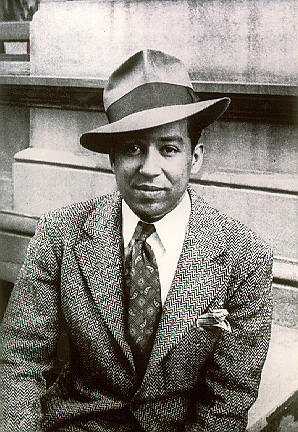
Renaissance man Langston Hughes reads three of his poems–
“Mulatto”
Also, read one of our favorite Hughes poems, “I, Too, Sing America” (a response, we believe, to Walt Whitman’s “I Hear America Singing” (Elizabeth Alexander’s inauguration poem, “Praise Song for the Day” seems to respond to both of these poems))–
I, too, sing America.
I am the darker brother.
They send me to eat in the kitchen
When company comes,
But I laugh,
And eat well,
And grow strong.Tomorrow,
I’ll be at the table
When company comes.
Nobody’ll dare
Say to me,
“Eat in the kitchen,”
Then.Besides,
They’ll see how beautiful I am
And be ashamed–I, too, am America.
William S. Burroughs/John Giorno

Look at these guys! I kind of have to have this record. If you have a copy, go ahead and send it to me. No? Okay, what about uploading the tracks somewhere as mp3s? No? Okay…
Image and LP info via Brainwashed.
William S. Burroughs/John Giorno (1975), GPS 006-007
William Burroughs
1. “103rd Street Boys” from Junkie 2. excerpt from Naked Lunch 3. “From Here To Eternity” from Exterminator 4. excerpt from Ah Pook Is Here 5. “The Chief Smiles” from Wild Boys 6. “The Green Nun” 7. excerpt from Cities Of The Red Night
John Giorno 8. “Eating Human Meat”
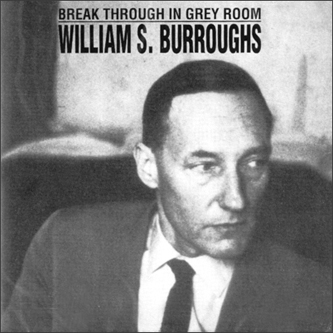
And so as not to just beg for mp3s but to also give, check out Burroughs explaining how tape manipulation helps to expand conciousness in “Origin and Theory of the Tape,” and get horrified by an example of said technique with “Present Time Exercises,” both from Break Through in Grey Room, a collection of Burroughs’s tape experiments and speeches (not to mention a dash of Ornette Coleman freaking freestyle in Morocco).
“Praise Song for the Day” — Elizabeth Alexander
“Praise Song for the Day” by Elizabeth Alexander (Obama 2009 inaugural poem)
Praise song for the day.
Each day we go about our business, walking past each other, catching each others’ eyes or not, about to speak or speaking. All about us is noise. All about us is noise and bramble, thorn and din, each one of our ancestors on our tongues. Someone is stitching up a hem, darning a hole in a uniform, patching a tire, repairing the things in need of repair.
Someone is trying to make music somewhere with a pair of wooden spoons on an oil drum with cello, boom box, harmonica, voice.
A woman and her son wait for the bus.
A farmer considers the changing sky; A teacher says, “Take out your pencils. Begin.”
We encounter each other in words, words spiny or smooth, whispered or declaimed; words to consider, reconsider.
We cross dirt roads and highways that mark the will of someone and then others who said, “I need to see what’s on the other side; I know there’s something better down the road.”
We need to find a place where we are safe; We walk into that which we cannot yet see.
Say it plain, that many have died for this day. Sing the names of the dead who brought us here, who laid the train tracks, raised the bridges, picked the cotton and the lettuce, built brick by brick the glittering edifices they would then keep clean and work inside of.
Praise song for struggle; praise song for the day. Praise song for every hand-lettered sign; The figuring it out at kitchen tables.
Some live by “Love thy neighbor as thy self.”
Others by first do no harm, or take no more than you need.
What if the mightiest word is love, love beyond marital, filial, national. Love that casts a widening pool of light. Love with no need to preempt grievance.
In today’s sharp sparkle, this winter air, anything can be made, any sentence begun.
On the brink, on the brim, on the cusp — praise song for walking forward in that light.
Whitman Hearts Tebow

Liquefied Brain So Backs, It

When Biblioklept’s Chief Science Reporter Nicky Longlunch sent us this article about coked-up bees from The New York Times, we knew we had to give it the old Dada treatment, or in this case, the new Dada treatment. In 1920, Tristan Tzara gave the following directions:
TO MAKE A DADAIST POEM
Take a newspaper.
Take some scissors.
Choose from this paper an article of the length you want to make your poem.
Cut out the article.
Next carefully cut out each of the words that makes up this article and put them all in a bag.
Shake gently.
Next take out each cutting one after the other.
Copy conscientiously in the order in which they left the bag.
The poem will resemble you.
And there you are—an infinitely original author of charming sensibility, even though unappreciated by the vulgar herd.
Of course, scissors and cutting and actual papers and bags can be messy and tiresome, not to mention terribly old fashioned. Luckily for us, there’s a hypertext version, and we used this Dada poem generator to make our own poem out of the NYT article. Here is our poem:
liquefied brain so backs, it
liquefied brain so backs, it
scientists Australia dropped freebase cocaine
freebase liquefied brain so in
in Australia freebase cocaine bees’
circulatory backs, dropped it brain
freebase on bees’ backs, so
much judgment, their behavior makes
like stimulates their behavior and
humans much their enthusiastic them
much humans cocaine judgment, their
much like alters their their
react bees makes like enthusiastic
its odor exhibit plummets syrup
exhibit coked-up bee cold turkey
bees symptoms stop test of
bee its score standard test
turkey its test associate syrup
exhibit turkey test of bee
The real article’s actually kinda sorta better. Try this (any of it) at home.
The Savage Detectives — Roberto Bolaño

I give up. I don’t know how to review The Savage Detectives.
Everyone told me I was supposed to love this book, but I didn’t. There, that’s a review. Not a good review, but there. I can’t remember a book ever taking me so long to finish or a book that I put down so often. When I truly love a book, I am moved. Often physically. Sometimes I have to stand up to read a book, I’m so moved. That’s a good book. (I never had to stand up during The Savage Detectives, although I often had to force myself to read thoroughly and not just skim). When I truly love a book, I’m a little sad and deflated when it’s over. I know a book is great if I’m compelled to go back and immediately reread sections. (Again, with Detectives, this didn’t happen). But it looks like I’m trashing the book. I shouldn’t. It has a lot going for it.
I read the first 140 pages, the journal entries of young Garcia Madero, in a blur. Funny and passionate, Madero’s voice explodes with the immediacy and intensity of youth. He joins up with the visceral realists, a group of anti-establishment poets (who no one cares about). Led by two enigmatic outsiders, Ulises Lima and Arturo Belano, the visceral realists gripe about the state of Mexican and Latin American literature, screw around, and argue with each other (no one else will listen to them). Madero paints Mexico City in the mid-1970s as vibrant, a place full of poetry and art. He becomes a biblioklept, God bless him (yet he ethically agrees not to steal from a poor old blind bookseller). He writes poems. He has sex. He runs away from home, sort of. There’s a breathless energy to Madero’s narrative that makes the book hard to put down, and the first section of The Savage Detectives, “Mexicans Lost in Mexico” culminates in one of the book’s most exciting events. Madero, Lima, and Belano help a young girl named Lupe escape from her belligerent pimp. Then, that portion of the story unresolved, the narrative shifts dramatically.
In the second section, “The Savage Detectives,” we are treated to, or subjected to, or made to endure, or made to navigate–pick your verb, please–over 450 pages of (one-sided) interviews spanning 20 years. Some of the interviewees appear consistently throughout this section, like Amadeo Salvatierra, who helps Lima and Belano in their quest to find the lost original visceral realist, Cesárea Tinajero. Other voices only pop up once to tell a weird story about Lima or Belano–or more accurately, a weird story about themselves with Lima or Belano playing bit parts. Some of these stories, like Lima’s strange time in a Tel Aviv prison, or Belano’s tenure as a national park guard in France are great; other times they are painfully tedious or repetitive (you know, like real life).
Technically, The Savage Detectives is quite an achievement. The myriad stories in the book’s main section represent the fragmented narratives that might compose a person’s life–a series of perspectives that others have about us, views that can never add up to a unified truth. The bulk of these stories are very much about poetry, art, and travel. Like Joyce’s Ulysses, Detectives is a peripatetic novel, full of specific locations and very, very explicit directions (Joyce famously claimed that were Dublin destroyed in a catastrophe, it could be rebuilt based on his novel; the same seems true for Bolaño’s Mexico City). Also like Ulysses, Detectives is an epic about the banal, ordinary things that fill our lives: jobs and eating and getting to places and having one’s friendships sour and being disappointed and so on. Lots and lots of “and so on.” This isn’t to say that there aren’t moments of heroism and adventure–saving kids from satanic caves, stow-away sea voyages, and dodging bullets from Liberian rebels make for interesting narrative peaks. However, most of the novel remains rooted in a realism that is often dreadfully visceral in its painstaking replication of just how depressing a life could be. As the seventies and eighties turn into the nineties, things get more bleak and more depressing for Lima and Belano. And it all adds up to an incomplete picture (literally; check out the last page of the book if you don’t believe me).

By the time we return to Madero’s journals in the third and final part of the novel, “The Sonora Desert,” the sadness and deflation of the previous section infects and tints every aspect of the narrative. Lima and Belano, with Madero and Lupe in tow, search desperately for the forgotten poet Cesárea Tinajero. Their search works as a pitiful parallel to “The Savage Detectives” section, a comment on the elusive nature of identity, and the strange disappointments that punctuate our expectations. Even the novel’s climactic ending seems understated after the monolithic middle section. And while this deflationary technique is undoubtedly a carefully considered conceit on Bolaño’s part, the payoff for the reader–this reader anyway–did not merit the effort and concentration that the book required. Or, to put it another way, after hours of time invested, I was unmoved.
As rave reviews of the English translation of his last novel 2666 begin seeping out of the critical woodwork (this month’s Harper’s has devoted a full four pages to the book), it seems that Bolaño will top most critics’ lists again this year. At over 900 pages and reportedly full of grim, bleak violence, it’s hard to imagine 2666 will be any easier to get through, and as FS&G summarily ignored our requests for a review copy, there’s no pressing obligation, I suppose. The critical praise heaped on 2666 this year will surely lead interested readers to The Savage Detectives. I think Mark Twain’s infamous note at the beginning of The Adventures of Huckleberry Finn would provide the best warning to these potential readers: “Persons attempting to find a motive in this narrative will be prosecuted; persons attempting to find a moral in it will be banished; persons attempting to find a plot in it will be shot.” While no serious critic could dismiss Bolaño’s lyrical skill and complex control of the many voices that populate Detectives, I think a number of readers–serious readers–would not be wrong for considering the tome a bit overrated.
A Desolation, A Simplicity, to Which the Trappings of a Gaudy World Make a Strange Back-ground

In Section IV of his Prelude, William Wordsworth evokes the most moving encounter with a veteran of war that I have ever read. At first reticent to be anything but a voyeur, the narrator (Wordsworth, in all likelihood), slips “into the shade/ Of a thick hawthorn” to spy on the “meagre man” with a “ghastly” mouth “in military garb” resting on a “mile-stone.” As the poor ex-soldier, “Companionless,” begins to issue “low muttered sounds, as if of pain / Or some uneasy though,” the narrator shakes his “heart’s specious cowardice” and hails the veteran as a human being, asking for his story. It turns out that the guy is slowly–and with great difficulty–returning to his “native home.” Wordsworth takes the veteran to a nearby friend’s house for companionship and rest, before returning to his own home in a contemplative mood. Full text of the “Discharged Soldier” episode after the jump–
A Swordless Conflict
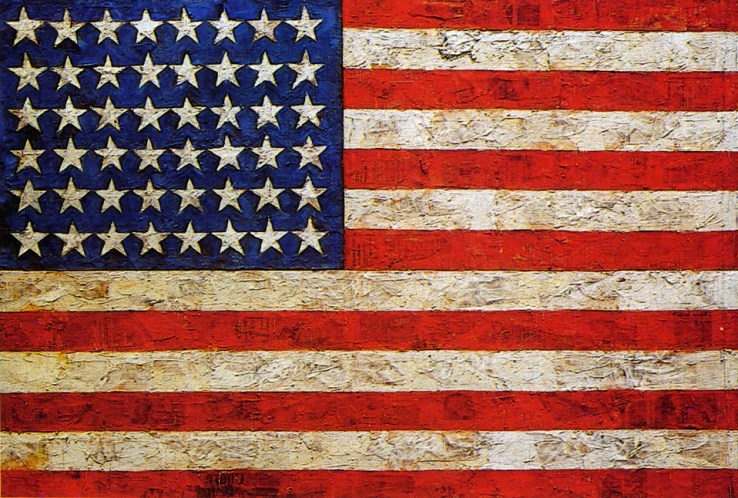
“Election Day, November, 1884” by Walt Whitman
If I should need to name, O Western World, your powerfulest scene and
show,
‘Twould not be you, Niagara–nor you, ye limitless prairies–nor
your huge rifts of canyons, Colorado,
Nor you, Yosemite–nor Yellowstone, with all its spasmic
geyser-loops ascending to the skies, appearing and disappearing,
Nor Oregon’s white cones–nor Huron’s belt of mighty lakes–nor
Mississippi’s stream:
–This seething hemisphere’s humanity, as now, I’d name–the still
small voice vibrating–America’s choosing day,
(The heart of it not in the chosen–the act itself the main, the
quadriennial choosing,)
The stretch of North and South arous’d–sea-board and inland–
Texas to Maine–the Prairie States–Vermont, Virginia, California,
The final ballot-shower from East to West–the paradox and conflict,
The countless snow-flakes falling–(a swordless conflict,
Yet more than all Rome’s wars of old, or modern Napoleon’s:) the
peaceful choice of all,
Or good or ill humanity–welcoming the darker odds, the dross:
–Foams and ferments the wine? it serves to purify–while the heart
pants, life glows:
These stormy gusts and winds waft precious ships,
Swell’d Washington’s, Jefferson’s, Lincoln’s sails.

