Happy Days — Samuel Beckett (2000 Filmed Production)

Moby-Dick: A Short Riff on a Long Book

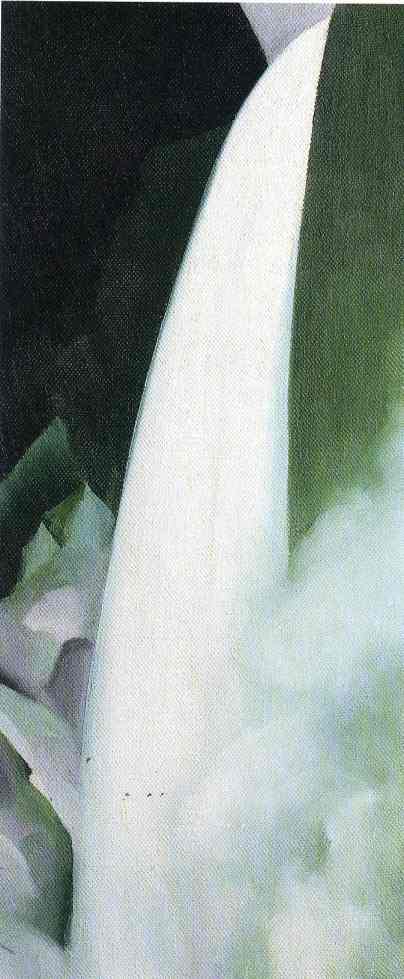
Green and White, Georgia O'Keeffe
Green and White, Georgia O’Keeffe

1. Prompted by Call Me Ishmael, Charles Olson’s marvelous study of Moby-Dick, I took a fifth trip through Melville’s massive opus this past month.

2. Every time I read Moby-Dick it seems funnier and sadder. Richer. Thicker.

3. I cobbled together my reading over different media and spaces: I listened to William Hootkins‘ outstanding unabridged audiobook version, and then reread on my Kindle key passages I’d mentally underlined; I then checked those passages against the copy of Moby-Dick I annotated the hell out of in grad school.

As I read, I posted some of my favorite excerpts on this blog.

4. I posted some of my favorite excerpts of Moby-Dick here on Biblioklept because I knew that I wouldn’t be able to write about the book—not really—that I wouldn’t be able to handle all of its language. (My riff on Olson’s book obsesses over Olson’s ability to write after Melville and Melville’s ability to write after Shakespeare).

5. Really, in posting so many fragments of Moby-Dick, I suppose that I’ve attempted to abrogate any kind of critical duty to describe the book under discussion in terms of its own language.

6. Point 5 is really a way of saying: Moby-Dick, like any sublime work of literature, is a self-defining, self-describing, and even self-deconstructing text.

7. Or, another way of making such a claim:

Let me (mis)appropriate Samuel Beckett’s description of Finnegans Wake and contend that the description fits Moby-Dick just as aptly:

Here form is content, content is form. You complain that this stuff is not written in English. It is not written at all. It is not to be read – or rather it is not only to be read. It is to be looked at and listened to. His writing is not about something, it is that something itself.

8. So here circumnavigate back to my own recent reading and auditing of the book:

Hootkins’ audio recording would make a great starting point for anyone (unnecessarily) daunted by Melville’s big book. He performs the book, commanding his audience’s attention. He unpacks the humor that might otherwise hide from untuned 21st century ears; he communicates the book’s deep, profound sorrow. His Ishmael is perceptive, clever, generous. His Stubb, hilarious. His Ahab a strange philosophical terror.

After listening to Hootkins on my commute, I’d return to key passages on my Kindle, and then finally review the notes I wrote in the cheap hardback Signet edition I read in grad school.

But why bring this up?

9. I don’t know.

Maybe: Unpacking Moby-Dick is too hard, too much—would require its own book, a book that would cite the entirety of Melville’s book.

But discussing the book this way seems a disservice to potential readers; it’s as if we would cloak the book in a mystic veil.

White Figure, Wassily Kandinsky

10. If I have a point to all of this: Moby-Dick is wonderful, funny, moving, engaging; a genre-bender that tackles philosophy, history, science; an adventure tale; a psychological novel brimming with ideas, allusions—but one delivered in sonorous, poetic language. It’s good, great, grand. Read it, if you haven’t. Reread it.

11. So I’ve failed to even try to begin to attempt to pretend to describe the plot.

Here: Ishmael, depressed, suicidal perhaps, decides to go to sea. To go whaling.

He tries to measure the whale, and by measuring the whale, maybe measure the world. But this is not really possible, certainly not in language. Certainly not in first-person perspective.

In Chapter 86, “The Tail,” Ishmael tells us:

The more I consider this mighty tail, the more do I deplore my inability to express it. At times there are gestures in it, which, though they would well grace the hand of man, remain wholly inexplicable. … Dissect him how I may, then, I but go skin deep. I know him not, and never will. But if I know not even the tail of this whale, how understand his head? much more, how comprehend his face, when face he has none? Thou shalt see my back parts, my tail, he seems to say, but my face shall not be seen. But I cannot completely make out his back parts; and hint what he will about his face, I say again he has no face.

(I don’t suppose I need to remark that Melville here lets one mighty tail stand in for another mighty tale—a tale he cannot face).

12. “Call me Ishmael”: our protagonist hails us.

But these famous opening lines aren’t really the beginning of the book. First we have the section titled “Extracts,” and before that “Etymology.” The first entry on the etymology of the whale, from  Hackluyt, warns us not to leave out “the letter H, which almost alone maketh up the signification of the word.”

Whaling. Hailing. Wailing.

The whiteness of the whale.

The witness of the wail.

13. How, just how, does Ishmael witness? How does he manage to tell this story? Did I obsess over this in earlier readings? I don’t think so—I was too concerned with absorbing the what and the why of the story to closely attend the how of its telling.

14. The novel begins in standard first-person point-of-view territory, Ishmael guiding us through Manhattan, New Bedford, Nantucket—but by the time he’s boarded the Pequod and set out into the wide watery world, this first-person perspective transcends the limits of physics: Our narrator not only attends the private conversations of Ahab, his mates, his harpooners, his men—but also the very interior of those men, their minds, their dreams, their imaginations.

Is Ishmael a ghost?

Leviathan-Job 40-21, Salvador Dali

15. And to return to Ahab for a moment: My godwhat a voice! His infecting, addicting insanity. His agon with Moby Dick, with the sun, with himself.

16. And Starbuck: Starbuck comes across weaker and weaker each time I read the book. We’re to believe he’s a man of convictions, but he moves in half-measures. In his final moments he tries to match or feign or approximate Ahab’s insanity: tragicomedy.

17. And Stubb: Despite his cruelties, he may be my favorite character in the book.

18. While I’m riffing: Is there a novel more phallic in the American canon than Moby-Dick? All that sperm: All that life-force.

19. This is maybe what Moby-Dick is about: Life-force. The attempt to to resurrect and die and resurrect again. The coffin that serves as life-buoy. The life-line that connects men that might also be their death. A counterpane to counter pain. A condensation of oppositions.

A yarn, a rope, a series of knots, layered, layering, self-contextualizing.

An attempt to put into language what cannot be put into language.

20. Twenty points: Maybe too long for the “short riff” promised in the title, but also surely too short to even begin to start to approach to pretend to say something adequate about the novel. So a parting thought: Moby-Dick is better—richer, fuller, deeper—each time I read it, and I look forward to reading it again.

Krapp’s Last Tape — Samuel Beckett (Full Performance)

Watch Samuel Beckett’s Endgame (Full Filmed Production)

Waiting for Elmo — Sesame Street Does Beckett

Three Notes on Thomas Bernhard’s Novel Correction (Plot, Prose, and a Riff)

1. Thomas Bernhard’s novel Correction is nominally the story of an unnamed narrator who leaves England after a severe illness to return to his native Austria to “sift and sort” the writings of his childhood friend Roithamer.

Roithamer, a brilliant but insane scientist, is the self-exiled son of an old, wealthy family. He uses an unexpected inheritance to fund an idealistic project: the building of a perfect Cone in the isolated heart of the Kobernausser forest. Roithamer envisions this Cone as the perfect home for his sister to live in (although he doesn’t bother to actually, y’know, talk to her about it). Roithamer’s sister dies almost immediately after taking up residence in the Cone. Roithamer then commits suicide.

Correction is divided into two sections, each a single, long, dense paragraph with no text break for the reader to rest upon. Bernhard’s sentences wind and unwind and rewind, sometimes snaking out for pages at a time; like Samuel Beckett, to whom he is often compared, Bernhard is a master of the comma splice. The effect is exhausting.

The first section of Correction is “Hoeller’s Garret,” named after the novel’s primary physical setting. Hoeller is a taxidermist who has built his own house in the Aurach gorge as a sort of dare to nature itself. Hoeller’s house inspires Roithamer’s Cone, and Hoeller’s garret becomes Roithamer’s work space—which is to say thinking space—for planning and executing his idealistic project.

Following Roithamer’s suicide, the unnamed narrator too moves into Hoeller’s garret, one of many formal repetitions in Correction (these formalizing plot repetitions are echoed in Bernhard’s syntactic repetitions).

In “Hoeller’s Garret” we learn about the childhood friendship between the narrator, Hoeller, and Roithamer. The paragraph (or chapter, if you will) includes details about Roithamer’s troubled family as well as an early horrific encounter with death, themes that will repeat throughout the novel.

The second section, “Sifting and Sorting,” finds the narrator working though Roithamer’s (mostly autobiographical) papers. The narrator appends a simple tag like “thus, Roithamer” or “so Roithamer” as attribution to Roithamer’s first-person statements, but this device pops up less and less as the book progresses, and it becomes clear that Roithamer has ventriloquized the narrative.

“Sifting and Sorting” focuses on Roithamer’s unhappy childhood, his endless fights with his mother, and his wish to perfect an idealization (namely, his Cone). The narrator channels Roithamer who channels the voices of his mother and father (and occasionally his detested brothers)—and of course, the reader channels all. The narrator slowly gives over to Roithamer’s voice as the novel’s final pages rush out in a series of diary entries, and Bernhard’s taxing syntax performs a mesmerist act on the reader, who, stunned, must return to the text in yet another repetition.

2. I’ve thus far failed to illustrate any of the above claims with an example of Bernhard’s prose.

It’s possible to plunder Correction for tight phrases, sharp, dark aphorisms, and other little bits of strange wisdom, but that doesn’t really convey the effect of what it’s like to read Bernhard’s sentences.

Better then to offer an example. Here’s the novel’s second sentence, via its English translator, Sophie Wilkins:

The atmosphere in Hoeller’s house was still heavy, most of all with the circumstances of Roithamer’s suicide, and seemed from the moment of my arrival favorable to my plan of working on Roithamer’s papers there, specifically in Hoeller’s garret, sifting and sorting Roithamer’s papers and even, as I suddenly decided, simultaneously writing my own account of my work on these papers, as I have here begun to do, aided by having been able to move straight into Hoeller s garret without any reservations on Hoeller’s part, even though the house had other suitable accommodations, I deliberately moved into that four-by-five-meter garret Roithamer was always so fond of, which was so ideal, especially in his last years, for his purposes, where I could stay as long as I liked, it was all the same to Hoeller, in this house built by the headstrong Hoeller in defiance of every rule of reason and architecture right here in the Aurach gorge, in the garret which Hoeller had designed and built as if for Roithamer’s purposes, where Roithamer, after sixteen years in England with me, had spent the final years of his life almost continuously, and even prior to that he had found it convenient to spend at least his nights in the garret, especially while he was building the Cone for his sister in the Kobernausser forest, all the time the Cone was under construction he no longer slept at home in Altensam but always and only in Hoeller’s garret, it was simply in every respect the ideal place for him during those last years when he, Roithamer, never went straight home to Altensam from England, but instead went every time to Hoeller’s garret, to fortify himself in its simplicity (Hoeller house) for the complexity ahead (Cone), it would not do to go straight to Altensam from England, where each of us, working separately in his own scientific field, had been living in Cambridge all those years, he had to go straight to Hoeller’s garret, if he did not follow this rule which had become a cherished habit, the visit to Altensam was a disaster from the start, so he simply could not let himself go directly from England to Altensam and everything connected with Altensam, whenever he had not made the detour via Hoeller’s house, to save time, as he himself admitted, it had been a mistake, so he no longer made the experiment of going to Altensam without first stopping at Hoeller’s house, in those last years, he never again went home without first visiting Hoeller and Hoeller’s family and Hoeller’s house, without first moving into Hoeller’s garret, to devote himself for two or three days to such reading as he could do only in Hoeller s garret, of subject matter that was not harmful but helpful to him, books and articles he could read neither in Altensam or in England, and to thinking and writing what he found possible to think and write neither in England nor in Altensam, here I discovered Hegel, he always said, over and over again, it was here that I really delved into Schopenhauer for the first time, here that I could read, for the first time, Goethe’s Elective Affinities and The Sentimental Journey, without distraction and with a clear head, it was here, in Hoeller’s garret, that I suddenly gained access to ideas to which my mind had been sealed for decades before I came to this garret, access, he wrote, to the most essential ideas, the most important for me, the most necessary to my life, here in Hoeller’s garret, he wrote, everything became possible for me, everything that had always been impossible for me outside Hoeller’s garret, such as letting myself be guided by my intellectual inclinations and to develop my natural aptitudes accordingly, and to get on with my work, everywhere else I had always been hindered in developing my aptitudes but in Hoeller’s garret I could always develop them most consistently, here everything was congenial to my way of thinking, here I could always indulge myself in exploring all my intellectual possibilities, here my intellectual possibilities, here in Hoeller’s garret my head, my mind, my whole constitution were suddenly relieved from all the outside world’s oppression, the most incredible things were suddenly no longer incredible, the most impossible (thinking!) no longer impossible.

If you’re interested, that’s 722 words (I wrote about 500 words before Bernhard’s sentence, if you need a point of contrast).

The repetition is easy to note even by absently gazing over the passage. The repeated phrase “Hoeller’s garret” stands out in particular, introducing the reader to the novel’s primary setting and establishing this “ideal place” in context against Altensam (the hated aristocratic home), England (self-imposed exile of a sort), and the Cone (the ideal ideal place).

We can also track a subtle shift in the final third of the sentence, as Roithamer’s voice ventriloquizes the narrator’s. Note how in the first third of the sentence, the narrator employs the first-person pronoun “I” which soon disappears in the middle third to be replaced by “he” (referring to Roithamer), until finally transforming into an “I” again in the final third—only this “I” is Roithamer’s “I.” This sentence demonstrates not only the demanding sentence structure that characterizes Correction as a whole, but also its narrative program of ventriloquism.

3. Okay. So I’ve offered plot summary, a lump of text, and a few comments on Bernhard’s prose—but I’ve hardly made a go of untangling the knotty density of Correction. (Although is that really what I came here to do? I don’t know. I hope not). Here are some stray, loose thoughts on Correction, offered here with little support (and the vague promise that I’ll write more about Correction in the future—shorter, more focused posts that hopefully expand on these ideas):

Correction shows how idealism, and specifically the will to create and perfect the ideal, leads to breakdown, death, insanity, suicide.

The Cone is a massive idealized phallus that reduces the agency of Roithamer’s sister, isolates her, and becomes her tomb.

Roithamer is part of a long tradition in literature of strange sister-lovers, dudes who dote on—and idealize—their sisters too much.

Roithamer seems to suffer from a sort-of reverse Oedipus complex, where he identifies with the strength of his father and hates his mother, who he sees as a cultural philistine, lower class, anti-intellectual. This complex leads to chauvinism against women in general, and possibly prevents him from better understanding his sister, who he essentially imprisons.

Correction reminded me often of Poe’s story “The Fall of the House of Usher.”

Correction reminded me often of W.G. Sebald’s novel Austerlitz, although Correction obviously came first, and Sebald clearly cited Bernhard as an influence.

At some of its rantier points, Correction reminded me of Notes from Underground.

Correction took me forever to read, mostly because every time I picked it back up I had to twist my way into its circular, repetitive rhythms anew. Lots of rereading.

My auditory imagination: In time, it was Werner Herzog’s voice that read Correction to me.

Correction performs its own deconstruction.

Correction is often so scathing and harsh in its treatment of humanity as to be difficult to swallow. One has to step back repeatedly and remind oneself that Roithamer is not sane.

Correction is also very, very funny at times—astonishingly so, even. Its humor is truly absurd, the absurdity of a parent’s funeral, or the absurdity of simply having to go on. I can’t help but cite a favorite line here—“waking up is the always frightening minimum of existence.”

The other side of “waking up is the always frightening minimum of existence” is of course death in general, or suicide in particular. Correction posits suicide as the ultimate correction, the final clearing gesture. The ideal.

And, not a thought on Correction, but a question for readers: What next? — ConcreteThe Loser, or Yes?

“Intercourse with Resuscitated Wife” — Ben Marcus

Intercourse with resuscitated wife for particular number of days, superstitious act designed to insure safe operation of household machinery. Electricity mourns the absence of the energy from (wife) within the household’s walls by stalling its flow to the outlets. As such, an improvised friction need to take the place of electricity, to goad the natural currents back to their proper levels. This is achieved with the dead wife. She must be found, revived, and then penetrated until heat fills the room, until the toaster is shooting bread onto the floor, until she is smiling beneath you with black teeth and grabbing your bottom. Then the vacuum rides by and no one is pushing it, it is on full steam. Days flip past in chunks of fake light, and the intercourse is placed in the back of the mind. But it is always there, that moving into a static-ridden corpse that once spoke familiar messages in the morning when the sun was new.

― From Ben Marcus’s collection The Age of Wire and String

Italo Calvino on Charles Dickens

Italo Calvino on Charles Dickens’s last novel Our Mutual Friend. Essay from Why Read the Classics?:

The Thames at nightfall, dark and muddy, with the tide rising up the piers of the bridges: against this backdrop, which this year’s news stories have brought to our attention in the most lugubrious light, a boat approaches, almost touching the floating logs, barges and rubbish. At its prow stands a man staring with vulture-like eyes at the current as though looking for something; at the oars, half-hidden by the hood of her cheap cloak, is a girl with an angelic face. What are they looking for? We soon learn that the man recovers the corpses of suicides or murder victims who have been flung into the river: the waters of the Thames seem to contain every day a rich catch for this particular fisherman. As soon as he sees a corpse floating on the water’s surface, the man removes the gold coins from his pockets, and then drags him with a rope to a riverside police station, where he will receive a reward. The angelic girl, the daughter of the boatman, tries not to look at this macabre booty: she is terrified, but continues to row.

The openings of Dickens’ novels are often memorable, but none is better than the first chapter of Our Mutual Friend, the second last novel he wrote, and the last one he completed. Carried along on the corpse-fisher’s boat, we seem to enter the dark side of the world.

In the second chapter everything changes. We are now surrounded by characters out of a comedy of manners, attending a dinner-party at the house of parvenus where everyone pretends to be old friends but in fact they barely know each other. However, before the chapter ends the guests’ conversation suddenly turns to the mystery of a man who drowned just as he was about to inherit a vast fortune, and this takes us back to the suspense of the opening chapter.

Continue reading “Italo Calvino on Charles Dickens”

“Shakespeare Humiliates the Prior Body of Language” — Wayne Koestenbaum

A passage from Wayne Koestenbaum’s new book, Humiliation

Shakespeare humiliates the prior body of language—the poor body of English, lackluster before he came along and renovated it. Shakespeare ennobled English, and so it may seem odd to say that he also humiliated it; but in his semantic magnanimity, his aural cornucopia, I detect the presence of lacerations. When Shakespeare commits lexical excess (by coining new words, by larding a simple thought with plump, dense sounds and metaphors, by hyper-enlivening every sentiment with figurative language), English becomes a body punctured by his violent actions. Example: “The murmuring surge / That on th’ unnumb’red idle pebble chafes / Cannot be heard so high.” “Murmuring” and “surge” and “unnumb’red” present the ear with a glut of “u” and “m” and “r” sounds. And “idle” and “pebble,” next to each other, create a pebble effect. With purple ripeness, low-pitched vowels (“murmuring surge”) ascend to high-pitched vowels (“high”). This apex virtuosity—language creaming, ascending, and thickening—this process (I’m straining my point) alerts me to a violence committed, symbolically, against English’s body. Poetic intensity—linguistic bravado, musical compression—hurts the mother tongue. “Good” language is hurt language. Bare, desiccated language—Samuel Beckett’s—is also humiliated: shorn, Samson-like. If you don’t understand what I’m saying, I will feel humiliated. If I fail to communicate my meaning, and if you tell me I’ve failed, then you will have humiliated me.

Beckett’s Breath (Directed by Damien Hirst)

Vodpod videos no longer available.

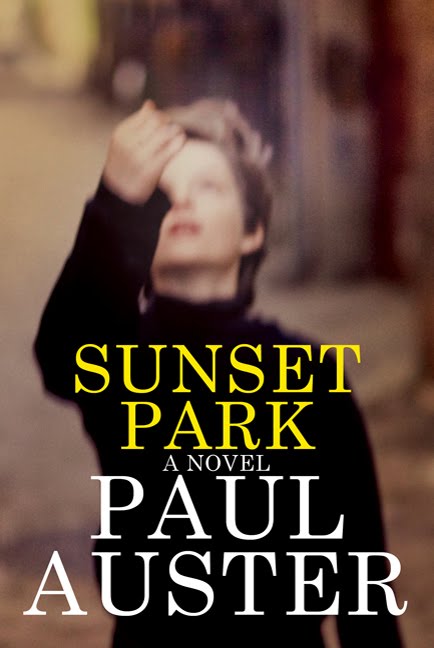
Sunset Park — Paul Auster

At the end of Paul Auster’s new novel Sunset Park, the narrative inhabits the mind of young protagonist Miles Heller. Riding in the back of a cab through Brooklyn, Miles’s thoughts glide through a slippery tangle of ideas. In a long sentence that runs on for almost two pages, Miles’s consciousness shifts from his own physical pain to a character in the movie The Best Years of Our Lives, a soldier named Homer who returns home with hooks for hands. This thought blends into a riff on the poet Homer, which in turn leads Miles, long estranged from his family, to figure himself a Telemachus now reunited with his father. And yet the homecoming cannot be; thoughts of Homer slip into thoughts about homelessness, his own homelessness, his friends’ homelessness, not metaphorical but literal. He then thinks about the homeless and displaced people across the country (Sunset Park is set square in the middle of the recent Great Recession), causing his mind to move back to the beginning of the novel, when he worked “trashing out” foreclosed homes in South Florida. The idea of “home” transmutes finally to “hope” as the cab crosses the Brooklyn Bridge–yet the idea (and the novel) is suspended in a strange, sad limbo.

I begin my review with Auster’s final sentence because it delineates many of Sunset Park’s themes, settings, and motifs. At its core–if such a novel can be said to have a core–Sunset Park asks its readers what “home” might mean. Is home a geographic location, a center that resonates with personal and cultural significance? Is home a place with a person you love? Can home be in your head? Is home where your family is? And, even more problematic, what exactly constitutes a family?

The founding trauma of the book, which is to say Miles’s founding trauma, is a radically ambiguous moment of violence: as a teenager, in a heated fight with his step-brother on a country road, Miles pushes the boy. At the same moment, a car flies down the road and kills him. Did Miles mean to kill his brother? At the moment of his anger, how could he not psychologically, if only temporarily, wish for the young man’s death? Did he know the car was coming? Miles cannot deal with the trauma and soon drops out of college and drops out of life. Unlike the biblical Cain, Miles’s exile is self-imposed. He breaks contact with his parents and thus breaks a family that was already twice broken; first, in his parents’ divorce and his mother’s move across the country to California; and second, in the death of his step-brother. Miles relegates himself to hard and unrewarding manual labor, wandering aimlessly around the country. It’s only after he meets a young girl named Pilar that he is able to reconstitute the idea of a family–of a self who can be in a family.

Pilar is a high school student. She is a minor. Auster does little to justify the social acceptability of Miles’s love for (and sodomy of) Pilar; instead, he repeatedly invokes the idea that other characters see the “truth” of the love by simply watching the pair. This is easily the book’s greatest weakness. Auster wants to communicate the idea that in loving Pilar, Miles is able to love a young version of himself–and thus forgive his young self (significantly, Pilar is the same age that Miles was when he pushed his step-brother)–yet the essential predatory narcissism of this “love” remains largely unremarked upon. Even Pilar’s caretaker, her oldest sister, is amenable to the romance–that is, until Miles refuses to keep bringing her high-end items that he recovers from the foreclosed homes he’s “trashing out.” Miles is again exiled, this time from his makeshift home with Pilar. He returns for the first time in seven years to New York City to stay in a squatter’s house with three other twentysomethings.

There’s a kind of silly Bohemian romanticism to the squat in Sunset Park. The project is helmed by would-be avant-jazzman, Bing Nathan, a notorious ranter who improbably subsists on funds he obtains from running his store, the Hospital for Broken Things, where he repairs typewriters and other antique artifacts. Bing thinks his friend Miles will be a perfect fit in the house–and he’s right: the other squatters love him. There’s Ellen, a skittish realtor (!) who aspires to become a pornographic painter, and Alice, an ABD trying to finish her doctoral thesis (on The Best Years of Our Lives, of course). Both women fall for Miles in different ways, although Auster’s writing never once shows why this might be.

Bing has other reasons for getting Miles back to NYC–he wants to reunite the Heller family. He’s been secretly communicating with Miles’s father Morris for years. Morris, who runs his own literary publishing house, is easily the most achieved character in Sunset Park, or at least its most realistic. Although the plot gets bogged down with his own marital difficulties (and other sundry tragedies that echo the “loss of children” theme), Morris’s narrative is the most focused and convincing section of the novel. His sad tone moves beyond melancholy but halts at bitterness, even as he reflects upon the myriad regrets of his life and the fearful future that yawns ahead (things are going badly with his wife; the publishing industry is in peril). Although Miles’s mother Mary-Lee figures less in the novel, she is also a more convincing and sympathetic character than the young people who squat in Sunset Park. Like Morris, she’s reflective, distanced enough from the young self who abandoned her only son, yet analytical enough to comprehend its traumatic effect. Mary-Lee and Morris, with their regrets and fears and hopes are far more aesthetically concrete and satisfying than the novel’s twentysomethings, who at times seem like caricatures or puppets or placeholders.

In Auster’s hands, the Sunset Park gang reflects an unrealistic idealization of youthful and artistic resistance to a predatory capitalist culture. Still, they provide him occasion for some of Sunset Park’s finest riffs, whether he’s ventriloquizing Bing (rage, rage against the lies of the man) or exploring Ellen’s enchanting perversions. Alice’s thesis on The Best Years of Our Lives (a film that somehow everyone in the book has not just seen but seen repeatedly and even analyzed) gives Auster ample material to explore how different generations face trauma, whether it’s the alienation experienced by WWII soldiers returning to a world that seems to have left them behind, or the crises of young people trying find homes in an America tottering on financial collapse.

With its ironic title, The Best Years pairs nicely with the other narrative that informs Sunset Park, Samuel Beckett’s play Happy Days-a play that Mary-Lee just happens to be performing on Broadway at the time of Miles’s return. Auster–through his erudite characters–riffs frequently and wisely on both the film and the play, and these are some of the finer moments of Sunset Park; one almost wishes that Auster would have abandoned the conceit of a novel completely and just write some kind of essay with his material. Sunset Park repeats the themes of alienation, loneliness, separation, and stasis that we find in Happy Days and The Best Years, yet it veers closer to the film’s melodrama than Beckett’s absurdity. Perhaps this is a fault of form: overloaded with characters, Sunset Park sags at times, asking its reader to care about yet another over-educated, privileged New Yorker whose artistic ambitions have stalled out. A concession to Beckett’s minimalism would have done wonders, and perhaps deflated some of Sunset Park’s murky self-seriousness.

The highlight of the novel is Auster’s syntax. His keen sentences, often unfurling for pages at a time, move from concrete to abstract, to present to past to future, to inside and outside, with a precision and skill that is admirable to say the least. Sure, he hits the occasional clunker–some of the book’s early dialog in Florida is particularly painful, as is a moment late in the book when Morris refers to his wife and friend as “the walking wounded,” a cliché that neither Morris or Auster should let slip–but there’s a smoothness of vision that unites the book from sentence to sentence.

Still, syntax is not content, and Sunset Park left me wanting something–more? Something different? I’m not sure what that something is, which is a precarious criticism at best. Auster’s vision of stasis, of limbo, of the impossibility of a real homecoming runs deeply contrary to the traditions and conventions of Western story-telling: in short, we are trained to desire and look for resolution. Auster’s observations–a continuation of Happy Days and The Best Years, in this sense–are precisely the right kind of psychological dissatisfaction we must experience for this novel to be “true” in an artistic sense. However, the aesthetic dissatisfaction I experienced at the end of the book seems of a separate nature. Chalk it up to too many characters and subplots, perhaps. In any case, Sunset Park made me think and made me feel, which is really the job of art–even if those thoughts and feelings are often negative and unpleasant. Perhaps it’s my own critical failing, but in the end I wanted a light to lead me out of the Auster’s  limbo.

Sunset Park is new in hardback this month from Henry Holt.

Smoking Makes You Look Cool

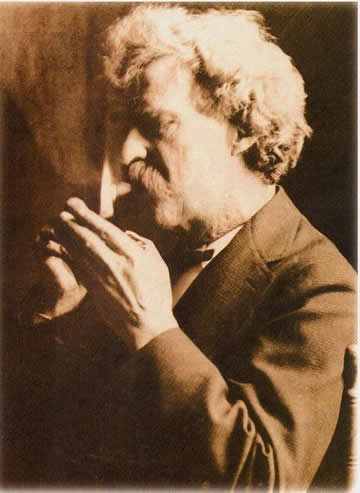
Mark Twain
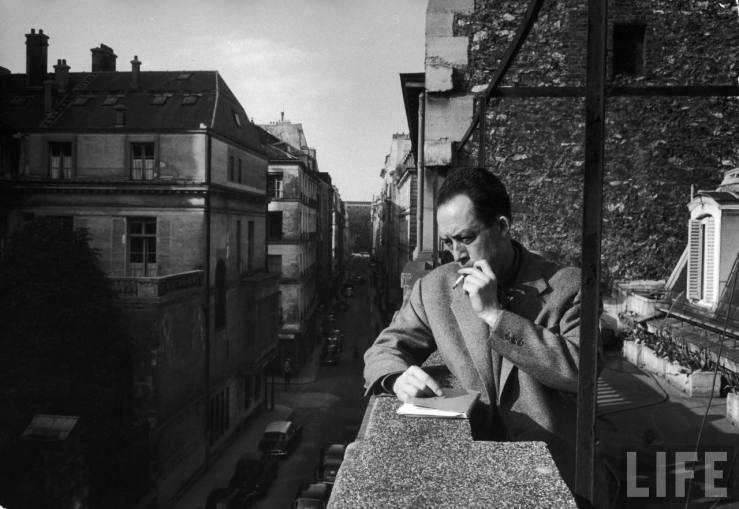
Albert Camus
Kurt Vonnegut
Roland Barthes
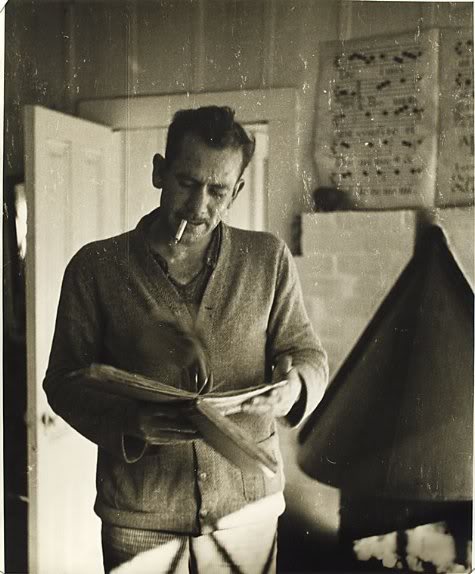
John Steinbeck
Charles Bukowski
William Faulkner
Roberto Bolaño
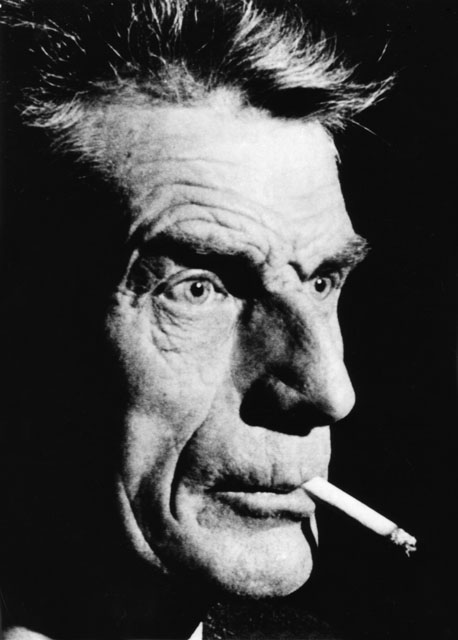
Samuel Beckett
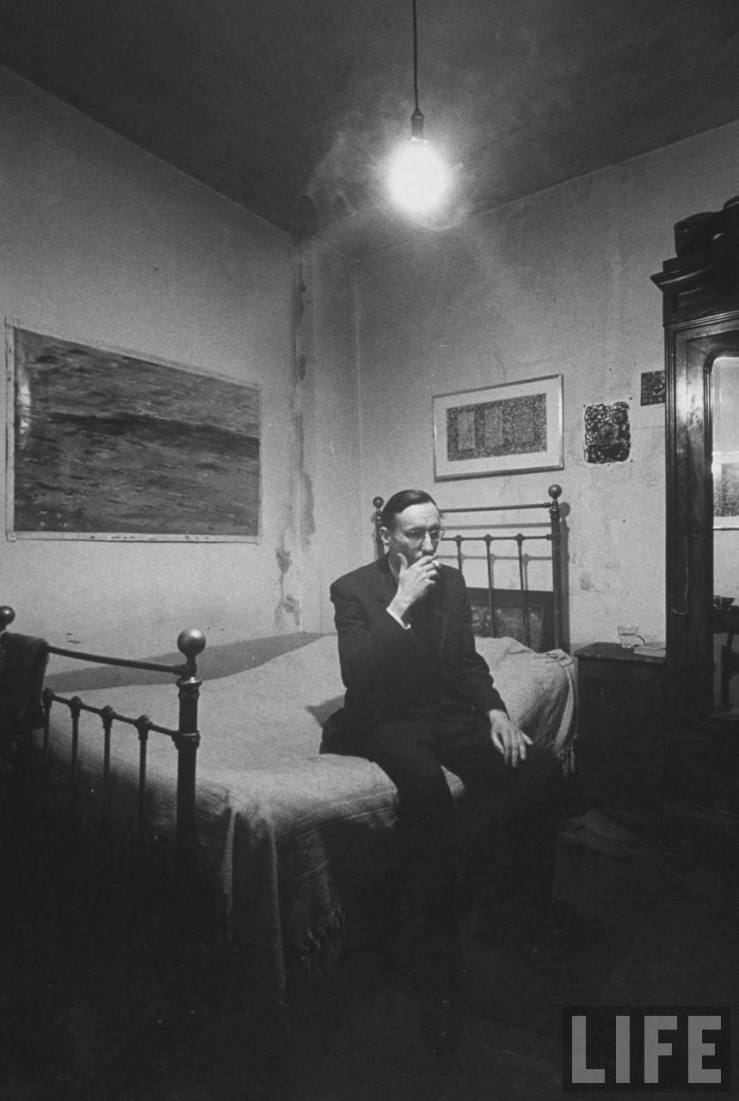
William Burroughs
JRR Tolkien
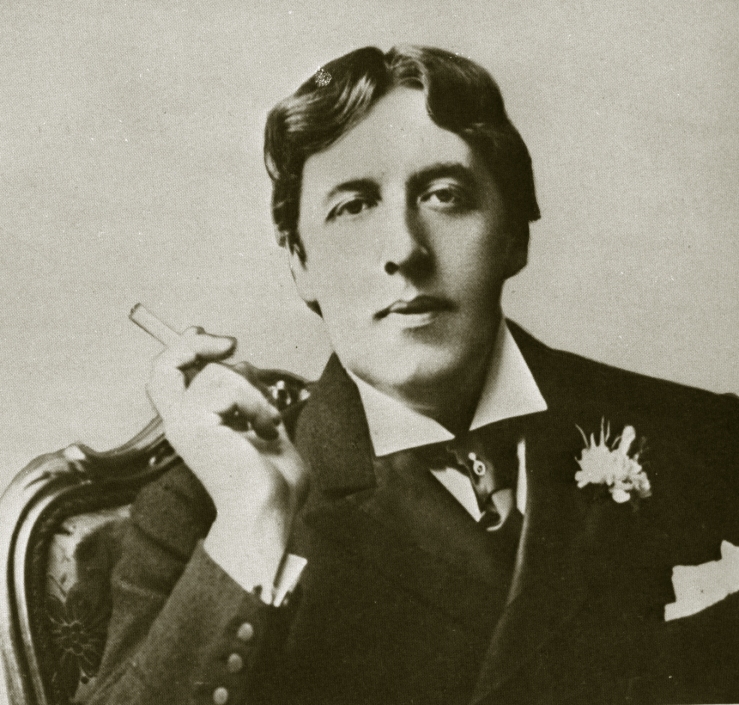
Oscar Wilde
Henry Miller
H.S.T.
Barry O'Bama

Covers, Old, Bold, and Missing

I spent a few hours cleaning up/out the office today. Hundreds and hundreds of books. Here are a few scans of old favorites, cool covers, and some I didn’t know I even had, like this one:

IMG_0001

No memory of acquiring this book at all. Dig the cover though. Here’s another one with a cool cover the origins of which are dim:

IMG

Probably a remainder from my high school’s library, like this book about our Fair Florida:

IMG_0004

I’m pretty sure that the fort here is meant to be the fort in Old St. Augustine. As a Floridian, I will attest that this image captures the essence of Florida life. Lovely.IMG_0002

Jock of the Bushveld was one of my favorite books as a kid. I actually used to live in the part of South Africa depicted in this book. Sorta. My dad bought me this book.

IMG_0003

Cat’s Cradle is one of my favorite books. My copy is clearly in terrible shape. The cover disappeared years ago. I think my cousin gave me this book.

IMG_0009

I know I swiped this one from my cousin: Anthony Scaduto’s biography of Bob Dylan. I’ve read this book probably more than any other nonfiction book I own. A lot of my friends have read it too, and remarkably, it’s always made it’s way back. Not sure when the cover went MIA. Apparently, I forged Dylan’s autograph on the upper right. I’m sure there was a joke behind this at some point.

IMG_0008

I haven’t written about an honest-to-God book theft in awhile. I stole this book from a large corporate book store when I was sixteen or seventeen. It’s pretty small. I think I just put it in my pocket. It was easy and I got a thrill from the experience. That said — kids, don’t steal stuff!