“You were not there for the beginning. You will not be there for the end. Your knowledge of what is going on can only be superficial and relative” — Naked Lunch

“You were not there for the beginning. You will not be there for the end. Your knowledge of what is going on can only be superficial and relative” — Naked Lunch
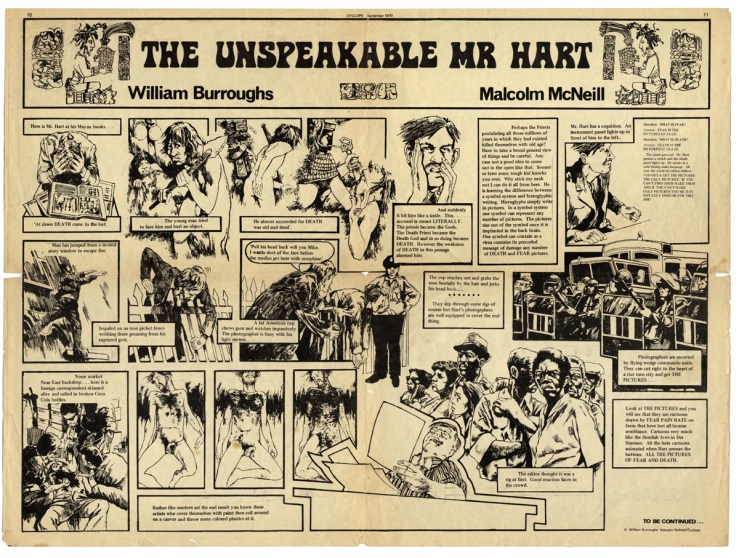
In 1970, William Burroughs was living in London. While there, he collaborated with young English artist Malcolm McNeill on a comic series for a magazine called Cyclops. The series was called The Unspeakable Mr. Hart, and remains uncollected/reprinted to date. Too bad, because it looks like really cool stuff. We got these images via The Virtual Library’s Beats collection, where there’s a really cool interview with McNeill (he discusses Burroughs habit of “going to movies to admire hard-ons and talking about them all afternoon,” which is kinda hilarious):

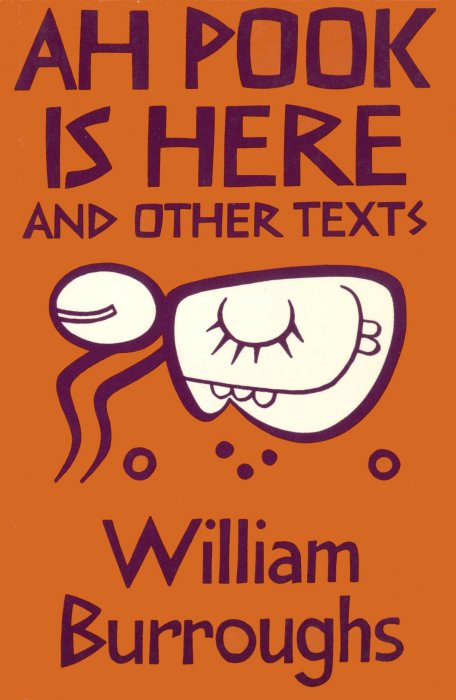
After Cylcops went kaput, Burroughs and McNeill continued the story in a project called Ah Pook Is Here, (a reference to the Mayan death god). Ah Pook Is Here, unfinished, was collected in the early eighties in Ah Pook Is Here and Other Texts which unfortunately is out of print. And very expensive. (Feel free to send it to me, anyone).
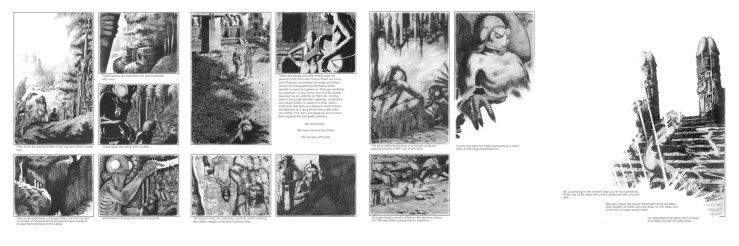
Fortunately, we can at least get a peek at some of McNeil’s hellish art at burroughsmcneillart.com. A few Boschian samples

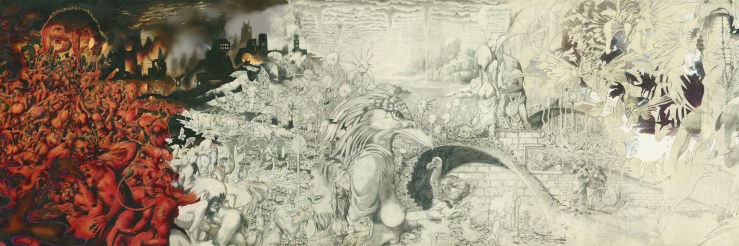
Again, we want this book. Please send us this book. In the meantime, filmmaker Philip Hunt made this 1994 6 minute animated short of Ah Pook Is Here:
Gus Van Sant’s great little short film from 1978, based on William Burroughs’s essay, explains the art of DE, or “Do Easy.” Our clumsy ass has been trying too hard, apparently. The film is quite funny but also useful, and well worth watching in full. It’s also included in the latest issue of Wholphin, if thou art so moved.

Look at these guys! I kind of have to have this record. If you have a copy, go ahead and send it to me. No? Okay, what about uploading the tracks somewhere as mp3s? No? Okay…
Image and LP info via Brainwashed.
William S. Burroughs/John Giorno (1975), GPS 006-007
William Burroughs
1. “103rd Street Boys” from Junkie 2. excerpt from Naked Lunch 3. “From Here To Eternity” from Exterminator 4. excerpt from Ah Pook Is Here 5. “The Chief Smiles” from Wild Boys 6. “The Green Nun” 7. excerpt from Cities Of The Red Night
John Giorno 8. “Eating Human Meat”
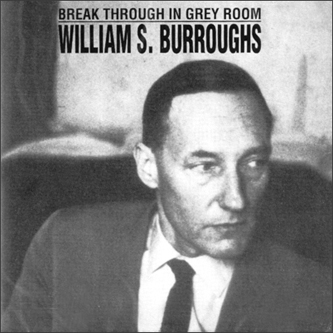
And so as not to just beg for mp3s but to also give, check out Burroughs explaining how tape manipulation helps to expand conciousness in “Origin and Theory of the Tape,” and get horrified by an example of said technique with “Present Time Exercises,” both from Break Through in Grey Room, a collection of Burroughs’s tape experiments and speeches (not to mention a dash of Ornette Coleman freaking freestyle in Morocco).
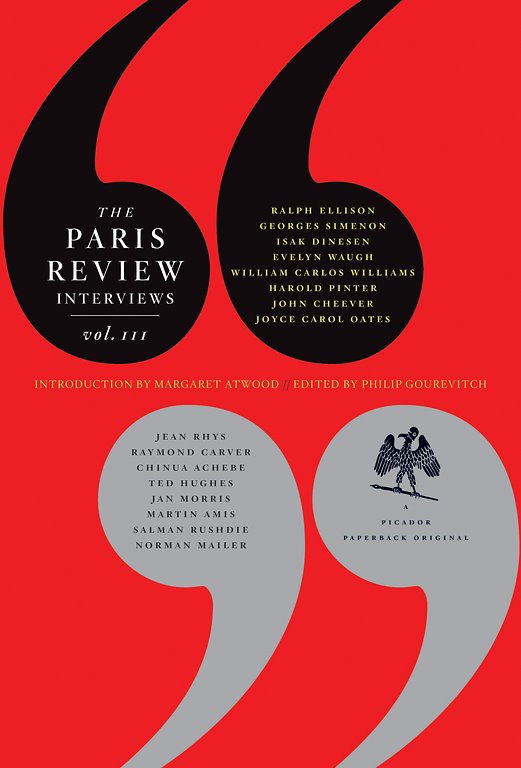
How much you enjoy the third collection The Paris Review Interviews will depend entirely on how much you enjoy reading intelligent and thoughtful writers discussing intelligent and thoughtful subjects. I happen to love reading author interviews–even interviews with authors I don’t particularly like–and hence, I enjoyed this book quite a bit.
Covering sixteen disparate authors and fifty-two tumultuous years, the interviews here are by turns insightful, hilarious, strange, and at times, infuriating. The first interview (the book is organized chronologically), a 1955 conversation with Ralph Ellison evokes all of these emotions. One can almost feel Ellison’s restraint as he patiently replies to asinine questions like, “Then you consider your novel a purely literary work as opposed to one in the tradition of social protest?” and, “But isn’t it going to be difficult for the Negro writer to escape provincialism when his literature is concerned with a minority?” If anything, these politicized charges prompt Ellison to some of the most salient observations about literature’s universalizing powers that I’ve ever read.
In his 1964 interview, poet William Carlos Williams also sheds quite a bit of light on his art and craft. Interestingly, his wife is also a major part of the interview, discussing at some length her own role in her husband’s writing. Beyond literature, craft, and writing, Williams also sets another early theme that unites the interviews collected here–dissing other writers. He calls T.S. Eliot a “conformist” determined to set poets back twenty years. Evelyn Waugh picks up on this theme in his 1963 interview. Of Faulkner: “I find Faulkner intolerably bad.” And Raymond Chandler: “I’m bored by all those slugs of whiskey. I don’t care for all the violence either.” Zing!
Don’t feel too bad for Chandler, though; he comes off funny and earthy and sad in his 1983 interview, especially when he discusses his alcoholism, and how and why he quit drinking. Apparently, teaching–and drinking–with John Cheever when the two were teaching at the Iowa Writer’s Workshop in 1973 had a major impact on Chandler’s decision to stop drinking.
John Cheever focuses mostly on the writing craft in his 1976 interview–not much talk of drinking here. He does, however, share this insight: “Plot implies narrative and a lot of crap. It is a calculated attempt to hold the reader’s interest at the sacrifice of moral conviction.” I’ve never liked Cheever’s writing, but he’s a great interview. In his 1994 interview, Achebe–an author whose fiction (and essays) I do like comes off as far more insightful and far less pretentious. On why creative writing classes exist: “I think it’s very important for writers who need something else to do, especially in these precarious times. Many writers can’t make a living. So to be able to teach how to write is a valuable to them. But I don’t really know about its value to the student.” Lovely. MFAs beware!
The interviews collected here are funny, smart, and very entertaining–whether its Achebe on general misunderstandings of his famous Conrad essay, Salman Rushdie on New Wave Cinema, or Joyce Carol Oates on Finnegans Wake, The Paris Review Interviews, Volume III is full of smart people talking about smart things–and what’s better than that? Highly recommended.
The Paris Review Interviews, Volume III is available October 28th, 2008 from Picador.
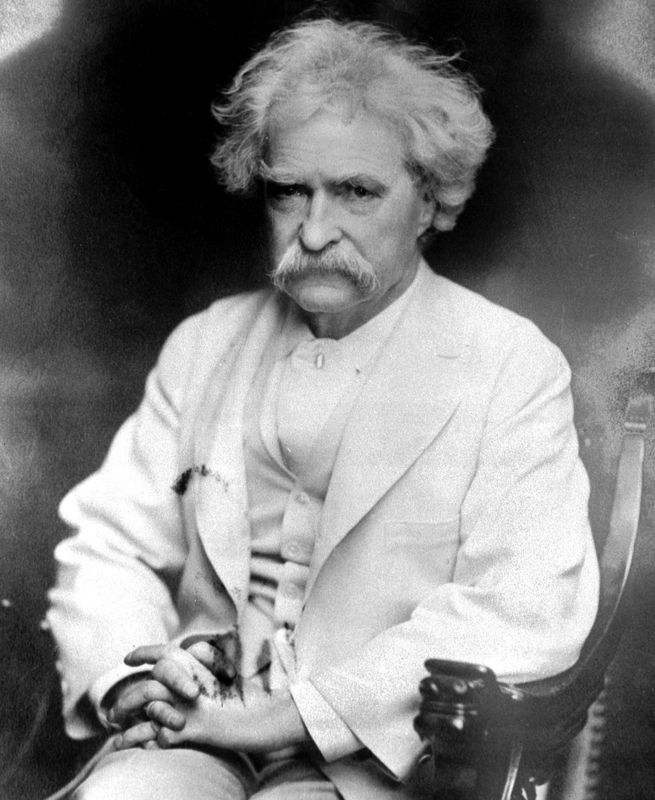
From the OED:
“A writer of satires or lampoons; applied to Timon of Phlius (268 BC).
1845 LEWES Hist. Philos. I. 77 His state of mind is finely described by Timon the sillograph. 1849 GROTE Hist. Greece II. xxxvii. IV. 526 The sillograph Timon of the third century B.C.
So sillographer, sillographist.
1656 BLOUNT Glossogr., Sillographer, a writer of scoffs, taunts and revilings; such was Timon. 1775 ASH, Sillographist. 1845 Encycl. Metrop. X. 393/1 Menippus indeed, in common with the Sillographers, seems to have introduced much more parody than even the earliest Roman Satirists.”
Famous sillographers include:
Timon of Philius (as noted above)
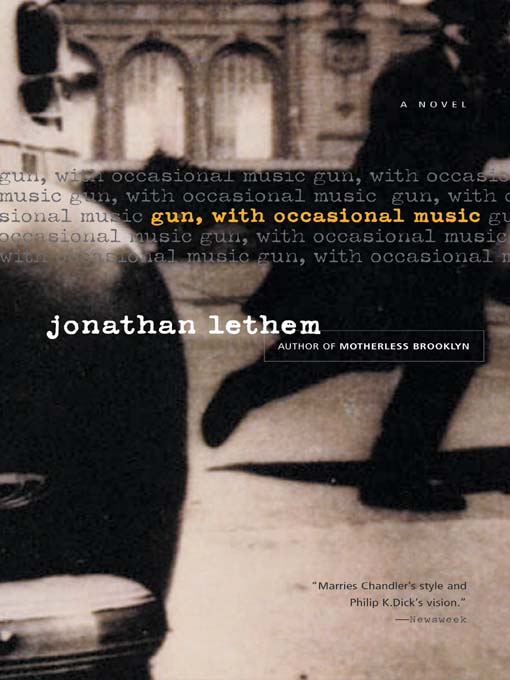
Jonathan Lethem’s novel Gun, with Occasional Music blends hardboiled crime noir with trippy sci-fi to examine the ethical ramifications of murder in a dystopian future where evolved animals work along side humans, mind altering drugs are not only free but encouraged by the authorities, and asking questions requires a license. Conrad Metcalf is a Private Inquisitor trying to solve a murder case involving a urologist, a baby-head (a failed evolved baby), and a gun-wielding kangaroo.
Two of the blurbs for Lethem’s debut describe the work as a marriage of Philip K. Dick and Raymond Chandler, but for my taste their wasn’t enough PKD. The details involving the “make” that Metcalf compulsively snorts, the genetic evolution techniques society now uses to produce children, and the genital nerve-ending swaps that people now enjoy are never fully explored. Sometimes bizarre details left unexplained create the dramatic immersion that the best SF achieves; Gun seems to throw ideas up against a wall to see if any stick. Many of the SF tropes that Lethem evokes are simply under-utilized. His ideas are playful, so why doesn’t he play with them more?
On the noir, end, the book also disappoints a little. The case is solved, but Metcalf’s solution–delivered entirely in a brief chapter crammed with exposition–seems hardly believable, or even really that interesting. This isn’t to suggest that Lethem’s/Conrad’s Chandlerisms aren’t enjoyable, and at times downright genius. Even when Lethem cranks out a clunker of a simile–and there’s more than one here–the rhetoric comes across more as satire of the genre as opposed to bad writing. The book also moves at a nice clip, with short, snappy chapters that always propel the narrative action. Eventually though, it just runs out steam. The story doesn’t really add up, and towards the end, it becomes clear that Lethem’s not going to fill us in on all of the cool ideas he initiated. I recommend those new to Lethem start with Motherless Brooklyn or The Fortress of Solitude instead. Or Men and Cartoons. Or The Disappointment Artist. Avoid You Don’t Love Me Yet like the plague.
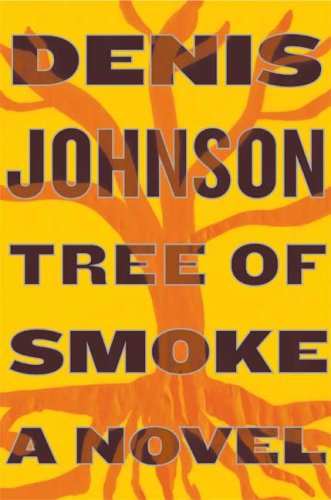
I finished Denis Johnson’s sprawling Vietnam War epic Tree of Smoke the same weekend that I finished James Joyce’s Ulysses. I managed to do this thanks to BBC America’s fantastic audio book version of Tree of Smoke, read by Will Patton–there’s simply no other way I would’ve managed to read both books. After finishing Tree of Smoke, that special depression reserved for only the best of books set in (you know that feeling–where the book you looked forward to every day is now over, and you feel a little sad and want more). I immediately started listening to it again (after I finished Ulysses I simply felt exhausted–Molly Bloom’s infamous monologue was fantastic (and sexy!), and I read it in one sitting, but still…the book inspires a special fatigue. More on all of this in a future post. I only bring the two up together as they are both very long books I finished this weekend; without pretense or shame, I attest that I enjoyed Johnson’s book over Joyce’s).
I plan to buy and reread (not sure if reread is the right verb) Tree of Smoke as soon as soon as it comes out in paperback. For now, here’s a very brief review: go buy this book and read it immediately. If you don’t have time to read it, get the 18-disc, 24 hour audiobook. Will Patton’s reading is astounding. He manages to meet and express the expansive range of voices and viewpoints in Johnson’s novel–newbie CIA spooks, double agents, overwhelmed relief workers, nihilist GIs, zealous field operatives, and more–in a way that brings the appropriate depth and personality to each character without ever being obtrusive or obnoxious (as can sometimes happen with audiobooks). Patton’s reading is on par with the best audiobook readings I’ve ever heard, and those of you who frequently listen to audiobooks know the difference this can make. He seems to fully appreciate the scope and magnitude of Johnson’s piece on Vietnam (sidenote: Patton played a bit-part in the underrated and overlooked 1999 film adaptation of Johnson’s novel-in-stories collection, Jesus’ Son).
But I’m not really doing justice to Johnson’s novel here. To call it a Vietnam war novel is like calling Prince a simple R&B artist–a facile description that doesn’t capture the subject. To be sure, it is a Vietnam war novel, but one that self-consciously riffs off of both The Ugly American and The Quiet American–with shades of Apocalypse Now to boot. At the same time, Johnson deftly injects mythology and philosophy directly into his character’s voices, into their conversations and letters, into the books they read and the papers they write, without ever once clumsily forcing a theme or motif. Unlike lesser writers, Johnson never slaps the reader in the face with all his clever ideas. Instead, all his clever ideas–meditations on colonialism, war, the minotaur myth, self-sacrifice, religion, data and analysis, love and betrayal–are part of an enthralling plot propelled by the most realistic dialog I’ve heard in a long, long time. If a better book is published in 2007, please let me know. Highly highly highly recommended.
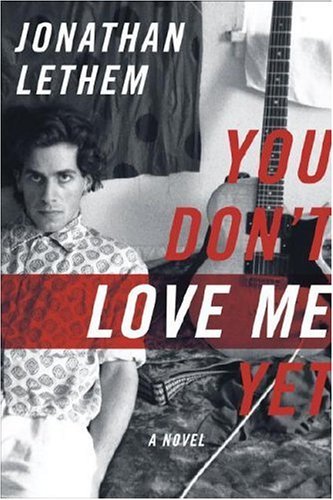
I’ve loved everything I’ve read by Jonathan Lethem so far–Motherless Brooklyn, The Fortress of Solitude, Men and Cartoons, and his essay collection, The Disappointment Artist. So, while perusing the library’s excellent collection of audiobooks for the perfect aural accompaniment for the longish drive from/to Jacksonville to/from St. Pete Beach, I was excited to discover a copy of Lethem’s new novel, You Don’t Love Me Yet, read by Lethem himself. The six and a half hour unabridged recording was just the right length to get there and back. The prospect of hearing an author read his own work is always encouraging, and I didn’t imagine I’d have a chance to read the book any time soon.
So. Well. Anyway.
About halfway through You Don’t Love Me Yet, my darling lovely wife turned to me with the most charming of smiles and said: “This isn’t a very good book.” I agreed with her sheepishly. After all, I’d been toting Lethem as a pop genius. Unfortunately, she was right. I’d been secretly waiting for the book to get good: for the characters to charm me, for the plot to intrigue me, for the writing to wow me. Instead, I was repeatedly disappointed.
The dull plot of You Don’t Love Me Yet centers around Lucinda, bassist for an “alternative” band (Lethem’s words) in LA, trying to get their shit together. Improbably, Lucinda answers phones for a living as part of an art installation complaint line. A mysterious complainer intrigues Lucinda; she ends up falling in love. She also uses the complainer’s complaints (which she recorded as part of her job) as the basis for song lyrics that somehow magically transform the band from rank amateurs to rank amateurs with something. Unfortunately, that something, that kinetic potential, is never quite explained to the novel’s audience. Additionally, the band’s music is never really adequately described (I think that some of the generic “transition music” that precedes each new chapter is supposed to inform the reader that the band is kinda Pixiesish, maybe even a little White Stripesish). Most glaringly, the complainer’s lyrics that somehow stun the band and their audience–built around phrases like “Monster Eyes” and “Astronaut Food”–are really nothing special.
Other elements of the plot that only sound interesting include: kangaroo theft, a dance party where everyone listens to their own playlists on headphones, and lots of sweaty ugly sex (Lethem seems to want You Don’t Love Me Yet to be something of a sex novel). Lethem’s characters have a tendency to prattle about ephemera, often of the pop culture stripe; this was one of my favorite elements of The Fortress of Solitude, but it’s almost unbearably cloying in You Don’t Love Me Yet, with the single exception of the guitarist Bedwin’s fascinating analysis of obscured signs (like, literal signs, posted signs, advertisements, y’know) in the background of Fritz Lang’s Human Desire.
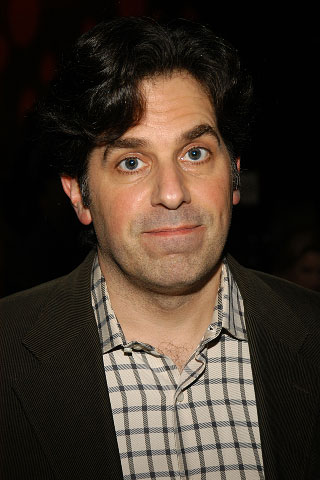
Plot has always been a secondary consideration to rhetoric in my critique of books, and Lethem here allows a number of awful lines–pure groaners–to infiltrate his text (the worst offender: a description of the complainer attesting to his “penisy glamor”). Lethem’s writing is in no way aided by his clipped, earnest delivery. The right reader can often imbue an audiobook with the perfect cadence, delivering the story with added dimension and depth. Lethem delivers each line in one of two different and exact rhythms; by the book’s end the effect is somewhere between numbing and grating.
So yes and well yes this is something of a negative review. But. My love for Lethem is still strong. So instead of ending with a “Not recommended” (and of course I can’t recommend that you spend your precious time on You Don’t Love Me Yet), I implore you to pick up Motherless Brooklyn or The Fortress of Solitude, or, if you’re pressed for time, The Disappointment Artist. And to prove that there are no hard feelings, I vow to read Lethem’s debut novel, Gun, with Occasional Music over the Christmas break. So there.
I dare you to watch Lethem talk about his new novel (in which he calls it a “deliberately silly book,” incidentally) for fifty minutes on Youtube. I dare you!
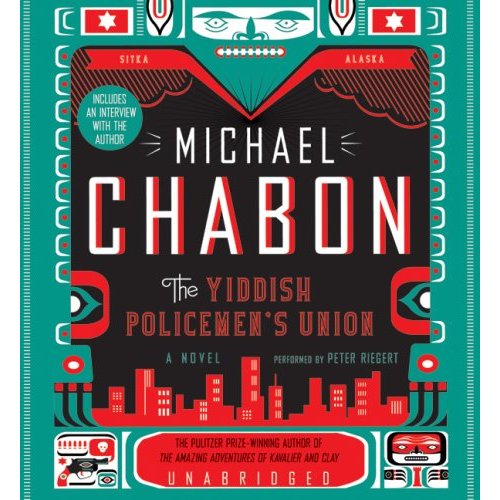
Yesterday afternoon, I finished listening to the audiobook version of Michael Chabon’s much heralded 2007 novel, The Yiddish Policemen’s Union, read quite competently by Peter Riegert.
I like audiobooks. They give me a chance to catch up with a lot of stuff that I otherwise wouldn’t have the time to read. Some people have a problem with audiobooks; apparently no one ever read a story to them. Or they’re just uptight. But that’s not what this is about. See, before I start picking at TYPU, I just want to preempt any Chabon fans saying: “Well, if you actually read the book, you would’ve liked it better.” No. I’m really good at listening to books on CD. Like, I can even make mental annotations. And I’ve enjoyed plenty of audiobooks in the past. This one, however? Nah.
I’m sure that many of you out there are staunch defenders of Chabon, and I won’t deny that he’s a “literary” writer, and one who, like one of my faves Jonathan Lethem, uses genre tropes and styles to great rhetorical effect. That said: this “detective story” is a completely overwritten, self-conscious barrage of hyperboles that rarely engaged me; worst of all, the book leads nowhere. In Chabon’s alternate reality, the Jewish diaspora continues into the Alaskan frontier. On the eve of the Yiddish settlement of Sitka’s Reversion–and the attendant displacement of the Jews–Detective Landsman investigates the murder of a young man, the son of an Orthodox gangster, who may or may not have been the messiah. There are all sorts of other problems, too, of course. Lots of problems=good writing, right?
In short, Chabon takes a cool premise–(what he believes to be) a Chandleresque detective story set in an alternate universe (à la PK Dicks’ The Man in the High Tower)–and crams in far too many tertiary plots, red herrings, and awkward symbols. Although Chabon’s prose is often funny and sometimes moving, in TYPU, his love for his own exaggerated metaphors and overstuffed similes distracts from the pacing and rhythm in what should be a gripping murder-mystery full of intrigue and suspense. Instead, I found TYPU to be clunky, and at times down right dull, but I kept listening: this book had gotten rave reviews, right? It was at the end of the book, when Chabon suddenly shifts perspective and lazily dumps an entire plot-essential back story on the reader, that I began to realize that this book was not the detective story it was claiming to be. No, the detective story was, like, a ruse, a trope, a form for Chabon to utilize in telling a story of Jewish identity, loss (infanticide lurks at the heart of this novel), and the metaphysical significance of chess. Chabon doesn’t really care about telling a good detective story (compare to Lethem’s lovelier and leaner Motherless Brooklyn, a detective novel that succeeds in telling a good mystery story and being all deep and shit). Instead, Chabon is happy to deadpan pseudophilosophy and use dippy conspiracy theories to help resolve his dangling plot threads. Not recommended.
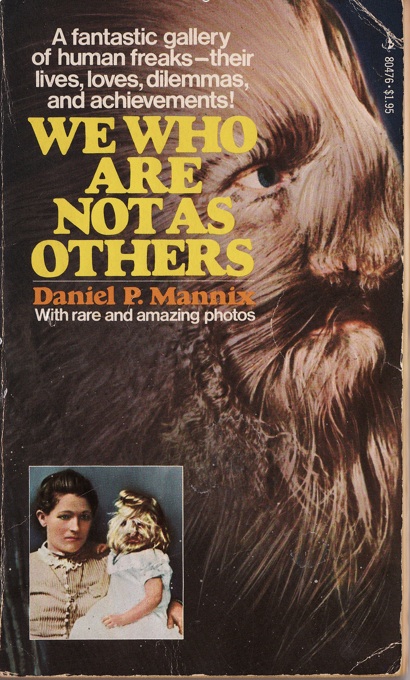
I’m not exactly sure if I stole Daniel P. Mannix’s immortal classic We Who Are Not as Others or if it was in a box of free books. I was in the eighth grade; it was the tail-end of a class trip to colonial Williamsburg, and I guess we had some time to kill, because they (they being the adults in charge) took us to a huge outdoor flea market. This was 1991 and Spike Lee’s Malcolm X had initiated a fad of wearing ball caps with a large solitary X emblazoned upon said cap. Some jokers at the flea market were selling hats emblazoned with a large solitary O, which the nimrod jocks in our class really thought was funny. They all bought the O hats; the counter-fad lasted about a fortnight after the Virginia trip. My love for We Who Are Not as Others, however, is immortal. My friend Tilford was rooting through a box of books: he claimed that the books were all free, although there was really nothing to indicate this. The mercenary setting of the flea market I now recall doesn’t seem to support Tilford’s assessment of the box. Nevertheless, we each wound up with a copy of We Who Are Not as Others. I read this book every year at some point. I implore you to read the back cover:
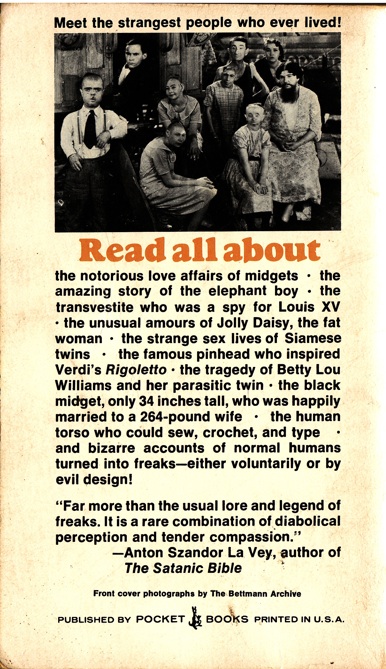
Look, I can’t top that, and I’m not going to even try. The blurb is wholly accurate. Anton LaVey’s assessment (and the fact that the leader of the Church of Satan endorses the book also attests to its literary merit) is spot on: this is a tender, tender piece of literature. Although We Who Are Not as Others was withdrawn only a month after its initial 1976 publication, it was fortunately reprinted in 2000 by Juno books, and is still available.

“[…] only one anus between them”–you must admire Mannix’s attention to detail. Good stuff.
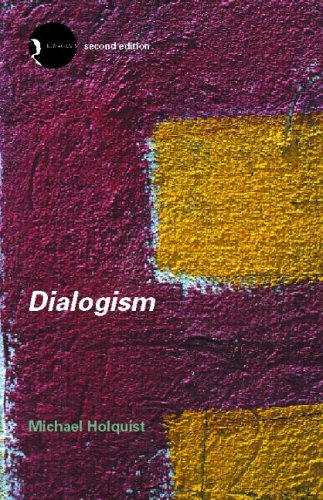
Michael Holquist’s Dialogism, a highly approachable introduction to the theory of Mikhail Bakhtin, is the most enjoyable book of literary theory I’ve wrapped my head around in quite a while. Bakhtin’s dialogism is–and I’m drastically paraphrasing here–a way of interpreting texts in terms of the way that they “speak” to other texts. In Bakhtinian dialogism, language exists in an endless play of call and response, of modulation and echo of all language that has come before and all language that is to come after. Written in short, concise bursts of information, Holquist’s Dialogism illuminates Bakhtin’s complex ideas; additionally, Holquist reads Bakhtin against heavyweights like Roman Jakobson, Kant, Saussure, and, uh, Albert Einstein. Most useful and enlightening of all are Holquist’s own dialogical readings, particularly his reading of Shelley’s Frankenstein. Dialogism is an essential introduction to an important philosopher, and, more importantly, a pretty good read.

As astute reader Nicky Longlunch pointed out in a comment on my last post on 50 Great Guitarists, John Fahey was not only a fantastic guitarist, he was also a published author. Fahey wrote three books–1970’s Charley Patton, a biography of that great blues guitarist (out of print now unless you buy the Charley Patton box set); 2000’s How Bluegrass Music Destroyed My Life, a collection of mostly humorous anecdotes and stories; and the posthumously published Vampire Vultures, a collection of Fahey’s letters, limericks, and interviews. HBMDML and VV are both still in print from Drag City (you can also read a PDF extract from HBMDML there).
I remember enjoying How Bluegrass Music Destroyed My Life back when it was first published, when Mr. Longlunch was kind enough to let me borrow it (I returned it folks!). I recall it as being funny, insightful, and Bukowski-spare; I recall it also exhibiting the same raw pathos that Bukowski infused in his work, but with none of the vulgar meanness. The best parts of the book detail Fahey’s young years in Maryland. I can’t really remember much else. I’d love to read it again, but I can’t really shell out $20 for a paperback right now. And unfortunately, I can’t just borrow it from Longlunch again, because he is no longer in possession.
In his comment, Longlunch griped at me to “Focus!” and he’s right–this blog is supposed to be focused on stolen books, and, poor guy, his copy of HBMDML is (I’m guessing) somewhere in Texas. Or he’s just misplaced it for the past seven years. Or he’s lying about it being MIA because he doesn’t want to loan it out. Which is fair, I guess.
Before I leave, I should also point out that Fahey isn’t the only author I overlooked in yesterday’s post. For years now, Pete Townshend has been doing “research” for his as-yet-unpublished autobiography. So we have that to look forward to.
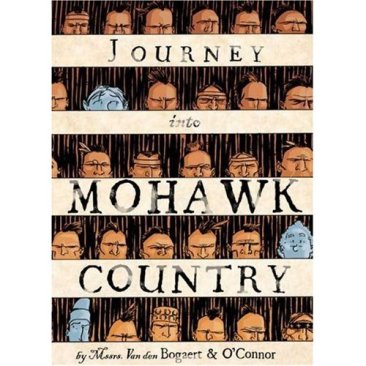
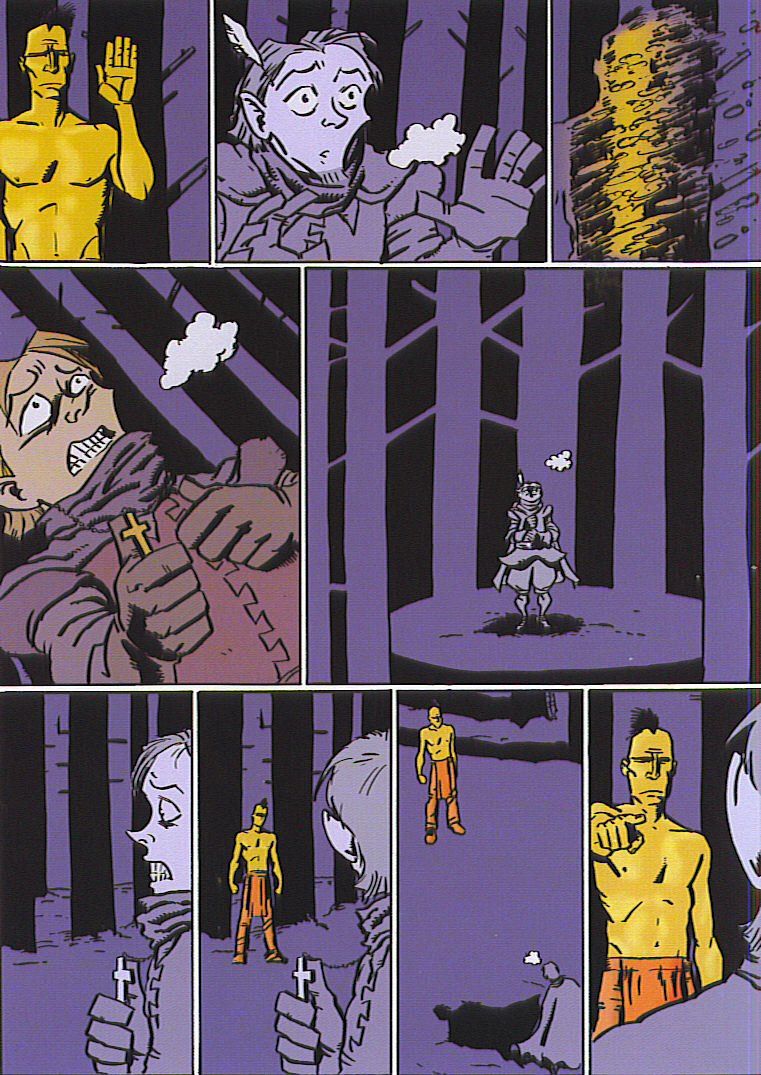
Journey into Mohawk Country is George O’Connor’s adaptation of Harmen Meyndertsz Van den Bogaert’s diary, an historical document detailing the young Dutch explorer’s 1634 journey out west of New Amsterdam to make contact with Indian villages for trade. O’Connor uses Van den Bogaert’s words verbatim, but his graphic novel format allows him extraordinary liberties with the journal’s account. Vague descriptions are literally fleshed out; O’Connor finds innuendo in even the simplest of Van den Bogaert’s entries, illustrating a between-the-lines reading of the Dutchman’s diary. O’Connor even manages to stick a strange epiphanic mystical revelation scene in there. The story itself is pretty simple: Van den Bogaert and his two companions head out into Mohawk country, meet and trade with Indians, eat bear, learn about some alien customs (including a sequence where some Indians show Van den Bogaert how to heal the sick by vomiting on them), and go back to Fort Orange. It’s really the little interpretive scenes around the text-proper, courtesy of O’Connor’s cartoony pictures, that make Journey into Mohawk Country such a pleasure to read. O’Connor’s work here illustrates the first-person narrative’s slippery claims on truth and the limited viability of a “true” historical account. Good stuff.

Didn’t we write about No Country for Old Men a week or two ago? Yeah, but that was for the upcoming Coen brothers movie; this post is a review of the audiobook, and I’m not creative enough to think of a different title.
So we listened to the entirety of Cormac McCarthy’s No Country for Old Men over the course of two drives: from Jacksonville to St. Pete Beach and back. First off, as far as books-on-CD goes, this one was pretty good. Native Texan Tom Stechshulte manages to get all of the male characters spot on (the women in the novel sound kind of ridiculous though), and the action-filled plot, tight pacing, and simple sentences make for an easy-to-follow-while-driving listening experience (this is my number one criterion for an audiobook–you have to be able to follow the plot while navigating a road littered with truckers and asshole teenagers. F’r’instance, Faulkner’s short stories are almost impossible to follow in audiobook format).
Set in 1980, No Country for Old Men is the story of Llewellyn Moss, a Vietnam vet who stumbles across the aftermath of a drug deal gone bad and a suitcase with 2.4 million dollars in it. Of course, he takes the money and runs. Assassin Chigurh is hot on his heels to collect the drug money, leaving a bloody wake of murder and chaos. Sheriff Bell, a WWII vet who first-person narrates the beginning of each section of the book, is also on the case, trying to track down Llewellyn before he gets himself killed.
The first five discs (of seven) of the book were excellent–an exercise in genre fiction–the crime-suspense novel–that transcends the limits of the genre’s tropes. McCarthy’s spare prose moves at just the right pace, with just the right amount of “literary” interjection. However, the end of the novel morphs (evolves or devolves?) into a meditation on war and the changing nature of America and the American people. McCarthy’s symbols and metaphors seem heavy-handed and downright clunky at times, and in the end, the book becomes something of a reflection on personal failures and regrets, and how these personal failures add up to national failures.
Perhaps because I was driving, and because I had been so involved with characters over the course of five compact discs who suddenly disappeared in the narrative, I was disappointed in the end. Perhaps if I had read the book instead of listening to it on compact disc while driving, I would have found the ending more profound, or even enjoyable. Who knows–reading books vs. listening to them is probably a subject for another post. I do think that the Coen brothers will make a fantastic movie out of this story–potentially on par with Fargo. We’ll see.
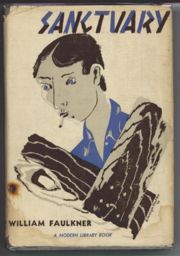
So I’ve been reading William Faulkner’s Sanctuary over the past few days. This was Faulkner’s breakthrough novel, the one that made him famous when it was published in 1931. He claimed that it was pot-boiler pulp fiction, written purely to make money, but who knows. I mean, we’re talking about a guy who chose to start spelling his name with a ‘u’ for some obscure reason–an author who worked from day one at creating the myth of himself as author. So who knows–maybe he actually thought he was writing a great piece of literature when he produced this lurid drivel.
Sanctuary is most famous for the rape of Southern debutante Temple Drake. She is raped with a corn cob. There you go. That’s pretty much all you need to know about this book. However, if you’re into elliptical and confusing depictions of violence, drunken debauchery, creepy voyeurism, and post-lynching sodomy, Sanctuary just might be the book for you.
There are two film adaptations of Sanctuary–1933’s The Story of Temple Drake, and 1961’s Sanctuary. Neither are readily available on VHS or DVD, and for good reason. They’re both pretty terrible. Still, the early sixties take on Sanctuary manages to capture the backwoods grotesque that saturates the novel. Actually, David Lynch could make a pretty decent film out of this.
My final analysis: I’m very very happy that I only have one more novel of Faulkner’s to read–Intruder in the Dust. Sanctuary did nothing but help consolidate my prejudice against Faulkner and my belief that the notion of Faulkner as an American Great is nothing but a scam.
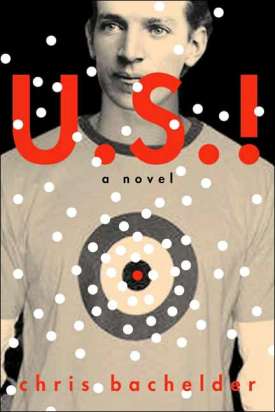
Chris Bachelder‘s superb novel U.S.! portrays an alternate (and somewhat hyperbolic) United States where the Left (big-L) keeps bringing Upton Sinclair (that guy who wrote The Jungle (maybe you read it in high school (I didn’t))) back to life. These would-be revolutionaries try to keep Sinclair (and hope) alive in spite of the fact that right-wing reactionary populist heroes keep assassinating him. In fact, in U.S.!, Upton Sinclair assassination is its own cottage industry.
Bachelder uses a dazzling range of approaches in the first 200 pages of the novel, employing everything from folk song lyrics to Amazon reviews to talk show transcripts in order to flesh out his alternate universe. The first part of U.S.! essentially sets up the last third of the novel, a relatively straight-forward third-person omniscient account of a Fourth of July book-burning in a Southern state. I won’t reveal any more of the plot, because I’m lazy and you should read this book for yourself.
Bachelder’s writing crackles with wit and surprising warmth, especially in the character of Sinclair, who comes across as a (literally) dusty out-of-touch relic, an idealist as equally unable to effect any change in the modern world as he was able to in his own era. Sinclair and the would-be revolutionaries who resuscitate him serve as Bachelder’s critique on America’s stale, impotent left (or is it Left?). Bachelder also savagely criticizes Sinclair’s rhetoric; one of the funniest sections of the first part of the book involves an analysis of exclamation points (and their overuse) in Sinclair’s novels. Toward the end of the novel, Bachelder employs a meta-critical strategy of adding more and more exclamation points to his own writing; the exaggerated gestures comically highlight the cartoonishly grotesque world of U.S.!, at the same time counterbalancing the understated but profound sadness of the novel.
My only gripe with U.S.! would be Bachelder’s rare lapse into what I like to call “workshop fiction”–fiction that seems the contrived and overwritten product of MFA work-shopping (did I mention that Bachelder got his MFA at my alma mater, the University of Florida at Gainesville? (other great writers associated with this glorious institution include Padgett Powell and Harry Crews)). As I noted though, these instances are rare and mostly notable because the majority of the novel is so fresh, original, and readable. This book is funny, poignant, and you should read it.
 Biblioklept