Book Shelves #4, 1.22.2012

Book shelves series #4, fourth Sunday of 2012: In which we finally leave the master bedroom and check out the books in my children’s rooms.

In the previous weeks, I illustrated that my kids — a girl and a boy, 4 and 1, respectively (tack on a “half” to each of those numbers if you care to) — my kids leave books all over the house. Their books are everywhere. They are as bad as I am. I indicated at the beginning of this year-long series that the documentation would never be stable or absolute; that books float through my house, come and go like bad house guests or silly ghosts—this is probably more true of the children’s books in this house than any other kind of book.

This week, I photograph the book shelves in my kids’ rooms, starting with my daughter’s. This is her big bookshelf:

20120121-174110.jpg

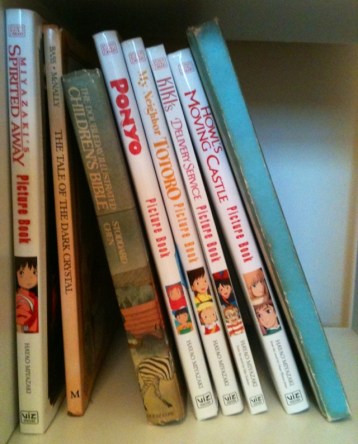
I did not photograph the big pile of books that set to the left. A close up of any of these shelves would reveal a mix of classics—stuff that my wife and I read and cherished as kids—and newer stuff as well. Here’s a shelf, sort of at random—it’s unusually well-organized:
20120121-174117.jpg

There’s a lot of Studio Ghibli books here; most narrativize Hayao Miyazaki’s films (we’re big fans in this house). My daughter loves these. The bible was my bible; the blue-spined book is this:

20120121-174125.jpg

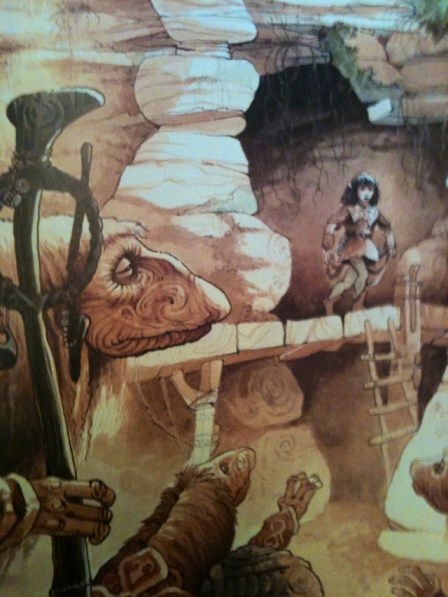
You might also note a book version of Jim Henson’s creepy classic The Dark Crystal; this was mine as a kid and it disturbed the hell out of me, so I gave it to my daughter, of course:
20120121-174143.jpg

The Studio Ghibli books combine beautiful stills of the film with narrative prose and comic book speech bubbles. From the standpoint of a fan of the films, they’re really interesting because they explicate some of the ambiguity. Our daughter loves them and asks for them (too much!):

20120121-174149.jpg

Another shelf from another book shelf—the only shelf with books on it in this piece of furniture, actually. Not interesting, but I said I’d photograph all book shelves as part of this project:
20120121-174157.jpg

Before my wife and I married, we lived in Tokyo for a while; we bought a bunch of these board books at a 100 yen shop. Here’s one:

20120121-174203.jpg

Night stand: always a place of shelving instability:

20120121-174209.jpg

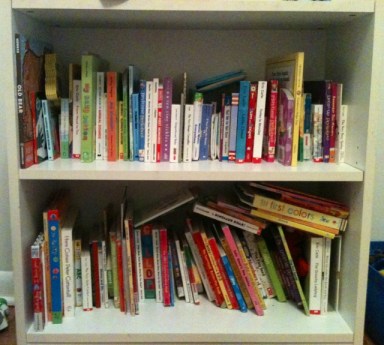
The book shelf in my son’s room—lots of board books, Eric Carle, stuff like that. He likes trains and dogs:
20120121-174219.jpg

So, I covered both of the kid’s rooms in one post in the hopes of getting to more interesting volumes in the next few weeks. On deck: the den/kitchen space, featuring cookbooks, art books, and travel volumes.

“Kakteen, Wüste, Sonne” — Kraftwerk (Live, 1971)

Books Acquired, 1.17.2012—Or, Here’s What’s New from Picador This Month

20120121-100054.jpg

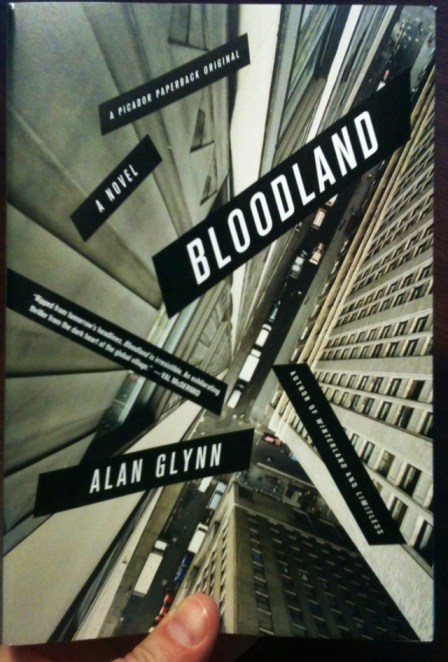
The kind people at Picador sent me a box of books, including a memoir (Margaux Fragoso’s Tiger, Tiger), a few novels (The Lover’s Dictionary by David Levithan; Ralph Sassone’s The Intimates; Alan Glynn’s noir thriller Bloodland; Dieter Schlesak’s The Druggist of Auschwitz, which purports to be a “documentary novel”; and Zoë Heller’s first novel, Everything You Know), and a work of political science (Ari Berman’s Herding Donkeys).

A box of books is a bit overwhelming, but I make it a point to spend some time with every book that comes into Biblioklept World Headquarters. Here’s some thoughts on these.

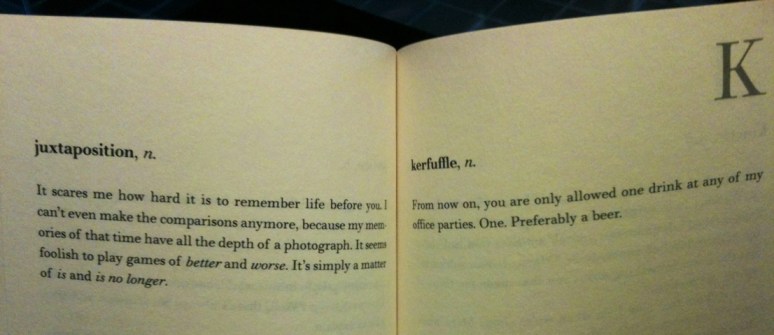
I actually ended up reading almost all of The Lover’s Dictionary, despite it having the word “lover” in the title, which, jeez. When my wife picked it up, she said something like, “How can they call this a novel?” — fair question, because the book is structured like a dictionary. In point of illustration:

20120121-100117.jpg

I’ve got a bigger post on Levithan’s book coming up, one that tries to situate it in the context of other non-novelly novels—but in short it is a novel, a very contemporary one that tells the oldest story in the proverbial book (boy meets girl) in an elliptical way that suits our post-information age. Like I said more to come, but for now: The Lover’s Dictionary is funny, occasionally cruel, too-often saccharine, awfully real, sometimes deeply flawed, but consistently engaging (sorry for all the adverbs).

I imagine Margaux Fragoso’s memoir Tiger, Tiger will capture the fascination of a large audience, but half an hour of the book was almost more than I could bear. Not because Fragoso can’t write—far from it, in fact—but her subject matter, which is to say her stolen childhood, is rendered too raw,   too real for me; there’s nothing pulpy or lurid about Fragoso’s work, nor is there the aesthetic sheen of Lolita to gloss any of the ugly, sordid details.  Kathryn Harrison ponders the question of Tiger, Tiger’s audience in her favorable review at The New York Times:

So who — other than voyeurs looking for a sustained close-up of a pedophile in action — will want to read this book? To bear witness to a numbingly long series of violations of a child by a man who has honed his wickedness for decades is not more pleasant than it sounds. As a society we energetically oppose sexual abuse; as individuals most of us shy away from investigating a relationship characterized by creepy kisses and inappropriate fondling. Worse, we defend cowardice by calling it discretion — minding our own business. Maybe a book like “Tiger, Tiger” can help us be a little braver. Certainly, it took courage to write.

20120121-100131.jpg

Ralph Sassone’s The Intimates: sex scenes (straight and gay); lots of notations about parents; lots of characters.

Dieter Schlesak’s The Druggist of Auschwitz: This “documentary novel” blends actual testimony from the Frankfurt Auschwitz Trial, interviews with camp guards and prisoners, and fictional narrative to tell the true story of Dr. Victor Capesius, an SS officer who worked with Mengele. The book is less gimmicky than it sounds in this description, and if its documentary elements are blunter and less ambiguous than W.G. Sebald’s historical fragments, I suppose that’s what the subject matter merits.

Alan Glynn’s new novel Bloodland (a Picador paperback original) is a noirish thriller set against the backdrop of political and corporate intrigue. Glynn writes with terse immediacy, telegraphing the plot in short punchy sentences that recall James Ellroy (without the finnicky slang). The book reads almost like a movie script, vivid and concrete. It’s a fast-paced page turner with a smart plot, just the sort of thing one wants from a thriller.

20120121-103504.jpg

Herding Donkeys by Ari Berman: Honestly not my thing, but if you want to read about the DNC from the time of Howard Dean to the rise of Barrack Obama, this is probably a book for you.

Zoë Heller’s Everything You Know: This is new in paperback again after over a decade. The story focuses on a cantankerous, unlikable son-of-a-bitch named Willy Muller. Things aren’t going well for him: he’s just suffered a heart attack, his daughter’s committed suicide, and the public still believes he murdered his wife. No wonder he hates humanity. Heller is probably most famous for her novel Notes on a Scandal, which was adapted into an excellent film in 2006.

Biblioklept’s picks: The Lover’s Dictionary; Tiger, Tiger; Bloodland.

Wonder Woman (Bondage) — Bill Sienkiewicz

(Via).

“Marks of the Good Writer” — Nietzsche

Friedrich Nietzsche. From Mixed Opinions and Maxims:

(138) Marks of the good writer.— Good writers have two things in common; they prefer to be understood rather than admired; and they do not write for knowing and over-acute readers.

Book Acquired, 1.18.2011 (Matt Mullins/Chainsaw Short Fiction Edition)

20120120-163945.jpg

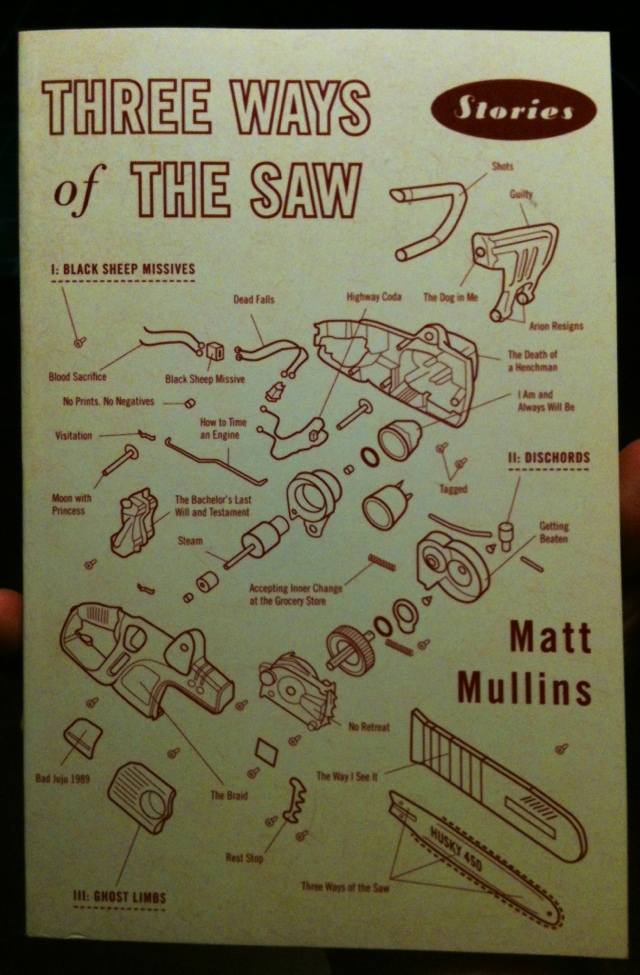
Matt Mullins’s Three Ways of the Saw (new in February from Atticus): Spent a few afternoons sifting through this volume, intrigued by its outstanding cover (I use the word “outstanding” literally; over a dozen titles came into Bblklpt Wrld Hdqrtrs this fine week). Mullins’s volume, stocked with short and short-short (and micro-) stories, bristles with boozy energy, grit, ugly druggy nervy episodes, shenanigans, dirty hi-jinks, breaking families, bad sons, bad people, broken people, desperate people . . . There’s a strong Bukoswkiish vibe to the business, with less ego, more concrete imagery, more Denis Johnson. I like this book.

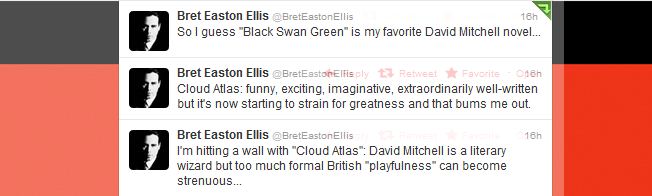
Bret Easton Ellis on David Mitchell’s Novel Cloud Atlas

“The Worst Readers” — Nietzsche

Friedrich Nietzsche. From Mixed Opinions and Maxims:

(137) The worst readers.— The worst readers are those who behave like plundering troops: they take away a few things they can use, dirty and confound the remainder, and revile the whole.

Pages from Joseph Cornell’s Imaginary Journal

Check out the Peabody Essex Museum’s marvelous interactive exhibit Navigating the Imagination, which lets you view (and play with) the works of artist Joseph Cornell The images here come from a 1911 textbook that Cornell transformed into a magical book object, full of illustrations, collages, quotes, and cut outs (you can peruse the entire book).

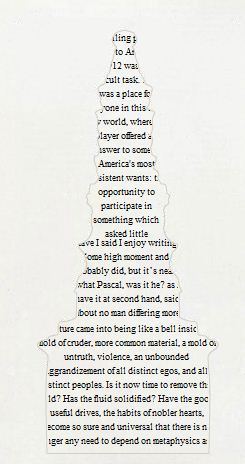
Bonus: Make your own Word Tower in the “Crystal Cage” machine. Here’s mine; I used snips from open tabs on my browser (two pieces from Gaddis and a Nietzsche):

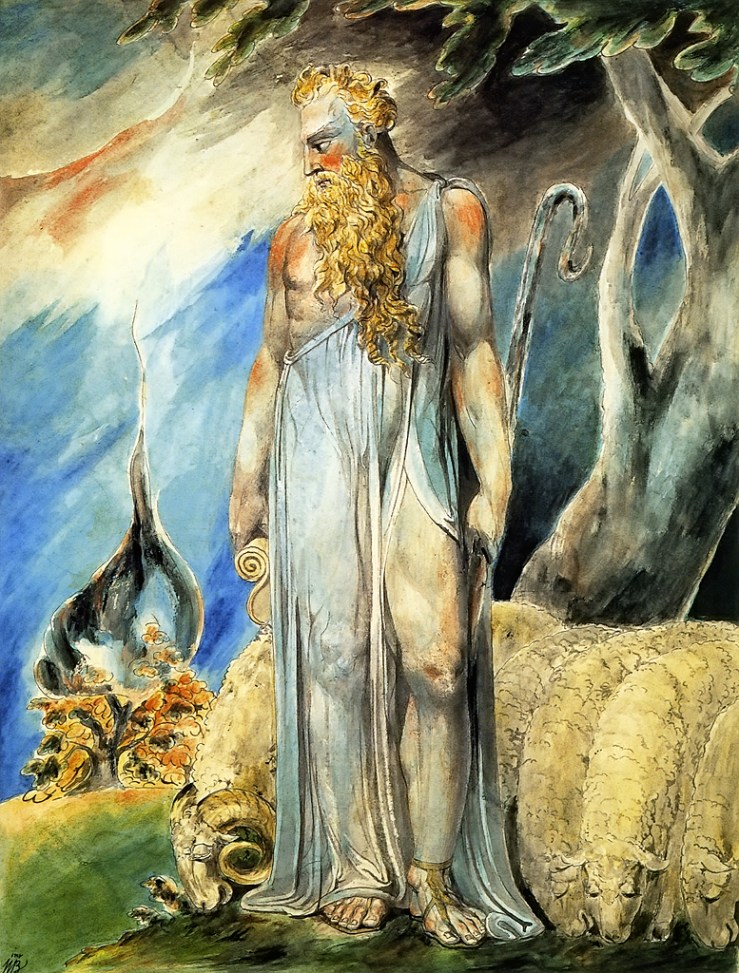
Moses and the Burning Bush — William Blake

Hawthorne and Thoreau Dine Together Then Take a Stroll

From Nathaniel Hawthorne’s journal (via):

September 1, 1842. Mr. Thoreau dined with us yesterday…. He is a keen and delicate observer of nature–a genuine observer–which, I suspect, is almost as rare a character as even an original poet; and Nature, in return for his love, seems to adopt him as her especial child, and shows him secrets which few others are allowed to witness. He is familiar with beast, fish, fowl, and reptile, and has strange stories to tell of adventures, and friendly passages with these lower brethren of mortality. Herb and flower, likewise, wherever they grow, whether in garden or wildwood, are his familiar friends. He is also on intimate terms with the clouds, and can tell the portents of storms. It is a characteristic trait that he has a great regard for the memory of the Indian tribes, whose wild life would have suited him so well; and strange to say, he seldom walks over a ploughed field without picking up an arrow-point, a spearhead, or other relic of the red men–as if their spirits willed him to be the inheritor of their simple wealth.

With all this he has more than a tincture of literature,–a deep and true taste for poetry, especially for the elder poets, and he is a good writer,–at least he has written a good article, a rambling disquisition on Natural History, in the last Dial, which, he says, was chiefly made up from journals of his own observations. Methinks this article gives a very fair image of his mind and character,–so true, innate, and literal in observation, yet giving the spirit as well as letter of what he sees, even as a lake reflects its wooded banks, showing every leaf, yet giving the wild beauty of the whole scene. Then there are in the article passages of cloudy and dreamy metaphysics, and also passages where his thoughts seem to measure and attune themselves into spontaneus verse, as they rightfully may, since there is real poetry in them. There is a basis of good sense and of moral truth, too, throughout the article, which also is a reflection of his character; for he is not unwise to think and feel, and I find him a healthy and wholesome man to know.

After dinner (at which we cut the first watermelon and muskmelon that our garden has ripened) Mr. Thoreau and I walked up the bank of the river; and, at a certain point, he shouted for his boat. Forthwith, a young man paddled it across the river, and Mr. Thoreau and I voyaged farther up the stream, which soon became more beautiful than any picture, with its dark and quiet sheet of water, half shaded, half sunny, between high and wooded banks. The late rains have swollen the stream so much that many trees are standing up to their knees, as it were, in the water, and boughs, which lately swung high in air, now dip and drink deep of the passing wave. As to the poor cardinals which glowed upon the bank a few days since, I could see only a few of their scarlet hats, peeping above the tide. Mr. Thoreau managed the boat so perfectly, either with two paddles or with one, that it seemed instinct with his own will, and to require no physical effort to guide it. He said that, when some Indians visited Concord a few years since, he found that he had acquired, without a teacher, their precise method of propelling and steering a canoe. Nevertheless he was desirous of selling the boat of which he is so fit a pilot, and which was built by his own hands; so I agreed to take it, and accordingly became possessor of the Musketaquid. I wish I could acquire the aquatic skill of the original owner.

from American Notebooks (1835-42)

Carousel-Animal Opera — Joseph Cornell

Girl in Bed — John Currin

“Readers’ Bad Manners” — Nietzsche

Friedrich Nietzsche. From Mixed Opinions and Maxims:

(130) Reader’s bad manners. —A reader is doubly guilty of bad manners against the author when he praises his second book at the expense of the first (or vice versa) and then asks the author to be grateful for that.


Read “Labyrinth,” an Excerpt from Roberto Bolaño’s Forthcoming Work, The Secret of Evil

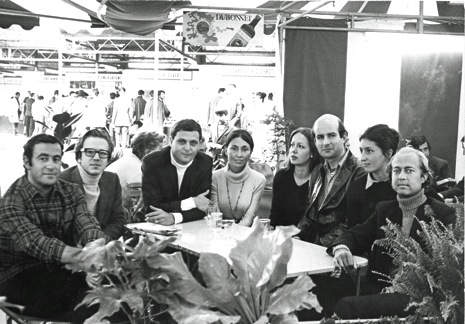
The New Yorker has published an excerpt from The Secret of Evil, the latest posthumous offering from Roberto Bolaño (new this spring from New Directions). The excerpt begins by extrapolating on a photo of some of the Tel Quel folks, (including a striking Julia Kristeva):

They’re seated. They’re looking at the camera. They are captioned, from left to right: J. Henric, J.-J. Goux, Ph. Sollers, J. Kristeva, M.-Th. Réveillé, P. Guyotat, C. Devade, and M. Devade.

There’s no photo credit.

They’re sitting around a table. It’s an ordinary table, made of wood, perhaps, or plastic, it could even be a marble table on metal legs, but nothing could be less germane to my purpose than to give an exhaustive description of it. The table is a table that is large enough to seat the above-mentioned individuals and it’s in a café. Or appears to be. Let’s suppose, for the moment, that it’s in a café.

The eight people who appear in the photo, who are posing for the photo, are fanned out around one side of the table in a crescent or a kind of opened-out horseshoe, so that each of them can be seen clearly and completely. In other words, no one is facing away from the camera. In front of them, or rather between them and the photographer (and this is slightly strange), there are three plants—a rhododendron, a ficus, and an everlasting—rising from a planter, which may serve, but this is speculation, as a barrier between two distinct sections of the café.

Read more.

Newt Gingrich (And Other Portraits of Old, Rich White Men) by Thomas V. Nash

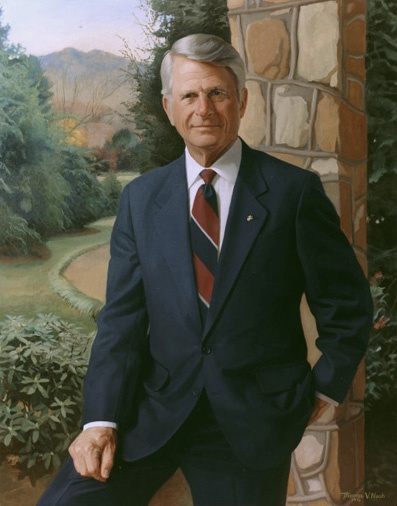
I recently saw this portrait of current Republican nomination candidate/constant font of regressive ideas Newt Gingrich on an image board I frequent. It’s by Georgia-based portrait artist Thomas Nash, whose website I had to visit after seeing this picture.

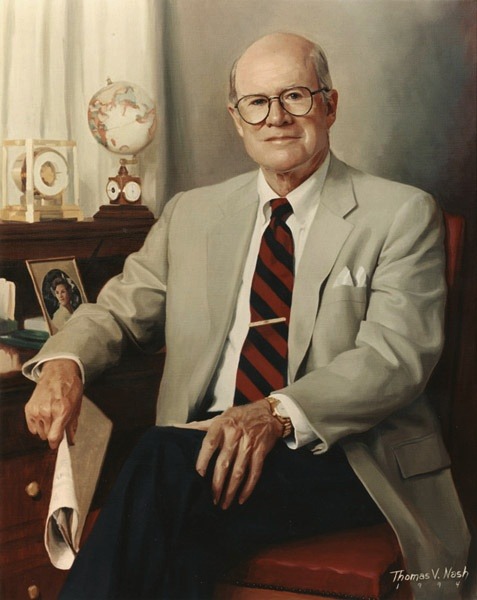
For some reason I can’t quite articulate, Nash’s portraits are surreal to me. I don’t think it’s purposeful, of course—he’s clearly a technically competent artist whose oil paintings are meant to confer a sense of power twinned in benevolence.

It must be my own sense of history, of power, of irony, that makes me feel thoroughly creeped out by this portrait of Newt—the manically glib glint in his eye (his left eyebrow ever-so slightly arched in cocky condescension), the sinister light that seems to emanate from his upraised, extended left hand, the mysterious document casually clutched in his right, the phallic authority of the Washington Monument jutting out from the Mall in the background as tiny tourists mill about, one even pausing to aim his camera from behind the scroll work at the viewer . . .

It’s odd, malevolent, and engrossing, but when paired against the other portraits in Nash’s collection of “Men,” like former Democratic Senator (and George W. Bush supporter) Zell Miller, it seems even more sinister and ironic to me, as if some evil scream lurked in the background, suppressed, detained, a black hood over its metaphorical head:

Or these guys:

In some sense, these paintings strike me as the strange dry twins of the work of sensualist John Currin, a subjective claim that is perhaps unsupportable but nevertheless seems true to me.