Read “The Fir-Tree,” Hans Christian Andersen’s Depressing Story About the Existential Fate of a Christmas Tree

Hans Christian Andersen’s “The Fir-Tree,” a depressing story about a Christmas tree—

Far down in the forest, where the warm sun and the fresh air made a sweet resting-place, grew a pretty little fir-tree; and yet it was not happy, it wished so much to be tall like its companions— the pines and firs which grew around it. The sun shone, and the soft air fluttered its leaves, and the little peasant children passed by, prattling merrily, but the fir-tree heeded them not. Sometimes the children would bring a large basket of raspberries or strawberries, wreathed on a straw, and seat themselves near the fir-tree, and say, “Is it not a pretty little tree?” which made it feel more unhappy than before. And yet all this while the tree grew a notch or joint taller every year; for by the number of joints in the stem of a fir-tree we can discover its age. Still, as it grew, it complained, “Oh! how I wish I were as tall as the other trees, then I would spread out my branches on every side, and my top would over-look the wide world. I should have the birds building their nests on my boughs, and when the wind blew, I should bow with stately dignity like my tall companions.” The tree was so discontented, that it took no pleasure in the warm sunshine, the birds, or the rosy clouds that floated over it morning and evening. Sometimes, in winter, when the snow lay white and glittering on the ground, a hare would come springing along, and jump right over the little tree; and then how mortified it would feel! Two winters passed, and when the third arrived, the tree had grown so tall that the hare was obliged to run round it. Yet it remained unsatisfied, and would exclaim, “Oh, if I could but keep on growing tall and old! There is nothing else worth caring for in the world!” In the autumn, as usual, the wood-cutters came and cut down several of the tallest trees, and the young fir-tree, which was now grown to its full height, shuddered as the noble trees fell to the earth with a crash. After the branches were lopped off, the trunks looked so slender and bare, that they could scarcely be recognized. Then they were placed upon wagons, and drawn by horses out of the forest. “Where were they going? What would become of them?” The young fir-tree wished very much to know; so in the spring, when the swallows and the storks came, it asked, “Do you know where those trees were taken? Did you meet them?”

Continue reading “Read “The Fir-Tree,” Hans Christian Andersen’s Depressing Story About the Existential Fate of a Christmas Tree”

Old Woman Reading — Gerrit Dou

Movies, Five Cents — John French Sloan

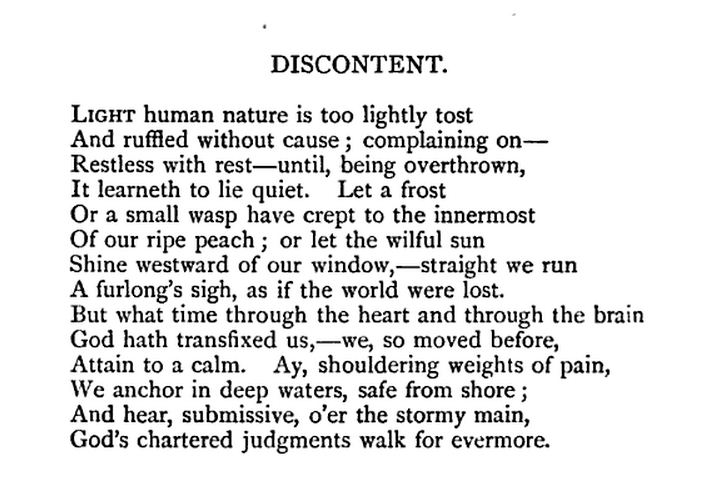
“Discontent” — Elizabeth Barrett Browning

ebb

Slavoj Žižek Finally Weighs in on Santa Claus

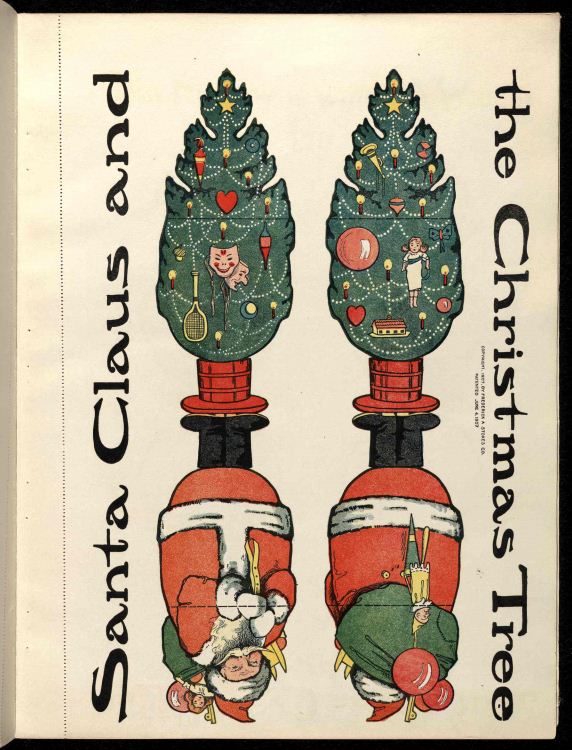
Santa Claus and the Christmas Tree — A 1907 Illustrated Cut-out

From The Twelve Magic Changelings by M.A. Glen, a 1907 book of children’s cut-outs.

Christmas in the Brothel — Edvard Munch

https://i0.wp.com/uploads3.wikipaintings.org/images/edvard-munch/christmas-in-the-brothel-1905.jpg

André Maurois’s Climates (Book Acquired, 12.11.2012)

20121217-104436.jpg

This one looks pretty cool—André Maurois’s 1928 novel Climates. Here’s publisher Other Press’s blurb:

Written in 1928 by French biographer and novelist Andre Maurois, Climates became a best seller in France and all over Europe. The first 100,000 copies printed of its Russian translation sold out the day they appeared in Moscow bookstores. This magnificently written novel about a double conjugal failure is imbued with subtle yet profound psychological insights of a caliber that arguably rivals Tolstoy’s. Here Phillipe Marcenat, an erudite yet conventional industrialist from central France, falls madly in love with and marries the beautiful but unreliable Odile despite his family’s disapproval. Soon, Phillipe’s possessiveness and jealousy drive her away. Brokenhearted, Phillipe then marries the devoted and sincere Isabelle and promptly inflicts on his new wife the very same woes he endured at the hands of Odile. But Isabelle’s integrity and determination to save her marriage adds yet another dimension to this extraordinary work on the dynamics and vicissitudes of love.

I haven’t had time to dip into Climates yet, but it got a compelling write-up in The New Yorker last month. Excerpt:

At first sight, “Climates” is a simple fable. It tells of Philippe Marcenat, the heir to a provincial paper-mill business, who falls in love with the woman of his dreams, Odile Malet. He loses her, but is later loved in turn by Isabelle de Cheverny, a woman not of his dreams at all, although he tries (“Vertigo”-ishly) to make her so. We follow first Philippe and then Isabelle as they reflect on their love. There is a happy ending of sorts, though not for Philippe. Maurois has summarized his first vision of the story, in its bare-bones form, as:

Part 1. I love, and am not loved.

Part 2. I am loved, and do not love.

Put that way, it sounds like a perfectly balanced diptych. In fact, it is neither balanced nor anywhere near simple. Each of these four “love” and “non-love” elements conceals some complication, something moving at cross-purposes to it. Beneath what seems to be love, there lurks tyranny or submission, or a mixture of both. Beneath what seems to be non-love, there is… it’s hard to say what, but something indefinable that looks very much like love.

Read more: http://www.newyorker.com/online/blogs/books/2012/11/the-two-loves-of-andre-maurois.html#ixzz2FKDinsNq


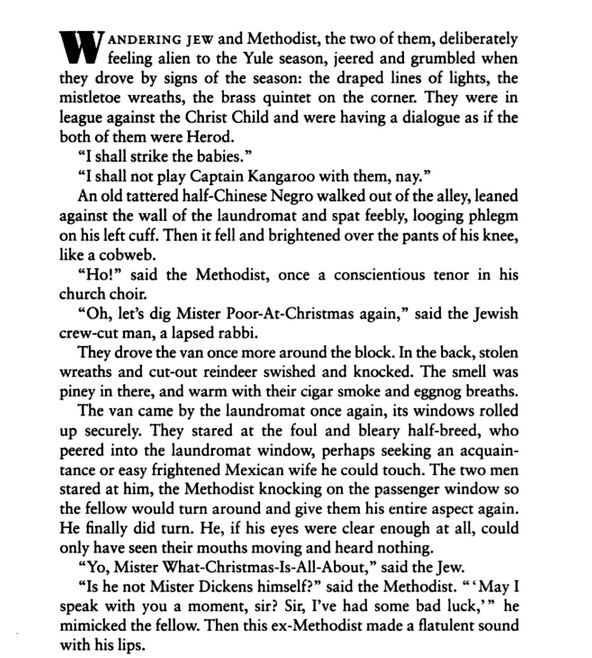
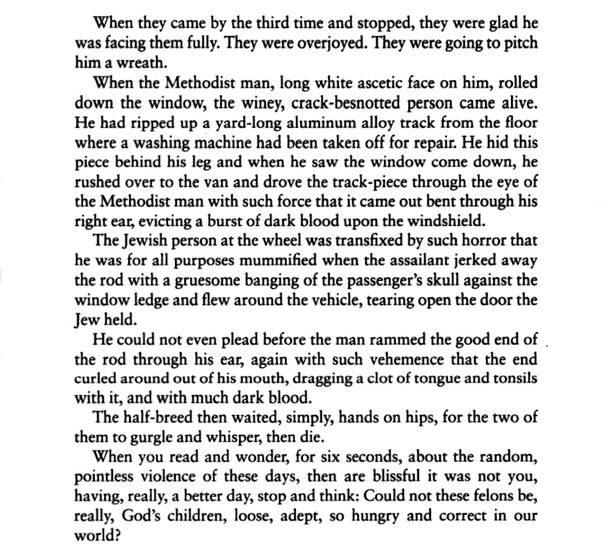
“A Christmas Thought” — Barry Hannah

“Thank You for Sending Me an Angel” — Talking Heads (Live in 1978)

Reflections — John William Godward

I’m Dreaming of a Black Christmas — Richard Hamilton

https://i0.wp.com/uploads7.wikipaintings.org/images/richard-hamilton/i-m-dreaming-of-a-black-christmas-1971.jpg

A Wassailing Poem from Robert Herrick

herrick2

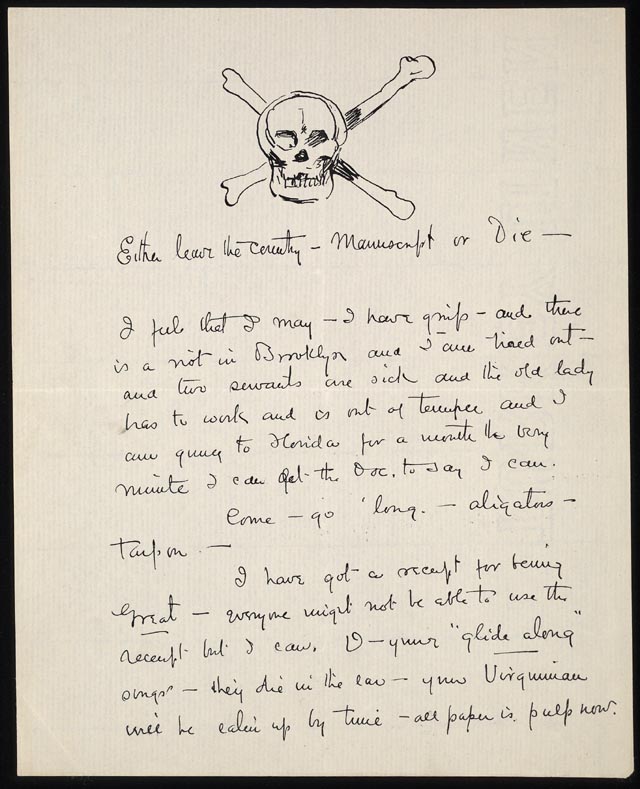
Frederic Remington Letter

at0179.7s

From the LOC:

Two champions of the old West share their common interest in this illustrated letter from sculptor, illustrator, and painter Frederic Remington to writer Owen Wister. Both originally Easterners, the two men had met in 1893 when Wister went to Wyoming for his health. In this letter to his new friend, Remington muses about the instability of his paintings, which may fade in time “like pale molasses,” but he suggests that his new work in bronze–“a cowboy on a bucking broncho”–will “rattle down through all the ages.”


Merry Christmas from Winsor McCay

Book Shelves #51, 12.16.2012


Book shelves series #51, fifty-first Sunday of 2012

20121216-092447.jpg

I am very ready for this project to be over. Two more weeks.

At this point, I’ve photographed all book shelves (and other bookbearing surfaces) in the house, but clearly the book shelves aren’t stable.

I mean, structurally, sure, they’re stable.

But their content shifts.

So this week (having three weeks left to fill), I go back to a sitting room in the front of the house where I like to read.

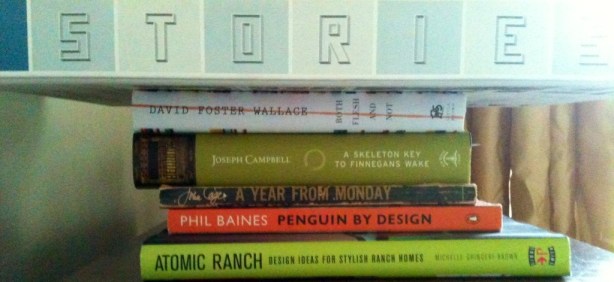
Above, resting on this cabinet, some current reading, including the latest DFW collection and Chris Ware’s Building Stories.

Below, a coffee table (first photographed in #7 of this series):


20121216-092518.jpg

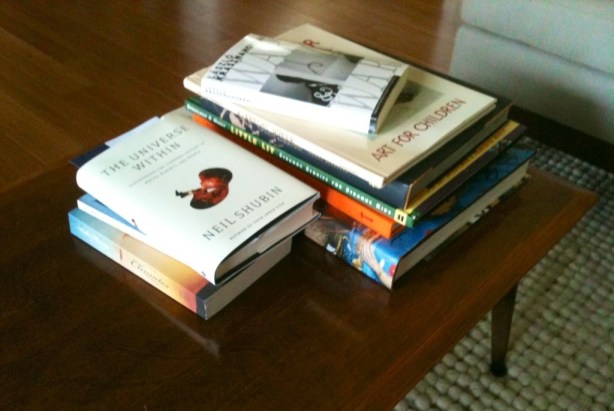
As usual, a few coffee table books, plus several review copies that I need to look at sometime next week:

20121216-092535.jpg

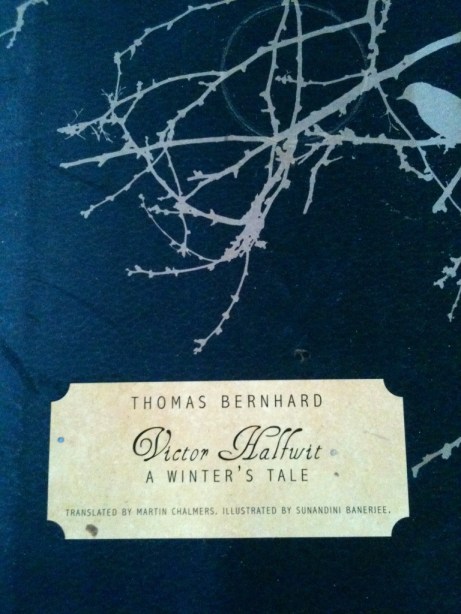
One of the coffee table books is by Thomas Bernhard:

20121216-092544.jpg

To the right of the case, a bin of books—mostly review copies that come in that I plan to write more about:

20121216-092558.jpg


Reading in the Forest — Eva Gonzales