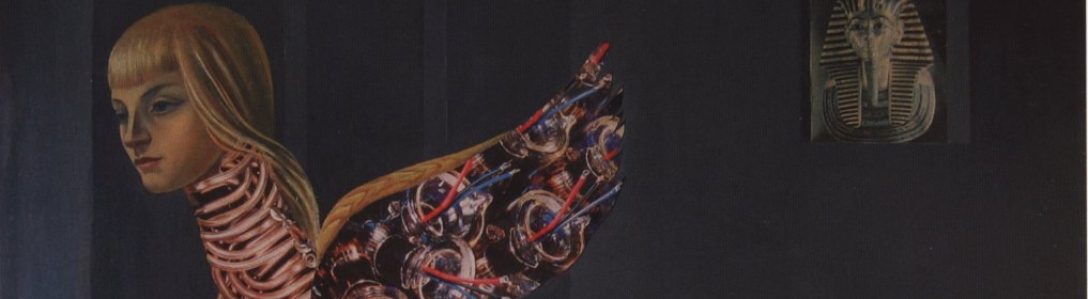
Detail from Venus, Cupid, Folly, and Time — Agnolo Bronzino

bronzino detail

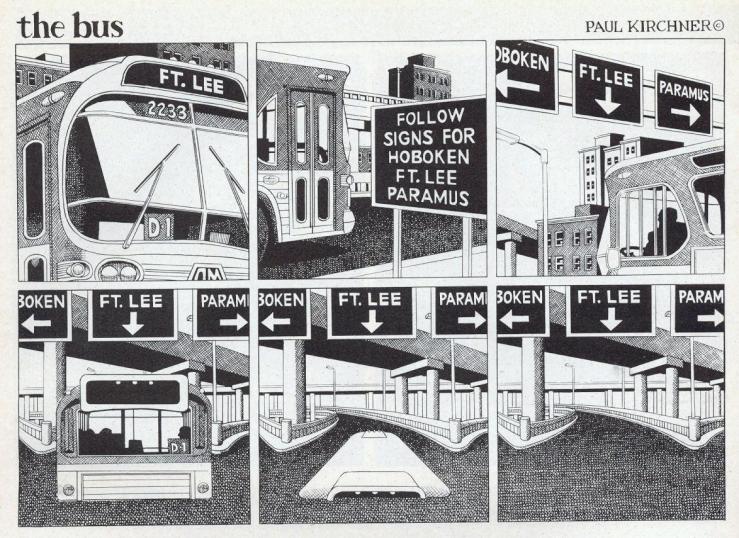
The Bus — Paul Kirchner

a

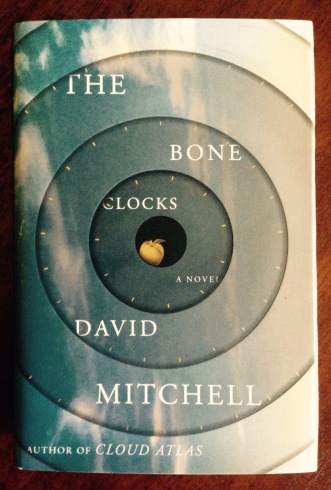
David Mitchell’s New Novel The Bone Clocks Falls Far Short of His Best Work

IMG_3700

David Mitchell’s latest novel The Bone Clocks is 624 pages in hardback, its sprawling metaphysical plot jammed into six overlapping sections that move through six decades and several genres. Any number of critical placeholders might be applied here: Sweepingambitious, genre-skeweringkaleidoscopic (I stole that last one from the book jacket). Or, perhaps we prefer our descriptors more academic? Okay: Postmodernmetatextualmetacritical, polyglossic. With The Bone Clocks, Mitchell has used these functional, formal postmodernist techniques to string together a few good novellas with some not-so-good novellas into a novel that’s not bad—but also not particularly good.The Bone Clocks is just okay. It fills space, it fills time. But unlike Mitchell’s previous stronger novels—Black Swan Green and Cloud Atlas in particular—The Bone Clocks fills without nourishing.

The Bone Clocks opens in 1984 with “A Hot Spell,” introducing us to the novel’s ostensible subject, Holly Sykes, a fifteen year-old who runs away from home. This section also introduces us to Mitchell’s consistent idiom here, a first-person present tense narration that forces the plot forward like an engine. When Mitchell needs to deliver any background information, the narrator simply trots out old memories, or a character politely shows up to dump exposition. The exposition-dumping is particularly egregious in the novel’s final sections.

Our heroine Holly Sykes helps out with some of that exposition early on, filling in some of the contours we’ll need to understand if we want to suss out the Big Metaphysical Plot of The Bone Clocks: There are “the radio people,” voices that contact Holly, um, telepathically; there are the strange figures of Marinus and Constantin; there is the drama of Holly’s deep-souled, old-souled little brother Jacko, who ominously makes her memorize a labyrinthine map in the book’s early pages (foreshadowing!):

The one Jacko’s drawn’s actually dead simple by his standards, made of eight or nine circles inside each other.

“Take it,” he tells me. “It’s diabolical.”

“It doesn’t look all that bad to me.”

“ ‘Diabolical’ means ‘satanic,’ sis.”

“Why’s your maze so satanic, then?”

“The Dusk follows you as you go through it. If it touches you, you cease to exist, so one wrong turn down a dead end, that’s the end of you. That’s why you have to learn the labyrinth by heart.”

Christ, I don’t half have a freaky little brother.

“Right. Well, thanks, Jacko. Look, I’ve got a few things to—” Jacko holds my wrist. “Learn this labyrinth, Holly. Indulge your freaky little brother. Please.” That jolts me a bit.

See how young Holly doesn’t quite cotton that Jacko has, like, responded to her by using the same phrase she thought but didn’t say aloud? Mitchell has a talent for crafting characters like this—characters who can’t see their own blind spots, characters utterly naïve to how we see them. Mitchell excelled at this technique in Black Swan Green, whose narrator Jason Taylor describes for us what he cannot name or fully understand. Holly’s 1984 narrative often feels like a rewrite of Black Swan Green. Jason actually shows up—sort of—in The Bone Clocks; his cousin Hugo Lamb, a minor character in Black Swan Green, narrates the section after young Holly’s story.

Hugo Lamb’s “Myrrh Is Mine, Its Bitter Perfume” propels us to 1991. Lamb is a charming, conniving con man. If young Holly echoes Adam Ewing of Mitchell’s superior novel Cloud Atlas in her naïve innocence (she does), then Hugo Lamb echoes Cloud Atlas’s genius con man, Robert Frobisher. Indeed, most of the central narrators in The Bone Clocks read like familiar repetitions of characters from Cloud Atlas. I enjoyed Frobisher’s plotting and scheming, and I enjoyed it again in Lamb, a sympathetic rake. I was digging The Bone Clocks all through his section, despite feeling vaguely worried that Mitchell was not exactly doing much to flesh out The Big Metaphysical Plot that would have to hold this thing together.

Continue reading “David Mitchell’s New Novel The Bone Clocks Falls Far Short of His Best Work”

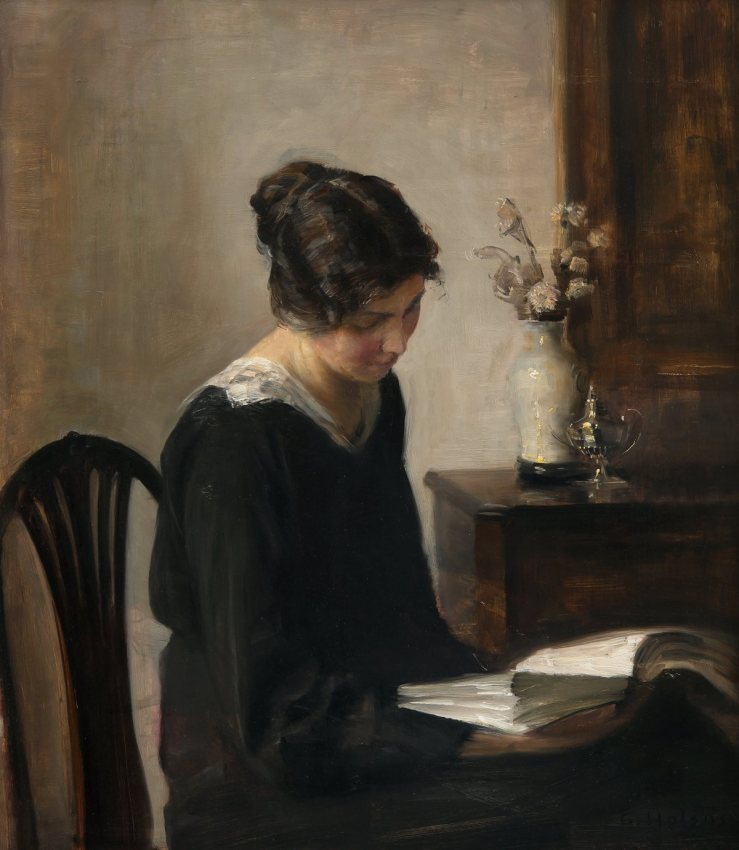
Lady in Black — Carl Vilhelm Holsøe

carl-vilhelm-holsc3b8e-lady-in-black

Misery — Nikolay Bogdanov-Belsky

“Authenticity’s Wiped Out” — A Passage from William Gaddis’s Last Novel, Agapē Agape

William Gaddis’s last novel Agapē Agape is a bitter, funny rant, a monologic stream-of-consciousness that, through its extreme powers of synthesis, spills over into heteroglossic eruptions, a carnival of erudite voices. Driven by terrible physical pain, hints of madness, and, most of all, the need to “explain all this” before he dies, the voice of the novel (surely Gaddis himself) channels cultural historian Johan Huizinga and philosopher Walter Benjamin into a conversation about the conflict of art and commerce set against the backdrop of the rise of mass culture:

. . . falls right into line doesn’t it, collapse of authenticity collapse of religion collapse of values what Huizinga called one of the most important phases in the history of civilization, and Walter Benjamin picks it up in his Art in the Age of Mechanical Reproduction in this heap somewhere, the authentic work of art is based in ritual he says, and wait Mr. Benjamin, got to get in there the romantic mid-eighteenth century aesthetic pleasure in the worship of art was the privilege of the few. I was saying, Mr. Huizinga, that the authentic work of art had its base in ritual, and mass reproduction freed it from this parasitical dependence. Ah, quite so Mr. Benjamin quite so, turn of the century religion was losing its steam and art came in as its substitute would you say? Absolutely Mr. Huizinga, and I’d add that this massive technical reproduction of works of art could be manipulated, changed the way the masses looked at art and manipulated them. Inadvertently Mr. Benjamin you might say that art now became public property, for the simply educated Mona Lisa and the Last Supper became calendar art to hang over the kitchen sink. Absolutely Mr. Huizinga, Paul Valery saw it coming, visual and auditory images brought into homes from far away like water gas and electricity and finally, God help us all, the television. Positively Mr. Benjamin, with mechanization, advertising artworks made directly for a market what America’s all about. Always has been, Mr. Huizinga. Always has been, Mr. Benjamin. Everything becomes an item of commerce and the market names the price. And the price becomes the criterion for everything. Absolutely Mr. Huizinga! Authenticity’s wiped out when the uniqueness of every reality is overcome by the acceptance of its reproduction, so art is designed for its reproducibility. Give them the choice, Mr. Benjamin, and the mass will always choose the fake. Choose the fake, Mr. Huizinga! Authenticity’s wiped out, it’s wiped out Mr. Benjamin. Wiped out, Mr. Huizinga. Choose the fake, Mr. Benjamin. Absolutely, Mr. Huizinga! Positively Mr. Benjamowww! Good God! a way to find a sharp pencil just sit still avoid stress stop singing what, anybody heard me they’d think I was losing my, that I’d lost it yes maybe I have . . .

Wild Game in Black — Giovanni Boldini

Dead Man’s Time (Book Acquired, 10.10.2014)

IMG_3592

Peter James’s Dead Man’s Time. Publisher’s blurb:

A vicious robbery at a secluded Brighton mansion leaves its elderly occupant dying. Millions of pounds’ worth of valuables have been stolen.

But as Detective Superintendent Roy Grace, heading the enquiry, rapidly learns, there is one priceless item of sentimental value that her powerful family cherish above all else. And they are fully prepared to take the law into their own hands, and will do anything – absolutely anything – to get it back.

Within days, Grace is racing against the clock, following a murderous trail that leads him from the shady antiques world of Brighton, across Europe, and all the way back to the New York waterfront gang struggles of 1922, chasing a killer driven by the force of one man’s greed and another man’s fury.

A reissue of the ninth novel in the multi-million copy bestselling Roy Grace series, from the #1 chart topper, Peter James

The Death of Don Quixote — Gustave Doré

So my other blog, Gustave Doré’s Don Quixote, has come to an end with the death of the Don.

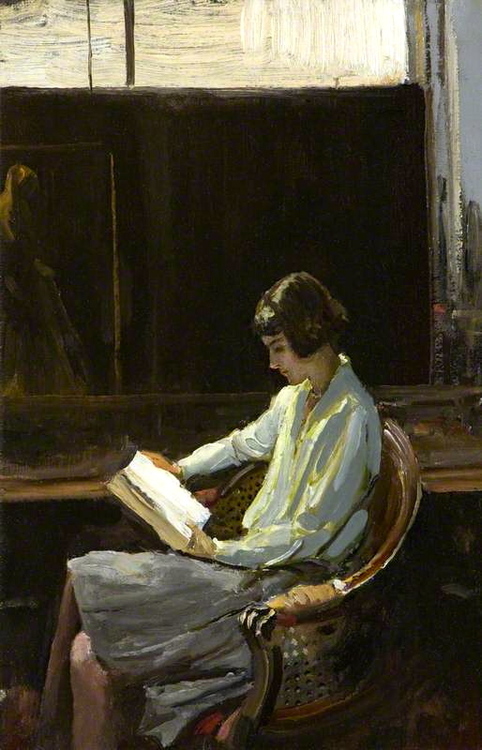
Alice — John Lavery

(c) Rosenstiel's; Supplied by The Public Catalogue Foundation

Black Bowl — George Seeley

black-bowl-1907

“Tragic Hunt” — Michelangelo Antonioni

IMG_3611

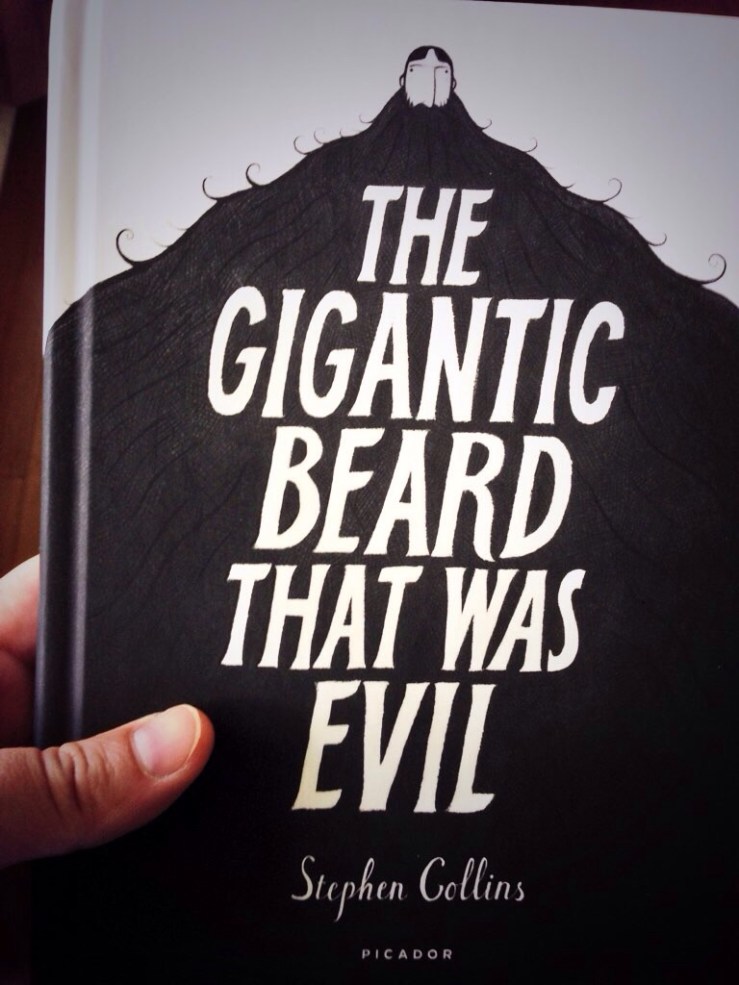
The Gigantic Beard That Was Evil (Book Acquired, 10.07.2014)

IMG_3543

Stephen Collins’s The Gigantic Beard That Was Evil is really really good. Full review forthcoming.

Scenes from the Life of David — Hans Sebald Beham

6725-scenes-from-the-life-of-david-hans-sebald-beham

“She Unnames Them” — Ursula K. Le Guin

“She Unnames Them”

by

Ursula K. Le Guin

MOST of them accepted namelessness with the perfect indifference with which they had so long accepted and ignored their names. Whales and dolphins, seals and sea otters consented with particular alacrity, sliding into anonymity as into their element. A faction of yaks, however, protested. They said that “yak” sounded right, and that almost everyone who knew they existed called them that. Unlike the ubiquitous creatures such as rats and fleas, who had been called by hundreds or thousands of different names since Babel, the yaks could truly say, they said, that they had a name. They discussed the matter all summer. The councils of elderly females finally agreed that though the name might be useful to others it was so redundant from the yak point of view that they never spoke it themselves and hence might as well dispense with it. After they presented the argument in this light to their bulls, a full consensus was delayed only by the onset of severe early blizzards. Soon after the beginning of the thaw, their agreement was reached and the designation “yak” was returned to the donor.

Among the domestic animals, few horses had cared what anybody called them since the failure of Dean Swift’s attempt to name them from their own vocabulary. Cattle, sheep, swine, asses, mules, and goats, along with chickens, geese, and turkeys, all agreed enthusiastically to give their names back to the people to whom—as they put it—they belonged.

A couple of problems did come up with pets. The cats, of course, steadfastly denied ever having had any name other than those self-given, unspoken, ineffably personal names which, as the poet named Eliot said, they spend long hours daily contemplating though none of the contemplators has ever admitted that what they contemplate is their names and some onlookers have wondered if the object of that meditative gaze might not in fact be the Perfect, or Platonic, Mouse. In any case, it is a moot point now. It was with the dogs, and with some parrots, lovebirds, ravens, and mynahs, that the trouble arose. These verbally talented individuals insisted that their names were important to them, and flatly refused to part with them. But as soon as they understood that the issue was precisely one of individual choice, and that anybody who wanted to be called Rover, or Froufrou, or Polly, or even Birdie in the personal sense, was perfectly free to do so, not one of them had the least objection to parting with the lowercase (or, as regards German creatures, uppercase) generic appellations “poodle,” “parrot,” “dog,” or “bird,” and all the Linnaean qualifiers that had trailed along behind them for two hundred years like tin cans tied to a tail. Continue reading ““She Unnames Them” — Ursula K. Le Guin”

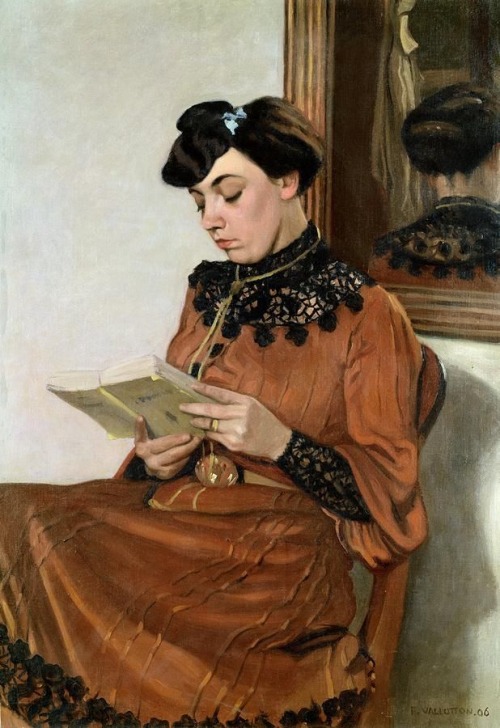
Woman Reading — Felix Vallotton

tumblr_naiidpvSQo1tvjj4lo1_500

Scented meat

IMG_0123.PNG