Joan of Arc — Jules Bastien-Lepage

An Excerpt from Thomas Bernhard’s “Concrete”

At last we found ourselves standing in front of one of the thousands of square marble plaques enclosed in concrete. On it was to be read, freshly incised, the name Isabella Fernandez. Anna Härdtl, with tears in her eyes, tried to fasten her husband’s photograph to the marble plaque, but was at first unable to do so. By chance I had in my pocket the end of a roll of adhesive tape and used this to stick the photograph to the marble. Anna had previous written the name of her husband, Hans Peter Härdtl, in pencil under that of Isabella Fernandez, and though partly obliterated by the rain, it could still be clearly read. Poor people, she said, or those who suddenly became victims of a misfortune such as she had suffered and could make themselves understood, were buried, when they died, the very same day in an above-ground concrete block like this, which is often meant not just for two, but for three bodies.

The Fall of the House of Usher (1928 Short Film)

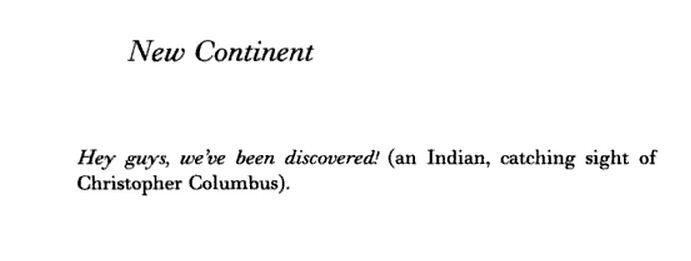
“New Continent” — Georges Perec

Ugolino Martelli — Agnolo Bronzino

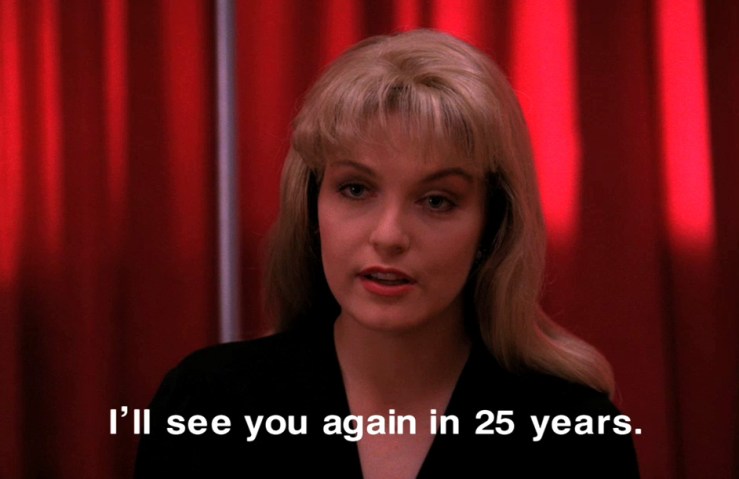
I’ll see you again in 25 years

tumblr_m74xotr7Wj1rwnwnfo1_1280 tp

Adam purchases guitars (Only Lovers Left Alive)

An idiom characterizes a society (Flannery O’Connor)

An idiom characterizes a society, and when you ignore the idiom, you are very likely ignoring the whole social fabric that could make a meaningful character. You can’t cut characters off from their society and say much about them as individuals. You can’t say anything meaningful about the mystery of a personality unless you put that personality in a believable and significant social context. And the best way to do this is through the character’s own language. When the old lady in one of Andrew Lytle’s stories says contemptuously that she has a mule that is older than Birmingham, we get in that one sentence a sense of a society and its history. A great deal of the Southern writer’s work is done for him before he begins, because our history lives in our talk. In one of Eudora Welty’s stories a character says, ‘Where I come from, we use fox for yard dogs and owls for chickens, but we sing true.’ Now there is a whole book in that one sentence; and when the people of your section can talk like that, and you ignore it, you’re just not taking advantage of what`s yours. The sound of our talk is too definite to be discarded with impunity, and if the writer tries to get rid of it, he is liable to destroy the better part of his creative power.

From Flannery O’Connor’s lecture “Writing Short Stories.” Republished in Mystery and Manners.

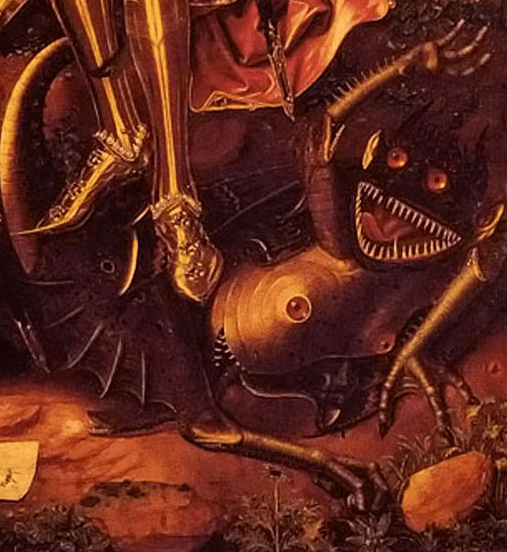
Saint Michael Triumphs over the Devil (Detail) — Bartolomé Bermejo

Capture

Snow White Swallows the Poisoned Apple — Paula Rego

Selections from One-Star Amazon Reviews of Mary Shelley’s Frankenstein

[Ed. note: The following citations come from one-star Amazon reviews of Mary Shelley’s novel Frankenstein. (See also: Thomas Pynchon’s Gravity’s RainbowGeorge Orwell’s 1984, Melville’s Moby-Dick, Joyce’s Ulysses and Markson’s Wittgenstein’s Mistress). I’ve preserved the reviewers’ own styles of punctuation and spelling].

Take it from me, a seasoned man of literature.

This book had a really good idea for a story.

Well, Mary Shelley was a teen when she wrote this.

And why do they call it a “horror story”?

I would rather read the berstein bears.

How does a gathering of dead limbs and organs produce super human strength?

Mary Shelley uses a lot of fancy words and complicated sentence stucture but the book really doesn’t say anything.

I don’t really care what the mountains looked like.

I would not recommend this book to anyone under the age of 40.

horribly and not understandably written

if you want to read this book, you will need knowledge of five words; reverence, countenence; ardour; odious; benevolence.

I probably skipped over 50% of the pages.

Unfortuantely, literature is an art

Its amazing that in less than a year, a monster, made from dead criminals can learn to speak better than i have been able to in my entire life.

UMMM CAN WE SAY “SUCKY” ?

There is no underlying message

I didn’t think anything could be worse then Kafka’s “The Metamorphosis”.

I decided to channel my inner John McCain and just survive the torture.

Hollywood does a better job with the story than the original author.

a “sissy” plot

One word. “Endeavor” This word was used ATLEAST 4 times a page on every page of the book when Victor is talking.

SORRY, BUT THIS BOOK DID NOT ENTERTAIN ME AT ALL, I THOUGHT IT WAS NOT EXACTLY WHAT YOU WOULD CALL “HORROR” WICH IS WHAT I WAS EXPECTING.

By the way? Where did he get the pieces of dead people?

I didn’t think anyone could make a 160 page book seem so long!

I threw it out my window.

I’d put this alongside other amateur horror authors like Stephen King

The whole novel is full of such ridiculous co-incidences and logical inconsistencies.

And talk about repetative.

The creature went from hideous dumb clod to hideous Collin Firth in a matter of months via eavesdropping on some peasants.

Movie was a million times better than that stupid story but I will say that it was very poorly written

ok this book does not deserve the title of a horror story its not scary in the leat bit.

Shelley is not only a terrible author, she is also an ignorant and prejudiced one.

It just had too much detail

I had seen the movie, and usually, if I like the movie, I like the book even better, but this time they really improved on the book.

Mary Shelley was the Stephanie Meyer of her generation, and her novel should be shelved with the chic-lit vampire romances and other such fare read avidly by teenage girls.

READ DRACULA ITS WY BETTER!

What can i say? This is not a great product, and not worth any stars.

Well I think I made my point.

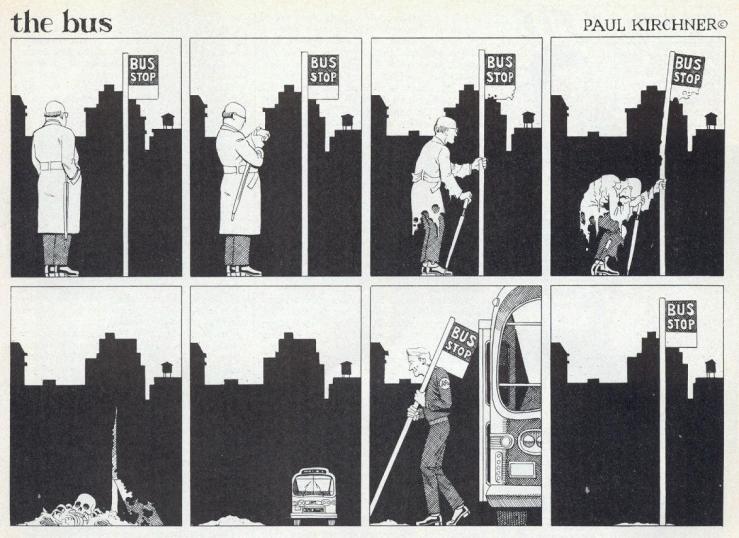
The Bus — Paul Kirchner

hQiAqo0

The Cotter’s Saturday Night — David Wilkie

Fudoh: The New Generation — Takashi Miike (Full Film)

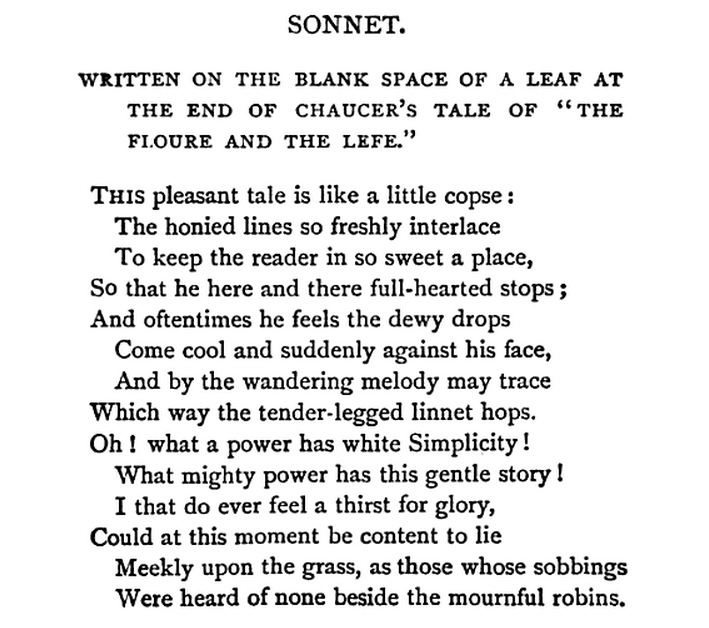
“Written on the Blank Space of a Leaf at the End of Chaucer’s Tale of ‘The Floure and the Lefe'” — John Keats

jk

Lovers (Bone Music) — Piroska Szanto

Read an excerpt from Denis Johnson’s forthcoming novel, The Laughing Monsters

In Arua we took rooms at The White Nile Palace Hotel. Here was the palace, but we’d crossed the Nile twenty kilometers ago. We arrived at night and formed no impression of the surrounding neighborhood except by its sounds—goats and cattle, arguments and celebrations. Surveying the parking area and later the tables in the café, I judged we’d come among missionaries and relief workers—Médecins sans Frontières sorts of people with good, big SUVs and clean hiking shoes. The grounds were well-kept and our quarters were comfortable. I hadn’t quite expected that.


At dinner Michael was nowhere in evidence. Davidia and I shared a table with an elderly, exhausted French woman of Arab descent who told us she studied torture. “And once upon a time before this, I spent years on a study of the Atlantic slave trade. Angola. Now it’s an analysis of the practices of torture under Idi Amin. Slavery. Torture. Don’t call me morbid. Is it morbid to study a disease? That’s how we find the cure for it. What is the cause of man’s inhumanity to man? Desensitization. The numbness of the perpetrator. Whether an activity produces pleasure, pain, discomfort, guilt, joy, triumph—before too long the soul grows tired and stops feeling. It doesn’t take long. Not too long at all, and then man becomes the devil, he laughs at his former scruples, he enslaves and tortures without compunction.” The woman’s taut, quivering neck, her mouth opening and closing . . . Halfway through her dessert of ice cream with chocolate sauce, without a word, she got up and left the table.

Read the rest of the excerpt at FS&G’s blog Work in Progress.