St. Jerome and the Lion — Rogier van der Weyden

The Death of Cain — George Frederick Watts

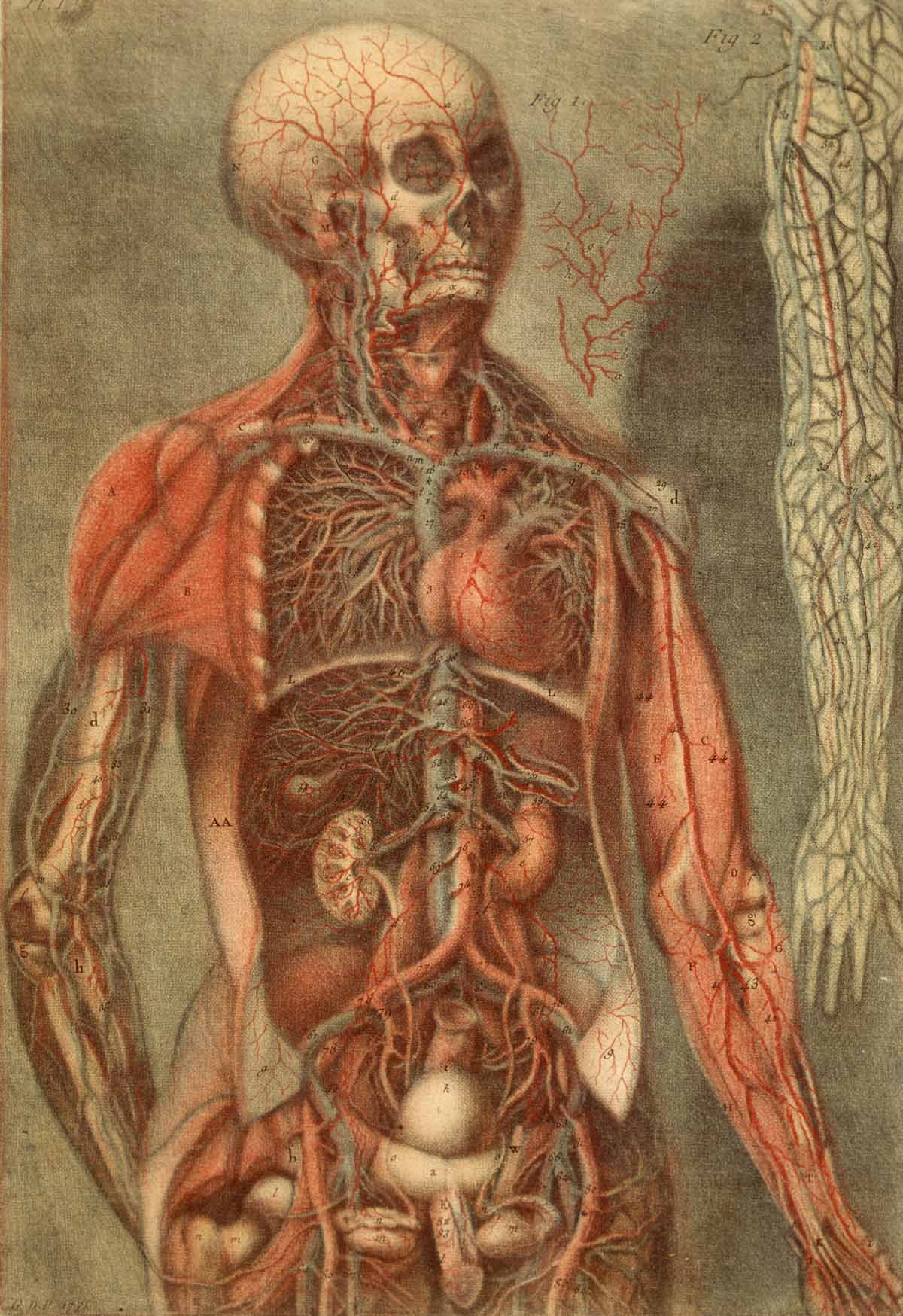
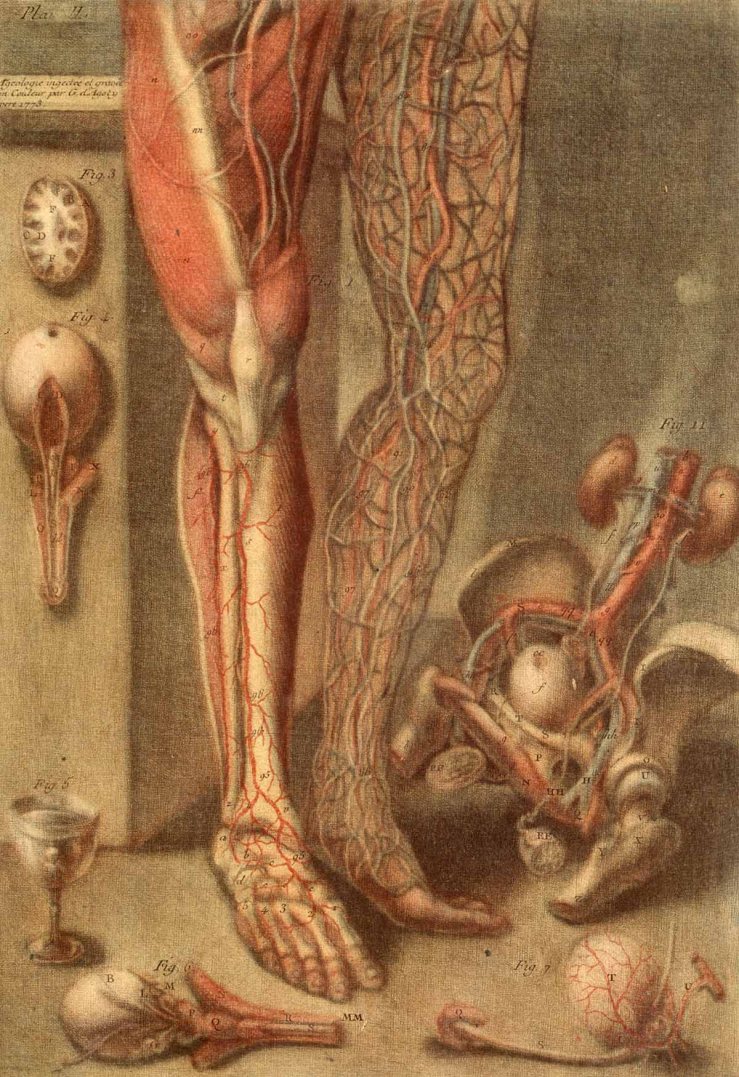
Anatomy of Man — Jacques Fabien Gautier D’Agoty

I-E-2-04a I-E-2-04b

Selections from One-Star Amazon Reviews of David Foster Wallace’s Infinite Jest

[Ed. note: I usually don’t preface these one-star Amazon selection riffs with much, other than to note the occasion for the post. In this case, the occasion is my coming to the end of a second reading of Pynchon’s novel Gravity’s Rainbow, a novel that is very much about the military-industrial-entertainment complex. And so well anyway, I keep thinking about Infinite Jest, which I have not read in full since 2002, but plan to reread later this summer. I expected Pynchon to show up a few times in the one-star reviews, but he’s present throughout, often obliquely referenced. Otherwise, the one-star reviews are typical: Rants against academia, “literary elites,” etc. The term “self-indulgent” appears again and again. Only one reviewer bothers to engage the plot though.]

***

slop

passably clever

completely pointless

superfluous logorrhea

spawn of PC Elitist writers

reads like a math textbook

This is the T.S. Eliot Effect

terminally adolescent drivel.

The footnotes have footnotes.

Big words and run-on sentences

utterly lacking in aesthetic merit

I only read the first 50 pages or so

wow, that’s a heck of a lot of words.

challenging, involving, and horrifying

A humorous book? – no. Absurd – Yes.

never made it to the end of chapter one.

I never did get through Gravity’s Rainbow

the magnum opus of American hipsterism.

the worst science fiction novel ever written.

If you like Pynchon, fine, go ahead, you’ll like this.

over a hundred pages of notes that serve no purpose

I pride myself on being an intelegent well read person

At least Pynchon, has humor, literary references, etc.

He probably sold more books on hype than on talent.

All in all, I suppose Wallace will just become a footnote.

this book(?) would not be worth the money if it was free

I trie d to think of Catcher in the Rye, but no comparison.

If you want to be warm, burn your overrated copy of Infinite Jest.

Wallace makes up words which does not help one reading a story.

I think it was in that book that I learned the word “omphaloskepsis.”

I’ll bet Dave had to beat off the nubile young co-eds after they read this one

obviously didn’t follow Elmore Leonard’s last tenet of his “10 Rules for Writing”

I suppose that some might consider Wallace a great writer, but was he popular?

It’s written in the first-person from the point of view of a mentally ill teenager.

he filled it with worthless footnotes that pretend to enlighten the victim of his prose

I just don’t understand how my fellow Amazon reviewers could have scored this book highly.

I realize that this book is considered to be “literature” but IMHO the internal ravings of mentally ill people isn’t literature.

It is called “INFINITE JETS” but there is not a single aircraft within, in fact the book is about people on land with drugs problems.

The book contains an anecdote plagiarized from the humorist, Gerard Hoffnung, who recorded it in the 1950s.

700 pages of clumsy sci-fi and the kind of smarty pants absurdist nonsense you’d expect from a precocious middle schooler

The premise for this novel derives from a Monty Python sketch in which the world’s funniest joke is also fatal.

Oh one other thing that drove me crazy: he started so many sentences with “And but so..” or “So but and…”

if Finnegans Wake was a rancid fart that was proudly left to rip, Infinite Jest is a weak one, lacking sound and odor.

Just a bunch of irrelevant words to set the scene…. not to mention he described everything into painful detail.

a kid thinks he’s going to the dentist but it’s really some sort of counselor and they have a long battle of wits to see which one of them is the bigger booger-eating nerd

DWF is desperately trying to emulate one of the century’s greatest authors, and utterly fails.

Put down the bong, go outside and get some real world experience before putting pen to paper.

Comparing Wallace to Pynchon is like comparing a kettle of sponges to Disney World

Academics also praise it as a badge of courage for (allegedly) reading it

It’s just the narrator’s interior thoughts about trying to buy drugs.

I was two pages in and started to feel confused, zoned out, and lost.

It reads like the stream of consciousness of a spoiled 10th grader.

What I read would have gotten an F in a freshman writing class.

The style is Pynchon. And by style, I mean, an exact duplication

At least, now I know where Dave Eggers ripped off his garbage

sorry Amazon,you definitely missed the boat with this one.

completely lacking in any kind of moral or ethical center

He and this book are simply silly, and a waste of pulp.

Book was a work of art, one I wasted my time viewing.

seems to spend forever talking about tennis and drugs

Characters are unbelievable and are over analyzed

Sure, he was making good points, for the 1990s!

Reading a thesaurus does not count as research.

Over 1000 pages of pseudo-subersiveness.

It’s the tyranny of the English Deparment

I only read about four percent of the book

For my taste, there were too many words

I think his suicide inflated his reviews.

I still feel awful thinking about it.

narcissistic garbage

wannabe Pynchon

Bad read no stars.

…is this an essay?

Generic Pynchon

Troglodyte.

Boring.

Skip it.

“All art constantly aspires towards the condition of something or other”

Montparnasse — Jury Annenkov

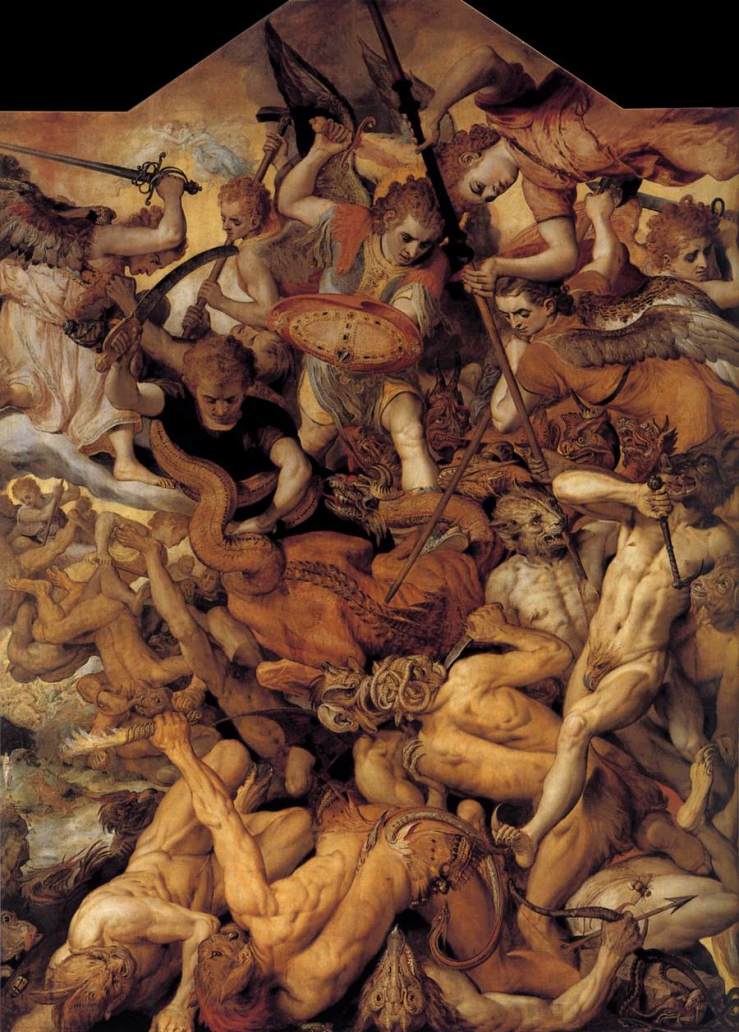
The Fall of the Rebellious Angels — Frans Floris

tumblr_llk0cyneN21qzix81o1_1280

The consciousness contained in any text (William H. Gass)

…the consciousness contained in any text is not an actual functioning consciousness; it is a constructed one, improved, pared, paced, enriched by endless retrospection, irrelevancies removed, so that into the ideal awareness that I imagined for the poet, who possesses passion, perception, thought, imagination, and desire, and has them present in amounts appropriate to the circumstances-just as, in the lab, we need more observation than fervor, more imagination than lust-there are introduced patterns of disclosure, hierarchies of value, chains of inference, orders of images, natures of things.

From William H. Gass’s essay “The Book as a Container of Consciousness,” published in his collection Finding a Form and available online as a pdf at Wilson Quarterly.

Anschluss: Alice in Wonderland — Oskar Kokoschka

Hearing Paul Thomas Anderson

Edited by Jacob T. Swinney. Via AV Club.

Animals of the Sea — Odilon Redon

God’s spoilers (Gravity’s Rainbow)

What you felt stirring across the land… it was the equinox… green spring equal nights… canyons are opening up, at the bottoms are steaming fumaroles, steaming the tropical life there like greens in a pot, rank, dope-perfume, a hood of smell… human consciousness, that poor cripple, that deformed and doomed thing, is about to be born. This is the World just before men. Too violently pitched alive in constant flow ever to be seen by men directly. They are meant only to look at it dead, in still strata, transputrefied to oil or coal. Alive, it was a threat: it was Titans, was an overpeaking of life so clangorous and mad, such a green corona about Earth’s body that some spoiler had to be brought in before it blew the Creation apart. So we, the crippled keepers, were sent out to multiply, to have dominion. God’s spoilers. Us. Counterrevolutionaries. It is our mission to promote death. The way we kill, the way we die, being unique among the Creatures. It was something we had to work on, historically and personally. To build from scratch up to its present status as reaction, nearly as strong as life, holding down the green uprising. But only nearly as strong.

Only nearly, because of the defection rate. A few keep going over to the Titans every day, in their striving subcreation (how can flesh tumble and flow so, and never be any less beautiful?), into the rests of the folksong Death (empty stone rooms), out, and through, and down under the net, down down to the uprising.

In harsh-edged echo, Titans stir far below. They are all the presences we are not supposed to be seeing—wind gods, hilltop gods, sunset gods—that we train ourselves away from to keep from looking further even though enough of us do, leave Their electric voices behind in the twilight at the edge of the town and move into the constantly parted cloak of our nightwalk till

Suddenly, Pan—leaping—its face too beautiful to bear, beautiful Serpent, its coils in rainbow lashings in the sky—into the sure bones of fright—

Don’t walk home at night through the empty country. Don’t go into the forest when the light is too low, even too late. Don’t go into the forest when the light is too low, even too late in the afternoon—it will get you. Don’t sit by the tree like this, with your cheek against the bark.

From Thomas Pynchon’s Gravity’s Rainbow, pages 720-21.

Woman Reading — Utagawa Kuniyoshi

Angels — Giovanni Boldini

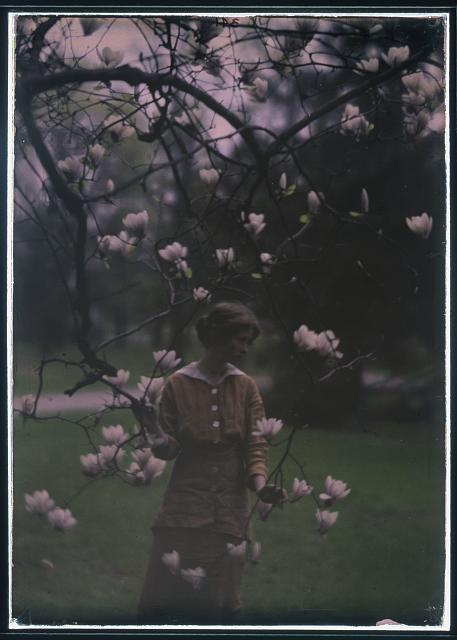
Edna St. Vincent Millay at Mitchell Kennerley’s house in Mamaroneck, New York — Arnold Genthe

7a18029r

On Mad Men’s cynical finale

In an early scene in “Person to Person,” the series finale of Mad Men, Joan Holloway tries cocaine for the first time. “I feel like someone just gave me very good news,” she beams, offering an advertising tag. The coke-sniffing detail seemed odd to me at first—perhaps it was another way for the series to signal the end of the sixties, to introduce the next drug, the next product to fuel future decades.

The final moments of “Person to Person,” however, show that the cocaine scene is an early reading rule. Joan’s testimony of the “Good News” comes from artificial inducement. Impermanent, intoxicating, and addictive, the coke here prefigures the Coke at the show’s end. Fittingly, Mad Men ends with a television commercial, the 1971 “I’d Like to Buy a the World a Coke” Coca-Cola ad.

The ad itself is a genius piece of propaganda: Buy a Coke, become a better person. Not feeling so good? Buy some more Coke. This ad strikes me as a prototypical example of what Slavoj Žižek would critique a few decades later as “the ultimate form of consumerism,” products that allow us “to be a consumerist, without any bad conscience, because the price for the countermeasure, for fighting consumerism, is already included into the price of a commodity.”

What’s the countermeasure, the counterforce then? All those supposed-values of the 1960s, which Don plunders for his career-restoring campaign. He cribs this vision of peace, love, and understanding from the New Age hucksters who are only too happy to take what’s left of our ad man’s money.

Don’s insight comes through a (purposefully facile?) moment of catharsis. In group therapy, a man takes the empty chair that Don’s counselor would have liked Don to fill himself. Don is spared testifying; the stranger will perform in his stead. He tells a story about feeling like a product on a shelf in a fridge, isolated, alienated. The core of his little monologue is about not understanding love, not knowing how to love or be loved. In a rare moment of empathy, Don has his big important cathartic release, and hugs the man, who has reminded Don of what Don already knew, but had been ignoring: People want to feel loved.

Earlier in the season, Don shot down an ad idea that had to do with love — “Love again? We always use that,” he says (or something close to that). But here, disconnected (almost all meaningful conversations in the episode are mediated through telephones), he’s reminded that what people want is touch, the sensation or feeling of love. And he can sell them that: The feeling of the feeling of love. 

Here’s the show’s last moments:

The pat montage ties an unusually neat bow on the series’ major storylines. I’d argue that it’s best read ironically, something of a send-up of our desires, our wish for the characters we “love” to experience “love.”

This ironic reading bears out in light of the notes that punctuate the conclusion. The meditation-leader promises “new lives…a new you,” words that might be used to sell almost anything, from soap to hope. A chime then initiates om meditation, and the series ends with three notes: The chime, a smile on Don’s face, and the opening bars of “I’d Like to Buy a the World a Coke.” The chime recalls a ringing cash register, and Don’s smile is an epiphany of how to sell love. Matthew Weiner ends his seven season project with an ad, a cynical joke on the audience. I loved it.

Or maybe my ironic reading is wrong. Maybe there isn’t a cynical joke on the audience here. Maybe the simple resolutions were the best Weiner et al could do. Maybe the show is just a really good-looking glossy prime-time soap opera (it is), and like all soap operas it was designed to sell soap.

St. Barbara (Werl Altarpiece) — Robert Campin