Ascent — Jeremy Geddes

JeremyGeddes_Ascent

Read “Spunk,” a short story by Zora Neale Hurston

“Spunk”

by

Zora Neale Hurston

A giant of a brown-skinned man sauntered up the one street of the Village and out into the palmetto thickets with a small pretty woman clinging lovingly to his arm.

“Looka theah, folkses!” cried Elijah Mosley, slapping his leg gleefully. “Theah they go, big as life an’ brassy as tacks.”

All the loungers in the store tried to walk to the door with an air of nonchalance but with small success.

“Now pee-eople!” Walter Thomas gasped. “Will you look at ’em!”

“But that’s one thing Ah likes about Spunk Banks—he ain’t skeered of nothin‘ on God’s green footstool—nothin’! He rides that log down at saw-mill jus‘ like he struts ’round wid another man’s wife—jus‘ don’t give a kitty. When Tes’ Miller got cut to giblets on that circle-saw, Spunk steps right up and starts ridin’. The rest of us was skeered to go near it.”

A round-shouldered figure in overalls much too large, came nervously in the door and the talking ceased. The men looked at each other and winked.

“Gimme some soda-water. Sass’prilla Ah reckon,” the newcomer ordered, and stood far down the counter near the open pickled pig-feet tub to drink it.

Elijah nudged Walter and turned with mock gravity to the new-comer.

“Say, Joe, how’s everything up yo‘ way? How’s yo’ wife?”

Joe started and all but dropped the bottle he held in his hands. He swallowed several times painfully and his lips trembled.

“Aw ‘Lige, you oughtn’t to do nothin’ like that,” Walter grumbled. Elijah ignored him.

“She jus‘ passed heah a few minutes ago goin’ theta way,” with a wave of his hand in the direction of the woods.

Now Joe knew his wife had passed that way. He knew that the men lounging in the general store had seen her, moreover, he knew that the men knew he knew. He stood there silent for a long moment staring blankly, with his Adam’s apple twitching nervously up and down his throat. One could actually see the pain he was suffering, his eyes, his face, his hands and even the dejected slump of his shoulders. He set the bottle down upon the counter. He didn’t bang it, just eased it out of his hand silently and fiddled with his suspender buckle.

“Well, Ah’m goin‘ after her to-day. Ah’m goin’ an’ fetch her back. Spunk’s done gone too fur.”

He reached deep down into his trouser pocket and drew out a hollow ground razor, large and shiny, and passed his moistened thumb back and forth over the edge.

“Talkin‘ like a man, Joe. Course that’s yo’ fambly affairs, but Ah like to see grit in anybody.”

Joe Kanty laid down a nickel and stumbled out into the street.

Dusk crept in from the woods. Ike Clarke lit the swinging oil lamp that was almost immediately surrounded by candle-flies. The men laughed boisterously behind Joe’s back as they watched him shamble woodward.

“You oughtn’t to said whut you did to him, Lige—look how it worked him up,” Walter chided.

“And Ah hope it did work him up. ‘Tain’t even decent for a man to take and take like he do.”

“Spunk will sho’ kill him.”

“Aw, Ah doan’t know. You never kin tell. He might turn him up an‘ spank him fur gettin’ in the way, but Spunk wouldn’t shoot no unarmed man. Dat razor he carried outa heah ain’t gonna run Spunk down an‘ cut him, an’ Joe ain’t got the nerve to go up to Spunk with it knowing he totes that Army 45. He makes that break outa heah to bluff us. He’s gonna hide that razor behind the first likely palmetto root an‘ sneak back home to bed. Don’t tell me nothin’ ’bout that rabbit-foot colored man. Didn’t he meet Spunk an‘ Lena face to face one day las’ week an‘ mumble sumthin’ to Spunk ‘bout lettin’ his wife alone?”

“What did Spunk say?” Walter broke in—“Ah like him fine but ‘tain’t right the way he carries on wid Lena Kanty, jus’ cause Joe’s timid ‘bout fightin’.”

“You wrong theah, Walter. ‘Tain’t cause Joe’s timid at all, it’s cause Spunk wants Lena. If Joe was a passle of wile cats Spunk would tackle the job just the same. He’d go after anything he wanted the same way. As Ah wuz sayin’ a minute ago, he tole Joe right to his face that Lena was his. ‘Call her,’ he says to Joe. ‘Call her and see if she’ll come. A woman knows her boss an’ she answers when he calls.‘ ’Lena, ain’t I yo‘ husband?’ Joe sorter whines out. Lena looked at him real disgusted but she don’t answer and she don’t move outa her tracks. Then Spunk reaches out an‘ takes hold of her arm an’ says: ‘Lena, youse mine. From now on Ah works for you an’ fights for you an‘ Ah never wants you to look to nobody for a crumb of bread, a stitch of close or a shingle to go over yo’ head, but me long as Ah live. Ah’ll git the lumber foh owah house to-morrow. Go home an‘ git yo’ things together! ‘

” ‘Thass mah house,’ Lena speaks up. ‘Papa gimme that.’

“‘Well,’ says Spunk, ‘doan give up whut’s yours, but when youse inside don’t forgit youse mine, an’ let no other man git outa his place wid you!’

“Lena looked up at him with her eyes so full of love that they wuz runnin‘ over, an’ Spunk seen it an‘ Joe seen it too, and his lip started to tremblin’ and his Adam’s apple was galloping up and down his neck like a race horse. Ah bet he’s wore out half a dozen Adam’s apples since Spunk’s been on the job with Lena. That’s all he’ll do. He’ll be back heah after while swallowin‘ an’ workin‘ his lips like he wants to say somethin’ an’ can’t.”

“But didn’t he do nothin‘ to stop ’em?”

“Nope, not a frazzlin‘ thing—jus’ stood there. Spunk took Lena’s arm and walked off jus‘ like nothin’ ain’t happened and he stood there gazin‘ after them till they was outa sight. Now you know a woman don’t want no man like that. I’m jus’ waitin‘ to see whut he’s goin’ to say when he gits back.” Continue reading “Read “Spunk,” a short story by Zora Neale Hurston”

Girl — Tsuguharu Foujita

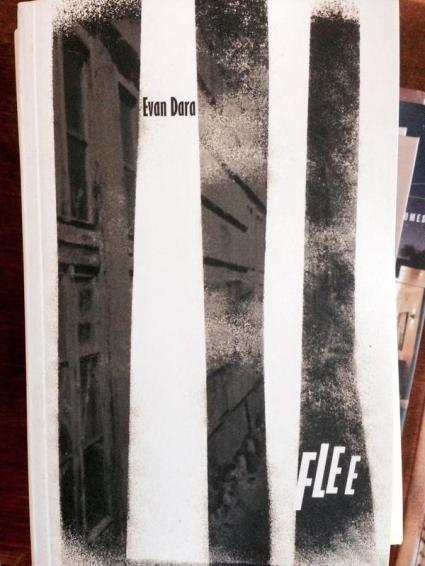
Some notes on beginning Evan Dara’s novel Flee

B8jFz0WCYAAghDz

A. What a cover on Evan Dara’s 2013 novel Flee, don’t you agree?

B. From the back cover:

IMG_5030

C. That’s all there is. Well, okay, there’s an ISBN too. But no blurbs, no other text.

D. “Something always going on—” is the first line of Flee. It’s also an apt description of Dara’s formal technique, a constantly-shifting series of dialogues, monologues, overlapping, cross-cutting, diverging—always out there ahead of the reader. That dash there—that dash is the simple summative signal of it all, a little typographic pole that simultaneously connects and interrupts.

E. The most obvious point of comparison for Dara’s technique (besides his amazing debut novel The Lost Scrapbook) is William Gaddis’s stuff, particularly J Rthe verbal dazzle, the few stray lines of poetic stage-setting in lieu of traditional exposition—the throw-the-reader-in-the-deep-end stuff. David Foster Wallace frequently attempted the same rhetorical mode, most successfully in §19 of The Pale King. (It’s entirely likely that The Lost Scrapbook could have had the same following that Infinite Jest achieved had Dara done anything to promote the book. But here I think of Gaddis in his Paris Review interview: “I’d go back to The Recognitions where Wyatt asks what people want from the man they didn’t get from his work, because presumably that’s where he’s tried to distill this ‘life and personality and views’ you speak of. What’s any artist but the dregs of his work: I gave that line to Wyatt thirty-odd years ago and as far as I’m concerned it’s still valid”).

F. The point of contrast though is Dara’s abrupt transition, sometimes it seems mid-sentence, from one speaker to the next. Just as we feel (nearly) comfortable with who this particular narrator might be, another voice interjects, or rather continues, or re-trajects the discourse—as in the second chapter of Flee (“38,842”), where a college student driving home in snowy weather to pick up a book by Paul Krugman gives over to a number of speakers all describing the closing of the local university, Pitkinson (this closing’s being the presumable, like, plot of Flee so far I suppose)—faculty and staff and townies and residents—until a grad student takes over to report the speech of one Professor Gray, himself bearing witness to the downfall of the school (Ghost Sociology is the issue)—and then of course the chapter gives over to more rumor, more speculation. “Something always going on—.”

G. So I’ve read the first three chapters (“38,839,” “38,842,” “36,551”). But wait: The next chapter (“35,717”–do the titles reflect the dwindling population of the town (Anderburg)?)—but wait the next chapter, I see by scanning, offers some new, perhaps, rhetorical gesture—a section in a different font? Chunkier paragraphs?

I have to go see about this. (More to come).

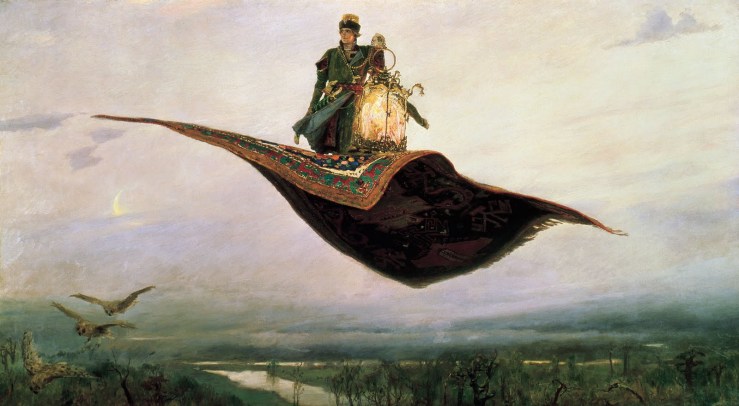
Flying Carpet — Viktor Vasnetsov

Viktor Mikhailovich Vasnetsov Flying Carpet

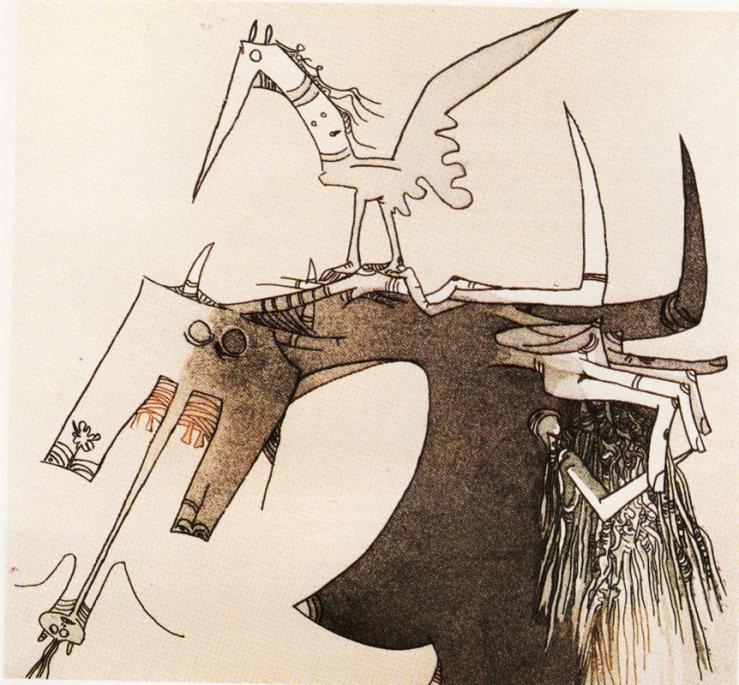
The Poet — Adrian Gottlieb

The_Poet_internet

A girl discovers the whole world in a leaf in Angela Steffen’s animated short film Lebensader

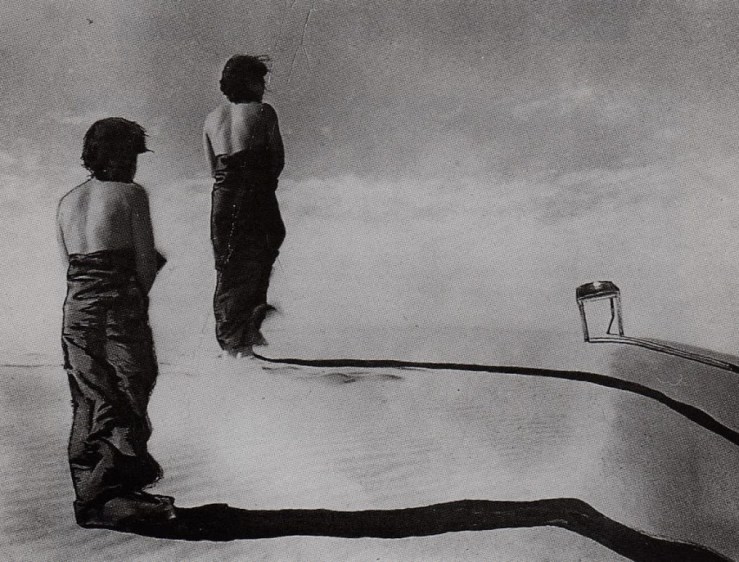
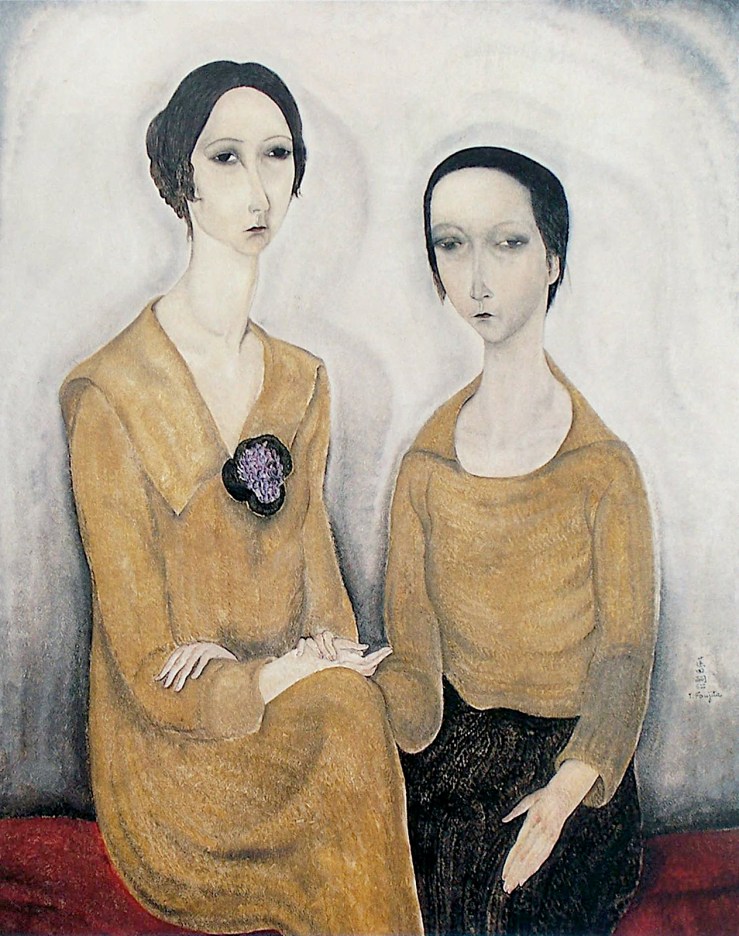
Untitled (Two Women) — Kansuke Yamamoto

EPSON035

Two Women — Tsuguharu Foujita

二人の女-Two-women-1918

Jane Bowles’s novel Two Serious Ladies confounds with sinister humor and dark delight

Two Women, Gwen John

Here’s a short review of Jane Bowles’s only novel, Two Serious Ladies: The book is amazing, a confounding, energetic picaresque suffused with sinister humor and dark delight. I read it knowing nothing about the plot on the recommendation of Ben Marcus, who described it as “so insane, so beautiful, and in some sense, unknowable to me. On the surface, it’s not really about much, but the arrangement of words does something chemical to me.” My recommendation is to dispense with the rest of my review and read Bowles’s novel.

“Unknowable” is a fair description, and Two Serious Ladies was met with bewilderment when it was first published in 1943, as Negar Azimi points out in the comprehensive essay “The Madness of Queen Jane”:

Edith Walton, writing in the Times Book Review, called the book senseless and silly: “To attempt to unravel the plot of ‘Two Serious Ladies’ would be to risk, I am sure, one’s own sanity.” Another reviewer said, simply, “The book is about nothing.” Jane’s family, in the meantime, found it unseemly in its stark depiction of lesbianism. Its characters, who have goals and motivations that are hard to grasp, were difficult to relate to. Yet another critic wrote, “The only shocking thing about this novel is that it ever managed to find its way to print.” Jane was only twenty-four.

The notion that “The book is about nothing,” is corrected by Marcus’s qualifier about its “surface”: Two Serious Ladies moves through the phenomenological world that its characters experience, but it does not mediate the concrete contours of that world in a way that its characters can name for the reader. When the characters, those two serious ladies, do stumble into language that might name, pin down, or otherwise fix their experience, fix their consciousness into a stable relation with the world, Bowles spins the wheel again, flings her characters into new scenarios. Moments of epiphany are transitory and hard-purchased. A (perhaps) illustrating passage, offered without context:

Mrs. Copperfield started to tremble after the girl had closed the door behind her. She trembled so violently that she shook the bed. She was suffering as much as she had ever suffered because she was going to do what she wanted to do. But it would not make her happy. She did not have the courage to stop from doing what she wanted to do. She knew that it would not make her happy, because only the dreams of crazy people come true. She thought that she was only interested in duplicating a dream, but in doing so she necessarily became the complete victim of a nightmare.

The free indirect style here still hides so much from the reader, who must suss the characters’ unnamed desires from bewildering details alone. The passage above shows us fear and trembling, dream, nightmare—and crazy people. What does Copperfield want to do? One subtext here is a lesbian desire seemingly comprehended by everyone but Mrs. Copperfield herself. (In some of the book’s strangest moments, Mr. Copperfield leaves his near-mad wife in a dangerous part of a foreign city to encounter hookers of every stripe). Two Serious Ladies is about women searching for something, but something they can’t name, can’t conceive in language—but can perhaps imagine. Continue reading “Jane Bowles’s novel Two Serious Ladies confounds with sinister humor and dark delight”

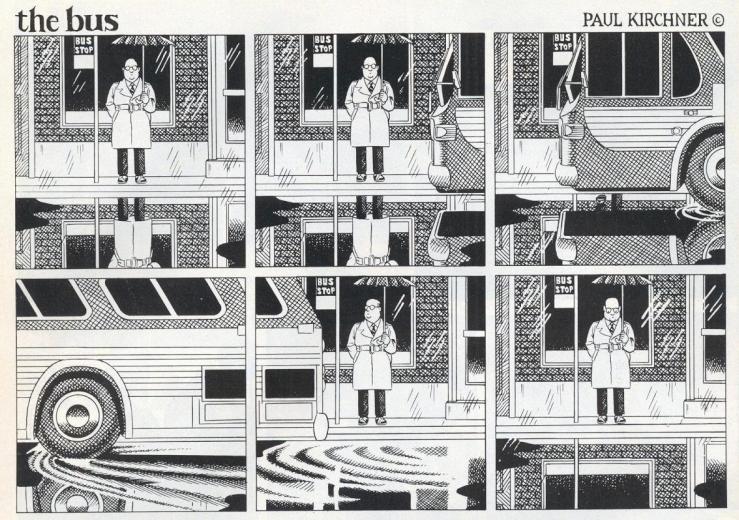
The Bus — Paul Kirchner

DGsYlDA

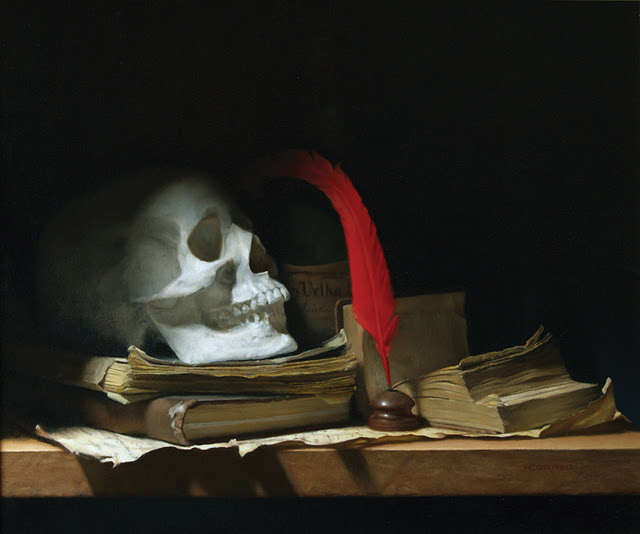
Vanitas of the Angels — Martinho Correia

tumblr_ltrk52Z9CG1r5569zo1_1280 (1)

We have to articulate ourselves, otherwise we would be cows in the field (Werner Herzog)

(An Incomplete) List of Ridiculous Names in Charles Dickens Novels

Abel Garland

Abel Magwich

Adolphus Tetterby

Alfred Jingle

Affery Flintwinch

Anne Chickenstalker

Anthony Jeddler

Augustus Snodgrass

Barnaby Rudge

Bayham Badger

Bazzard

Bella Wilfer

Bentley Drummle

Betsy Prig

Betsy Quilp

Betsy Trotwood

Brownlow

Bucket

Bumble

Caroline “Caddy” Jellyby

Charity Pecksniff 

Clara Peggotty

Cleopatra Skewton

Clickett

Cornelia Blimber

Canon Crisparkle

Charles Cheeryble

Chevy Slyme

Clarence Barnacle

Clarriker

Creakle Continue reading “(An Incomplete) List of Ridiculous Names in Charles Dickens Novels”

The Complete Short Stories of Mark Twain

TheCompleteShortStoriesOfMarkTwain

1971 Bantam edition.