Manuel Mujica Lainez’s Bomarzo (Book acquired, 14 July 2025)

I’m always intrigued by any NYRB fatty that shows up at Biblioklept World Headquarters, and Manuel Mujica Lainez’s 1962 novel Bomarzo (translated by Gregory Rabassa) has especially piqued my interest. The back of this edition features praise from Roberto Bolaño:

[Bomarzo] is a novel that will make any reader happy…. It’s a novel about art and a novel about decadence, about the luxury of writing novels and about the exquisite uselessness of the novel…. And of course it’s also a novel to be read aloud, with the whole family gathered around.

I’d heard of the novel a few years ago, but hadn’t been able to track down a used copy, so it’s great that it’s back in print. Here’s NYRB’s description:

Pier Francesco Orsini, duke of Bomarzo, created a park of monsters in which the nightmares of the Renaissance are preserved, set in stone yet still writhingly alive. In Bomarzo, Manuel Mujica Lainez—one of the great Argentine novelists of the twentieth century—re-creates the dark and legendary duke as a brilliant memoirist recalling the trials and travails of his sixteenth-century life from a modern point of view (Freudian psychoanalysis and Lolita both put in an appearance) while ensconced in a city that sounds suspiciously like Mujica Lainez’s own Buenos Aires.

Bomarzo is a historical novel in the grand manner, a first-person portrait of an aristocratic hunchback bullied by his family and determined to prove a villain (a portrait so convincing that Edmund Wilson assumed it to be fact). It is also, of course, a commentary on such historical fictions. But above all it’s an immersive story told in a sumptuous style—a bit as if Proust were rewriting one of Poe’s Italian tales—as Gregory Rabassa’s translation (out of print for many years) conveys beautifully.

Sunday Comix

From “The Paradox Man, Ch. 2” by Barry Windsor-Smith, Storyteller, 1996

Drinker — Bill Hay

Drinker, 1989 by Bill Hay (b. 1956)

David Cronenberg visits the Criterion Closet

Hazardous Beauty — Jan Nelson

Hazardous Beauty, 1983 by Jan Nelson (b. 1955)

43 minutes of This Heat playing live in 1980

Chris Ware contributes to the U.S. Postal Service’s “250 Years of Delivering Stamps” collection; unites philatelists and pannapictagraphists

Chris Ware’s contribution to the U.S. Postal Service’s anniversary series is available in a few weeks. Stick one on a postcard and mail it to me.

Mass-market Monday | John Barth’s End of the Road

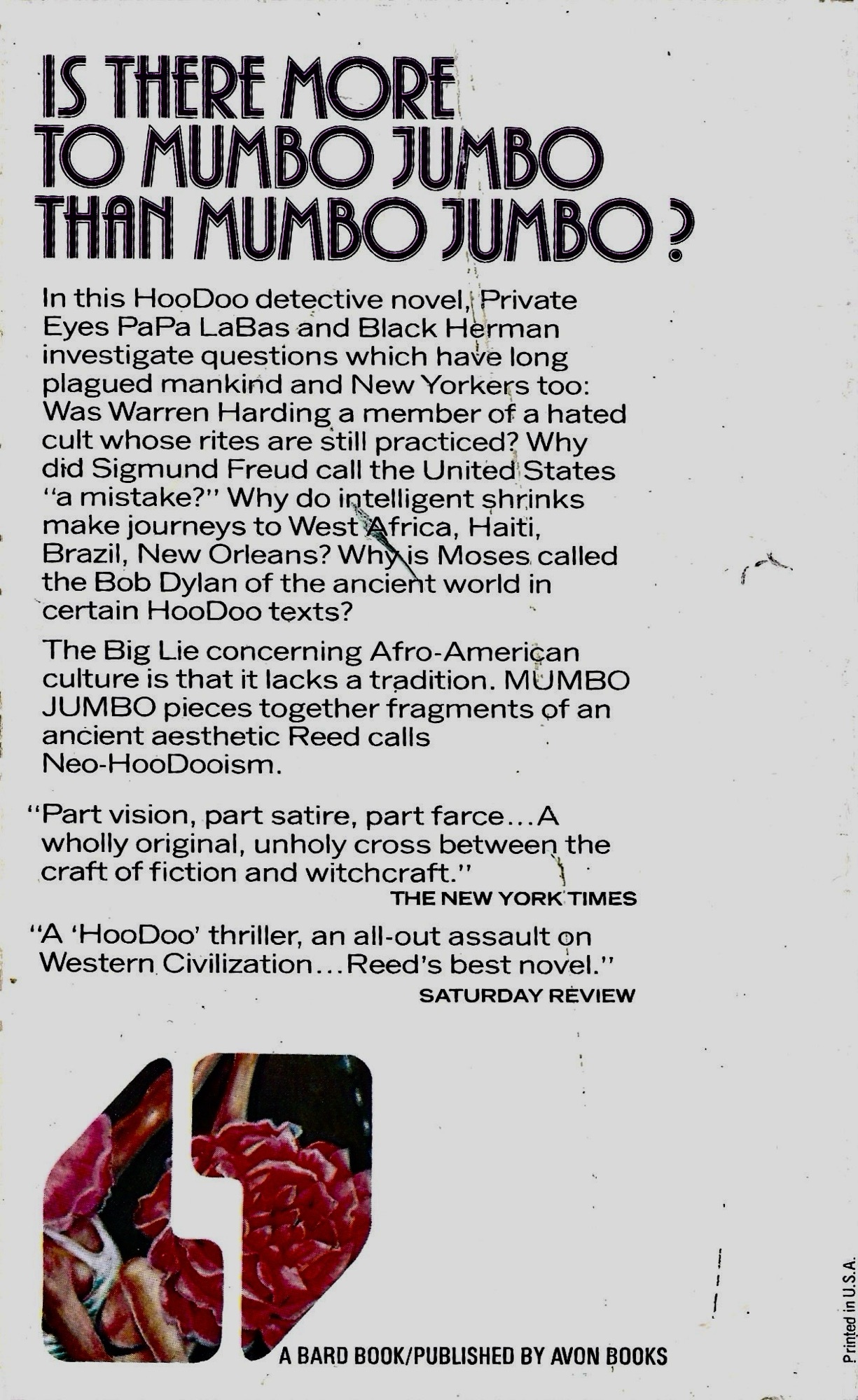
End of the Road, 1958, by John Barth. Avon Books (1960). No cover artist or designer credited. 158 pages.

I already owned a more attractive edition of John Barth’s The End of the Road (or End of the Road as the title is given in this edition), but I couldn’t pass up on the odd rounded corners.

Sunday Comix

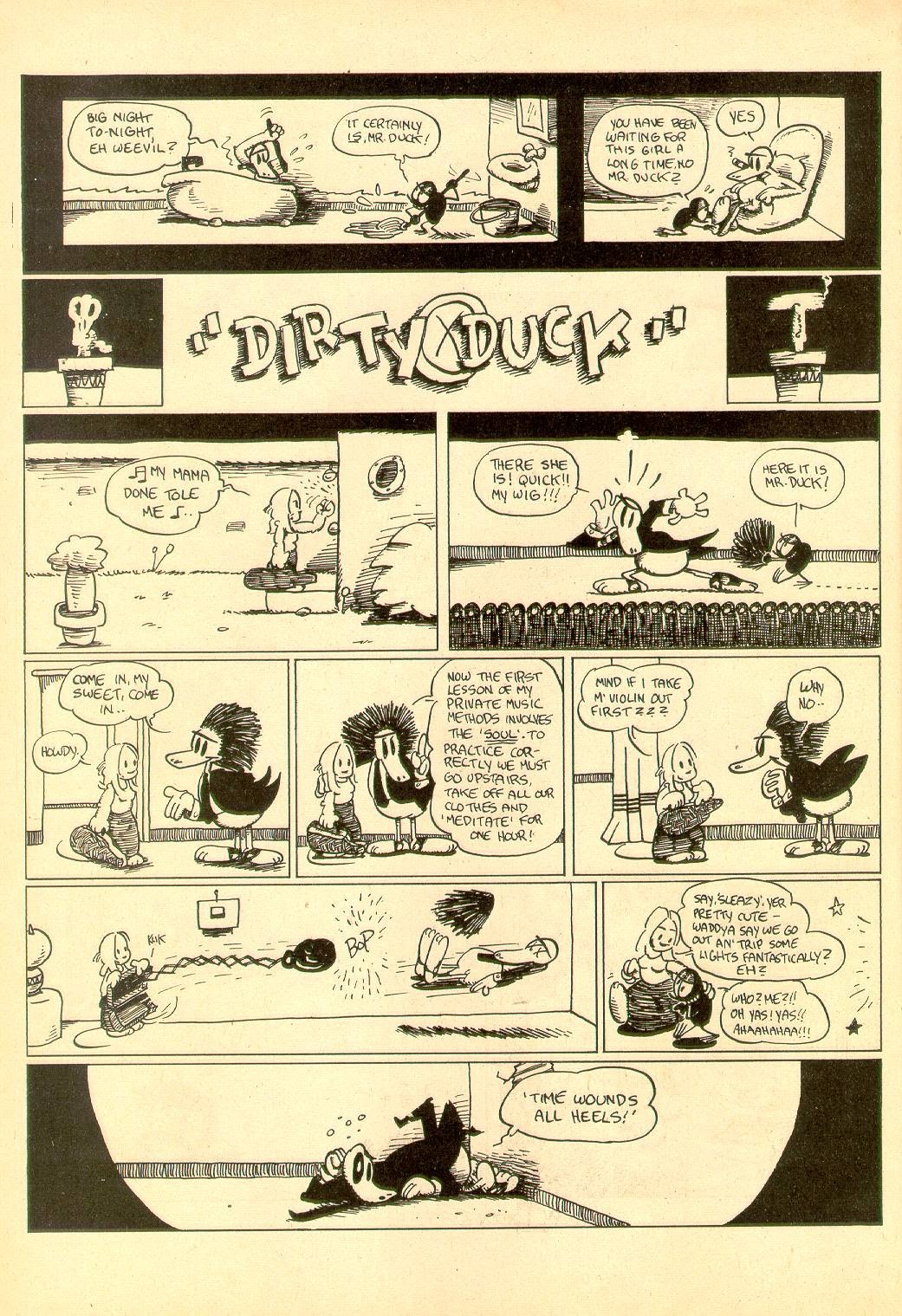
Cover for Slow Death #2, 1970 by Jack Jackson and Dave Sheridan

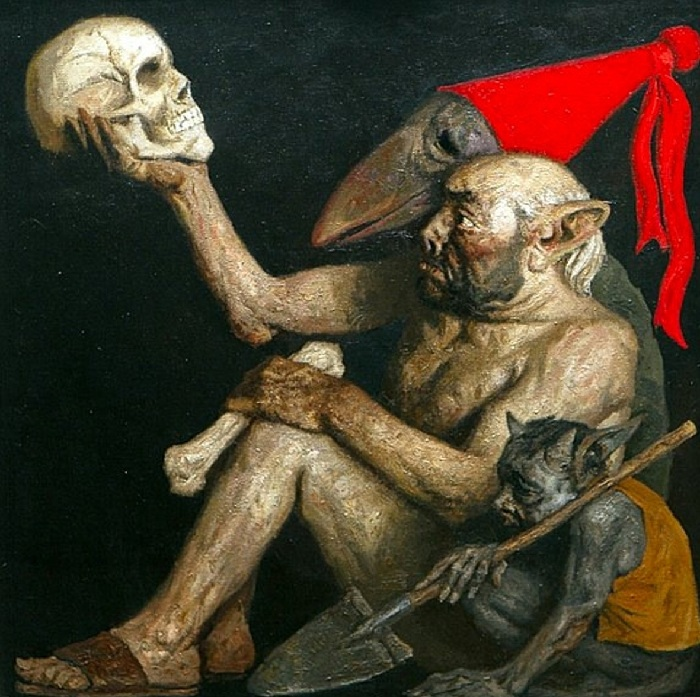
“Paolo Ucello, Painter” — Marcel Schwob

“Paolo Ucello, Painter”

by

Marcel Schwob

from Imaginary Lives

translated by Lorimer Hammond


His real name was Paolo di Dono, but the Florentines called him Uccelli or Paul of the Birds because of the many bird figures and painted beasts in his house, for he was too poor to feed live animals or to obtain those strange species he did not know.

At Padua he was said to have executed a fresco of the four elements, with an image of a chameleon representing the air. He had never seen one, so he made it a sort of pot bellied camel with a gaping snout (while the chameleon, explains Vasari, resembles a small dry lizard and the camel is a great humped beast). Uccello was not concerned with the reality of things but in their multiplicity and the infinity of their lines. He made fields blue, cities red, and cavaliers in black armour on ebony horses with blazing mouths, the lances of the riders radiating toward every quarter of the heavens. He had a fancy for drawing the mazocchio, a headdress made of wooden hoops so covered that th
e cloth fell down in pleats all about the wearer’s face. Uccello drew pointed ones and square ones and others in pyramids and cones, following every intricacy of their perspectives so studiously as to find a world of combinations in their folds. The sculptor Donatello used to say to him: “Ah, Paolo, you leave the substance for the shadow.”

The Bird continued his patient work, assembling circles, dividing angles, examining all creatures under all their aspects. From his friend Giovanni Manetti, the mathematician, he learned of the problems of Euclid, then shut himself up to cover panels and parchments with points and curves. Aided by Filippo Brunelleschi, he perpetually employed himself at the study of architecture, but he had no intention to build. He wanted only to know the directions of lines from foundation to cornice, the convergences of parallels together with their intersections, the manner in which vaulting turns upon its keys and the perspective of ceiling beams as they appear to unite at the ends of long rooms. He drew all beasts, all their movements and all the gestures of men, reducing these things to simple lines.

Then like an alchemist who mixes ores and metals in his furnace, watching their fusion in hope of finding the secret of gold, Uccello would throw all his forms into a crucible, mix them, mingle them and melt them, striving to transmute them into one ideal form containing all. That was why Paolo Uccello lived like an alchemist at the back of his little house. He believed he might find the knowledge to merge all lines into a single aspect; he wanted to see the universe as it should be reflected in the eye of God, all figures springing from one complex centre. Near him lived Ghiberti, della Robbia, Brunelleschi and Donatello, each one proud and a master of his art. They railed at poor Uccello for his folly of perspectives, with his house full of cobwebs empty of provisions. But Uccello was prouder than they. At each new combination of lines he imagined he had discovered the way. It was not imitation he sought, but the sovereign power to create all things, and his strange drawings of pleated hats were to him more revealing than magnificent marble figures by the great Donatello.

That was how The Bird lived: like a hermit, with his musing head wrapped in his cape, noting neither what he ate nor what he drank.

One day along a meadow, near a ring of old stones deep in the grass, he saw a laughing girl with a garland on her head. She wore a thin dress held to her hips by a pale ribbon and her movements were supple as the reeds she gathered. Her name was Selvaggia. She smiled at Uccello. Noting the flexion of her smile when she looked at him, he saw the little lines of her lashes, the patterned circles of the iris, the curve of her lids and all the minute interlacements of her hair. Considering the garland across her forehead, he described it to himself in a multitude of geometric postures, but Selvaggia knew nothing of all that, for she was only thirteen.

She took Uccello by the hand and he loved her. She was the daughter of a Florentine dyer, her mother was dead and another woman had come to her father’s house and had beaten her. Uccello took her home with him. Selvaggia used to kneel all day by the wall whereon Uccello traced his universal forms.

She never understood why he preferred to regard those straight and arched lines instead of the tender face she raised to him. At night, when Manetti or Brunelleschi came to work with Uccello, she would sleep at the foot of the scaffolding, in the circle of shadow beyond the lamplight. In the morning she arose before him, rejoicing because she was surrounded by painted birds and coloured beasts.

Uccello drew her lips, her eyes, her hair, her hands; he recorded all the attitudes of her body but he never made her portrait as did other painters when they loved a woman. For The Bird had no pleasure imitating individuals. He never dwelt in the one place – he tried to soar over all places in his flight.

So Selvaggia’s forms were tossed into his crucible along with the movements of beasts, the lines of plants and stones, rays of light, billowings of clouds above the earth and the rippling of sea waves.

Without thought for the girl, he lived in eternal meditation upon his crucible of forms.

There came a time when nothing remained to eat in Uccello’s house. Selvaggia did not speak of this to Donatello or the others; she kept her silence and died. Uccello drew the stiffening lines of her body, the union of her thin little hands, her closed eyes. He no more realized she was dead than he had ever realized she was alive. But he threw these new forms among all the others he had gathered.

The Bird grew old. His pictures were no longer understood by men, who recognized in them neither earth nor plant nor animal, seeing only a confusion of curves. For many years he had been working on his supreme masterpiece which he hid from all eyes. It was to embrace all his research and all the images he had ever conceived. The subject was Saint Thomas, incredulous, tempting the wrath of Christ. Uccello completed this work when he was eighty. Calling Donatello to his house he uncovered it piously before him and Donatello said: “Oh, Paolo, cover your picture!” Though The Bird questioned him, the great sculptor would say no more, then Uccello knew he had accomplished a miracle. But Donatello had seen only a mass of lines.

A few years later they found Paolo Uccello dead in his bed, worn out with age. His face was covered with wrinkles, his eyes fixed on some mysterious revelation. Tight in his rigid hand he clutched a little parchment disc on which a network of lines ran from the centre to the circumference and returned from the circumference to the centre.

4 July 2025

Posted in Art

Blog about recent (non)reading

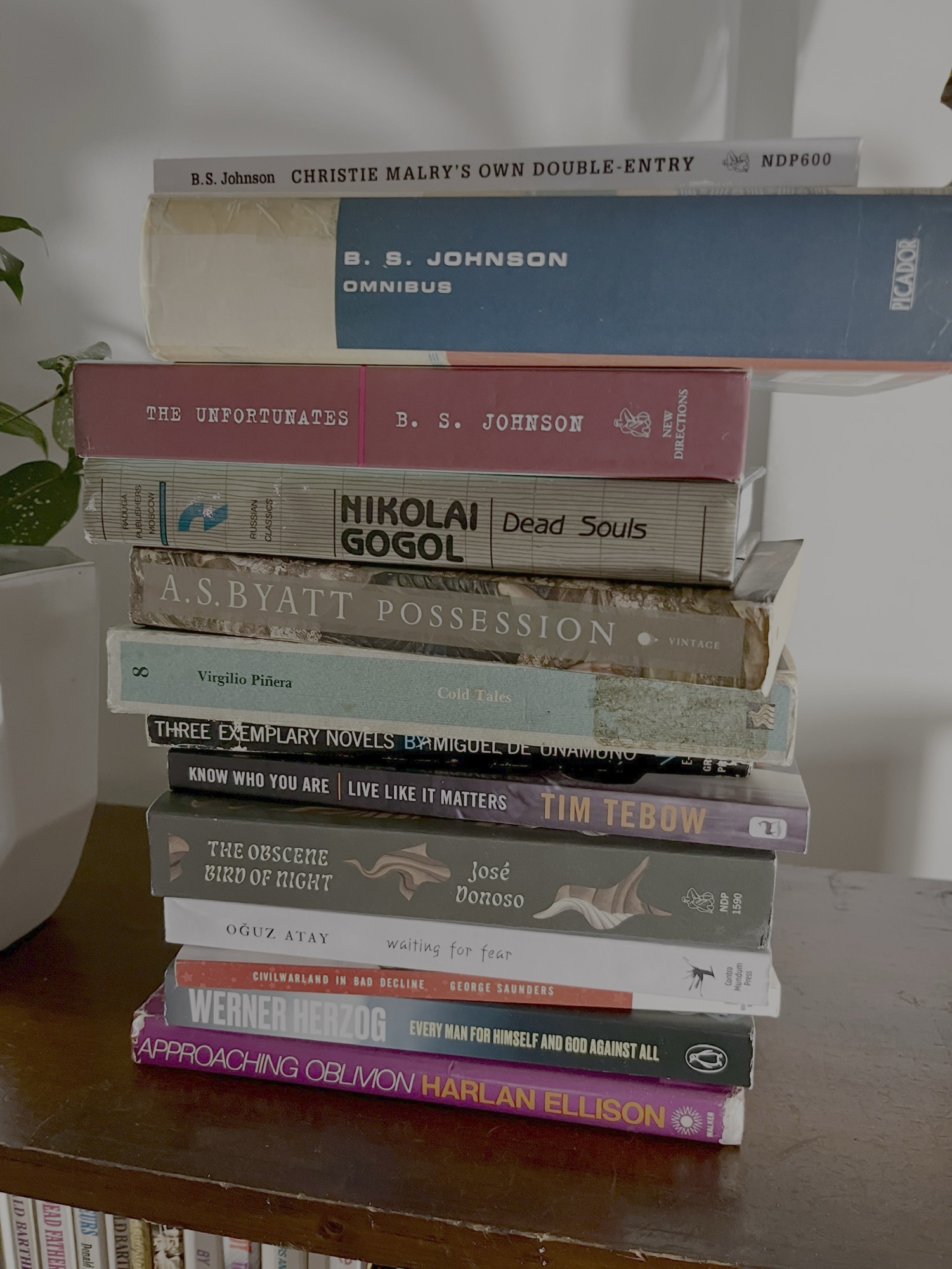
I read one novel in May 2025, the historical graphic biography The Woman with Fifty Faces: Maria Lani and the Greatest Art Heist That Never Was, by Jon Lackman and Zack Pinson. I think it was the only book I’ve read in full in the past two months. It was excellent and I owe it a full review.

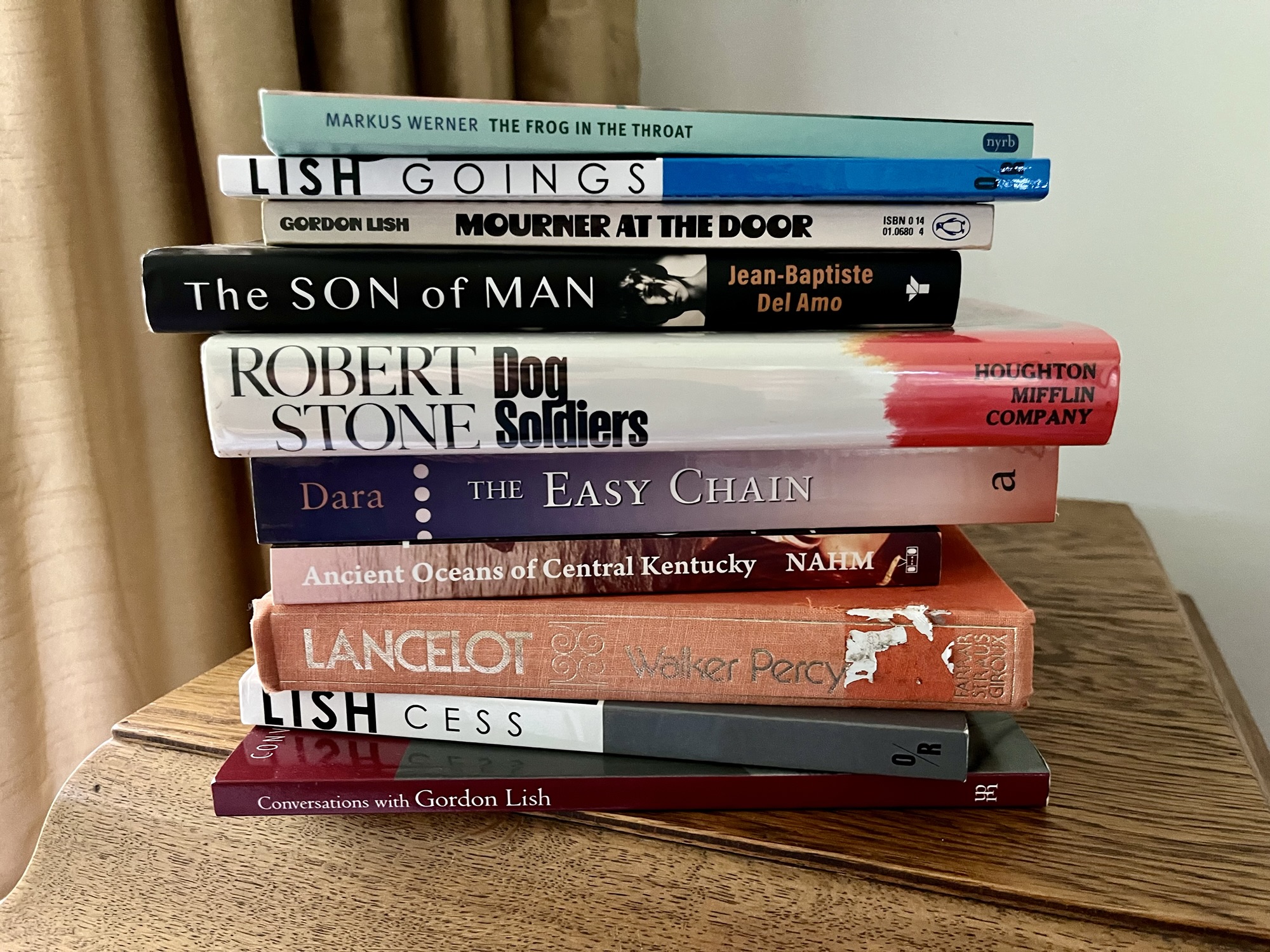
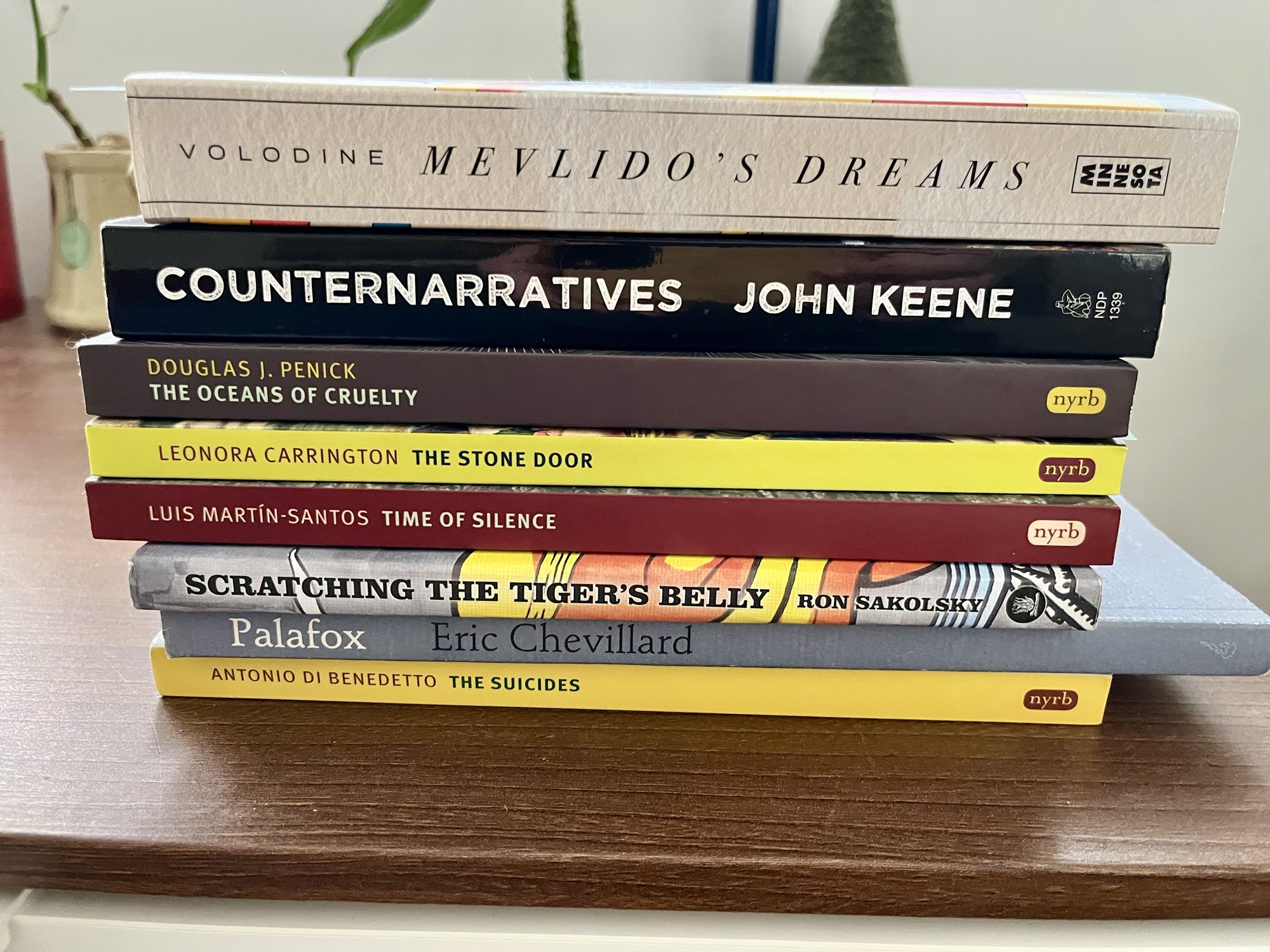
I’ve read so so so many Wikipedia pages lately, tunneling down there almost every night (even all night) over the last six weeks. Last night I think I started, for some reason I can’t recall, on Julia Lennon’s page, maybe around eleven pm, and a few hours later I was reading about the visual systems of cuttlefish (this is when my wife woke up and told me to go to sleep). I didn’t start Leonora Carrington’s The Stone Door and I didn’t finish Augusto Monterroso’s The Rest Is Silence, even though they were on my cute little night stand.

I read a big chunk of The Rest Is Silence last Monday at the beach. I took my son and his friends there; despite their claims to being “goth” (or whatever, false claims) they wanted to hang out all day at Hannah Park. So we did that. I walked for a few miles and then discreetly drank a carton of sauvignon blanc and almost finished The Rest Is Silence and then promptly forgot all of the feeling of having read it, having replaced that feeling with the blazing Florida heat (a heat obscured by a heavy gray Atlantic breeze). There was a camp of young musicians wading in the water. I don’t know how I recognized them as teenage musicians, other than years of recognizing such persons in public — the same way I can recognize, say, college football coaches out for barbecue on a Saturday afternoon or late Friday. Some people just look like some people. I chatted with one of the music camp coaches. A lot of these kids hadn’t ever been to the ocean, he assured me, which he didn’t have to. Their movements against the waves showed it. I’m sure they are all graceful with their chosen instruments. Like I said, the slim novella was gone. The sand covered it over (this is a stupid metaphor; I am all rotten inside lately).

I have also not finished Paul Kirchner’s The Bus 3, mostly because I wanted to not finish it, to save it for a different shade of my disposition that is sure to arrive any day now. I love what Paul Kirchner has done, and I have never felt the strips whimsical; or, rather, their whimsy struck me as wise, a sharper whimsy. I’m having a hard time laughing lately.

I read a big chunk of an anthology called The New Gothic about three weeks ago. It was in the house we — we my family, my wife and kids — were staying at in Minori, a smallish town in the Amalfi Coast of Italy. We spent the first fifteen days of June in Italy to celebrate my daughter’s 18th birthday and high school graduation. In a lovely little house on the side of a mountain (maybe it was a big hill, I’m a Florida boy), in a small shelf of mostly non-English language books, I picked out The New Gothic and read tales by Coover, Carter, Vollmann and others. The book is a love letter to Poe, really, with a wonderful introductory essay by editors Bradford Morrow and Patrick McGrath.

The story that really stood out though was Lynne Tillman’s “A Dead Summer.” This particular paragraph made me cry:

The Mets were doing better, but with so many new players on the team, she didn’t have the same relationship to them. Her dead friend had loved the Mets too. Sometimes she watched a game just for him, as if he could use her as a medium. She was sure his spirit was hovering near her, especially at those times. But she did not speak of this to her boyfriend who was talking about breaking up. That night she let him gag her. She didn’t have anything to say anyway, not anything worthwhile. She read that the Ku Klux Klan had marched in Palm Beach.

The story is about grief and bad dreams set against a terrifying American political backdrop. The notion of witnessing something so that one’s dead friend might use your eyes as a medium is what did me in. I’ve had such thoughts a few times in the last two months after my best friend died unexpectedly, moments where I thought I might somehow channel his spirit to, say, listen to the new Pulp record. But I don’t think he’s haunting me.

(I didn’t steal The New Gothic from the house in Minori, although I thought about it for two or three minutes.)

I have almost finished reading the stories in Debbie Urbanski’s collection Portalmania (it is a “collection” but I suspect it is a stealth novel — about escapes, transitions, aesexuality, monsters, uh, portals, etc.). Review to come. (I will absolutely get might shit together, any day now.)

I read and reviewed Mauro Javier Cárdenas’s American Abductions back in March. It’s only in this stack — this organizing picture that I use as an outline — because it is the most timely novel in America right now. It is a novel I read, loved, and highly recommend. Its narrative power surpasses the timeliness I’ve imposed upon it.

I was, what?, maybe 200, 225 pages? into Stephen Dixon’s massive novel Frog before I abandoned it. I was really loving it, its tics, repetitions, its noisy monotonous howl, its droll jabs at normal fucking people. It could have been one of my favorite novels ever, I think, but I’m not sure I’ll ever wade back in. I tried a few times, but it’s all enmeshed with some bad intense feelings I felt in early May.

Which is what? I guess? another way of saying that reading is just a series of feelings for me now. Maybe at some point I thought of reading novels as an intellectual exercise, and maybe at one point I turned that into an ideal of an aesthetics of reading — but I don’t care about any of that shit now.

I believe in reading for

pleasure

pain

other feelings, in between and otherwise.

Mass-market Monday | Eco-Fiction

Eco-Fiction, 1971, ed. John Stadler. Pocket Books (1971). No cover artist or designer credited. 206 pages.

The cover art is by Michael Eagle (you can see his signature in the illustration).

In addition to the names listed on the back cover, this collection also features stories by J.G. Ballard, Frank Herbert, J.F. Powers and more.

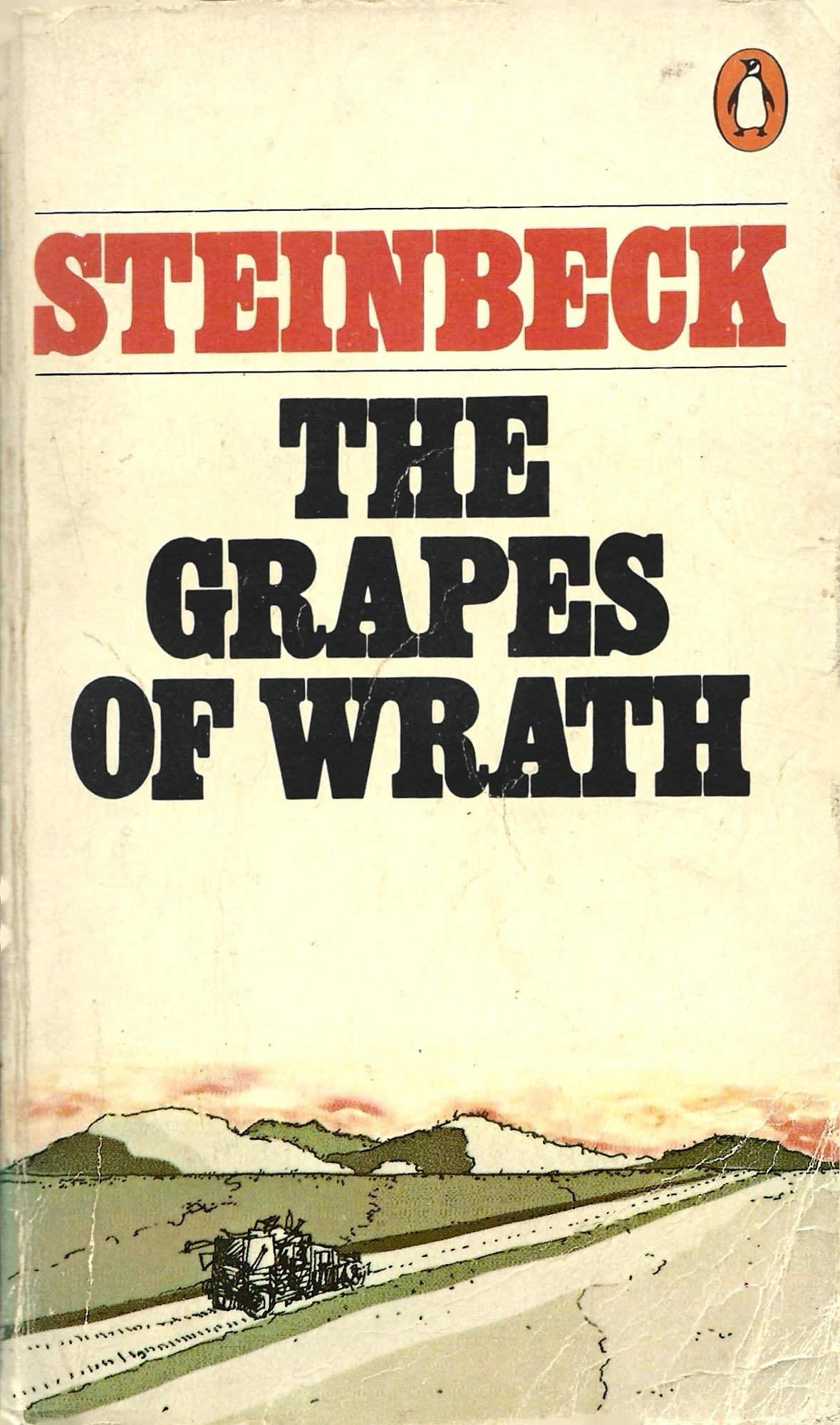
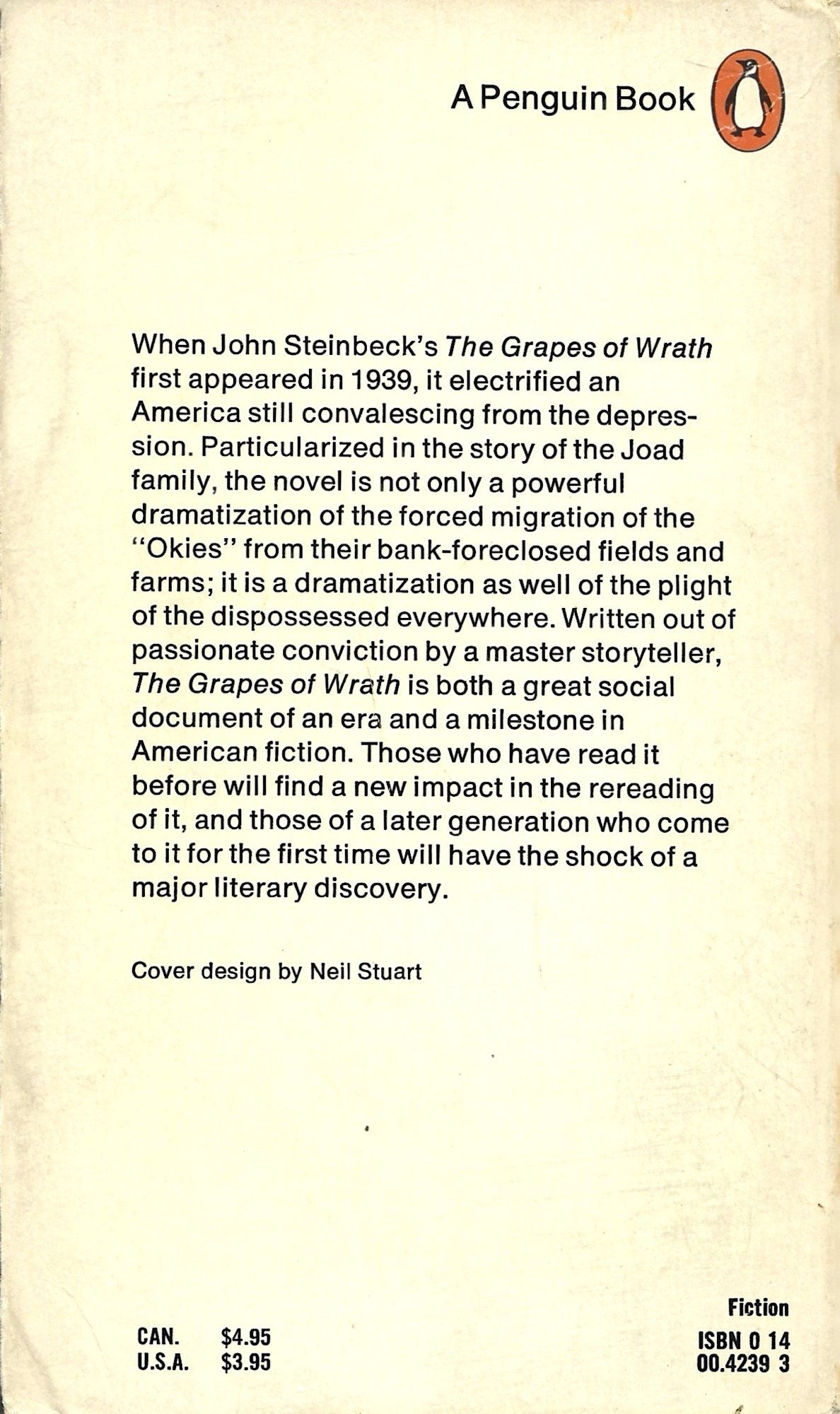
The vignette “The Turtle” condenses all of The Grapes of Wrath–and most of Steinbeck’s themes in general–into four paragraphs.


“The Turtle”

by

John Steinbeck

The concrete highway was edged with a mat of tangled, broken, dry grass, and the grass heads were heavy with oat beards to catch on a dog’s coat, and foxtails to tangle in a horse’s fetlocks, and clover burrs to fasten in sheep’s wool; sleeping life waiting to be spread and dispersed, every seed armed with an appliance of dispersal, twisting darts and parachutes for the wind, little spears and balls of tiny thorns, and all waiting for animals or the hem of a woman’s skirt, all passive but armed with appliances of activity, still, but each possessed of the anlage of movement.

The sun lay on the grass and warmed it, and in the shade under the grass the insects moved, ants and ant lions to set traps for them, grasshoppers to jump into the air and flick their yellow wings for a second, sow bugs like little armadillos, plodding restlessly on many tender feet. And over the grass at the roadside a land turtle crawled, turning aside for nothing, dragging his high-domed shell over the grass: His hard legs and yellow-nailed feet threshed slowly through the grass, not really walking, but boosting and dragging his shell along. The barley beards slid off his shell, and the clover burrs fell on him and rolled to the ground. His horny beak was partly opened, and his fierce, humorous eyes, under brows like fingernails, stared straight ahead. He came over the grass leaving a beaten trail behind him, and the hill, which was the highway embankment, reared up ahead of him. For a moment he stopped, his head held high. He blinked and looked up and down. At last he started to climb the embankment. Front clawed feet reached forward but did not touch. The hind feet kicked his shell along, and it scraped on the grass, and on the gravel. As the embankment grew steeper and steeper, the more frantic were the efforts of the land turtle. Pushing hind legs strained and slipped, boosting the shell along, and the horny head protruded as far as the neck could stretch. Little by little the shell slid up the embankment until at last a parapet cut straight across its line of march, the shoulder of the road, a concrete wall four inches high. As though they worked independently the hind legs pushed the shell against the wall. The head upraised and peered over the wall to the broad smooth plain of cement. Now the hands, braced on top of the wall, strained and lifted, and the shell came slowly up and rested its front end on the wall. For a moment the turtle rested. A red ant ran into the shell, into the soft skin inside the shell, and suddenly head and legs snapped in, and the armored tail clampled in sideways. The red ant was crushed between body and legs. And one head of wild oats was clamped into the shell by a front leg. For a long moment the turtle lay still, and then the neck crept out and the old humorous frowning eyes looked about and the legs and tail came out. The back legs went to work, straining like elephant legs, and the shell tipped to an angle so that the front legs could not reach the level cement plain. But higher and higher the hind legs boosted it, until at last the center of balance was reached,  the front tipped down, the front legs scratched at the pavement, ad it was up. But the head of wild oats was held by its stem around the front legs.

Now the going was easy, and all the legs worked, and the shell boosted along, waggling from side to side. A sedan driven by a forty-year-old woman approached, She saw the turtle and swung to the right, off the highway, the wheels screamed and a cloud of dust boiled up. Two wheels lifted for a moment and then settled. The car skidded back onto the road, and went on, but more slowly. The turtle had jerked into its shell, but now it hurried on, for the highway was burning hot.

And now a light truck approached, and as it came near, the driver saw the turtle and swerved to hit it. His front wheel struck the edge of the shell, flipped the turtle like a tiddly-wink, spun it like a coin, and rolled it off the highway. The truck went back to its course along the right side. Lying on its back, the turtle was tight in its shell for a long time. But at last its legs waved in the air, reaching for something to pull it over. Its front foot caught a piece of quartz and little by little the shell pulled over and flopped upright. The wild oat head fell out and three of the spearhead seeds stuck in the ground. And as the turtle crawled on down the embankment, its shell dragged dirt over the seeds. The turtle entered a dust road and jerked itself along, drawing a wavy shallow trench in the dust with its shell. The old humorous eyes looked ahead, and the horny beak opened a little. His yellow toe nails slipped a fraction in the dust.

Sunday Comix

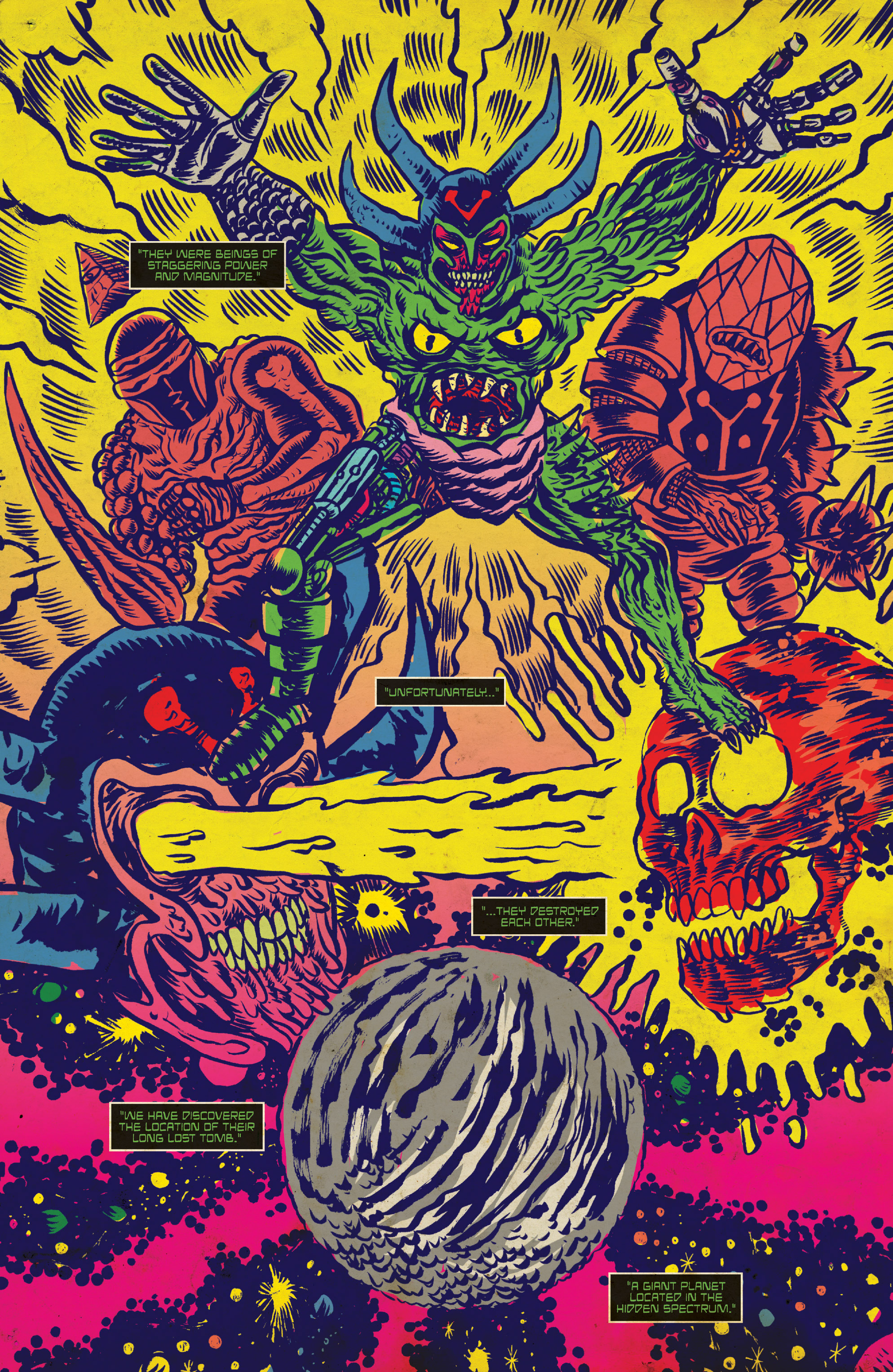
From “A Folk Tale” by Gilbert Hernandez, Love and Rockets #27, 1982

Leonora Carrington’s The Stone Door (Book acquired, 22 June 2025)

Superpsyched about this one. NYRB’s jacket copy:

The Stone Door is an omen, an incantation, and an adventure story rolled into one. Built in layers like a puzzle box, it is the tale of two people, of love and the Zodiac and the Kabbalah, of Transylvania and Mesopotamia converging at the Caucasus, of a mad Hungarian King named Böles Kilary and of a woman’s discovery of an initiatory code that leads to a Cyclopean obstacle, to love, self, and awareness, to the great stone door of Kescke and beyond.

Written at the end of World War II but not published until 1977 and long unavailable, The Stone Door is at once a celebration of the union of the surrealist painter Leonora Carrington and her husband, the Hungarian-born photographer Chiki Weisz, and an argument for the unification of the male and the female as a means of liberating the human race.

Flying Fish — Ōno Bakufu

Flying Fish, 1938 by Ōno Bakufu (1888-1976)

Señor Mustache Mustache Who Has Two Faces — Leonora Carrington

Illustration for “The Monster of Chihuahua,” from The Milk of Dreams by Leonora Carrington (1917 – 2011)