Vittoria Colonna from Barcelona — Sebastiano del Piombo

“All art constantly aspires towards the condition of music”

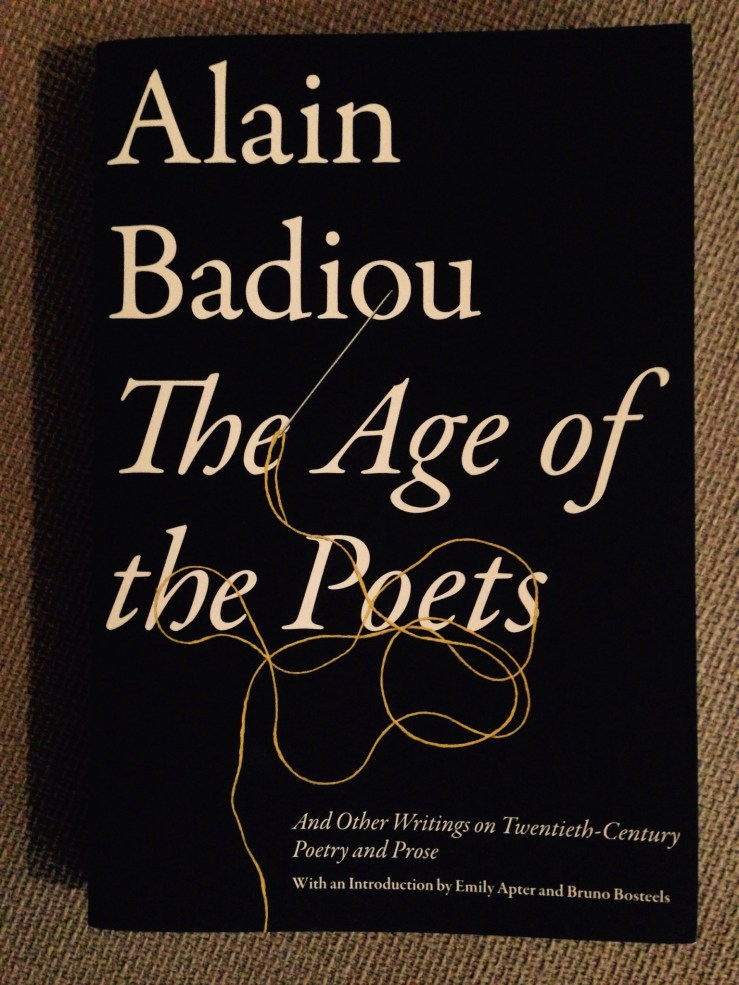
New Alain Badiou — The Age of the Poets (Book Acquired, 10.10.2014)

IMG_3585

New from Verso Books, a collection of writings from philosopher Alain Badiou. Verso’s blurb:

The Age of the Poets revisits the age-old problem of the relation between literature and philosophy, arguing against both Plato and Heidegger’s famous arguments. Philosophy neither has to ban the poets from the republic nor abdicate its own powers to the sole benefit of poetry or art. Instead, it must declare the end of what Badiou names the “age of the poets,” which stretches from Hölderlin to Celan. Drawing on ideas from his first publication on the subject, “The Autonomy of the Aesthetic Process,” Badiou offers an illuminating set of readings of contemporary French prose writers, giving us fascinating insights into the theory of the novel while also accounting for the specific position of literature between science and ideology.

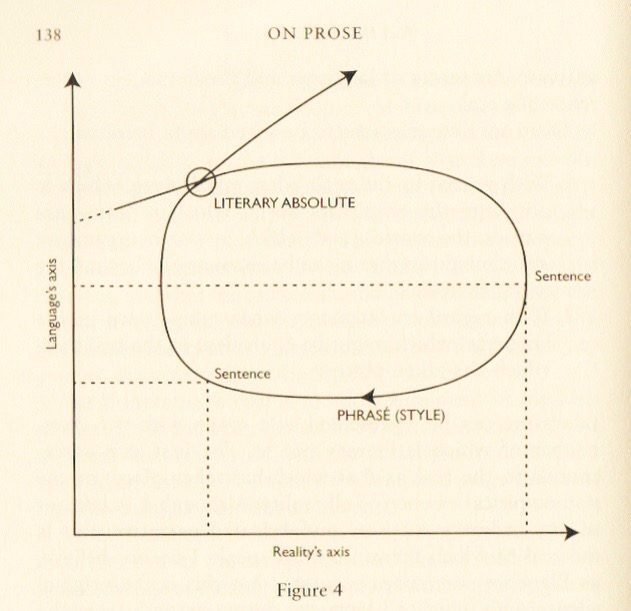
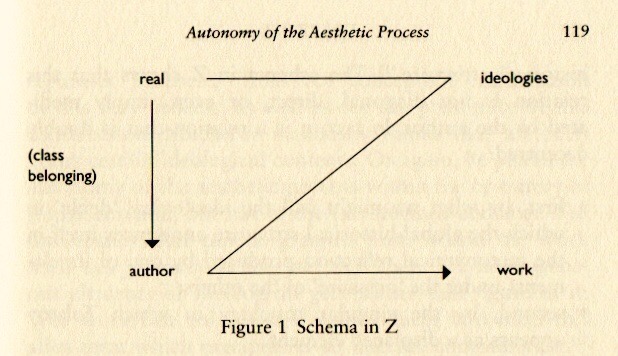
More to come—but for now: Diagrams! (I will try to understand them in context):

IMG_3588 IMG_3587

Danse Macabre — William Strang

YHVBGDnuUVI

Our books (Edgar Allan Poe)

Our books—the books which, for years, had formed no small portion of the mental existence of the invalid—were, as might be supposed, in strict keeping with this character of phantasm. We pored together over such works as the “Ververt et Chartreuse” of Gresset; the “Belphegor” of Machiavelli; the “Heaven and Hell” of Swedenborg; the “Subterranean Voyage of Nicholas Klimm” by Holberg; the “Chiromancy” of Robert Flud, of Jean D’Indaginé, and of De la Chambre; the “Journey into the Blue Distance” of Tieck; and the “City of the Sun” of Campanella. One favorite volume was a small octavo edition of the “Directorium Inquisitorium,” by the Dominican Eymeric de Gironne; and there were passages in Pomponius Mela, about the old African Satyrs and Œgipans, over which Usher would sit dreaming for hours. His chief delight, however, was found in the perusal of an exceedingly rare and curious book in quarto Gothic—the manual of a forgotten church—the Vigiliæ Mortuorum Secundum Chorum Ecclesiæ Maguntinæ.

From “The Fall of the House of Usher” by Edgar Allan Poe.

Meditation — Jean Léon Bazile Perrault

Joan of Arc — Jules Bastien-Lepage

The Fall of the House of Usher (1928 Short Film)

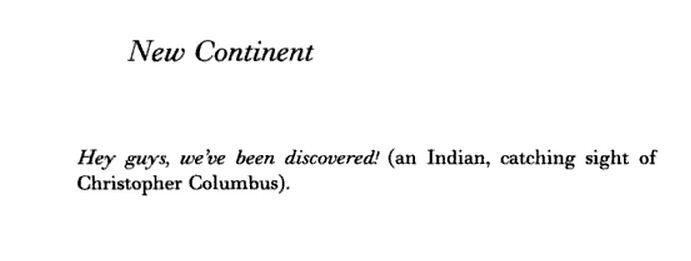
“New Continent” — Georges Perec

Ugolino Martelli — Agnolo Bronzino

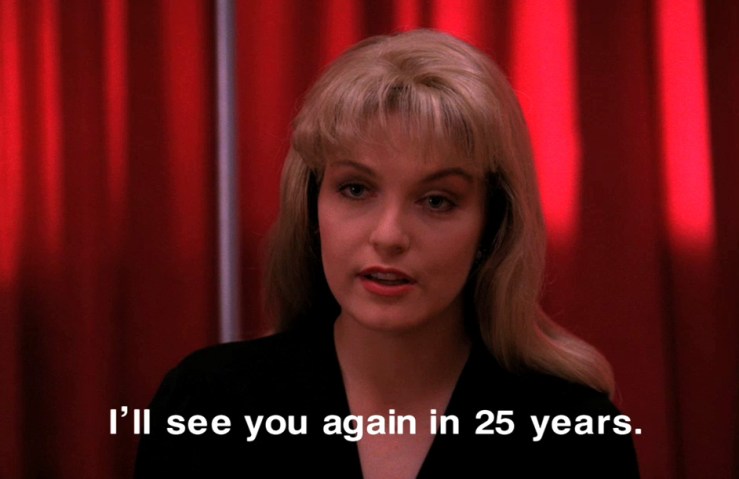
I’ll see you again in 25 years

tumblr_m74xotr7Wj1rwnwnfo1_1280 tp

Adam purchases guitars (Only Lovers Left Alive)

An idiom characterizes a society (Flannery O’Connor)

An idiom characterizes a society, and when you ignore the idiom, you are very likely ignoring the whole social fabric that could make a meaningful character. You can’t cut characters off from their society and say much about them as individuals. You can’t say anything meaningful about the mystery of a personality unless you put that personality in a believable and significant social context. And the best way to do this is through the character’s own language. When the old lady in one of Andrew Lytle’s stories says contemptuously that she has a mule that is older than Birmingham, we get in that one sentence a sense of a society and its history. A great deal of the Southern writer’s work is done for him before he begins, because our history lives in our talk. In one of Eudora Welty’s stories a character says, ‘Where I come from, we use fox for yard dogs and owls for chickens, but we sing true.’ Now there is a whole book in that one sentence; and when the people of your section can talk like that, and you ignore it, you’re just not taking advantage of what`s yours. The sound of our talk is too definite to be discarded with impunity, and if the writer tries to get rid of it, he is liable to destroy the better part of his creative power.

From Flannery O’Connor’s lecture “Writing Short Stories.” Republished in Mystery and Manners.

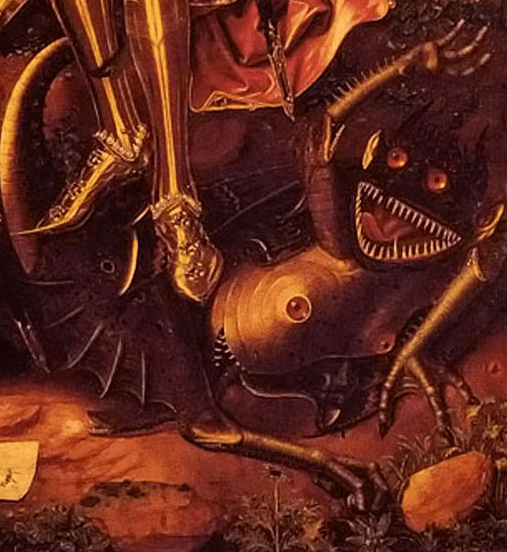
Saint Michael Triumphs over the Devil (Detail) — Bartolomé Bermejo

Capture

Snow White Swallows the Poisoned Apple — Paula Rego

Selections from One-Star Amazon Reviews of Mary Shelley’s Frankenstein

[Ed. note: The following citations come from one-star Amazon reviews of Mary Shelley’s novel Frankenstein. (See also: Thomas Pynchon’s Gravity’s RainbowGeorge Orwell’s 1984, Melville’s Moby-Dick, Joyce’s Ulysses and Markson’s Wittgenstein’s Mistress). I’ve preserved the reviewers’ own styles of punctuation and spelling].

Take it from me, a seasoned man of literature.

This book had a really good idea for a story.

Well, Mary Shelley was a teen when she wrote this.

And why do they call it a “horror story”?

I would rather read the berstein bears.

How does a gathering of dead limbs and organs produce super human strength?

Mary Shelley uses a lot of fancy words and complicated sentence stucture but the book really doesn’t say anything.

I don’t really care what the mountains looked like.

I would not recommend this book to anyone under the age of 40.

horribly and not understandably written

if you want to read this book, you will need knowledge of five words; reverence, countenence; ardour; odious; benevolence.

I probably skipped over 50% of the pages.

Unfortuantely, literature is an art

Its amazing that in less than a year, a monster, made from dead criminals can learn to speak better than i have been able to in my entire life.

UMMM CAN WE SAY “SUCKY” ?

There is no underlying message

I didn’t think anything could be worse then Kafka’s “The Metamorphosis”.

I decided to channel my inner John McCain and just survive the torture.

Hollywood does a better job with the story than the original author.

a “sissy” plot

One word. “Endeavor” This word was used ATLEAST 4 times a page on every page of the book when Victor is talking.

SORRY, BUT THIS BOOK DID NOT ENTERTAIN ME AT ALL, I THOUGHT IT WAS NOT EXACTLY WHAT YOU WOULD CALL “HORROR” WICH IS WHAT I WAS EXPECTING.

By the way? Where did he get the pieces of dead people?

I didn’t think anyone could make a 160 page book seem so long!

I threw it out my window.

I’d put this alongside other amateur horror authors like Stephen King

The whole novel is full of such ridiculous co-incidences and logical inconsistencies.

And talk about repetative.

The creature went from hideous dumb clod to hideous Collin Firth in a matter of months via eavesdropping on some peasants.

Movie was a million times better than that stupid story but I will say that it was very poorly written

ok this book does not deserve the title of a horror story its not scary in the leat bit.

Shelley is not only a terrible author, she is also an ignorant and prejudiced one.

It just had too much detail

I had seen the movie, and usually, if I like the movie, I like the book even better, but this time they really improved on the book.

Mary Shelley was the Stephanie Meyer of her generation, and her novel should be shelved with the chic-lit vampire romances and other such fare read avidly by teenage girls.

READ DRACULA ITS WY BETTER!

What can i say? This is not a great product, and not worth any stars.

Well I think I made my point.

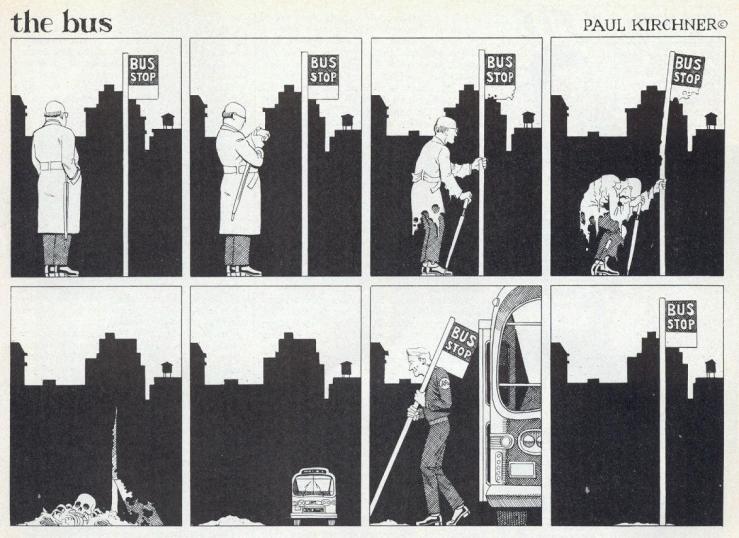
The Bus — Paul Kirchner

hQiAqo0