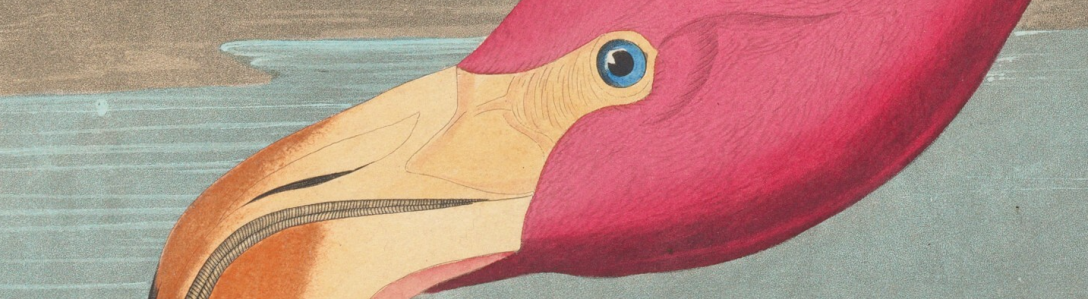
Gamaun, The Prophetic Bird — Viktor Vasnetsov

Belly, balls, glory, skull (Bukowski)

lost

Peter Rabbit’s Race Game — Beatrix Potter

Lydia Davis on Using Nabokov’s Marginalia in Translating Madame Bovary

The Card-Sharp with Ace of Diamonds — Georges de La Tour

Pain and boredom (Schopenhauer)

The most general survey shows us that the two foes of human happiness are pain and boredom. We may go further, and say that in the degree in which we are fortunate enough to get away from the one, we approach the other. Life presents, in fact, a more or less violent oscillation between the two. The reason of this is that each of these two poles stands in a double antagonism to the other, external or objective, and inner or subjective. Needy surroundings and poverty produce pain; while, if a man is more than well off, he is bored. Accordingly, while the lower classes are engaged in a ceaseless struggle with need, in other words, with pain, the upper carry on a constant and often desperate battle with boredom. The inner or subjective antagonism arises from the fact that, in the individual, susceptibility to pain varies inversely with susceptibility to boredom, because susceptibility is directly proportionate to mental power. Let me explain. A dull mind is, as a rule, associated with dull sensibilities, nerves which no stimulus can affect, a temperament, in short, which does not feel pain or anxiety very much, however great or terrible it may be. Now, intellectual dullness is at the bottom of that vacuity of soul which is stamped on so many faces, a state of mind which betrays itself by a constant and lively attention to all the trivial circumstances in the external world. This is the true source of boredom—a continual panting after excitement, in order to have a pretext for giving the mind and spirits something to occupy them. The kind of things people choose for this purpose shows that they are not very particular, as witness the miserable pastimes they have recourse to, and their ideas of social pleasure and conversation: or again, the number of people who gossip on the doorstep or gape out of the window. It is mainly because of this inner vacuity of soul that people go in quest of society, diversion, amusement, luxury of every sort, which lead many to extravagance and misery. Nothing is so good a protection against such misery as inward wealth, the wealth of the mind, because the greater it grows, the less room it leaves for boredom. The inexhaustible activity of thought! Finding ever new material to work upon in the multifarious phenomena of self and nature, and able and ready to form new combinations of them,—there you have something that invigorates the mind, and apart from moments of relaxation, sets it far above the reach of boredom.

From Arthur Schopenhauer’s The Wisdom of Life (trans. T. Bailey Saunders).

Sunflower — Benchung

Orion and Light Skies — Oluf Høst

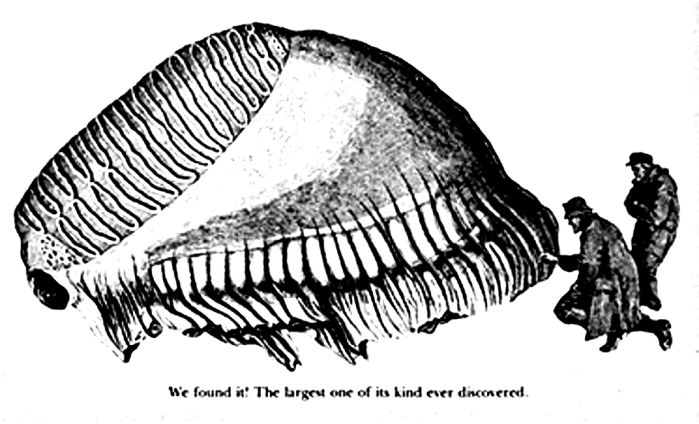
We found it! (Donald Barthelme)

barthelme1

Drapery Study — Leonardo da Vinci

The Locked Room — Tom Gauld

locked room

A Philosophy of Walking (Book Acquired, Some Time in December of 2013)

20140103-095900.jpg

A Philosophy of Walking by Frederic Gros is new in English translation from Verso Books. Their blurb:

In A Philosophy of Walking, Frédéric Gros charts the many different ways we get from A to B—the pilgrimage, the promenade, the protest march, the nature ramble—and shows what it tells us about ourselves.

He draws attention to other thinkers who also saw walking as a central part of their practice, and ponders over things like why Henry David Thoreau entered Walden Woods in pursuit of the wilderness; the reason Rimbaud walked in a fury while Nerval rambled to cure his melancholy. We learn how Rousseau had to walk to think, Nietzsche in order to write, while Kant walked to distract himself from contemplation. Brilliant, erudite and always entertaining, Gros is certain to make you reconsider this everyday activity.

I had hoped to crack into this a bit more over the holidays, but got wrapped up in another Verso book, Balestrini’s Tristano—and also like four other books. More to come.

J.R.R. Tolkien Links

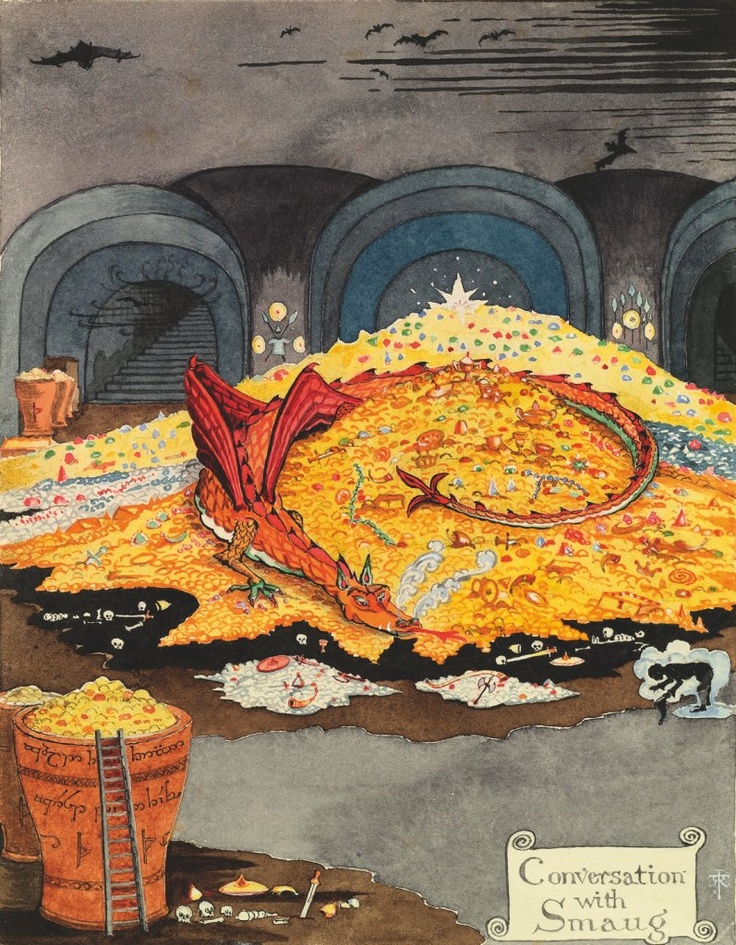
Conversation with Smaug, Illustration by Tolkien

The Hobbit Is a Picaresque Novel

I Compare the First Three Books of George R. R. Martin’s A Song of Ice and Fire Series to Tolkien’s work

Smaug Flies Round the Mountain, illustration by Tolkien

“I Have a Very Vivid Child’s View” — A 1967 Interview with J.R.R. Tolkien

Illustrated Manuscript Page from Tolkien’s Lord of the Rings

J.R.R. Tolkien, In His Own Words (1968 BBC Documentary)

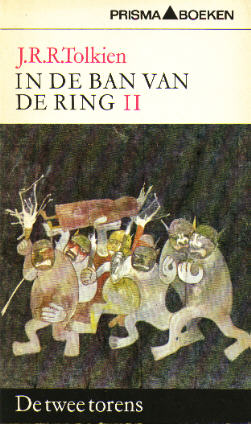
Tolkien Cover Gallery

“I Rarely Remember a Book About Which I Have Had Such Violent Arguments” — W.H. Auden Reviews .R.R. Tolkien

Portrait of Gustave Geffroy — Paul Cezanne

Gerti Schiele in a Plaid Garment — Egon Schiele

“All art constantly aspires towards the condition of music”

“God Sees the Truth, but Waits” — Leo Tolstoy

“God Sees the Truth, but Waits” by Leo Tolstoy

In the town of Vladimir lived a young merchant named Ivan Dmitrich Aksionov. He had two shops and a house of his own.

Aksionov was a handsome, fair-haired, curly-headed fellow, full of fun, and very fond of singing. When quite a young man he had been given to drink, and was riotous when he had had too much; but after he married he gave up drinking, except now and then.

One summer Aksionov was going to the Nizhny Fair, and as he bade good-bye to his family, his wife said to him, “Ivan Dmitrich, do not start to-day; I have had a bad dream about you.”

Aksionov laughed, and said, “You are afraid that when I get to the fair I shall go on a spree.”

His wife replied: “I do not know what I am afraid of; all I know is that I had a bad dream. I dreamt you returned from the town, and when you took off your cap I saw that your hair was quite grey.”

Aksionov laughed. “That’s a lucky sign,” said he. “See if I don’t sell out all my goods, and bring you some presents from the fair.”

So he said good-bye to his family, and drove away.

When he had travelled half-way, he met a merchant whom he knew, and they put up at the same inn for the night. They had some tea together, and then went to bed in adjoining rooms.

It was not Aksionov’s habit to sleep late, and, wishing to travel while it was still cool, he aroused his driver before dawn, and told him to put in the horses.

Then he made his way across to the landlord of the inn (who lived in a cottage at the back), paid his bill, and continued his journey.

When he had gone about twenty-five miles, he stopped for the horses to be fed. Aksionov rested awhile in the passage of the inn, then he stepped out into the porch, and, ordering a samovar to be heated, got out his guitar and began to play.

Suddenly a troika drove up with tinkling bells and an official alighted, followed by two soldiers. He came to Aksionov and began to question him, asking him who he was and whence he came. Aksionov answered him fully, and said, “Won’t you have some tea with me?” But the official went on cross-questioning him and asking him. “Where did you spend last night? Were you alone, or with a fellow-merchant? Did you see the other merchant this morning? Why did you leave the inn before dawn?”

Aksionov wondered why he was asked all these questions, but he described all that had happened, and then added, “Why do you cross-question me as if I were a thief or a robber? I am travelling on business of my own, and there is no need to question me.”

Then the official, calling the soldiers, said, “I am the police-officer of this district, and I question you because the merchant with whom you spent last night has been found with his throat cut. We must search your things.”

They entered the house. The soldiers and the police-officer unstrapped Aksionov’s luggage and searched it. Suddenly the officer drew a knife out of a bag, crying, “Whose knife is this?” Continue reading ““God Sees the Truth, but Waits” — Leo Tolstoy” →