A Scholar Seated at a Table with Books — Rembrandt

Bring Me the Head of Alfredo Garcia — Sam Peckinpah

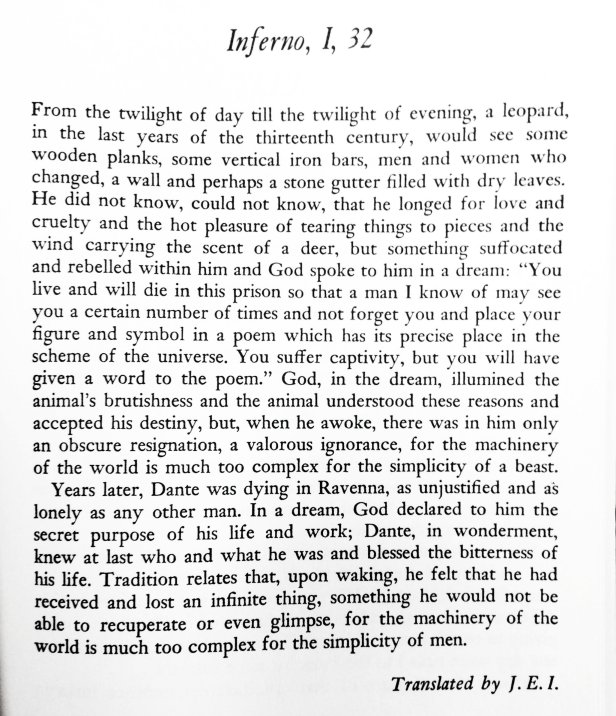
“Inferno, I, 32” — Jorge Luis Borges

jlb

Dante and Virgil — Camille Corot

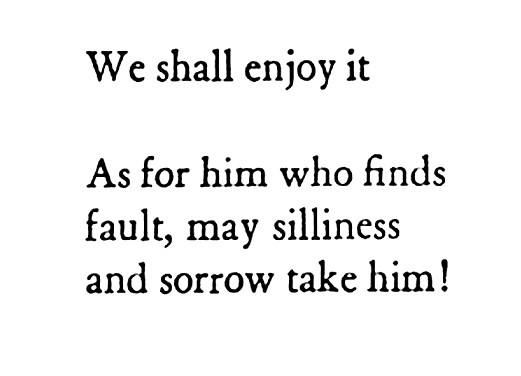
We shall enjoy it (Sappho)

Capture

Smoking Makes You Look Cool (Part III)

Clarice Lispector
Clarice Lispector
conrad
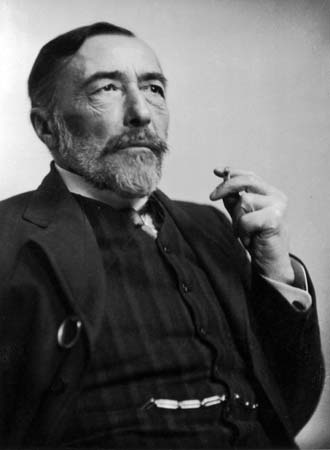
Joseph Conrad
james baldwin
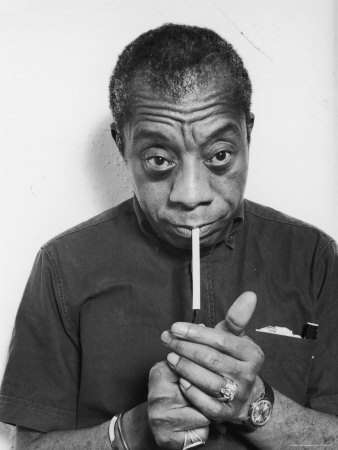
James Baldwin
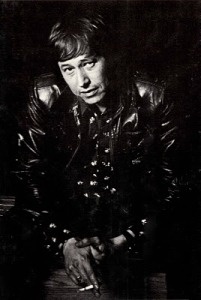
Barry Hannah
Barry Hannah
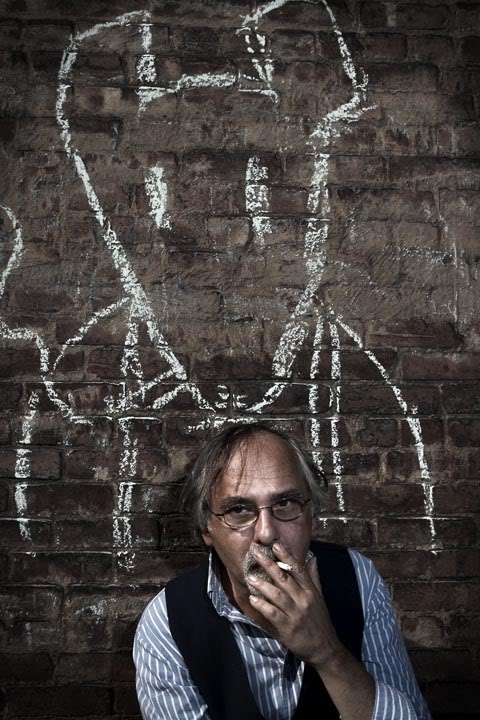
art spiegelman
Art Spiegelman
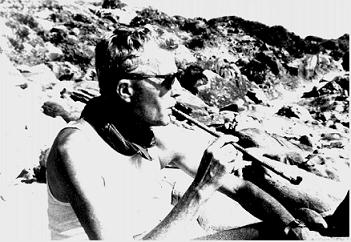
paul bowles
Paul Bowles
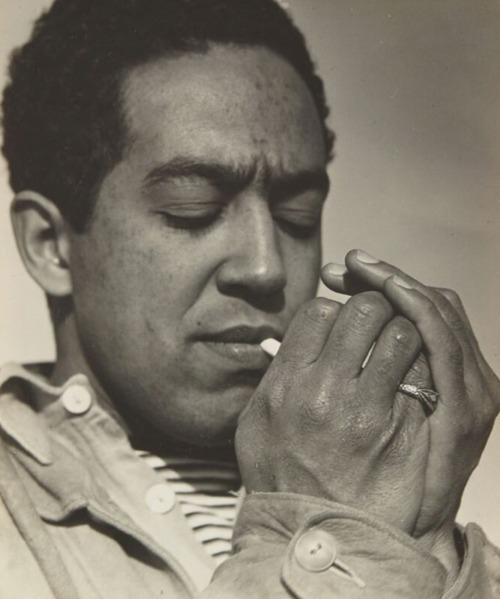
langston hughes
Langston Hughes
images (1)
Patricia Highsmith
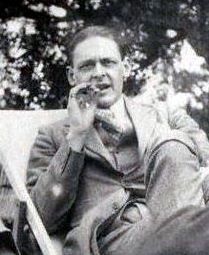
T.S._Eliot,_1923
T.S.Eliot

(Parts I and II (don’t worry, everyone already yelled at me re: “smoking unhealthy,” etc., and yes, whole post was probably just an excuse to run that pic of Lispector)).


“Of Superstition” — Francis Bacon

“Of Superstition” by Francis Bacon

IT WERE better to have no opinion of God at all, than such an opinion, as is unworthy of him. For the one is unbelief, the other is contumely; and certainly superstition is the reproach of the Deity. Plutarch saith well to that purpose: Surely (saith he) I had rather a great deal, men should say, there was no such man at all, as Plutarch, than that they should say, that there was one Plutarch, that would eat his children as soon as they were born; as the poets speak of Saturn. And as the contumely is greater towards God, so the danger is greater towards men. Atheism leaves a man to sense, to philosophy, to natural piety, to laws, to reputation; all which may be guides to an outward moral virtue, though religion were not; but superstition dismounts all these, and erecteth an absolute monarchy, in the minds of men. Therefore theism did never perturb states; for it makes men wary of themselves, as looking no further: and we see the times inclined to atheism (as the time of Augustus Caesar) were civil times. But superstition hath been the confusion of many states, and bringeth in a new primum mobile, that ravisheth all the spheres of government. The master of superstition, is the people; and in all superstition, wise men follow fools; and arguments are fitted to practice, in a reversed order. It was gravely said by some of the prelates in the Council of Trent, where the doctrine of the Schoolmen bare great sway, that the Schoolmen were like astronomers, which did feign eccentrics and epicycles, and such engines of orbs, to save the phenomena; though they knew there were no such things; and in like manner, that the Schoolmen had framed a number of subtle and intricate axioms, and theorems, to save the practice of the church. The causes of superstition are: pleasing and sensual rites and ceremonies; excess of outward and pharisaical holiness; overgreat reverence of traditions, which cannot but load the church; the stratagems of prelates, for their own ambition and lucre; the favoring too much of good intentions, which openeth the gate to conceits and novelties; the taking an aim at divine matters, by human, which cannot but breed mixture of imaginations: and, lastly, barbarous times, especially joined with calamities and disasters. Superstition, without a veil, is a deformed thing; for, as it addeth deformity to an ape, to be so like a man, so the similitude of superstition to religion, makes it the more deformed. And as wholesome meat corrupteth to little worms, so good forms and orders corrupt, into a number of petty observances. There is a superstition in avoiding superstition, when men think to do best, if they go furthest from the superstition, formerly received; therefore care would be had that (as it fareth in ill purgings) the good be not taken away with the bad; which commonly is done, when the people is the reformer.


The Misses Vickers — John Singer Sargent

Slacker (Peanuts)

slacker

“Exotic smoking practices around the world, of great anthropological value!” (Pynchon’s Against the Day)

Observers of the Fair had remarked how, as one moved up and down its Midway, the more European, civilized, and . . . well, frankly, white exhibits located closer to the center of the “White City” seemed to be, whereas the farther from that alabaster Metropolis one ventured, the more evident grew the signs of cultural darkness and savagery. To the boys it seemed that they were making their way through a separate, lampless world, out beyond some obscure threshold, with its own economic life, social habits, and codes, aware of itself as having little if anything to do with the official Fair. . . . As if the halflight ruling this perhaps even unmapped periphery were not a simple scarcity of streetlamps but deliberately provided in the interests of mercy, as a necessary veiling for the faces here, which held an urgency somehow too intense for the full light of day and those innocent American visitors with their Kodaks and parasols who might somehow happen across this place. Here in the shadows, the faces moving by smiled, grimaced, or stared directly at Lindsay and Miles as if somehow they knew them, as if in the boys’ long career of adventure in exotic corners of the world there had been accumulating, unknown to them, a reserve of mistranslation, offense taken, debt entered into, here being reexpressed as a strange Limbo they must negotiate their way through, expecting at any moment a “runin” with some enemy from an earlier day, before they might gain the safety of the lights in the distance.

Armed “bouncers,” drawn from the ranks of the Chicago police, patrolled the shadows restlessly. A Zulu theatrical company reenacted the massacre of British troops at Isandhlwana. Pygmies sang Christian hymns in the Pygmy dialect, Jewish klezmer ensembles filled the night with unearthly clarionet solos, Brazilian Indians allowed themselves to be swallowed by giant anacondas, only to climb out again, undigested and apparently with no discomfort to the snake. Indian swamis levitated, Chinese boxers feinted, kicked, and threw one another to and fro.

Temptation, much to Lindsay’s chagrin, lurked at every step. Pavilions here seemed almost to represent not nations of the world but Deadly Sins.   Pitchmen in their efforts at persuasion all but seized the ambulant youths by their lapels.

“Exotic smoking practices around the world, of great anthropological value!”

“Scientific exhibit here boys, latest improvements to the hypodermic syringe and its many uses!”

Here were Waziris from Waziristan exhibiting upon one another various techniques for waylaying travelers, which reckoned in that country as a major source of income. . . . Tarahumara Indians from northern Mexico crouched, apparently in total nakedness, inside lathandplaster replicas of the caves of their native Sierra Madre, pretending to eat visionproducing cacti that sent them into dramatic convulsions scarcely distinguishable from those of the common “geek” long familiar to American carnivalgoers. . . . Tungus reindeer herders stood gesturing up at a gigantic sign reading SPECIAL REINDEER SHOW, and calling out in their native tongue to the tip gathered in front, while a pair of young women in quite revealing costumes—who, being blonde and so forth, did not, actually, appear to share with the Tungus many racial characteristics—gyrated next to a very patient male reindeer, caressing him with scandalous intimacy, and accosting passersby with suggestive phrases in English, such as “Come in and learn dozens ways to have fun in Siberia!” and “See what really goes on during long winter nights!”

“This doesn’t seem,” Lindsay adrift between fascination and disbelief, “quite . . . authentic, somehow.”

An early episode from Thomas Pynchon’s novel Against the Day; here, the Chums of Chance have flown to Chicago to visit the “World’s Columbian Exposition recently opened there;” Lindsay Noseworth and Miles Blundell fearlessly go beyond “the fabled ‘White City,’ its great Ferris wheel, alabaster temples of commerce and industry, sparkling lagoons, and the thousand more such wonders, of both a scientific and an artistic nature.”

Conversation with Smaug — J.R.R. Tolkien

smaug tolkien

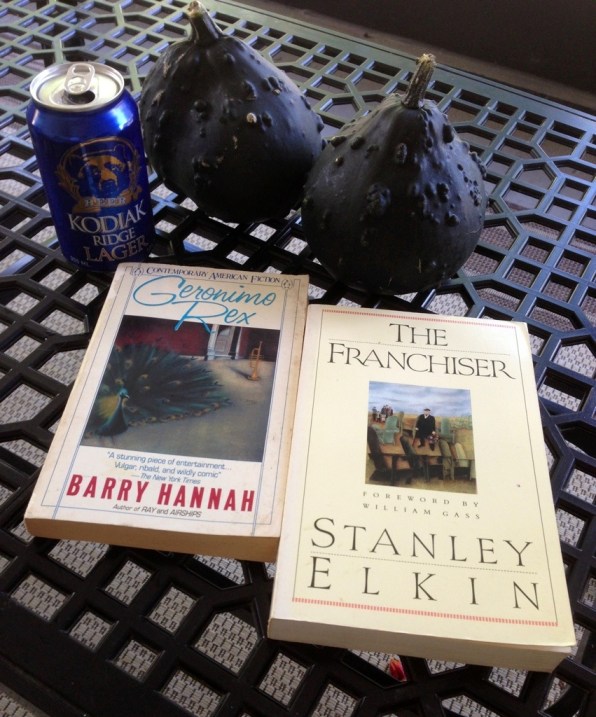
Barry Hannah/Stanley Elkin (Books Acquired, 5.29.2013)

20130529-164927.jpg

I was thrilled to find a somewhat tattered copy of Barry Hannah’s Geronimo Rex, after trolling the [huge, unorganized] “HA” section of my favorite used bookstore. Years ago, I found like seven of Hannah’s books used there and picked up only one. I devoured it, returned, the rest were gone. Regrets, regrets. I will review this maybe at the end of the summer (?) — until then:  reviews of Hannah’s AirshpsHey Jack!, and Ray.

I’ve never read Stanley Elkin, but sort of feel like I should. Mr. BLCKDGRD (-a, -o, -e) suggested The Franchiser as a good starting point (although he said that The Magic Kingdom is his pers. fav. {disney fan?}). Some dude named Billy Gass wrote the forward. 

Also pictured: Two weird black gourds that grew in my garden, right in the midst of my cucumber patch. Also: Kodiak Ridge Lager, a weak lager with a beautiful blue an’ gold can.

The Monkey Who Had Seen the World — Edwin Henry Landseer

“Today, there’s no present to people” (Barry Hannah)

My aunts told wonderful stories. Not to me, but to each other. We had a very strong family. My mother’s sisters loved each other intensely. The uncles loved each other intensely. Those were the days when it meant something to travel, when people were still grinning because you could drive a car over a hundred miles. So when they got together they really narrated. Children were supposed to be quiet, so we’d all go to bed, but I’d still hear these stories going into the night and people’s laughter. It was a delightful way to go to sleep on Christmas or Thanksgiving. They had huge senses of humor. Humor meant everything to them because they had all been through the war and the depression, and now they had decent work and jobs. I think there’s no kind of happiness and laughter as after you’ve made something after a tough grade.

I was born in Clinton, Mississippi, which had 1,500–2,500 people when I was growing up—a village. Now it’s impossible to go back to these places because they’re not there anymore. My generation, we were the war children, and so there’s just hurt all over the continent because there’s no place to go home to.

Today, there’s no present to people. Nobody wants to listen for very long to anybody talking, except in certain places—in a bar, in a confessional, or maybe a shrink’s office. All they say is, Yeah, yeah, yeah. Men don’t even tell dirty jokes much anymore.

Nobody stops to talk except the instructors at college who’re paid for it. So it was a much more primitive time back then. More heartfelt. A more patient time, and I was the beneficiary of that.

From The Paris Review’s interview with Barry Hannah.


The Bible Lesson, or Anne and Tobias — Gerrit Dou

Vagabond — Remedios Varo

List with No Name #26

  1. Spirited Away
  2. Ponyo
  3. Nausicaä of the Valley of the Wind
  4. My Neighbor Totoro
  5. Howl’s Moving Castle
  6. Kiki’s Delivery Service
  7. Porco Rosso
  8. Princess Mononoke
  9. Castle in the Sky