Moebius Penciling and Inking Blueberry (Video)

RIP Jean Giraud aka Moebius

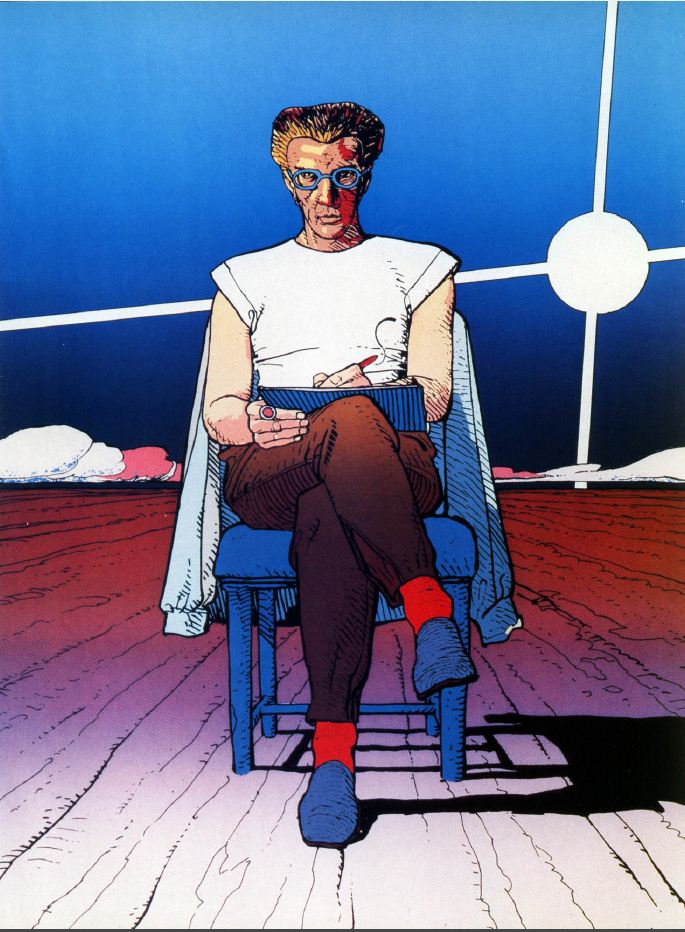
French comic book legend Jean Giraud, also known as Moebius, died today in Paris at 73.

selfportraitmoebius

Although Giraud’s work is more famous in Europe, and particularly France and Belgium, where comics tend to get more of the artistic esteem they deserve, his influence on contemporary American comics and sci-fi film design should not be underestimated.

starwatcheriii

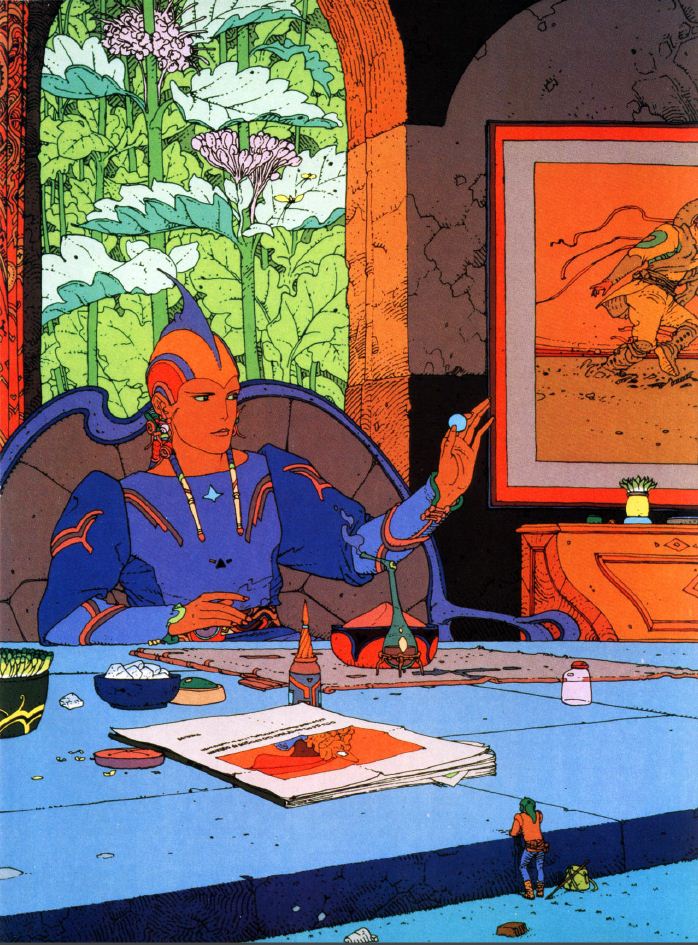
His take on Wild West culture is exemplified in what is likely his largest body of work Blueberry, but folks new to Giraud might wish to start with The Airtight Garage (or just check out this cool gallery).

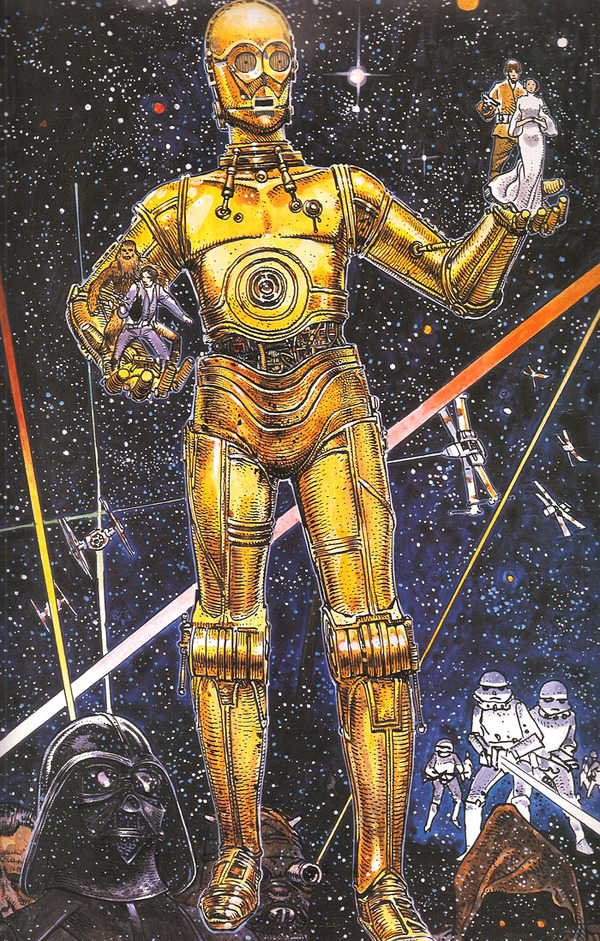
moebius star wars

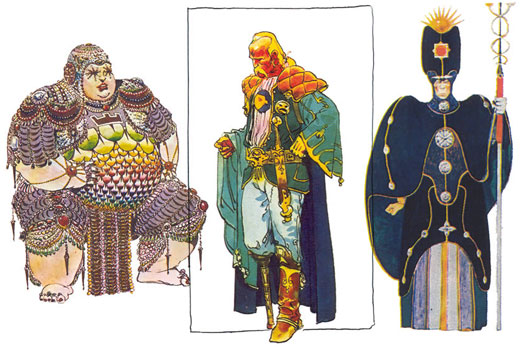
Giraud/Moebius was never simply a genre artist; instead, his work taps into the mythological, exploring themes that seem at once both strangely familiar but also wildly divergent from our expectations. His imaginative disruptions made him a key partner for film directors like Alejandro Jodorowsky; he also worked on the art team behind Alien, among other films, like The Abyss, Willow, and Tron. Giraud was also close friends with Hayao Miyazaki.

Giraud leaves a rich, vibrant legacy. The imaginative spaces of his worlds will undoubtedly captivate generations to come.


Bret Easton Ellis’s Notes for an American Psycho Sequel (From Twitter, Of Course)

Matmos & Zeena Parkins Jam at The Henry Miller Library

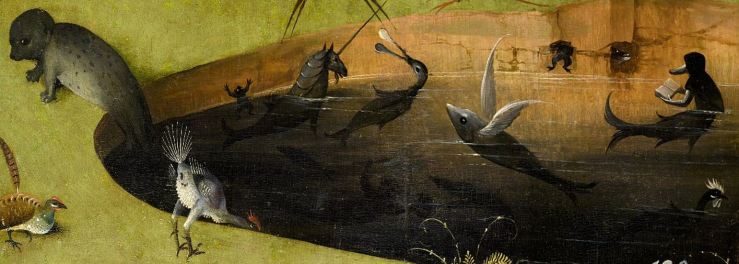
Mermaid Reading (Detail from Bosch’s Garden of Earthly Delights)

“Cry” — Godley & Creme

Natural Bridge Tale

From Charles M. Skinner’s Myths And Legends of Our Own Land (1896):

Though several natural bridges are known in this country, there is but one that is famous the world over, and that is the one which spans Clear Creek, Virginia—the remnant of a cave-roof, all the rest of the cavern having collapsed. It is two hundred and fifteen feet above the water, and is a solid mass of rock forty feet thick, one hundred feet wide, and ninety feet in span. Thomas Jefferson owned it; George Washington scaled its side and carved his name on the rock a foot higher than any one else. Here, too, came the youth who wanted to cut his name above Washington’s, and who found, to his horror, when half-way up, that he must keep on, for he had left no resting-places for his feet at safe and reachable distances—who, therefore, climbed on and on, cutting handhold and foothold in the limestone until he reached the top, in a fainting state, his knife-blade worn to a stump. Here, too, in another tunnel of the cavern, flows Lost River, that all must return to, at some time, if they drink of it. Here, beneath the arch, is the dark stain, so like a flying eagle that the French officer who saw it during the Revolution augured from it a success for the united arms of the nations that used the eagle as their symbol. The Mohegans knew this wonder of natural masonry, for to this point they were pursued by a hostile tribe, and on reaching the gulf found themselves on the edge of a precipice that was too steep at that point to descend. Behind them was the foe; before them, the chasm. At the suggestion of one of their medicine-men they joined in a prayer to the Great Spirit for deliverance, and when again they looked about them, there stood the bridge. Their women were hurried over; then, like so many Horatii, they formed across this dizzy highway and gave battle. Encouraged by the knowledge that they had a safe retreat in case of being overmastered, they fought with such heart that the enemy was defeated, and the grateful Mohegans named the place the Bridge of God.

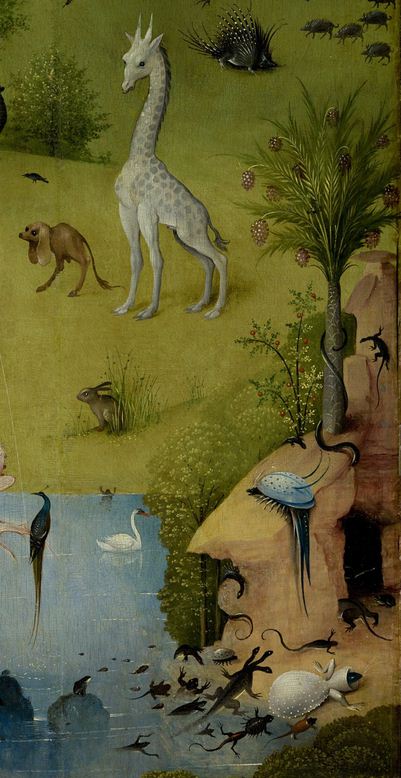
Detail from The Joining of Adam and Eve — Hieronymous Bosch

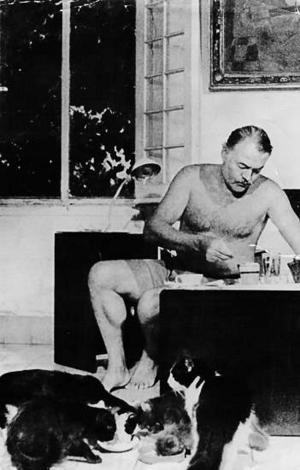
Topless Hemingway, Part VII

Liam Neeson, Improv Comic

Finally got around to seeing the first ep of Life’s Too Short the other night; funny, but not Extras funny—Warwick Davis is great though (I should mention that Willow was one of my favorite movies as a youth).

“Of the Foure Elementes Where They Shoulde Sone Be Founde” (A Tale from The Old-English Jest Book)

A tale of the four elements from The Old-English Jest Book, a volume supposedly owned and used by William Shakespeare:

In the old world when all thyng could speke, the iiii elementys mette to geder for many thynges whych they had to do, because they must meddell alway one wyth a nother, and had communicacion to gyder of dyuers maters; and by cause they coulde not conclude all theyr maters at that season, they appoyntyd to breke communicacion for that tyme and to mete agayne another tyme. Therfore eche one of them shewed to other where theyr most abydyng was and where theyr felows shoulde fynde them, yf nede shuld requyre; and fyrste the erthe sayde: bretherne, ye knowe well as for me I am permanent alway and not remouable; therfore ye may be sure to haue me alway whan ye lyste. The wather sayde: yf ye lyst to seke me, ye shall be sure to haue me under a toft of grene rushes or elles in a womans eye. The wynde sayde: yf ye lyst to speke wyth me, ye shall be sure to haue me among aspyn leuys or els in a womans tong. Then quod the fyre: yf any of you lyst to seke me, ye shall euer be sure to fynd me in a flynt stone er elles in a womans harte.

By thys tale ye may lerne as well the properte of the iiii elementys as the properteis of a woman.

All of David Markson’s References in The Last Novel to Walt Whitman

All of David Markson’s references in The Last Novel to Walt Whiman:

I am he that aches with amorous love.            Wrote Whitman.

Walter, leave off.

Wrote D. H. Lawrence.

Walt Whitman’s claim — never in any way verified — that he had fathered at least six illegitimate children.

Gerard Manley Hopkins, on realizing that he feels a certain kinship with Whitman:

As he is a very great scoundrel this is not a very pleasant confession.

A writer of something occasionally like English — and a man of something occasionally like genius.

Swinburne called Whitman.

Future generations will regard Bob Dylan with the awe reserved for Blake, Whitman, Picasso and the like.

Said an otherwise seemingly rational writer named Jonathan Lethem.

Before the Euro, the portrait of Yeats on Ireland’s twenty-pound note.

America’s Whitman twenty-dollar bill, when?

The Melville ten?

Twenty-five years after his death, Poe’s remains were disinterred from what had been little better than a pauper’s grave and reburied more formally.

Walt Whitman, who made the journey from Camden to Baltimore in spite of being disabled from a recent stroke, was the only literary figure to appear at the ceremonies.

Salvador Dali & Amanda Lear (French TV,1967)

“We Kind of Dipped Our Toes into Murder” — Pineapple Express Diner Scene (NSFW)

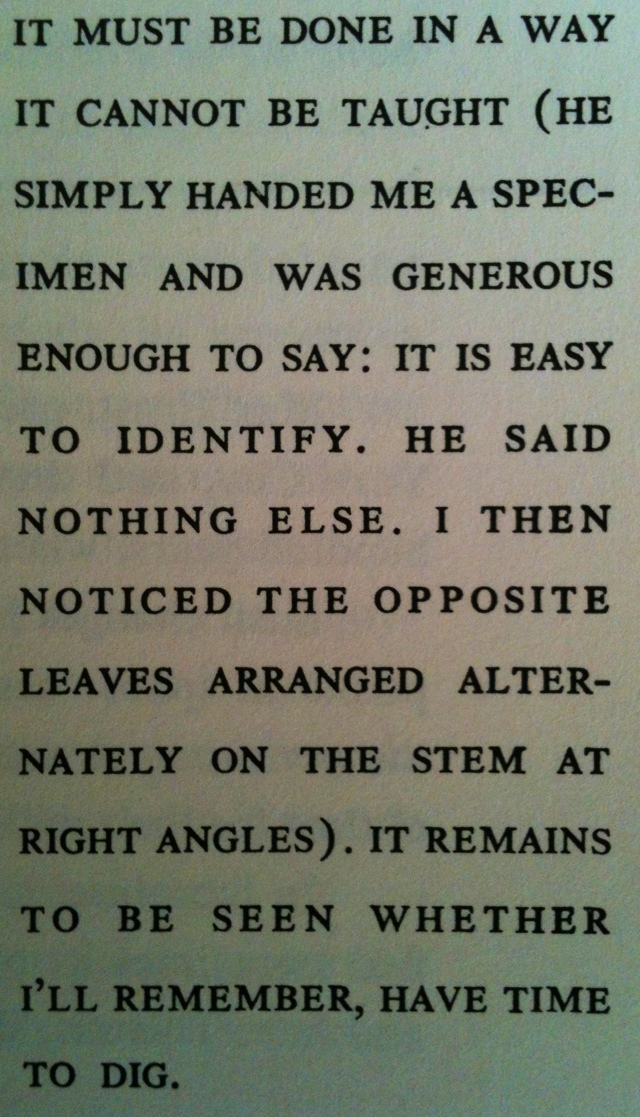
“It Must Be Done in a Way It Cannot Be Taught” — John Cage

20120228-173108.jpg

(From John Cage’s A Year from Monday).

Michel Houellebecq: “I Still Haven’t Made Up My Mind Whether Sex Is Good or Not”

Michel Houellebecq talks sex, frustration, and prostitution in his 2010 Paris Review interview:

INTERVIEWER

Of course, it was the numerous sex scenes that got you a lot of attention in the media.

HOUELLEBECQ

I’m not sure that there are such an unusual number of sex scenes in my novel.
I don’t think that’s what was shocking. What shocked people was that I
depicted sexual failure. I wrote about sexuality in a nonglorifying way. Most of all I described a basic reality: a person filled with sexual desire who can’t satisfy it. That’s what people don’t like to hear about. Sex is supposed to be positive. Showing frustrated sexual desire is obscene. But it’s also the truth. The real question is, Who is allowed to have sex? I don’t understand, for example, how teachers survive with all these alarming young girls. When women become sexual tourists, that is even more hidden, shameful, and taboo than when men do it. Just as, when a woman professor puts her hand on a student’s thigh, it’s even worse, even more unspeakable.

INTERVIEWER

A constant refrain in your novels is that sex and money are the dominant values of this world.

HOUELLEBECQ

It’s strange, I’m fifty years old and I still haven’t made up my mind whether sex is good or not. I have my doubts about money too. So it’s odd that I’m considered an ideological writer. It seems to me that I am mostly exposing my doubts. I do have certain convictions. For example, the fact that you can pay a girl, that I think is a good thing. Undeniably. An immense sign of progress.

INTERVIEWER

You mean prostitutes?

HOUELLEBECQ

Yes. I’m all for prostitution.

INTERVIEWER

Why?

HOUELLEBECQ

Because everybody wins. It doesn’t interest me personally, but I think it’s a good thing. A lot of British and Americans pay for it. They’re happy. The girls are happy. They make a lot of money.

INTERVIEWER

How do you know that the girls are happy?

HOUELLEBECQ

I talk to them. It’s very difficult because they don’t really speak English, but I talk to them.

INTERVIEWER

What about the more commonly held idea that these women are victims who are forced into these circumstances?

HOUELLEBECQ

It’s not true. Not in Thailand. It’s just stupid to have objections about it.

Books Acquired, 2.16.2012 — Or, Here’s What’s New from Picador This Month

20120228-173327.jpg

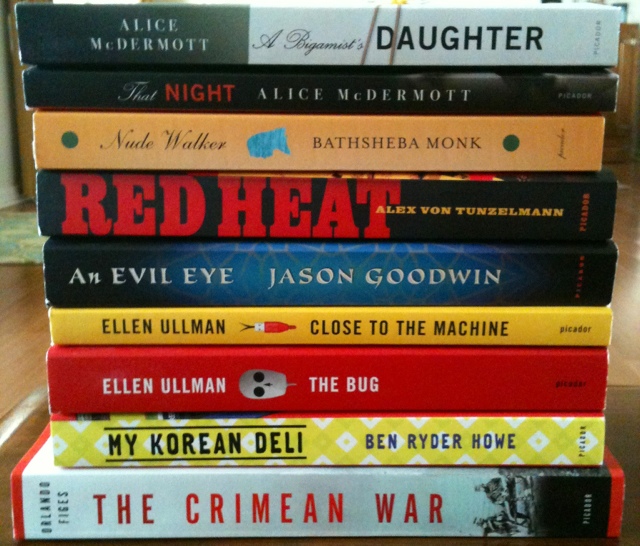
The kind folks at Picador sent a nice box of titles to Biblioklept World Headquarters a few weeks ago; I’ve had enough time to mull over them a bit and do something of a write-up. Here goes.

Next month, coinciding with her new novel By Blood (from FS&G), Picador re-releases (in new editions) two from Ellen Ullman:Close to the Machine and The Bug, which features a new introduction by Mary Gaitskill. Machine is a sort-of-memoir about the dawn of the tech-era; Ullman recounts her experiences as a female software engineer finding a place in the boys’ club of programming. Love these covers:
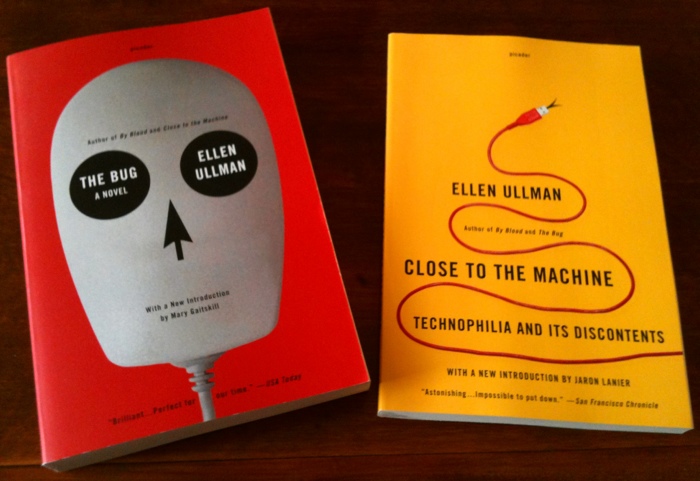
20120228-173409.jpg

The Bug, a novel is tech without the noir, cyber without the punk—something different and fresh. It reminds me of Douglas Coupland’s Microserfs only because I can’t think of what else to compare it to. Pub’s write-up:

Ellen Ullman is a “rarity, a computer programmer with a poet’s feeling for language” (Laura Miller, Salon). The Bug breaks new ground in literary fiction, offering us a deep look into the internal lives of people in the technical world. Set in a start-up company in 1984, this highly acclaimed first novel explores what happens when a baffling software flaw—a bug so teasing it is named “the Jester”—threatens the survival of the humans beings who created it.

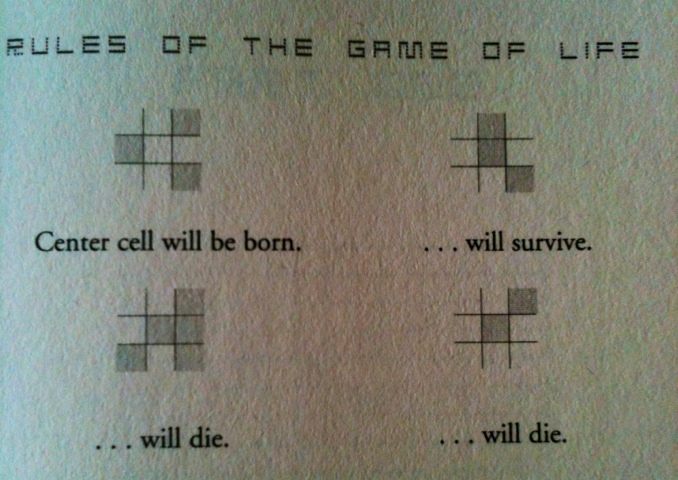
The Bug features a playfulness of the page, a willingness to examine the intersection of code and poetry. Example:
20120228-173416.jpg

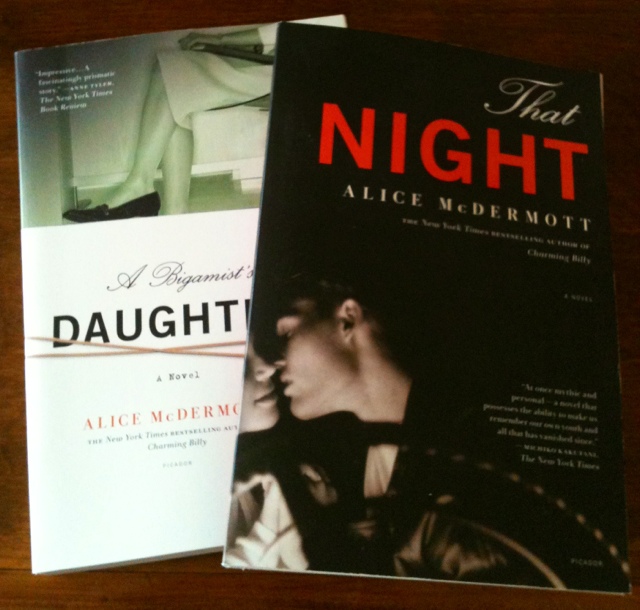
Alice McDermott also gets reissues: A Bigamist’s Daughter and That Night, which my wife picked up. That Night was a finalist for the Pulitzer and the National Book Award. It seems a little sexy and dangerous. Again, pub’s blurb:

It is high summer, the early 1960s. Sheryl and Rick, two Long Island teenagers, share an intense, all-consuming love. But Sheryl’s widowed mother steps between them, and one moonlit night Rick and a gang of hoodlums descend upon her quiet neighborhood. That night, driven by Rick’s determination to reclaim Sheryl, the young men provoke a violent confrontation, and as fathers step forward to protect their turf, notions of innocence belonging to both sides of the brawl are fractured forever. Alice McDermott’s That Night is “a moving and captivating novel, both celebration and elegy…a rare and memorable work” (The Cleveland Plain Dealer).
20120228-173424.jpg

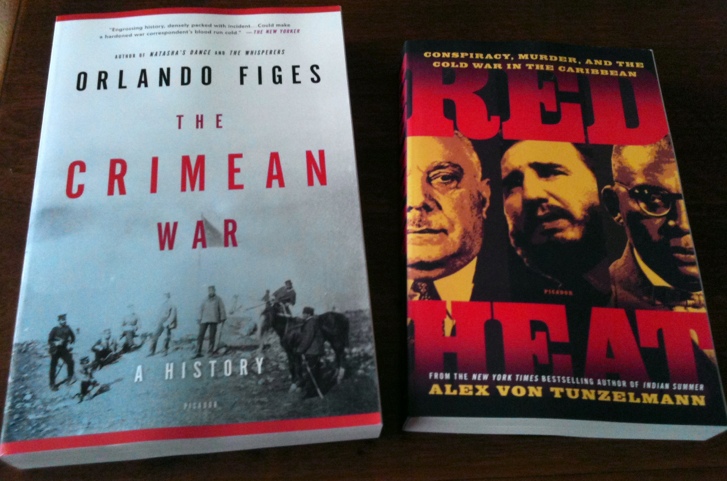
Two history books in the package: Orlando Figes’s The Crimean War and Red Heat by Alex von Tunzelmann.
20120228-173435.jpg

Here’s an excerpt from the Figes book (which is, uh, about the Crimean War):

Two world wars have obscured the huge scale and enormous human cost of the Crimean War. Today it seems to us a relatively minor war; it is almost forgotten, like the plaques and gravestones in those churchyards. Even in the countries that took part in it (Russia, Britain, France, Piedmont-Sardinia in Italy and the Ottoman Empire, including those territories that would later make up Romania and Bulgaria) there are not many people today who could say what the Crimean War was all about. But for our ancestors before the First World War the Crimea was the major conflict of the nineteenth century, the most important war of their lifetimes, just as the world wars of the twentieth century are the dominant historical landmarks of our lives.

Red Heat is not the novelization of the 1988 Schwarzenegger buddy-cop film (nor, sadly, a novelization of the 1985 Linda Blair women-in-prison film of the same name). Von Tunzelmann’s book examines the relationship between the island nations to the U.S.’s immediate south to America and Russia. Like I said, no Schwarzenegger, but plenty of strong men. From Jad Adam’s review in The Guardian:

Red Heat deftly juggles the stories of three countries – Cuba, Haiti and the Dominican Republic – and their relationship with the superpowers, where things were not as they seemed. Von Tunzelmann asserts that the political labels of the region were a sham: “democracy” was dictatorship; leaders veered to the rhetoric of the right or left according to advantage; a communist was anyone, however rightwing or nationalistic, whom the ruling regime wanted tarnished in the eyes of the US