“Praise of Aphorisms” — Nietzsche

Friedrich Nietzsche. From Mixed Opinions and Maxims:

(168) Praise of aphorisms.— A good aphorism is too hard for the tooth of time and is not consumed by all millennia, although it serves every time for nourishment: this it is the great paradox of literature, the intransitory amid the changing, the food that always remains esteemed, like salt, and never loses its savor, as even that does.

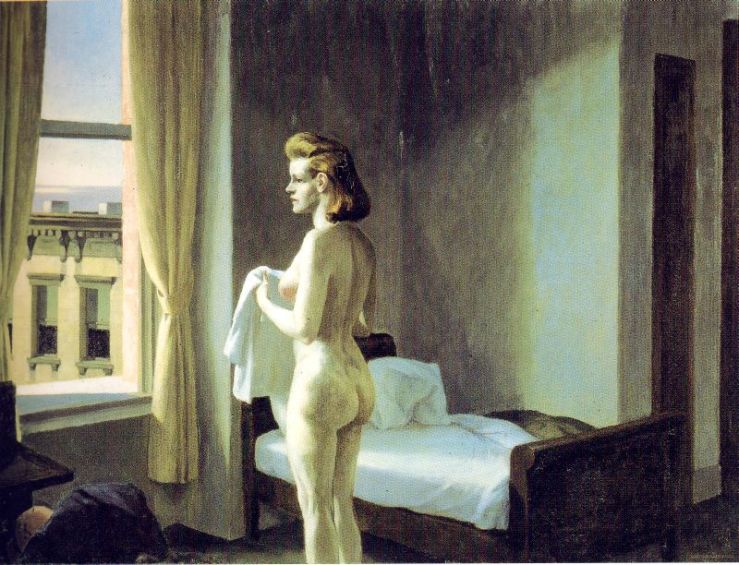
Morning in a City — Edward Hopper

Coffee Ideology — Slavoj Žižek

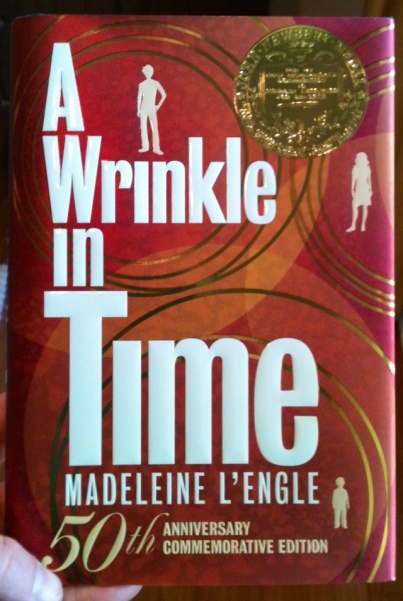
Book Acquired, 1.18.2012 — 50th Anniversary Edition of Madeleine L’Engle’s Classic A Wrinkle in Time

20120122-120441.jpg

The 50th anniversary edition of Madeleine L’Engle’s innovative YA classic A Wrinkle in Time showed up at the house last week (I wrote a bit about Wrinkle as well).

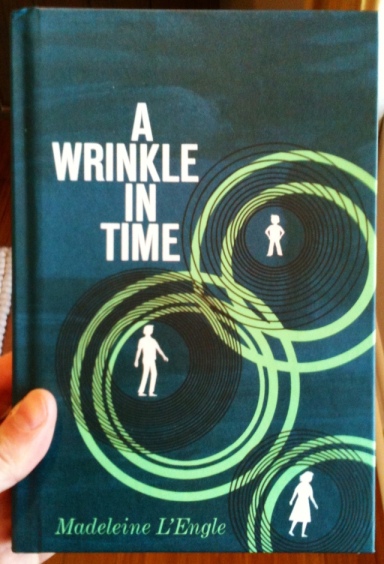
The new edition is chock full of extras, including manuscript pages, photos, and more. My favorite detail though is the actual cover—the one under the dust jackets (I hate dust jackets):

20120122-120459.jpg

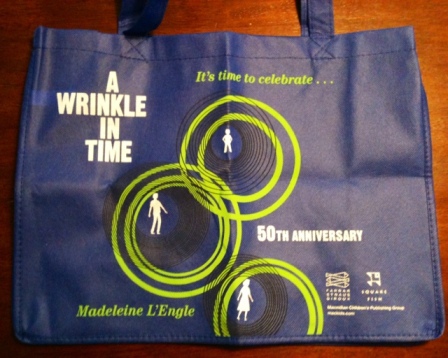
The kind people at Macmillan also sent along a bag—a first—one I’ll proudly use when I do my grocery shopping:

20120122-120509.jpg

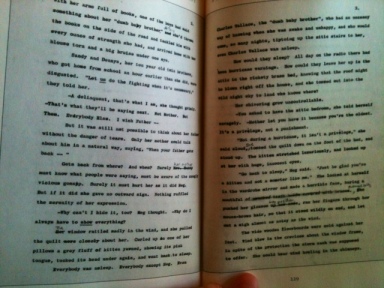
A blurry shot of the manuscript section:

20120122-120517.jpg

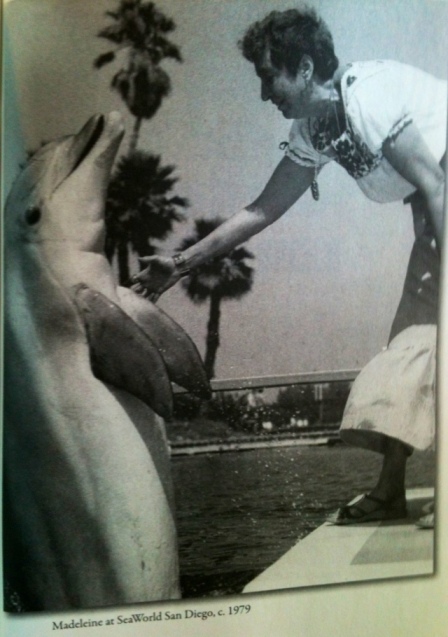
Madeleine and a dolphin:

20120122-120526.jpg

William Gaddis on James Joyce

William Gaddis on James Joyce (via/more):

I recall a most ingenious piece in a Wisconsin quarterly some years ago in which The Recognitions’ debt to Ulysses was established in such minute detail I was doubtful of my own firm recollection of never having read Ulysses.

(March 1972 letter to Jean [?] Howes)

I’ve about reached the end of the line on questions about what I did or didn’t read of Joyce’s 30 years ago. All I read of Ulysses was Molly Bloom at the end which was being circulated for salacious rather than literary merits; No I did not read Finnegans Wake though I think a phrase about “psychoanaloosing” one’s self from it is in The Recognitions; Yes I read some of Dubliners but don’t recall how many & remember only a story called “Counterparts”; Yes I read a play called Exiles which at the time I found highly unsuccessful; Yes I believe I read Portrait of an Artist but also think I may not have finished it; No I did not read commentary on Joyce’s work & absorb details without reading the original. I also read, & believe with a good deal more absorbtion [sic], Eliot, Dostoevski, Forster, Rolfe, Waugh, why bother to go on, anyone seeking Joyce finds Joyce even if both Joyce & the victim found the item in Shakespear, read right past whole lines lifted bodily from Eliot &c, all of which will probably go on so long as Joyce remains an academic cottage industry.

(June 1975 letter to Grace Eckley)

Portlandia Does Battlestar Galactica


“Value of Honest Books” — Nietzsche

Friedrich Nietzsche. From Mixed Opinions and Maxims:

(145) Value of honest books.—Honest books make the reader honest, at least by luring into the open his hatred and aversion which his sly prudence otherwise knows how to conceal best. But against a book one lets oneself go, even if one is very reserved toward people.

Book Shelves #4, 1.22.2012

Book shelves series #4, fourth Sunday of 2012: In which we finally leave the master bedroom and check out the books in my children’s rooms.

In the previous weeks, I illustrated that my kids — a girl and a boy, 4 and 1, respectively (tack on a “half” to each of those numbers if you care to) — my kids leave books all over the house. Their books are everywhere. They are as bad as I am. I indicated at the beginning of this year-long series that the documentation would never be stable or absolute; that books float through my house, come and go like bad house guests or silly ghosts—this is probably more true of the children’s books in this house than any other kind of book.

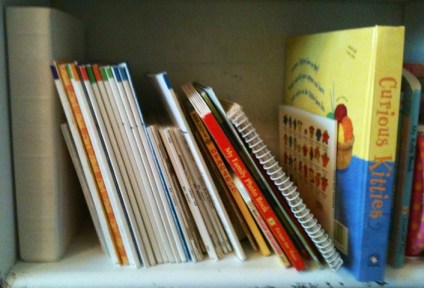
This week, I photograph the book shelves in my kids’ rooms, starting with my daughter’s. This is her big bookshelf:

20120121-174110.jpg

I did not photograph the big pile of books that set to the left. A close up of any of these shelves would reveal a mix of classics—stuff that my wife and I read and cherished as kids—and newer stuff as well. Here’s a shelf, sort of at random—it’s unusually well-organized:

20120121-174117.jpg

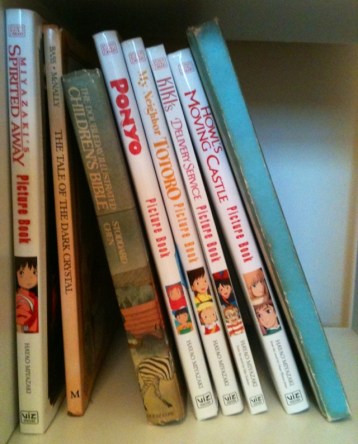
There’s a lot of Studio Ghibli books here; most narrativize Hayao Miyazaki’s films (we’re big fans in this house). My daughter loves these. The bible was my bible; the blue-spined book is this:

20120121-174125.jpg

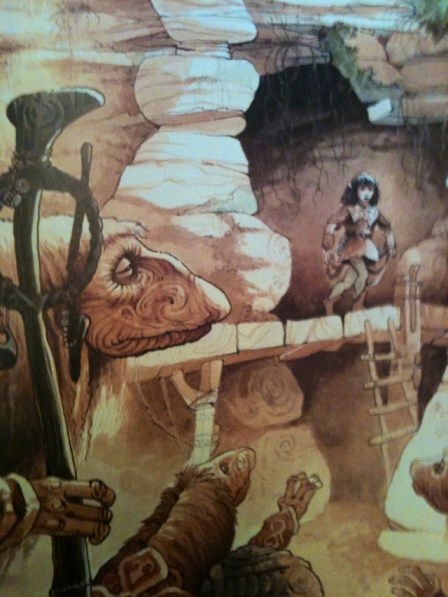
You might also note a book version of Jim Henson’s creepy classic The Dark Crystal; this was mine as a kid and it disturbed the hell out of me, so I gave it to my daughter, of course:

20120121-174143.jpg

The Studio Ghibli books combine beautiful stills of the film with narrative prose and comic book speech bubbles. From the standpoint of a fan of the films, they’re really interesting because they explicate some of the ambiguity. Our daughter loves them and asks for them (too much!):

20120121-174149.jpg

Another shelf from another book shelf—the only shelf with books on it in this piece of furniture, actually. Not interesting, but I said I’d photograph all book shelves as part of this project:

20120121-174157.jpg

Before my wife and I married, we lived in Tokyo for a while; we bought a bunch of these board books at a 100 yen shop. Here’s one:

20120121-174203.jpg

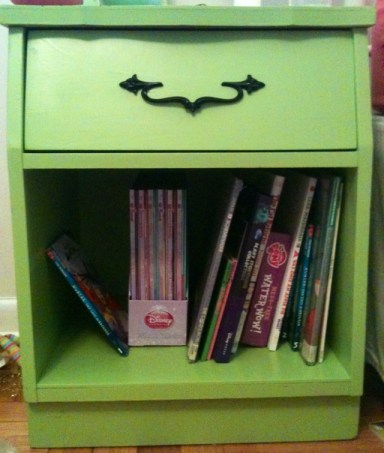
Night stand: always a place of shelving instability:

20120121-174209.jpg

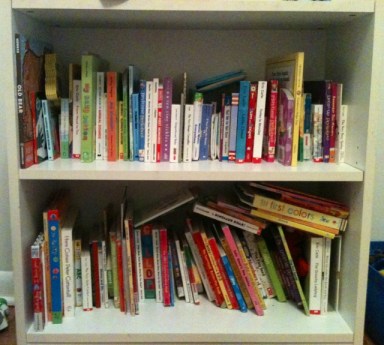
The book shelf in my son’s room—lots of board books, Eric Carle, stuff like that. He likes trains and dogs:

20120121-174219.jpg

So, I covered both of the kid’s rooms in one post in the hopes of getting to more interesting volumes in the next few weeks. On deck: the den/kitchen space, featuring cookbooks, art books, and travel volumes.

“Kakteen, Wüste, Sonne” — Kraftwerk (Live, 1971)

Books Acquired, 1.17.2012—Or, Here’s What’s New from Picador This Month

20120121-100054.jpg

The kind people at Picador sent me a box of books, including a memoir (Margaux Fragoso’s Tiger, Tiger), a few novels (The Lover’s Dictionary by David Levithan; Ralph Sassone’s The Intimates; Alan Glynn’s noir thriller Bloodland; Dieter Schlesak’s The Druggist of Auschwitz, which purports to be a “documentary novel”; and Zoë Heller’s first novel, Everything You Know), and a work of political science (Ari Berman’s Herding Donkeys).

A box of books is a bit overwhelming, but I make it a point to spend some time with every book that comes into Biblioklept World Headquarters. Here’s some thoughts on these.

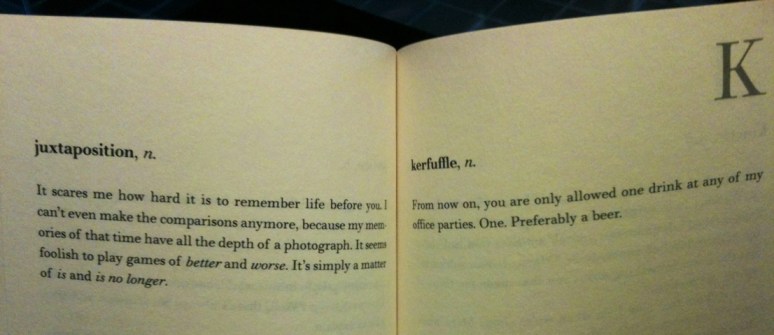
I actually ended up reading almost all of The Lover’s Dictionary, despite it having the word “lover” in the title, which, jeez. When my wife picked it up, she said something like, “How can they call this a novel?” — fair question, because the book is structured like a dictionary. In point of illustration:
20120121-100117.jpg

I’ve got a bigger post on Levithan’s book coming up, one that tries to situate it in the context of other non-novelly novels—but in short it is a novel, a very contemporary one that tells the oldest story in the proverbial book (boy meets girl) in an elliptical way that suits our post-information age. Like I said more to come, but for now: The Lover’s Dictionary is funny, occasionally cruel, too-often saccharine, awfully real, sometimes deeply flawed, but consistently engaging (sorry for all the adverbs).

I imagine Margaux Fragoso’s memoir Tiger, Tiger will capture the fascination of a large audience, but half an hour of the book was almost more than I could bear. Not because Fragoso can’t write—far from it, in fact—but her subject matter, which is to say her stolen childhood, is rendered too raw,   too real for me; there’s nothing pulpy or lurid about Fragoso’s work, nor is there the aesthetic sheen of Lolita to gloss any of the ugly, sordid details.  Kathryn Harrison ponders the question of Tiger, Tiger’s audience in her favorable review at The New York Times:

So who — other than voyeurs looking for a sustained close-up of a pedophile in action — will want to read this book? To bear witness to a numbingly long series of violations of a child by a man who has honed his wickedness for decades is not more pleasant than it sounds. As a society we energetically oppose sexual abuse; as individuals most of us shy away from investigating a relationship characterized by creepy kisses and inappropriate fondling. Worse, we defend cowardice by calling it discretion — minding our own business. Maybe a book like “Tiger, Tiger” can help us be a little braver. Certainly, it took courage to write.

20120121-100131.jpg

Ralph Sassone’s The Intimates: sex scenes (straight and gay); lots of notations about parents; lots of characters.

Dieter Schlesak’s The Druggist of Auschwitz: This “documentary novel” blends actual testimony from the Frankfurt Auschwitz Trial, interviews with camp guards and prisoners, and fictional narrative to tell the true story of Dr. Victor Capesius, an SS officer who worked with Mengele. The book is less gimmicky than it sounds in this description, and if its documentary elements are blunter and less ambiguous than W.G. Sebald’s historical fragments, I suppose that’s what the subject matter merits.

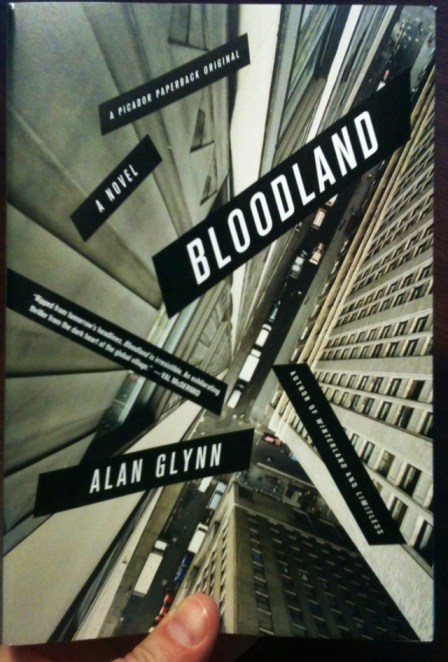
Alan Glynn’s new novel Bloodland (a Picador paperback original) is a noirish thriller set against the backdrop of political and corporate intrigue. Glynn writes with terse immediacy, telegraphing the plot in short punchy sentences that recall James Ellroy (without the finnicky slang). The book reads almost like a movie script, vivid and concrete. It’s a fast-paced page turner with a smart plot, just the sort of thing one wants from a thriller.
20120121-103504.jpg

Herding Donkeys by Ari Berman: Honestly not my thing, but if you want to read about the DNC from the time of Howard Dean to the rise of Barrack Obama, this is probably a book for you.

Zoë Heller’s Everything You Know: This is new in paperback again after over a decade. The story focuses on a cantankerous, unlikable son-of-a-bitch named Willy Muller. Things aren’t going well for him: he’s just suffered a heart attack, his daughter’s committed suicide, and the public still believes he murdered his wife. No wonder he hates humanity. Heller is probably most famous for her novel Notes on a Scandal, which was adapted into an excellent film in 2006.

Biblioklept’s picks: The Lover’s Dictionary; Tiger, Tiger; Bloodland.
Wonder Woman (Bondage) — Bill Sienkiewicz

(Via).

“Marks of the Good Writer” — Nietzsche

Friedrich Nietzsche. From Mixed Opinions and Maxims:

(138) Marks of the good writer.— Good writers have two things in common; they prefer to be understood rather than admired; and they do not write for knowing and over-acute readers.

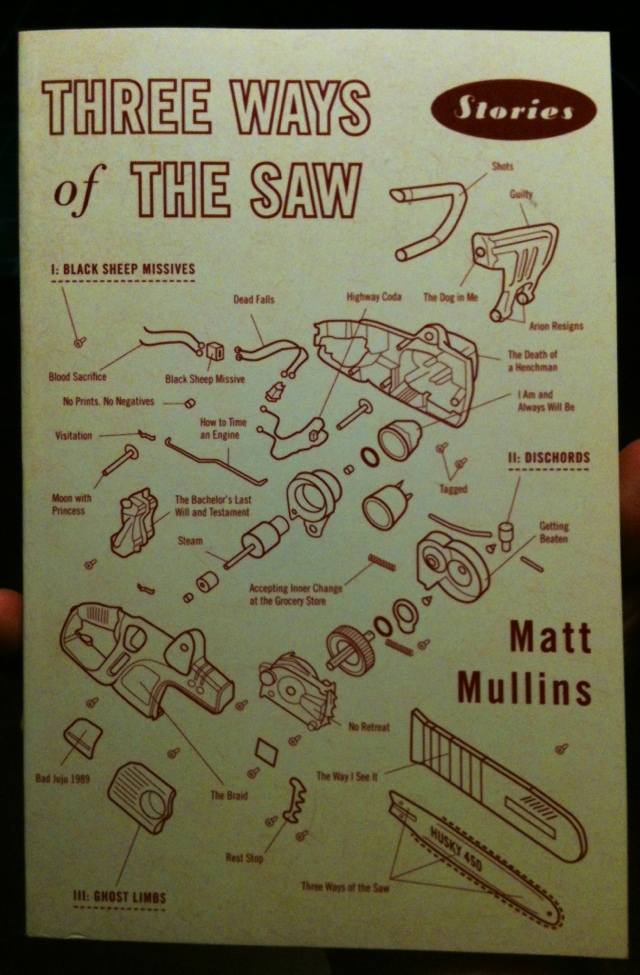
Book Acquired, 1.18.2011 (Matt Mullins/Chainsaw Short Fiction Edition)

20120120-163945.jpg

Matt Mullins’s Three Ways of the Saw (new in February from Atticus): Spent a few afternoons sifting through this volume, intrigued by its outstanding cover (I use the word “outstanding” literally; over a dozen titles came into Bblklpt Wrld Hdqrtrs this fine week). Mullins’s volume, stocked with short and short-short (and micro-) stories, bristles with boozy energy, grit, ugly druggy nervy episodes, shenanigans, dirty hi-jinks, breaking families, bad sons, bad people, broken people, desperate people . . . There’s a strong Bukoswkiish vibe to the business, with less ego, more concrete imagery, more Denis Johnson. I like this book.

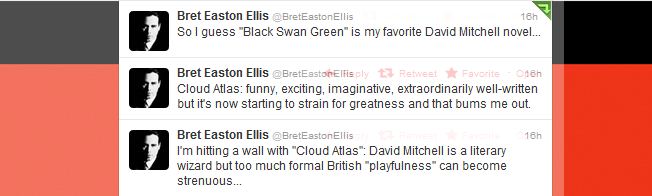
Bret Easton Ellis on David Mitchell’s Novel Cloud Atlas

“The Worst Readers” — Nietzsche

Friedrich Nietzsche. From Mixed Opinions and Maxims:

(137) The worst readers.— The worst readers are those who behave like plundering troops: they take away a few things they can use, dirty and confound the remainder, and revile the whole.

Pages from Joseph Cornell’s Imaginary Journal

Check out the Peabody Essex Museum’s marvelous interactive exhibit Navigating the Imagination, which lets you view (and play with) the works of artist Joseph Cornell The images here come from a 1911 textbook that Cornell transformed into a magical book object, full of illustrations, collages, quotes, and cut outs (you can peruse the entire book).

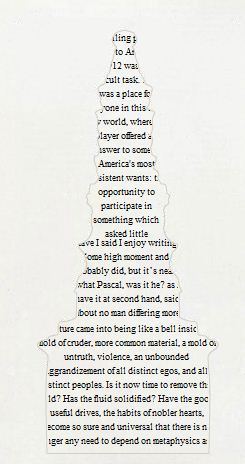
Bonus: Make your own Word Tower in the “Crystal Cage” machine. Here’s mine; I used snips from open tabs on my browser (two pieces from Gaddis and a Nietzsche):