Werner Herzog on James Cameron’s Avatar

“The Boarding” — Denis Johnson

“The Boarding” by Denis Johnson–

One of these days under the white
clouds onto the white
lines of the goddamn PED
X-ING I shall be flattened,
and I shall spill my bag of discount
medicines upon the avenue,
and an abruptly materializing bouquet
of bums, retirees, and Mexican
street-gangers will see all what
kinds of diseases are enjoying me
and what kind of underwear and my little
old lady’s legs spidery with veins.
So Mr. Young and Lovely Negro Bus
Driver I care exactly this: zero,
that you see these things
now as I fling my shopping
up by your seat, putting
this left-hand foot way up
on the step so this dress rides up,
grabbing this metal pole like
a beam of silver falling down
from Heaven to my aid, thank-you,
hollering, “Watch det my medicine
one second for me will you dolling,
I’m four feet and det’s a tall bus
you got and it’s hot and I got
every disease they are making
these days, my God, Jesus Christ,
I’m telling you out of my soul.”

Anemic Cinema — Marcel Duchamp

Vodpod videos no longer available.

“Death Mask” — Edward Field

“Death Mask,” a poem by Edward Field

“Old age is the most unexpected
of all the things that happen to a man.”
–Leon Trotsky.

“Do not let me hear
Of the wisdom of old men, but rather of their
folly,
Their fear…”
–“East Coker,” by T.S. Eliot

1

In the mirror now,
what I see
reminds me
I won’t be here forever.

I don’t feel like
that face at all.
Inside it, I protest,
I’m quite different.

It’s somebody’s grandfather,
not me.

Whose grandfather is that?
I don’t want him.

2

Ah, memory, memory….

terrible,

to be losing

the words.

3

How do you get from here to there-
I mean, from where I am
to the nursing home?
In a snap of the fingers,
the blink of an eye.

Like my mother said,
as she was being loaded
into the ambulance,
It went so fast.

4

Life
a lazy buzz,
then
the quick sting.

A long inward breath,
then
the sudden
exhaling.

Deb Olin Unferth Reads Her Short Story “Deb Olin Unferth”

“It Was this Truly Epiphantic Experience” — David Foster Wallace Describes the First Time He Saw Blue Velvet

From his 1997 interview with Charlie Rose (which Jesus yeah I know you’ve seen before, but hey, it’s worth reading this anecdote from the transcript), David Foster Wallace describes seeing David Lynch’s Blue Velvet

The screen gets all fuzzy now as the viewer’s invited to imagine this. Coming out of an avant garde tradition, I get to this grad school and at the grad school, turns out all the teachers are realists. They’re not at all interested in post-modern avant garde stuff. Now, there’s an interesting delusion going on here — so they don’t like my stuff. I believe that it’s not because my stuff isn’t good, but because they just don’t happen to like this kind of esthetic.

In fact, known to them but unknown to me, the stuff was bad, was indeed bad. So in the middle of all this, hating the teachers, but hating them for exactly the wrong reason — this was spring of 1986 — I remember — I remember who I went to see the movie with — “Blue Velvet” comes out. “Blue Velvet” comes out.

“Blue Velvet” is a type of surrealism — it may have some — it may have debts. There’s a debt to Hitchcock somewhere. But it is an entirely new and original kind of surrealism. It no more comes out of a previous tradition or the post-modern thing. It is completely David Lynch. And I don’t know how well you or your viewers would remember the film, but there are some very odd — there’s a moment when a guy named “the yellow man” is shot in an apartment and then Jeffrey, the main character, runs into the apartment and the guy’s dead, but he’s still standing there. And there’s no explanation. You know, he’s just standing there. And it is — it’s almost classically French — Francophilistically surreal, and yet it seems absolutely true and absolutely appropriate.

And there was this — I know I’m taking a long time to answer your question. There was this way in which I all of a sudden realized that the point of being post-modern or being avant garde or whatever wasn’t to follow in a certain kind of tradition, that all that stuff is B.S. imposed by critics and camp followers afterwards, that what the really great artists do — and it sounds very trite to say it out loud, but what the really great artists do is they’re entirely themselves. They’re entirely themselves. They’ve got their own vision, their own way of fracturing reality, and that if it’s authentic and true, you will feel it in your nerve endings. And this is what “Blue Velvet” did for me.

I’m not suggesting it would do it for any other viewer, but I — Lynch very much helped snap me out of a kind of adolescent delusion that I was in about what sort of avant garde art could be. And it’s very odd because film and books are very different media. But I remember — I remember going with two poets and one other student fiction writer to go see this and then all of us going to the coffee shop afterwards and just, you know, slapping ourselves on the forehead. And it was this truly epiphantic experience.

“Wildcat Was Written in a Kind of Obsolete Vernacular” — Eli Cash Discusses His Unsuccessful Novel

“I Don’t Understand American Morals” — A Passage from Heinrich Böll’s Novel The Clown

A passage from Heinrich Böll’s novel The Clown, new in print again from Melville House–

Most films which children are allowed to see are full of whores. I have never understood what the boards who grade the films have in mind when they pass this type of film for children. The women in these films are either whores by nature, or they are whores in a sociological sense; they are almost never compassionate. In some Wild West saloon there are these blondes dancing the cancan, while rough cowboys, goldminers, or trappers then go after the girls and try to go up to their rooms with them, they usually have the door slammed in their face, or some brutal swine cruelly knocks them down. I take it this is meant to express something like virtuousness. Cruelty where compassion would be the only humane thing. No wonder the poor devils start beating each other up and shooting — it’s like football at school, only it is even crueller, since they are grown men. I don’t understand American morals. I suppose over there a compassionate woman would be burned as a witch, a woman who does it not for money and not out of passionate love for the man, but simply out of pity for masculine nature.

“Walking in the Footsteps of W.G. Sebald” — Stuart Jeffries Retraces The Rings of Saturn

Stuart Jeffries retraces W.G. Sebald’s coastal walk from The Rings of Saturn. Video after the jump. Continue reading ““Walking in the Footsteps of W.G. Sebald” — Stuart Jeffries Retraces The Rings of Saturn”

Alejandro Jodorowsky on David Lynch’s Dune (and Other Matters)

The AV Club’s Noel Murray interviews Chilean director Alejandro Jodorowsky, he of Holy Mountain and apocalypse-Western El Topo fame. Jodorowsky famously almost adapted Frank Herbert’s Dune before David Lynch picked up that gauntlet. Here’s Jodorowsky on Lynch’s adaptation–

AVC: For a long time, you were involved with developing Dune into a feature film, before the project fell through. Did you ever see David Lynch’s Dune?

AJ: Yes, I’ve seen it. I was very scared when I saw it, because Dune was for me very important in my life. I was very sad I could not do it. When I saw that David Lynch would do it, I was very scared, because I admire him as a moviemaker, and I thought he would do well. But when I see the picture, I realize he never understood this picture. It’s not a David Lynch picture. It’s the producer who made that picture, no? Who made this horror. For David Lynch, it was a job. A commercial job. It never was that for me.

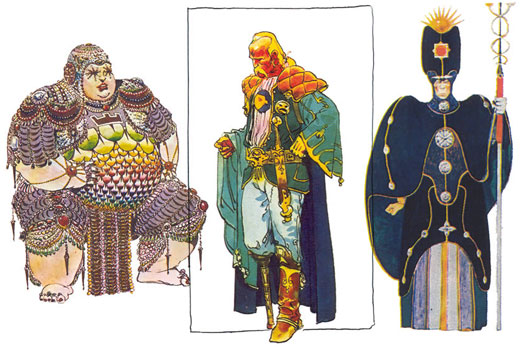
Jodorowsky’s version of Dune had entered pre-production, including early art from Jean Giraud (French comics artist Moebius). You can see some of Giraud’s character designs and storyboards here.

Jodorowsky famously wanted Salvador Dali to play the Emperor and Mick Jagger to play Feyd Rautha (a role that went to Sting in Lynch’s version).

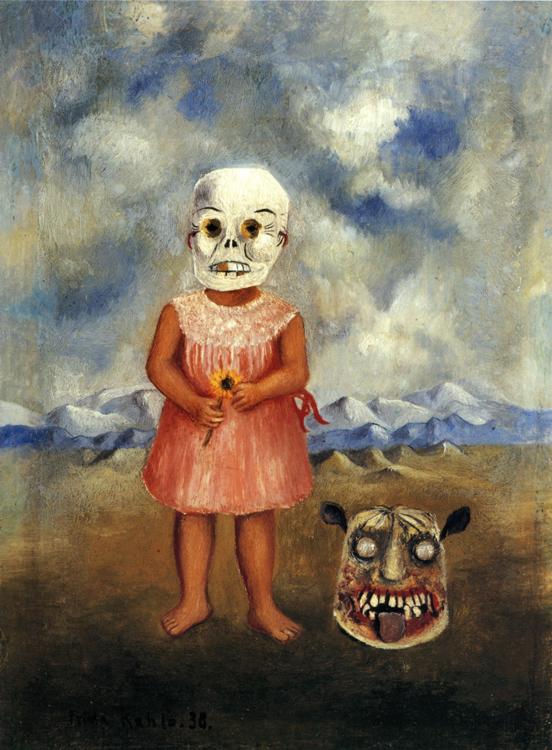
Girl with Death Mask — Frida Kahlo

Reminder: The Lost Books of the Odyssey Giveaway Ends This Friday

The kind folks at Picador are offering you, dear reader, a chance to win one of two copies of Zachary Mason’sThe Lost Books of the Odyssey, a dazzling re-imagining of Homer’s epic tale. And you’ll want to read this book, folks. Here’s a snippet from our review–

In his preface to The Lost Books of the Odyssey, author Zachary Mason tells us that before the story we now know as the Odyssey was organized by the poet Homer, the “material was formless, fluid, its elements shuffled into new narratives like cards in a deck.” Mason’s goal in The Lost Books is to echo these older versions of the story of Odysseus, omitting “stock epic formulae in favor of honing a single trope or image down to extreme clarity.” He succeeds admirably — Lost Books is an engaging and perplexing work that challenges our assumptions about one of the most foundational stories of Western literature. Mason’s “novel” (it is not really a novel, of course) strikes a wonderfully resonant and deeply upsetting chord, disrupting our sense of narrative satisfaction, breaking us away from the outcomes we thought we knew.

So, how do you get your grubby little hands on a copy? First, you need to have a U.S. mailing address. Second, you need to email us at biblioklept.ed@gmail.com, responding to this simple prompt: Who is your favorite character in The Odyssey, and why? Our esteemed judges will choose the winners from the best responses and post them as an announcement this Friday Saturday. Good luck!

“It Sounds Like the Title of a David Lynch Film” — A Passage from Roberto Bolaño’s 2666

A passage from Roberto Bolaño’s opus 2666

The card for the Santa Teresa cybercafe was a deep red, so red that it was hard to read what was printed on it. On the back, in a lighter red, was a map that showed exactly where the cafe was located. He asked the receptionist to translate the name of the place. The clerk laughed and said it was called Fire, Walk With Me.

“It sounds like the title of a David Lynch film,” said Fate.

The clerk shrugged and said that all of Mexico was a collage of diverse and wide-ranging homages.

“Every single thing in this country is an homage to everything in the world, even the things that haven’t happened yet,” he said.

After he told Fate how to get to the cybercafe, they talked for a while about Lynch’s films. The clerk had seen all of them. Fate had seen only three or four. According to the clerk, Lynch’s greatest achievement was the TV series Twin Peaks. Fate liked The Elephant Man best, maybe because he’d often felt like the elephant man himself, wanting to be like other people but at the same time knowing he was different. When the clerk asked him whether he’d heard that Michael Jackson had bought or tried to buy the skeleton of the elephant man, Fate shrugged and said that Michael Jackson was sick. I don’t think so, said the clerk, watching something presumably important that was happening on TV just then.

“In my opinion,” he said with his eyes fixed on the TV Fate couldn’t see, “Michael knows things the rest of us don’t.”

“We all know things we think nobody else knows,” said Fate.

Terrence Malick in Badlands

Here’s director Terrence Malick in his uncredited role in Badlands

Story behind the appearance, from this 2009 interview

Malick also tells us that “Badlands” features his one and only appearance as an actor. “This actor was supposed to show up at 9:30 in the morning for a small scene. We waited, the hours passed, and he didn’t show up. In the end we couldn’t afford to keep waiting, so I put on the cowboy’s hat and performed the part myself.”

“I prefer working behind the camera,” he added with a smile.

David Milch’s Idea of Fun: A Shotgun, Some Pantyhose, and a Dose of LSD

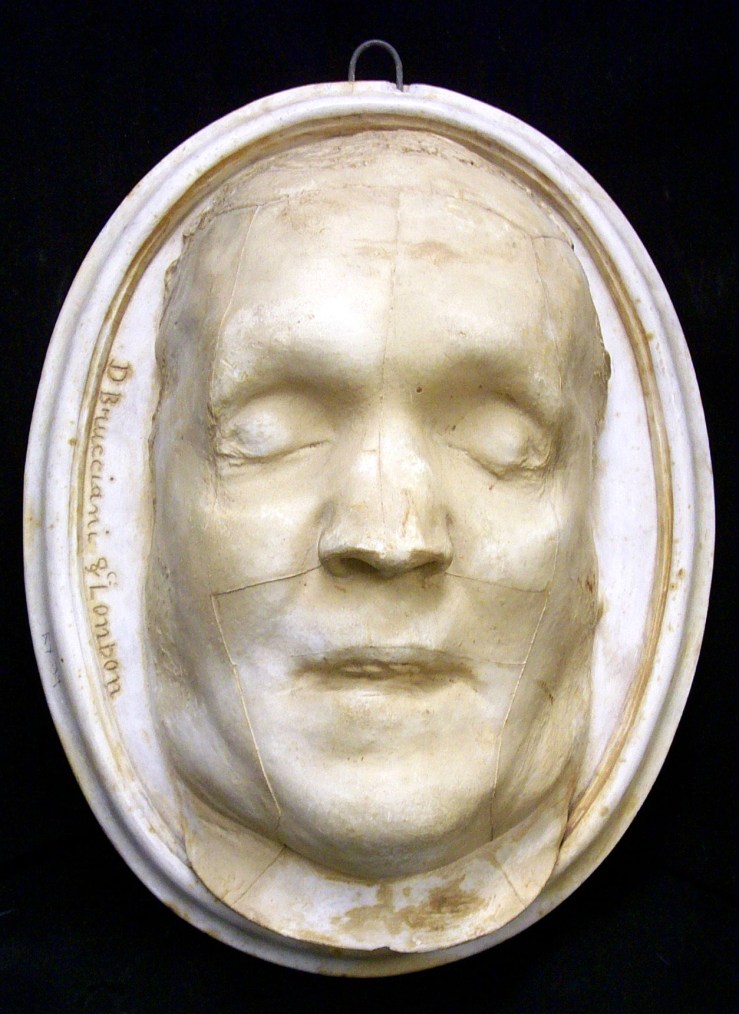
William Makepeace Thackeray’s Death Mask

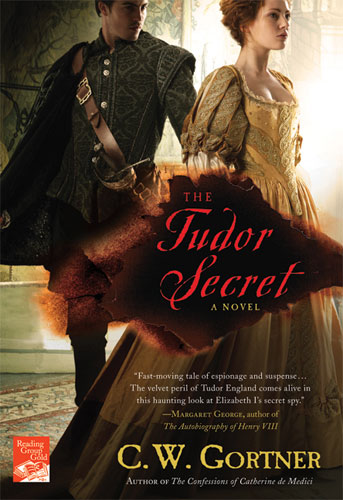
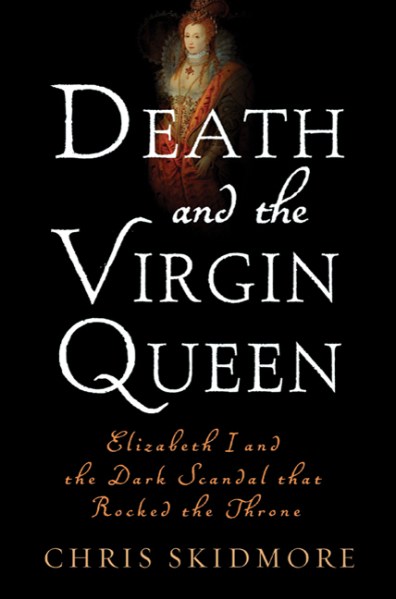
Two Tales of the Tudors: The Tudor Secret by C.W. Gortner and Death and the Virgin Queen by Chris Skidmore

It’s been nearly half a millennium since a Tudor held the British throne, yet narratives of Tudor exploits seem to proliferate at an exponential rate. The primary reason may be that these monarchs — Henry VIII and Elizabeth I in particular — were such strong characters, people whose fascinating qualities extended beyond their world-changing edicts. And it’s not just the monarchs, of course, who draw our attention, but the characters around them — the Boelyns and the Cromwells, Thomas More and William Shakespeare (the latter was tangential and late, to be sure, but hardly an insignificant figure of the Elizabethan era). We identify in the Tudors a certain sexiness (one milked shamelessly by Showtime’s silly series), as well as its corollary intrigue: personal scandal for these royals was politicized; what happened in the bedroom affected the public sphere. There is something strikingly modern about this fact, which perhaps also makes us turn our attention to the Tudors again and again.
C.W. Gortner delves into the conflict between the political and the private in his historical novel The Tudor Secret. He plants his fictional hero Brendan Prescott into Dudley Castle, where the young man grows up bullied by Lord Robert Dudley –who will later become an “intimate familiar” of Queen Elizabeth. In the summer of 1553, however, Elizabeth is still Princess; her brother Edward VI is king. Around the same time Brendan is brought to court to squire for Robert Dudley, Edward falls gravely ill and then disappears. Princess Elizabeth soon enlists Brendan’s aid as a spy, a situation that quickly becomes more complicated when he finds himself having to serve as a double agent for William Cecil, Elizabeth’s adviser, an employee of the Duke of Northumberland who meanwhile plots to raise Jane Grey to the throne (a move that would cut Elizabeth out of succession). The Tudor Secret is a tightly-plotted, quick-paced read, stuffed with animated historical characters buzzing around in a world of espionage and intrigue. Setting the stage for the ascendancy of a crafty Elizabeth I, the book is the first in a planned series called the Elizabethan Spymaster Chronicles.

Chris Skidmore’s Death and the Virgin Queen will also be of great interest to those fascinated by the darker side of the Tudors. Skidmore’s book is essentially a forensic analysis of the events of September 8, 1560, when the body of Amy Robsart was found dead in Cumnor Place, her neck broken after an apparent fall down the stairs. The problem: Rosbart was the wife of one Lord Robert Dudley (hey, remember him from before?); with Rosbart out of the way, Elizabeth might be free to marry the man she was scandalously close to. Even after the death was ruled an accident, a cloud of suspicion and rumor about the issue hung over Elizabeth’s reign. Skidmore digs into the issue, outlining the motives of possible parties and detailing likely suspects. Skidmore also explores why, even with Rosbart out of the picture, Elizabeth’s advisers would never allow a marriage to Dudley — and how Dudley worked to prevent the queen from marrying another. Death and the Virgin Queen is a nice parallel to The Tudor Secret; both are written in a popular style for a general audience, both are clearly well-researched, and both should satisfy those thirsting for more details about the still-bewildering world of the Tudors.

Death and the Virgin Queen is new this month in hardback from St. Martin’s Press. The Tudor Secret is new in trade paperback February 1st from St. Martins’ Griffin.