Thomas Pynchon: A Bibliography (Book acquired and then unacquired in that long COVID march of March 2020-March 2021)

Clifford Mead’s Thomas Pynchon: A Bibliography was published in 1989 by Dalkey. As far as I can tell, the book is out of print and has not been updated.

I checked out Thomas Pynchon: A Bibliography via interlibrary loan back in early March, 2020. My librarian borrowed it for me from the good librarians at the University of South Florida. I can’t really recall why I wanted it—probably not anything specific. I’ve used ILL to get a number of weird or rare items in the past, including a pristine copy of Samuel Chamberlain’s My Confessions (a major source for Cormac McCarthy’s Blood Meridian), and a handful of early stories by William Gaddis (I did not need to get my hands on this juvenalia).

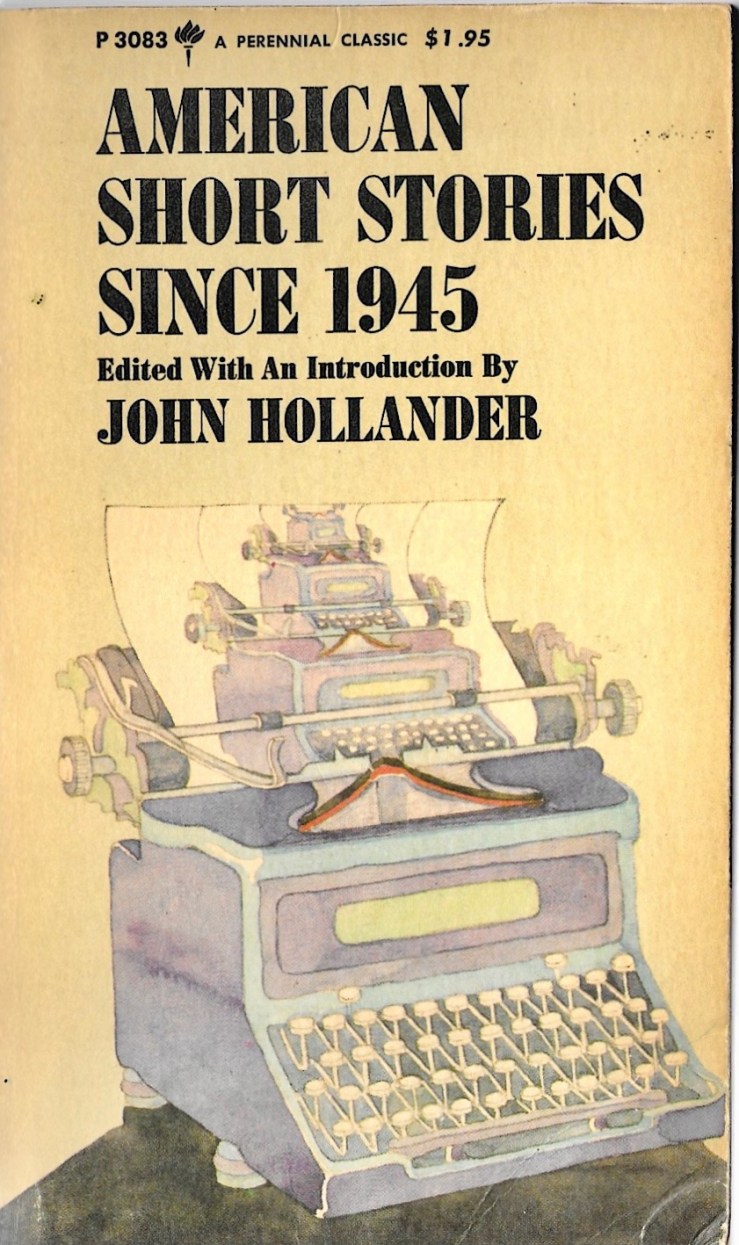
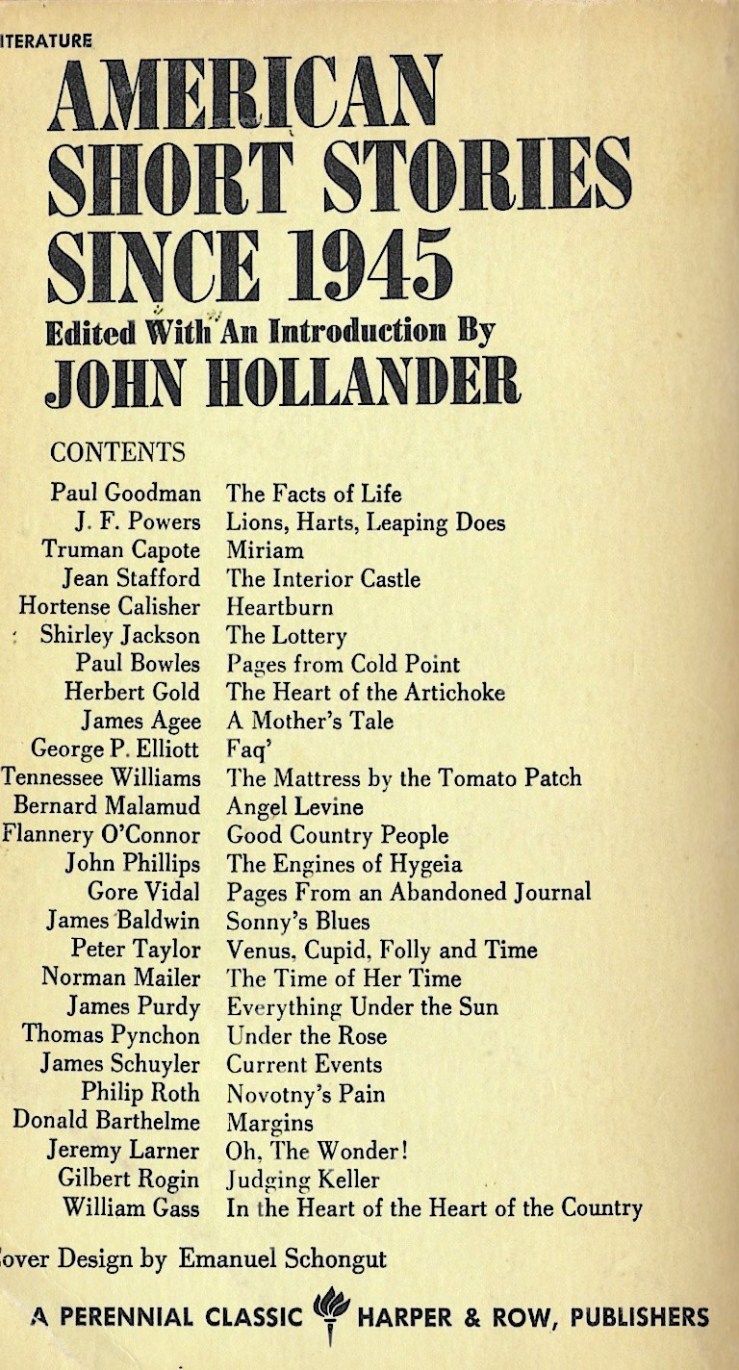
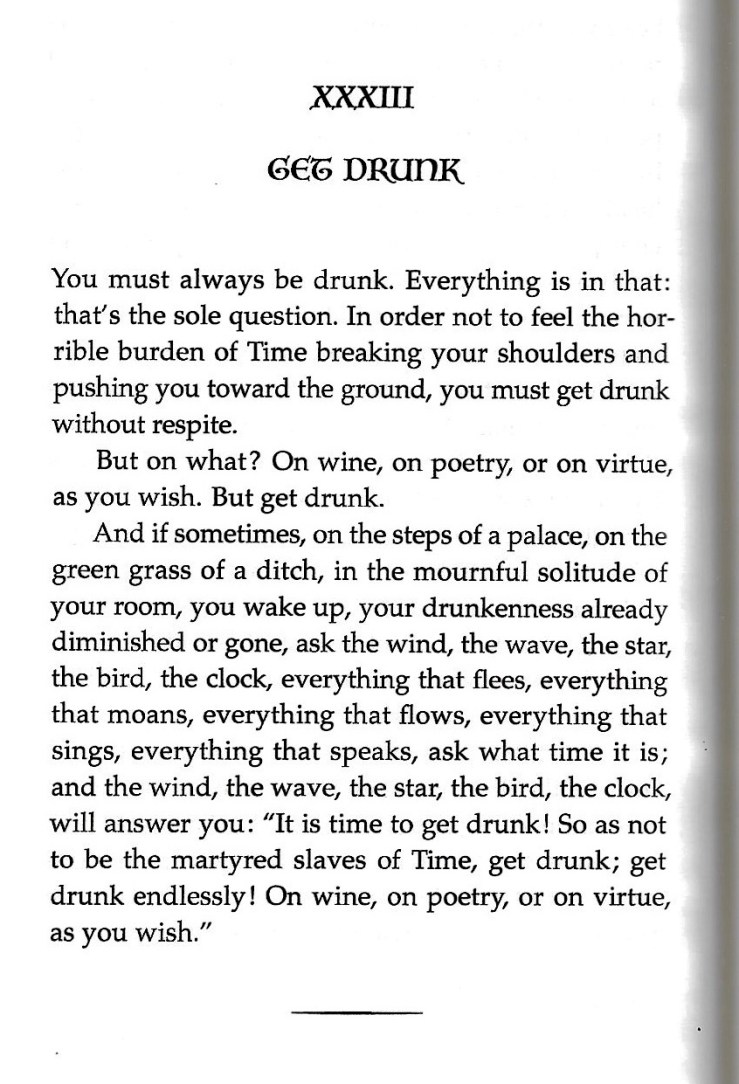
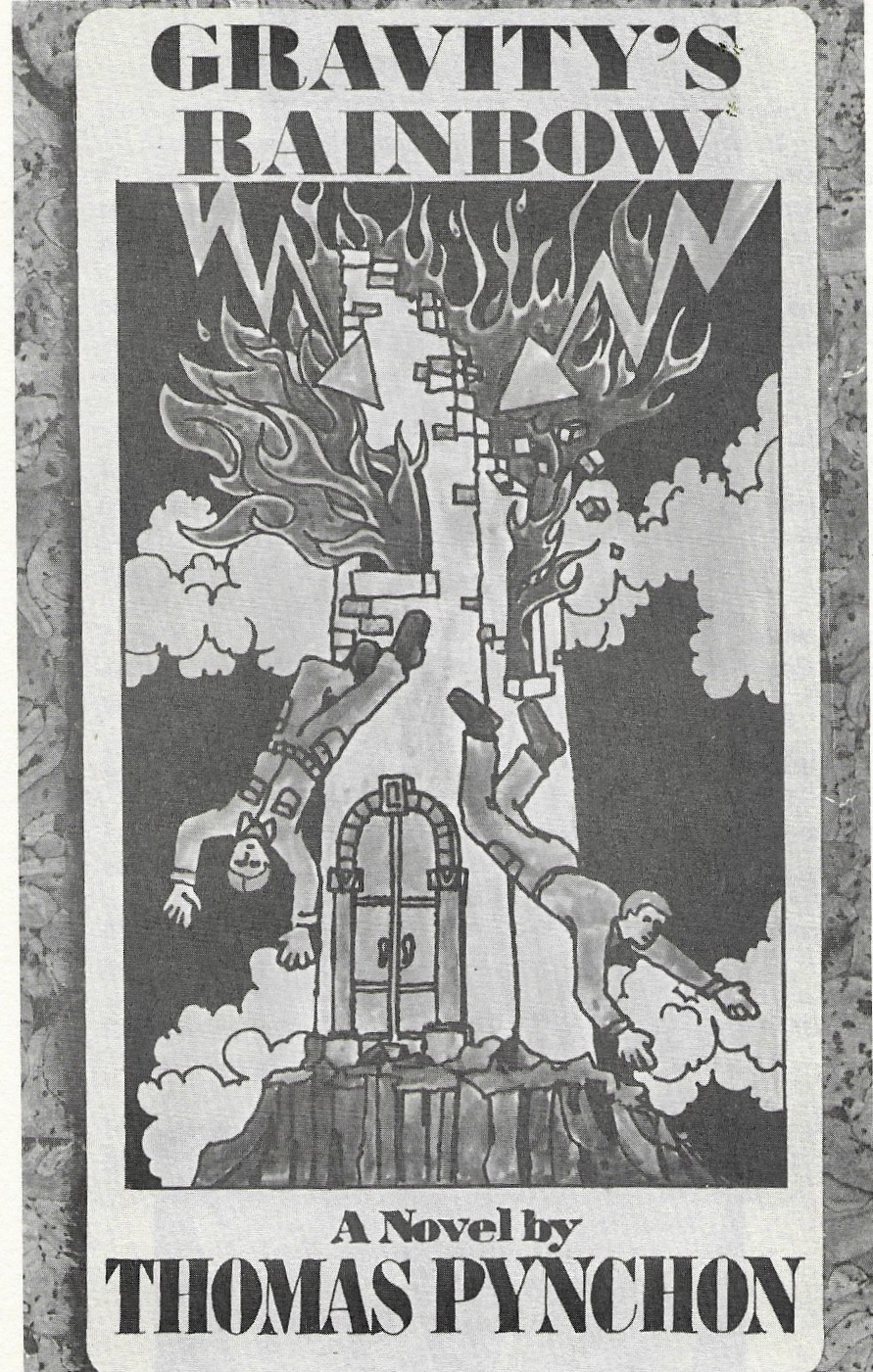
I probably got the bibliography on Tuesday, March 10, 2020. I think that’s the date because I tweeted this photo from its appendix:

If I recall correctly, I had taken that Monday (March 9th) and the preceding Friday off work. My family and I went to Georgia’s coastal Golden Isles and stayed on a houseboat for a few nights. It was the end of my kids’ spring break, and I would have a week of work before my spring break started.

This—the family vacation week—was the first week of March and I was beginning to get pretty paranoid about COVID-19. But I’d been paranoid and tired and really just exhausted for four years straight by now.

I took a break from Mervyn Peake’s Gormenghast trilogy to read Charles Wright’s novel The Wig that weekend. I read it on a houseboat with a corny name on Jekyll Island. We rode bikes around the island and ate sea food, fried food. It was beautiful.

I came back to work, worried but happy to get the Pynchon bibliography, even if it only went to ’89, thus leaving out, like, the last three decades. That must have been, like I said, Tuesday, March 10th.

On Wednesday, March 11th, the NBA canceled their season and I knew what was up.

My department chair decorated our office suite with glittery shamrocks for the upcoming St. Patrick’s Day.

I filled a box with the books and binders and gear I figured I needed to teach from home after Spring Break. A colleague made a joke, something like a, Hey did you get fired with that box in your hands? joke.

(Maybe I’ll see him this fall?)

(Those St. Patrick’s Day decorations are still up, by the way, and, once again, out of season. Although I think they fit the mode of the day, the zeitgeist, the long tacky sparkling sad celebratory day.)

And you more or less know the rest, having lived it in your own first-person perspective.

For most of the year that passed I kept Thomas Pynchon: A Bilbiography with my textbooks. I reached out to my librarian around the time it was due, 10 May 2020 (my wife and I were supposed to be in Chicago then; we weren’t). My librarian said to keep the book in good condition.

In the meantime, I picked up some of the books that Thomas Pynchon had blurbed, often preferring his blurbs to the novels he blurbed.

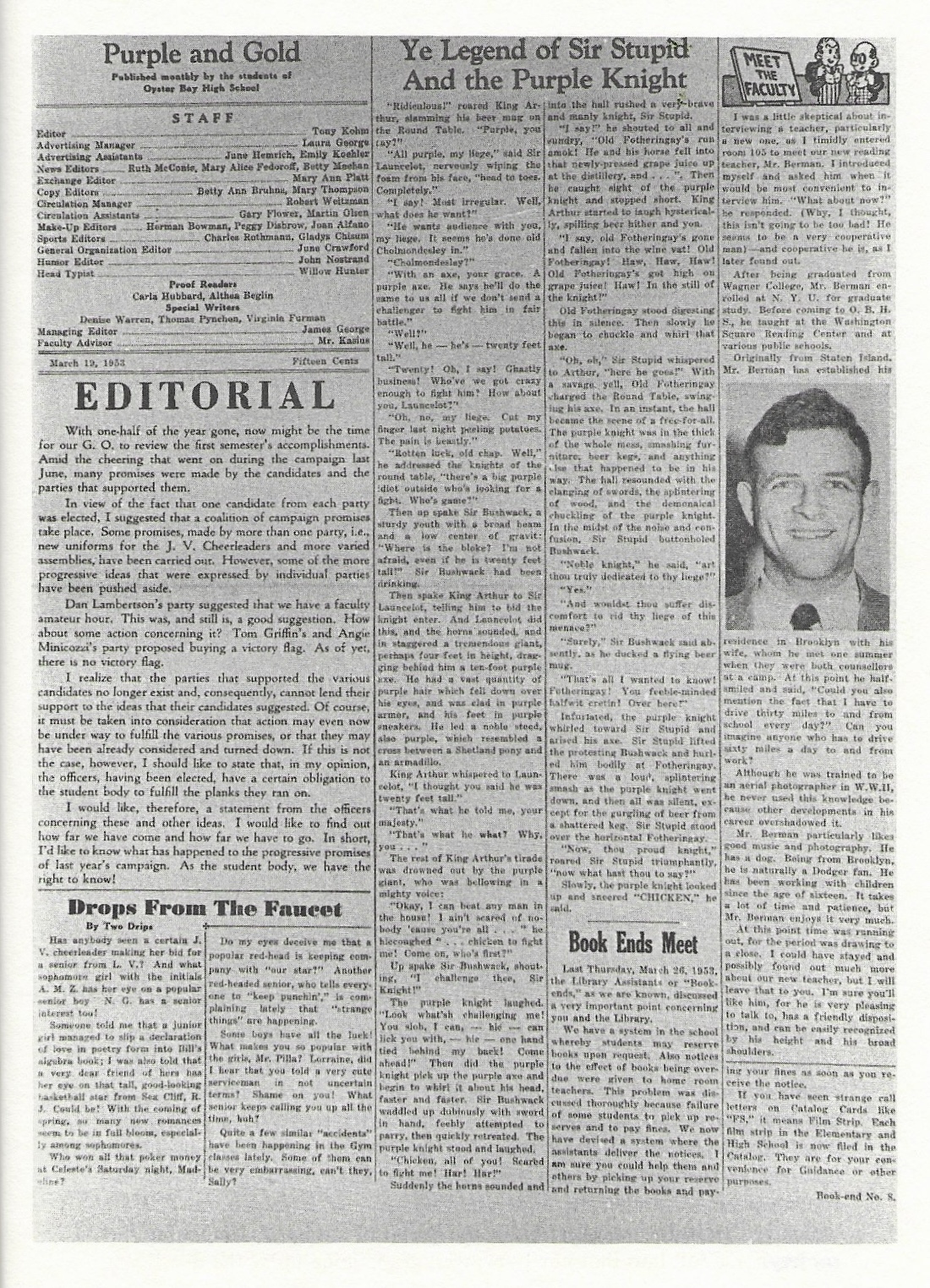
I read some of his juvenalia again, like “Ye Legend of Sir Stupid and the Purple Knight”:

In May I  finally read Pynchon’s latest (last?!) novel Bleeding Edge.

I looked online for bootleg editions of the material that showed up in Slow Learner. I read more of Slow Learner, leaving two tales…just to leave them, just to not have exhausted a…final supply?

In the absence of March Madness college basketball, I ran a silly bracket of dystopian/sci fi writers — “zeitgeisty” writers” — and Pynchon won, beating out J.G. Ballard, who I still think should have won.

(Someone wrote in to tell me that it was the “most shite” thing that I’ve ever done on the blog and to never do it again. Thanks guy! That felt good.)

And also,

I worried, fretted, washed, ranted, cried even at times, but

I never missed a meal and my family had a regular four square game going and Florida actually gave us real Spring weather, crisp and cool and sunny, and the trees bloomed and budded, and I figure in some ways I was as happy as I’ve ever been.

And the year passed, with its plague, its violent racism, its protests, all swelling into its ugly electioneering.

And then this Spring 2021 semester I went back in, setting my feet on campus for Tues and Thurs classes and the world seemed a bit more normal. We got a normal, boring president; a lot of us started to get the vaccine. Things felt…better? Like other folks, I looked forward to hanging out with all the folks I’d seen so little of in the last year.

I got my first vax jab a few weeks ago; I get my second this Friday. I look forward to hanging with “The Boys” (and “the girls,” and etc.)


At some point in the last year I shelved Thomas Pynchon: A Bibliography with the rest of the Pynchon books in the house. I just assumed that it was mine, that it was an artifact of the plague year. My covid acquired.

But last week my librarian let me know, Hey, USF wants that Pynchon book back. I held on to it a second week, revisiting it in parts, but mostly to write this here blog post, mostly to find another way to say, Hey, what a year, eh? I’ll drop it off with my librarian tomorrow, but I think it’ll make me feel a bit sad.

But also maybe relieved.


Vítězslav Nezval’s Woman in the Plural (Book acquired, sometime last week)

Woman in the Plural is a newly-translated collection of poems and plays by Vítězslav Nezval. The new translation is by Ka (the volume also features art by Karel Teige).

Here’s a taste:

And here’s publisher Twisted Spoon’s blurb:

In the summer of 1935, Vítězslav Nezval, already one of the most celebrated Czech poets of his generation, embarked on a period of manic creativity that would result in three volumes of poetry written and published in a two-year span (1935-37), mirrored by three volumes of memoir-like poetic prose. These collections would not only reshape Czech poetry, blending approaches developed by the French Surrealists with national cultural sensibilities and political concerns, taken together they are among the highest achievements of the interwar avant-garde. Woman in the Plural (1936), the first volume in this loose trilogy, adopted “objective chance” as its modus operandi (whereas the third and final volume, The Absolute Gravedigger (1937), was guided by the paranoiac-critical method).

Appearing in English translation for the first time, Woman in the Plural displays Nezval’s prodigious talents in a variety of forms, styles, and genres as he spins images of the female form like a zoetrope to create novel and hallucinatory ways of conceiving woman’s mythical, divine, and creative power. It is an eclectic collection that blends profound free verse, at times reading like a cascade of automatic writing, with pages from Nezval’s dream journal, an exuberant set of Surrealist exercises, and a full-length play of chance encounters with “a woman like any other,” all the while addressing the social and political uncertainties of the 1930s. Led off by Karel Teige’s original collages from the first edition, Woman in the Plural is a vibrant and volatile tour de force from one of the greatest European artists of the 20th century.

Judith Schalansky’s Pocket Atlas of Remote Islands (Book acquired, 5 Feb. 2021)

I have no idea how Judith Schalansky’s Atlas was not on my atlas until earlier this month when BLCKDGRD sent me a copy. (For reading the whale book again, I think?)

Anyway, god love him forever.

It’s a beautiful big little small expansive book, as Sadie Stein attests in The Paris Review:

There’s a book I’ve returned to again and again, ever since its clementine-orange cover first caught my eye at a museum bookstore: A Pocket Atlas of Remote Islands by Judith Schalansky, translated from the German by Christine Lo.

The subtitle is Fifty Islands I Have Not Visited and Never Will, but don’t worry: this book isn’t precious. At least, not too precious—despite the somewhat whimsical conceit, the author approaches her idiosyncratic task with seriousness. The book looks serious, until you read that quirky subtitle: it looks like a pocket atlas. But then you open it. And each remote island’s entry—St. Kilda in the Atlantic, the Carolines of Micronesia, the American Pagan—is a prose poem of sorts. Facts sit side-by-side with a kind of highly personal fiction; we are given latitudes and detailed maps, but also lore and speculation. Of the antipodes the author writes, “cattle that are brought here die quickly and quietly in the dun-colored steppes of grass. And the thunderous echo of waves breaking against the hollows of the jagged coastline never ceases.”


Schalansky’s Atlas is not-exactly history, not-exactly prose-poetry—it seems to evoke its own genre out of preexisting modes.

This guy on Amazon was dissatisfied though:

The line maps are beautiful, but I’m no sailor.

(When the little book showed up, my darling wife insisted we give it to our charmed friend who’s spent the past few years sailing around the globe on his goddamn charmed catamaran, winding up in New Zealand around the time of the Covid thing. I told her this book was mine. But in the big-spirited spiritedness of Mr. BLCKDGRD, I’ll send him his own copy.)

Joy Williams’s State of Grace (Book acquired, 22 Feb. 2021–and some covers of books unacquired)

I did a Big Clean a weekend or two past, including a thorough dusting of shelves. I always try to purge titles that I know I’ll never read, reread, or that I have no real attachment to. I filled a box with about 25 books, mostly novels, mostly paperbacks, and took it to my favorite used bookstore.

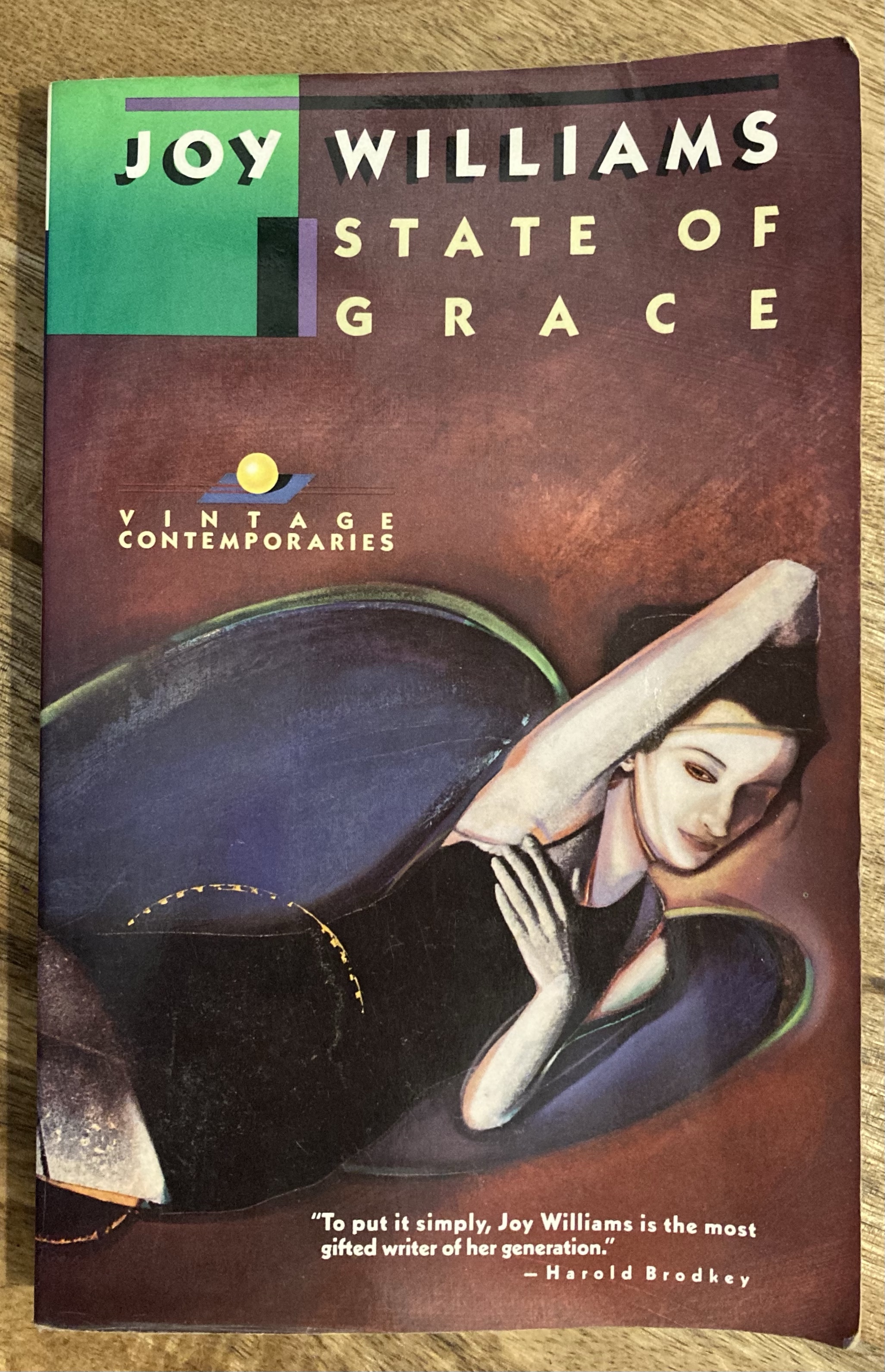
There, I found to my joy Joy Williams’s first novel State of Grace in my beloved preferred ugly Vintage Contemporaries edition. (I loved Williams’s collection Taking Care, which I read as a VC edition.) I’ve got a big stack of newly-published novels that I need to get to once I finish rereading Whale-Book, but who knows. Maybe I’ll get to it sometime before summer.

In the meantime, here’s the first graf of Gail Godwin’s 1973 NYT review:

The fated heroine of this bleak but beautifully‐crafted first novel may well be the final, perfected archetype of all the “sad ladies”: that formidably fashionable sorority which has impinged on the past decade or so of American fiction. But I’ll remember Kate Jackson; I’ll reread her stubbornly depressing story, picking out those cleverly‐hidden but ever‐present clues of grace. Kate is no simple “slice‐of‐despair” character; her sad story becomes, through the author’s skill and intention, transsubstantiated into significant myth. This book is neither a self‐indulgent journal of despair, nor journalism of despair. It is premeditated, articulate, artistic—a novel.

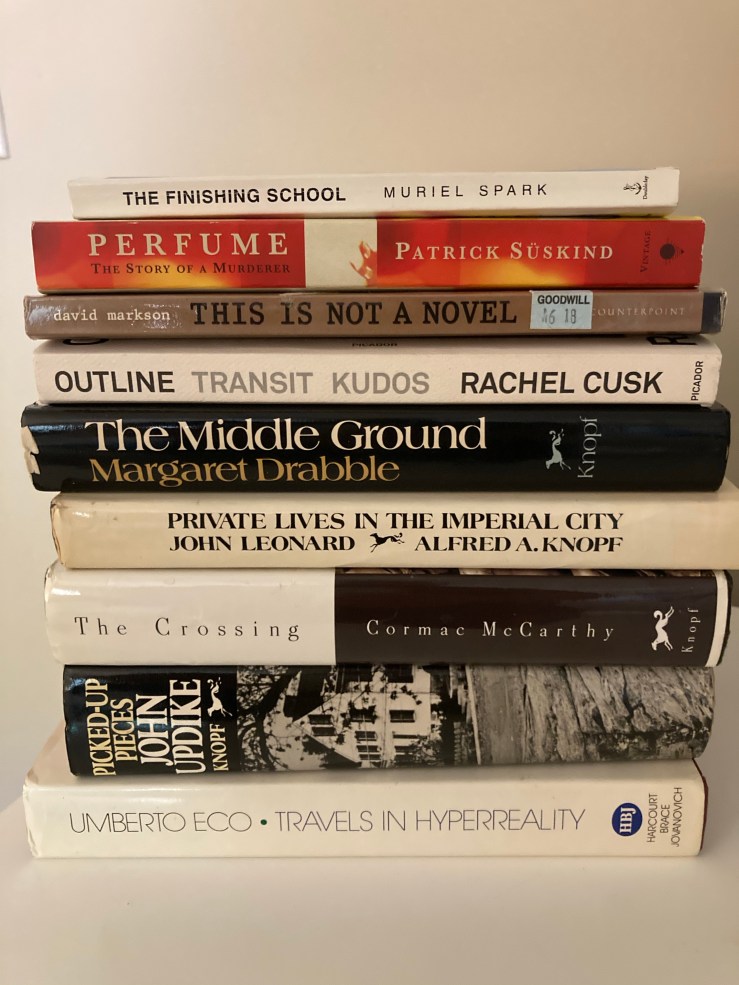
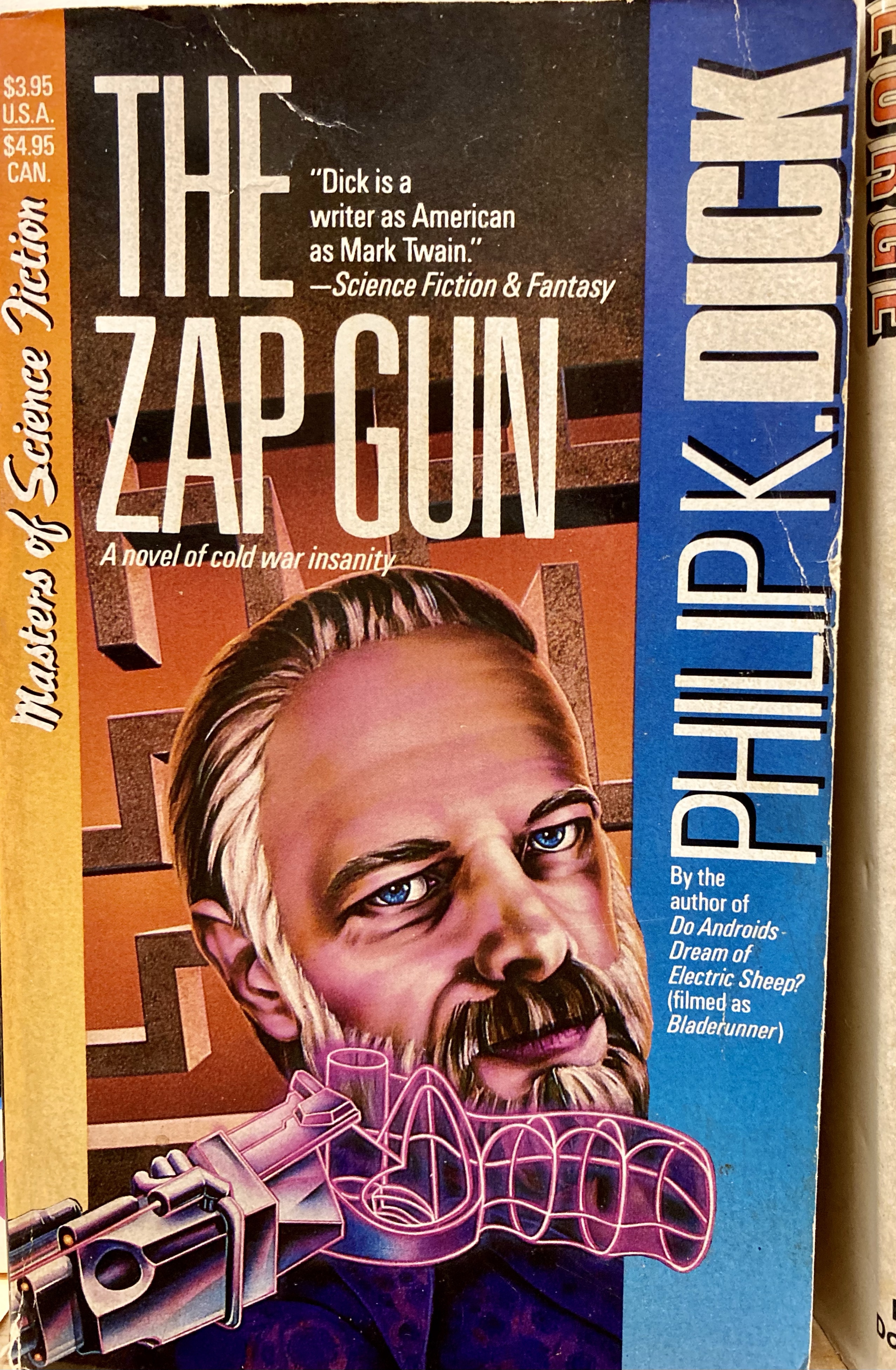
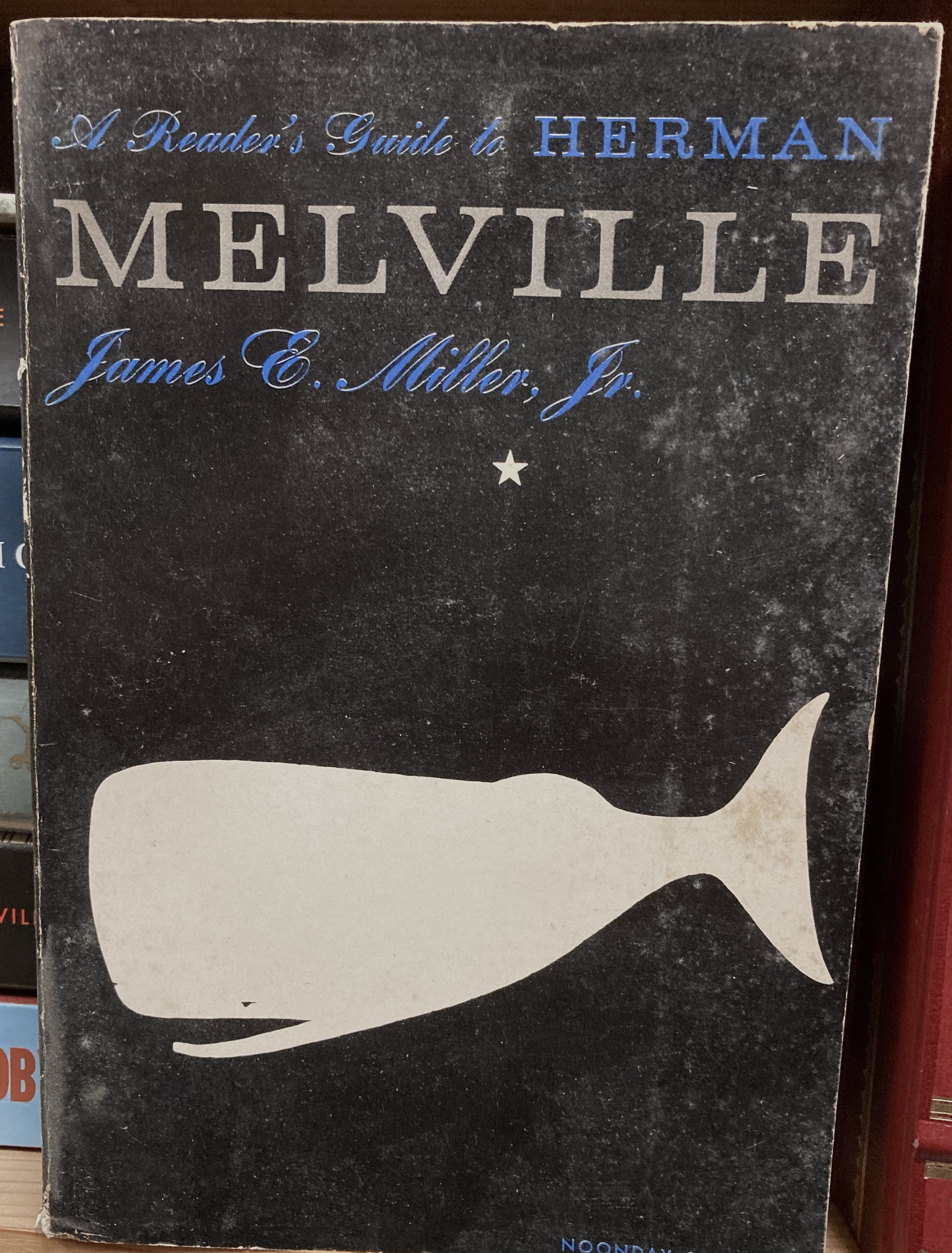
As always, I browsed. Here are some covers that caught my eye, but I did not leave with them–just these photos:

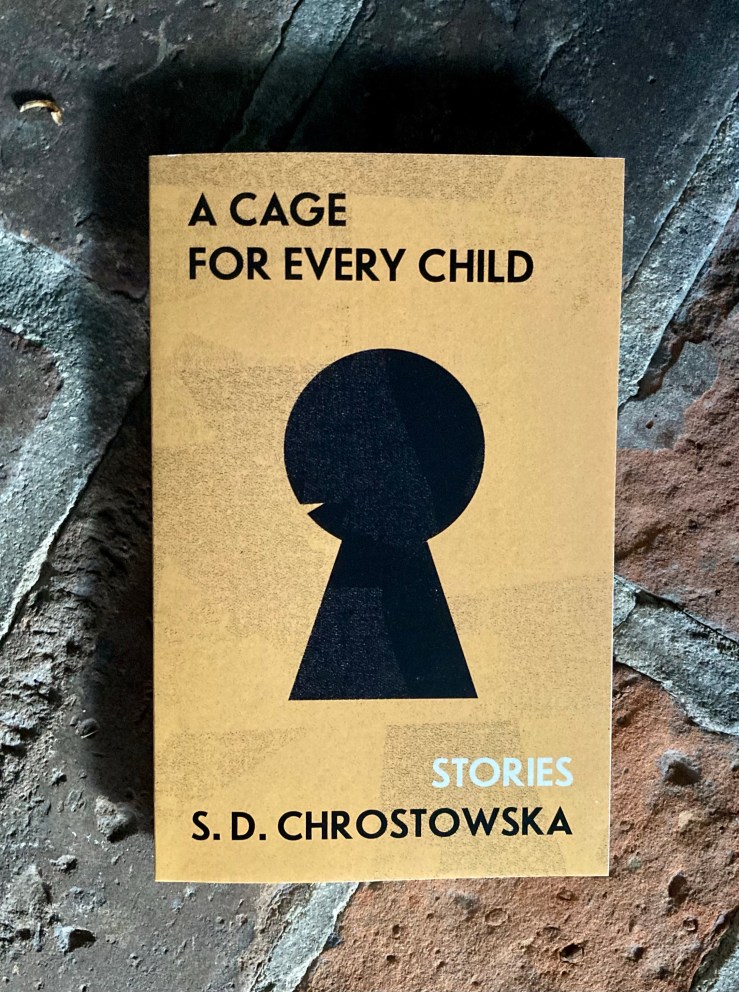
S.D. Chrostowska’s collection A Cage for Every Child (Book acquired, some time early last week)

S.D. Chrostowska’s collection of short (and often very short) fictions A Cage for Every Child is forthcoming this summer from Sublunary Editions. Here’s their blurb:

A hunter of giant worms is surprised by the sentience of their prey. A flower sprouting in the palm of a hand delivers bad news. In an unknown country, power is transferred in hyper-sensual ways.

Whether fantastic or seemingly mundane, the twenty-four stories united in A Cage for Every Child unfold as uncanny encounters and brief sojourns in parallel worlds. Told in S. D. Chrostowska’s slyly provocative style, each tale questions the stability of our reality and the meaning of our pursuits.

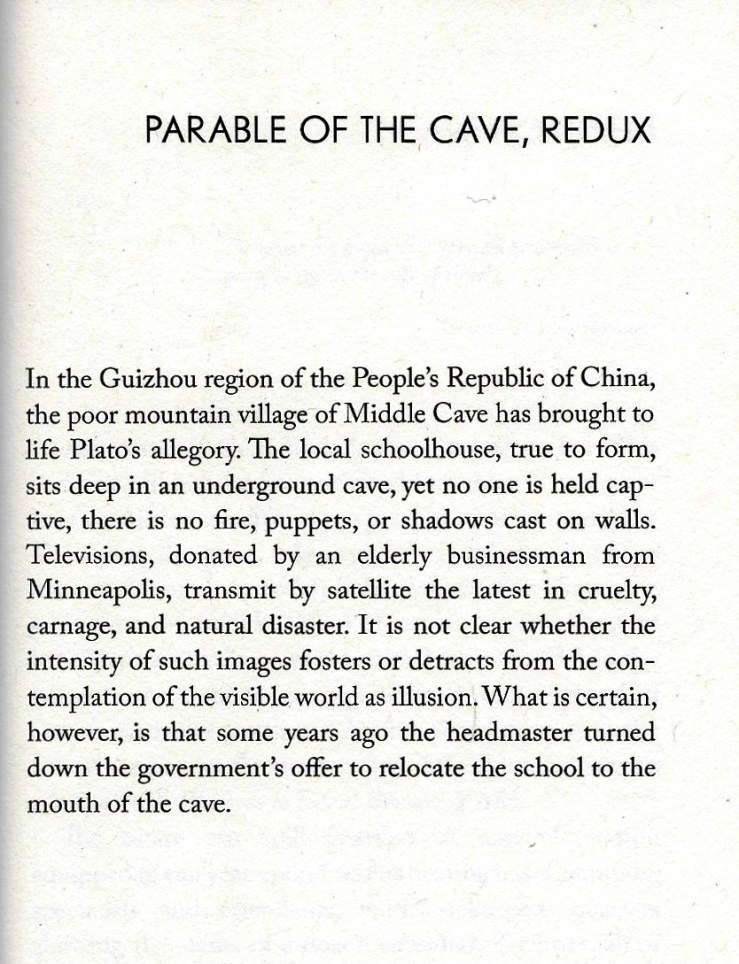
I’ve read a few of the shorter pieces in Cage and am digging it so far. Here’s “Parable of the Cave, Redux”:

Read my review of Chrostowska’s 2013 novel Permission.

Read my interview with Chrostowska for 3:AM Magazine.

Ann Quin’s Passages (Book acquired, 30 Jan. 2021)

A new edition of Ann Quin’s third novel Passages is out in a few days from indie juggernaut And Other Stories. The new edition (the first in nearly two decades) features a new introduction from Claire-Louise Bennett, whose book (novel?) Pond was a favorite of mine a few years back.
Ann Quin’s first novel Berg was one of the best books I read in 2019, and one of the best books I’ve read in years. In my review of the novel a few years back, I wrote,

Read the book. There’s nothing I can do in this review that approaches the feeling of reading Ann Quin’s Berg. I can make lame comparisons, saying that it reminds me of James Joyce’s Ulysses (in its evocations of loose consciousness), or David Lynch’s Blue Velvet (in its oedipal voyeuristic griminess), or Luis Buñuel’s The Exterminating Angel (for its surreal humor and dense claustrophobia). Or I can point out how ahead of her time Quin was, how Berg bridges modernism to postmodernism while simply not giving a fuck about silly terms like modernism and postmodernism.

I’m psyched to get into Passages.

Here’s And Other Stories’ blurb:

Ann Quin’s third novel Passages – an instant classic when published in 1969 – is perhaps her most harrowing investigation of the limits of identity and desire, as well as the possibilities of fiction. It is the story of a woman, accompanied by her lover, searching for her lost brother, who may have been a revolutionary, and who may have been tortured, imprisoned or killed. Roving a Mediterranean landscape, they live out their entangled existences, reluctant to give up, yet afraid of where their search will lead.

In ‘passages’ that alternate between the two protagonists’ perspectives, taking the form of diary excerpts, annotations and Burroughsian cut-ups, this fractured tale builds an intricate, musical system of theme and repetition. ‘All seasons passed through before the pattern formed, collected in parts.’

Erotic and terrifying by turns, Quin’s third novel allowed her writing freer rein than ever before, blazing a trail still being followed by such authors as Eimear McBride, Chris Kraus and Anna Burns. It stands as Quin’s most beguiling, poetic, and mysterious work.

Read an excerpt here.

Two Lovely Le Guins (Books acquired, 22 Jan. 2021)

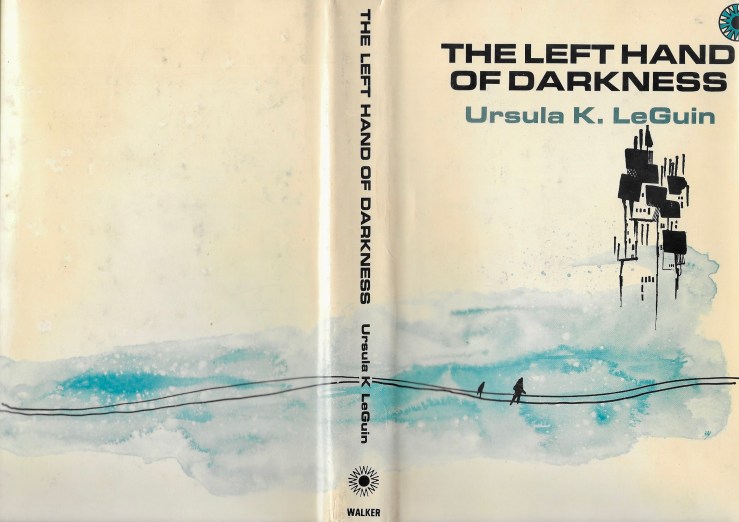
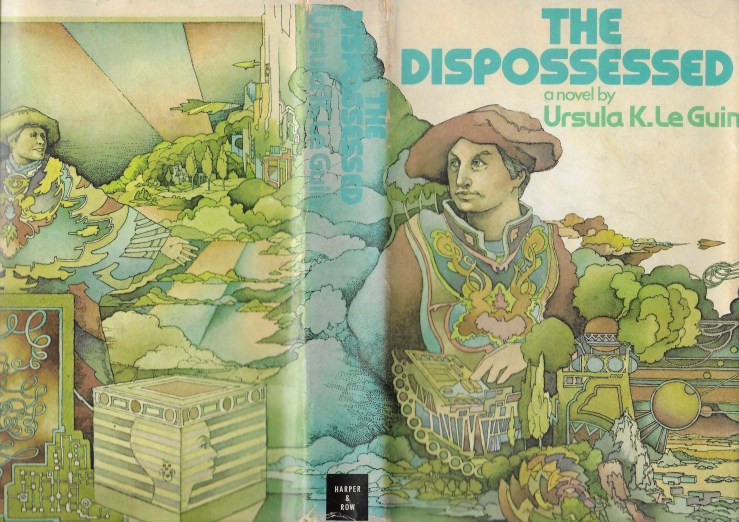
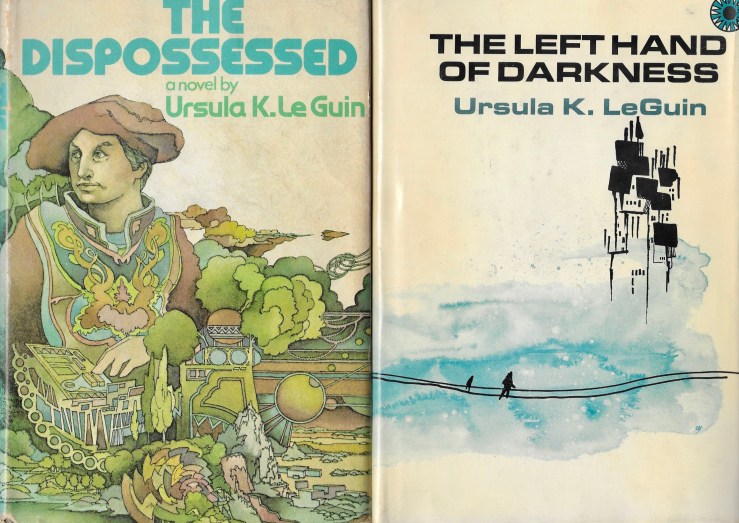
I found two first-edition hardback Ursula K. Le Guin novels—my favorite Le Guins at that!—for next to nothing last week at my favorite local used bookstore.

The simple, elegant cover for Le Guin’s 1969 novel The Left Hand of Darkness was designed by Lena Fong Lueg. It employs an illustration by Jack Gaughan.

The jacket for 1974’s The Dispossessed was designed by Fred Winkowski.

In 2015, I undertook the project of reading (or in some cases rereading) Le Guin’s so-called Hainish novels. I wrote about those novels in a long post in January of 2016. Of the (maybe) eight novels in the Hainish cycle, The Left Hand of Darkness and The Dispossessed are easily the strongest (although I really loved the one-two punch of Planet of Exile (1966) and City of Illusions (1967)).

Here is what I wrote about The Left Hand of Darkness:

The Left Hand of Darkness is amazing. Perfect in its strange imperfections and crammed with fables and myths and misunderstandings, it is the apotheosis of Le Guin’s synthesis of adventure with philosophy. Darkness is about shadows and weight. About pulling weight—literally, figuratively. It’s also the story of an ice planet. (A stranger comes to the ice planet!). It’s a political thriller. It’s a sexual thriller. But the impression that lingers strongest: The Left Hand of Darkness is one of the better literary evocations of friendship (its precarious awful strange wonderful tenuous strength) that I’ve ever read.

And here is what I wrote about The Dispossessed:

The Dispossessed feels closer to Le Guin’s non-Hainish 1971 novel The Lathe of Heaven in some ways than it does to its so-called Hainish kin. Both novels formally (and spiritually) evoke yin and yang, opposition, conflict, stress, and, ultimately, synthesis. The Dispossessed is a riff on anarchy and stability, allegiance to one’s community and family weighed against personal vision and ecumenical dreams.

I also claimed that The Dispossessed is the best starting place for those new to Le Guin, but I think The Left Hand of Darkness is equally good, as are her Earthsea novels.

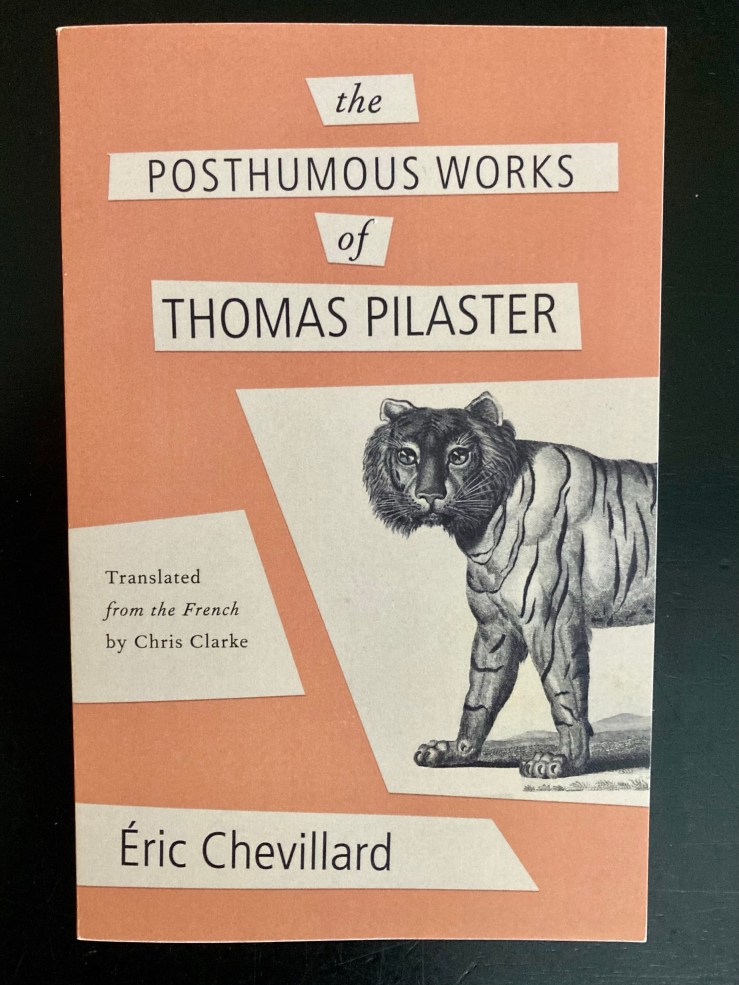
Éric Chevillard’s The Posthumous Works of Thomas Pilaster (Book acquired, 8 Jan. 2021)

I have no idea what the fuck is going on over there at that Sublunary Editions indie press.

Their forthcoming title is The Posthumous Works of Thomas Pilaster by Éric Chevillard (translated from the French by Chris Clarke), and it looks really good, like in the Borgesian vein good. I read the section “So Many Seahorses” a few minutes ago and it made me laugh aloud.

If I ever finish Moby-Dick I’ll let you know more.

Sublunary’s blurb:

The literary world owes a great debt of gratitude to the executors who, charged with burning the remaining papers of their authorial charges, refuse, instead publishing them for the fanatic and meddlesome among us. Collected here are the remaining unpublished works—diaries and drafts, aphorisms and ephemera—of the late Thomas Pilaster, compiled by Marc-Antoine Marson, a longtime friend and fellow writer with whom Pilaster maintained a healthy rivalry. With rough edges and glints of genius present in equal measure, scholars and lay-readers alike will treasure these curious texts—So Many SeahorsesThe Vander Sons Company, and Three Attempts at the Reintroduction of the Man-Eating Tiger Into Our Countryside, to name a few—for generations to come.

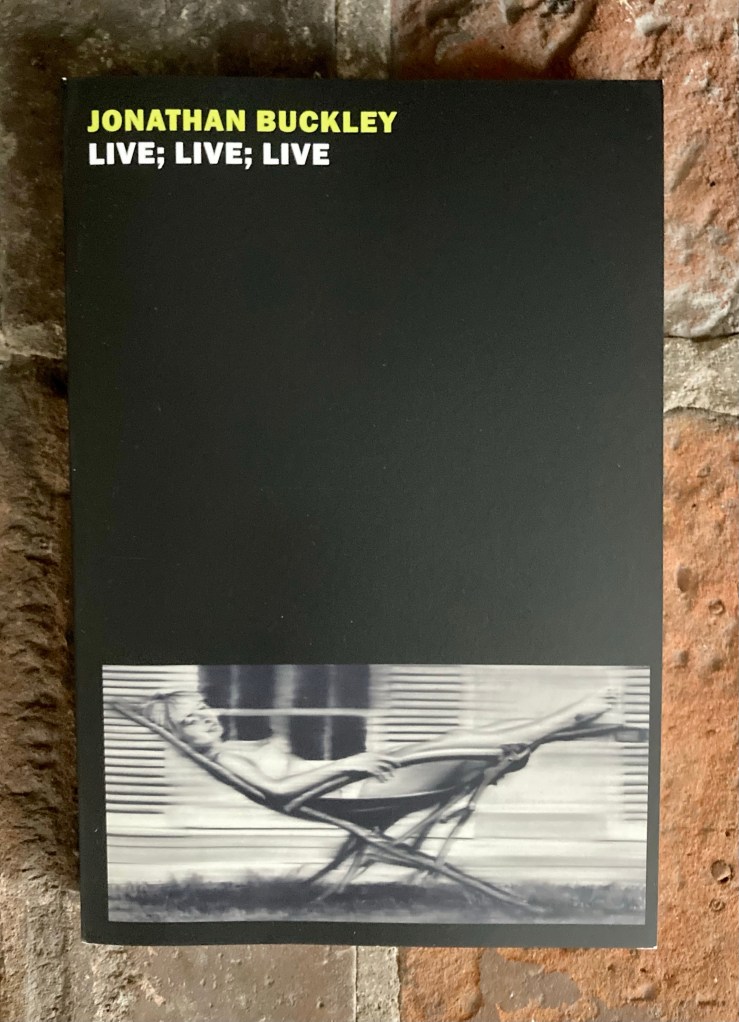
Jonathan Buckley’s Live; live; live (Book acquired, 26 Dec. 2020)

Jonathan Buckley’s novel Live; live; live is forthcoming from NYRB in a few weeks. Their blurb:
Jonathan Buckley’s latest novel, Live; live; live, is a subtly suspenseful and slow-burning story about the occult as a source of psychological and existential truth. Lucas Judd is a man with a gift: He hears the dead speaking. Joshua lives next door, just a boy when he first meets his mysterious, kind neighbor. But as he grows up, his instructive friendship with Lucas is gradually altered by desire: Joshua’s attraction to, then obsession with Erin, the much younger woman with whom Lucas lives. The nature of her relationship to Lucas is unclear and unclassifiable: Is it erotic, platonic, pedagogical? And is Lucas a sham or a kind of shaman? Is Joshua really a reliable witness? At the heart of this powerful and resonant novel are timely questions about narrative truth and timeless questions about life, death, and belief. There are no certainties in Live; live; live, only mutability, permeability, and the beautifully observed cadence of change.

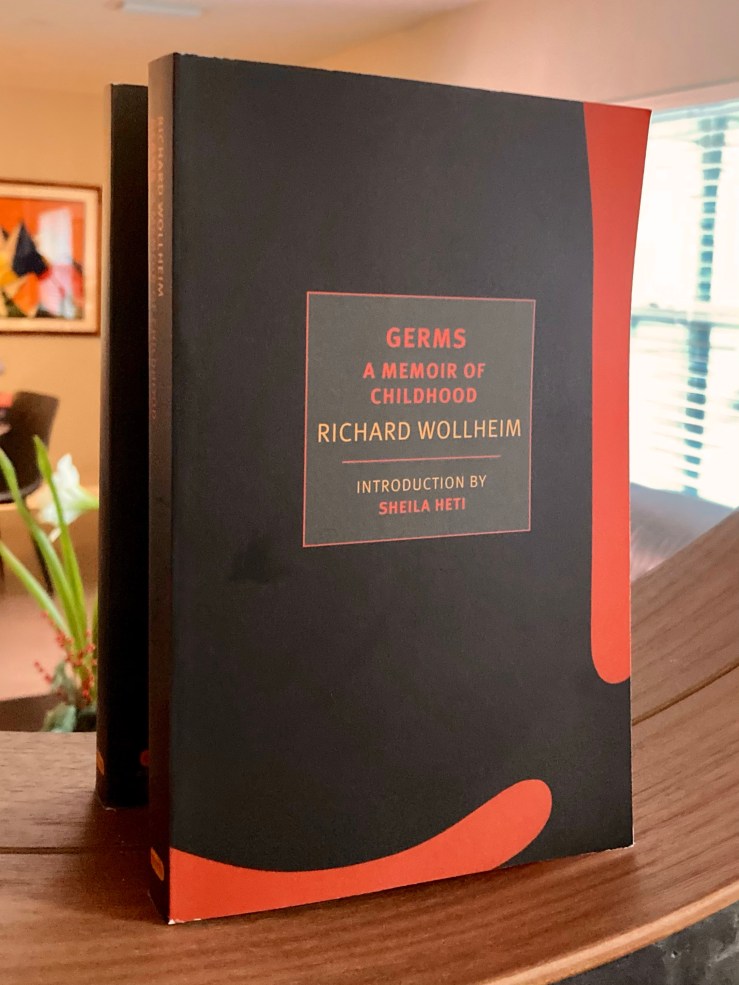
Richard Wollheim’s Germs (Book acquired, 24 Dec. 2020)

Richard Wollheim’s memoir Germs is forthcoming from NYRB in February. Their blurb:

Germs is about first things, the seeds from which a life grows, as well as about the illnesses it incurs, the damage it sustains. Written at the end of the life of Richard Wollheim, a major British philosopher of the second half of the twentieth century, this memoir is not the usual story of growing up, but very much about childhood, that early world we all share in which we do not know either the world or ourselves for sure, and in which things—houses, clothes, meals, parents, the past—loom large around us, seeming both inevitable and uncontrollable. Richard Wollheim’s remarkable, moving, and entirely original book recovers this formative moment that makes us who we are before we really are who we are and that haunts us all our lives in lucid and lyrical prose.

André Gide’s Marshlands (Book acquired, 9 Dec. 2020)

André Gide’s 1895 novel Marshland is out in a few weeks from NYRB in a new translation by Damion Searls.

NYRB’s blurb:

André Gide is the inventor of modern metafiction and of autofiction, and his short novel Marshlands shows him handling both forms with a deft and delightful touch. The protagonist of Marshlands is a writer who is writing a book called Marshlands, which is about a reclusive character who lives all alone in a stone tower. The narrator, by contrast, is anything but a recluse: He is an indefatigable social butterfly, flitting about the Paris literary world and always talking about, what else, the wonderful book he is writing, Marshlands. He tells his friends about the book, and they tell him what they think, which is not exactly flattering, and of course those responses become part of the book in the reader’s hand. Marshlands is both a poised satire of literary pretension and a superb literary invention, and Damion Searls’s new translation of this early masterwork by one of the key figures of twentieth-century literature brings out all the sparkle of the original.

Gide’s blurb:

I don’t understand a single thing in Marshlands. Did I write the book?

Leonora Carrington’s The Hearing Trumpet (Book acquired, 1 Dec. 2020)

NYRB will have a new edition of surrealist painter Leonora Carrington’s 1976 novel The Hearing Trumpet out in early January of 2021. I started it this afternoon, and the first 20 or so pages seem to divert in style from the short stories I’ve read by her—definitely chock full of quirky imagery, but also relatively straightforward in their execution. At around the 20 page mark, though, the narrative dips into demented dreamland. Ali Smith’s blurb promises there’s more under the surface:

The Hearing Trumpet . . . reads on its parodic surface like an Agatha Christie domestic mystery, but one melted, dissolved by extreme heat into something unthinkably other, and reconstructed as the casebook of an alchemist. . . . It asks its readers to allow the dark, allow the wild and rethink how power works. It is a work of massive optimism. . . . One of the most original, joyful, satisfying, and quietly visionary novels of the twentieth century.

I also love the blurb from Luis Buñuel:

Reading The Hearing Trumpet liberates us from the miserable reality of our days.

Here’s NYRB’s blurb:

Leonora Carrington, painter, playwright, and novelist, was a surrealist trickster par excellence, and The Hearing Trumpet is the witty, celebratory key to her anarchic and allusive body of work. The novel begins in the bourgeois comfort of a residential corner of a Mexican city and ends with a man-made apocalypse that promises to usher in the earth’s rebirth. In between we are swept off to a most curious old-age home run by a self-improvement cult and drawn several centuries back in time with a cross-dressing Abbess who is on a quest to restore the Holy Grail to its rightful owner, the Goddess Venus. Guiding us is one of the most unexpected heroines in twentieth-century literature, a nonagenarian vegetarian named Marian Leatherby, who, as Olga Tokarczuk writes in her afterword, is “hard of hearing” but “full of life.”

Jim Gauer’s Novel Explosives (Book acquired, 30 Nov. 2020)

Oof she’s a big boy. Jim Gauer’s 2016 novel Novel Explosives showed up at Biblioklept World Headquarters on Sunday (a rare day for acquisitions). The novel has been praised by folks like Michael Silverblatt, Steven Moore, and Matt Bucher, and has been compared to the work of Pynchon, Bolaño, and Gaddis. It’s also pretty damn long. Anyway, Novel Explosives is being reprinted by indie Zerogram; their blurb:

IT’S THE WEEK AFTER EASTER, APRIL 13-20, AN OTHERWISE ORDINARY WEEK IN 2009… LATE in the week, a man wakes up in Guanajuato, Mexico, with his knowledge intact, but with no sense of who he is, or how he came to Guanajuato. EARLY in the week, a venture capital investor sits at his desk in Santa Monica, California, attempting to complete his business memoirs, but troubled by the fact that a recent deal appears to be some sort of money-laundering scheme. IN THE MIDDLE of the week, two gunmen for the Juárez Drug Cartel arrive at a small motel in El Paso, assigned to retrieve a suitcase full of currency, and eliminate the man who brought it to El Paso. THUS BEGINS the three-stranded narrative of Novel Explosives, a search for identity that travels through the worlds of venture capital finance, high-tech money-laundering methods, and the Juárez drug wars, a joyride of a novel with only one catch: the deeper into the book you go, the more dangerous it gets.

Angela Carter’s Heroes & Villains (Book acquired 30 Nov. 2020)

I went to the bookstore today to take one last shot at finding a copy of Walker Percy’s 1971 novel Love in the Ruins (preferably a first-edition hardback…why not signed, while I’m dreaming? In pristine condition? Or an interesting beat up mass market paperback? I would’ve settled for an ugly tasteful prestige trade paperback at this point). No luck, but I just checked out a digital copy from my library.

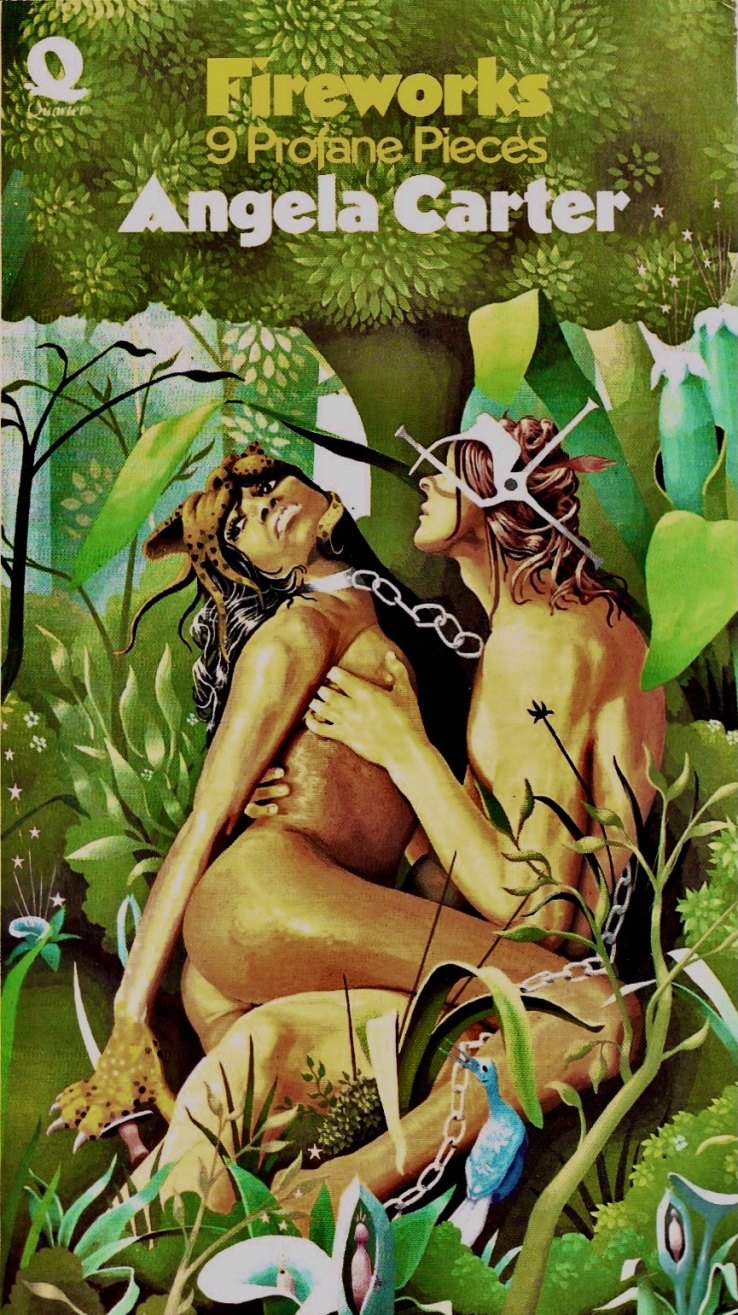
I came across this lovely 1972 Pocket Books mass market paperback copy of Angela Carter’s 1969 novel Heroes and Villains. I’m pretty sure the hornyassed so-seventies cover is by Gene Szafran, but no illustrator is credited. The back cover illustration is some psychedelic horniness too:

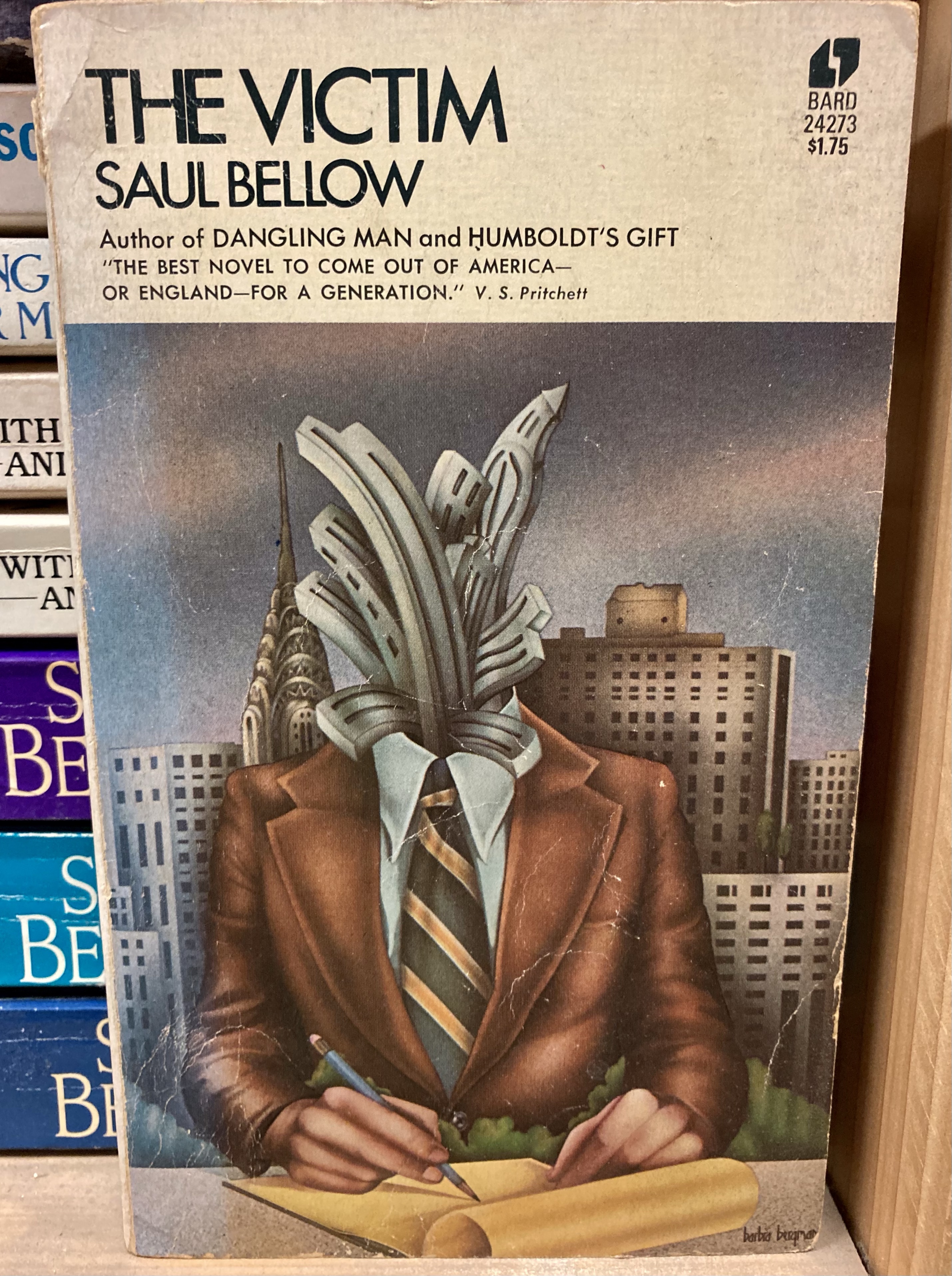
I know I’ve ranted on here about the trend towards tasteful book covers over the past few decades. I appreciate simple, handsome covers, to be clear—hey, look at this copy of Mark Spilka’s 1963 study Dickens and Kafka—

—I mean appreciate simple, handsome covers, to be clear—but there’s a sameness in contemporary design that is a bit wearying—I see so many new books that look like every other new book. I suppose though that the same could be said about the two examples above, each specimens of their time. Perhaps a few decades from now I’ll reflect fondly on the bold, oh-so Instagrammable cover for the first edition of Marlon James’s novel Black Leopard, Red Wolf. (jacket design by Helen Yentus; jack illustration by Pablo Gerardo Camacho):

img_2496

Ge Fei’s Peach Blossom Paradise (Book acquired, 12 Nov. 2020)

Ge Fei’s novel Peach Blossom Paradise, translated from the Chinese by Canaan Morse, is forthcoming from. Their blurb:

In 1898 reformist intellectuals in China persuaded the young emperor that it was time to transform his sclerotic empire into a prosperous modern state. The Hundred Days’ Reform that followed was a moment of unprecedented change and extraordinary hope—brought to an abrupt end by a bloody military coup. Dashed expectations would contribute to the revolutionary turn that Chinese history would soon take, leading in time to the deaths of millions.

Peach Blossom Paradise, set at the time of the reform, is the story of Xiumi, the daughter of a wealthy landowner and former government official who falls prey to insanity and disappears. Days later, a man with a gold cicada in his pocket turns up at his estate and is inexplicably welcomed as a relative. This mysterious man has a great vision of reforging China as an egalitarian utopia, and he will stop at nothing to make it real. It is his own plans, however, which come to nothing, and his “little sister” Xiumi is left to take up arms against a Confucian world in which women are chattel. Her campaign for change and her struggle to seize control over her own body are continually threatened by the violent whims of men who claim to be building paradise.

Robert Stone’s Dog Soldiers (Book acquired, 17 Nov. 2020)

I’ve been looking for a copy of Robert Stone’s 1974 novel Dog Soldiers for a little over a year now. By looking I mean scanning over the Robert Stone section (dude has his own little placard) of my beloved used bookshop, seeing literally dozens of copies for pretty much every Stone book except Dog Soldiers.

My interest in the novel I owe to the late great freight date David Berman, who reportedly repeatedly said it was his favorite novel. The guitarist William Tyler–whom I did not get to see play with Steven Gunn earlier this year, way back in March, way back in early COVID days—attests that Berman “told me his favorite novel was Dog Soldiers by Robert Stone.” I think I also heard that Dog Soldiers was Berman’s fave from the writer John Lingan, probably on twitter, although the detail is not included in his fantastic 2019 profile of Berman. And Berman mentioned the book in his Reddit AMA as part of his answer to book recommendations for someone starting college:

Poetics of Space by Gaston Bachelard

Dog Soldiers by Robert Stone

Anatomy of Melancholy by Robert Burton

Complete Emily Dickinson

Anyway…I found Dog Soldiers, finally, today. I stopped in quickly to pick up two novels for my son, whose reading virility is through the roof now—dude reads like 600 pages a week—and I had a few minutes before I needed to attend my carpool duties and, finally, today, I read Dog Soldiers. I think I’ll read it next, and maybe write something about it here—something not about Berman, but who knows.

Osvaldo Lamborghini/Mihail Sebastian (Books acquired, 10 Nov. 2020)

Two new “objects” in translation from strangish newish indie Sublunary Editions arrived at Biblioklept World Headquarters the other day: Two Stories by Osvaldo Lamborghini (translated by Jessica Sequeira) and Fragments from a Found Notebook by Mihail Sebastian (translated by Christina Tudor-Sideri).

Intrigued by the three-word blurb from Roberto Bolaño (“It scares me”) on its back cover, I read the two stories in Lamborghini’s Two Stories. I skipped César Aira’s introduction—I always skip introductions—and then after a few baffling pages, I went back to the introduction. Aira’s introduction didn’t exactly explicate the text for me. It did, however, read like a few pages from a Bolaño novel, describing a strange heroic exotic Argentine writer, a poet-artist romantically disposed to self-exiles. (I actually did a basic internet search just to make sure it wasn’t like, an elaborate fake. It’s not. Lamborghini was real, although he could have been a Bolaño invention.)

The texts of Two Stories are not exactly surrealist, not exactly automatic writing…Sublunary publisher Joshua Rothes described Lamborghini as “…a surrealist white hole… like de Sade and Lautréamont were sucked in by the surrealists, and Lamborghini’s what came out the other side.” Sublunary’s blurb describes the stories collected here as “an accurate sample of his work in much the same way that a bucket of seawater is an accurate sample of the ocean.”

I also started in on Mihail Sebastian’s Fragments from a Forgotten Notebook. Again, the whole affair has that romantic-Bolañoesque tinge to it. Sebastian presents the Notebook as a literal found object. Is it? Or is it invention? Here’s Sublunary’s verb, which begins with Sebastian’s introduction:

“One November evening (in circumstances that would take too long to narrate here) I found in Paris, on the Mirabeau Bridge, a notebook with black, glossy, oilcloth covers, like the ones in which grocers used to keep accounts. There were exactly 126 pages—commercial paper—filled with small writing, streamlined, without erasures. A curious reading, tiring in places, obscure passages, notations that appeared foreign to me, in fact even absolutely contrasting.”

Presented here for the first time in English, the late Mihail Sebastian’s debut book, seldom mentioned by scholars or even the author himself, Fragments from a Found Notebook casts an important light on a young writer—later to be known primarily as a diarist and documentarian—struggling with the identity of the I at the tip of his pen.