Prospero in Secret Studies — Edmund Dulac

“Transitional” — William Carlos Williams

wcw

Luck, Trust, and Ketchup: Robert Altman in Carver Country (Full Documentary)

A Rather Interesting Tale (From Barthelme’s The Dead Father)

It is rather an interesting tale, said the Dead Father, which I shall now tell. I had been fetched by the look of a certain maiden, a raven-haired maiden —He looked at Julie, whose hand strayed to her dark dark hair.

A raven-haired maiden of great beauty. Her name was Tulla. I sent her many presents. Little machines, mostly, a machine for stamping her name on strips of plastic, a machine for extracting staples from documents, a machine for shortening her fingernails, a machine for removing wrinkles from fabric with the aid of steam. Well, she accepted the presents, no difficulty there, but me she spurned. Now as you might imagine I am not fond of being spurned. I am not used to it. In my domains it does not happen but as ill luck would have it she lived just over the county line. Spurned is not a thing I like to be. In fact I have a positive disinclination for it. So I turned myself into a haircut —A haircutter? asked Julie. A haircut, said the Dead Father. I turned myself into a haircut and positioned myself upon the head of a member of my retinue, quite a handsome young man, younger than I, younger than I and stupider, that goes without saying, still not without a certain rude charm, bald as a bladder of lard, though, and as a consequence somewhat diffident in the presence of ladies. Using the long flowing sideburns as one would use one’s knees in guiding a horse —The horseman is still following us, Thomas noted. I wonder why.

— I sent him cantering off in the direction of the delectable Tulla, the Dead Father went on. So superior was the haircut, that is to say, me, joined together with his bumbly youngness, for which I do not blame him, that she succumbed immediately. Picture it. The first night. The touch nonesuch. At the crux I turned myself back into myself (vanishing the varlet) and we two she and I looked at each other and were content. We spent many nights together all roaratorious and filled with furious joy. I fathered upon her in those nights the poker chip, the cash register, the juice extractor, the kazoo, the rubber pretzel, the cuckoo clock, the key chain, the dime bank, the pantograph, the bubble pipe, the punching bag both light and heavy, the inkblot, the nose drop, the midget Bible, the slot-machine slug, and many other useful and humane cultural artifacts, as well as some thousands of children of the ordinary sort. I fathered as well upon her various institutions useful and humane such as the credit union, the dog pound, and parapsychology. I fathered as well various realms and territories all superior in terrain, climatology, laws and customs to this one. I overdid it but I was madly, madly in love, that is all I can say in my own defense. It was a very creative period but my darling, having mothered all this abundance uncomplainingly and without reproach, at last died of it. In my arms of course. Her last words were “enough is enough, Pappy.” I was inconsolable and, driven as if by a demon, descended into the underworld seeking to reclaim her.

I found her there, said the Dead Father, after many adventures too boring to recount. I found her there but she refused to return with me because she had already tasted the food-of-hell and grown fond of it, it’s addicting. She was watched over by eight thunders who hovered over her and brought her every eve ever more hellish delicacies, and watched over furthermore by the ugly-men-of-hell who attacked me with dreampuffs and lyreballs and sought to drive me off. But I removed my garments and threw them at the ugly-men-of-hell, garment by garment, and as each garment touched even ever-so-slightly an ugly-man-of-hell he shriveled into a gasp of steam. There was no way I could stay, there was nothing to stay for; she was theirs.

Then to purify myself, said the Dead Father, of the impurities which had seeped into me in the underworld I dived headfirst into the underground river Jelly, I washed my left eye therein and fathered the deity Poolus who governs the progress of the ricochet or what bounces off what and to what effect, and washed my right eye and fathered the deity Ripple who has the governing of the happening of side effects/unpredictable. Then I washed my nose and fathered the deity Gorno who keeps tombs warm inside and the deity Libet who does not know what to do and is thus an inspiration to us all. I was then beset by eight hundred myriads of sorrows and sorrowing away when a worm wriggled up to me as I sat hair-tearing and suggested a game of pool. A way, he said, to forget. We had, I said, no pool table. Well, he said, are you not the Dead Father? I then proceeded to father the Pool Table of Ballambangjang, fashioning the green cloth of it from the contents of an alfalfa field nearby and the legs of it from telephone poles nearby and the dark pockets of it from the mouths of the leftover ugly-men-of-hell whom I bade stand with their mouths open at the appropriate points —”

What was the worm’s name? Thomas asked.

I forget, said the Dead Father. Then, just as we were chalking our cues, the worm and I, Evil himself appeared, he-of-thegreater-magic, terrible in aspect, I don’t want to talk about it, let me say only that I realized instantly that I was on the wrong side of the Styx. However I was not lacking in wit, even in this extremity. Uncoiling my penis, then in the dejected state, I made a long cast across the river, sixty-five meters I would say, where it snagged most conveniently in the cleft of a rock on the farther shore. Thereupon I hauled myself hand-over-hand ‘midst excruciating pain as you can imagine through the raging torrent to the other bank. And with a hurrah! over my shoulder, to show my enemies that I was yet alive and kicking, I was off like a flash into the trees.

From Donald Barthelme’s novel The Dead Father.
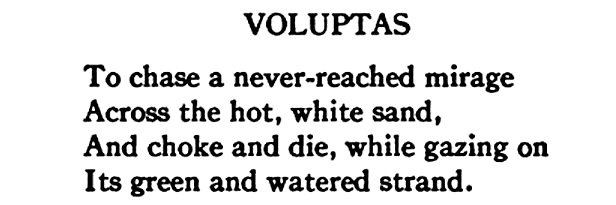
“Voluptas” — James Weldon Johnson

voluptas

George Saunders Discusses His Writing

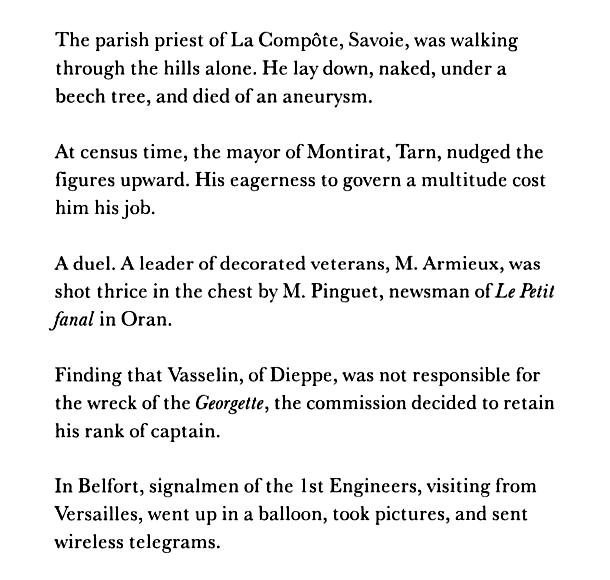
Five from Félix Fénéon

five

Schoolgirls — Nikolay Bogdanov-Belsky

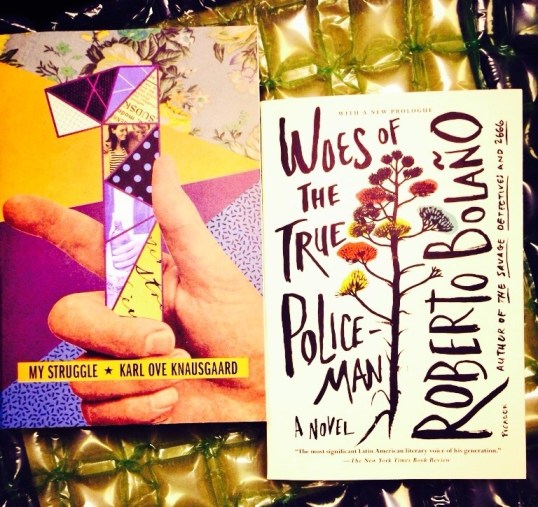
Bolaño/Knausgaard (Books Acquired, 12.04.2013)

20131205-120055.jpg

“Some of Us Had Been Threatening Our Friend Colby” — Donald Barthelme

“Some of Us Had Been Threatening Our Friend Colby” by Donald Barthelme

Some of us had been threatening our friend Colby for a long time, because of the way he had been behaving. And now he’d gone too far, so we decided to hang him. Colby argued that just because he had gone too far (he did not deny that he had gone too far) did not mean that he should be subjected to hanging. Going too far, he said, was something everybody did sometimes. We didn’t pay much attention to this argument. We asked him what sort of music he would like played at the hanging. He said he’d think about it but it would take him a while to decide. I pointed out that we’d have to know soon, because Howard, who is a conductor, would have to hire and rehearse the musicians and he couldn’t begin until he knew what the music was going to be. Colby said he’d always been fond of Ives’s Fourth Symphony. Howard said that this was a “delaying tactic” and that everybody knew that the Ives was almost impossible to perform and would involve weeks of rehearsal, and that the size of the orchestra and chorus would put us way over the music budget. “Be reasonable,” he said to Colby. Colby said he’d try to think of something a little less exacting.

Hugh was worried about the wording of the invitations. What if one of them fell into the hands of the authorities? Hanging Colby was doubtless against the law, and if the authorities learned in advance what the plan was they would very likely come in and try to mess everything up. I said that although hanging Colby was almost certainly against the law, we had a perfect moralright to do so because he was our friend, belonged to us in various important senses, and he had after all gone too far. We agreed that the invitations would be worded in such a way that the person invited could not know for sure what he was being invited to. We decided to refer to the event as “An Event Involving Mr. Colby Williams.” A handsome script was selected from a catalogue and we picked a cream-colored paper. Magnus said he’d see to having the invitations printed, and wondered whether we should serve drinks. Colby said he thought drinks would be nice but was worried about the expense. We told him kindly that the expense didn’t matter, that we were after all his dear friends and if a group of his dear friends couldn’t get together and do the thing with a little bit of eclat, why, what was the world coming to? Colbv asked if he would be able to have drinks, too, before the event. We said,”Certainly.”

The next item of business was the gibbet. None of us knew too much about gibbet design, but Tomas, who is an architect, said he’d look it up in old books and draw the plans. The important thing, as far as he recollected, was that the trapdoor function perfectly. He said that just roughly, counting labor and materials, it shouldn’t run us more than four hundred dollars. “Good God !” Howard said. He said what was Tomas figuring on, rosewood? No, just a good grade of pine, Tomas said. Victor asked if unpainted pine wouldn’t look kind of “raw,” and Tomas replied that he thought it could be stained a dark walnut without too much trouble.

[Read the rest of “Some of Us Had Been Threatening Our Friend Colby” here].

Beyond Evangeline — Kenton Nelson

beyond evangeline

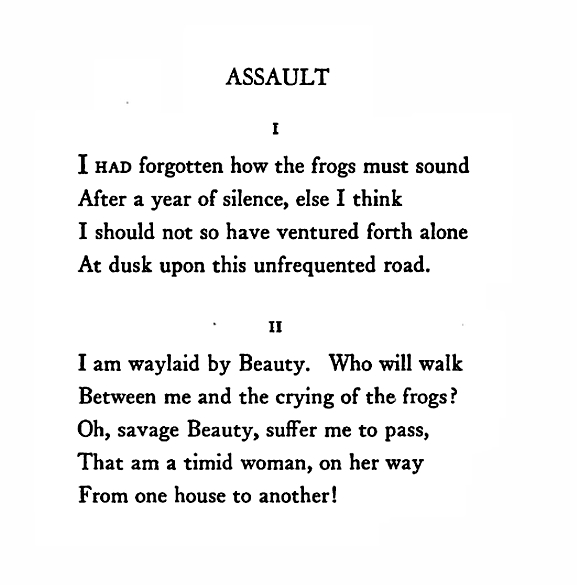
“Assault” — Edna St. Vincent Millay

esvm

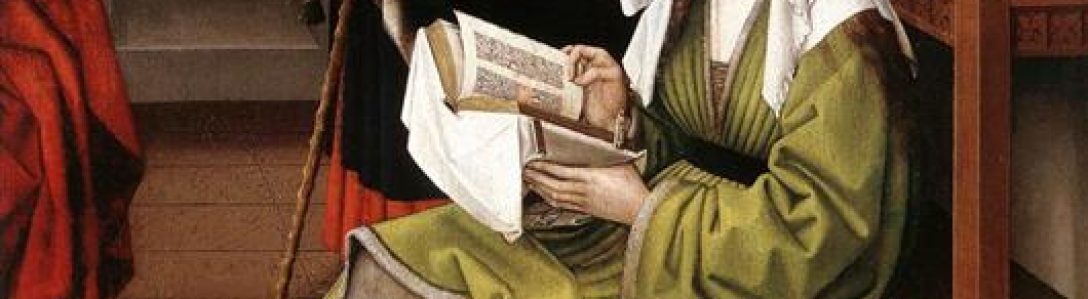
“To Read or Not to Read” — Oscar Wilde

“To Read or Not to Read” by Oscar Wilde

Books, I fancy, may be conveniently divided into three classes:

1.  Books to read, such as Cicero’s Letters, Suetonius, Vasari’s Lives of the Painters, the Autobiography of Benvenuto Cellini, Sir John Mandeville, Marco Polo, St. Simon’s Memoirs, Mommsen, and (till we get a better one) Grote’s History of Greece.

2.  Books to re-read, such as Plato and Keats: in the sphere of poetry, the masters not the minstrels; in the sphere of philosophy, the seers not the savants.

3.  Books not to read at all, such as Thomson’s Seasons, Rogers’s Italy, Paley’s Evidences, all the Fathers except St. Augustine, all John Stuart Mill except the essay on Liberty, all Voltaire’s plays without any exception, Butler’s Analogy, Grant’s Aristotle, Hume’s England, Lewes’s History of Philosophy, all argumentative books and all books that try to prove anything.

The third class is by far the most important.  To tell people what to read is, as a rule, either useless or harmful; for, the appreciation of literature is a question of temperament not of teaching; to Parnassus there is no primer and nothing that one can learn is ever worth learning.  But to tell people what not to read is a very different matter, and I venture to recommend it as a mission to the University Extension Scheme.

Indeed, it is one that is eminently needed in this age of ours, an age that reads so much, that it has no time to admire, and writes so much, that it has no time to think.  Whoever will select out of the chaos of our modern curricula ‘The Worst Hundred Books,’ and publish a list of them, will confer on the rising generation a real and lasting benefit.

After expressing these views I suppose I should not offer any suggestions at all with regard to ‘The Best Hundred Books,’ but I hope you will allow me the pleasure of being inconsistent, as I am anxious to put in a claim for a book that has been strangely omitted by most of the excellent judges who have contributed to your columns.  I mean the Greek Anthology.  The beautiful poems contained in this collection seem to me to hold the same position with regard to Greek dramatic literature as do the delicate little figurines of Tanagra to the Phidian marbles, and to be quite as necessary for the complete understanding of the Greek spirit.

I am also amazed to find that Edgar Allan Poe has been passed over.  Surely this marvellous lord of rhythmic expression deserves a place?  If, in order to make room for him, it be necessary to elbow out some one else, I should elbow out Southey, and I think that Baudelaire might be most advantageously substituted for Keble.

No doubt, both in the Curse of Kehama and in the Christian Year there are poetic qualities of a certain kind, but absolute catholicity of taste is not without its dangers.  It is only an auctioneer who should admire all schools of art.


Maria Zambaco — Edward Burne-Jones

Too Tired (Peanuts)

too tired

The Ant and the Grasshopper, A Stop-motion Film by Władysław Starewicz


Brousov Calendar — Viktor Vasnetsov