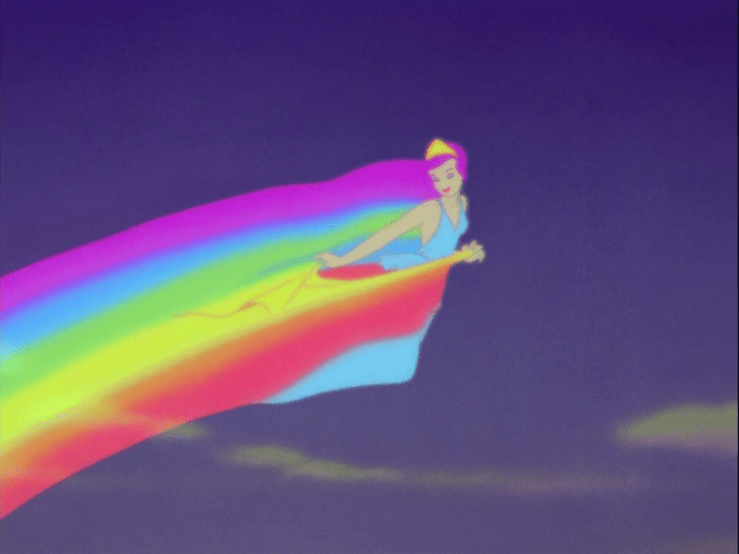
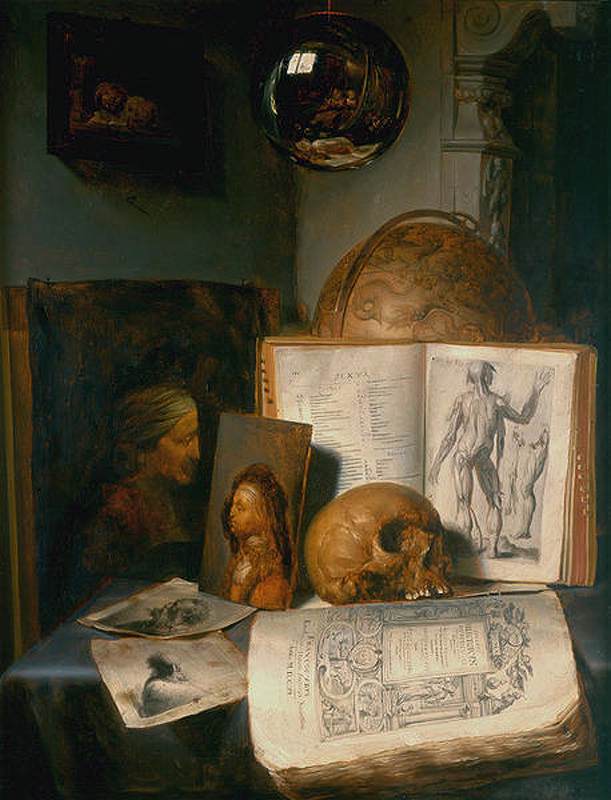
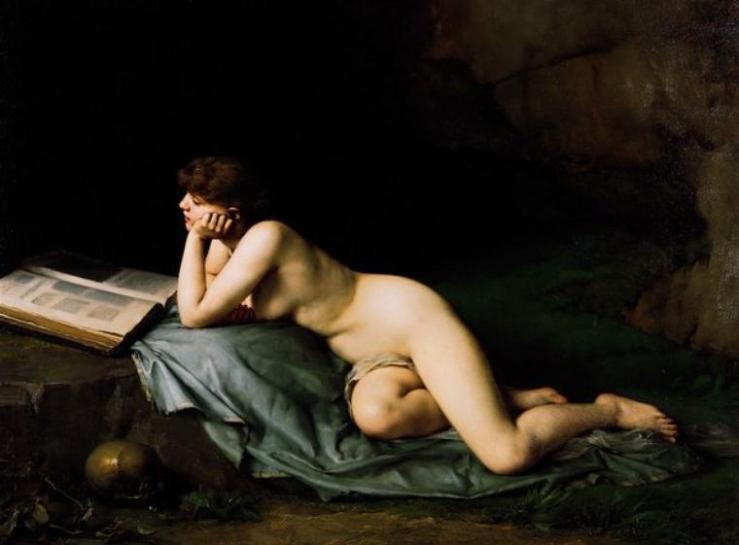
Read J.G. Ballard’s story “The Terminal Beach”

“The Terminal Beach”

by

J.G. Ballard


The Terminal Beach


At night, as he lay asleep on the floor of the ruined bunker, Traven heard the waves breaking along the shore of the lagoon, like the sounds of giant aircraft warming up at the ends of their runways. This memory of the great night raids against the Japanese mainland had filled his first months on the island with images of burning bombers falling through the air around him. Later, with the attacks of ben-ben, the nightmare passed and the waves began to remind him of the deep Atlantic rollers on the beach at Dakar, where he had been born, and of watching from the window in the evenings for his parents to drive home along the corniche road from the airport. Overcome by this long-forgotten memory, he woke uncertainly from the bed of old magazines on which he slept and went out to the dunes that screened the lagoon.


Through the cold night air he could see the abandoned Superfortresses lying among the palms beyond the perimeter of the emergency landing field three hundred yards away. Traven walked through the dark sand, already forgetting where the shore lay, although the atoll was little more than half a mile in width. Above him, along the crests of the dunes, the tall palms leaned into the dim air like the symbols of a cryptic alphabet. The landscape of the island was covered by strange ciphers.


Giving up the attempt to find the beach, Traven stumbled into a set of tracks left years earlier by a large caterpillar vehicle. The heat released by the weapons tests had fused the sand, and the double line of fossil imprints, uncovered by the evening air, wound its serpentine way among the hollows like the footfalls of an ancient saurian.


Too weak to walk any further, Traven sat down between the tracks. Hoping that they might lead him to the beach, he began to excavate the wedge-shaped grooves from a drift into which they disappeared. He returned to the bunker shortly before dawn, and slept through the hot silences of the following noon.


The Blocks


As usual on these enervating afternoons, when not even a breath of on-shore breeze disturbed the dust, Traven sat in the shadow of one of the blocks, lost somewhere within the centre of the maze. His back resting against the rough concrete surface, he gazed with a phlegmatic eye down the surrounding aisles and at the line of doors facing him. Each afternoon he left his cell in the abandoned camera bunker among the dunes and walked down into the blocks. For the first half an hour he restricted himself to the perimeter aisle, now and then trying one of the doors with the rusty key in his pocket – found among the litter of smashed bottles and cans in the isthmus of sand separating the testing ground from the air-strip – and then inevitably, with a sort of drugged stride, he set off into the centre of the blocks, breaking into a run and darting in and out of the corridors, as if trying to flush some invisible opponent from his hiding place. Soon he would be completely lost. Whatever his efforts to return to the perimeter, he always found himself once more in the centre.


Eventually he would abandon the task, and sit down in the dust, watching the shadows emerge from their crevices at the foot of the blocks. For some reason he invariably arranged to be trapped when the sun was at zenith – on Eniwetok, the thermonuclear noon.


One question in particular intrigued him: ‘What sort of people would inhabit this minimal concrete city?’

Continue reading “Read J.G. Ballard’s story “The Terminal Beach””
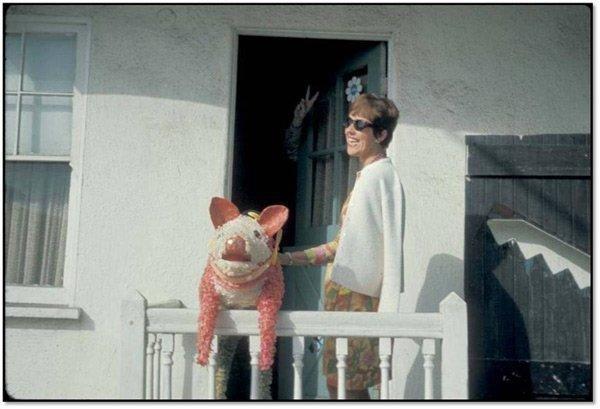
Possible photographic evidence of Thomas Pynchon’s hand (and a pig piñata)

6a00d8341c630a53ef014e88434d23970d

From an article in LAist:

A photograph on the back cover of a memoir by Phyllis Gebauer, a close friend of Pynchon’s, shows the author’s hand extending out of the door of his apartment giving a peace sign with a pig piñata named Claude and Gebauer in the foreground. In 2011, Gebauer donated her rare collection of signed Pynchon novels to UCLA.

I seem to recall mention of this pig piñata in A Journey into the Mind of P (but I could be wrong).

Big thanks to Doug Eklund for pointing the photo out to me.

A last riff (for now) on Gravity’s Rainbow (and Disney’s Fantasia)

Screenshot 2015-04-24 at 9.27.30 PM

Disney’s Fantasia is one of the better film adaptations of Thomas Pynchon’s novel Gravity’s Rainbow. 

At least this thought zipped into my head a few weeks back, as I watched the film with my wife and kids. I was in the middle of a second reading of the novel, an immediate rereading prompted by the first reading. It looped me back in. Everything seemed connected to the novel in some way. Or rather, the novel seemed to connect itself to everything, through its reader—me—performing a strange dialectic of paranoia/anti-paranoia.

So anyway, Fantasia seemed to me an adaptation of Gravity’s Rainbow, bearing so many of the novel’s features: technical prowess, an episodic and discontinuous form, hallucinatory dazzle, shifts between “high” and “low” culture, parodic and satirical gestures that ultimately invoke sincerity, heightened musicality, themes of magic and science, themes of automation and autonomy, depictions of splintering identity, apocalypse and genesis, cartoon elasticity, mixed modes, terror, love, the sublime, etc.

(There’s even a coded orgy in Fantasia).

But Fantasia was first released in 1940 right, when Pynchon was, what, three or four? And Gravity’s Rainbow was published in 1973, and most of the events in that novel happen at the end of World War II, in like, 1944, 1945, right? So the claim that “Fantasia is one of the better film adaptations of Gravity’s Rainbow” is ridiculous, right?

(Unless, perhaps, we employ those literary terms that Steven Weisenburger uses repeatedly in his Companion to Gravity’s Rainbow: analepsis and prolepsis—so, okay, so perhaps we consider Fantasia an analepsis, a flashback, of Gravity’s Rainbow, or we consider Gravity’s Rainbow a prolepsis, a flashforward, of Fantasia…no? Why not?).

Also ridiculous in the claim that “Fantasia is one of the better film adaptations of Gravity’s Rainbow” is that modifier “better,” for what other film adaptations of Gravity’s Rainbow exist?

(The list is long and mostly features unintentional titles, but let me lump in much of Robert Altman, The Conversation, Richard Kelly’s Southland Tales, Paul Thomas Anderson’s The Master, that Scientology documentary Going Clear, a good bit of stuff by the Wachowksis, The Fisher King (hell, all of Terry Gilliam, why not?), the Blackadder series, which engenders all sorts of wonderful problems of analepsis and prolepsis…).

Gravity’s Rainbow is of course larded with film references, from King Kong and monster movies to German expressionism (Fritz Lang in particular), and features filmmakers and actors as characters. The novel also formulates itself as its own film adaptation, perhaps. The book’s fourth sentence tells us “…it’s all theatre.” (That phrase appears again near the novel’s conclusion, in what I take to be a key passage). And the book ends, proleptically, in “the Orpheus Theatre on Melrose,” a theater managed by Richard M. Nixon, excuse me, Zhlubb—with the rocket analeptically erupting from the past into “The screen…a dim page spread before us, white and silent.” Indeed, as so many of the book’s commentator’s have noted, Pynchon marks separations in the book’s sequences with squares reminiscent of film sprockets —  □ □ □ □ □ □ □. Continue reading “A last riff (for now) on Gravity’s Rainbow (and Disney’s Fantasia)”

A U.S. of modern A. where the State is not a team or a code, but a sort of sloppy intersection of desires and fears (Infinite Jest)

…but who can imagine this training serving its purpose in an experialist and waste-exporting nation that’s forgotten privation and hardship and the discipline which hardship teaches by requiring? A U.S. of modern A. where the State is not a team or a code, but a sort of sloppy intersection of desires and fears, where the only public consensus a boy must surrender to is the acknowledged primacy of straight-line pursuing this flat and short-sighted idea of personal happiness: ‘The happy pleasure of the person alone, yes?’

From: David Foster Wallace’s novel Infinite Jest.

The Syllabus (Book acquired, 5.14.2015)

IMG_6422

The Syllabus is the third Festschrift from Verbivoracious Press. Their blurb:

A monument to our insatiable verbivoracity, The Syllabus is an act of humble genuflection before the authors responsible for those texts which have transported us to the peak of readerly nirvana and back. The texts featured, chosen in a rapturous frenzy by editors and contributors alike, represent a broad sweep of the most important exploratory fiction written in the last hundred years (and beyond). Featuring 100 texts from (fewer than) 100 contributors, The Syllabus is a form of religious creed, and should be read primarily as a holy manual from which the reader draws inspiration and hope, helping to shape their intellectual and moral life with greater awareness, and lead them towards those works that offer deep spiritual succour while surviving on a merciless and unkind planet. Readers of this festschrift should expect nothing less than an incontrovertible conversion from reader to insatiable verbivore in 226 pages.

I’m one of those contributors—I have a piece in there on Flann O’Brien’s At Swim-Two Birds.

RIP Tanith Lee

Tanith-Lee-006

RIP Tanith Lee, 1947-2015

Publisher Tor has reported Tanith Lee’s death. She was the author of nearly 100 books in various genres, including fantasy, sci-fi, and horror. I probably read a dozen of those books between the ages of ten and thirteen, but the one I most remember is her first novel, The Dragon Hoard, which I still have a copy of somewhere, nestled neatly by tattered copies of The Once and Future KingThe Halfmen of O, and The Hobbit.

I don’t remember the plot of The Dragon Hoard so much as I remember the kind librarian who suggested it to me (I asked for “Something with dragons”). I also remember my reaction to the author’s first name: “Tanith” sounded like the name of a fantasy character. I know I first read the book viat the library but at some point I must’ve conned my mother into buying it for me. I know I read whatever other book’s our little local library held by her. I’m pretty sure I wasn’t conscious of any of the feminist themes in her work, but I’d like to think they seeped in somehow.

I found the pic for this post–it’s Lee’s PR pic–at an appreciation of Tanith Lee by Alison Flood published at The Guardian. I’m glad that it was published when Lee was alive.

“Decoration Day” — Sarah Orne Jewett

“Decoration Day” by Sarah Orne Jewett

I.

A week before the thirtieth of May, three friends—John Stover and Henry Merrill and Asa Brown—happened to meet on Saturday evening at Barton’s store at the Plains. They were ready to enjoy this idle hour after a busy week. After long easterly rains, the sun had at last come out bright and clear, and all the Barlow farmers had been planting. There was even a good deal of ploughing left to be done, the season was so backward.

The three middle-aged men were old friends. They had been school-fellows, and when they were hardly out of their boyhood the war came on, and they enlisted in the same company, on the same day, and happened to march away elbow to elbow. Then came the great experience of a great war, and the years that followed their return from the South had come to each almost alike. These men might have been members of the same rustic household, they knew each other’s history so well.

They were sitting on a low wooden bench at the left of the store door as you went in. People were coming and going on their Saturday night errands,—the post-office was in Barton’s store,—but the friends talked on eagerly, without being interrupted, except by an occasional nod of recognition. They appeared to take no notice at all of the neighbors whom they saw oftenest. It was a most beautiful evening; the two great elms were almost half in leaf over the blacksmith’s shop which stood across the wide road. Farther along were two small old-fashioned houses and the old white church, with its pretty belfry of four arched sides and a tiny dome at the top. The large cockerel on the vane was pointing a little south of west, and there was still light enough to make it shine bravely against the deep blue eastern sky. On the western side of the road, near the store, were the parsonage and the storekeeper’s modern house, which had a French roof and some attempt at decoration, which the long-established Barlow people called gingerbread-work, and regarded with mingled pride and disdain. These buildings made the tiny village called Barlow Plains. They stood in the middle of a long narrow strip of level ground. They were islanded by green fields and pastures. There were hills beyond; the mountains themselves seemed very near. Scattered about on the hill slopes were farmhouses, which stood so far apart, with their clusters of out-buildings, that each looked lonely, and the pine woods above seemed to besiege them all. It was lighter on the uplands than it was in the valley, where the three men sat on their bench, with their backs to the store and the western sky.

“Well, here we be ‘most into June, an’ I ‘ain’t got a bush-bean above ground,” lamented Henry Merrill.

“Your land’s always late, ain’t it? But you always catch up with the rest on us,” Asa Brown consoled him. “I’ve often observed that your land, though early planted, was late to sprout. I view it there’s a good week’s difference betwixt me an’ Stover an’ your folks, but come first o’ July we all even up.”

“‘Tis just so,” said John Stover, taking his pipe out of his mouth, as if he had a good deal more to say, and then replacing it, as if he had changed his mind.

“Made it extry hard having that long wet spell. Can’t none on us take no day off this season,” said Asa Brown; but nobody thought it worth his while to respond to such evident truth.

“Next Saturday’ll be the thirtieth o’ May—that’s Decoration Day, ain’t it?—come round again. Lord! how the years slip by after you git to be forty-five an’ along there!” said Asa again. “I s’pose some o’ our folks’ll go over to Alton to see the procession, same’s usual. I’ve got to git one o’ them small flags to stick on our Joel’s grave, an’ Mis’ Dexter always counts on havin’ some for Harrison’s lot. I calculate to get ’em somehow. I must make time to ride over, but I don’t know where the time’s comin’ from out o’ next week. I wish the women folks would tend to them things. There’s the spot where Eb Munson an’ John Tighe lays in the poor-farm lot, an’ I did mean certain to buy flags for ’em last year an’ year before, but I went an’ forgot it. I’d like to have folks that rode by notice ’em for once, if they was town paupers. Eb Munson was as darin’ a man as ever stepped out to tuck o’ drum.” Continue reading ““Decoration Day” — Sarah Orne Jewett”

Gorgeous madness | George Saunders on Thomas Pynchon

I don’t think anyone has gotten closer than Thomas Pynchon to summoning the real audacity and insanity and scope of the American mind, as reflected in the American landscape. I read Pynchon all out of order, starting with Vineland, and I still remember the shock of pleasure I got at finally seeing the America I knew—strange shops and boulevards, built over former strange shops and former boulevards, all laid out there in valleys and dead-end forests, heaped on top of Indian cemeteries, peopled with nut jobs and hustlers and moral purists—actually present in a novel, and present not only in substance but in structure and language that both used and evoked the unruly, muscular complexity of the world itself.

In Pynchon, anything is fair game—if it is in the world, it can go in the book. To me there is something Buddhist about this approach, which seems to say that since the world is capable of producing an infinity of forms, the novel must be capable of accommodating an infinite number of forms. All aesthetic concerns (style, form, structure) answer this purpose: Let in the world.

This is why Pynchon is our biggest writer, the gold standard of that overused word inclusiveness: No dogma or tidy aesthetic rule or literary fashion is allowed to prefilter the beautiful data streaming in. Everything is included. No inclination of the mind is too small or large or frightening. The result is gorgeous madness, which does what great literature has always done—reminds us that there is a world out there that is bigger than us and worthy of our utmost humility and attention.

I have often felt that we read to gain some idea of what God would say about us if someone were to ask Him what we’re like. Pynchon says, through the vast loving catalogue he has made, that we are Excellent but need to be watched closely. He says there is no higher form of worship than the loving (i.e., madly attentive) observation of that-which-is, a form of prayer of which Pynchon’s work is our highest example.

George Saunders on Thomas Pynchon. From the Summer 2005 issue of Bookforum.

The face of nature can never look more beautiful than now (May 23, 1851 entry from Nathaniel Hawthorne’s Note-Books)

May 23d.–I think the face of nature can never look more beautiful than now, with this so fresh and youthful green,–the trees not being fully in leaf, yet enough so to give airy shade to the woods. The sunshine fills them with green light. Monument Mountain and its brethren are green, and the lightness of the tint takes away something from their massiveness and ponderosity, and they respond with livelier effect to the shine and shade of the sky. Each tree now within sight stands out in its own individuality of hue. This is a very windy day, and the light shifts with magical alternation. In a walk to the lake just now with the children, we found abundance of flowers,–wild geranium, violets of all families, red columbines, and many others known and unknown, besides innumerable blossoms of the wild strawberry, which has been in bloom for the past fortnight. The Houstonias seem quite to overspread some pastures, when viewed from a distance. Not merely the flowers, but the various shrubs which one sees,–seated, for instance, on the decayed trunk of a tree,–are well worth looking at, such a variety and such enjoyment they have of their new growth. Amid these fresh creations, we see others that have already run their course, and have done with warmth and sunshine,–the hoary periwigs, I mean, of dandelions gone to seed.

From Nathaniel Hawthorne’s American Note-Books.

Ishmael Reed . . . and more Pynchon (Books acquired, 5.22.2015)

So I finished my second full reading of Gravity’s Rainbow today. And then I read the last section three more times. And my brain feels fried. I was thinking about rereading V. after this, but I think a break will do nicely. So I picked up Ishmael Reed’s Mumbo Jumbo on Pynchon’s recommendation (“check out Ishmael Reed,” the narrator tells us on page 588 of Gravity’s Rainbow). A stroll through the lit crit section led to my spying (okay, looking for and finding) the 20th Century Views collection on Pynchon. So we’ll see how that reads.