In Sam Lipsyte’s 2004 novel Home Land, minor loser Lewis Miner sends missives to his high school alumni newsletter, Catamount Notes, about his awful, sad misadventures in small-time drug use, petty copy-writing, itinerant busboyism, and chronic masturbation (he has a strong erotic disposition toward leg warmer porn. If this idea repels you (with no reciprocal attraction) this book is not for you). Miner wants to be sweet but he can be mean. He’s obsessed with the past–and who can blame him? His nickname in high school was Teabag, an appellation literally thrust upon him by the dumbest of jock-bullies. He carries this kernel of spite for years like a pebble in the sock, one that rubs up a giant blister–Miner is all blister. Writing ostensibly to his former classmates, but really just for himself, another form of masturbation:
It’s always been this way, as many of you might recall. Somebody chucks a snowball, I’m scouring the school yard for rocks. The bully just wants to shove sadness around, shake me down for spare change, I’m looking to scrape out his eye. I lack a sense of proportion. I have no sensitivity to sport. I’m the aggrieved rider on the grievous plain. I’m still pissed about the parade.
For all his anger though, Miner is an engaging, preternaturally sensitive voice. Along with his best friend/foil Gary, he muddles through a wretched life, finding solace (and an outlet for an outsized comic voice) in his letters to Catamount Notes–even if disgraced Principal Fontana won’t publish them. Despite his censorious discretion, Fontana reignites a downright silly mentorship with Miner. Fontana, a man after Holden Caulfield’s heart who calls everyone a “phony,” plays a weird father-figure to our favorite loser (even though Lewis’s own “Daddy Miner” is an ever-present terror in this tragicomedy).
Fontana, Daddy Miner, and the other characters in Home Land often feel like props rather than fully-drawn beings. Take the aforementioned Gary, for example, flush with cash after suing the hypnotherapist who convinced him that his parents sexually abused him repeatedly as part of elaborate Satanic rituals. His ridiculous past is par for course in the book. Such characters are the stock-in-trade of Home Land; they are, paradoxically, both its strength and weakness, beings who seem to speak entirely in misplaced metaphors and fucked-up aphorisms. There are too many of them for the book’s 200 pages. The fast writing never sags under the huge cast, but, nonetheless, its spine, its plot, its quick rhythm can’t bear their weight. There’s a much bigger novel here, but I don’t think I’d want to read it. Even Lipsyte’s normals are grotesques–or maybe it’s just Miner’s bilious perspective. In any case, sympathy is in short supply in Catamount country.
None of this is meant to disparage the reading experience of Home Land, which is marvelous, quick, funny, and a little bit gross (in a good way). Lipsyte crafts his sentences with a concrete, witty excellence that is near unrivaled in contemporary lit. It’s true that he sacrifices the depth of his characters here from time to time, and then includes passages that add nothing to the plot as a whole, like this one:
An older shapely woman swerved past on rollerblades. Bronzed, undulant in black Lycra, she clutched a pack of menthol cigarettes, danced on her wheels to something pumped through headphones. It was an admirable kind of ecstasy, hard-won. I wanted her for a lewd aunt.
That last line, of course, tells us so much about Lewis Miner and is also indicative of his overall method of storytelling. Not that he sees his letters to his alumni newsletter as part of a larger narrative–indeed, he’s to be forgiven all his esoterica, his mean, incisive commentary on contemporary life that doesn’t add up. Halfway through the book he tells us:
It occurs to me, Catamounts, sitting here composing this latest update, that someday, if and when the collected works of Lewis Miner ever see the light of day, some futuristic editor-type might attempt to assemble these dispatches in a certain manner, to, for example, tell a story, or else effect some kind of thematic arrangement of interwoven leitmotifs: Work, Love, Masturbation, Gary.
This would be a mistake. There are no leitmotifs. There is no story.
Miner then goes on to makes a pretty convincing case against stories (or at least against narrative arcs) and, tellingly, Home Land is better as a series of ugly, gross, hilarious anecdotes than it is as a novel with a traditional character arc. Which it is–a novel with a traditional character arc, climax, all that good stuff. Strangely, this is the book’s biggest failure. But that failure doesn’t get in the way of what is a pretty great and often very funny reading experience. Miner’s voice is a pleasure to inhabit for a while, a postmodern Falstaff heavy on the self-loathing. Home Land is a quick, easy read, a novel destined for cult-status, and Lewis Miner’s pathetic ironic braggadocio will hit home for many folks. Recommended.
Home Land is available in trade paperback from Picador.
In his essay “Shakespeare in Bloom,” critic James Wood performs one of the strangest, most backhanded (and yet earnest) defenses I’ve ever read of Harold Bloom‘s aesthetic reaction to (what Bloom has called) “The School of Resentment” — deconstruction, Marxism, gender and queer theory, postcolonial theory, all that good stuff. Wood comes out strong, arguing, that in his prolific output, Bloom “has kidnapped the whole of the English literature and has been releasing his hostages, one by one, over a lifetime, on his own spirited terms.” Wood suggests that “this ceaselessness has produced some hurried, fantastical, and repetitive work,” before going on to throw around words like “garrulous” and “shallow.” Wood then takes Bloom to task over his famous (and improbable) claim that “Shakespeare invented us,” situating the claim against Bloom’s own most famous theory, the anxiety of influence. Wood says–
In truth, Bloom’s word invention is an enthusiastic Wildean necessary exaggeration. It is Bloom’s way of registering our almost religious sense that we live in Shakespeare’s shadow and that he does not simply represent human beings but brings new life, more life, into the world. . . . Bloom’s determination to honor Shakespeare’s godly primacy is a kind of secular theology.
The second section of Wood’s essay should be required reading for all English majors (or anyone serious about literary criticism). Here, Wood provides a wonderfully succinct overview of the history of literary criticism, connecting Freudian analysis and the New Critics to the various theories that Bloom would come to call the “The School of Resentment.” As we bring up the term again, we should note that we consider it a bit pejorative and utterly reactionary, and, to borrow from (and perhaps misapply) Wood, shallow. Wood points out that “Deconstruction brings a generalized suspicion to bear on language and in particular on metaphor (or ‘rhetoric’), which it suspects of hiding something–namely, its own metaphoricity.” In short, literature always metaphorizes, and thus hides, some other impulse, one always politicized. Wood continues: “Political criticism, including cultural materialism, converts Freud’s analytical suspicions into political ones. . . . The poem is read as if it were covering something up, as if it were an alibi that is rather too fluent to be entirely trusted.” It must be interrogated to reveal its secret, the secret prejudices of its age. Wood continues, after a page or two–
This is a long way around to Bloom, but it may explain the venom and desperation of his attacks. For although deconstruction did not intend to, it has produced mutant modes of reading that, when combined with leftish political guilt or ressentiment, seem to threaten the existence of literature as a discipline.
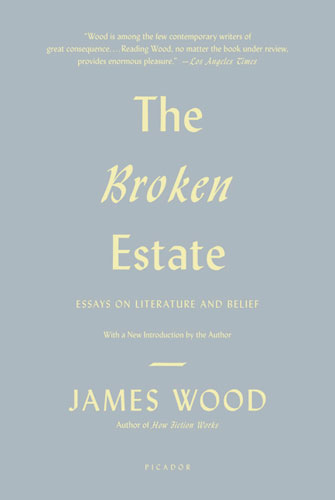
Wood espouses some common sense here uncommon in literary criticism, taking a long view that recognizes–and attempts to step outside of–the fact that it’s not all academic when it comes to how we read our books. History and politics matter, but so does our passion, our love for our books (as silly as that may sound). He defends Bloom’s work even as he calls it an overreaction. He credits deconstruction as having “produced some brilliance and many distinguished readings (no one could deny the acuities of Derrida, of Paul de Man, of Barbara Johnson).” Wood’s essay “Shakespeare in Bloom” is the kind of thing that students and aspiring critics alike should read before they feel the need to draw arms. You can read it in the second printing (the first in a decade) of Wood’s essay collection The Broken Estate, which debuts in June, 2010 from Picador.
In her new book Inseparable: Desire Between Women in Literature (on sale May 25, 2010 from Knopf), Emma Donoghue discusses the six most common recurring girl-on-girl plots in literature. From her introduction:
TRAVESTIES: Cross-dressing (whether by a woman or a man) causes the “accident” of same-sex desire.
INSEPARABLES: Two passionate friends defy the forces trying to part them.
RIVALS: A man and a a woman compete for a woman’s heart.
MONSTERS: A wicked woman tries to seduce and destroy an innocent one.
DETECTION: The discovery of a crime turns out to be the discovery of same-sex desire.
OUT: A woman’s life is changed by the realization that she loves her own sex.
We’re enjoying Donoghue’s book so far. It proceeds from this initial folkloric classification with a balance of erudition and wit and a keen eye for the desire writhing between the lines. More to come.
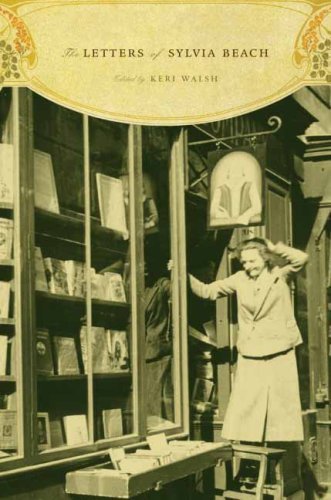
Keri Walsh’s new book The Letters of Sylvia Beach sheds light on one of modern literature’s most fascinating figures. Sylvia Beach was the nexus point for the ex-pat/Lost Generation/Modernist scene in the first half of the twentieth century. Along with her partner Adrienne Monnier, Beach ran the Left Bank bookstore Shakespeare & Company until the Nazi occupation of Paris in 1941. She was the first publisher of Joyce’s Ulysses, she translated Paul Valéry into English, and she was close friends to a good many great writers, including William Carlos Williams, Ezra Pound, H.D., and Ernest Hemingway. Walsh’s book compiles Beach’s letters, revealing a woman who cared deeply about literature and art, who was funny and sincere, and who loved her famous (and not so famous) friends dearly. Over a series of emails, we talked to Dr. Walsh about The Letters of Sylvia Beach, which is out now from Columbia UP. Keri Walsh teachers 20th Century British and Irish Literature at Claremont McKenna College in Los Angeles.
Biblioklept: How did you get interested in Sylvia Beach?
Keri Walsh: I got interested in Sylvia Beach in the same way that many English-speaking visitors to Paris do: when I stumbled upon the Shakespeare and Company bookstore in Paris. Of course, the current bookstore is its own entity: it’s not the direct descendant of Beach’s. It was founded after the Second World War by George Whitman, and it’s been there so long that it’s now legendary in its own right. Today it’s run by Whitman’s daughter, Sylvia Beach Whitman. The shop preserves many of the qualities of Beach’s original: the whimsicality, the friendliness, the sense of being a gathering place for expats. So it was easy to fall in love with it and to want to learn more about its origins.
Sylvia Beach grew up in Princeton, New Jersey. Beach’s father was minister of the Presbyterian Church just up the street from the university campus. I didn’t know that when I began my Ph.D. studies in the English department there. I was delighted to learn that Firestone library, where I worked every day, owned a vast collection of Sylvia Beach’s letters, photographs, books, and belongings. They even had the original “Shakespeare and Company” sign that had hung in front of her store. I started to read through her letters, beginning with the ones she wrote as a teenager. Even then she was always reading. I was charmed by how funny she was, and how resourceful. She could talk her friends into just about anything– including smuggling illegal copies of Ulysses into the United States.
Her correspondents were so illustrious that I was surprised to learn that her letters had never been published. Because she wrote to Gertrude Stein, Ernest Hemingway, H.D. and others, I hoped that this volume might make a contribution to the study of modernist literary culture. But I also wanted to share Beach’s story for its own sake, because she was so fascinating and endearing. I had a hunch that there would be other readers like me who wanted to know more about Beach, and about the sensibility that informed Shakespeare and Company. I thought about all the people who love modernist Paris and independent bookstores. Beach is a kindred spirit for bookworms, expatriates, bohemians, bluestockings, francophiles and salonnieres of all stripes.
Keri Walsh at Shakespeare and Company, Paris
B: You mention Sylvia Beach Whitman. I’ve read that she’s an ancestor of Walt Whitman–is that true?
KW: About Sylvia Beach Whitman and the Whitman connection– I don’t know. But I do know that the original Sylvia Beach had a Whitman connection, and she was proud of it. An aunt of hers had visited Whitman and asked permission to dig some manuscripts out of his trash bin. Sylvia had these on display in her shop. She writes in her memoir of “several little manuscripts of Walt Whitman scribbled on the backs of letters. These were the gift of the poet to my Aunt Agnes Orbison. Aunt Agnes, when she was a student at Bryn Mawr, had gone with her friend Alys Smith to Camden to visit Walt Whitman . . ..Manuscripts were strewn all over the floor, and some of them . . . were in the waste-paper basket. She got up the courage to draw out a few of these scribblings, mostly on the backs of letters addressed to Walt Whitman, Esq., and asked if she might keep them. “Certainly, my dear,” he replied. And that’s how our family got its Whitman manuscripts” (20).
B: Can you tell us a bit about Beach’s involvement in smuggling copies of Ulysses into the States?
KW: As for the smuggling of Ulysses, Beach tells us in her memoir Shakespeare and Company that some of Hemingway’s friends in Toronto smuggled copies to the Ulysses subscribers underneath their clothes. The original edition of Ulysses was paid for by subscribers in advance, so when Ulysses was banned in the US, it wasn’t a matter of getting copies into bookstores, it was a matter of getting them to the people who’d already bought them. Beach’s letters show us that she relied on her old friend Marion Peter to do some of the smuggling, receiving the books in non-descript looking parcels and forwarding them on to the subscribers in America. “You were such an angel to take all that trouble bootlegging for me!” she wrote to Marion Peter in 1923, a characteristically Sylvia-esque joke at the height of Prohibition to her eminently respectable friend.
B: In Beach’s letters, she comes across as both a friend and a fan to many of the authors to whom she writes. At times, there seems to be a tension there–there’s a late letter to Ezra Pound (#188), for example, where she seems almost ironically deferential; there’s a letter to Hemingway (#211) where she apologizes ahead of time for early “references to [his] domestic life” in her memoir Shakespeare and Company that “should be deleted.” How important was Beach to these writers, and how important were they to her? What was the response to her memoir?
KW: It must have been hard to know what to say to Pound in the years after the Second World War. His politics during the conflict had been abominable, and his mental health was precarious to say the least. Beach was a tactful person who disliked turning her back on anyone, so I think she struck a compromise, holding Pound at a distance but remaining polite. Beginning in the early 1930s her letters register her discomfort with his attraction to Italian fascism. In 1931 Beach wrote to Hemingway that “Ezra Pound is making us a visit, and an Italian tried to stick a stiletto into him during a soiree given in his honor at the Brasserie de l’Odeon. I think people should control themselves better” (134-5). You’re right to pick up on that ironic deference in the later letters. Perhaps it was her way of “handling” Pound: “Do tell me what the “factual error” was in my piece. Not the color of your shirt, I hope. I could swear it was blue. But I know how inaccurate I am. Adrienne is in despair over it” (214).
Her relationships varied, but as a general pattern her relationships with women like Bryher, H.D., and Adrienne Monnier were deep and mutual. One gets the sense that Joyce was more important to her than she was to him. Beach and Hemingway were genuine kindred spirits in the 1920s, and they retained a fond regard for each other throughout their lives. I think that by the 1950s Beach felt less certain about her friendship with Hemingway, wondering whether this cultural icon and Nobel Prize-winning writer still had time for her. But it was a gesture of thoughtfulness on her part to write to him wondering how much of his private story she could share in her memoir. And he responded with implicit trust in her judgment, telling her that anything she wrote would be OK.
One of my favorite Hemingway moments to come out of the Sylvia Beach archives nicely demonstrates their mutual understanding. Beach recorded on Hemingway’s Shakespeare and Company bill of 1934 that “Hemingway read Wyndham Lewis’s article ‘The Dumb Ox in Life and Letters’ and punched a vase of tulips on the table. Paid SB 1500 fr damages. SB returned 500 fr.” (“The Dumb Ox” was, of course, Lewis’s famously unflattering study of Hemingway’s writing).
B: You mention that “One gets the sense that Joyce was more important to her than she was to him.” There’s a letter published in the volume that Beach never actually sent to Joyce that is extremely angry and shows that, at least to some extent, she felt hurt by Joyce’s treatment of her–that she felt used. The letter also reveals the economic difficulties faced by writers and publishers alike, and perhaps hints that Joyce was more mercenary than he would have liked his public to know. To what extent was Beach merely a bank to Joyce?
KW: That letter is remarkable, isn’t it, because it shows the deep resentment Beach eventually felt toward Joyce. But more characteristically, especially in the early 1920s when they were working together on the publication of Ulysses, Beach was indulgent about the privileges of genius. To an extent that amazes me, she welcomed his incursions on her goodwill. She loved his writing, and she made a conscious decision to serve him and his art. This attitude was probably integral to her success. A less devoted, tenacious, and flexible person would simply not have been able to get Ulysses into print. But their intense and one-sided relationship proved unsustainable as his needs escalated and her resources diminished during the Depression.
Beach wasn’t the only one who put Joyce ahead of her own needs: Harriet Weaver, Paul Léon, Samuel Beckett, and Eugene Jolas were similarly devoted. Now, ideally, Joyce would have repaid these personal debts with magnanimity and grace. Sometimes he did. And sometimes he didn’t. In her recent piece on Beach’s letters in the London Times, Jeanette Winterson expresses the frustration that Beach admirers often feel:
“Joyce’s gigantic ego nearly ruined her. He took her cash, let her take all the risks on his (at the time) unpublishable book, and later reneged on the letter and the spirit of their agreements, simply reselling to Random House when he was famous enough to do so.”
But whatever his weaknesses of character, we have to remember that Beach indulged them. She was moved by Joyce’s work ethic in spite of his wretched health, the fact that he was terribly short of funds, and that he always seemed overmatched by circumstance. Her letters give us a glimpse into the sufferings he endured with his eye surgeries, for instance, and it’s harrowing reading. No, they never patched things up, but Beach remained loyal to Joyce’s family after his death, and she was a careful guardian of his legacy.
B: Beach lived with her partner Adrienne Monnier for years. To what extent were they “out” among Paris society, their literary friends, and their family?
KW: Most people who knew them accepted Beach and Monnier as a couple. Paris in the 1920s was tolerant of alternative lifestyles. As George Orwell put it in “Inside the Whale,” “for a time, the populace had grown so hardened to artists that gruff-voiced lesbians in corduroy breeches and young men in Grecian or medieval costume could walk the streets without attracting a glance.”
Beach was considered a member of the Monnier family and spent weekends and summers at Monnier’s parents’ home in Rocfoin. In Women of the Left Bank, Shari Benstock offers an insightful analysis of their relationship. She notes that Beach and Monnier’s relationship differed from Gertude Stein and Alice Toklas’s in its mutuality, and in its refusal of butch/femme roles or the model of heterosexual marriage. “Perhaps because both partners were strong feminists,” says Benstock, their relationship was characterized by: “an egalitarianism unusual in either homosexual or heterosexual relationships of the period. It was not marked by self-destructive behavior, neither was it given to self-indulgence. Indeed, this union might well serve as an alternative model to the more popular view of Paris lesbian experience… (210-211).”
Of course, then, as now, intolerance could rear its head at any time. I came across one patently homophobic response to Beach and Monnier’s relationship. It came from William Carlos Williams’ Autobiography. He wrote of Monnier: “She enjoyed the thought, she said, of pigs screaming as they were being slaughtered, a contempt for the animal—a woman toward whom it was strange to see the mannishly dressed Sylvia so violently drawn” (93). I think he misunderstood Monnier’s sense of humor, and the fun she had shocking the sensibilities of Americans.
B: Have you ever stolen a book?
KW: Hmm . . . does picking up novels left behind on planes count?
This isn’t a theft, but it did feel like a piece of good luck: while editing Beach’s letters, I wanted a copy of her translation of Henri Michaux’s A Barbarian in Asia. I ordered one though a second-hand bookstore online, and when it arrived, I found that it was inscribed with the name of Sylvia Beach’s Ulysses-bootlegger friend Marion Peter. It was the copy Beach had sent to her as a gift when it came out in 1949.
I’m coming to the end of Hilary Mantel’s brilliant treatment of the Tudor saga, Wolf Hall. Sign of a great book: when it’s finished, I will miss her characters, particularly her hero Thomas Cromwell, presented here as a self-made harbinger of the Renaissance, a complicated protagonist who was loyal to his benefactor Cardinal Wolsey even though he despised the abuses of the Church. Mantel’s Cromwell reminds us that the adjective “Machiavellian” need not be a pejorative, applied only to evil Iago or crooked Richard III. The Cromwell of Wolf Hall presages a more egalitarian–modern–extension of power. Cromwell here is not simply pragmatic (although he is pragmatic), he also has a purpose: he sees the coming changes of Europe, the rise of the mercantile class signaling economic power over monarchial authority. Yet he’s loyal to Henry VIII, and even the scheming Boleyns. “Arrange your face” is one of the book’s constant mantras; another is “Choose your prince.” Mantel’s Cromwell is intelligent and admirable; the sorrows of the loss of his wife and daughter tinge his life but do not dominate it; he can be cruel when the situation merits it but would rather not be. I doubt that many people wanted yet another telling of the Tudor drama–but aren’t we always looking for a great book? Wolf Hall demonstrates that it’s not the subject that matters but the quality of the writing. Highly recommended.
Cromwell’s greatest foil in Wolf Hall is Thomas More, who is also the subject of the first essay in James Wood’s collection The Broken Estate. I got my review copy in the mail late last week, so it was pure serendipity that I should read “Sir Thomas More: A Man for One Season” after a full day of listening to Wolf Hall (did I neglect to mention that I listened to the audio book? Sorry). Wood is harsher on More than Mantel; whereas she lets us despise him within the logic and framework of the Tudor court, Wood aims to find a contemporary secular standard from which to judge him. He finds license to do so through the work of John Stuart Mill, citing the influential essay On Liberty. Wood writes:
So it is enough for secular criticism to argue that More should have acted differently, and in asserting only this, secular criticism gives birth to itself. It is enough for the secularist to say that there are categories and modes of being which possess a transhistorical and universal status equivalent to sainthood’s, and by which it is therefore permissible to judge More’s actions.
I think in some ways Mantel’s work performs a kind of transhistorical secularist critique of More, albeit one that steps outside of historical or literary criticism or philosophy, one that remains in the logical limits of historical fiction. Mantel does not ask her Thomases to be something that we in the 21st century want them to be, but by centering on Cromwell, she engenders a sharp critique of More’s hypocrisy, a hypocrisy endemic to his time. Cromwell is a humanist (who does not know that he is a humanist, perhaps) and his complicated view of More forms the thrust of any critique we might choose to find in Wolf Hall. Cromwell admires More’s erudition but despises his arrogance; he respects More as a family man but resents his attitudes toward women. In Mantel’s London, Cromwell works to save More’s life not because he wants to avoid creating a martyr, but because he feels genuine compassion and pity for the man’s family. More’s selfishness is all the more apparent in light of this. Further reflection Wood’s book to come; this second printing (the first in a decade) of Wood’s essays debuts in June, 2010 from the good folks at Picador.
Loved loved loved Nick McDonell’s collection of reportage on the US Army in Iraq, The End of Major Combat Operations. It’s not the sort of thing that I’d normally pick up, so I’m glad that it showed up as half of McSweeney’s 34. Embedded with the 1st Cavalry, McDonell offers a series of tightly-drawn close-ups of the soldiers in Iraq, their interpreters, and ordinary folks trying to make a life in Baghdad. Great stuff. You can read an excerpt now at Salon.
Deirdre Madden’s novel Molly Fox’s Birthday takes place over the course of just one summer day in Dublin, Ireland. Perhaps that sounds a bit familiar, but Madden can’t be accused of trying to riff off Ulysses–even if her book is funny and erudite. Molly Fox, a famous stage actor, is abroad for a few months; in the interim her playwright friend, the unnamed narrator, takes residence in her home. The book opens with a strange dream sequence, full of joy and mystery, which ushers in a host of questions about the intertwined past of the narrator, Molly, and a TV art critic named Andrew. Madden’s book is a sustained investigation into how our friendships endure–and change–over the course of all the masks we wear. Molly Fox’s Birthday, a Picador trade paperback original, is new in the US this month.
Earlier this week I got a review copy of Elliot Allagash by 25-year old SNL writer Simon Rich. Now, normally I’d say all kinds of nasty things about Rich simply because he’s a debut novelist who’s younger than I am and, let’s face it, I’m a jealous hater. But Elliot Allagash‘s initial pages are charming and quite funny and seem to impel further reading, so I’ll probably just do that (i.e., you know, read it) instead of making snap judgments. Here’s one of the better book trailers in recent memory, starring SNL-er Bill Hader and Simon Rich (who apparently borrowed his father’s ill-fitting suit for the occasion):
Elliot Allagash is available May 25, 2010 from Random House.
Inspired by Roberto Bolaño, who called it his favorite book, sections of Adam Thirlwell’s The Delighted States, Time’s Flow Stemmed’srecent review, and my own sense of literary duty, I picked up Edith Grossman’s translation of Miguel de Cervantes’ epic Don Quixote last week.
I’ve read chunks of the book over the years, but I’ve probably read more about it than I have the thing itself–never a good thing for a reader who aspires to literary criticism, I suppose. Anyway. I’m surprised at a few things so far. First–and I don’t know if it’s an effect of Grossman’s translation–but the book is very easy to read–breezy, almost. Not what I was expecting for a 400 year old tome famous for dismantling high/low distinctions. I’m also surprised at how terribly sad the book is. Most critics cite the book’s humor, its farcical depiction of Don Quixote as a satire on romanticism and erudition. But it’s also about a guy who’s batshit insane, who repeatedly attacks those he comes into contact with, and who also catches a beating himself now and then.
My goal is to finish it this summer–or at least the first book, anyway. The restaurant I ate lunch in today flaunted statues of Don Quixote and Sancho Panza, which I would take to be an auspicious sign if I believed in such things (I don’t). I couldn’t really get a good picture of both with my phone’s camera so I did my best for a headshot of Quixote. The sun’s light seems to obscure him but perhaps that’s appropriate.
Vice Magazine has published an excerpt from William T. Vollmann’s new bookKissing the Mask: Beauty, Understatement, and Femininity in Japanese Noh Theater. Read the excerpt here. The picture above is Mr. Vollmann in drag, one of the themes of his new book. Here is an excerpt from Vice‘s excerpt:
The best mask of my self (never mind my soul) may well be a chujo; my forehead will soon begin to wrinkle in a pattern like roots, and I often bear the sparse mustache, gaping mouth, and blackened teeth of the loyal bewildered lieutenant; perhaps I belong to the Komparu school. What the artist inscribed on the back of my face I will never know, being unable to see myself objectively the way a professional Noh actor would. Most of the time I am a sturdy man who wears the same clothes often, preferring garments of lifelong reliability; I shave carelessly and shrug off my latest wrinkles, because anyhow I never possessed even a waki’s hope of being beautiful, nor felt the loss.
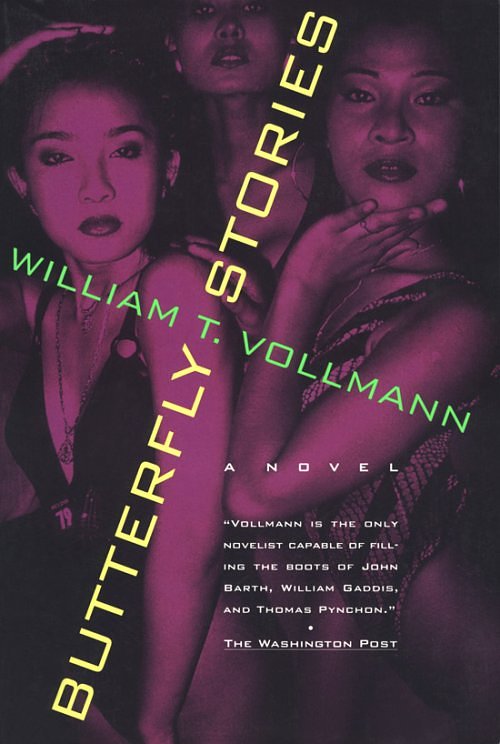
In his 1994 novel Butterfly Stories, William T. Vollmann explores the intense cost of unrelenting idealism. Butterfly Stories is a tragic-comic bildungsroman centered around the life of a protagonist who is almost certainly a semi-autobiographical stand-in for Vollmann. He’s never named in the text; few of the characters are. Instead, he goes by various appellations: the butterfly boy, the boy who wanted to be a journalist, the journalist, the husband. These names square with the protagonist’s painful idealism. He’s a professional alien, a traveler who reports on all the beautiful ugly poor places we Quiet (Ugly) Americans forget about (or never know of in the first place). The main set piece in Butterfly Stories takes place in Thailand and Cambodia:
Once upon a time a journalist and a photographer set out to whore their way across Asia. They got a New York magazine to pay for it. They each armed themselves with a tube of coll soft K-Y jelly and a box of Trojans. The photographer, who knew such essential Thai phrases as: very beautiful!, how much?, thank you and I’m gonna knock you around! (topsa-lopsa-lei), preferred the extra-strength lubricated, while the journalist selected the non-lubricated with special receptacle end. The journalist never tried the photographer’s condoms because he didn’t even use his own as much as (to be honest) he should have; but the photographer, who tried both, decided that the journalist had really made the right decision from a standpoint of friction and hence sensation; so that is the real moral of this story, and those who don’t want anything but morals need read no further.
I’ve quoted the passage at length because I think it delineates a good deal of Vollmann’s program very quickly: whoring-as-gonzo-journalism, a foreshadowing of the sexual grotesquerie to come, blackly ironic humor, and an uncomfortable gap between protagonist and narrator. It’s that gap between the narrator’s ironic detachment and the journalist’s earnest search for meaning–and love–in a world of violence and prostitution that made the book rewarding for me. However, I suspect many will not enjoy (perhaps even hate) this disconnect. The journalist falls in love with several prostitutes throughout the course of the novel, fixating on a Cambodian girl named Vanna in particular. His obsession with Vanna overcomes him, surpasses any rational course of action, and leads him to divorce his wife back in San Francisco in the hopes of marrying a girl he, over time, can no longer even visualize. In short, idealism tortures the protagonist; he’s in love with the idea of love. Late in the novel, he thinks (his thinking framed by the narrator, of course):
Better not to try anything than to be wicked! — That’s how most people acted, and they were probably right, dying their lumpish lives without collecting more than their share of the general blame; but he’d do whatever he was called to do . . .
And later, hallucinating in one of his STD-fueled fevers, he remembers the bully that tormented him back when he was the butterfly boy: “I’m not afraid of you anymore . . . Because I have someone whose life means more to me than mine.” The protagonist’s unrelentingly romanticized view of self-sacrifice is ultimately a defense mechanism against the world’s (equally unrelenting) Darwinian violence.
Vollmann’s milieu of disease-infested, war-torn, economically depressed lands dramatizes this conflict. The violence of the Khmer Rouge, the depravity of prostitution, and the specter of AIDS underpin the novel, and are never mere props for Vollmann, who places his protagonist in a paradoxically privileged vantage point from which to observe, investigate–or ignore–the atrocities of poverty. The book succeeds because of the tension between the narrator’s judgmental, ironic perspective and the protagonist’s big-hearted but ultimately facile dream of a self-sacrificing love. The narrator sees–and lets us see–the ironic selfishness of the protagonist’s dream to save the world, one prostitute at a time.
Just under 300 pages and larded with the author’s spidery black-ink sketches, Butterfly Stories is one of Vollmann’s shorter and more digestible (if that word may be used) volumes. It is bleakly funny, often depressing, and filled with erudite asides on Nobel prizewinners, transvestites, and the benefits of whiskey. And benadryl. Can’t forget the benadryl. Vollmann has an astounding gift for crafting concrete sentences that burst into blistering abstraction, but he can also drift rather aimlessly at times. Does he have an editor? What other literary writer can put out a book of at least 500 pages every year? Butterfly Stories may be a good start for those interested in Vollmann but daunted by his prolific output. It will also repel many readers with its grotesque depictions of sex, which recall Henry Miller and the best of Charles Bukowksi. I liked it very much. Recommended.
ReadRollShow‘s Dave Weich interviews Sam Lipsyte. Great little short clips, perfect for internet viewing. They have three up so far, all embedded below–
There are two distinct ironies in the title of George V. Higgins’s landmark 1970 novel The Friends of Eddie Coyle. The first is the word “friends” to describe the collection of folks on both sides of the law who Coyle tries to get over on in order to get out of an upcoming prison sentence (of course, most of these folks are looking to use or set up Coyle in turn). The second irony is that Eddie Coyle (aka Eddie Fingers aka “the stocky man”) is not so much the headliner here as he is the catalyst in a sharp and gritty tale of Boston gangsters, gunrunners, student radicals, cops, state police, and federal agents.
Like David Simon did three decades later in his Baltimore opus The Wire, Higgins throws his audience into the deep end. Coyle features almost no exposition. Instead Higgins, a former U.S. Attorney, forwards his intricate and fast-paced plot using machine-gun dialogue. While many crime writers fall for the lure of hyperbolic argot, Higgins’s dialogue rings very true and very raw. He trusts the reader to sort out the complex relationships between hustlers and dupes, cops and finks from their conversations alone; the rest of the prose is reserved for tight, cinematic descriptions of gritty urban Boston at the end of the 1960s. The imagery is straight out of a Scorcese film, and like that director, Higgins has a wonderful gift for showing his audience action without getting in the way. Coyle features a description of a bank robbery that is so clean, precise, and sharp that I wouldn’t be surprised to hear that someone somewhere had used it as a how-to manual.
Higgins also spares authorial intrusion when it comes to a moral voice in his novel. There are certainly bad guys here, to be sure, but they are complex and human, just like the cops and feds who hunt them. In this sense, Coyle is the prototype of a type of crime fiction that came to rise in the cinema of the ’70s–gritty actioners that viewed crime and punishment through a lens of absolute ambiguity. At the same time, Coyle doesn’t unravel into a mere shaggy dog story–there’s a definite conclusion to the story here, even if it doesn’t satisfy the district attorney who tries to make sense of it all (like, in a metaphysical sense) at the end.
I’ve read more crime fiction in the past year than I ever have before, inspired perhaps by “The Part About the Crimes” in Bolaño’s 2666 or Jonathan Lethem’s forays into noir. I wrote a little bit about this the other week when I praised Denis Johnson’s noveau-noir exercise Nobody Move for its purity and its “willingness to be what it is” (whatever that means). (The tone of Nobody Move is downright lighthearted next to Coyle. Not that they need to be compared–I enjoyed both very much). What I did not directly address in that post is my own prejudice against genre fiction, a prejudice that inflamed me in my early teens to such a degree that I probably outright disregarded a lot of great writing. But there’s always more great writing out there than one can read in a lifetime, so why dwell on the past? Suffice to say that The Friends of Eddie Coyle should correct any prejudicial notions of the limits of crime fiction. Highly recommended.
The Friends of Eddie Coyle 40th Anniversary Edition with a new introduction by Dennis Lehane is new this month from Picador.
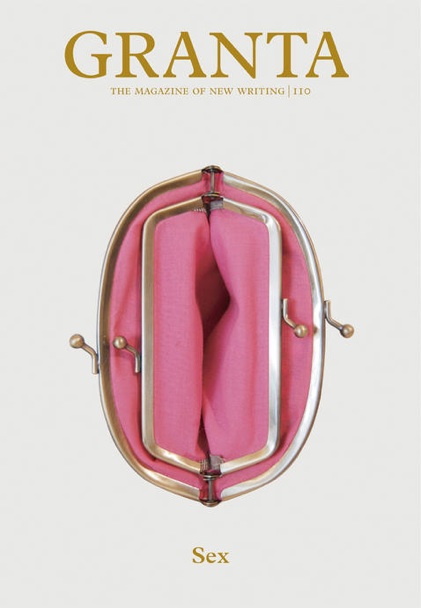
Subtly titled Sex, issue 110 of the long-running literary journal Granta hits stands this week, and it looks like a doozy. There’s a story by Roberto Bolaño called “The Redhead” about “a disturbing encounter between an eighteen-year-old girl and a narcotics cop.” Charming. No description for Tom McCarthy’s “The Spa,” but presumably it will involve sex, and Dave Eggers’s drawings “Four Animals Contemplating Sex” promises to be self-descriptive. Lots of other stuff too, of course. Order Granta 110here. The journal has also produced short videos for four of the pieces in Sex, all directed by Luke Seomore and Joseph Bull. You can see them at the oh-so-cleverly titled website This is not a purse; the vid for Bolaño’s “The Redhead” is embedded below.
Sylvia Beach was the nexus point for Modernist and ex-pat literature for much of the first half of the twentieth century, running the Left Bank bookstore Shakespeare & Company until the Nazi occupation of Paris in 1941. She was the first publisher of Joyce’s Ulysses, she translated Paul Valéry into English, and was close friends to a good many great writers, including William Carlos Williams, Ezra Pound, H.D., and Ernest Hemingway. In The Letters of Sylvia Beach, editor Keri Walsh compiles many of Beach’s letters from 1901 to just before her death in 1962. Framed by a concise biographical introduction and a useful glossary of correspondents, Letters reveals private insights into a fascinating literary period. There’s a sweetness to Beach’s letters, whether she’s inviting the Fitzgeralds to come to a dinner party or asking Richard Wright (“Dick”) how much he thinks a fair price for a record player is. The Letters of Sylvia Beach is out now from Columbia UP.
I’m a couple of chapters into William T. Vollmann’s 1993 novel Butterfly Stories, one of his (three? four? Dude’s prolific) books about prostitution. The bullied butterfly grows up to be a boy who wants to be a journalist and then a journalist/inept sex tourist in southeast Asia. Good stuff. Here’s a mordantly elegant passage:
Once he began to combine cutting his wrists and half-asphyxiating himself he believed that he’d found the ideal. Afterwards he’d dream of mummy sex with the gentle girl, by which he meant her body being suspended ropelessly above him, then slowly drifting down; when her knee touched his leg he jerked and then went limp there; her hands reached his hands, which died; her breasts rolled softly upon his heart which fibrillated and stopped; finally she lay on top of him, quite docile and still soft . . . He knew that the others didn’t like mummy sex, but that was because they didn’t understand it; they thought that it must be cold; they thought that she must paint her mouth with something to make it look black and smell horrible and soften like something rotten . . . He wanted to open her up until the pelvis snapped like breaking a wishbone. Would that be mummy sex?
Here’s a one-star review of the book from Amazon: “This book is a sordid collection of junk. I picked it out at random from a library shelf and did not enjoy/like/sympathize with even one thing about it. Don’t waste your time.” Guy didn’t like the mummy sex, I guess.
Been working through my reader’s copy of Dave Eggers’s The Wild Things, new in trade paperback from Vintage. I’m having a hard time envisioning a kind of review of the book that escapes the context of the book; that it’s a novelization of a movie script of a Maurice Sendak book of maybe a few dozen words. I loved that book growing up, so no reason that it should be adapted into a feature film, but hoped for the best due to Eggers’s involvement and the fact that the incomparable Spike Jonze was at the rudder. Or helm. Or whatever naval metaphor you wish. Anyway, I absolutely hated the movie–it was mostly melancholy and downright depressing at times. Whereas Sendak’s book channels the joys of transgressive energy while reiterating the need for stable familial order, Jonze’s movie was all sorrow and loss, the hangover of youth, each ecstasy overshadowed in darkness. Too much yin, not enough yang. Anyway. I’ll try to give the book its proper, fair due on its own terms without all that baggage. Full review forthcoming.
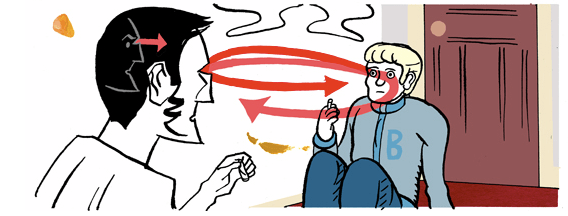
In the future Dash Shaw proposes in his graphic novel BodyWorld, the Second Civil War and rapid industrial growth have left most of America a concrete sprawl by 2060. An exception is Boney Borough, a (literal) green zone somewhere on the Atlantic seaboard. This small secluded town is a new Eden in an otherwise gray world. Enter Professor Paulie Panther, a fuck-up par excellence. He goes to Boney Borough as part of a freelance mission to find out about a new, strange plant he’s found there via the internet. Professor Panther, you see, is a botanist and poet, a would-be scientist who finds out about the psychopharmacological properties of plants by smoking them up in big fat joints (when he’s not too busy trying to commit suicide or stumbling around on one or more of the various drugs to which he’s addicted). Professor Panther is the perfect acerbic foil to the homogeneous folk of Boney Borough. He gets hot for teacher Jem Jewel, turns-on Peach Pearl, the small town girl who wants to go to the big city, and pisses off and confuses her dumb jock boyfriend Billy-Bob Borg. The alliterative names (along with Shaw’s sharp, cartoonish style) recall–and subvert–the classic all-Americanism of Archie comics. Professor Panther soon discovers that the mystery plant, when smoked, grants the user strange telepathic abilities–namely, users sense the “body-mind” of the bodies of others around them.
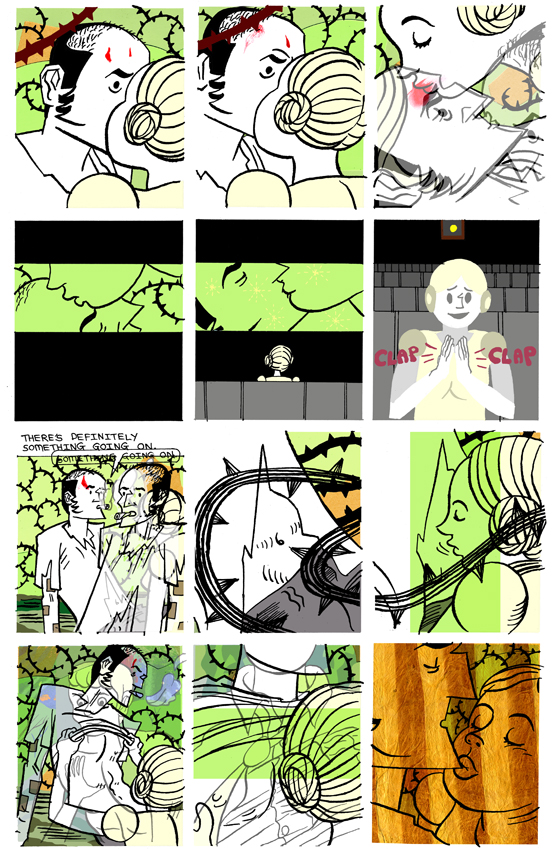
The plant’s telepathic effects allow Shaw to explore what happens within a literalized I-see-you-seeing-me-seeing-you-seeing-me (seeing-y0u-seeing-me . . .) structure. His bright Pop Art goes Cubist in psychedelic trip scenes, superimposing images to show a surreal conflation of not just the melding of two people’s pasts and presents, but those people’s perceptions of past and present. Very heady stuff–but seeing Shaw’s work is superior to my description, of course. Observe, as Panther sees Pearl seeing Panther seeing Pearl idealizing their attempt at romance:
BodyWorld is sardonically humorous in its psychoanalytic visions, guided in no small part by Professor Panther’s hilarious outsider perspective, but also tempered by Shaw’s larger project, a sci-fi satire of American exurbanist insularity. We wrote earlier this month about science fiction’s tendency to work within the dichotomy of wastelands and green zones, and Shaw’s work is no exception. His marvelous trick is to keep us within the green zone of Boney Borough the whole time and to make us identify with a waster, Panther. The greatest irony is that in this futurist vision, the zombies are the ones in the green zone.
Not everyone’s a conformist though. There are exceptions, of course, especially in the seedy Outer Rim where Panther takes up transient residence. We meet a psychotic latter-day Johnny Appleseed who certainly shares Panther’s weirdo proclivities. The episode is a marvelous spoof on the corny “origin stories” standard in Golden and Silver Age comics, with Shaw’s treatment more loving than mocking. To tell more about this weirdo might spoil the climax of Shaw’s graphic novel, and we don’t want to do that, of course, because you’re going to want to read it, aren’t you? Suffice to say that it’s part and parcel of Shaw’s program, a sweet and sour subversion of the 1950s comics and contemporary conformist groupthink politics. Shaw owes some debt to the neat precision, spacing, and rhythm of Chris Ware, as well as the haunting inks and sharp wit of Charles Burns but it would be a mistake to see this young talent as anything but original. Still, while we’re making comparisons: Richard Kelly could make a messy, sprawling treasure of a film out of BodyWorld.

 In his essay “Shakespeare in Bloom,” critic James Wood performs one of the strangest, most backhanded (and yet earnest) defenses I’ve ever read of Harold Bloom‘s aesthetic reaction to (what Bloom has called) “The School of Resentment” — deconstruction, Marxism, gender and queer theory, postcolonial theory, all that good stuff. Wood comes out strong, arguing, that in his prolific output, Bloom “has kidnapped the whole of the English literature and has been releasing his hostages, one by one, over a lifetime, on his own spirited terms.” Wood suggests that “this ceaselessness has produced some hurried, fantastical, and repetitive work,” before going on to throw around words like “garrulous” and “shallow.” Wood then takes Bloom to task over his famous (and improbable) claim that “Shakespeare invented us,” situating the claim against Bloom’s own most famous theory, the anxiety of influence. Wood says–
 As we bring up the term again, we should note that we consider it a bit pejorative and utterly reactionary, and, to borrow from (and perhaps misapply) Wood, shallow. Wood points out that “Deconstruction brings a generalized suspicion to bear on language and in particular on metaphor (or ‘rhetoric’), which it suspects of hiding something–namely, its own metaphoricity.” In short, literature always metaphorizes, and thus hides, some other impulse, one always politicized. Wood continues: “Political criticism, including cultural materialism, converts Freud’s analytical suspicions into political ones. . . . The poem is read as if it were covering something up, as if it were an alibi that is rather too fluent to be entirely trusted.” It must be interrogated to reveal its secret, the secret prejudices of its age. Wood continues, after a page or two–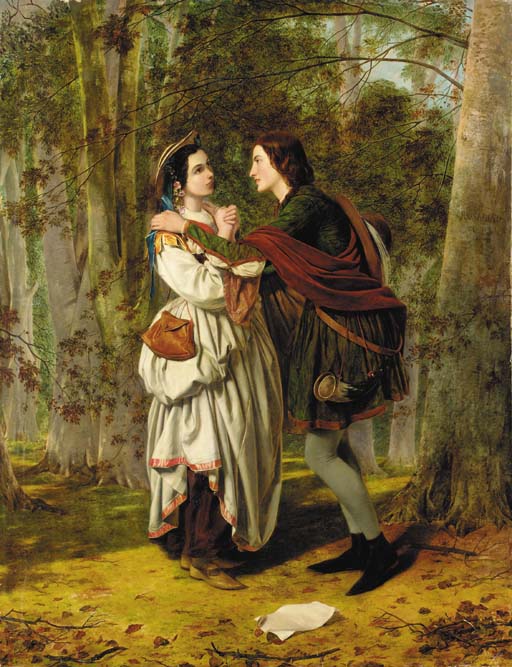

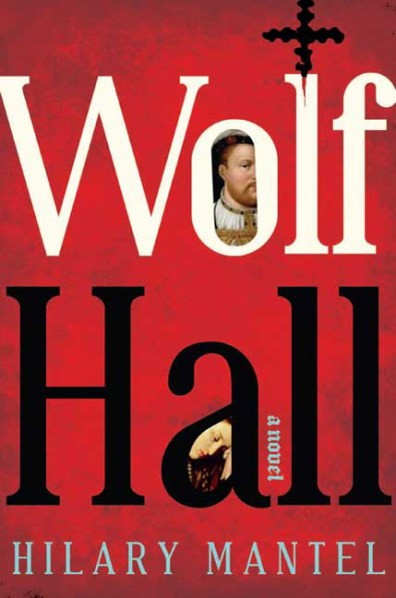 I’m coming to the end of Hilary Mantel’s brilliant treatment of the Tudor saga, Wolf Hall. Sign of a great book: when it’s finished, I will miss her characters, particularly her hero Thomas Cromwell, presented here as a self-made harbinger of the Renaissance, a complicated protagonist who was loyal to his benefactor Cardinal Wolsey even though he despised the abuses of the Church. Mantel’s Cromwell reminds us that the adjective “Machiavellian” need not be a pejorative, applied only to evil Iago or crooked Richard III. The Cromwell of Wolf Hall presages a more egalitarian–modern–extension of power. Cromwell here is not simply pragmatic (although he is pragmatic), he also has a purpose: he sees the coming changes of Europe, the rise of the mercantile class signaling economic power over monarchial authority. Yet he’s loyal to Henry VIII, and even the scheming Boleyns. “Arrange your face” is one of the book’s constant mantras; another is “Choose your prince.” Mantel’s Cromwell is intelligent and admirable; the sorrows of the loss of his wife and daughter tinge his life but do not dominate it; he can be cruel when the situation merits it but would rather not be. I doubt that many people wanted yet another telling of the Tudor drama–but aren’t we always looking for a great book? Wolf Hall demonstrates that it’s not the subject that matters but the quality of the writing. Highly recommended.
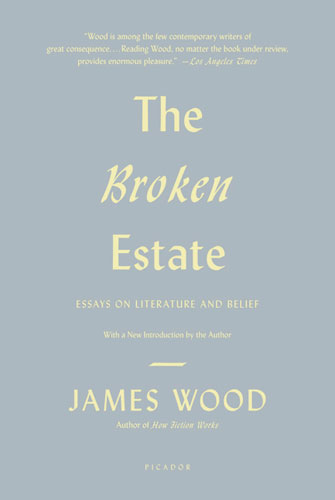 Cromwell’s greatest foil in Wolf Hall is Thomas More, who is also the subject of the first essay in James Wood’s collection The Broken Estate. I got my review copy in the mail late last week, so it was pure serendipity that I should read “Sir Thomas More: A Man for One Season” after a full day of listening to Wolf Hall (did I neglect to mention that I listened to the audio book? Sorry). Wood is harsher on More than Mantel; whereas she lets us despise him within the logic and framework of the Tudor court, Wood aims to find a contemporary secular standard from which to judge him. He finds license to do so through the work of John Stuart Mill, citing the influential essay On Liberty. Wood writes:
 Loved loved loved Nick McDonell’s collection of reportage on the US Army in Iraq, The End of Major Combat Operations. It’s not the sort of thing that I’d normally pick up, so I’m glad that it showed up as half of
  Deirdre Madden’s novel Molly Fox’s Birthday takes place over the course of just one summer day in Dublin, Ireland. Perhaps that sounds a bit familiar, but Madden can’t be accused of trying to riff off Ulysses–even if her book is funny and erudite. Molly Fox, a famous stage actor, is abroad for a few months; in the interim her playwright friend, the unnamed narrator, takes residence in her home. The book opens with a strange dream sequence, full of joy and mystery, which ushers in a host of questions about the intertwined past of the narrator, Molly, and a TV art critic named Andrew. Madden’s book is a sustained investigation into how our friendships endure–and change–over the course of all the masks we wear. Molly Fox’s Birthday, a



 Sylvia Beach was the nexus point for Modernist and ex-pat literature for much of the first half of the twentieth century, running the Left Bank bookstore Shakespeare & Company until the Nazi occupation of Paris in 1941. She was the first publisher of Joyce’s Ulysses, she translated Paul Valéry into English, and was close friends to a good many great writers, including William Carlos Williams, Ezra Pound, H.D., and Ernest Hemingway. In The Letters of Sylvia Beach, editor Keri Walsh compiles many of Beach’s letters from 1901 to just before her death in 1962. Framed by a concise biographical introduction and a useful glossary of correspondents, Letters reveals private insights into a fascinating literary period. There’s a sweetness to Beach’s letters, whether she’s inviting the Fitzgeralds to come to a dinner party or asking Richard Wright (“Dick”) how much he thinks a fair price for a record player is. The Letters of Sylvia Beach is out now from
 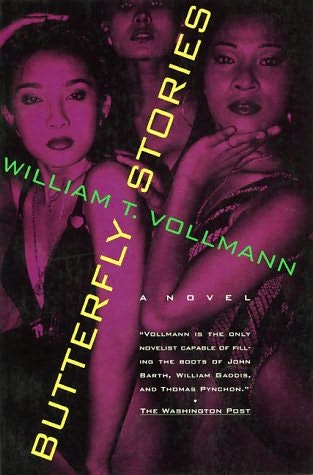 I’m a couple of chapters into William T. Vollmann’s 1993 novel Butterfly Stories, one of his (three? four? Dude’s prolific) books about prostitution. The bullied butterfly grows up to be a boy who wants to be a journalist and then a journalist/inept sex tourist in southeast Asia. Good stuff. Here’s a mordantly elegant passage:
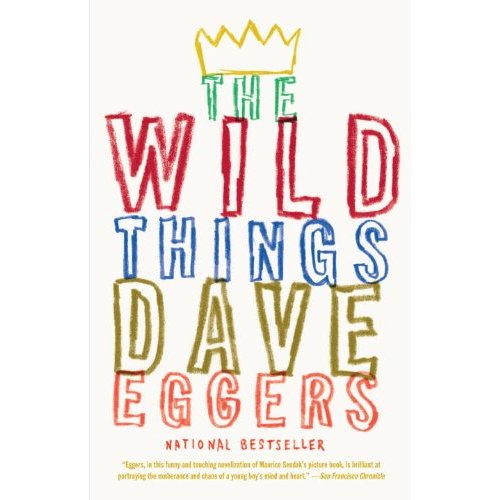 Been working through my reader’s copy of Dave Eggers’s The Wild Things, new in trade paperback from Vintage. I’m having a hard time envisioning a kind of review of the book that escapes the context of the book; that it’s a novelization of a movie script of a Maurice Sendak book of maybe a few dozen words. I loved that book growing up, so no reason that it should be adapted into a feature film, but hoped for the best due to Eggers’s involvement and the fact that the incomparable Spike Jonze was at the rudder. Or helm. Or whatever naval metaphor you wish. Anyway, I absolutely hated the movie–it was mostly melancholy and downright depressing at times. Whereas Sendak’s book channels the joys of transgressive energy while reiterating the need for stable familial order, Jonze’s movie was all sorrow and loss, the hangover of youth, each ecstasy overshadowed in darkness. Too much yin, not enough yang. Anyway. I’ll try to give the book its proper, fair due on its own terms without all that baggage. Full review forthcoming.
 Biblioklept