Tree of Smoke — Denis Johnson

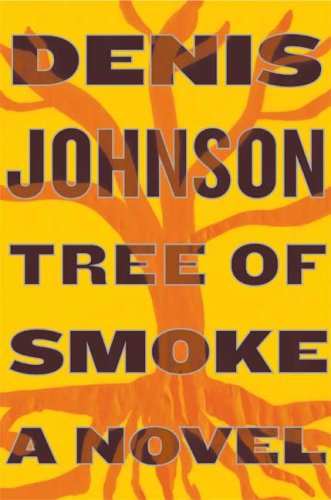
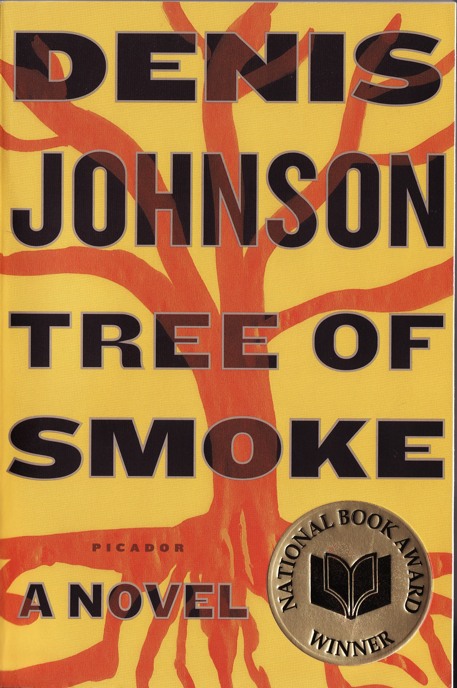
One year after it topped book critics’ best-of 2007 lists everywhere (including ours), Denis Johnson’s Vietnam War epic Tree of Smoke is finally available in a handsome trade-paperback. Picador’s edition retains the original orange and yellow cover, only now affixed with the proud blazon “National Book Award Winner.” However, that Tree of Smoke won this prestigious award no doubt ruffled a few feathers. It still remains an urgently divisive work.

Although plenty of critics and readers loved the novel, including The New York Times‘s Jim Lewis (who cautiously called it “something like a masterpiece”) and Michiko Kakutani, it has had more than its fair share of haters. Consider B.R. Myers’s downright mean review, “A Bright Shining Lie” in The Atlantic. Here, Myers displays the worst kind of vitriol. He’s the critic who feels the need not only to trumpet his hatred of the work he’s assessing, but also to lambaste the dignity, taste, and intellect of anyone who would disagree with him. Myers specifically attacks Johnson’s rhetorical style, his diction and syntax, and concludes that those idiots who would praise such inane, base, and clichéd language (idiots like me, that is) are clearly the cause of all current social and political problems and “have no right to complain about incoherent government.” Uh, sure. Myers’s baseless zealotry aside, it’s worth looking at the popular reception of Tree of Smoke, and what better place to do so than scouring Amazon reviews, right?

A cynic might say that Amazon reviews are the bottom-barrel of literary criticism, yet it’s still worth considering the almost perfectly mathematical split between 5- and 4-starred reviews of the book and 1- and 2-starred reviews (although none of the negative reviews I read on Amazon suggested that praising Johnson’s novel disenfranchised one from political opinions). Put simply, most people tend to either hate or love Tree of Smoke, which, I believe, is a sign of great art. And, were I inclined to inflate my rhetoric to a grandiose level like Myers, I might here wax philosophical about opinion, perspective, history, and the value of great art to ignite debate and discussion within the marketplace of ideas. However, I don’t think a book review is necessarily the best venue to make grand sweeping statements. At best, such writing presents a shallow or hollow endorsement of a collective truth (e.g. “Everyone assesses literature from their own perspective and therefore everyone values books differently”); at worst–in the case of Myers’s grotesque review–we get a pompous, overblown, self-important declaration (here, praising Tree of Smoke = losing the ability to authoritatively comment on society or politics) that can only be supported within the limited rhetorical bounds created the sophist has constructed (i.e. Myers’s review). But I’ve made a long digression, and, worse, I’ve failed to really discuss the book at all.

My initial review of Tree of Smoke last year was really a review of Will Patton’s masterful audio-recording of the novel (I was reading Ulysses for graduate school at the time and simply did not have the time to read both). I loved the experience; Patton did a great job, and I found myself wholly addicted to the narrative. When the advance copy of Tree showed up in the mail earlier this week, I immediately re-read the coda of the book in a single sitting. I would say the measure of a great narrative is not its core, its climax, or its beginning, but how well the conclusion is able to deliver the promises established throughout the book. Tree of Smoke delivers, and its ending continues to haunt the reader well after the book has been set aside. Readers like Myers may not get the payoff–he claims that “Johnson’s failure to understand [his character’s] faith is such that when he uses it to end the novel on an uplifting note, the reader feels nothing.” However, I hardly think that a watery Hallmark-word like “uplifting” properly connotes the weight, pathos, and sheer pain that Johnson conveys and addresses at the end of the book (Myers’s shallow diagnosis leads me to believe he merely skimmed the novel). Ethics of literary criticism aside, the real triumph of Tree of Smoke is simply that Johnson manages to comment in a new way on a subject that, by 2007, had been done to death. Who knew that we needed another story about the Vietnam War? Denis Johnson, apparently. Read the book for yourself. Very highly recommended.

Tree of Smoke is available in paperback from Picador on 2 September, 2008.
Moral Relativism — Steven Lukes

Moral relativism is the belief that ideals of right and wrong and good and bad are contextually determined by one’s local culture, as opposed to a theory of morality that holds that good and bad exist as absolute, metaphysical values existing cross-culturally, values intrinsic to one’s humanness. At the same time, individuals, even those (sometimes especially those) who see moral relativism as the overwhelmingly rational, sensical position, nonetheless are inextricably tied to their own sense of right and wrong, and this sense often leads them into a position of judgment–and perhaps action–against, over, and/or in reaction to the perceived wrongs of other cultures and societies.

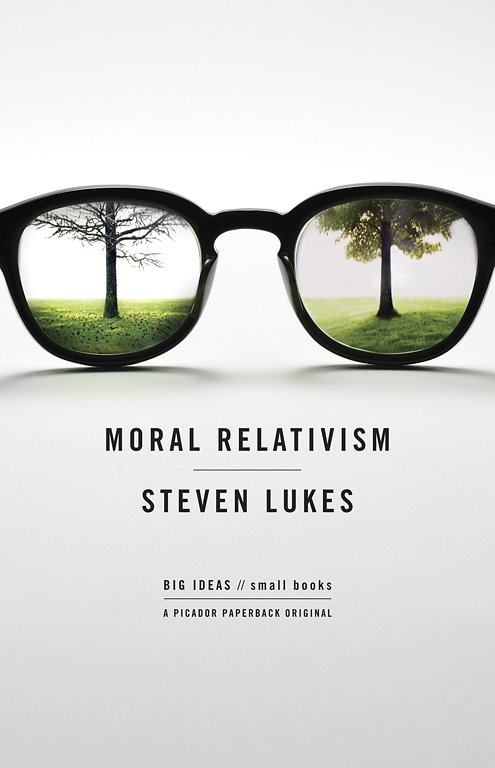
In his new book Moral Relativism, NYU sociology professor Steven Lukes employs an interdisciplinary approach to tackle one of the biggest sticking points of contemporary thought. Using a variety of methods including philosophy, anthropology, history, and literature, Lukes addresses the fundamental conflict of moral relativism: that what’s right and good in one’s own culture may not be right and good in another’s culture, yet a will remains to believe in ideals of universal human rights. Lukes uses a number of timely concrete examples, including female genital circumcision, Islamic fundamentalism, and mass immigration, to assess the costs and payoffs of holding a view that says that no absolute morality exists. Perhaps the most fascinating part of Moral Relativism is Lukes’s negotiation of Western (or globally Northern, as he saliently points out) human rights actions as an extension of colonialism, with the one-time colonists imposing their values–again–upon the one-time colonized.

Lukes concludes that “the question Who are we to judge other cultures? is a bad question.” Arguing that the “postcolonial and multicultural contexts of our time do not require us to see the discourse and practice of human rights as ethnocentric,” Lukes takes up a position–well-argued–that a moral fundamentalist might claim is simply a liberal humanist wanting to have his cake and eat it too. Which, of course, is the problem with the book. It’s a fantastic argument for moral relativism, one that points out that no one–no one–is absolutely relativist, and that, in fact, being a moral relativist entails recognizing that within cultures certain perceived absolutes exist. The idea that right and wrong are relative doesn’t mean that right and wrong are arbitrary or don’t exist–it simply means that ideals of right and wrong have to be reconstituted within different systems of social and cultural order. Yet Lukes’s book isn’t going to convince the types that need convincing. Still, those of us who think that moral relativism is simple common sense will find plenty of concrete, contemporary, real world ammunition here in case we feel like arguing with a–gasp–moral fundamentalist.

Moral Relativism, available now, is part of the new BIG IDEAS // small books series from Picador Books.

In the Land of No Right Angles — Daphne Beal

In the Land of No Right Angles tells the story of Alex, an American college student backpacking in Nepal for a year. Alex’s overseas adventure becomes complicated when she meets fellow American Will. Will prompts Alex to help bring a poor Nepalese girl named Maya to the capital city of Kathmandu, and the three move in to an apartment together. Awkwardness ensues, including a failed threesome, a bad drug trip, and some major cultural misunderstandings. Alex leaves on a sour note, returning eight years later as a professional photojournalist to expose the horrors of human trafficking, only to find Maya embroiled in Bombay’s seedy sex trade.

The novel reads at a rapid clip, propelled by lots of dialog, and Beal certainly shows a complex knowledge of Nepali culture. Still, there’s something pervasively shallow, even troubling about Alex’s interactions with and reactions to her experience with this alien culture that the novel doesn’t quite resolve. The reader is meant to identify with Alex, the privileged American on her adventure to the exotic East. At one point, Alex states, “I wanted to come home different from what I’d been–bolder, wiser, happier.” This desire to find one’s self far away from home is nothing uncommon, of course, yet Alex’s–and Will’s–professed altruism toward their subject, poor little Maya, ultimately comes off as paternalistic and demeaning, culminating in the older Alex’s quest to “save” Maya. It’s hard to feel the empathy or sympathy that Beal wishes to evoke for Alex’s dilemma: in spite of all her questing, she still falls prey to the illusion of her own power as an educated Westerner to control the outcomes of alien others. To take a cue from Edward Said’s work revealing Orientalism in Western thinking, Alex’s East–and the people in it–exist mostly to reify and stabilize her own identity, give her her the adventure she needs to “come home different” with plenty of great stories to share.

Orientalist critique aside, Alex does have a pretty good story to tell. Beal’s descriptions are vivid and the novel has the compressed vitality of a good memoir coupled with a tone of immediacy that makes it easy and enjoyable to read. In the Land of No Right Angles will no doubt end up in more than a few book clubs this fall, and it’s certainly your smarter than average beach read–and there’s still plenty of summer left.

In the Land of No Right Angles is available August 12th from Anchor Books.

Violence — Slavoj Žižek

Slavoj Žižek describes Violence as “six sideways glances” examining how our preoccupation with subjective violence (that is, the personal, material violence that we can see so easily in crime, racism, etc.) masks and occludes our understanding of the systemic and symbolic violence that underwrites our political, economic, and cultural hierarchies. Žižek believes that a dispassionate “step back enables us to identify a violence that sustains our very efforts to fight violence and promote tolerance,” and that a rampant “pseudo-urgency” to act instead of think currently (detrimentally) infects liberal humanitarian efforts to help others. This is where the fun comes in. Žižek delights here in pointing out all the ways in which we fool ourselves, all the ways in which we believe we’ve gained some kind of moral edge through our beliefs and actions.

I use the words “fun” and “delight” above for a reason: Violence is fun and a delight to read. Žižek employs a rapid, discursive method, pulling examples from contemporary politics, psychoanalysis, films, poetry, history, jokes, famous apocryphal anecdotes, and just about every other source you can think of to illustrate his points. And while it would be disingenuous to suggest that it doesn’t help to have some working knowledge of the philosophical tradition and counter-traditions to best appreciate Violence, Žižek writes for a larger audience than the academy. Yet, even when he’s quoting Elton John on religion or performing a Nietzschean reading of Children of Men, Žižek’s dalliances with pop culture always occur within the gravest of backdrops. Within each of Violence‘s six chapters, there’s a profound concern for not only the Big Questions but also the big events: Žižek frequently returns to the Iraq War, the 9/11 attacks, and the Israeli-Palestinian conflict as major points of consideration. This concern for contemporary events, and the materiality of contemporary events, is particularly refreshing in a work of contemporary philosophy. Undoubtedly some will pigeonhole Žižek in the deconstructionist-psychoanalytical-post-modernist camp (as if it were an insult, of course)–he clearly has a Marxist streak and a penchant for Lacanian terminology. Yet, unlike many of the writers of this philosophical counter-tradition, Žižek writes in a very clear, lucid manner. There’s also a great sense of humor here, as well as any number of beautiful articulations, like this description of the “dignity and courage” of atheism:

[A]theists strive to formulate the message of joy which comes not from escaping reality, but from accepting it and creatively finding one’s place in it. What makes this materialist tradition unique is the way it combines the humble awareness that we are not masters of the universe, but just a part of a much larger whole exposed to contingent twists of fate, with a readiness to accept the heavy burden of responsibility for what we make out of our lives. With the threat of unpredictable catastrophe looming from all sides, isn’t this an attitude needed more than ever in our own times?

I’m inclined to answer, “Yes.” Highly recommended.

Violence, part of the new BIG IDEAS // small books series from Picador Books, is available August 1st.

Chemical Chords — Stereolab

When “Valley Hi!” pops up roughly half way through Chemical Chords, Stereolab’s ninth studio album, the realization sinks in that on just about any new group’s new album the song would be a great achievement, a perfectly constructed pop song, fun, bouncy, a little sly even, with sexy lead vocals, effervescent harmonies, and tight but lush instrumentation. However, wedged into Stereolab’s nearly two-decade-long oeuvre, the song barely stands out, and that’s the problem. The band consistently delivers material like this, to the point that it all kinda sounds the same–a charge that’s been leveled at them by critics and fans alike for a few years now, starting more or less with 1999’s Cobra and Phases Group Play Voltage in the Milky Night, a record that some (maybe many) thought failed to live up to the radical revisionist pop tendencies of 1996’s Emperor Tomato Ketchup (it’s hard to top a perfect album, folks!) or the digital experiments of 1997’s Dots and Loops (my least favorite Stereolab album; sounds like marbles rolling on ice). I happen to like Cobra a lot: it’s warm (and literally fuzzy) and masterfully played–and kinda anonymous, a trend that Stereolab continues with Chemical Chords.

From the outset of the new album, Stereolab establishes a metronomic motortik pop vibe from which they rarely deviate. Opener “Neon Beanbag” flows into first single “Three Women” without much to differentiate the two besides a two second gap and a key change, and the third track, “One Finger Symphony,” only stands out due to its throwaway brevity. It isn’t until Sean O’Hagan’s slinky strings announce the title track that the album grabs onto something new. “Chemical Chords” approaches a ’70s blaxploitation vibe–think Curtis Mayfield or Bobby Womack here–but ends up being (you guessed it) just another Stereolab song, beautifully polished and meticulously executed with little or no risk to band or audience. The next track, “The Ecstatic Static” slides right into the same groove, and it becomes apparent that Stereolab have released yet another perfect ambient soundtrack for any polite social gathering. The rest of the album follows this mode of flawless and ultimately forgettable songwriting.

There are moments of exception, of course, but only moments. The countryfied swagger that initiates the penultimate track, “Daisy Click Clack,” is pretty great, if only for simply hitting a different rhythm and sound, and the song’s lyrics are about making music, which is always cool. It’s on “Pop Molecule (Molecular Pop 1),” where Stereolab employ backmasked drones and triumphant chugging guitars that recall the glory days of tracks like “Crest,” from ’93’s Transient Random-Noise Bursts with Announcements (or anything off of ’92’s dreampop singles collection, Switched On), that the band finally gets its hands a little dirty–with great results. Too bad they only play it out for about two minutes; the old groop would’ve droned those two chords for at least six–the listener doesn’t ever get a chance to get hypnotized.

It seems like I’m bashing the album, but I’m not. I love Stereolab. Really. And Chemical Chords is pretty good — it will hang out in my stereo for a month, maybe two, and then I’ll forget about it. Ultimately, it’s too polished, too precise, and too meticulous to make any long-term impact. We know Stereolab are fantastic arrangers and musicians, and their taste is impeccable, but when bands fail to take risks, the music gets stale.

Chemical Chords is available from 4AD Records in the US on August 19th.

The Rough Guide to Conspiracy Theories

There’s something fun-but-not-too-fun about James McConnachie and Robin Tudge’s The Rough Guide to Conspiracy Theories, a lovely little coffee-table encyclopedia that investigates everything from the strange death of playwright Christopher Marlowe to the disputed Apollo 11 moon landings to the sinister happenings at Bohemian Grove to the 9/11 attacks. The book is dubious and skeptical in all the right places, yet never snotty or wholly dismissive of the marginalized ideas it presents. Also, none of the lurid tabloid earnestness that marks the work of lifers like Alex Jones or David Icke can be found here (Icke does get his own five paragraph section, however). For the most part, the 450 or so pages of Conspiracy Theories are evenhanded, concise, and well-researched. A bibliography follows each section, and at the end of the book there’s a “Conspiracy Archive” suggesting books, websites, and films for those who can’t get enough paranoia. Conspiracy Theory devotes a good number of pages to recent events like Hurricane Katrina and the Iraq War, a choice that will perhaps date the book eventually–but of course, by that time we’ll need a new edition to record all the nefarious invisible acts committed by the Bilderberg Group, NWO, Masons, and, uh, reptilian beings posing as European royalty. Good stuff.

The updated U.S. edition of The Rough Guide to Conspiracy Theories is available this fall from Rough Guides.

Underworld — Don DeLillo

Don DeLillo’s Underworld explores American culture and psyche throughout–and immediately after–the Cold War era. The book centers loosely on waste management exec Nick Shay, but diverges in constant achronological loops, employing dozens of different voices and viewpoints in order to handle a variety of themes and subjects that are, frankly, too massive to get a grip on. At all times though, Underworld seems aware of this inability to document its subject’s vastness, but, like Ishmael in Moby-Dick who attempts to systemize the unknowable whales, the characters in Underworld nevertheless try and try again to find order and meaning in a paranoid and increasingly disconnected world. The real center of the book is a baseball, the ball pitched by Brooklyn Dodger Ralph Branca to New York Giant Bobby Thomson, who won the game in a hit known as “The Shot Heard ‘Round the World.” However, this ball, this center, is repeatedly transferred, deferred, shifted, and even characters who claim to own the “real” ball understand that the validity or “realness” of the home run ball is always under question. DeLillo seems to suggest that finding fixed, stable meaning is an illusion; the best that people can hope for is to find solace in their family and friends in open, honest relationships.

By the time DeLillo had published Underworld in 1997, he had already established himself as a canonized saint of the American postmodern literary tradition, yet Underworld, in its massive size and scope (it weighs in at over 800 pages) seems primed to be the author’s “big book,” destined to fit neatly in the new canon of large and long American postmodern novels next to John Barth’s The Sot-Weed Factor, Robert Coover’s The Public Burning, Thomas Pynchon’s Gravity’s Rainbow, and David Foster Wallace’s Infinite Jest. Underworld utilizes nearly every postmodernist trope, including a nonlinear plot, myriad, discursive voices, and a willingness to engage historical figures. The novel also manages to contain a bulk of themes and devices DeLillo has employed throughout his body of work: find here the paranoid alienation of The Names, the shadow of assassination-as-spectacle from Libra, the intersection of art, violence, economics, and politics of Mao II, and the exploration of the new American religion, consumerism, that underpinned White Noise.

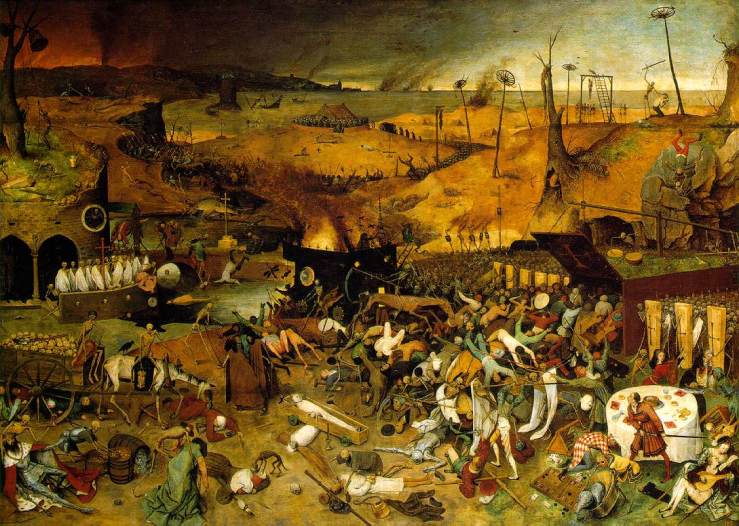
Ultimately, all of Underworld‘s themes–garbage, art, war, insulation, paranoia, drugs, death, secrets, baseball, identity, etc.–threaten to crush the narrative under their sheer weight. Unlike Pynchon, Barth, Coover, and DFW, DeLillo is rarely playful or even fun; most of the humor here serves to alienate rather than connect the reader to the characters. The book is masterfully written, and any number of the little vignettes, like the sad life of the Texas Highway Killer, or the Space-Age compartmentalization of a 1950s suburban family, expertly delineate DeLillo’s handling of concepts and motifs. However, the book’s prologue, “The Triumph of Death” (the title alludes to Bruegel’s painting), an account of the 1951 Dodgers-Giants pennant game is easily the most passionate, intense, and engaging moment of the novel. This assessment isn’t meant to suggest that the remaining 700 pages or so of Underworld aren’t as rewarding, they just aren’t as fun. Underworld is probably a work of genius, and the sum of its many, many parts do add up to more than the corpus, only that sum will probably leave a lot of readers feeling cold.

Brundibar — Maurice Sendak

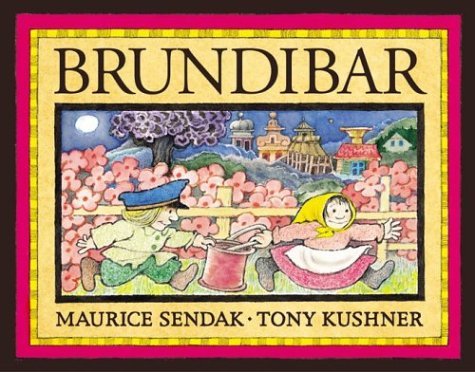
Adapted by playwright/screenwriter Tony Kushner and illustrated by Maurice Sendak, Brundibar retells Hans Krása’s children’s opera about a brother and sister who go on an adventure to get their ailing mother some fresh milk. The penniless pair decides to sing in order to earn milk money, but the cruel organ grinder Brundibar chases them away. However, they triumph with the help of a sparrow, a cat, a dog, and a cadre of helpful children.

The original opera was first performed by the children-inmates of a Nazi concentration camp in occupied Czechoslovakia. The symbolic overtones of the story are pretty straightforward, and Sendak emphasizes the point, marking his Brundibar with a Hitlerish mustache and a ridiculous Napoleon Bonaparte hat. Political symbolism aside, Brundibar is simply a great book, full of little songs, beautiful art, and a unique narrative style in which individual characters get their own speech bubbles and even street signs tell a story. This isn’t my one-year old daughter’s favorite book–yet–but it’s certainly one of my top picks from her little library. Good stuff.

Be Kind Rewind

Sweet and silly, Be Kind Rewind, Michel Gondry’s fourth film (fifth if you count his 2005 documentary, Block Party) recounts the adventures of Mike (Mos Def) and his pal Jerry (Jack Black) as they recreate films from memory. When Mr. Fletcher, owner of the Be Kind Rewind video store, goes away for a week to a Fats Waller convention, he leaves Mike in charge of the store. Unfortunately, after a bizarre accident, Jerry becomes magnetized and consequently demagnetizes the store’s entire collection of VHS tapes (no DVDs here, folks). When number-one customer Miss Falewicz (Mia Farrow) asks for Ghostbusters, the pair are forced to create their own version from memory (along with help from local laundress Alma (Melonie Diaz)). Miss Falewicz’s nephew and his friends see the bizarre results and must have more, hence the birth of “sweding“–the process of remaking film favorites. The neighborhood citizens go crazy for the sweded films, clamoring for their own favorites to be made. By the end of the film, the entire neighborhood has moved beyond copying other people’s movies. Instead, they make their own film, the (kinda invented) biography of Fats Waller.

Be Kind Rewind is full of goofy fun laughs, and despite its lighthearted tone it never half-asses–or overplays–handling its dominant themes of creativity and community. Jack Black never overdoes it as Jerry, the zany paranoiac, and Mos Def is fantastic as the slightly anxious, slightly slow Mike (his version of Chris Tucker during the sweding of Rush Hour 2 is worth the price of admission alone). Danny Glover plays Mr. Fletcher poignantly, and the character comes to serve as a kind of elegiac totem for the death of highly-specialized local video shops with knowledgeable, cinephile-employees. Be Kind Rewind is a funny, giving film, and never self-indulgent; it moves the viewer without a trace of schmalz. Plus, it never drags. Highly recommended.

Be Kind Rewind is out on DVD today.

Dad’s Little Helper: Malt Liquor for Grownups

So my wife gave me Rogue’s Dad’s Little Helper Malt Liquor for Father’s Day. The back of the bottle tells the history of Father’s Day, which is fortunate, because I love reading copy with my food and drink. Here is the history:

After the death of his wife, Henry Jackson Smart was left to raise 6 young children alone. His courage, love, selflessness and dedication inspired his daughter, Sonora Smart Dodd, to organize the first Fathers Day on June 19th, 1910. In 1924 President Calvin Coolidge proclaimed the third Sunday in June as Fathers Day. President Nixon, in 1972, established it as a permanent day of national observance.

Nixon! What a softy. Anyway. I’m going to drink this now and write about the experience in real time.

Malt liquor is traditionally served in its selfsame bottle or can, with the special accoutrement of a brown paper bag. However, out of respect for Rogue Brews–they make great beers–I’ll pour it out into a nice glass. Here goes.

7:56pm: Open the bottle. The nose is reminiscent of, uh, like a quart of Mickey’s (the “gentleman’s malt”). Not a good sign.

7:57pm: Pour. The color is gold, of course, a little darker and more opaque than a standard American lager.

7:58pm: Taste. First impression: This isn’t Olde English, but it’s hardly Rogue’s Juniper Pale Ale.

7:59pm: Oh shit! The Simpsons is going to come on (yeah, I still like The Simpsons).

8:00pm: I missed the couch gag. Hang on, a trailer for Hellboy 2. This looks pretty good. But back to the malt.

8:03pm: The beer has a good taste in the mouth, but it has that undeniable corn-burn aftertaste, which is kinda unpleasant, and kinda makes you want to keep drinking the beer. Homer kills his father–but it’s just a “wonderful dream.” Dark.

8:08pm: I haven’t had malt liquor in a long time, actually, probably like seven years. When I was a college student I used to scrape together seventy cents and go to the gas station next door and get myself a quart of Hurricane (to more cosmopolitan readers: in Florida we don’t have beverages in the forty ounce variety, popularly called “forties” –we have quarts. Because that extra eight ounces will, like, really tear you up). The trick with Hurricane–or really any quart, especially malt liquor, is to drink it really, really fast, before it gets warm. When it gets warm, it’s really, really bad. Also, the last portion is no good to drink, but may be respectfully tipped out in memory to one’s fallen comrades (the “homies,” if you will). Lisa said “southern-fried succubus.” Excellent.

8:17pm: A little internet research reveals that Anheuser-Busch still makes Hurricane. Also, Hurricane received a 2.125 rating (5 is the best) at BeerPal. What kind of a loser takes the time to review malt liquor online? Dad’s Little Helper got a 3.0. Here’s a quick control: My go-to beer of choice, Sierra Nevada IPA earned a 3.355, and Budweiser, the self-proclaimed “King of Beers” earned a 1.866.

8:26pm: The Dixie Chicks, Colonel Homer…and Major Marge! Seriously, the show is way past due for being taken out back and gently shot between the eyes. Seriously.

8:30pm: King of the Hill. This show is still good. And “What Would Hank Hill Do?” is a personal motto of mine.

8:35pm: This malt liquor is only 22 ounces, not 34, but it’s never taken me this long to drink one before. I’m kinda old, I guess, or I just don’t drink that much anymore.

8:36pm: My wife appears from the baby’s room. She has put the baby to sleep (that’s not a metaphor. We’re excellent parents). She asks about the malt liquor. “It’s a malt liquor,” I say. “It’s pretty good.” She asks me why I’m smiling. I think the brew is working some magic on me.

8:40pm: Micturition imminent.

8:43pm: God, I hate Peggy Hill.

8:45pm: My wife informs me that this Rogue beverage costs the same as other Rogue beverages (like five or six dollars). So, there. There’s some info in the review.

8:46pm: I haven’t talked about the label. Who is this guy? He’s on a couple of the Rogue bottles, but it strikes me now that he looks like Tom Selleck. Or, really like Magnum (P.I.). Magnum in three ties.

8:50pm: It occurs to me now that my best friend gave me a subscription to a microbrew of the month club, where I’ll receive several microbrewed beers in the mail every other month. So, I could do reviews like these, you know bimonthly (I suppose there’s nothing to stop me from doing them all the time–still, there needs to be an occasion. I’m kinda rambling now).

8:56pm: Okay–so, as it warms, Dad’s Little Helper conforms to standard malt liquor rules–but with greater resistance. There’s a possibility of this tasting like ass pretty soon, though, I fear. I need to pony up and get down to brass tacks.

9:02pm: Final verdict: This beer will give you a buzz, but so will Hurricane, paint thinner, and standing up too fast. A lovely Father’s Day gift–who wouldn’t want malt liquor?–but not on par with Rogue’s other brews.

At Mount Zoomer

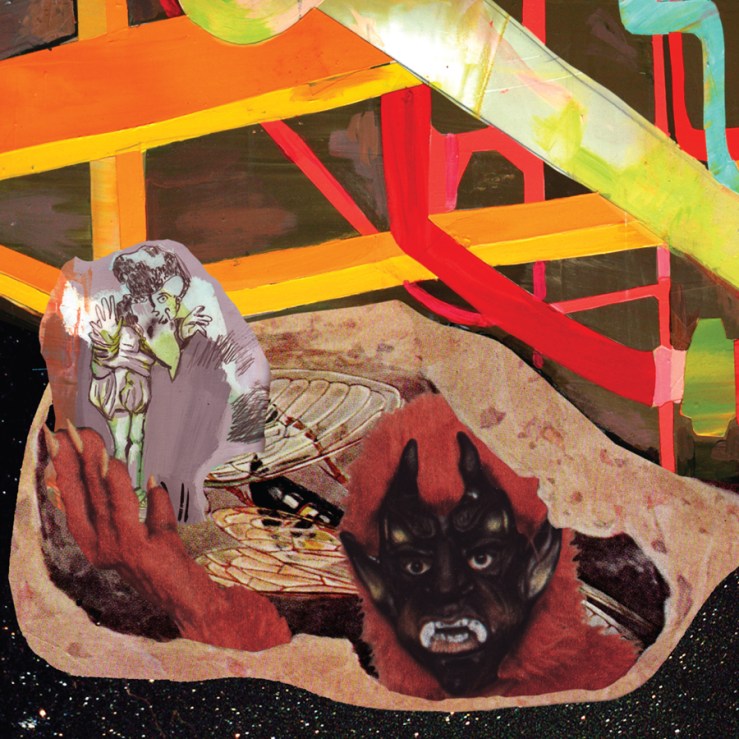
The first five seconds of “Soldier’s Grin,” the first track on At Mount Zoomer, Wolf Parade’s second LP, consist of a spindly synth and guitar duet that announces the program of the rest of the album: tight, lyrical, melodic prog-punk-pop that gets plenty of mileage out of old keyboards and crunchy guitars. This welding of synth with indie-rock guitar reflects the split songwriting duties of Wolf Parade. Like its predecessor, 2005’s Apologies to the Queen Mary, the new record is split almost evenly into songs written and sung by keyboardist Spencer Krug or guitarist Dan Boeckner. The slight stylistic differences between Boeckner’s and Krug’s songs are unified on Zoomer by drummer Arlen Thompson’s big, warm production. Songs like “Call it a Ritual” and “Bang Your Drum” propel on tense, jumpy punk rhythms before letting loose into brief moments of pop satisfaction–a formula that worked so well for the band on Queen Mary. The best moments of the record come though when they try something new. On longer songs like “Fine Young Cannibals” and epic album-closer “Kissing the Beehive” Wolf Parade play with trickier melodies and leave more open space in their music, letting the rhythms and melodies coalesce into tight, beautiful pockets that aren’t overwhelmed by big synths or vocal growls. That’s not to say there isn’t something sublime about thicker numbers like “The Grey Estates,” a keyboard-driven ditty that recalls The Cars, or “Language City,” a song that channels (if not flat out rips off) The Moody Blues’s “Your Wildest Dreams.” Still, there are a few missteps here: “California Dreamer” aims for motortik tension but falls instead into annoying territory, and the first half of Krug’s “An Animal in Your Care” is the worst in indulgent glam-emo. However, “Animal” picks up in its second half, evolving into a crisp stomping guitar and piano workout–but on an album with only nine songs, each one should be perfect. Ultimately, Zoomer won’t disappoint its intended audience. Wolf Parade make the best sort of indie rock comfort food, the kind that recalls the classic bands of the genre (Pixies, Sonic Youth) while also hearkening to the earlier days of college rock (Talking Heads, Television). Really, nothing here pushes boundaries–Wolf Parade’s biggest trick is making you forget that what you’re listening to is really as safe as milk.

At Mount Zoomer will be released June 17 from Sub Pop records.

To the Castle and Back — Vaclav Havel

Václav Havel’s latest memoir To the Castle and Back plays as a strange series of paradoxes. It’s elliptical and fragmentary yet thorough and exhaustive; it’s personal and introspective yet political and social; it presents a total picture of Czechoslovakia’s 1989 Velvet Revolution and the subsequent dissolution of Czechoslovakia into the Czech Republic and Slovakia, yet it repeatedly admits to being unable to convey the full story. The narrative of the Velvet Revolution is fascinating even for those who aren’t political junkies. Make no mistake though–To the Castle in Back will be most enjoyed by people who can’t get enough of world politics. The book is larded with dry political details, and Havel the poet and playwright, Havel Lou Reed’s buddy, Havel the Zappa enthusiast–in short Havel as hipster–is largely absent from this text. Instead, we get journalistic accounts of Havel as politician and speech maker interwoven with Havel’s own commentary and even interoffice memos. At times the level of detail is almost excruciating, but Havel seems to understand this. His preface to the book actually serves as the best review (and guide) possible:

If you occasionally feel like putting the book aside because it seems to skirt some of the world-shaking events that I lived through, or to burrow too deeply into exclusively Czech or Czechoslovak matters, I urge you to skip ahead. It’s easy to do because the book is divided not only into chapters but into short sequences, separated by horizontal lines.

Late in the memoir, Havel writes that for all of his life, he’d “longed to write a brutally honest diary, something in the style of Henry Miller, Charles Bukoswki, [or] Anaïs Nin.” And while To the Castle and Back hardly approaches the rough and scandalous material of that mid-century triad, it does contain something just as honest perhaps: an unglamorous, unromanticized accounting of the past told at all times with the caveat that this story is not history writ large, but rather the perspective of someone who lived through it and acted upon it. Honest, moving, often humorous, and, yes, occasionally dull, To the Castle and Back is probably not a book for everyone, but for those interested in the man and the events of the Velvet Revolution it makes a competent introduction.

Tearing Down the Wall of Sound: The Rise and Fall of Phil Spector

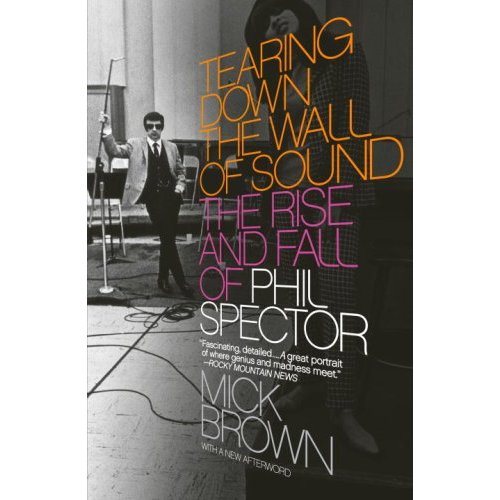
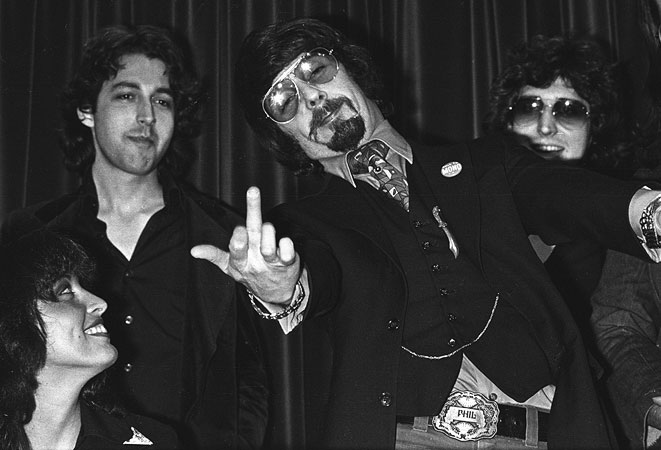
Even if Phil Spector hadn’t given us the recent spectacle of an outlandish murder trial, Mick Brown’s Spector biography Tearing Down the Wall of Sound would still make for a gripping read. Brown’s biography, simply put, is the definitive Spector book. At nearly 500 pages (including endnotes and an extensive bibliography), Tearing consistently treads the thin line between exhaustive and exhausting, but the source material–Spector’s insane life–is simply too compelling to ever earn a yawn. Just when it begins to feel that Brown has given us too much detail, we’re rewarded with yet another tale of Spector’s lunatic shenanigans. And whether he’s pulling a gun on the Ramones, drunkenly berating Michelle Phillips, praising Ike Turner and Yoko Ono, or fighting with the Beatles, Spectors’s crazy mischief is exactly the kind of stuff we love to read in a celebrity biography. However, lurid stories never trump the real reason to read this book: Spector as musical genius. There’s plenty here to please hardcore audiophiles, including long discussions of the evolution of Spector’s famous “wall of sound” and the producer’s tumultuous relationship with arranger/songwriter Jack Nitzsche. All the episodes of Spector’s life are here–his early teenybopper days with the Ronettes, his “making” of Tina Turner, his battles with the Beatles (both as a group and individuals), his “comeback” shot with the Ramones, and even his late disillusionment with, um, Celine Dion. These segments are bookended with a detailed consideration of Spector’s recent troubles, beginning with a secretive Spector secluded in his California mansion right before the alleged murder of B-movie actress Lana Clarkson, and a lengthy, journalistic afterword explaining the events of Spector’s much-publicized trial, right up to the September 2007 mistrial ruling. Heady stuff.

Photograph by Brad Elterman

Ultimately, Brown crafts Spector’s strange life into a bizarre bildungsroman; he paints Spector respectfully but never reverentially, revealing a Promethean hubris in his subject that veers into self-annihilation. At the same time, Brown’s Spector is an utterly American story, a classic reinvention tale. Even when Spector is at his most petulant, paranoid, and downright awful, Brown never lets us lose sight of the man’s sheer force of will and his enormous contribution to American music and culture. Brown’s book reminds us of the myriad ways Spector transformed our notions of pop music, but he leaves us wondering if Spector will indeed be able to rise like the phoenix from his latest debacle or if his upcoming retrial will be the end of the music.

Gob’s Grief — Chris Adrian

It’s the greatest open secret, that death will take everyone, that every person is as transient as a shadow. Embracing this knowledge…was how sane people managed their grief.

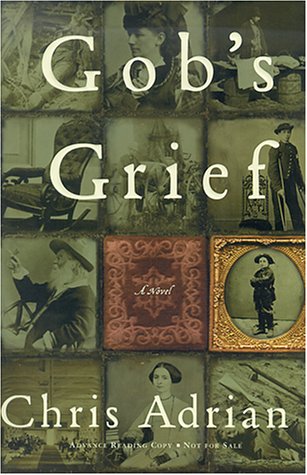
In his debut novel Gob’s Grief, Chris Adrian explores the turbulent political, cultural, and social reforms of the immediate post-Civil War era through the lens of personal loss–specifically, the loss of dead brothers. Gob Woodhull, fictional son of agitating feminist Victoria Woodhull, suffers from intense grief and guilt after not running away to war with his twin brother Tomo, who dies at Chickamauga. Deciding that he must perform the impossible, Gob sacrifices his pinkie finger (and much more!) to a sinister, cave-dwelling magical being called the Urfeist, who takes young Gob on as an apprentice. Under the Urfeist’s tutelage, Gob begins designing and building a Frankenstein machine that will bring both his brother and all of the dead back to earth. Gob describes his machine and its purpose:

Don’t you understand? What’s grief if not a profound complaint? It’s what the engine will do; it will complain. It will grieve with mechanical efficiency and mechanical strength. It will grieve for my brother and for your brother and for all the six hundred thousand dead of the war. It will grieve for all the dead of history, and all the dead of the future. Man’s grief does nothing to bring them back, but just as man’s hands cannot move mountains, but man’s machines can, our machine will grieve away the boundaries between this world and the next.

The Urfeist agrees with Gob’s strange logic, explaining just what’s in it for the dead:

Unhappiness is the lot of the spirits. They are denied bodily delight, but they are creatures of desire. Desire is all that’s left to them. They want to live again! They want to be with you, all you desolate millions. How will you live without them? How will they continue without you? What sort of heaven can there be when brothers are apart?

Aiding Gob, often against their better judgment, are Walt Whitman (yes, that Walt Whitman), Will Fie, and Maci Truffant; both Will and Maci have also lost brothers in the Civil War, and these fraternal ghosts literally haunt them. Whitman too has lost a brother, but the poet more keenly misses Hank, a young man who Whitman becomes very attached to while volunteering at a hospital. Although Hank dies, his voice remains in Whitman’s head. Walt, Will, and Maci all make unique contributions to Gob’s bizarre machine. Maci serves as an engineer, Will as a visionary builder, and Walt, “the Kosmos,” serves as the battery that powers the strange, mansion-sized contraption. Added to the mix is Pickie Beecher, an unearthly little kid birthed during an early trial run of the machine.

The novel is divided into three distinct sections, each focusing on the different perspectives of Walt, Will, and Maci, and the most interesting moments of the narrative are when the events overlap, revealing the differences between these characters (the first section, focusing on Walt Whitman, is easily my favorite; it even made me go back and reread portions of Leaves of Grass). Adrian also employs interchapters focusing on young Tomo running away to the war and the Urfeist’s education of Gob. At times, this structure is fascinating, but it often gets in the way of characterization and detail: at nearly 400 pages, Gob’s Grief is a fairly long book, but it feels like it should be much longer. Adrian is fascinated with the cultural, economic, and social upheavals that preceded the Gilded Age, but much of the fine tuning seems edited away in favor of repeated descriptions of, uh, grief (at a certain point, I wanted to yell, “Okay–I get it! He’s mourning! He’s sad! Move on”). I also found the elements of magical realism, particularly the backstory of the Urfeist, to be underdeveloped, often overshadowed by a concern for the tropes of historical fiction.

Still, in Gob’s Grief, Adrian conveys a marvelous aplomb rare in debut novels, a promise he lives up to in his fantastic follow-up The Children’s Hospital (Pickie Beecher shows up again in that novel, and its main protagonist, Jemma Claflin, is a descendant of Woodhull). In all likelihood, Adrian will continue to perfect his craft. And while we’re waiting for his next great novel, we can read A Better Angel, a collection of short stories set to drop this August.

Gun, with Occasional Music–Jonathan Lethem

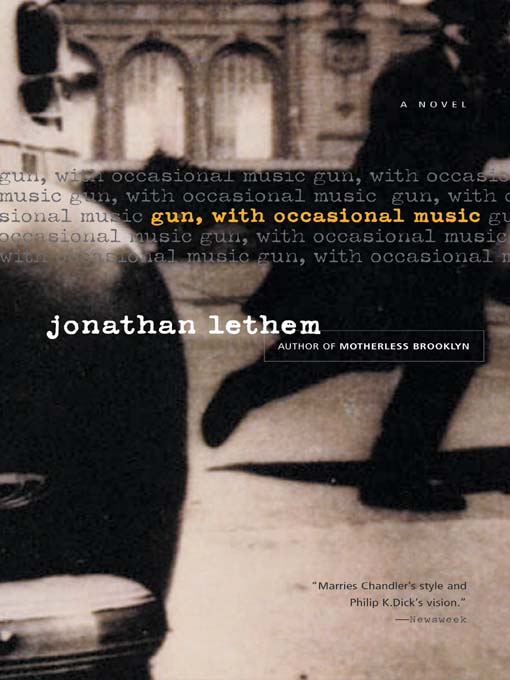
Jonathan Lethem’s novel Gun, with Occasional Music blends hardboiled crime noir with trippy sci-fi to examine the ethical ramifications of murder in a dystopian future where evolved animals work along side humans, mind altering drugs are not only free but encouraged by the authorities, and asking questions requires a license. Conrad Metcalf is a Private Inquisitor trying to solve a murder case involving a urologist, a baby-head (a failed evolved baby), and a gun-wielding kangaroo.

Two of the blurbs for Lethem’s debut describe the work as a marriage of Philip K. Dick and Raymond Chandler, but for my taste their wasn’t enough PKD. The details involving the “make” that Metcalf compulsively snorts, the genetic evolution techniques society now uses to produce children, and the genital nerve-ending swaps that people now enjoy are never fully explored. Sometimes bizarre details left unexplained create the dramatic immersion that the best SF achieves; Gun seems to throw ideas up against a wall to see if any stick. Many of the SF tropes that Lethem evokes are simply under-utilized. His ideas are playful, so why doesn’t he play with them more?

On the noir, end, the book also disappoints a little. The case is solved, but Metcalf’s solution–delivered entirely in a brief chapter crammed with exposition–seems hardly believable, or even really that interesting. This isn’t to suggest that Lethem’s/Conrad’s Chandlerisms aren’t enjoyable, and at times downright genius. Even when Lethem cranks out a clunker of a simile–and there’s more than one here–the rhetoric comes across more as satire of the genre as opposed to bad writing. The book also moves at a nice clip, with short, snappy chapters that always propel the narrative action. Eventually though, it just runs out steam. The story doesn’t really add up, and towards the end, it becomes clear that Lethem’s not going to fill us in on all of the cool ideas he initiated. I recommend those new to Lethem start with Motherless Brooklyn or The Fortress of Solitude instead. Or Men and Cartoons. Or The Disappointment Artist. Avoid You Don’t Love Me Yet like the plague.

Tree of Smoke–Denis Johnson

tree-of-smoke.jpg

I finished Denis Johnson’s sprawling Vietnam War epic Tree of Smoke the same weekend that I finished James Joyce’s Ulysses. I managed to do this thanks to BBC America’s fantastic audio book version of Tree of Smoke, read by Will Patton–there’s simply no other way I would’ve managed to read both books. After finishing Tree of Smoke, that special depression reserved for only the best of books set in (you know that feeling–where the book you looked forward to every day is now over, and you feel a little sad and want more). I immediately started listening to it again (after I finished Ulysses I simply felt exhausted–Molly Bloom’s infamous monologue was fantastic (and sexy!), and I read it in one sitting, but still…the book inspires a special fatigue. More on all of this in a future post. I only bring the two up together as they are both very long books I finished this weekend; without pretense or shame, I attest that I enjoyed Johnson’s book over Joyce’s).

I plan to buy and reread (not sure if reread is the right verb) Tree of Smoke as soon as soon as it comes out in paperback. For now, here’s a very brief review: go buy this book and read it immediately. If you don’t have time to read it, get the 18-disc, 24 hour audiobook. Will Patton’s reading is astounding. He manages to meet and express the expansive range of voices and viewpoints in Johnson’s novel–newbie CIA spooks, double agents, overwhelmed relief workers, nihilist GIs, zealous field operatives, and more–in a way that brings the appropriate depth and personality to each character without ever being obtrusive or obnoxious (as can sometimes happen with audiobooks). Patton’s reading is on par with the best audiobook readings I’ve ever heard, and those of you who frequently listen to audiobooks know the difference this can make. He seems to fully appreciate the scope and magnitude of Johnson’s piece on Vietnam (sidenote: Patton played a bit-part in the underrated and overlooked 1999 film adaptation of Johnson’s novel-in-stories collection, Jesus’ Son).

But I’m not really doing justice to Johnson’s novel here. To call it a Vietnam war novel is like calling Prince a simple R&B artist–a facile description that doesn’t capture the subject. To be sure, it is a Vietnam war novel, but one that self-consciously riffs off of both The Ugly American and The Quiet American–with shades of Apocalypse Now to boot. At the same time, Johnson deftly injects mythology and philosophy directly into his character’s voices, into their conversations and letters, into the books they read and the papers they write, without ever once clumsily forcing a theme or motif. Unlike lesser writers, Johnson never slaps the reader in the face with all his clever ideas. Instead, all his clever ideas–meditations on colonialism, war, the minotaur myth, self-sacrifice, religion, data and analysis, love and betrayal–are part of an enthralling plot propelled by the most realistic dialog I’ve heard in a long, long time. If a better book is published in 2007, please let me know. Highly highly highly recommended.

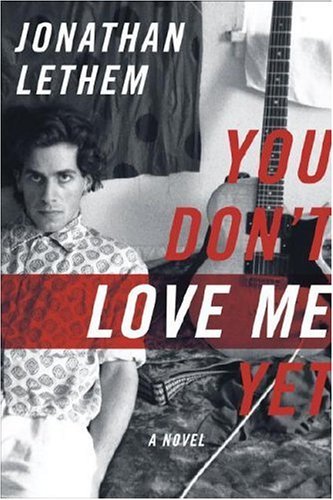
You Don’t Love Me Yet–Jonathan Lethem

you-dont-love-me-yet.jpg

I’ve loved everything I’ve read by Jonathan Lethem so far–Motherless Brooklyn, The Fortress of Solitude, Men and Cartoons, and his essay collection, The Disappointment Artist. So, while perusing the library’s excellent collection of audiobooks for the perfect aural accompaniment for the longish drive from/to Jacksonville to/from St. Pete Beach, I was excited to discover a copy of Lethem’s new novel, You Don’t Love Me Yet, read by Lethem himself. The six and a half hour unabridged recording was just the right length to get there and back. The prospect of hearing an author read his own work is always encouraging, and I didn’t imagine I’d have a chance to read the book any time soon.

So. Well. Anyway.

About halfway through You Don’t Love Me Yet, my darling lovely wife turned to me with the most charming of smiles and said: “This isn’t a very good book.” I agreed with her sheepishly. After all, I’d been toting Lethem as a pop genius. Unfortunately, she was right. I’d been secretly waiting for the book to get good: for the characters to charm me, for the plot to intrigue me, for the writing to wow me. Instead, I was repeatedly disappointed.

The dull plot of You Don’t Love Me Yet centers around Lucinda, bassist for an “alternative” band (Lethem’s words) in LA, trying to get their shit together. Improbably, Lucinda answers phones for a living as part of an art installation complaint line. A mysterious complainer intrigues Lucinda; she ends up falling in love. She also uses the complainer’s complaints (which she recorded as part of her job) as the basis for song lyrics that somehow magically transform the band from rank amateurs to rank amateurs with something. Unfortunately, that something, that kinetic potential, is never quite explained to the novel’s audience. Additionally, the band’s music is never really adequately described (I think that some of the generic “transition music” that precedes each new chapter is supposed to inform the reader that the band is kinda Pixiesish, maybe even a little White Stripesish). Most glaringly, the complainer’s lyrics that somehow stun the band and their audience–built around phrases like “Monster Eyes” and “Astronaut Food”–are really nothing special.

Other elements of the plot that only sound interesting include: kangaroo theft, a dance party where everyone listens to their own playlists on headphones, and lots of sweaty ugly sex (Lethem seems to want You Don’t Love Me Yet to be something of a sex novel). Lethem’s characters have a tendency to prattle about ephemera, often of the pop culture stripe; this was one of my favorite elements of The Fortress of Solitude, but it’s almost unbearably cloying in You Don’t Love Me Yet, with the single exception of the guitarist Bedwin’s fascinating analysis of obscured signs (like, literal signs, posted signs, advertisements, y’know) in the background of Fritz Lang’s Human Desire.

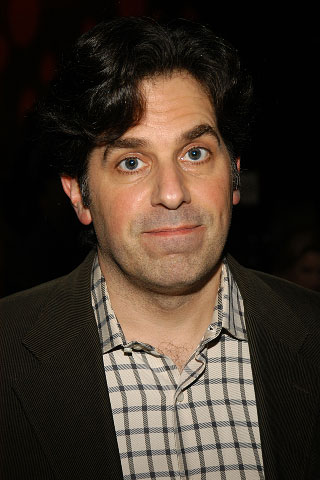
lethem.jpg

Plot has always been a secondary consideration to rhetoric in my critique of books, and Lethem here allows a number of awful lines–pure groaners–to infiltrate his text (the worst offender: a description of the complainer attesting to his “penisy glamor”). Lethem’s writing is in no way aided by his clipped, earnest delivery. The right reader can often imbue an audiobook with the perfect cadence, delivering the story with added dimension and depth. Lethem delivers each line in one of two different and exact rhythms; by the book’s end the effect is somewhere between numbing and grating.

So yes and well yes this is something of a negative review. But. My love for Lethem is still strong. So instead of ending with a “Not recommended” (and of course I can’t recommend that you spend your precious time on You Don’t Love Me Yet), I implore you to pick up Motherless Brooklyn or The Fortress of Solitude, or, if you’re pressed for time, The Disappointment Artist. And to prove that there are no hard feelings, I vow to read Lethem’s debut novel, Gun, with Occasional Music over the Christmas break. So there.

I dare you to watch Lethem talk about his new novel (in which he calls it a “deliberately silly book,” incidentally) for fifty minutes on Youtube. I dare you!