Yesterday afternoon, prepping notes for an evening class, I recalled that this blog Biblioklept turned fourteen. I was typing out some notes for an American literature class I teach (and have taught for years now) on Wednesday nights, and something about it resonated with me–What is on 9 September?–and then I remembered why the date should catch in my memory. I posted the first Biblioklept post on 9 Sept. 2006. It was on Lorraine Hansberry’s play A Raisin in the Sun and it was all of four sentences long. I was teaching AP Lang and AP Lit at an inner-city high school in Jacksonville, FL at the time, and I suppose that we must have been reading Raisin at the time. I still know pretty much every line of the play.
I know large chunks of the text that I was preparing my notes for last night, Mark Twain’s novel Adventures of Huckleberry Finn. Some semesters I sleepwalked through my American lit classes, others I find myself revitalized by the material. Lately I’ve been sleepwalking–since 2017ish, if I’m honest, but having to do everything over Zoom has necessitated change. I spent a big chunk of the last few days revisiting Leslie Fiedler and Arnold Weinstein and Harold Bloom and Ralph Ellison on Huck Finn, trying to synthesize the material into something new that might zap me enough to zap my students through Zoom.
In years past I might’ve smuggled my notes into a blog post, a trick I used to pull every now and then, but I didn’t seem to have the energy when I got up today. I had a few composition classes to prep for, as well as remedial college reading class where half of the students speak English as a second language. I needed to figure out a way to communicate through the screen again, a way to figure out how to wrangle all my body language into a tiny digital square. It’s a bit exhausting, but we’ve all been exhausted, right? I’m healthy, my family is healthy, we have enough to eat, the air is still breathable, the water still potable, etc.
I’ve thought about ending this blog a lot in the past two years. I’ve seen so many of the blogs that I admired and conversed with and interacted with disappear over the last five or six or seven years. I still keep a blogroll (called “Elsewhere,” at the bottom of the site), but many of the links there have melted off into unupdated ghosts or, worse, collapsed into vacant 404s. (Is there an archive somewhere of Mark Wood’s wood s lot? Is someone–who?–going to keep David Berman’s Menthol Mountains up?). Other spaces that I had once thought were blogs, or at least bloggish, like The Millions and LitHub, turned out to be other things entirely.
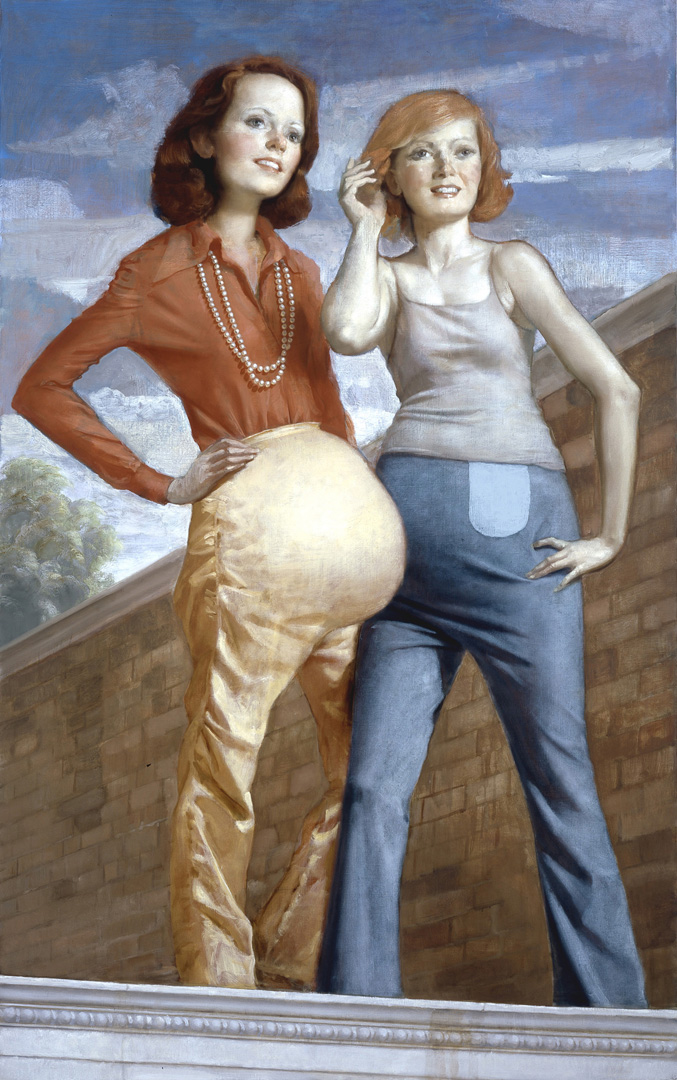
Is this even a blog? A weblog? I’m not sure. For a long time Biblioklept seemed to me a hybrid of the “traditional” blogging that came out of LiveJournal and other spaces with the more image-centric universe of sites like tumblr. I’m not sure what it is anymore. I like to post paintings on here. I like figure painting in particular. I’m jealous of my wife’s art history degree, and have spent the past ten or so years trying to catch up to her.
I’d write about art more but I feel terribly unqualified.
I’d write about literature more but I feel exhausted by it so often, so terribly uninvigorated.
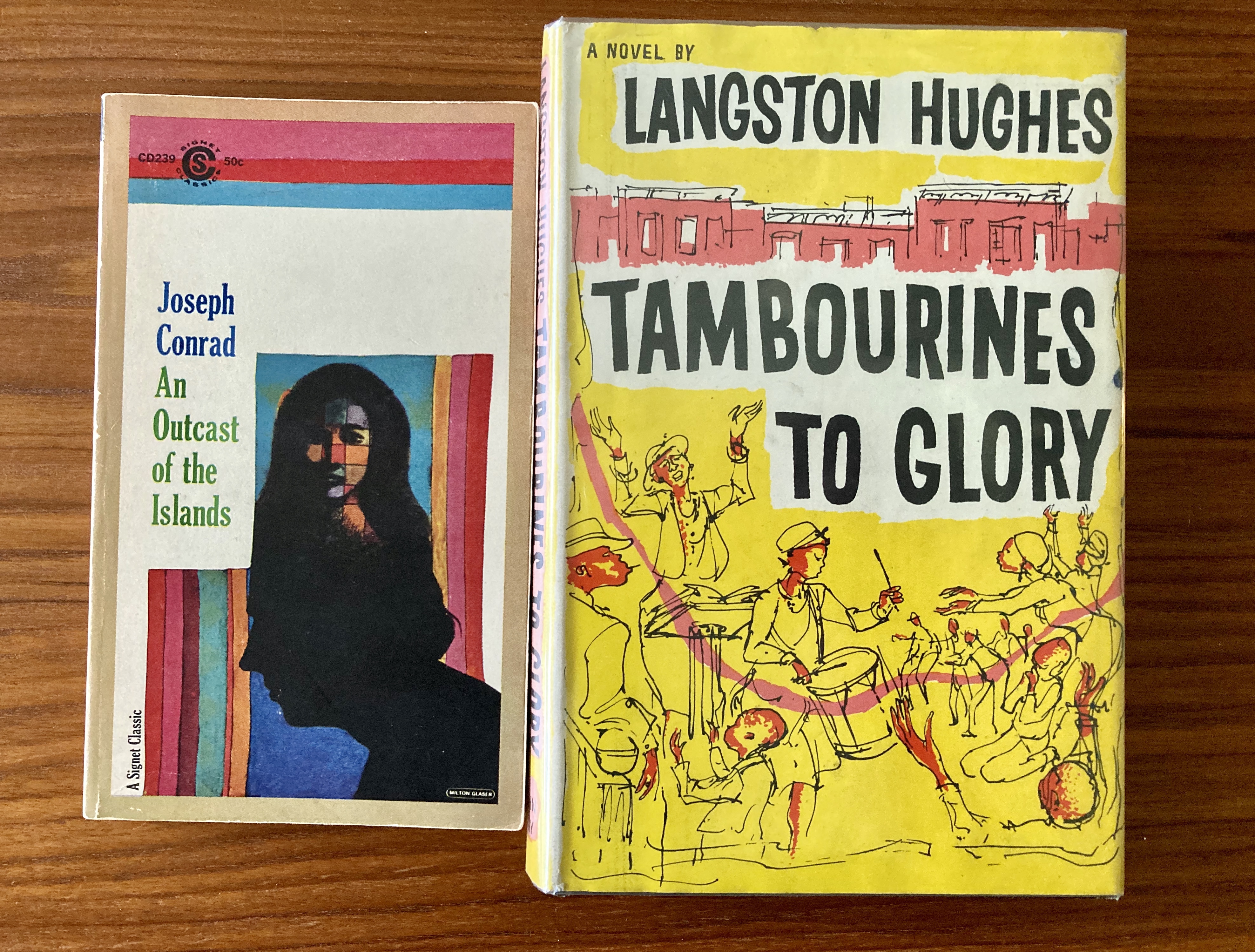
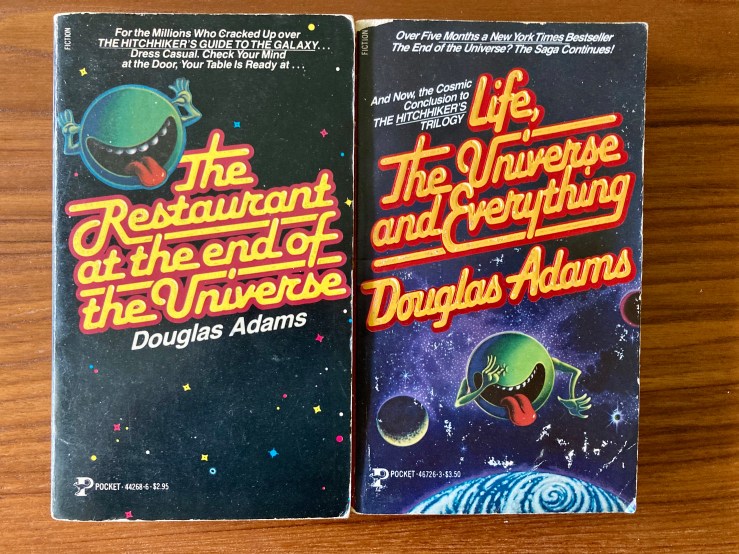
Here’s a big stack of books that I stacked up from three stacks stacked around our stack-stocked house: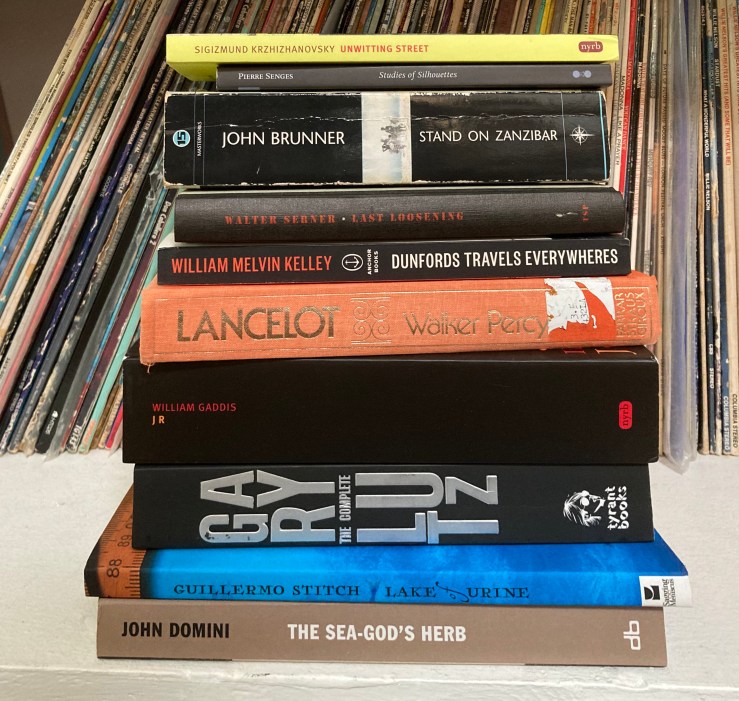
Some of these are books that I’m reading and will finish soon (Walker Percys Lancelot, Walter Serner’s Last Loosening), some are books that I keep dipping in and out of (Domini’s The Sea-God’s Herb, The Big Fat Gary Lutz, Pierre Senges’s Studies of Silhouettes), some are books that have recently come into the house and need to be restacked elsewhere. At least one is an enigmatic new indie that I need to muster a review of (look, go buy Guillermo Stitch’s weirdass novel Lake of Urine. It might not be your cup of tea but it is in no way boring, either at the plot or prose level).
But yeah, I wish I blogged about books more.
When I look at that first four-sentence post back in 2006 I feel a bit envious. What the fuck made me feel it was acceptable to string those clauses together so cavalierly? Later September posts (like one on Klaus Kinski’s memoir, or a “review” of Jonathan Lethem’s Fortress of Solitude show a little more dedication to fuller description (maybe even the germ of an inkling of an iota of analysis), but on the whole, those early posts–I mean, just looking at them now–I think I was having a lot more fun.
2006 was different and I was different–still in my mid (okay maybe late twenties), still sans children, still up to see a scuzzy band at a scuzzy bar on a week night even if it meant getting up hungover at 5:30am to teach high school downtown. I was closer in age to the students I taught then than I am to the students in my classes now. Most of my students now would, what, be starting kindergarten in 2006?
2006 was different and blogging seemed full of possibility—possibility of communication, transformation, elation, etceteration. There wasn’t really Facebook yet, or Twitter, or Reddit. Or rather, all of these social media platforms existed, but they were newborn, untested (at least by the masses), not the primary spaces for engagement over the internet. Internet 2.0 was just starting, really, and the second wave of blogging—with blogs like Biblioklept—seemed as vital as any other online presence.
(Should I mention that I only started blogging because two of my friends had started blogs and both of them, independently, insisted I do it because I’d be good at it? So I started, riffing mainly on books that I’d stolen, or at least gotten for free somehow, and those stories ran out, and at some point publishers started sending me books, and then a decade or so passed.)
Today, nothing about Biblioklept feels vital to me, and I realize the hubris in a 27 year old, a 30 year old, that thought the blog was important somehow. In retrospect, I realize that the feeling of doing something important (namely, discussing literature) was really the weird feeling of joy and energy I used to have. And sometimes I still grab a little piece of that old joy when I type out some characters, some words into the little big WordPress box. (I’ve had to retrofit to using WordPress’s old or “classic” editor. They updated to a block editor which I despise, another sign of my age perhaps. (Or maybe, just maybe, the block editor fucking sucks.)) And well so anyway yeah. I’m not really sure what the point of this post is. It’s not a rant, right? It kinda feels like a half-assed apology, but, like, for what?
I guess I wish I had it in me to post more—to post shorter riffs, maybe—to get back to that initial spirit of writing too fast and maybe not thinking too hard.
Anyway. I really do appreciate all of you who have read and looked and lurked for five, six, ten, twelve, fourteen years. Really.







 Biblioklept