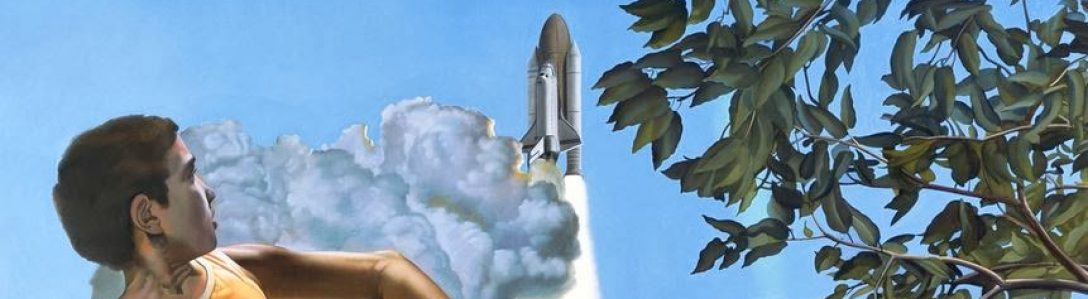
lnexplicable Joy in the Time of Corona — Eric Fischl

lnexplicable Joy in the Time of Corona, 2020 by Eric Fischl (b. 1948)

Book report (Peanuts)

Via Peanuts on This Day.

“Trust” — Susan Kinsolving

The Disillusioned One — Ferdinand Hodler

The Disillusioned One, 1892 by Ferdinand Hodler (1853-1918)

“Ovid on Climate Change” — Eliza Griswold

“Ovid on Climate Change”

by

Eliza Griswold


Bastard, the other boys teased him,
till Phaethon unleashed the steeds
of Armageddon. He couldn’t hold
their reins. Driving the sun too close
to earth, the boy withered rivers,
torched Eucalyptus groves, until the hills
burst into flame, and the people’s blood
boiled through the skin. Ethiopia,
land of   burnt faces. In a boy’s rage
for a name, the myth of race begins.

Watch Norwood, the not-especially-good film adaptation of Charles Portis’s novel Norwood (or don’t watch it, it’s not that good)

I found the 1970 film adaptation of Norwood on YouTube and watched it this morning. It stars Glen Campbell in the title role. He’s reasonably charming but a little too handsome. Kim Darby is also in the film; she starred as Mattie Ross in the 1969 film adaptation of Portis’s True Grit along with Campbell. Norwood was also produced by the same guy as True Grit (Hal Wallis) and shared the same screenwriter (Marguerite Roberts), and it kinda sorta feels like…left overs from that production? I don’t know if that makes sense. Joe Namath and Dom DeLuise also pop up.

It has a few moments (mostly coming on Campbell’s charm delivering lines cribbed from the novel), but it looks terrible and never gets close to the wit and energy of its source material. But I thought I’d share it any way, as a kind of curio for Portisheads who might want to skim through it.


“Sumptuous Destitution” — Anne Carson

“Sumptuous Destitution”

by

Anne Carson


“Sumptuous destitution”

Your opinion gives me a serious feeling. I would like to be what you deem me.

(Emily Dickinson letter 319 to Thomas Higginson)

is a phrase

You see my position is benighted.

(Emily Dickinson letter 268 to Thomas Higginson)

scholars use

She was too enigmatical a being for me to solve in an hours interview.

(Thomas Higginson letter 342a to Emily Dickinson)

of female

God made me [Sir] Master—I didn’t be—myself.

(Emily Dickinson letter 233 to Thomas Higginson)

silence.

Rushing among my small heart—and pushing aside the blood—

(Emily Dickinson letter 248 to Thomas Higginson)

Save what you can, Emily.

And when I try to organize—my little Force explodes—and leaves me bare and charred.

(Emily Dickinson letter 271 to Thomas Higginson)

Save every bit of thread.

Have you a little chest to put the Alive in?

(Emily Dickinson letter 233 to Thomas Higginson)

One of them may be

By Cock, said Ophelia.

(Emily Dickinson letter 268 to Thomas Higginson)

the way out of here

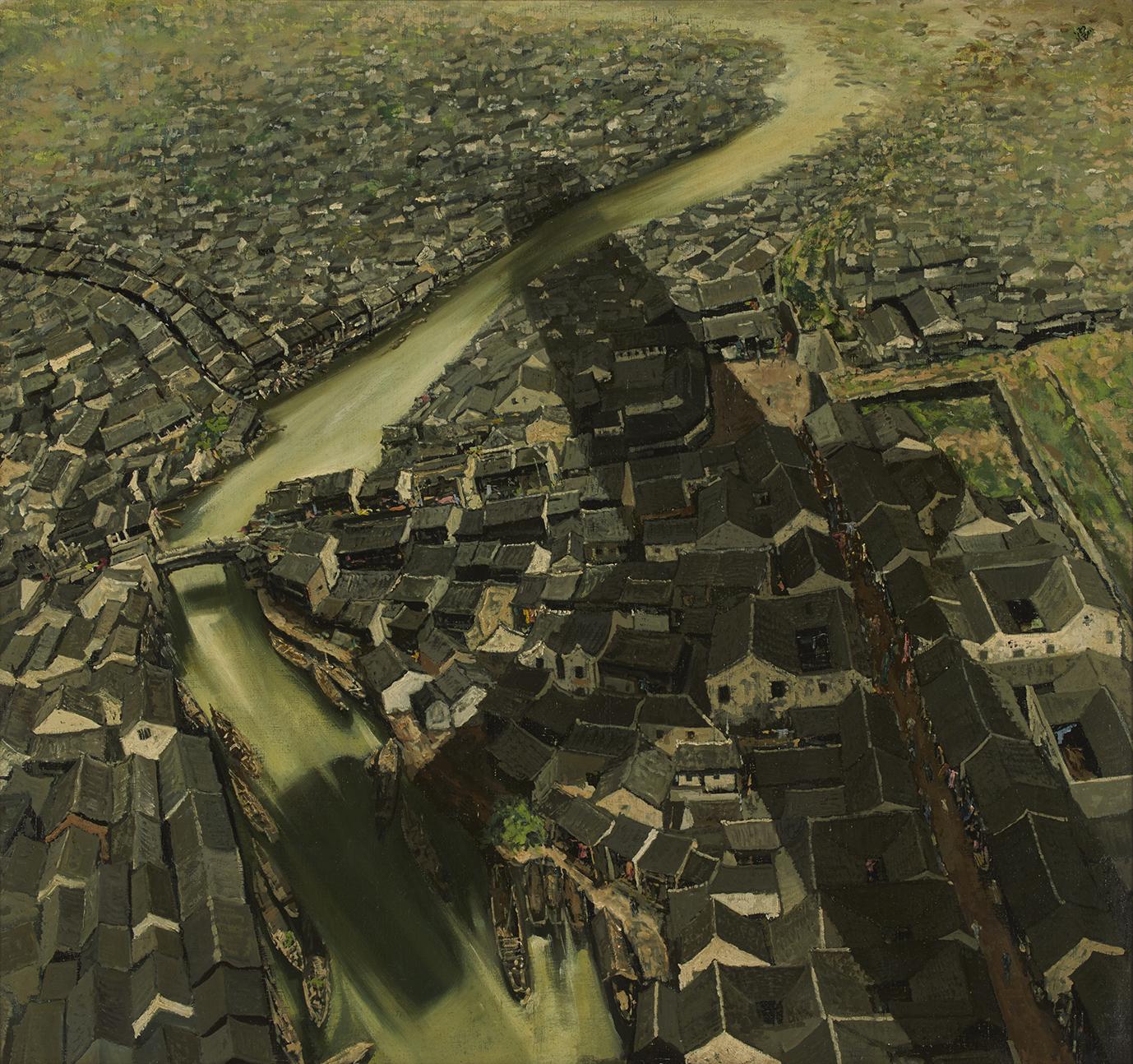
Shadow (Over Suzhou) — Mukai Junkichi

Shadow (Over Suzhou), 1938 by Mukai Junkichi (1901-1995)

Read “Piper in the Woods,” Philip K. Dick’s early short story about men turning into plants

“Piper in the Woods”

by

Philip K. Dick

First published in Imagination: Stories of Science and Fantasy, February 1953 and made available via Project Gutenberg.


“Well, Corporal Westerburg,” Doctor Henry Harris said gently, “just why do you think you’re a plant?”

As he spoke, Harris glanced down again at the card on his desk. It was from the Base Commander himself, made out in Cox’s heavy scrawl: Doc, this is the lad I told you about. Talk to him and try to find out how he got this delusion. He’s from the new Garrison, the new check-station on Asteroid Y-3, and we don’t want anything to go wrong there. Especially a silly damn thing like this!

Harris pushed the card aside and stared back up at the youth across the desk from him. The young man seemed ill at ease and appeared to be avoiding answering the question Harris had put to him. Harris frowned. Westerburg was a good-looking chap, actually handsome in his Patrol uniform, a shock of blond hair over one eye. He was tall, almost six feet, a fine healthy lad, just two years out of Training, according to the card. Born in Detroit. Had measles when he was nine. Interested in jet engines, tennis, and girls. Twenty-six years old.

“Well, Corporal Westerburg,” Doctor Harris said again. “Why do you think you’re a plant?”

The Corporal looked up shyly. He cleared his throat. “Sir, I am a plant, I don’t just think so. I’ve been a plant for several days, now.”

“I see.” The Doctor nodded. “You mean that you weren’t always a plant?”

“No, sir. I just became a plant recently.”

“And what were you before you became a plant?”

“Well, sir, I was just like the rest of you.”

There was silence. Doctor Harris took up his pen and scratched a few lines, but nothing of importance came. A plant? And such a healthy-looking lad! Harris removed his steel-rimmed glasses and polished them with his handkerchief. He put them on again and leaned back in his chair. “Care for a cigarette, Corporal?”

“No, sir.”

The Doctor lit one himself, resting his arm on the edge of the chair. “Corporal, you must realize that there are very few men who become plants, especially on such short notice. I have to admit you are the first person who has ever told me such a thing.”

“Yes, sir, I realize it’s quite rare.”

“You can understand why I’m interested, then. When you say you’re a plant, you mean you’re not capable of mobility? Or do you mean you’re a vegetable, as opposed to an animal? Or just what?”

The Corporal looked away. “I can’t tell you any more,” he murmured. “I’m sorry, sir.”

“Well, would you mind telling me how you became a plant?”

Corporal Westerburg hesitated. He stared down at the floor, then out the window at the spaceport, then at a fly on the desk. At last he stood up, getting slowly to his feet. “I can’t even tell you that, sir,” he said.

“You can’t? Why not?”

“Because—because I promised not to.”

Continue reading “Read “Piper in the Woods,” Philip K. Dick’s early short story about men turning into plants”

William Melvin Kelley’s Dunfords Travels Everywhere (Book acquired, 9 Sept. 2020)

Earlier this summer, I “discovered” the long-neglected novels of William Melvin Kelley, first through an essay on postmodern fiction by Black American authors (I can’t find the essay now, but I think it was by Bernard Bell), and then in a more-widely circulated article at The New Yorker. I then read Kelley’s first novel A Different Drummer and his fourth novel, demWhat I really wanted to read though was Kelley’s final novel, Dunfords Travels Everywheres, which is generally described as his most postmodern and Joycean. 

Dunfords was, at that point, not in print. I had no success finding it at my local used bookshop, so I looked on Abebooks, where I discovered that the cheapest copies were going for a hundred bucks.

Fortunately, Anchor Books has reissued Dunfords Travels Everywheres—it’s out later this month. Even better, they’ve included the many pen-and-ink illustrations for the book that Kelley commissioned from his wife Aiki. These illustrations were not included in the novel’s first edition in 1970. Here is one of her illustrations:

Proper review in the works; for now, here’s publisher Anchor’s blurb:

William Melvin Kelley’s final work, a Joycean, Rabelaisian romp in which he brings back some of his most memorable characters in a novel of three intertwining stories.

Ride on out with Rab and Turt, two o’New Afriqueque’s toughfast, ruefast Texnosass Arangers, as they battle Chief Pugmichillo and ricecure Mr. Charcarl Walker-Rider. Cut in on Carlyle Bedlowe, wrecker of marriage, saver of souls.

Or just along with Chig Dunford, product of Harlem and private schools, on the circular voyage of self-discovery that takes him from Europe’s Café of One Hand to Harlem’s Jack O’Gee’s Golden Grouse Bar & Restaurant.

Beginning on an August Sunday in one of Europe’s strangest cities, Dunfords Travels Everywheres but always returns back to the same point—the “Begending”—where Mr. Charcarl’s dream becomes Chig Dunford’s reality (the “Ivy League Negro” in the world outside the Ivory Tower).

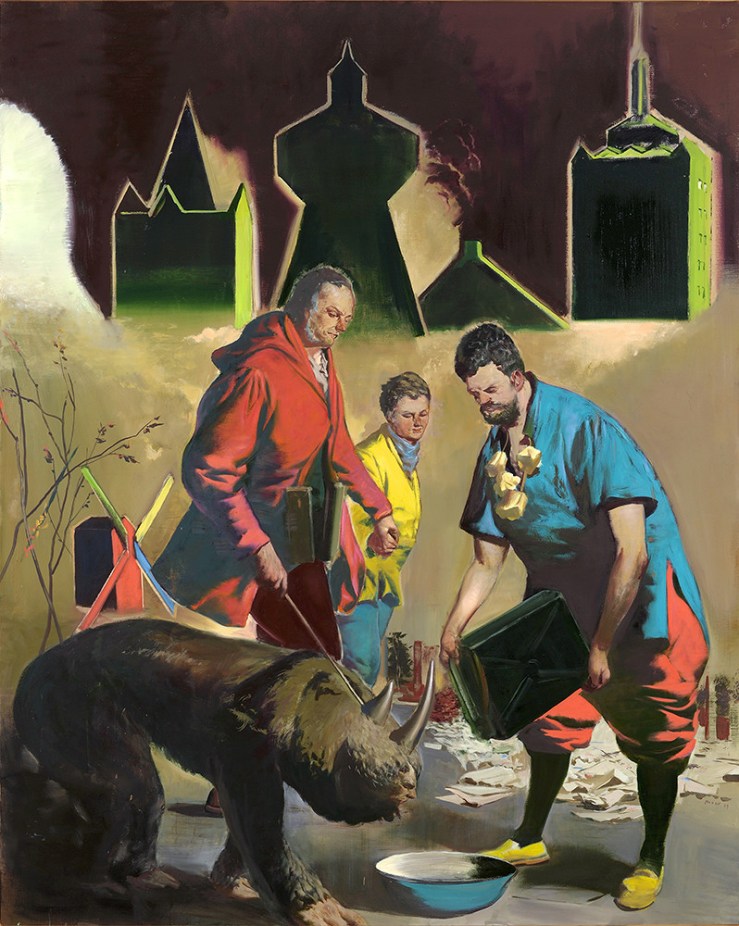
Towers — Neo Rauch

Türme (Towers), 2011 by Neo Rauch (b. 1960)

Untitled — Peter Busch

Untitled, 2020 by Peter Busch (b. 1971)

“On Walking Backwards” — Anne Carson

Atlantic Civilisation — André Fougeron

Atlantic Civilisation, 1953 by André Fougeron (1913–1998)

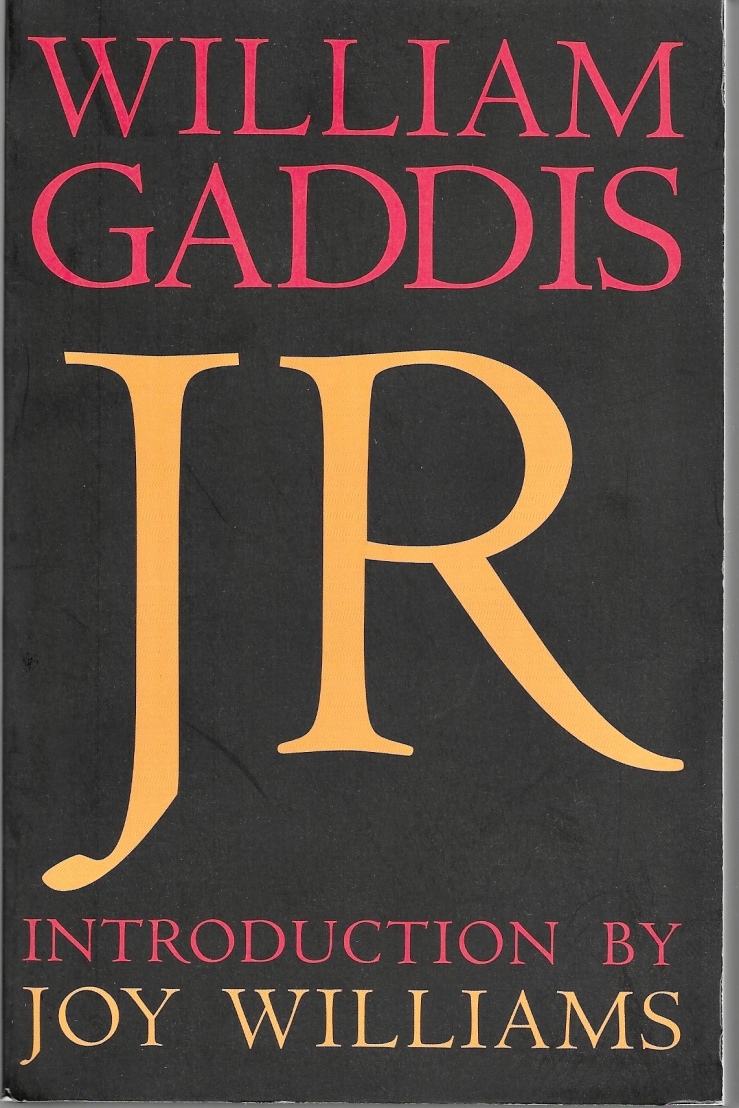
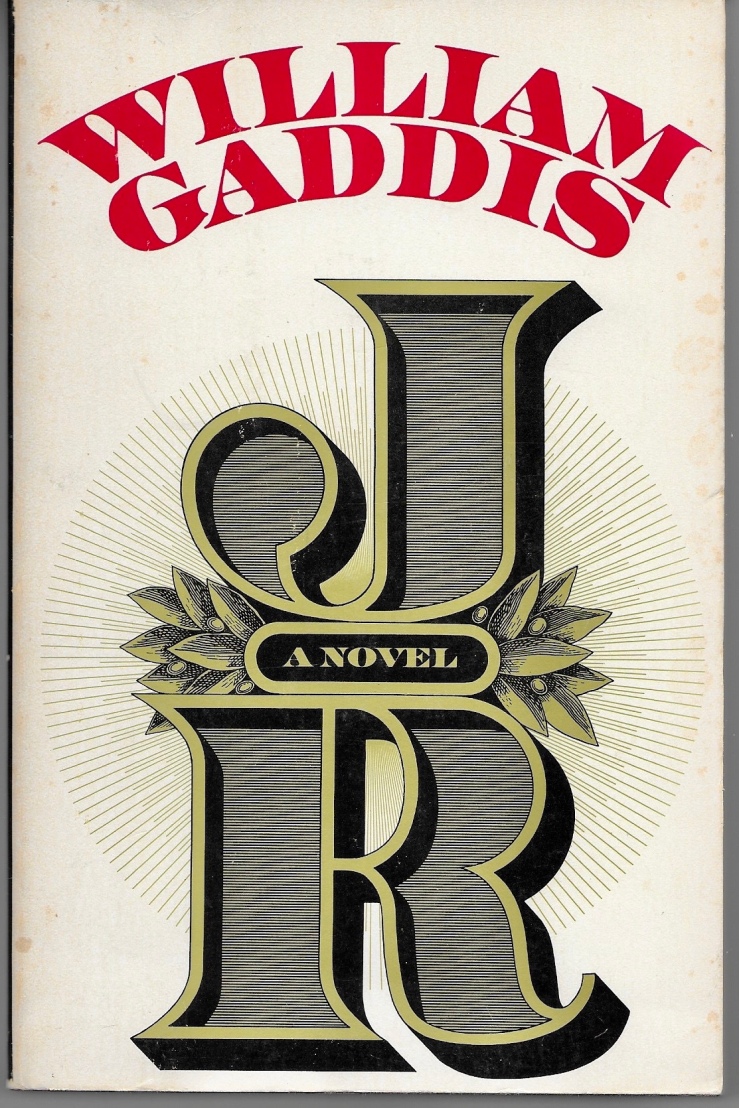
J R J R J R | Three Books

J R by William Gaddis. 2020 trade paperback edition by NYRB. Cover design by Katy Homans. Introduction by Joy Williams (xi pages). 770 pages.

J R by William Gaddis. 1993 trade paperback edition by Penguin. Cover art is a detail of an Associated Gas and Electric Company stock certificate “Courtesy of William Gaddis.” No designer credited. Introduction by Frederick R. Karl (xxi pages). 726 pages.

J R by William Gaddis. 1975 trade paperback edition by Borzoi/Knopf. Cover design by Janet Halverson. 726 pages.

On Walker Percy’s postmodern Gothic novel Lancelot

Walker Percy’s 1977 novel Lancelot opens with an invitation: “Come into my cell. Make yourself at home.”

The invitation is to both the reader and to the titular Lancelot’s audience of one, a friend from his college days he calls Percival. Percival listens to Lancelot’s increasingly-insane, unceasing monologue without interruption.

Lancelot Lamar—Lance, to friends—tells his story from his cell in the Center for Aberrant Behavior. It’s New Orleans, sometime in the mid-seventies. The dream of the sixties has curdled and soured, its failed would-be revolution of love turned to rot.

Lance’s (electrically-sexual) love for his wife Margot begins to sour, fester, and rot. He discovers by chance that he is not the father of their daughter Siobhan, and quickly comes to suspect that Siobhan is the product of Margot’s infidelity with Merlin, a filmmaker whom Margot, an always-aspiring actress, has known for years.

Merlin and his crew are filming at Lance’s ancestral manse, Bell Isle. Belle Isle was once a Great House in its parish, but modernity (and postmodernity) have a way of rotting out traditions. Margot, heiress to a new-money Texas fortune, restores the ancestral home to something-close-to its former glory. Belle Isle and the Lamar name might rub some good old fashioned Southern Aristocracy off on her. Despite those oil dollars, the Lamars still need to allow tour groups to visit Belle Isle—gawking Michiganders and Yankees and the like—in order to keep in the black.

Lancelot Lamar himself has long since stopped working. A one-time liberal who helped the NAACP, he trained as a lawyer, but latterly has taken to lust and drink. At the outset of his tale, our debauched wastrel spends his days in the pigeonnier of Belle Isle slurping bourbon and smoking cigs. His discovery that his daughter is not his own revitalizes him—it’s the revelation—nay, the apocalypse—that splits his life in two: “my life is divided into two parts, Before and After,” he tells Percival in cell.

Percival says all of thirteen words in the novel. Or, really, two words: twelve yeses and one no. It’s never quite clear if Percival is a failed psychiatrist or a failed priest or some hybrid of both, but we do know that Lancelot has long admired Percival since their school days, when the austere intellectual literally jumped ship to swim to a deserted island for a Thoreau-inspired think. Percival, or Lancelot’s ideation of Percival, serves not only as a confessor’s ear, but also as Lancelot’s avatar of intellectual spirituality. In contrast, visceral once-virile Lance (with his oh-so-phallic mantle) rests on his most vibrant college laurels: he once ran 110 yards against the Alabama Crimson Tide.

But back to Lancelot of the Before and After. Specifically, the After. After discovering his wife’s apparent infidelity (infidelities?), Lance enlists the help of his retainer Elgin, the son of Belle Isle’s Black housekeepers. Elgin is an MIT student and a technical genius, a figure whose ascendancy Lancelot can understand but perhaps not fully appreciate. A scion of the South and a one-time “liberal,” Lancelot is unable to fully understand his own racism, even as he understands Elgin’s intellectual and technocratic superiority.

Still, Lancelot comprehends the failure of the 1960’s liberalism to fully follow through on its utopian promise. He relies on Elgin’s gratitude to him, but admits,

…in truth I had done very little for him, the kind of easy favors native liberals do and which are almost irresistible to the doer, if not to the done to, yielding as they do a return of benefit to one and a good feeling to the other all out of proportion to the effort expended. That was one of the pleasures of the sixties: it was so easy to do a little which seemed a lot. We basked in our sense of virtue and what we took to be their gratitude. Maybe that was why it didn’t last very long. Who can stand gratitude?

Driven by his own motives, tech-whiz Elgin sets up secret cameras all around Belle Isle as part of Lancelot’s movie-making scheme: our monologist plans to catch his wife in the act, either with Merlin or another lover. Percy’s postmodernism is subtle but effective here. We see Belle Isle through layers, a Gothic playground of both real and imaginary depravities, some staged, some extemporaneous, all set against the backdrop of the sins of the Gothic South.

Like William Gaddis’s 1985 novel Carpenter’s Gothic, Percy’s Lancelot is a work of Gothic postmodernism. Belle Isle has been converted to a theme park version of its aristocratic past, glossed up for tourists and film crews. It’s certainly not the scene of domestic bliss.

Lancelot’s monologue starts to boil over into crazed horror, taking the reader (and his auditor Percival) into strange new spaces. Belle Isle becomes a haunted house, scene of repeated debaucheries on the cusp of disaster. The film crew prepares a massive weather machine to simulate a hurricane for their fantasy even as a massive hurricane approaches to destroy the real world. But maybe Lance, in his perverted quest, will destroy that world first.

Lancelot’s Gothic quest is for the anti-Grail, the Unholy Grail. As the novel unravels towards its crazed ending, Lancelot’s consciousness ping-pongs about in philosophical ranting. Our hero stands against postmodernity, against the nascent eighties, against the collapse of the Romantic sixties and its failed revolution. He plans a third Revolution, the final part in the trilogy initiated by the American Revolution and the Civil War. Lancelot’s increasingly unhinged screeds disturb both Percival and the reader. His apocalyptic urge for a great cleansing veers into strange, misogynistic territory.

A failed knight who cannot see his own failure, he becomes obsessed with the woman celled next to him, Anna, victim of a gang rape whom he both fetishizes and idealizes. Lancelot reads like a Southern companion to Martin Scorsese’s 1976 film Taxi Driver. Lance reminds one of Travis Bickle: both are strange, nihilistic, optimistic idealists, would-be knights seeking to save damsels in a fallen world, praying for some great rain to come and cleanse the filth of sin away. 

And like Taxi Driver, Percy’s novel—released around the same time, of course—seems like an early analysis of the failure of the sixties. It’s the burn out, the hangover, the realization that the dream was just a dream, and that the business of reality is cruel and cold and dirty. Perhaps insanity is the proper response.

There’s so much in Lancelot I’ve failed to unpack: Its analysis of America–North, South, and West–its treatment of Hollywood, its strange gnostic tinges, its weird tangled and often colliding philosophies. Lancelot Lamar is an enthralling monologist, witty, severe, pathetic and sympathetic, simultaneously cartoonish and ferociously real. I’ve also failed to convey how funny this novel is—Percy’s prose crackles and zaps, zips and dips, turns into weird little unexpected nooks. I ate it up.

Lancelot was the first Walker Percy novel I’ve read, but it won’t be the last. Great stuff.
“Pressure Drop” (Live in ’75) — Toots and the Maytals

RIP Toots Hibbert, 1942-2020