“All art constantly aspires towards the condition of music”

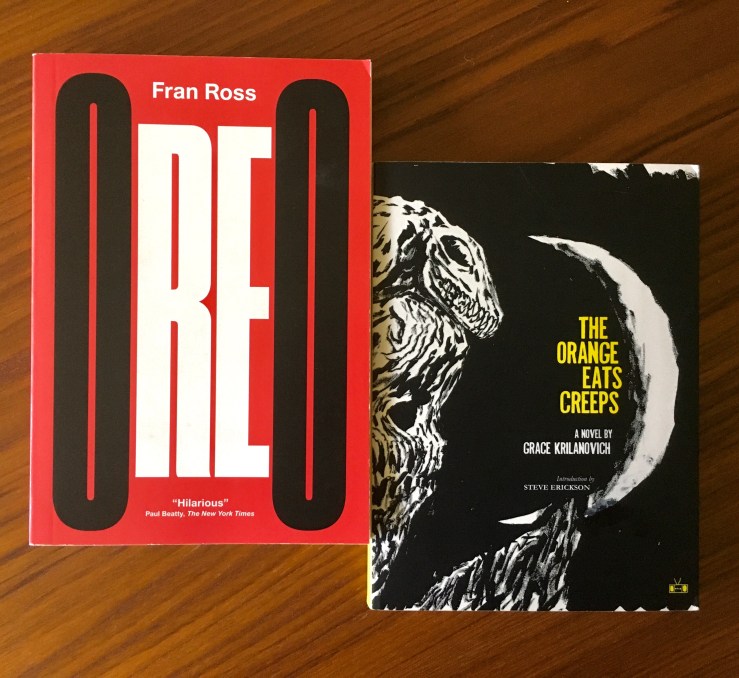
Oreo/Orange (Books acquired, 13 July 2020)

img_5778

I’m like 50 pages from the end of Fran Ross’s 1974  Oreo and I simply don’t understand how this novel is so erased or ignored in most discussions of postmodern classics. (It could be ignorance—mine for sure—or erasure, or sure, structural racism in publishing and literary criticism—I mean, I feel like every list that compels someone to read Thomas Pynchon and Kathy Acker and John Barth and Stanley Elkin and Ishmael Reed and Robert Coover should include Fran Ross, Fran Ross’s novel Oreo, Fran Ross’s only novel Oreo, why is there only one novel by Fran Ross, Oreo? What I’m trying to say is: Why didn’t I read this until now? Although reading it now has felt like a gift of some kind.)

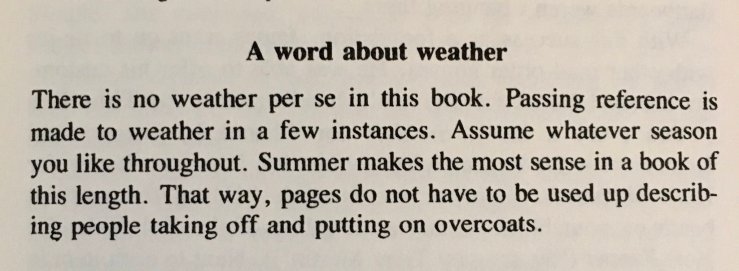
This thing—Oreo, that is—zapped me on like page three or four with this ditty–

Ec1_7BJXkAUYc1q

I mean, c’mon!

I owe Oreo a proper write-up, if I can ever muster such a thing again, which maybe I can’t.

I also picked up, almost entirely at random, Grace Krilanovich’s novel The Orange Eats Creeeps. The spine and title struck me, I saw it was a Two Dollar Radio publication, and when I fished it from the shelf, I read Steve Erickson’s blurb and just went with it. Here’s Two Dollar’s blurb:

A girl with drug-induced ESP and an eerie connection to Patty Reed (a young member of the Donner Party who credited her survival to her relationship with a hidden wooden doll), searches for her disappeared foster sister along “The Highway That Eats People,” stalked by a conflation of Twin Peaks’ “Bob” and the Green River Killer, known as Dactyl.

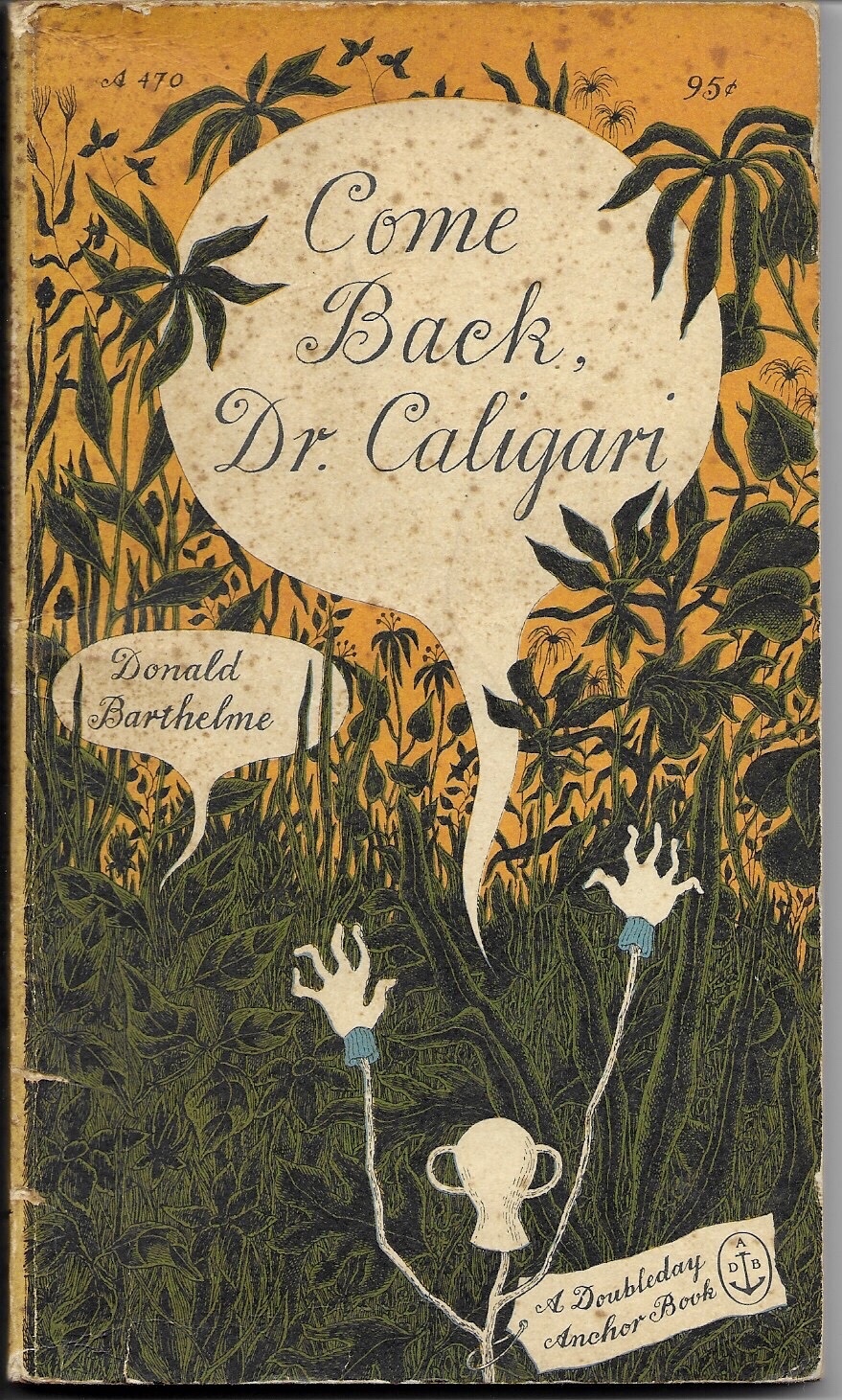
I also found a Donald Barthelme collection with an Edward Gorey cover:

2020-07-16_161411

Five bookmarks

2020-07-18_154118_1-4

Business card for the NC-based artist Hannah Dansie, likely obtained at an arts fair in Asheville, NC, late 2018. Inside Charles Portis’s The Dog of the South, pages 106-07. Did I finish The Dog of the South? Yes I did.

2020-07-18_154118_1-2

An actual bookmark from the indie publisher Two Dollar Radio, obtained in 2020 when I purchased their edition of Rudolph Wurlitzer’s Nog. Inside Rudolph Wurlitzer’s Nog, between the cover and the first page. Did I finish Nog? Yes I did.

2020-07-18_154118_1-3

Entrance ticket for Wat Pho, obtained in Bangkok, Thailand, in the fall of 2002. Found inside Thomas Pynchon’s V., pages 228-29 (the beginning of “Mondaugen’s Story.” Did I finish V.? Yes I did.

2020-07-18_154118_1-1

Postcard from the Greek indie publisher Pilotless Press celebrating Allen Kechagiar’s chapbook The Mundane History of Lockwood HeightsObtained via the publisher in 2012. Inside of Barry Hannah’s Long, Last, Happy, page 254-55. Did I finish The Mundane History of Lockwood Heights? Yes I did.

2020-07-18_154118_1

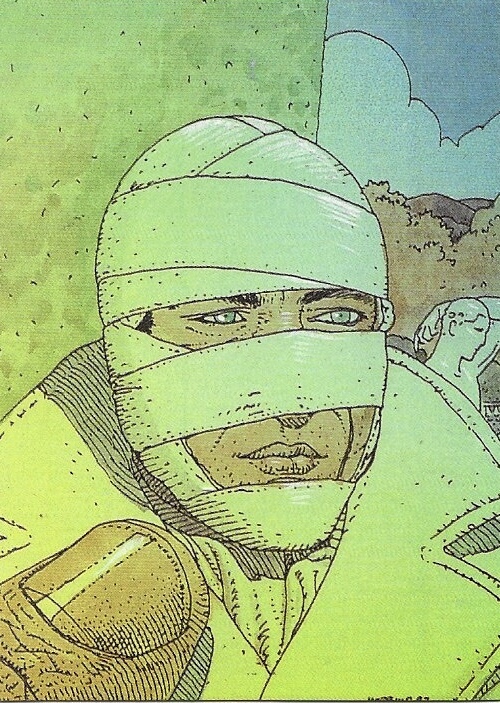
Card #30 (from Airtight Garage) of a set of Moebius collector cards, circa 1993. Obtained in a pack of Moebius Collector Cards purchased from Floating World Comics in Portalnd, Oregon, in July of 2019. Inside Jim Dodge’s Fup, pages 24-25. Did I finish Fup? No I did not.

The Madmen — Agostino Arrivabene

i-folli

The Madmen, 2017 by Agostino Arrivabene (b. 1967)

Three Books

2020-07-16_161411

2020-07-16_161411_1

Come Back, Dr. Caligari by Donald Barthelme. Mass-market paperback from Anchor Books, 1965. Cover art and design by Edward Gorey.

I’d only ever seen the Milton Glaser cover for Barthelme’s first collection of stories, Come Back, Dr. Caligari, and was thrilled to pick up this Gorey Anchor cover the other day. I’d almost picked up the Glaser version years ago, but it wasn’t in great shape, and I was pretty sure that all of the stories in Caligari are contained in Sixty Stories and Forty Stories (I could be wrong). I love the richness of Gorey’s cover.

2020-07-16_161411_2

Nova by Samuel R. Delany. Mass-market paperback from Bantam Books, 1979. Cover art by Eddie Jones (not credited); no designer credited.

I couldn’t make it through Delany’s cult favorite Dhalgren a few years back, but Nova was easier sledding. The book is a riff on Moby-Dick, tarot, monoculture, and the grail quest. It’s jammed with ideas and characters, and if it never quite coheres into something transcendent, it’s a fun quick read (even if the ending, right from the postmodern metatextual playbook is too clever by half).

2020-07-16_161411_3

Mr Pye by Mervyn Peake. Mass-market papberback from Penguin Books, 1982. Cover art by Mervyn Peake; no designer credited.

While Mr Pye isn’t as rich, dense, or abjectly weird as Peake’s Gormenghast trilogy, it is wry and sharp, a strange morality play that made me laugh out loud a few times. (It also has a few shades of Wicker Man to it–but not too much). Good stuff.
Checkmate — Maria Helena Vieira da Silva

2020-07-15_151953_3

Checkmate, 1950 by Maria Helena Vieira da Silva (1908–1992)

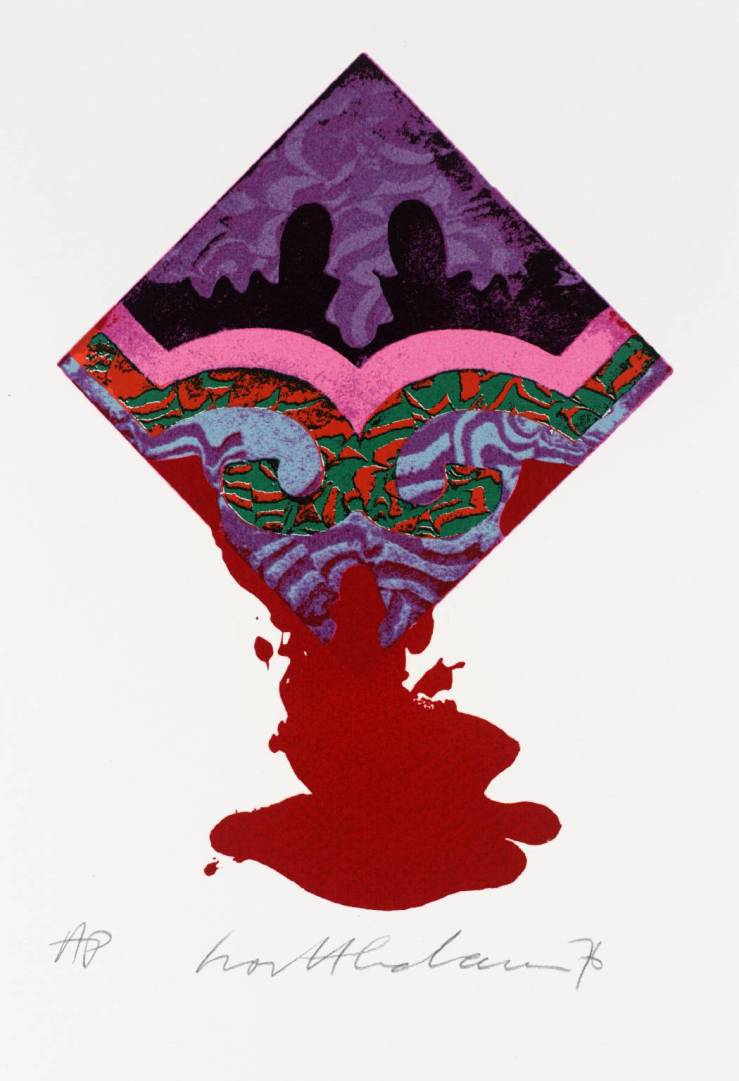
Illustration for Poe’s “The Masque of Red Death” — Ivor Abrahams

The Masque of the Red Death 1976 by Ivor Abrahams born 1935

Illustration for Poe’s “The Masque of Red Death,” 1976 by Ivor Abrahams (1935–2015)

“The Masque of Red Death”

by

Edgar Allan Poe


The “Red Death” had long devastated the country. No pestilence had ever been so fatal, or so hideous. Blood was its Avatar and its seal—the redness and the horror of blood. There were sharp pains, and sudden dizziness, and then profuse bleeding at the pores, with dissolution. The scarlet stains upon the body and especially upon the face of the victim, were the pest ban which shut him out from the aid and from the sympathy of his fellow-men. And the whole seizure, progress and termination of the disease, were the incidents of half an hour.

But the Prince Prospero was happy and dauntless and sagacious. When his dominions were half depopulated, he summoned to his presence a thousand hale and light-hearted friends from among the knights and dames of his court, and with these retired to the deep seclusion of one of his castellated abbeys. This was an extensive and magnificent structure, the creation of the prince’s own eccentric yet august taste. A strong and lofty wall girdled it in. This wall had gates of iron. The courtiers, having entered, brought furnaces and massy hammers and welded the bolts. They resolved to leave means neither of ingress nor egress to the sudden impulses of despair or of frenzy from within. The abbey was amply provisioned. With such precautions the courtiers might bid defiance to contagion. The external world could take care of itself. In the meantime it was folly to grieve, or to think. The prince had provided all the appliances of pleasure. There were buffoons, there were improvisatori, there were ballet-dancers, there were musicians, there was Beauty, there was wine. All these and security were within. Without was the “Red Death”.

It was towards the close of the fifth or sixth month of his seclusion, and while the pestilence raged most furiously abroad, that the Prince Prospero entertained his thousand friends at a masked ball of the most unusual magnificence. Continue reading “Illustration for Poe’s “The Masque of Red Death” — Ivor Abrahams”

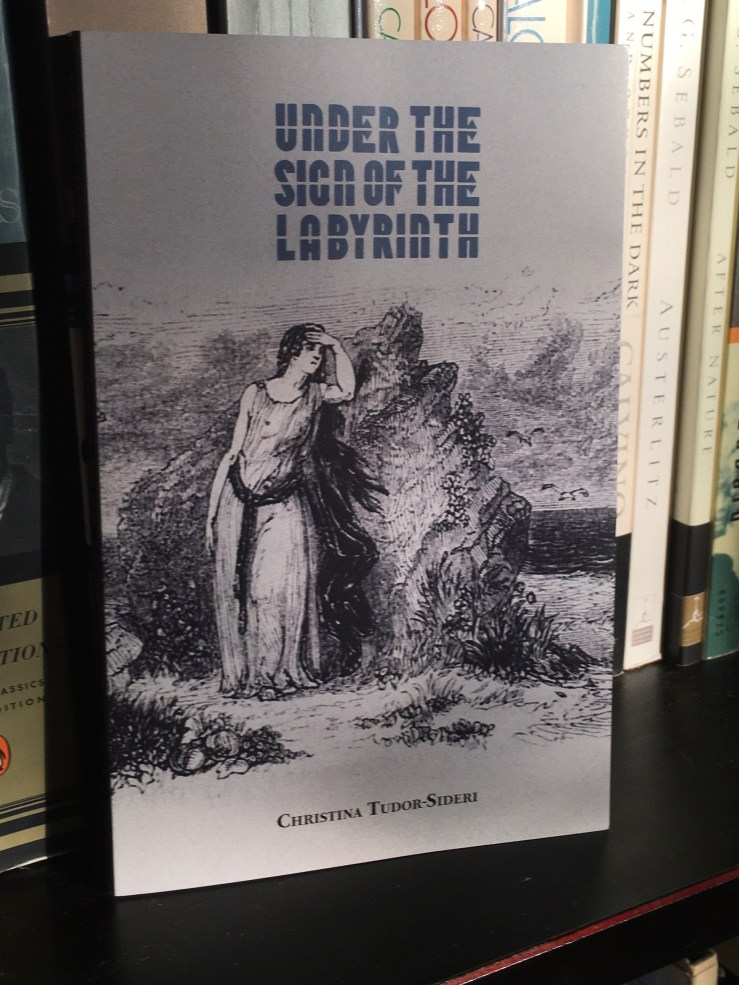
Under the Sign of the Labyrinth (Book acquired, 7 July 2020)

img_5756

Christina Tudor-Sideri’s Under the Sign of the Labyrinth adds to Sublunary Editions‘ growing catalog of odd and engaging short volumes.

Their blurb:

There is no need to place your hand on a wound to feel it throbbing in pain. There is no need to see its root to know that a tree is dying. I am renouncing history. A film frame has lost its meaning. Vain and cruel, I have become a self that contains all negations to come, I have escaped the universe of time and space—page after page, touch after touch, train after train. I have become the idea of a sea beast moving in the deep. I have become the labyrinth. I am entombed in poetry. In the first stanza, in the last, in the blueness of thirsting ink—in the bruising of eternity. I have become alone. I am alone.”

Buzz off

From Jim Jarmusch’s 1986 film Down By Law (full film below).

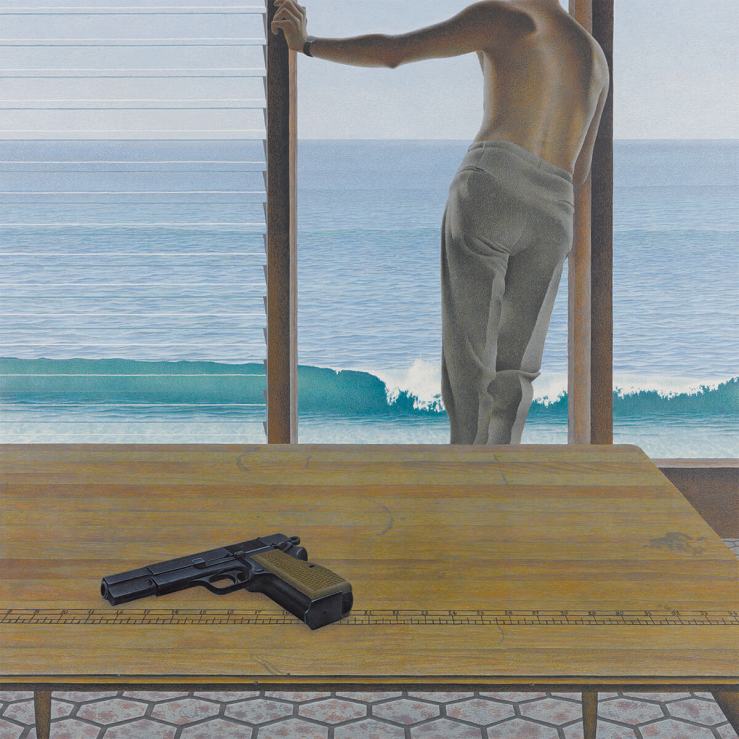
Pacific — Alex Colville

alex-colville-pacific

Pacific, 1967 by Alex Colville (1920-2013)

“The Friar’s Dream” — Álvaro Mutis

2020-06-29_174250

From The Mansion; English translation by Beatriz Haugner.

Saturday Night — George Petrovich Kichigin

113bb8e591684a30d7c73c750c19d0bd

Saturday Night, 1989 by George Petrovich Kichigin (b. 1951)

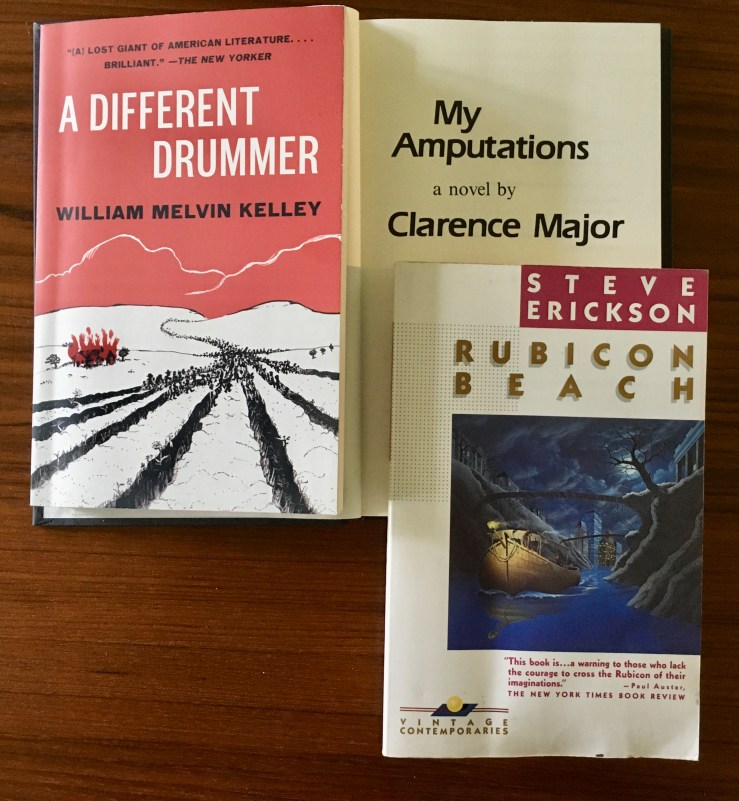
Books acquired, 1 July 2020

img_5747

Scored a copy of William Melvin Kelley’s first novel A Different Drummer the other week, along with a copy of Steve Erickson’s novel Rubicon Beach. I was looking for the Kelley; I was looking for a print edition of Erickson’s more recent novel Zeroville (which I loved in audiobook), but there wasn’t one. Still, I can’t resist a Vintage Contemporaries edition. I’d been looking for a copy of Clarence Major’s My Amputations for a while now with no luck; I eventually broke down and bought one on Abebooks for five bucks. It turned out to be an old library copy with no dust jacket. No one ever checked it out. Check it out.

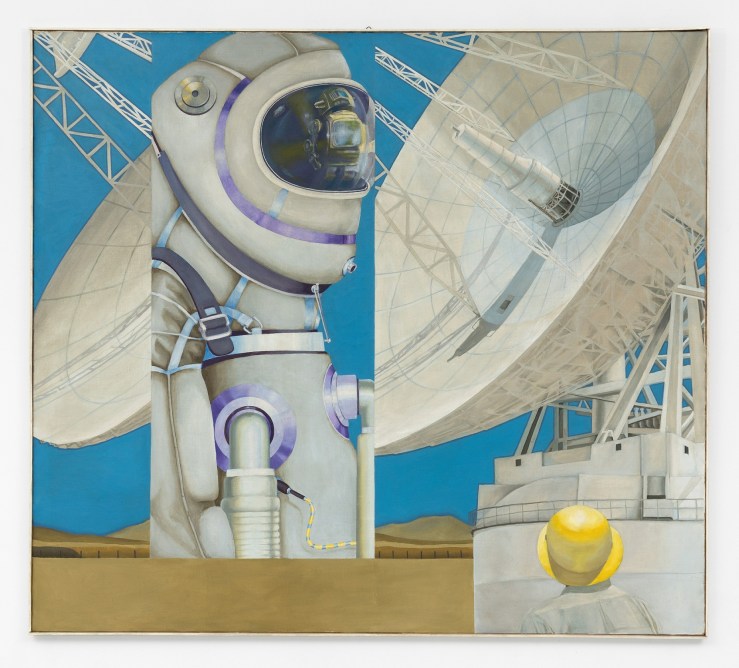
Astronaut and Radio Telescope — Bettina von Arnim

713da44e04f64cc2

Astronaut and Radio Telescope, 1970 by Bettina von Arnim (b. 1940)

12 still frames from Carl Theodor Dreyer’s The Passion of Joan of Arc

09 (1130)13 (1156)16 (1156)25 (1156)26 (1156)28 (1155)34 (1153)46 (1129)49 (1118)51 (1105)55 (1072)59 (1034)

From The Passion of Joan of Arc, 1928. Directed by Carl Theodor Dreyer and starring Renée Jeanne Falconetti. Cinematography by Rudolph Maté. Via FilmGrab.


Infatuation — Konrad Klapheck

Verliebtheit (Infatuation), 1969 by Konrad Klapheck (b. 1935)

Freudian Woman, NYC — Louis Faurer

dchywgoxuaay0sh

Freudian Woman, NYC, 1947 by Louis Faurer (1916-2001)