Plastics and paranoia (Harold Bloom on Thomas Pynchon)

For Pynchon, ours is the age of plastics and paranoia, dominated by the System. No one is going to dispute such a conviction; reading the New York Times first thing every morning is sufficient to convince one that not even Pynchon’s imagination can match journalistic irreality. What is more startling about Pynchon is that he has found ways of representing the impulse to defy the System, even though both impulse and its representations always are defeated. In the Zone (which is our cosmos as the Gnostics saw it, the kenoma or Great Emptiness) the force of the System, of They (whom the Gnostics called Archons), is in some sense irresistible, as all overdetermination must be irresistible. Yet there is a Counterforce, hardly distinguished in its efficacy, but it never does (or can) give up. Unfortunately, its hero is the extraordinarily ordinary Tyrone Slothrop, who is a perpetual disaster, and whose ultimate fate, being “scattered” (rather in biblical sense), is accomplished by Pynchon with dismaying literalness. And yet—Slothrop, who has not inspired much affection even in Pynchon’s best critics, remains more Pynchon himself.

From Harold Bloom’s introduction to Bloom’s Critical Modern Views: Thomas Pynchon.

Reading the very best writers is not going to make us better citizens (Harold Bloom)

Reviewing bad books, W. H. Auden once remarked, is bad for the character. Like all gifted moralists, Auden idealized despite himself, and he should have survived into the present age, wherein the new commissars tell us that reading good books is bad for the character, which I think is probably true. Reading the very best writers—let us say Homer, Dante, Shakespeare, Tolstoy—is not going to make us better citizens. Art is perfectly useless, according to the sublime Oscar Wilde, who was right about everything. He also told us that all bad poetry is sincere. Had I the power to do so, I would command that these words be engraved above every gate at every university, so that each student might ponder the splendor of the insight.

From Harold Bloom’s The Western Canon.

The authentic American apocalyptic novel | Harold Bloom and Blood Meridian

The Triumph of Death, Pieter Bruegel the Elder, c. 1562

Harold Bloom’s esteem for Blood Meridian may have done much to advance the novel’s reputation since its publication, especially in pre-social media outlets, like Goodreads, Twitter, or Facebook. His essay on the book, first published in his 2000 collection How to Read and Why and later included as the preface to Random House’s Modern Library edition, makes a strong case for Blood Meridian’s canonical status. Bloom begins, in typical Bloomian fashion–the anxiety of influence is always at work–by situating McCarthy’s book against other heavies:

Blood Meridian (1985) seems to me the authentic American apocalyptic novel, more relevant even in 2000 than it was fifteen years ago. The fulfilled renown of Moby-Dick and of As I Lay Dying is augmented by Blood Meridian, since Cormac McCarthy is the worthy disciple both of Melville and of Faulkner. I venture that no other living American novelist, not even Pynchon, has given us a book as strong and memorable as Blood Meridian . . .

The Garden of Earthly Delights — Hell, Hieronymus Bosch, 1503-1504

Bloom goes  on to rate Blood Meridian over DeLillo’s Underworld, several books by Philip Roth, and even McCarthy’s own All the Pretty Horses. Indeed, Bloom proclaims Blood Meridian “the ultimate Western, not to be surpassed.” This doesn’t mean that Bloom is at home with the book’s violence; he confesses that it took him two attempts to read through its “overwhelming carnage.” Still, he makes a case for reading it in spite of its gore:

Nevertheless, I urge the reader to persevere, because Blood Meridian is a canonical imaginative achievement, both an American and a universal tragedy of blood. Judge Holden is a villain worthy of Shakespeare, Iago-like and demoniac, a theoretician of war everlasting. And the book’s magnificence–its language, landscape, persons, conceptions–at last transcends the violence, and converts goriness into terrifying art, an art comparable to Melville’s and to Faulkner’s.

Bloom repeatedly invokes Melville and Faulkner in his essay, arguing that Blood Meridian’s “high style” is one of its key strengths (unlike fellow aesthetic critic James Wood, who seems to think that McCarthy is a windbag). The trajectory of Bloom’s essay follows Melville and Shakespeare, finding in Judge Holden both a white whale (and not so much an Ahab) and an Iago. He writes:

Since Blood Meridian, like the much longer Moby-Dick, is more prose epic than novel, the Glanton foray can seem a post-Homeric quest, where the various heroes (or thugs) have a disguised god among them, which appears to be the Judge’s Herculean role. The Glanton gang passes into a sinister aesthetic glory at the close of chapter 13, when they progress from murdering and scalping Indians to butchering the Mexicans who have hired them.

I think that Bloom’s great insight here is to read the book as a prose epic as opposed to a linear novel. Bloom intuits that Blood Meridian foregrounds a deeply tragic and ironic reworking of the great American myth of Manifest Destiny. While hardly a pastiche, the book is somehow a collage—a massive, deafening collage that numbs, stuns, and overwhelms with its layers of thick, bloody prose. The effect is akin to the apocalyptic paintings of Hieronymus Bosch and Pieter Bruegel. Dense and full of allusion, paintings like The Triumph of Death and The Garden of Earthly Delights surge over the senses, destabilizing narrative logic. Like Blood Meridian, these paintings employ a graphic grammar that disorients and then reorients. They are apocalyptic in all senses of the word: both revelatory and portentously conclusive. And like Blood Meridian, they showcase “a sinister aesthetic glory” (to use Bloom’s term), a terrible, awful, awesome ugliness that haunts us with repulsive beauty.

[Ed. note–Biblioklept originally published a version of this post in September of 2010].

Girl Reading a Newspaper — Louis Anquetin

Girl Reading a Newspaper 1890 by Louis Anquetin 1861-1932

Girl Reading a Newspaper, 1890 by Louis Anquetin (1861–1932)

Three Books

2019-10-13_183112

The Last Days of Louisiana Red by Ishmael Reed. 1974 first edition hardback from Random House. No designer credited, but the jacket flap indicates that the cover design was “suggested” by Ishmael Reed. I reviewed Louisiana Red earlier this year on this site.

2019-10-13_182907

Blue Beard by Max Frisch. English translation by Geoffrey Skelton. 1983 first edition hardback from HBJ. Design by Amy Hill.

2019-10-13_182945

Stanley Elkin’s Greatest Hits by Stanley Elkin. Foreword by Robert Coover. 1980 first edition hardback from E.P. Dutton. Cover design by Janet Halverson.

Genius of the River Chases Away The Frenzy of Art — Jillian Denby

genius

Genius of the River Chases Away The Frenzy of Art, 2017 by Jillian Denby (b. 1944)

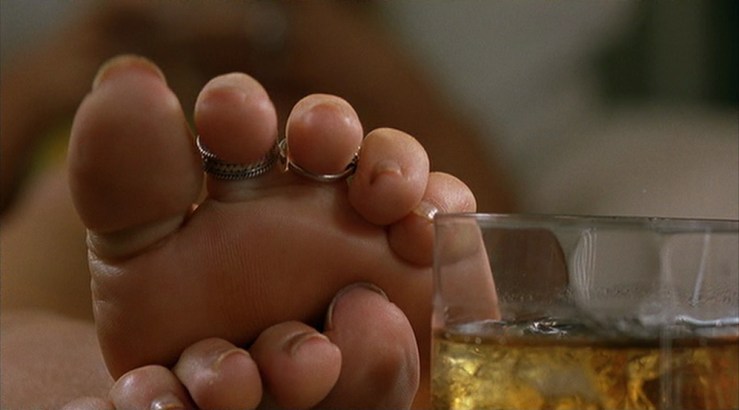
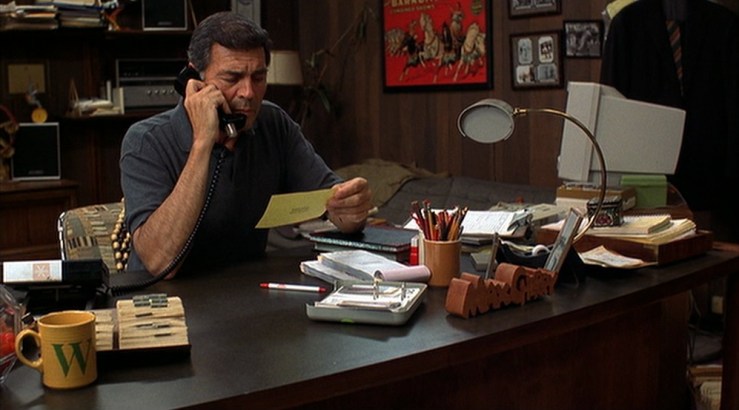
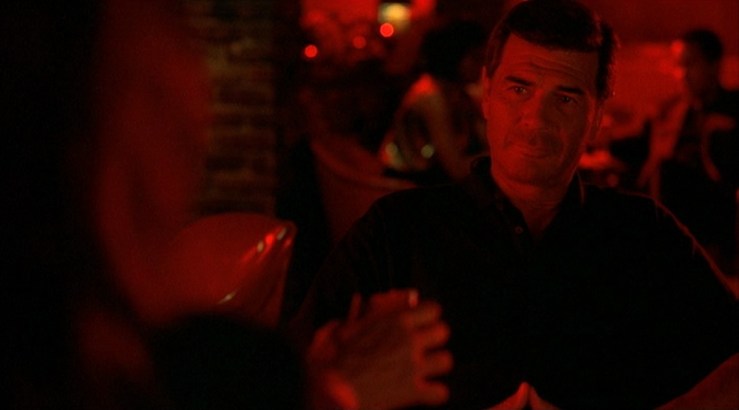
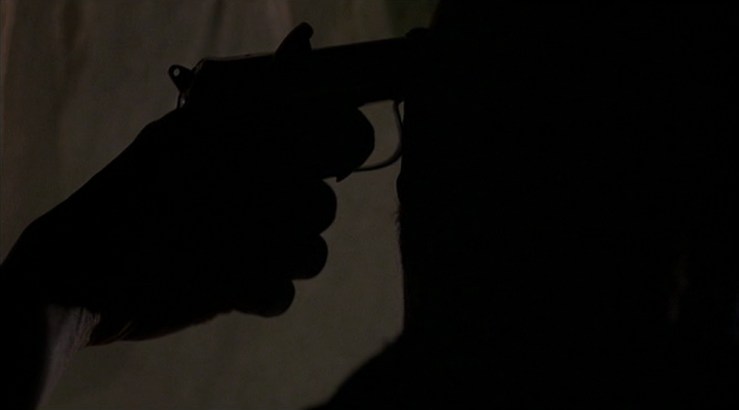
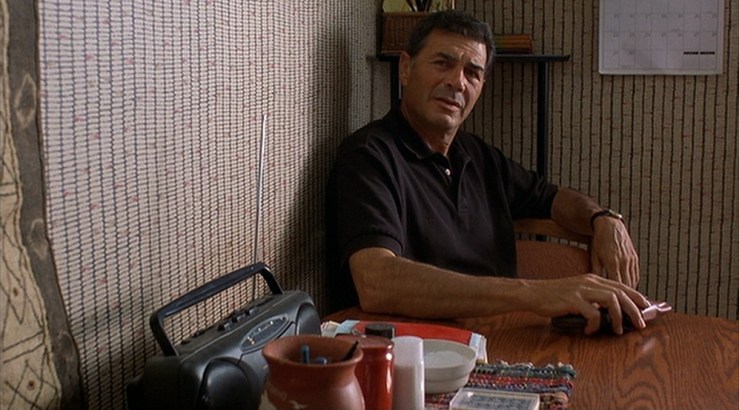
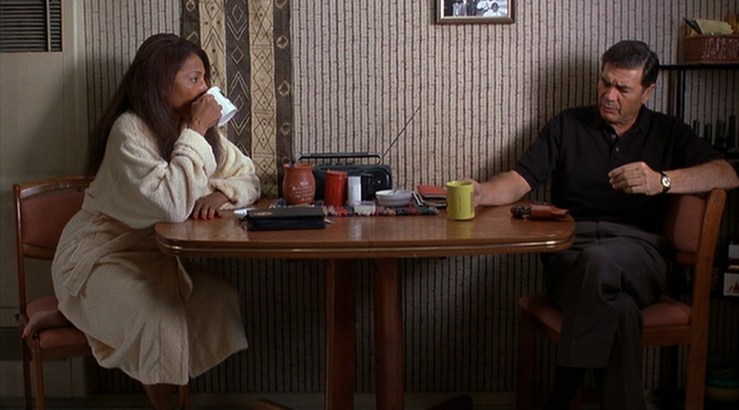
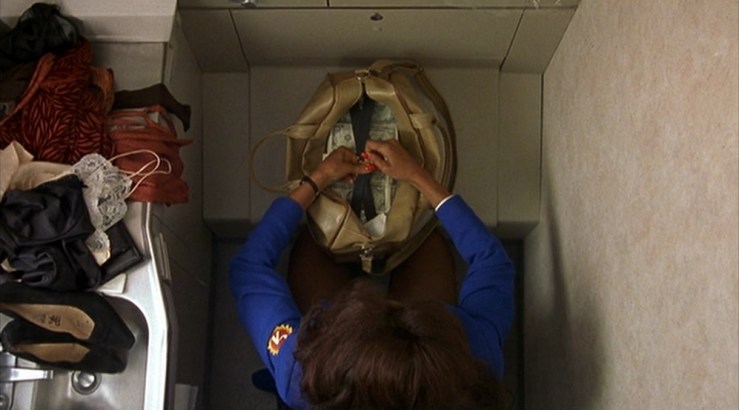
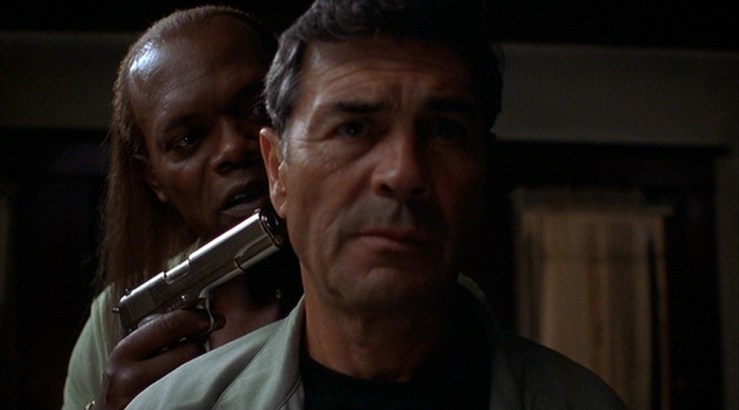
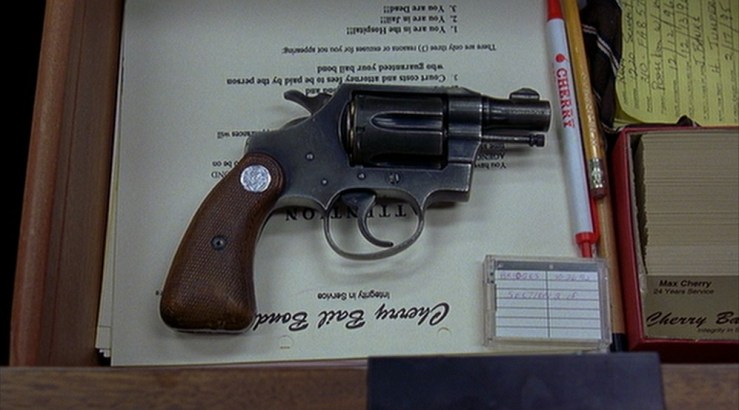
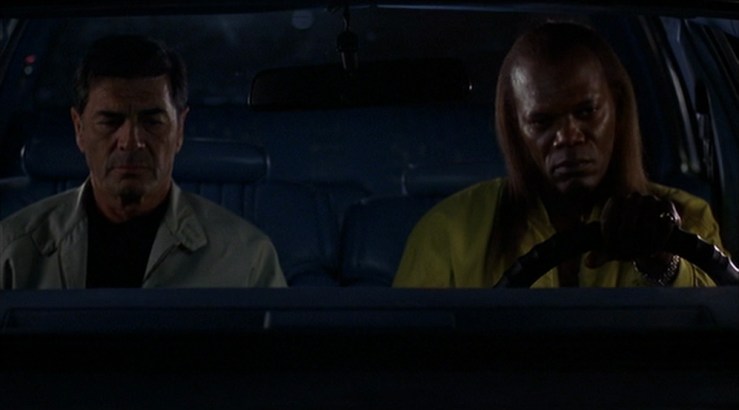
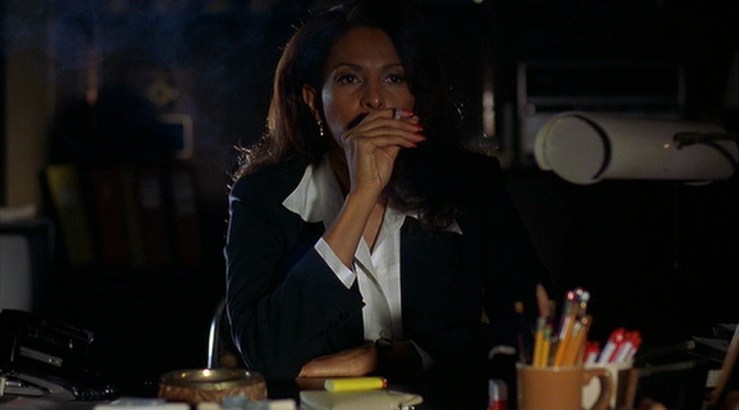
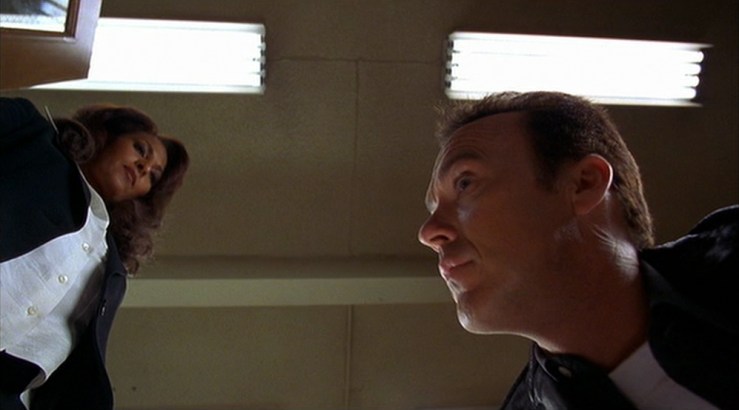
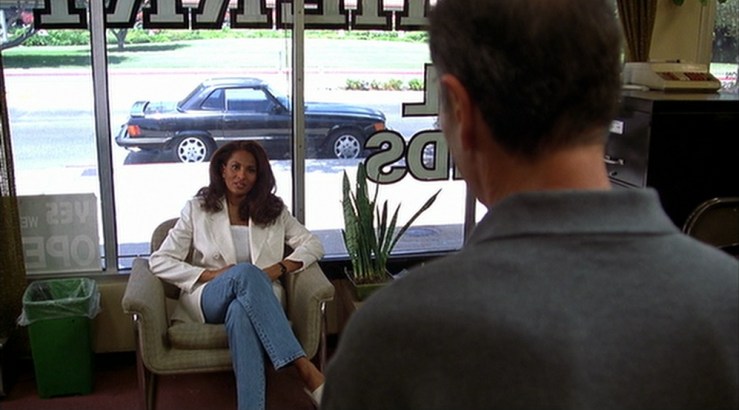
25 still frames from Quentin Tarantino’s Jackie Brown

64 (393)01 (522)03 (521)05 (522)08 (522)20 (532)21 (532)24 (532)25 (532)26 (532)27 (532)28 (531)30 (531)31 (528)32 (530)37 (529)43 (522)53 (498)54 (494)56 (484)58 (479)59 (475)62 (434)63 (410)65 (357)

From Jackie Brown, 1997. Directed by Quentin Tarantino with cinematography by Guillermo Navarro. Via Film Grab. RIP Robert Forster.

“Conversation with Job” — Alfred Döblin

2019-10-06_172844

Conversation with Job, it’s up to you, Job, you don’t want to

After Job had lost everything, everything a man can possibly lose, not more and not less, he lay in the cabbage patch.

‘Job, you’re lying in the cabbage patch, just far enough away from the doghouse for the dog not to bite you. You hear him gnashing his teeth. The dog will bark if you take so much as a single step. If you turn round or make to get up, he will growl, rush at you, rattle his chain, jump out, drool and snap at you.

‘Job, there is your palace, and there are the gardens and fields that once were yours. This watchdog was not even known to you, and this cabbage patch where you have been thrown was not even known to you, any more than the goats they drove past you in the mornings that would take a mouthful of grass as they passed, and grind it between their teeth and fill their cheeks with it. They were yours.

‘Job, you have lost everything. You are allowed to shelter in the barn at night. Everyone is afraid of your contagion. You once rode in splendour over your estates, and people used to flock around you. Now you’ve got the wooden fence in front of you, and you can watch the snails creep up it. You can make a study of the earthworms. Those are the only creatures that aren’t afraid of you.

You hardly ever open your crusty eyes, you bundle of misery, you human swamp.

‘What is the worst torment, Job? The fact that you lost your sons and daughters, that you own nothing, that you’re cold at night, the boils on your throat, on your nose? Tell, Job.’

‘Who’s asking?’

‘I’m just a voice.’

A voice comes out of a throat.’

‘You mean I must be a human being.’

‘Yes, and therefore I don’t want to see you. Go away.’

‘I’m just a voice, Job, open your eyes as far as you can, and then you’ll see me.’

‘I’m raving. My head, my brains, now I’m being driven mad, now they’re taking my thoughts away from me.’

‘And if they were, would that matter?’

‘I don’t want them to.’

‘Even though you’re suffering so much, and suffering so much by your thoughts, you still don’t want to lose them?’

‘Don’t ask. Go away.’

‘But I’m not taking anything. I just want to know which torment is the worst.’

‘That’s nobody’s business.’

‘You mean, nobody but you?’

‘Yes. Yes. Certainly not yours!”

The dog barks, growls, snaps at the air. The voice returns after a while:

‘Is it your sons you are lamenting over?’

‘No one need pray for me when I’m dead. I’m poison to the earth. When I am gone, just spit. Forget Job.’

‘And your daughters?’

‘My daughters. Ah. They’re dead too. They’re fine. They were pictures of women. They would have given me grandchildren, and they were dashed from me. One after the other was dashed to the ground, as though God had taken her by the hair, and lifted her up and thrown her to the ground, broken.’

‘Job, you can’t open your eyes, they are gummed shut. You are lamenting because you are in the cabbage patch, and the doghouse is the least thing that is yours, that and your disease.’

‘The voice, you voice, whosesoever voice you are, and wherever you are hiding.’

‘I don’t know why you’re lamenting.’

‘Oh. Oh.’

‘You groan, and you don’t know either, Job.’

‘No, I have—’

‘You have?’

‘I have no strength. That’s it.’

‘So you’d like strength.’

‘No strength with which to hope or wish. I have no teeth. I am soft, I feel ashamed.’

‘So you say’

‘Yes, you must know. That’s the worst.’

‘So it’s already written on my brow. That’s what a rag I am.’

‘That’s what is causing you the most suffering, Job. You would like not to be weak, you would like to resist, or to be wholly riddled, your brains gone, your thoughts gone, just an animal. Make a wish.’

‘You’ve asked me so many things, voice, I think you must be allowed to ask. Heal me. If you can. Whether your name is Satan or God or angel or man, heal me.’

‘Will you accept healing from anyone?’

‘Heal me.’

‘Job, think carefully. You can’t see me. If you open your eyes, perhaps you will be shocked to see me. Perhaps I will charge a great and terrible price.’

‘All will be seen. You speak like someone who is serious.’

‘What if I am Satan or the Evil One?’

‘Heal me.’

‘I am Satan.’

‘Heal me.’

The voice withdrew, became weaker and ever weaker. The dog barked. Job listened fearfully: he is gone, I must be healed, or I must die. He squawked. A terrible night broke in. The voice came back once more:

“And if I am Satan, how will you deal with me?’

Job screamed: ‘You will not heal me. No one will help me, not God, not Satan, and no angel, and no human.’

‘And you yourself?’

‘What about me?’

‘You won’t.’

‘What.’

‘Who can help you when you don’t want to help yourself?’

‘No, no,’ burbled Job.

The voice in front of him: ‘God and Satan, angels and humans, all want to help you, but you will not help yourself – God out of love, Satan so as to control you later, the angels and men because they are helpers of God and Satan, but you don’t want to.’

‘No, no,’ burbled Job, and screamed, and flung himself to the ground.

He screamed all night long. The voice called uninterruptedly: ‘God and Satan, angels and men, all will help you, but you will not help yourself.’ Job uninterruptedly: ‘No, no.’ He tried to stifle the voice, it grew louder and ever louder, it was always a degree ahead of him. All night long. Towards morning, Job fell on his face.

Job lay there silent.

That day the first of his boils healed.


From Berlin Alexanderplatz by Alfred Döblin. English translation by Michael Hoffmann. (NRYB trade paperback, 2018).

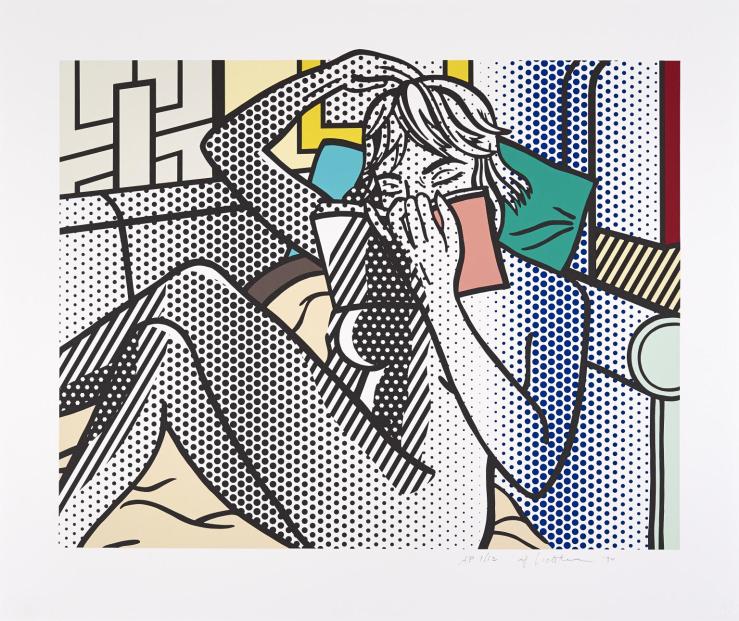
Nude Reading — Roy Lichtenstein

Nude Reading 1992 by Roy Lichtenstein 1923-1997

Nude Reading, 1994 by Roy Lichtenstein (1923–1997)

A review of Olga Tokarczuk’s novel Flights

Olga Tokarczuk’s Flights,

being a book of diversions, of anything but the straight and narrow; a book bound by water, in that it is fluid, unfixed, and preoccupied with the very stuff, and the whales within; an interminable book, in which numerous stories never finish (for what is an ending but a wall to be destroyed or circumnavigated by time and other stories), but also a terminal book, in that it is “situated at the extremity of something” (New Oxford American Dictionary), like a book set on the eve of an important day, the day we leave, the day we make our move, the day we attack; and speaking of extremities, it is a book obsessed with fingers and toes and the blood vessels within, and all of the body’s parts, muscles in particular, and their preservation, long after the soul has left the body, submerged in anything from booze to Kaiserling III and held in a jar, transported across the world via horse and buggy or Russian galleon, to be placed on full display before students, kings, curious onlookers, and a grieving daughter, whose letters challenge the dubious practice of plastination; a book in which letters cross paths with lists, travelogues, tall tales, myths, ruminations on plastic bags and sanitary pads, dark matter and swastikas, stories that traverse the ruins of Athens, a boiler room in Moscow, the olive groves of Croatia, not to mention places without names, impossible to find on a map, without coordinates, all of it jumping from past to present and back again, if linear time is to be believed; a book of wandering women, who disappear and reappear on their own accord, slipping into the divine rhythms of circular time; a book about the temptation to make meaning out of any assortment of objects; a book made of 116 sections in all, which is the number of years the Hundred Years’ War actually lasted, and is the prefix for several European telephone helplines such as 116000, the hotline for missing children, or 116123, the emotional support helpline, according to Wikipedia, a site which may be, says Tokarczuk, “mankind’s most honest cognitive project,” except that it cannot index “its inverse, its inner lining, everything we don’t know”; a book populated by characters who either do not know, can’t figure it out, are lost, are trying to figure out what happened in that span of time that slipped their grasp, or those who know it all, who know the map like the back of their hand, or so they think; a book that anticipates the sovereignty of airports, those modern portals that make us time travelers, where you and I might collide, and if we do, will we talk to each other, tell our stories, move beyond the Three Travel Questions (where are you from, where are you coming from, where are you going) and into our ideas, those dangerous, viscous things, or will we simply utter apologies and head to our gates; a book that floods, that breaks at the seams and spills out into the world, so that fact and fiction get scrambled and mix in the deluge, becoming indistinguishable; a book with no answers, only arrows pointing in other directions, toward books yet to be written, histories to be retold, cities at the ends of the earth, or to the person nearest you; a book oriented, most importantly, toward other pilgrims…

…is masterfully translated from the Polish by Jennifer Croft, available from your English publisher of choice, and a magnificent read, one that travelled with me across Poland, Ireland, and the UK, and has convinced me, once and for all, that it is a crime never to read Moby-Dick.

(Image above, a map of Novaya Zemlya, via. Read an excerpt over at Asymptote, in their January 2016 issue.)

[Ed. note–Biblioklept originally ran Ryan Mihaly’s review of Flights in the summer of 2018. We run it again in recognition of Olga Tokarczuk, who was awarded the Nobel Prize for Literature for 2018. The 2018 award was initially canceled after a sexual assault scandal. Noted genocide-apologist Peter Handke won the 2019 award.] 

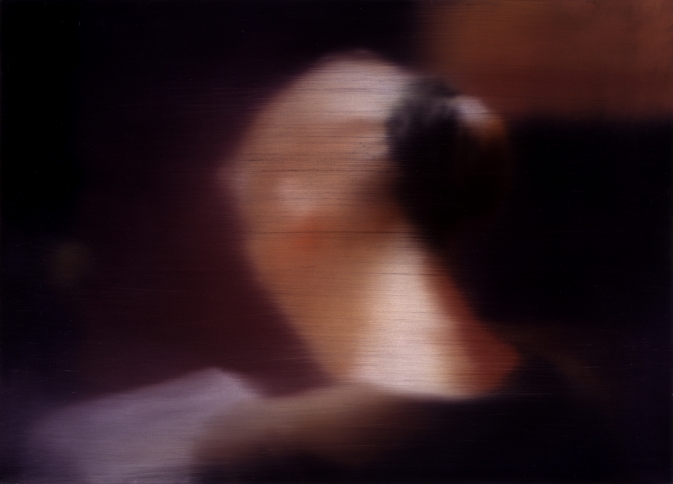
Reader — Gerhard Richter

3928

Reader, 1994 by Gerhard Richter (b. 1932)

“American Gothic” — John Stone

“American Gothic”

by

John Stone


Just outside the frame
there has to be a dog
chickens, cows and hay

and a smokehouse
where a ham in hickory
is also being preserved

Here for all time
the borders of the Gothic window
anticipate the ribs

of the house
the tines of the pitchfork
repeat the triumph

of his overalls
and front and center
the long faces, the sober lips

above the upright spines
of this couple
arrested in the name of art

These two
by now
the sun this high

ought to be
in mortal time
about their businesses

Instead they linger here
within the patient fabric
of the lives they wove

he asking the artist silently
how much longer
and worrying about the crops

she no less concerned about the crops
but more to the point just now
whether she remembered

to turn off the stove.


1200px-grant_wood_-_american_gothic_-_google_art_project
American Gothic, 1930, Grant Wood

Volleyballer V — Jansson Stegner

jansson-stegner-2

Volleyballer V, 2009 by Jansson Stegner (b. 1972)

Untitled (Reader) — Francine Van Hove

DeJClwbX0AAAc3m (1)

Untitled by Francine van Hove (b. 1942)

Three Books

2019-10-06_172659

Negrophobia by Darius James. Cover design by Katy Homans, employing All Cats Are Black in the Dark by Natasha Xavier. Trade paperback, NYRB, 2019.

Darius James’s Negrophobia, first published in 1992, is ugly, hilarious, abject, and gritty, a deep comic dive into American racism and the ways that massculture and urban living propagate and feed off of racism. NYRB’s blurb rightfully compares the novel to the work of William S. Burroughs and Ishmael Reed, but, in its hallucinatory film script form (an apocalyptic angles), it also recalls Aldous Huxley’s overlooked novel Ape in Essence. I loved it and am too much of a coward to attempt a real review.

2019-10-06_172524

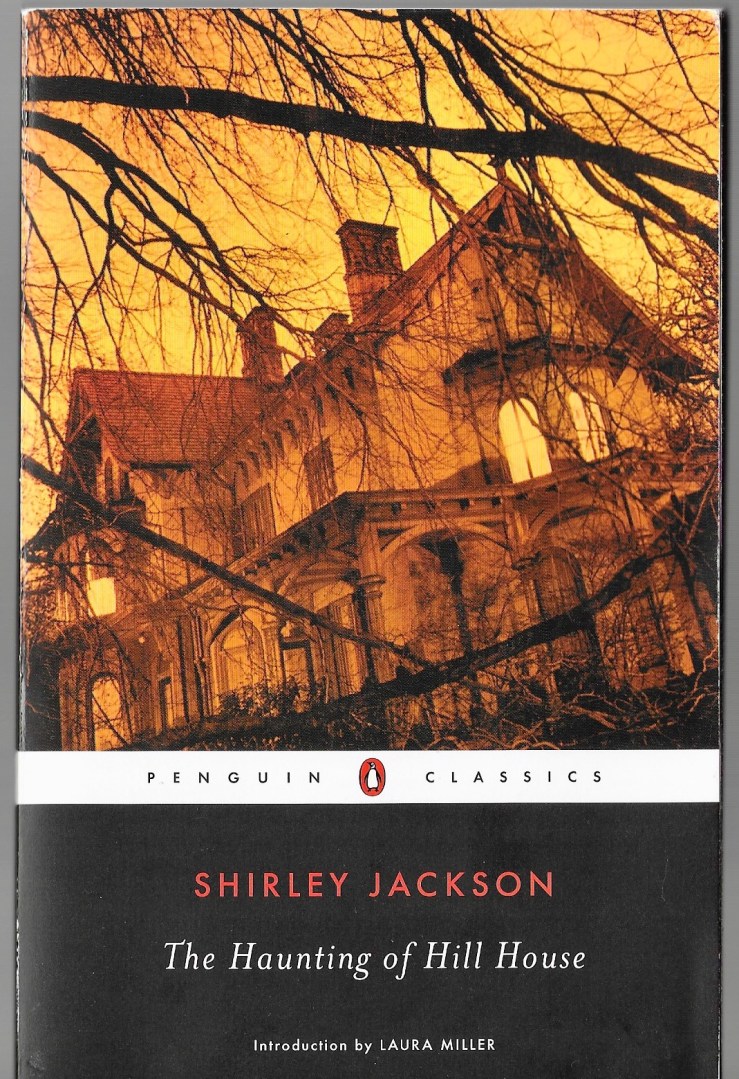
The Haunting of Hill House by Shirley Jackson. Cover photograph by W. Eugene Smith; designer uncredited. Penguin Classics US trade paperback, 2006.

Jackson’s spooky 1959 novel has some of the best opening lines of a novel I’ve read in recent years. Hills’ final section answers to its weird opening, dramatizing fraught consciousness in turmoil, disintegrating in a ping-pong free indirect style that leaves the reader stunned, puzzled, and wishing for an extra chapter against his better judgment.

2019-10-06_172844

Berlin Alexanderplatz by Alfred Döblin. English translation by Michael Hoffmann. Book design by Katy Homans, featuring Georg Grosz’s painting Down with Liebknecht (1919). NRYB trade paperback, 2018.

I picked up Döblin’s 1929 Berlin Alexanderplatz on a whim a while ago at a bookstore and picked it up off the shelf today on a different whim and laughed in sympathy through the first two chapters. It’s a long book but I think I’ll keep going.


Watermelon — Rufino Tamayo

default-1

Watermelon, 1952 by Rufino Tamayo (1899-1991)

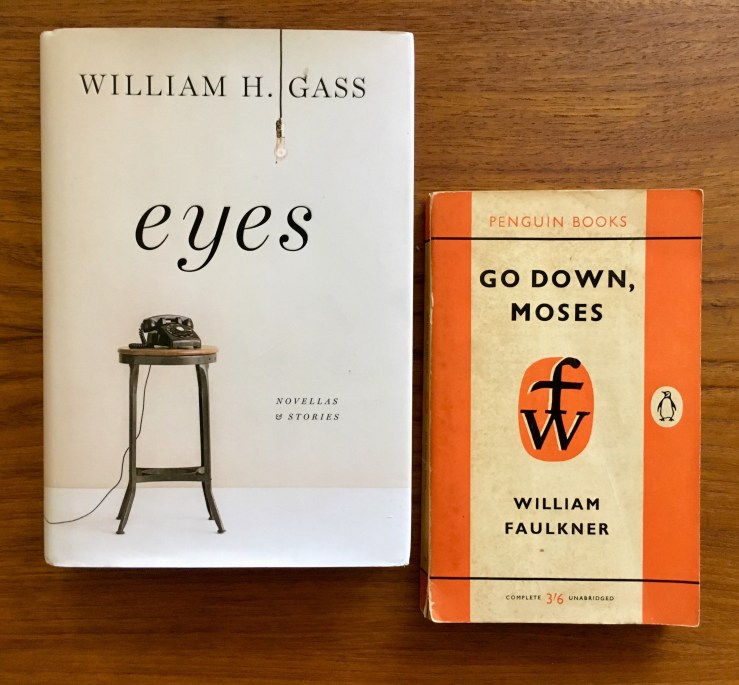
Faulkner/Gass (Two Williams acquired, 4 Oct. 2019)


img_4013

Friday is a day in which I have a few rare spare hours to myself after lunch, and I often like to browse my beloved labyrinthine used bookstore in one of those hours. Last week, I managed to leave without picking anything up, but today I couldn’t resist these two Williams.

Wiliam H. Gass’s last collection of fiction Eyes jumped out at me. I struggled with his bigass opus The Tunnel last year, hardly making a dent, but I loved Middle C as well as the novellas in Cartesian Sonata and Other Novellasso maybe Eyes will be more manageable.

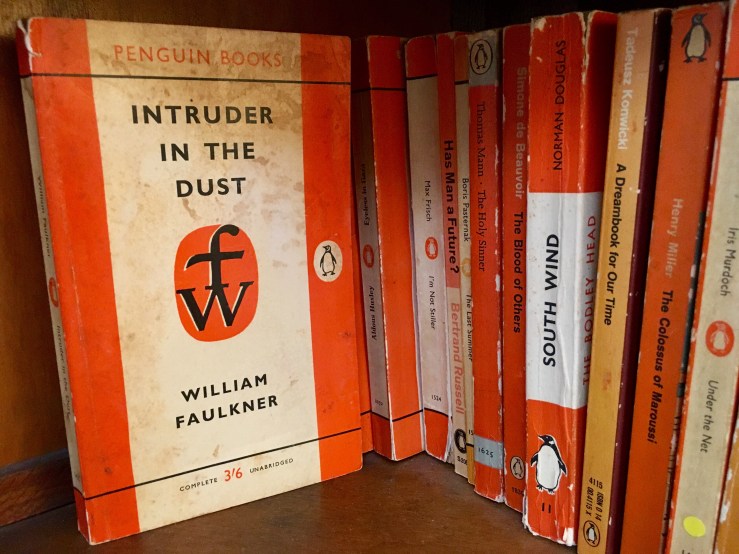
I wasn’t actually browsing the Faulkner section, simply walking past it, but the orange spine of a 1960 Penguin edition of Go Down, Moses jumped out at me. I’m a sucker for these Penguin editions, and Go Down, Moses is my favorite Faulkner (I haven’t read everything Faulkner wrote but I doubt he wrote anything as great as “The Bear”). This edition makes a nice partner with the copy of Intruder in the Dust I picked up a few years ago, too. img_4014

Intruder is a really underrated Faulkner novel in my estimation, and Clarence Brown’s 1949 film adaptation is pretty strong as well.

I was attracted to another orange book, an English-language Japanese publication of Kenzaburo Oe’s The Silent Cry, but I had to pass on it—the print was tiny and my forty-year-old eyes aren’t as strong as they used to be. The cover is gorgeous though:

img_4008