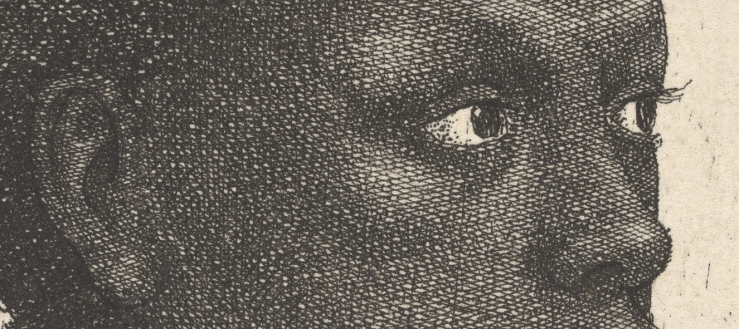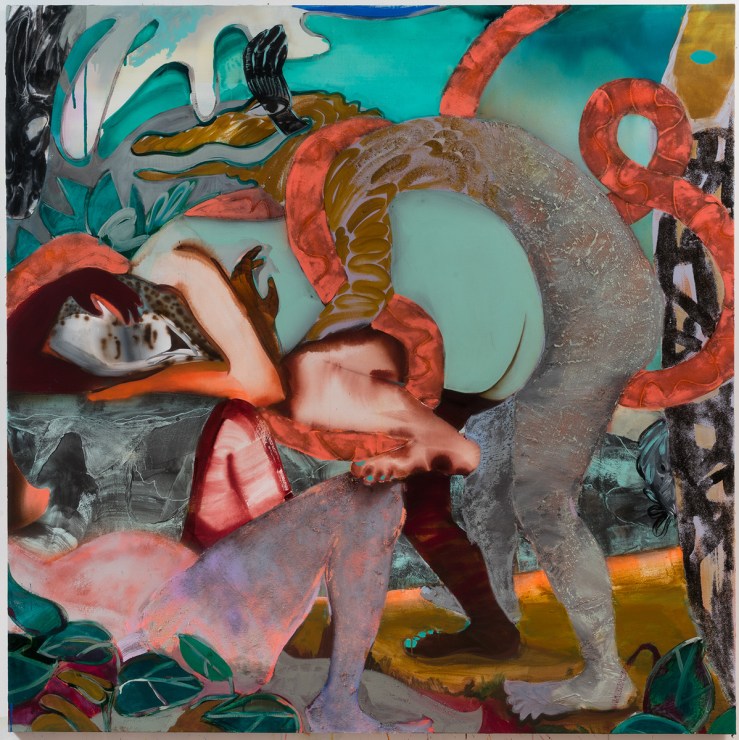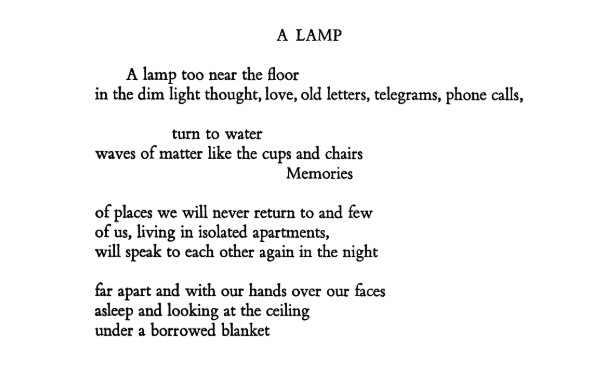
The Kiss — Odd Nerdrum

odd-nerdrum-the-kiss

The Kiss, 2002 by Odd Nerdrum (b. 1944)

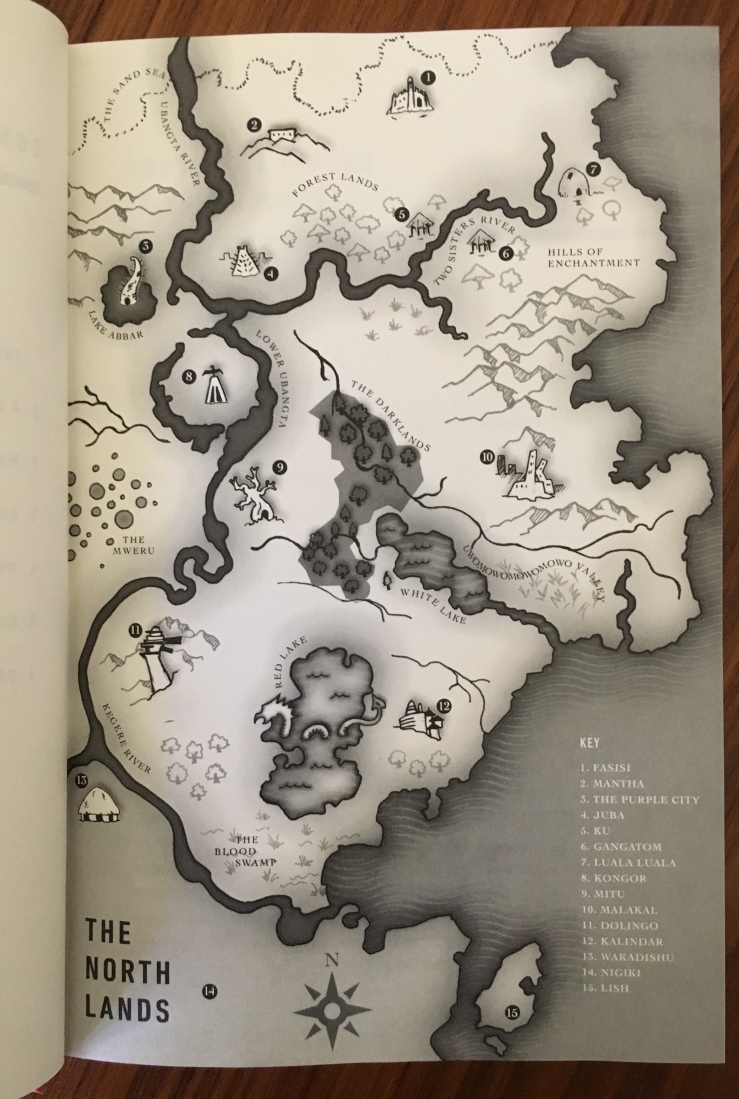
Barad-dûr: The Fortress of Sauron — J.R.R. Tolkien

merlin_150013245_3ec3294a-7d7c-4721-8836-9d6b6c723299-superjumbo

Barad-dûr: The Fortress of Sauron, c. 1944 by J.R.R. Tolkien (1892–1973).

From The Morgan Library & Museum’s exhibition “Tolkien: Maker of Middle-earth.”

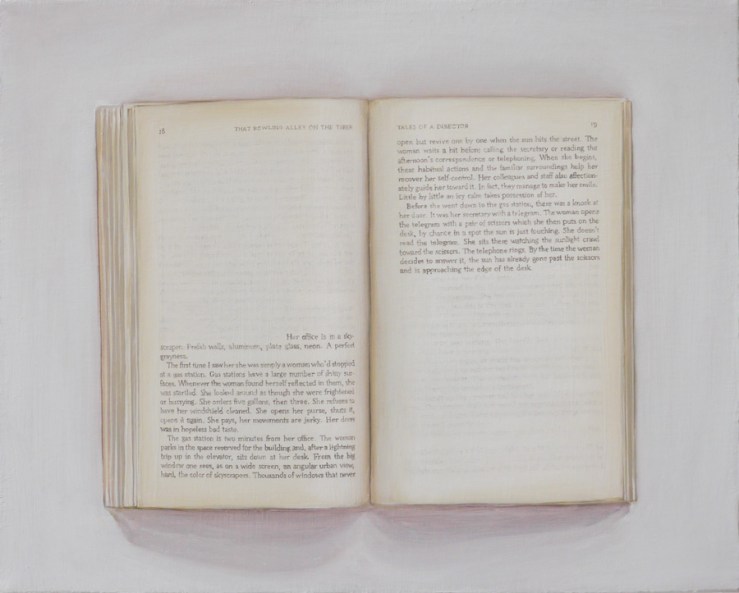
A review of Lucia Berlin’s short story collection Evening in Paradise

img_2216

Evening in Paradise is the second posthumously-published collection of short stories by the American writer Lucia Berlin. The book collects twenty-two stories originally published between 1981 and 1999. Most of the stories center around a semi-autobiographical version of Berlin herself. Like the excellent compendium A Manual for Cleaning Women which preceded it, Evening in Paradise is crammed with life. These stories teem with electric energy—even when their immediate subject matters might seem banal on the surface. Evening in Paradise shows an artist shaping the events of her life, big and small, wild and tragic, sharp and dull, into an impressionistic and urgent patchwork of tales that add up to a fictional memoir of sorts. As Berlin’s eldest son Mark Berlin noted in a 2005 essay on his mother (which serves as an introduction to Evening in Paradise),

Ma wrote true stories; not necessarily autobiographical, but close enough for horseshoes. Our family stories and memories have been slowly reshaped, embellished and edited to the extent that I’m not sure what really happened all the time. Lucia said this didn’t matter: the story is the thing.

The first stories in the collection feel sharply autobiographical. Both “The Musical Vanity Boxes” and “Sometimes in the Summer” are told by a first-person narrator named “Lucia” who details the small adventures of her childhood early 1940s in El Paso, Texas. Lucia and her friend slip over borders of all sorts, passing not only into Juarez, but also into a more complicated version of themselves as they mature. There’s a subtle menace rumbling under these stories. A mature Berlin looks back, knows what her girl protagonist does not yet know about the world and its dark joys and sinister terrors. The writer shows us a narrator gazing on life’s bright lights, even as she—the writer—draws our attention to the edge of those lights, to the threatening shadows on the margin.

Like A Manual for Cleaning Women, the stories in Evening in Paradise follow an arc of maturation—they are organized not chronologically by dates of composition or publication, but organized rather around the age of the central protagonist, the Berlin stand-in.

We find this protagonist simultaneously struggling and thriving in her teenage years. “Anando: A Gothic Romance” lives up to its subtitle. Set in Chile in an ex-pat community, “Andado” features a version of Berlin’s own teenage family—the father, a somewhat-absent mining engineer; the mother a depressed alcoholic. It’s no wonder then that our hero “Laura” is so easily seduced — “ruined” — by an older man. In one telling aside, the third-person narrator assesses a subtle moment of the seduction from the distance of time:

She was simply enveloped.

This would never happen to her again. When she grew older she would always be in control, even when being submissive. This would be the first and the last time anyone took over herself.

In “Itinerary,” another fictionalized-version of Berlin departs Chile for college in New Mexico. She leaves on her own, taking a series of planes and being greeted by a series of hosts, each of which reveals, inadvertently, something about her family which she had not previously seen, something that would be obvious though to any mature eyes settling on the family with objective distance. Berlin’s first-person narrator never quite names what is revealed to her; instead, she takes us up to the moment where we see her seeing what she has previously been blind to, yet still does not quite have the language to name. The final lines of “Itinerary” are a sort of negative epiphany:

It was sunset as we circled Albuquerque. The Sandias and the miles of rocky desert were a deep coral pink. I felt old. Not grown up, but the way I do now. That there was so much I did not see or understand, and now it is too late. The air was cold in New Mexico. No one met me.

The middle section of Evening in Paradise gives way to a series of stories focusing on young wives and young mothers different iterations of Berlin in the fifties. “Lead Street, Albuquerque” is particularly fascinating. Here, Berlin splits the material of her life into two different characters—the narrator, a somewhat hapless housewife who’s relegated to washing the dishes while her artist-husband and his artist-friends chat about hepcat stuff—and “Maria” — “seventeen, American, but grew up in South America, acts foreign, shy. English major.” A mature narrator looks back, half-mockingly and half-lovingly, at an ingénue-muse version of herself, the pair framed in the same tale. And our narrator turns toward her own life in the same attitude in turn:

Is there a word opposite of déjà vu? Or a word to describe how I saw my whole future flash before my eyes? I saw that I’d stay at the Albuquerque National Bank and Bernie would get his doctorate and keep on painting bad paintings and making muddy pottery and would get tenure. We would have two daughters and one would a dentist and the other a cocaine addict. Well, of course I didn’t know all that, but I saw how things would be hard. And I knew that years and years from then Bernie would probably leave me for one of his students and I’d be devastated but then would go back to school and when I was fifty I’d finally do things I wanted to do, but I would be tired.

The push-pull of artistic ambition against domestic life’s constraints ripple through these middle stories, where women raise kids and clean houses while men pursue their muses—writing, jazz, painting. There are small resentments and sordid affairs, banal routines and burgeoning substance abuse problems. Threaded through these stories is a common theme though, summed up in the last line of “Cherry Blossom Time,” when the hero Cassandra addresses her husband: “David. Please talk to me.”

The collection’s title story marks a shift in the trajectory of the Berlinverse, and stands out as a bit of an oddity. “Evening in Paradise” is the only piece here that doesn’t feature a straightforward Berlin stand-in; indeed, the story doesn’t have a strong central persona at all. Rather, “Evening” plays like a series of elegiac vignettes centered around the Oceano hotel–notably its bar—in Puerto Vallarta, Mexico. It’s 1963 and cast and crew of The Night of the Iguana are causing a ruckus in the small fishing town, drinking heavily, taking up with beach gigolos, smoking reefers—and even shooting heroin and snorting coke. Richard Burton and Elizabeth Taylor burst in and out; Ava Gardner looms larger than life. Director John Huston sits in the bar’s corner, drinking homemade mescal from a mayonnaise jar. There’s scheming and screaming, and generally famous times—but, like the title declares, the scene announces the end of an era.

“Evening in Paradise,” without a Berlin-protagonist, resets the stage, moving us to Mexico for a while, and introducing heroin as a major trope. In the next tale, “La Barca de la Ilusion,” Maya and her husband Buzz move to Yelapa (in Jalisco, Mexico) so that Buzz can kick heroin. “La Barca” is a standout in the collection, a slow burn of a tale, but one packed with lifetimes of storytelling. Buzz, born to a wealthy Boston family, drops out of Harvard to play saxophone in jazz clubs. He marries an heiress named Circe (I know, right?), starts a Volkswagen franchise, becomes a millionaire, has an affair with Maya, divorces Circe, etc. The problem remains though: “Heroin is easy to hide if you are rich, because you always have it.” That problem transgresses the paradise of Yalapa in the form of Victor, a menacing drug dealer who’s had his hooks in Buzz for years. Victor is a creature from the shadows, the sinister specter that haunted the background of the earlier tales of Evening in Paradise finally made manifest. I won’t spoil the rest of the story, but it swells to a startling, cinematic climax.

Characters like Victor and Buzz and Circe show up in different iterations in successive stories, like “My Life Is an Open Book” and “The Wives,” before Evening in Paradise gives over to Berlin’s Oakland years. Stories like “Noël, 1974” feature Berlin’s sons—excuse me, Berlin’s stand-in’s sons. These stories also feature her alter-ego’s high-functioning alcoholism. (Again, features that will be familiar to fans of the stories in A Manual for Cleaning Women).

The one-pager “The Pony Bar, Oakland” serves as something of a summary of the material that preceded it, delivered in Berlin’s economical prose. “There are certain perfect particular sounds. A tennis ball, a golf ball hit just right….Pool is erotic any way you look at it” the narrator begins, perched on a bar stool, as the sounds of billiards take her back in time to a cricket match in Chile:

Cricket in Santiago. Red parasols, green grass, white Andes. Red and white striped canvas chairs at the Prince of Wales Country Club. I signed chits for lemonade, tipped the tuxedoed waiters, applauded John Wells. Perfect crack of the cricket bat. I wore white, was careful of the grass stains, flirted with the boys who wore Grange school gray flannels, blue blazers in summertime. Cucumber sandwiches with tea, plans for Sunday at Viña del Mar.

The narrator remarks that she felt like an alien in that privileged childhood, just as she feels like an alien here at the Pony Bar in Oakland, sitting next to a tattooed biker. Berlin—or hey, sorry, Berlin’s stand-in—is never at home, but also at home every where. The tale ends as she glances at the hinges tattooed on the biker’s wrists, elbows, knees. The story ends in a wry punchline:

“You need a hinge on your neck,” I said.

“You need a screw up your ass.”

The smoky bar reverberating with the erotic sounds of pool transmutes into expatriate pastimes and then lands back into unglamorous Oakland, to culminate in a dirty joke. “Pony Bar, Oakland” condenses Evening in Paradise’s themes of memory, sensation, and life into a spare but evocative tale.

Later stories, like “Our Brother’s Keeper,” “Lost in the Louvre,” and “Luna Nueva” work in much the same way, filling a few slim pages with full fat life. These late stories are reflective and fully mature—still questioning and questing, but also shining with a strange peace, a strange reconciling to the sinister forces that vibrate under life’s vivid contours of family, work, culture, persona. I’ll confess that there’s something in these stories that I don’t fully appreciate—something beyond my forty years, something that their narrators see that I don’t maybe—maybe not yet, maybe not ever. But I’ll be happy to revisit them—and Berlin’s work in general—in years to come. Highly recommended.


Anchises Lost — F. Scott Hess

tumblr_nlbe8jkCs71tg83cfo1_1280

Anchises Lost, 2009 by F. Scott Hess (b. 1955)


Judith sees the Head of the Lion — Thomas Theodor Heine

Screenshot 2019-02-12 at 9.47.52 PM

Judith sees the Head of the Lion, 1908 by Thomas Theodor Heine (1867-1948)

I got this seeker running along a lonely line

Birmingham Totem — Charles White

dig.57

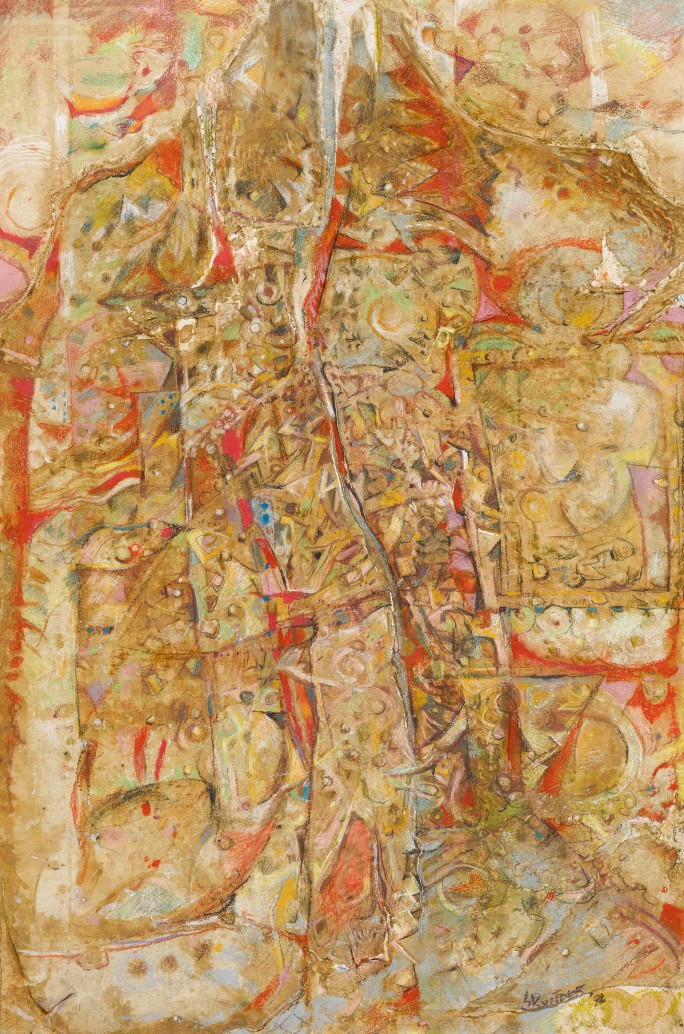
Birmingham Totem, 1964 by Charles White (1918-1979)

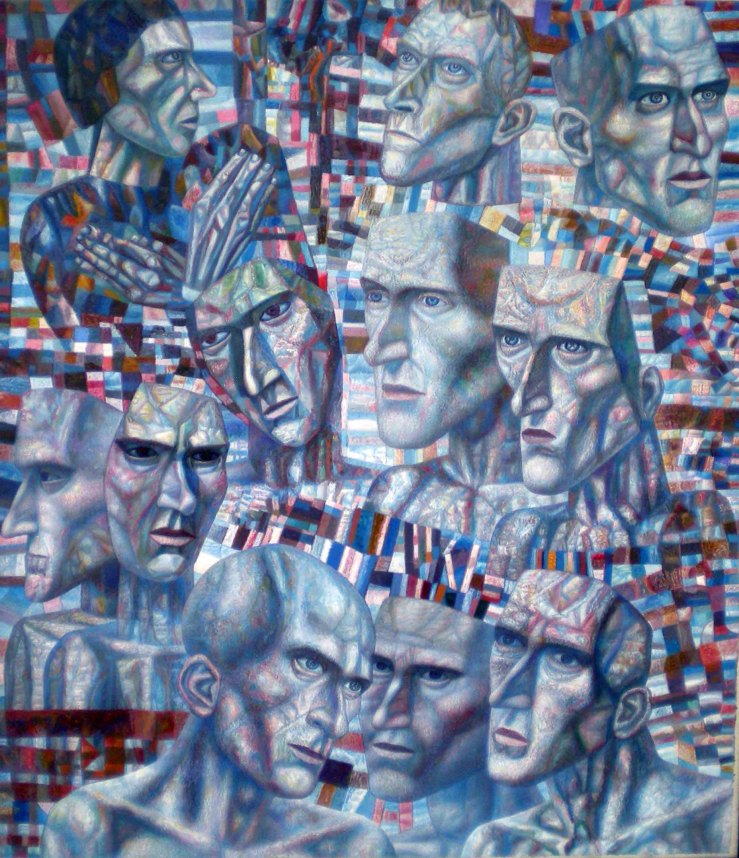
Divine State — Jia Aili

3_m5rwufmrmn_2340x1316

Divine State, 2012 by Jia Aili (b. 1979)

Eclipse 2 — Tilo Baumgärtel

eclipse-22c-20182c-150x180cm2c-occ88l-auf-leinwandScreenshot 2019-02-11 at 8.21.01 PM

Eclipse 2, 2018 by Tilo Baumgärtel (b. 1972)

It’s the story of a spaceship that for a long time has been looking for a planet habitable by the human race | Roberto Bolaño

“Yesterday I dreamed about Thea von Harbou. . . . It woke me right up. . . . But then, thinking about it, I realized that I dreamed about her because of a novel I read recently. . . . It’s not that it was such a strange book, but I got the idea that the author was hiding something. . . . And after the dream, I figured it out . . .”

“What novel?”

Silhouette, by Gene Wolfe.”

“. . .”

“Want me to tell you what it’s about?”

“All right, while I’m making breakfast.”

“I had some tea before, when you were asleep.”

“I’ve got a headache. Are you going to want another cup of tea?”

“Yes.”

“Go on. I’m listening, even if my back is turned.”

“It’s the story of a spaceship that for a long time has been looking for a planet habitable by the human race. At last they find one, but it’s been many years since they set off on the voyage, and the crew has changed; they’ve all gotten older, but you have to realize that they were very young when they set off. . . . What’s changed are their beliefs: sects, secret societies, covens have sprung up. . . . The ship has also fallen into disrepair—there are computers that don’t work, blown-out lights that no one bothers to fix, wrecked sleeping compartments. . . . Then, when they find the new planet, the mission is completed and they’re supposed to return to Earth with the news, but no one wants to go back. . . . The voyage will consume the rest of their youth, and they’ll return to an unknown world, because meanwhile several centuries have gone by on Earth, since they’ve been traveling at close to light speed. . . . It’s just a starving, overpopulated planet. . . . And there are even those who believe that there is no life left on Earth. . . . Among them is Johann, the protagonist. . . . Johann is a quiet man, one of the few who love the ship. . . . He’s of average height. . . . There’s a hierarchy of height; the woman who’s captain of the ship, for example, is the tallest, and the privates are the shortest. . . . Johann is a lieutenant; he goes about his duties without making too many friends. Like nearly everyone, he’s set in his ways; he’s bored . . . until they reach the strange planet. . . . Then Johann discovers that his shadow has grown darker. . . . Black as outer space and dense . . . As you probably guessed, it’s not his shadow but a separate being that’s taken over there, mimicking the movements of his shadow. . . . Where has it come from? The planet? Space? We’ll never know, and it doesn’t really matter. . . . The Shadow is powerful, as we’ll see, but as silent as Johann. . . . Meanwhile the sects are preparing to mutiny. . . . A group tries to convince Johann to join them; they tell him that he’s one of the chosen, that their common fate is to create something new on this planet. . . . Some seem pretty loony, others dangerous. . . . Johann commits to nothing. . . . Then the Shadow transports him to the planet. . . . It’s a vast jungle, a vast desert, a vast beach. . . . Johann, dressed only in shorts and sandals, almost like a Tyrolean, walks through the undergrowth. . . . He moves his right leg when he feels the Shadow push against his right leg, then the left, slowly, waiting. . . . The darkness is total. . . . But the Shadow looks after him as if he’s a child. . . . When he returns, rebellion breaks out. . . . It’s total chaos. . . . Johann, as a precaution, takes off his officer’s stripes. . . . Suddenly he runs into Helmuth, the captain’s favorite and one of the heads of the rebellion, who tries to kill him, but the Shadow overpowers him, choking him to death. . . . Johann realizes what’s happening and makes his way to the bridge; the captain and some of the other officers are there, and on the screens of the central computer they see Helmuth and the mutineers readying a laser cannon. . . . Johann convinces them that all is lost, that they must flee to the planet. . . . But at the last minute, he stays behind. . . . He returns to the bridge, disconnects the fake video feed that the computer operators have manipulated, and sends an ultimatum to the rebels. . . . Whoever lays down arms this very instant will be pardoned; the rest will die. . . . Johann is well acquainted with the tools of falsehood and propaganda. . . . Then, too, he has the police and the marines on his side, who’ve spent the voyage in hibernation, and he knows that no one can snatch victory from him. . . . He finishes his communiqué with the announcement that he is the new captain. . . . Then he plots another route and abandons the planet. . . . And that’s all. . . . But then I dreamed about Thea von Harbou, and I realized that it was a Millennial Reich ship. . . . They were all Germans . . . all trapped in entropy. . . . Though there are a few weird things, strange things. . . . Under the effects of some drug, one of the girls—the one who sleeps most often with Johann—remembers something painful, and, weeping, she says that her name is Joan. . . . The girl’s real name is Grit, and Johann thinks that maybe her mother called her Joan when she was a baby. . . . Old-fangled and unfashionable names, banned by the psychologists, too . . .”

“Maybe the girl was trying to say that her name was Johann.”

“Possibly. The truth is, Johann is a serious fucking opportunist.”

“So why doesn’t he stay on the planet?”

“I don’t know. Leaving the planet, and not going back to Earth, is like choosing death, isn’t it? Or maybe the Shadow convinced him that he shouldn’t colonize the planet. Either way, the captain and a bunch of people are stuck there. Listen, read the novel, it’s really good. . . . And now I think the swastika came from the dream, not Gene Wolfe. . . . Though who knows . . . ?”

“So you dreamed about Thea von Harbou . . .”

“Yes, it was a blond girl.”

“But have you ever seen a picture of her?”

“No.”

“How did you know it was Thea von Harbou?”

“I don’t know, I guessed it. She was like Marlene Dietrich singing ‘Blowin’ in the Wind,’ the Dylan song, you know? Weird stuff, spooky, but very up-close and personal—it’s hard to explain, but personal.”

“So the Nazis take over the Earth and send ships in search of new worlds.”

“Yes. In Thea von Harbou’s version.”

“And they find the Shadow. Isn’t that a German story?”

“The story of the Shadow or the man who loses his shadow? I don’t know.”

“And it was Thea von Harbou who told yo all this?”

“Johann believes that inhabited planets, or habitable planets, are the exception in the universe. . . . As he tells it, Guderian’s tanks lay waste to Moscow . . .”

From Roberto Bolaño’s novel The Spirit of Science Fiction. English translation by Natasha Wimmer.

Gene Wolfe’s 1975 novella Silhouette was originally published in The New Atlantis, an anthology of sci-fi edited by Robert Silverberg, and later collected in Endangered Species (1989). Silhouette begins with an epigraph culled from Ambrose Bierce’s short story “A Psychological Shipwreck” (1879):

To sundry it is given to be drawn away, and to be apart from the body for a season; for, as concerning rills which would flow across each other the weaker is borne along by the stronger, so there be certain of kin whose paths intersecting, their souls do bear company, the while their bodies go foreappointed ways, unknowing.

In Bierce’s story, this passage is itself quoted from “that rare and curious work, Denneker’s Meditations.”

Thea von Harbou wrote many novels and screenplays, including numerous screenplays for her husband director Fritz Lang, including the classic sci-fi film Metropolis. After its ascendance to power, von Harbou remained loyal to the Nazi party.

Days and Days without Love — Sanam Khatibi 

dsc_0513

Screenshot 2019-02-10 at 3.37.34 PM

Screenshot 2019-02-10 at 3.37.51 PM

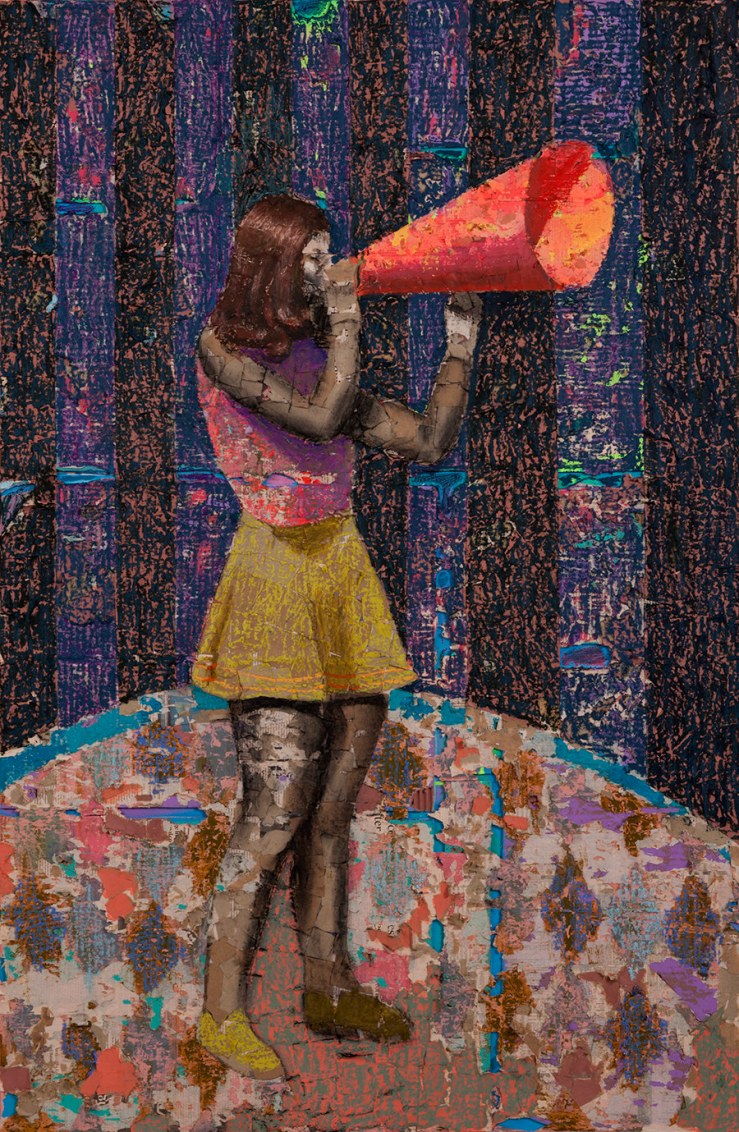
Days and Days without Love, 2017 by Sanam Khatibi (b. 1979)

“The Witness,” a very short story by Jorge Luis Borges

“The Witness”

by

Jorge Luis Borges

English translation by Andrew Hurley


In a stable that stands almost in the shadow of the new stone church, a man with gray eyes and gray beard, lying amid the odor of the animals, humbly tries to will himself into death, much as a man might will himself to sleep. The day, obedient to vast and secret laws, slowly shifts about and mingles the shadows in the lowly place; outside lie plowed fields, a ditch clogged with dead leaves, and the faint track of a wolf in the black clay where the line of woods begins. The man sleeps and dreams, forgotten.

The bells for orisons awaken him. Bells are now one of evening’s customs in the kingdoms of England, but as a boy the man has seen the face of Woden, the sacred horror and the exultation, the clumsy wooden idol laden with Roman coins and ponderous vestments, the sacrifice of horses, dogs, and prisoners. Before dawn he will be dead, and with him, the last eyewitness images of pagan rites will perish, never to be seen again. The world will be a little  poorer when this Saxon man is dead.

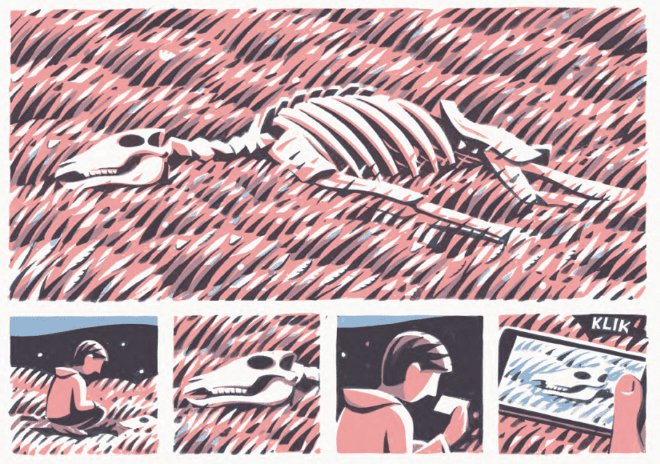
Things, events, that occupy space yet come to an end when someone dies may make us stop in wonder—and yet one thing, or an infinite number of things, dies with every man’s or woman’s death, unless the universe itself has a memory, as theosophists have suggested. In the course of time there was one day that closed the last eyes that had looked on Christ; the Battle of Junin and the love of Helen died with the death of one man. What will die with me the day I die? What pathetic or frail image will be lost to the world? The voice of Macedonia Fernandez, the image of a bay horse in a vacant lot on the corner of Sarrano and Charcas, a bar of sulfur in the drawer of a mahogany desk?

Roberto Bolaño/Joy Williams (Books acquired, 8 Feb. 2019)

img_2209

My expectations for The Spirit of Science Fiction, Roberto Bolaño’s latest the posthumous novel are somewhat measured, but I’m excited to read it nonetheless. It’s new in English translation by Natasha Wimmer, who of course translated Bolaño’s other big novels, including 2666 and The Savage Detectives. My intuition is that The Spirit of Science Fiction will read like a dress rehearsal for The Savage Detectives, much in the same way that Woes of the True Policeman (also translated by Wimmer) felt like a dry run for 2666. My guess is that Spirit will simply make me want to reread 2666. 

While I was at the bookstore, I couldn’t help but pick up a copy of Joy Williams’ debut story collection Taking Care. I found it completely misshelved, or not really shelved at all, just sort of laying on a stack of unrelated books. I have a soft spot for these eighties Vintage Contemporaries editions, and after finishing Lucia Berlin’s Evening in Paradise, I have a hankering for something in a similar vein.

Interior Strandgade 30 — Vilhelm Hammershøi

interior-strandgade-30-1901

Interior Strandgade 30, 1901 by Vilhelm Hammershøi (1864-1916)

The Falconer — Jansson Stegner 

the-falconer_lowres

The Falconer, 2011 by Jansson Stegner (b. 1972)

Daniela on David’s Récamière — Paul Wunderlich

paul-wunderlich-6

Daniela on David’s Récamière, 1974 by Paul Wunderlich (1927-2010)

(An Incomplete) List of Ridiculous Names in Charles Dickens Novels

Abel Garland

Abel Magwich

Adolphus Tetterby

Alfred Jingle

Affery Flintwinch

Anne Chickenstalker

Anthony Jeddler

Augustus Snodgrass

Barnaby Rudge

Bayham Badger

Bazzard

Bella Wilfer

Bentley Drummle

Betsy Prig

Betsy Quilp

Betsy Trotwood

Brownlow

Bucket

Bumble

Caroline “Caddy” Jellyby

Charity Pecksniff 

Clara Peggotty

Cleopatra Skewton

Clickett

Cornelia Blimber

Canon Crisparkle

Charles Cheeryble

Chevy Slyme

Clarence Barnacle

Clarriker

Creakle Continue reading “(An Incomplete) List of Ridiculous Names in Charles Dickens Novels”